
My first encounter with Peru was an unforgettable summer during college, embarking on an English teaching internship. What started as an academic pursuit quickly transformed into an immersive cultural and, more significantly, culinary odyssey. I vividly remember the initial jolt of realizing how much I didn’t know about my own native language when faced with curious students asking, “What’s the subtle difference between ‘because’ and ‘because of’?” These were the moments that often prompted a strategic change of subject, underscoring the humbling yet enriching experience of stepping outside one’s comfort zone.
Unveiling Peru’s Culinary Treasure Trove
Peru’s culinary scene is arguably one of the world’s best-kept secrets, a revelation that borders on tragedy for those unfamiliar with its exquisite flavors. My time there became a testament to this, as I devoured more incredible food than I had in my entire life. I once confessed in a letter home, “Okay, can I just tell you that I’m getting fat? It’s like my back-fat is taking over my body. Don’t worry, I’m not going on a diet or anything; the food here is simply too good to resist.” This sentiment perfectly encapsulates the irresistible allure of Peruvian cuisine, a vibrant fusion of indigenous traditions, Spanish colonial influences, and contributions from African, Chinese, and Japanese immigrants. Lima, the capital, has consistently been recognized as a global gastronomic powerhouse, a testament to the country’s innovative chefs and unparalleled access to diverse ingredients from the Pacific coast, the Andes mountains, and the Amazon rainforest.
Unexpected Palate Pleasures: From Beets to Beyond
My Peruvian adventure brought with it several unexpected food revelations, reshaping my understanding of what truly delicious food could be. One such revelation was the humble beet. Prior to Peru, my only experience with beets was a childhood trauma involving what I mistakenly thought was canned cranberry sauce at a buffet. The jarring, earthy taste of raw beets when expecting sweetness was, to put it mildly, utterly revolting.
In Peru, however, beets were transformed. When cooked properly – often gently boiled, thinly sliced, and incorporated into fresh salads with a light vinaigrette – they offered a subtle sweetness and an earthy depth that was genuinely delicious. This experience taught me the profound difference that fresh, quality ingredients and thoughtful preparation can make, turning a previously disliked vegetable into a newfound favorite.
A Taste of Tradition: The Controversial Cuy
Another, more adventurous, culinary lesson involved the consumption of rodents. While observing local traditions, I quickly learned that embracing every local delicacy might not be for everyone, even when surrounded by eager friends. This particular experience, detailed in another letter home, offered a humorous yet slightly unsettling glimpse into Peruvian culture:
Sunday, I went to Yosmi’s aunt’s house for the day and watched her family get delightfully tipsy off Pisco (a potent grape brandy) for eight hours. We ate cuy as the main course. Cuy, for the uninitiated, is guinea pig. The meat itself was surprisingly palatable – lean, with a gamey flavor not unlike rabbit or duck. However, I simply couldn’t overcome the visual challenge. Every time I glanced at my plate, a small, perfectly preserved hamster-like foot, complete with tiny claws, seemed to stare back at me. It took every ounce of my willpower not to lose my appetite, if only because then I wouldn’t have to finish it. Afterward, my friend Eduardo took the tiny claw and playfully started pretending to comb his hair with it, then scratch his back. Yum.
It was only later that I grasped the full irony: I was likely the only sober person at the table, which undoubtedly contributed to my heightened awareness of the anatomical details. Culturally, cuy is a significant dish in the Andean regions of Peru, often reserved for special celebrations and considered a delicacy. While it might be a challenging dish for some Western palates, it’s an important part of the local heritage and provides a unique insight into traditional Peruvian eating habits. It’s a testament to the diverse and sometimes surprising nature of global gastronomy.
The Essence of Peruvian Flavors: Spice, Cream, and Mayo
Beyond specific dishes, a general profile of Peruvian food emerged. Most meals frequently feature generous portions of rice, often swimming in a variety of rich, creamy, and intensely flavorful sauces. These sauces, almost always packing a significant but manageable heat, are typically paired with tender, perfectly cooked slabs of meat – be it chicken, beef, or pork. And, intriguingly, a side of mayonnaise. The Peruvian affinity for mayonnaise is a delightful mystery, appearing alongside everything from fries to roasted chicken, adding a creamy coolness that somehow complements the vibrant spice of many dishes.
Mastering Papa a la Huancaína: A Peruvian Classic
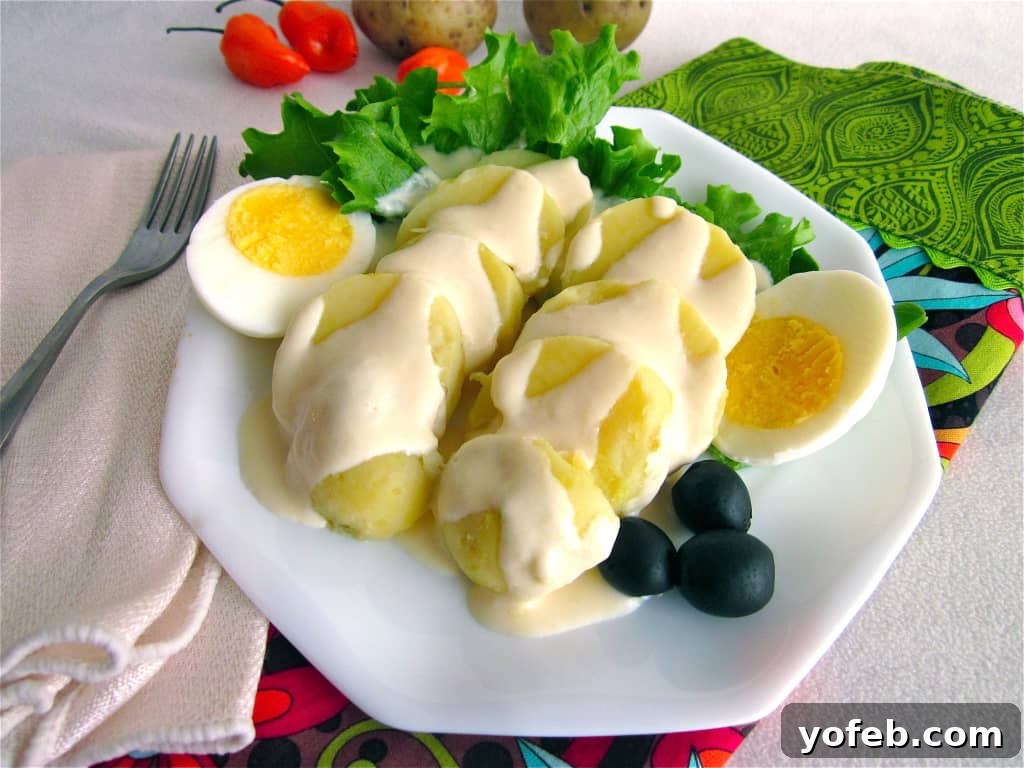
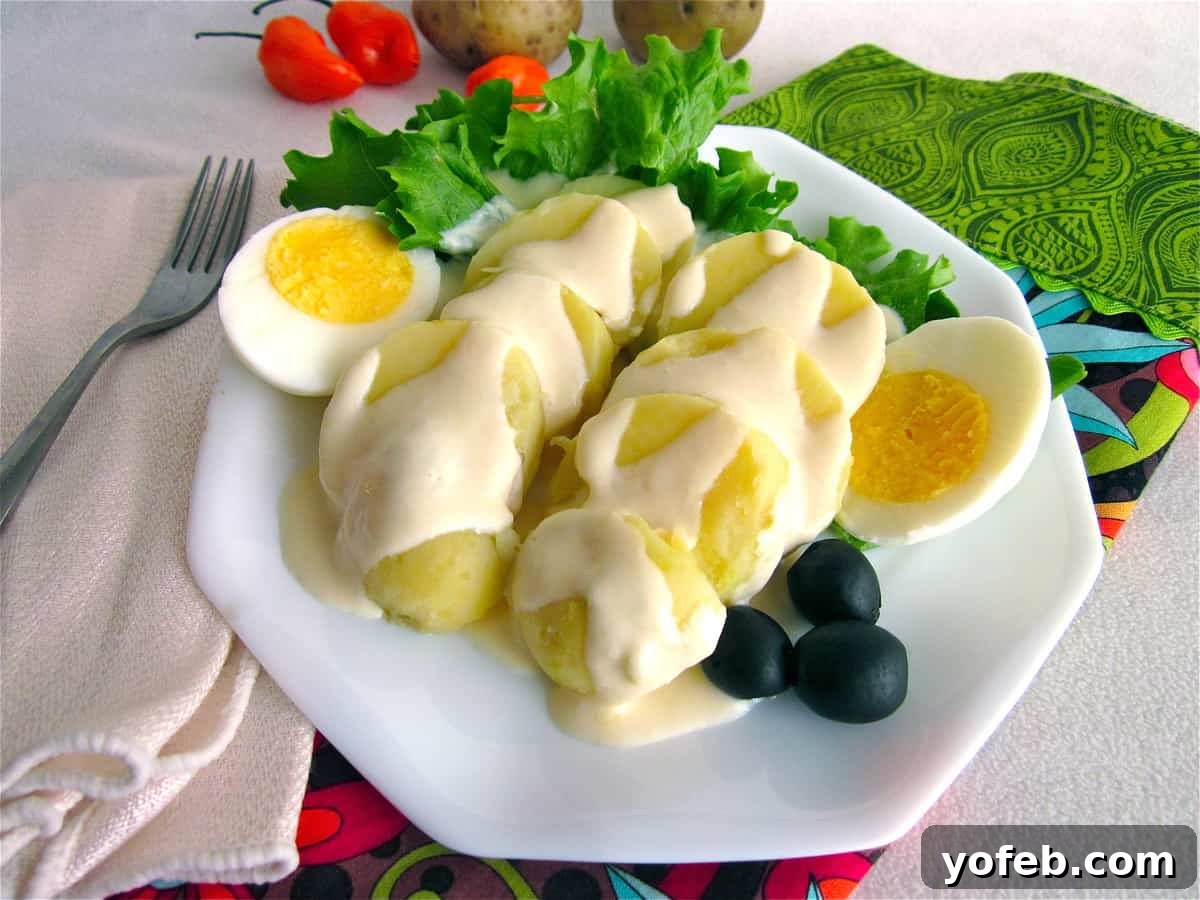
Among the pantheon of Peruvian delights, Papa a la Huancaína stands out as an iconic and beloved staple. Though often served as an appetizer, its rich flavors and satisfying textures make it a hearty and fulfilling dish in its own right. Pronounced “pah-pah ah lah wahn-kay-ee-nah,” its name translates to “Huancayo-style potatoes,” honoring Huancayo, the vibrant city in the central Peruvian Andes where this culinary masterpiece originated. This dish is a celebration of the potato, a crop with thousands of varieties native to Peru, elevated by an exquisite, creamy, and mildly spicy cheese sauce.
The secret to the sauce’s distinctive flavor and sunny yellow hue lies in aji amarillo, a specific type of yellow chili pepper that is utterly ubiquitous in Peruvian cooking. This pepper is not merely about heat; it possesses a unique fruity, subtly sweet, and complex flavor profile that is indispensable to authentic Peruvian dishes. From stews to ceviches, aji amarillo is truly put in everything, infusing the cuisine with its signature warmth and depth. My nose often ran when enjoying the delicious spiciness, sometimes necessitating an entire roll of toilet paper at the table – a small price to pay for such incredible flavor!
While fresh aji amarillo can be challenging to find outside of specialty Latin American markets or online, its distinctive flavor can sometimes be approximated. In its absence, I’ve successfully substituted habañero peppers, although it’s important to note that habañeros offer a different kind of heat and a less fruity aroma. You can also look for frozen aji amarillo paste or whole peppers, which are often available in well-stocked ethnic grocery stores. This recipe, using habañeros, offers a balanced level of heat; if you prefer a fiery kick, feel free to increase the pepper quantity.
A Versatile Delight: The versatility of Papa a la Huancaína sauce extends far beyond its traditional potato pairing. I once served the leftover sauce and potatoes with grilled chicken and a side of peas, and it was an absolute winner, proving that this creamy, spicy concoction is a fantastic complement to various meats and vegetables.
Papa a la Huancaína Recipe
Source: Peru Delights
Ingredients:
- 6 large Yukon Gold potatoes, boiled whole until tender, then peeled by hand
- 5-6 habañero peppers (or 3-4 aji amarillo if available), seeded and de-ribbed
- Water and salt, for boiling peppers
- 1 cup evaporated milk (whole milk can also be used for a slightly lighter consistency)
- ¼ cup vegetable oil (or neutral oil like canola)
- 4 saltine crackers (optional, for thickening; alternatively, use 1/4 cup panko bread crumbs for a similar effect)
- 8 ounces queso fresco, crumbled (or a mild, crumbly feta as an alternative if queso fresco is unavailable)
- Salt to taste; start with 1/8 teaspoon and adjust
- 3 large hard-boiled eggs, peeled and halved
- Fresh crisp lettuce leaves (such as Romaine or butter lettuce)
- Black olives, for garnish
Instructions:
- Prepare the Habañeros: Carefully halve the habañero peppers and meticulously remove all seeds and white membranes. This is crucial for controlling the heat level. Bring a small pot of salted water to a boil, add the prepared peppers, and boil for approximately 15 minutes. Drain the peppers thoroughly. While the original recipe suggests the skin will be easy to remove, this can sometimes be challenging. For best results and safety, wear gloves. To peel, gently scrape the inner flesh of the pepper away from the skin using the back of a sharp knife. This step helps in achieving a smoother sauce and reduces bitterness.
- Make the Sauce: Place the peeled pepper flesh into a blender or food processor. Add the vegetable oil, evaporated milk, saltine crackers (or panko), crumbled queso fresco, and initial 1/8 teaspoon of salt. Process the mixture until it is completely smooth and creamy. You may need to pause and scrape down the sides of the blender to ensure everything is incorporated. Taste and adjust salt as needed. If the sauce is too thick, add a little more milk; if too thin, a few more crackers can help.
- Prepare the Potatoes: While the sauce is being made, ensure your potatoes are boiled and peeled. Boiling them whole helps prevent them from becoming waterlogged. Once cool enough to handle, peel them gently. Slice the boiled potatoes into thick, uniform rounds.
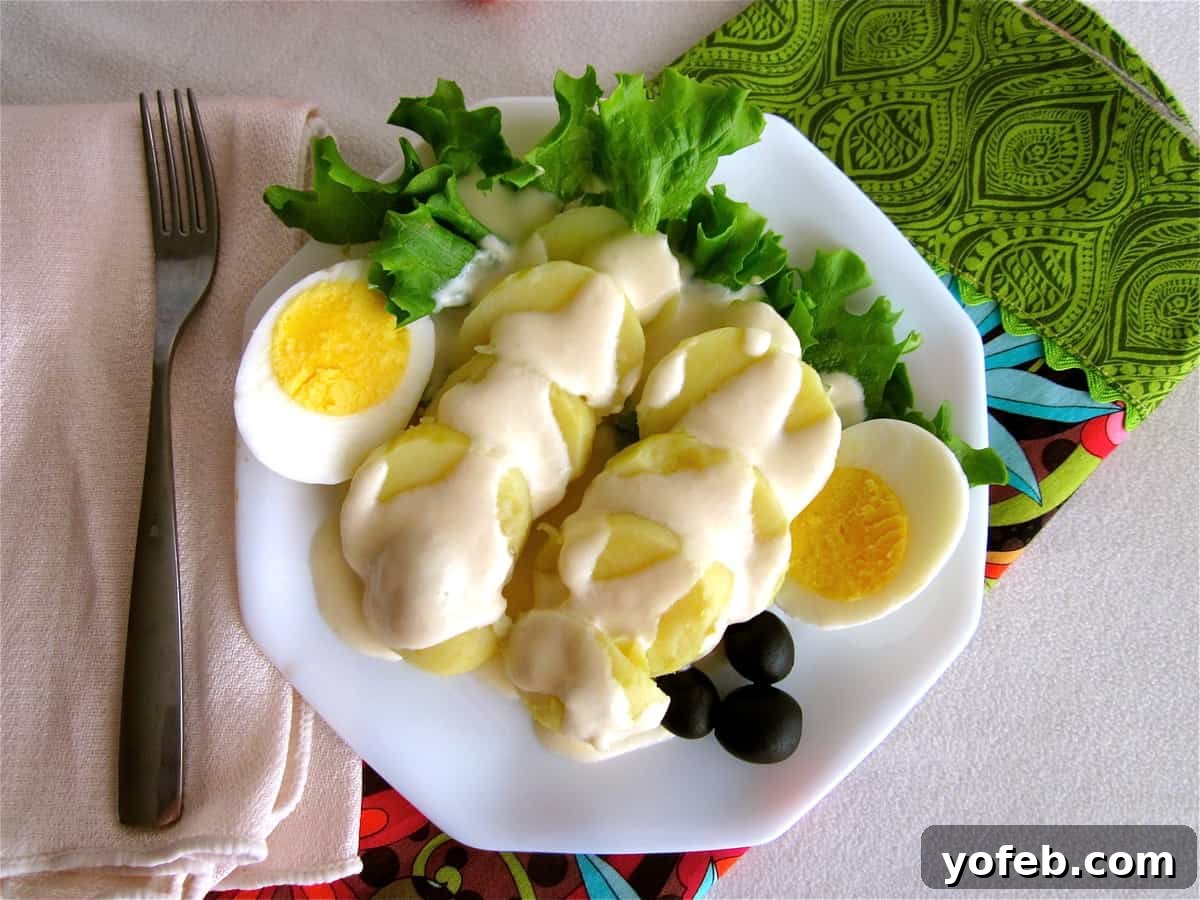
- Assemble the Dish: Arrange the fresh lettuce leaves on a serving plate or individual plates, creating a vibrant green base. Neatly layer the sliced potatoes on top of the lettuce.
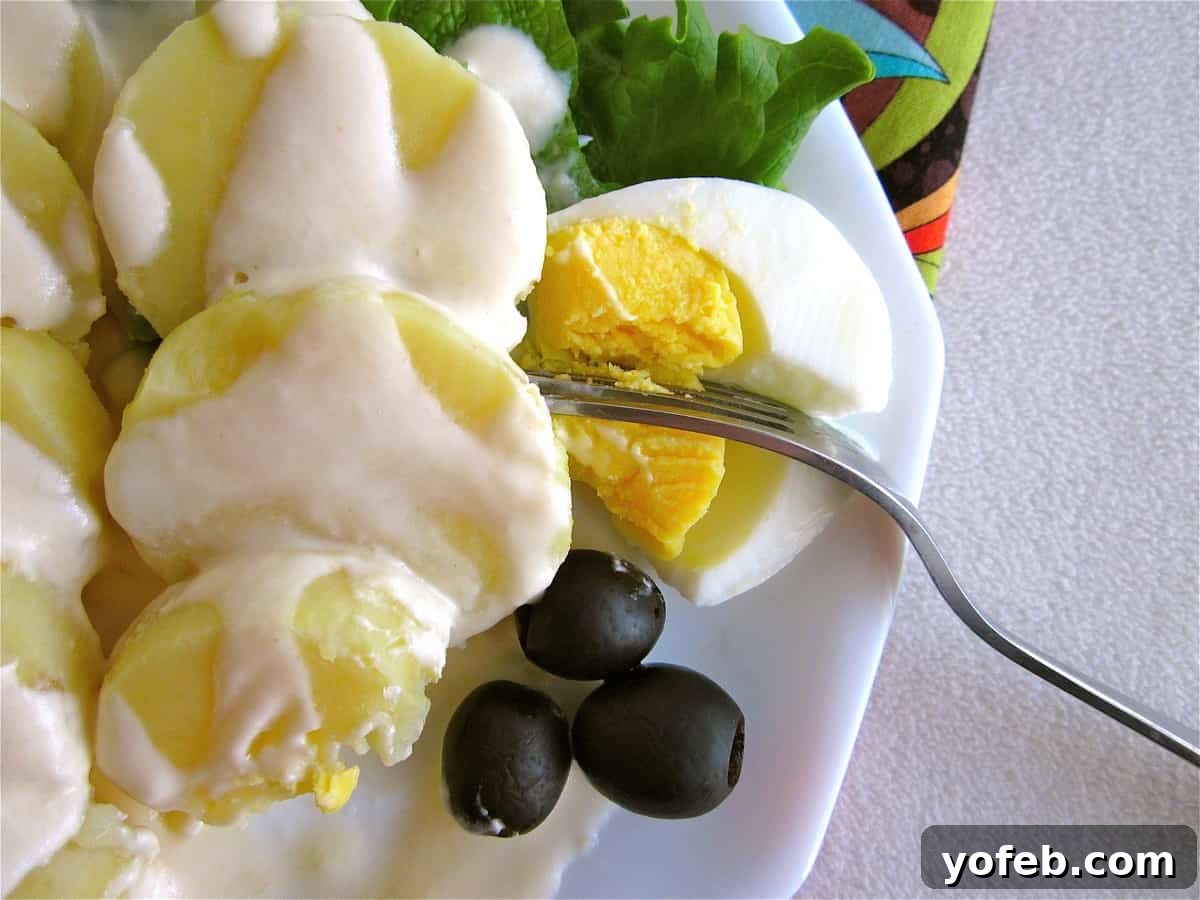
- Serve: Generously drizzle the creamy Huancaína sauce over the layered potatoes. Garnish the dish with the halved hard-boiled eggs and a scattering of black olives. Traditionally, Papa a la Huancaína is served cold, making it a refreshing appetizer, but many, including myself, find it equally delicious served at room temperature or even slightly warm.
Chef’s Tips for Success:
- Potato Choice: Yukon Gold potatoes are excellent for this dish due to their creamy texture and relatively thin skin. You can also use red or white potatoes.
- Spice Level: If you’re sensitive to heat, start with fewer habañeros or remove more of the membranes. For a truly authentic flavor, seeking out aji amarillo paste is highly recommended.
- Consistency: The sauce should be thick enough to coat the back of a spoon but still pourable. Adjust with milk or crackers as necessary to achieve your desired consistency.
- Serving Variations: Beyond being a classic appetizer, Papa a la Huancaína sauce makes a fantastic dip for crudités, a topping for grilled chicken or fish, or even a unique sauce for pasta. Don’t let any go to waste!
Embrace the Peruvian Culinary Journey
My summer in Peru was more than just an internship; it was a deep dive into a culture rich with history, warmth, and, most notably, extraordinary food. From discovering the true potential of a beet to navigating the cultural intricacies of cuy, and finally mastering the art of Papa a la Huancaína, every meal was an education. Peruvian cuisine is a sensory feast, a vibrant tapestry woven with the threads of diverse ingredients and ancient traditions. I encourage you to embark on your own culinary adventure, whether it’s through travel or by bringing the flavors of Peru into your own kitchen with this authentic Papa a la Huancaína recipe. Prepare to be delighted, surprised, and utterly captivated by the magic of Peruvian food.