

Unlock a world of rich flavors and culinary possibilities by transforming your Thanksgiving turkey carcass into a deeply satisfying homemade turkey stock. This comprehensive guide will walk you through the effortless process of creating a golden, aromatic turkey bone broth using ingredients you likely already have on hand. Beyond just a simple soup base, this flavorful stock is a versatile staple that elevates any dish, from gravies and stuffings to risottos and stews. Discover how easy it is to make and store this essential kitchen ingredient, ensuring you savor every last bit of your holiday feast.

Table of Contents
- The Magic of Homemade Turkey Stock
- Ingredients for Turkey Bone Broth
- How to Make Turkey Stock: Step-by-Step
- Slow Cooker Turkey Stock Method
- Turkey Bone Broth FAQs
- How to Use Turkey Bone Broth
- How to Store Turkey Broth
- Other Stock and Broth Recipes You Will Like
The Magic of Homemade Turkey Stock
Thanksgiving is a time for feasting, family, and creating cherished memories. But when the last slice of turkey is served and the plates are cleared, there’s often one valuable component left behind: the turkey carcass. Instead of discarding it, transform these humble bones into a culinary treasure – homemade turkey stock. This golden liquid is far superior to any store-bought version, offering a depth of flavor that will elevate all your post-holiday meals.
Making your own turkey stock is incredibly rewarding and surprisingly simple. It’s a sustainable practice that minimizes waste and maximizes flavor, ensuring you get every last bit of goodness from your festive bird. The process is mostly hands-off, requiring minimal effort but yielding maximum aroma and taste. Imagine the rich, savory foundation this stock will provide for hearty soups, silky gravies, and delicious casseroles. It’s an essential building block for comfort food, and once you try it, you’ll wonder why you ever bought canned broth.
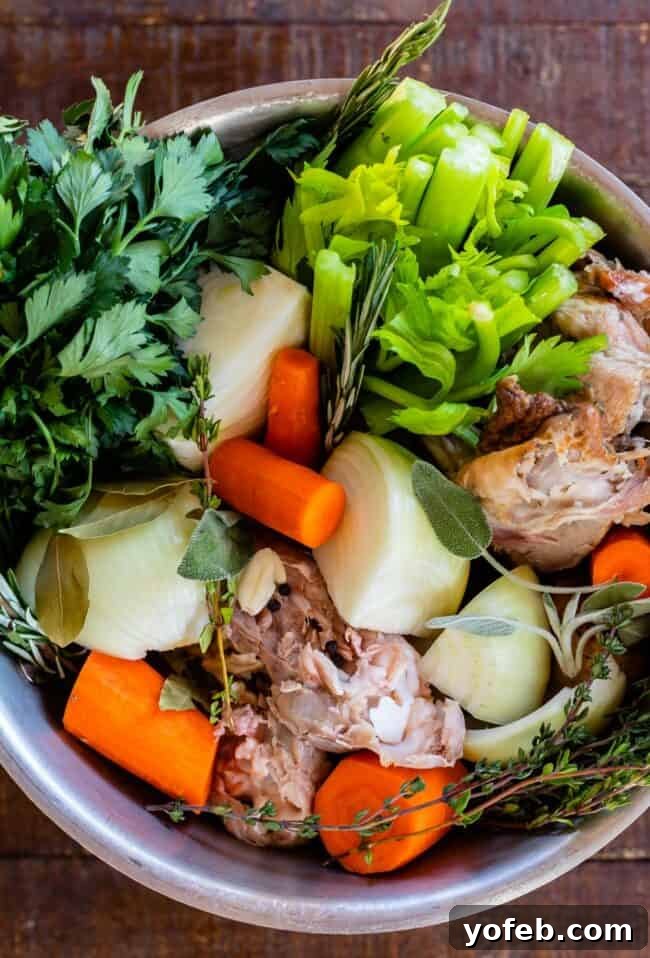
Essential Ingredients for Rich Turkey Bone Broth
Creating a truly exceptional turkey stock relies on a few key components, many of which you’ll likely have leftover from your Thanksgiving meal preparation. This recipe is flexible, so don’t worry if you’re missing an item or two – the core elements are what truly matter. For detailed measurements, please refer to the recipe card below.
- Turkey Carcass: The star of the show! A picked-over carcass from a 12-15 pound turkey is ideal. Don’t worry about a few bits of meat clinging to the bones; they’ll add extra flavor.
- Turkey Neck & Giblets: If you have them (often included with the turkey), these add a significant boost to the flavor and richness of your stock.
- Leftover Turkey Drippings: Any pan drippings from roasting your turkey will infuse the stock with an incredible savory depth.
- Onion: A whole onion, peeled and quartered, provides a foundational aromatic base.
- Garlic: A few smashed cloves of garlic contribute a warm, pungent note that complements the turkey.
- Carrots: Large carrots, scrubbed and roughly chopped, add sweetness and color.
- Celery: About a third of a head, including the leaves, offers a distinct earthy flavor that is crucial for a balanced stock.
- Fresh Parsley: A generous bunch provides fresh, herbaceous notes.
- Fresh Sage, Rosemary, and Thyme: These classic poultry herbs are essential for that signature Thanksgiving flavor. Feel free to adjust quantities to your preference.
- Bay Leaves: A few dried bay leaves add a subtle, savory depth.
- Whole Peppercorns: Instead of ground pepper, whole peppercorns provide a gentle, even heat without clouding the stock.
- Water: The liquid base for extracting all those wonderful flavors.
Pro Tip: Don’t discard your vegetable scraps from Thanksgiving dinner! Onion peels, carrot ends, and celery trimmings can all be saved and added to your stockpot for extra flavor and zero waste.
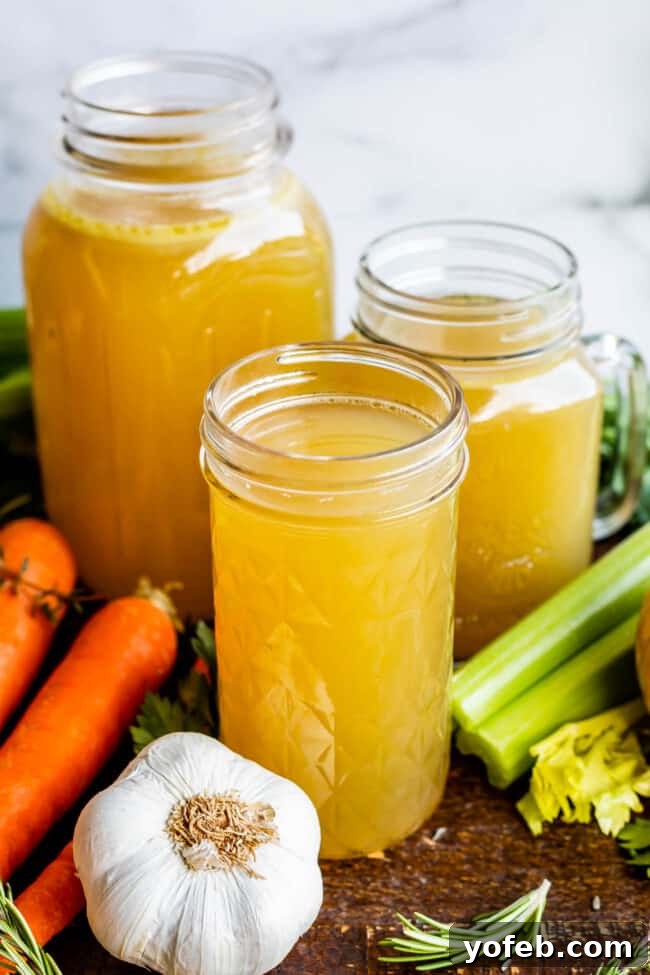
How to Make Turkey Stock: Step-by-Step
Crafting homemade turkey stock is a therapeutic and aromatic endeavor, especially after the hustle and bustle of Thanksgiving dinner. It’s a low-maintenance process that allows you to relax while your kitchen fills with an irresistible savory scent. Follow these simple steps to create a rich, flavorful stock you’ll want to make year after year.
Step 1: Prepare the Turkey Carcass and Parts
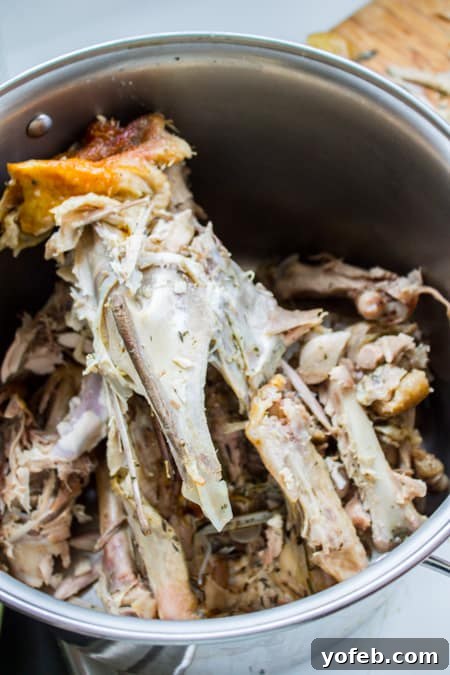
Begin by placing your picked-over turkey carcass into the largest stockpot you own (a 6-quart capacity or larger is ideal). If your carcass is too large, you may need to break it down into smaller pieces to fit. Add any turkey neck, giblets (excluding the liver, which can make the stock bitter), skin, or leftover turkey drippings you have. These additional parts will significantly enhance the depth of flavor. While a little meat on the bones is fine, note that it will become tough after simmering and is not intended for eating.
Step 2: Add Aromatics and Herbs
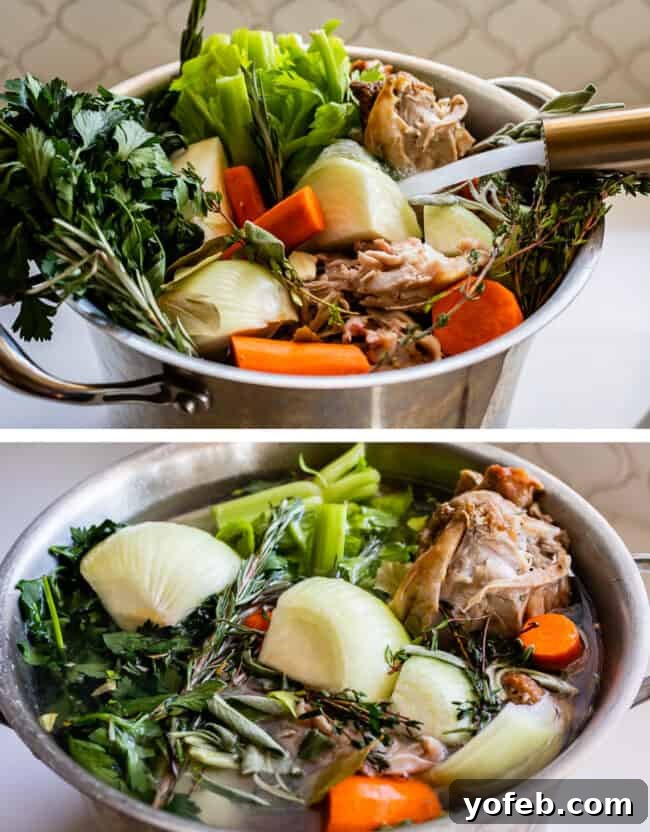
Next, add your roughly chopped vegetables and fresh herbs. This includes quartered onion, chopped carrots (scrubbed or peeled), smashed garlic cloves, and several stalks of celery (including the leaves for extra flavor). Then, incorporate a generous bunch of fresh parsley, about half a bunch of sage, 3-4 sprigs of fresh rosemary, and approximately 5 sprigs of fresh thyme. Lightly tear or bruise the herbs to help them release their aromatic oils more effectively. Finish by adding 3 bay leaves and 8-10 whole peppercorns. Remember, there’s no need for extreme precision here; the goal is a harmonious blend of flavors.
Step 3: Cover with Water
Pour about 4 quarts of cold water over the turkey carcass and vegetables in the pot. Ensure everything is mostly submerged; if some parts are still sticking out, it’s generally fine, but add more water if needed to cover the majority of the ingredients. Using cold water allows for a slower extraction of flavors from the bones and vegetables, resulting in a clearer, richer stock.
Step 4: Simmer Slowly for Flavor Extraction
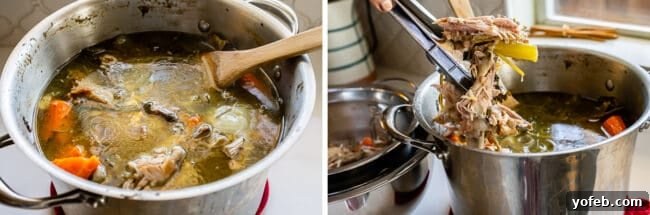
Bring the pot to a rolling boil over high heat. Once it reaches a vigorous boil, immediately reduce the heat to just below medium, or to a setting where you can maintain a very gentle simmer. The liquid should have small, lazy bubbles and a slight, continuous movement, but it should not be actively boiling. This slow simmer is crucial for extracting maximum flavor from the bones and vegetables without emulsifying fats or creating a cloudy stock. Simmer for a minimum of 2 hours, and up to 4 hours for an incredibly rich, concentrated stock. During this time, periodically skim off any foam or impurities that rise to the surface to keep your stock clear and pure. If the water level drops significantly and the bones begin to be exposed, add more hot water to ensure everything remains submerged and continues to infuse.
Step 5: Strain the Stock
Once the simmering is complete, carefully remove the large pieces of turkey carcass and vegetables from the pot using tongs or a slotted spoon. Then, pour the entire contents of the pot through a fine-mesh colander or sieve into a large heat-proof bowl or another clean pot. For an even clearer stock, you can line the colander with cheesecloth. Discard all the solids; their work is done!

Step 6: Separate the Fat (Optional but Recommended)
For a leaner stock, separate the fat. You can do this immediately using a gravy fat separator. Alternatively, allow the stock to cool completely, then refrigerate it. The fat will solidify on the surface, making it easy to skim off with a spoon. You can discard the fat or reserve it for other cooking purposes, like sautéing vegetables.
Slow Cooker Turkey Stock Method
For an even more hands-off approach, your slow cooker is a fantastic tool for making turkey stock. This method is perfect for simmering overnight or while you’re away, ensuring a rich, deeply flavored broth with minimal supervision.
Simply add all the ingredients—the turkey carcass and other parts, chopped vegetables, and herbs—to a large crock pot. Cover everything with water. Set your slow cooker to the “low” setting and let it simmer for 10-12 hours. The low, consistent heat of the slow cooker is ideal for extracting all the goodness from the bones and aromatics. Once done, proceed with straining the stock as described in Step 5 above. It’s truly that easy!
Turkey Bone Broth FAQs
While a long simmer time (up to 4-5 hours) is beneficial for extracting flavor and collagen, high heat can indeed “overcook” your stock. Maintaining a gentle simmer is key. A rapid, aggressive boil can cause the stock to become cloudy, break down delicate flavors from your herbs, and emulsify fats and solids into the liquid, making it difficult to achieve a smooth, clean texture. Always aim for a low, steady simmer to ensure the best results.
The terms “broth” and “stock” are often used interchangeably, but traditionally, there are subtle distinctions:
Stock is:
– Primarily made from bones (often roasted for deeper flavor).
– Characterized by its gelatinous texture when cooled due to collagen extracted from the bones, which adds body and mouthfeel.
– Typically left unseasoned with salt, allowing for greater versatility in recipes.
– Cooked for a longer duration, usually 3-6 hours or more, to fully extract flavor and collagen.
Broth is:
– Can be made from meat, or a combination of meat and bones.
– Usually seasoned with salt and other spices during cooking.
– Generally cooked for a shorter period, often less than 2 hours.
– Tends to be lighter in body and flavor compared to stock.
Our recipe yields a true “stock” due to its focus on bones and longer simmer time, often resulting in a noticeable gel when chilled.
Absolutely! The good news is that you can almost always use stock and broth interchangeably in recipes. Stock generally offers a richer, deeper flavor profile and more body due to the collagen. When substituting stock for broth, especially homemade unseasoned stock, remember to taste your final dish and adjust the salt levels accordingly. Since homemade stock is typically unsalted, you’ll have more control over the seasoning of your meal.
Both methods produce excellent results, but they offer different advantages. The stovetop method allows for quicker temperature adjustments and faster extraction of flavor (2-4 hours). The slow cooker method is incredibly convenient for a truly hands-off approach, requiring minimal supervision and allowing for longer cooking times (10-12 hours on low), which can lead to a deeper flavor and more collagen extraction. Choose the method that best fits your schedule and comfort level.
Roasting your turkey carcass and any additional bones (like neck and giblets) before simmering is an optional step that can add an even deeper, more complex, and richer flavor to your stock. This process caramelizes the bones and any residual meat, creating roasted notes that translate beautifully into the finished stock. Simply roast the bones at 400°F (200°C) for 30-45 minutes until nicely browned before adding them to your stockpot with the vegetables and water.
Versatile Ways to Use Your Homemade Turkey Bone Broth
Homemade turkey stock is a culinary superpower in your kitchen! Its rich, deep flavor makes it incredibly versatile, suitable for countless recipes. You can confidently use it in any dish that calls for chicken broth, and often, the turkey stock will provide an even more robust and satisfying taste. It’s particularly fantastic for utilizing leftover turkey meat from your Thanksgiving feast.
Soups that you can use this turkey stock to make:
The most obvious, and perhaps most delicious, application for turkey stock is in soups. Its full-bodied flavor creates a comforting base for a variety of creations:
- Creamy Turkey Wild Rice Soup: A new favorite! Replace chicken broth with your rich turkey stock for an unparalleled depth of flavor.
- Turkey Barley Soup (Slow Cooker): An ideal way to use up those Thanksgiving leftovers, made even better with homemade stock.
- Creamy Enchilada Soup: Enhance the savory notes by swapping chicken broth for turkey stock.
- Classic Turkey Noodle Soup: A comforting classic, elevated by the robust flavor of your homemade turkey stock.
- Roasted Butternut Squash Soup: Turkey stock adds a savory balance to the sweet earthiness of butternut squash.
- Ham Mac and Cheese Soup: A unique and hearty soup where turkey stock can add an extra layer of savory goodness.
- Simple Asparagus Soup: Use turkey stock for a more complex base that complements the delicate flavor of asparagus.
- Slow Cooker Chicken, White Bean and Kale Soup: (Stovetop version available) A nutritious and flavorful option perfect with turkey stock.
Beyond Soups: Don’t limit your turkey stock to just soup bowls! Here are more creative ways to integrate this liquid gold into your cooking:
- Gravies and Sauces: Use it as the base for the most incredible gravy you’ve ever made. It’s also perfect for pan sauces or reductions to serve with roasted meats.
- Risotto and Grains: Replace water or other broths when cooking rice, quinoa, or couscous for a richer, more flavorful side dish. It’s especially good for mushroom or leftover turkey risotto.
- Stuffing and Dressings: Moisten your holiday stuffing or everyday bread puddings with turkey stock for an unbeatable savory boost.
- Braising Liquids: Use it to braise leftover turkey pieces, vegetables, or other meats, infusing them with savory goodness.
- Cooking Vegetables: Steam or boil vegetables in turkey stock for added flavor, turning simple sides into something special.
- Pan Roasts and Casseroles: Add a splash of stock to your favorite casseroles or pan roasts to keep them moist and flavorful.
How to Store Your Homemade Turkey Broth
Proper storage is essential to enjoy your homemade turkey stock for weeks or months to come. After all the effort you put into making it, you want to ensure its freshness and flavor are preserved.
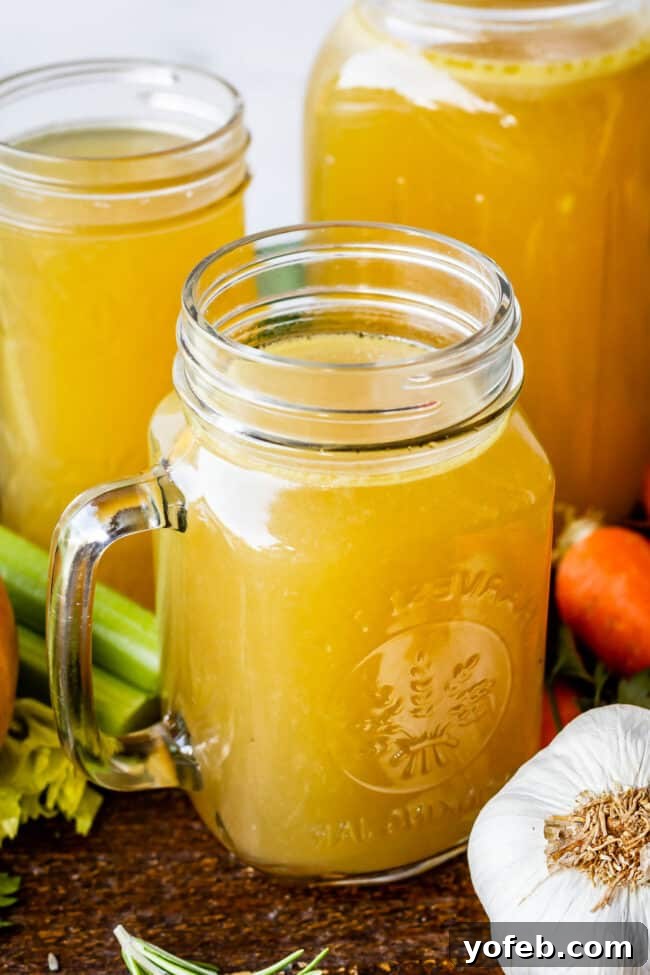
Refrigeration: Once your turkey stock has completely cooled, transfer it to airtight containers. Glass mason jars are an excellent choice for refrigerator storage. Properly sealed, homemade turkey stock will keep fresh for 3-4 days in the refrigerator. Always ensure the stock is cool before sealing and refrigerating to prevent bacterial growth and potential pressure buildup in containers.
Freezing: Turkey stock freezes exceptionally well, allowing you to enjoy its rich flavor long after Thanksgiving. It can be stored in the freezer for 4-6 months, or even longer if properly sealed. Here are a few tips for freezing:
- Large Ziplock Bags: For convenient, space-saving storage, pour cooled stock into quart-sized freezer-safe ziplock bags. Lay them flat on a baking sheet to freeze, then stack them vertically to save freezer space.
- Ice Cube Trays: For smaller portions, freeze stock in ice cube trays. Once frozen solid, transfer the cubes to a freezer-safe bag. This is perfect for adding a concentrated flavor boost to gravies, pan sauces, or sautéed vegetables.
- Leave Headspace: If freezing in glass jars or rigid containers, remember to leave about an inch of headspace at the top. Liquids expand when frozen, and this prevents containers from cracking.
To use frozen stock, simply thaw it in the refrigerator overnight, or add partially thawed stock directly to your hot soups and stews. This makes meal prep incredibly easy and ensures you always have a wholesome base for your culinary creations.
There you have it – a simple yet incredibly rewarding way to make the most of your Thanksgiving turkey. Transforming a humble turkey carcass into a rich, homemade stock is a testament to the adage “waste not, want not.” It’s a fundamental skill for any home cook, one that will enrich your meals and bring a deeper satisfaction to your cooking. So, next time you carve your holiday bird, remember that the feast isn’t truly over until you’ve extracted every last drop of goodness from those bones. Enjoy the depth of flavor this incredible homemade turkey stock brings to your kitchen, and get ready for a season of delicious, comforting meals!
Other Stock and Broth Recipes You Will Like
- How to Make the Best Chicken Stock from FoodieCrush
- Homemade Chicken Stock from Table for Two
- Homemade Chicken Stock Recipe from Add a Pinch
- Roasted Beef Broth from Self Proclaimed Foodie
Facebook | Pinterest | Instagram

Turkey Bone Broth

Ingredients
- 1 12-15 pound turkey carcass, picked over
- turkey neck, if you have it (it’s ok if you don’t)
- giblets, if you have them (it’s ok if you don’t)
- leftover turkey drippings, if you have them (it’s ok if you don’t)
- 1 onion, peeled and quartered
- 4 cloves of garlic, smashed
- 2 large carrots, scrubbed or peeled, chopped into thirds
- about 1/3 a head of celery, leaves included
- 1 large bunch of parsley, roughly torn or chopped
- 1/2 bunch sage, roughly torn or chopped
- 3-4 sprigs fresh rosemary
- 5 sprigs thyme
- 3 bay leaves
- 8-10 whole peppercorns
- about 4 quarts of water
Instructions
-
Place your turkey carcass into a very large stock pot (at least 6-quart capacity.) Add in your turkey neck, giblets, any skin, and leftover turkey drippings, if you have them. It’s okay if you don’t, you will still get a great turkey stock from just the carcass.
-
Add the onion, carrots, and garlic. Chop off about a third of a head of celery, the end that has the leaves preferably, but use what you have. You should have several short stalks. Add them to the pot.
-
Add a bunch of parsley, half a bunch of sage, 3-4 sprigs of rosemary, and about 5 sprigs of thyme.* Tear the herbs up a bit so they start releasing flavor faster.
-
Add 3 bay leaves and 8-10 peppercorns.
-
Cover the turkey and vegetables with about 4 quarts of water, or however much you need to submerge everything in the pot (at least mostly, some parts sticking out is okay.)
-
Bring to a rolling boil over high heat. After if has come to a rapid boil, turn the burner down to just below medium, or wherever you can maintain a low simmer. There should be gentle bubbles but nothing too active.The liquid should be gently moving at all times, not still.
-
Simmer for about 2-4 hours. See how chill this recipe is? I would say 2 hours is the minimum, 4 hours will get you a super duper rich stock. Check on it every now and then, and skim off any foam or scum that may settle on the top. If your water is boiling off too quickly and the bones start to stick out of the water, add more water to cover it up, and bring back to a simmer.
-
Pour the stock through a colander into a large bowl (or two), catching any bones or vegetables.
-
At this point I like to use a gravy fat separator to easily discard all the fat that will rise to the top. You can also just wait for the stock to cool (or refrigerate/freeze it) and skim the fat off with a spoon.
-
Allow stock to cool before moving to an airtight container and placing in the fridge or freezer. I like to use mason jars if you plan to store in the fridge, or quart size ziplocks if you plan to freeze.
-
Use this turkey stock as a base for soups or anything that calls for chicken broth!
-
Stock can be stored in the fridge for up to 5 days, or in the freezer for about 3 months.
Slow Cooker Instructions:
-
Add all the ingredients to a large crock pot. Cook on low for 10-12 hours. Pick up with the recipe in step 8, when you strain it through a colander.
Notes
Makes 12-15 cups total.