
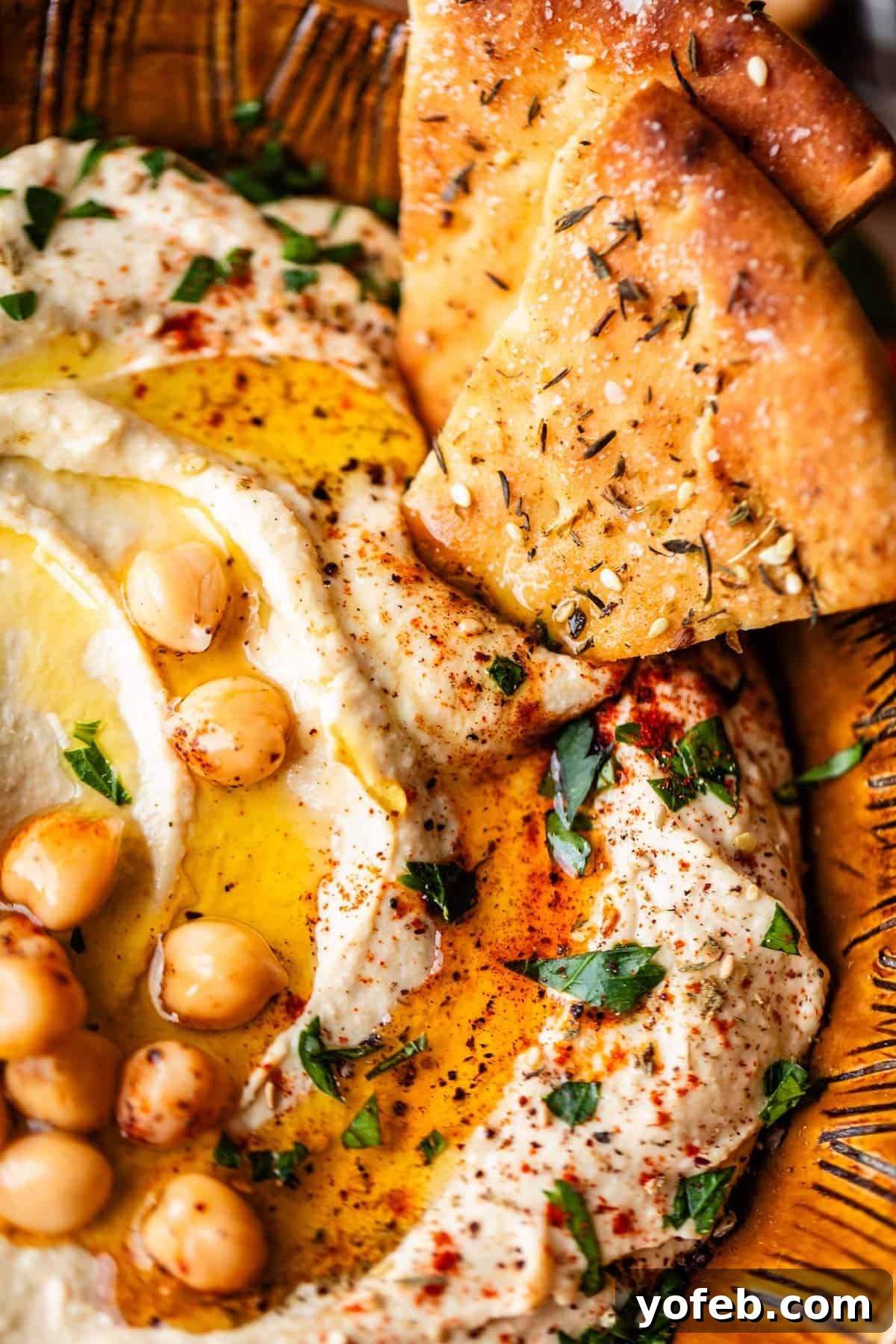
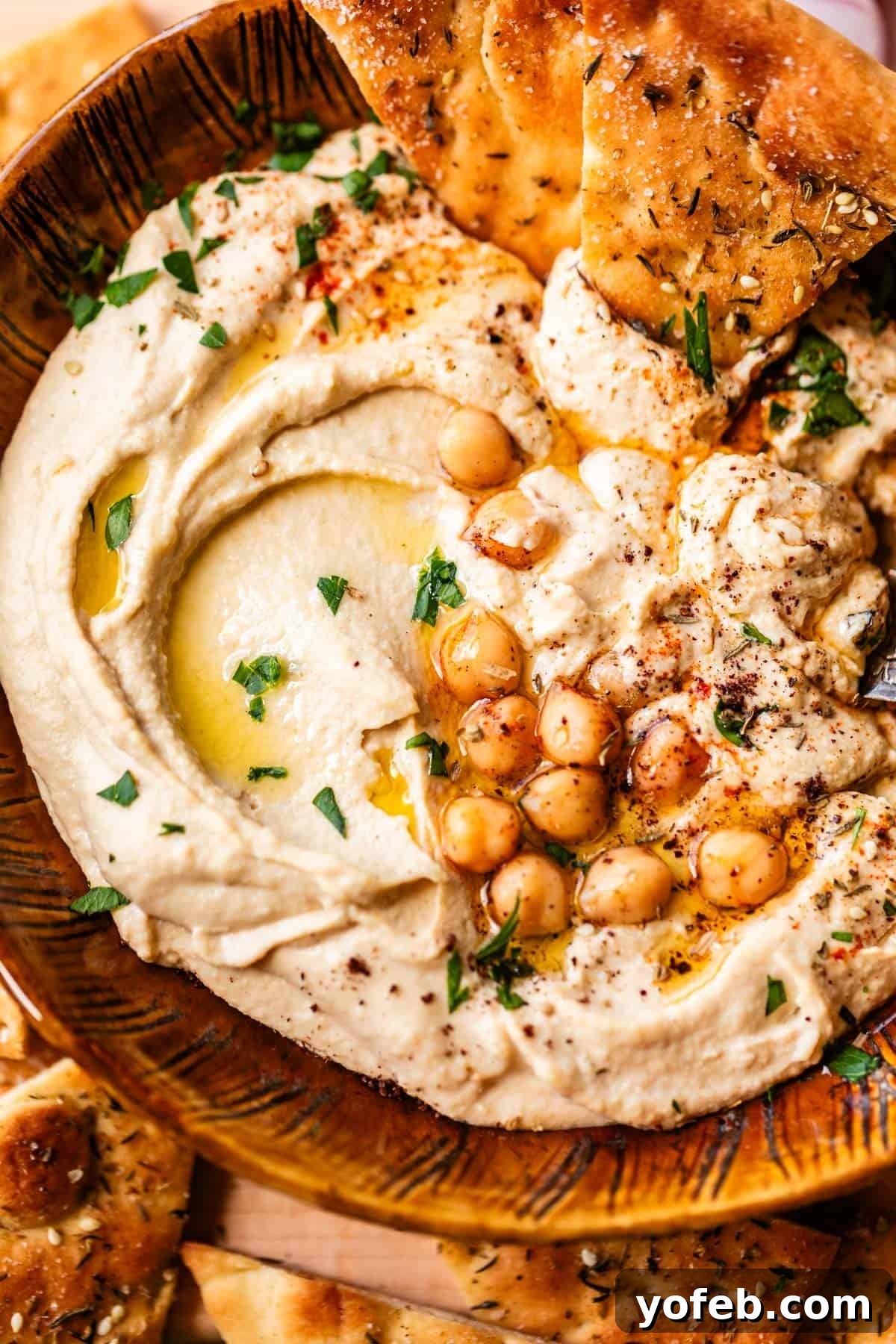
This 15-minute hummus recipe delivers bold, nutty, garlicky, lemony flavor with a silky, airy texture—no fussing with chickpea skins required. It’s perfect as an appetizer, a versatile condiment, or a sandwich spread. Serve with warm pita, grilled meats, or roasted vegetables for a crowd-pleasing addition to any meal.
Hummus has become my go-to pantry hero. I’ve been scooping it on everything lately—pita, sandwiches, roasted vegetables. Before I get to the recipe, here’s a short, funny family moment: at church my teen daughter Charlotte accidentally handed baby-touched bread back to the tray, then panicked and ate it herself. I nearly laughed out loud. Parenting is full of little, ridiculous moments like that.
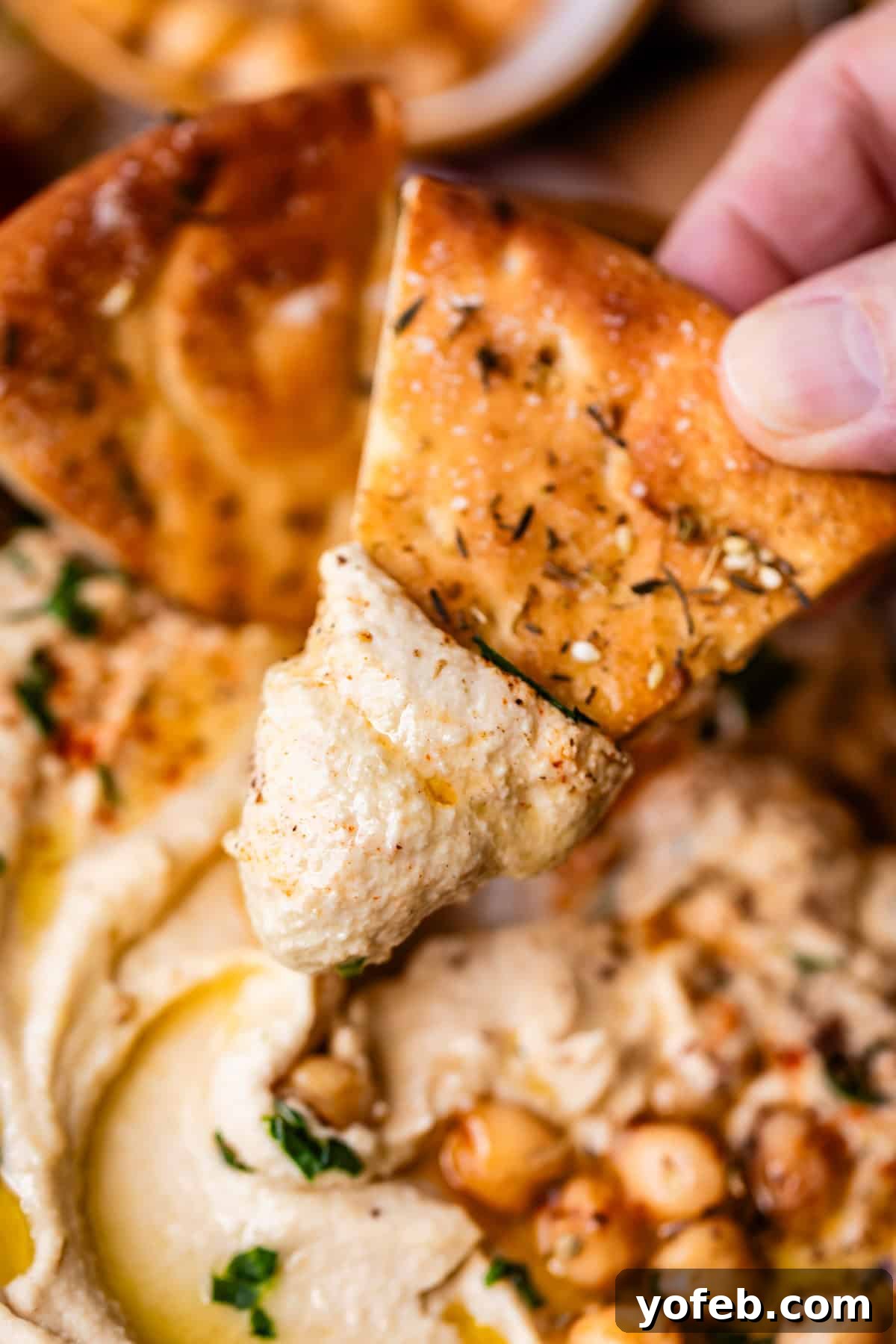
This hummus is why you should always have chickpeas in your pantry
Hummus is an easy crowd-pleaser, especially when paired with warm za’atar pita, olives, and fresh vegetables. The version here stands out for two simple reasons:
- Boiling the chickpeas with garlic deepens a rich, nutty flavor and softens the beans for better blending.
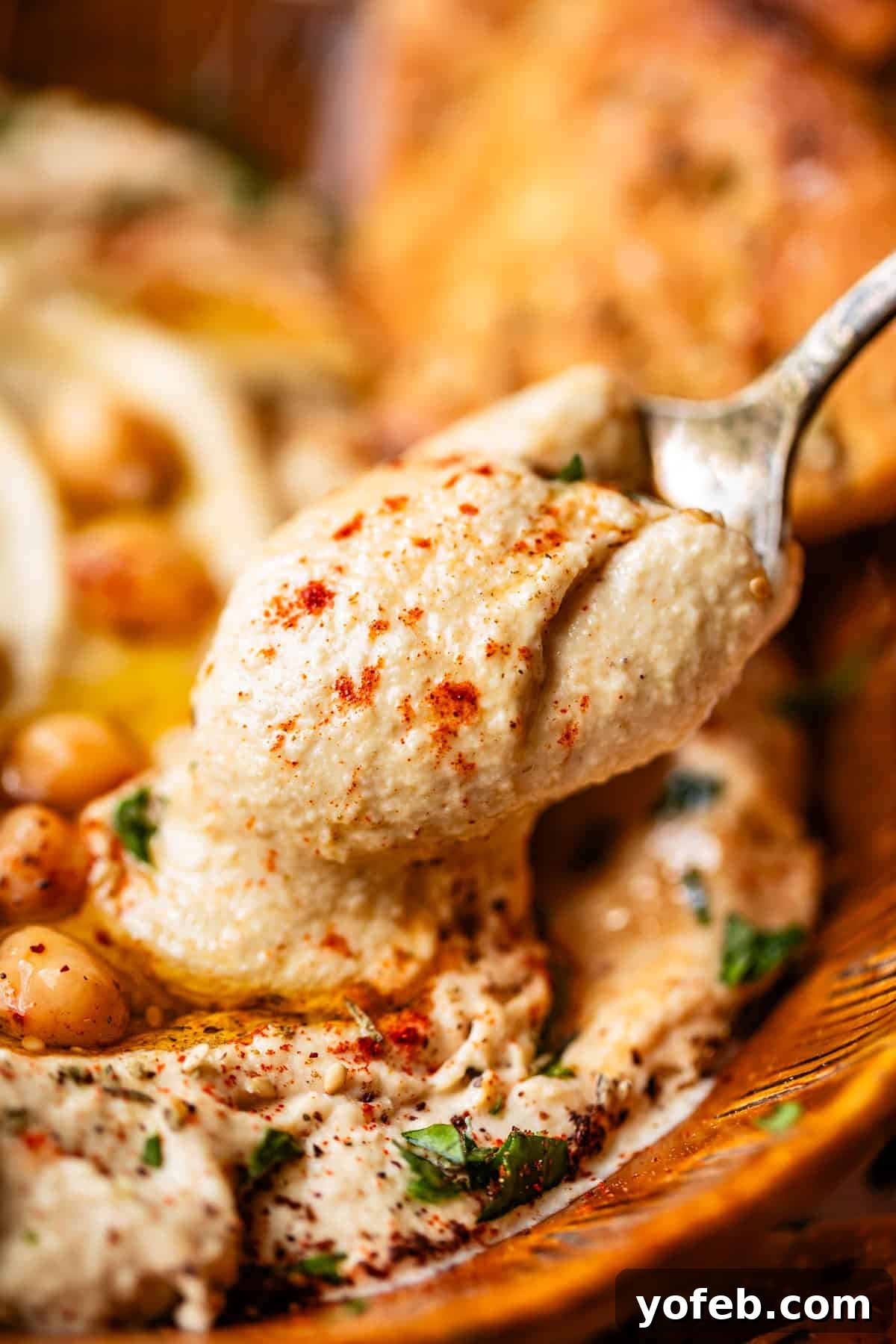
- Blending with ice aerates the mixture for a light, creamy texture—no peeling of skins needed.
Why I don’t care about perfectly smooth hummus
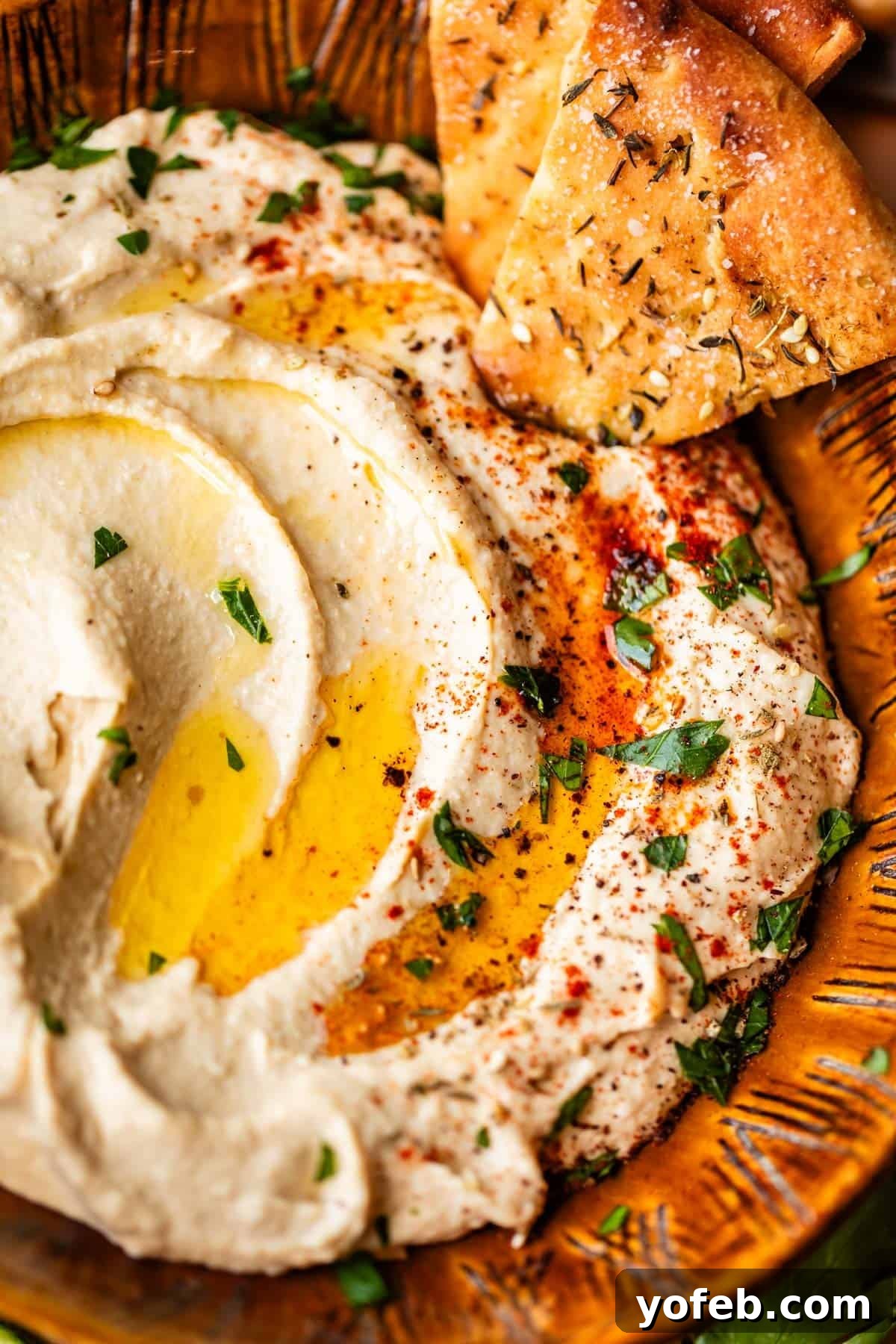
Many recipes obsess over removing every chickpea skin to reach factory-smooth hummus. That labor-intensive step isn’t necessary at home. Industrial hummus is often ultra-smooth because of specialized machinery or powerful, continuous processing. I prefer a different approach: focus on aeration and flavor instead of factory-smooth texture. The result is fluffy, light hummus with great mouthfeel—without the tedious peeling.
The best hummus is creamy and aerated
Two easy techniques transform canned chickpeas into rich, airy hummus: boiling and blending with ice. Boiling the chickpeas softens them and brings out a deeper, nuttier flavor. Adding two cloves of garlic to the pot mellows and sweetens the garlic flavor; a third fresh clove in the food processor adds brightness and bite. Finally, blending in ice traps air and cools the mixture so the oils don’t separate, producing a lighter, smoother texture.
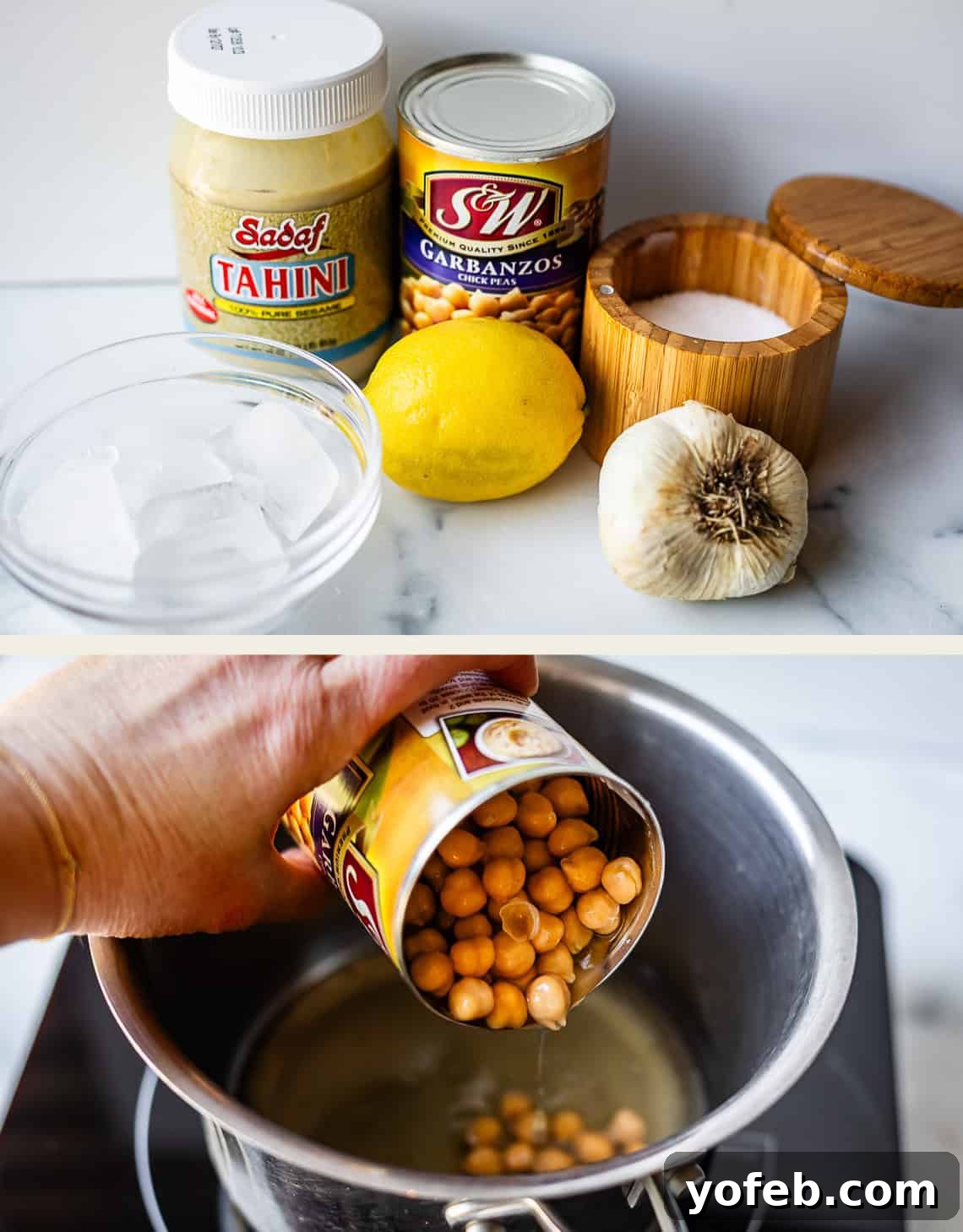
Important ingredients
This recipe uses just a handful of pantry staples (plus ice). A few key ingredients make a big difference:
- Chickpeas (garbanzo beans) are the base; jarred chickpeas can be higher quality, but canned work perfectly well.
- Tahini is sesame seed paste—an essential emulsifier that adds creaminess and a nutty note.
- Fresh lemon juice brightens and balances the richness—use fresh for best flavor.
- Ice is the secret to a fluffy, aerated hummus that stays cohesive and smooth.
How to make homemade hummus
Keep a few cans of chickpeas and a jar of tahini on hand. Tahini is shelf stable until opened and lasts a long time in the fridge.
Instructions summary:
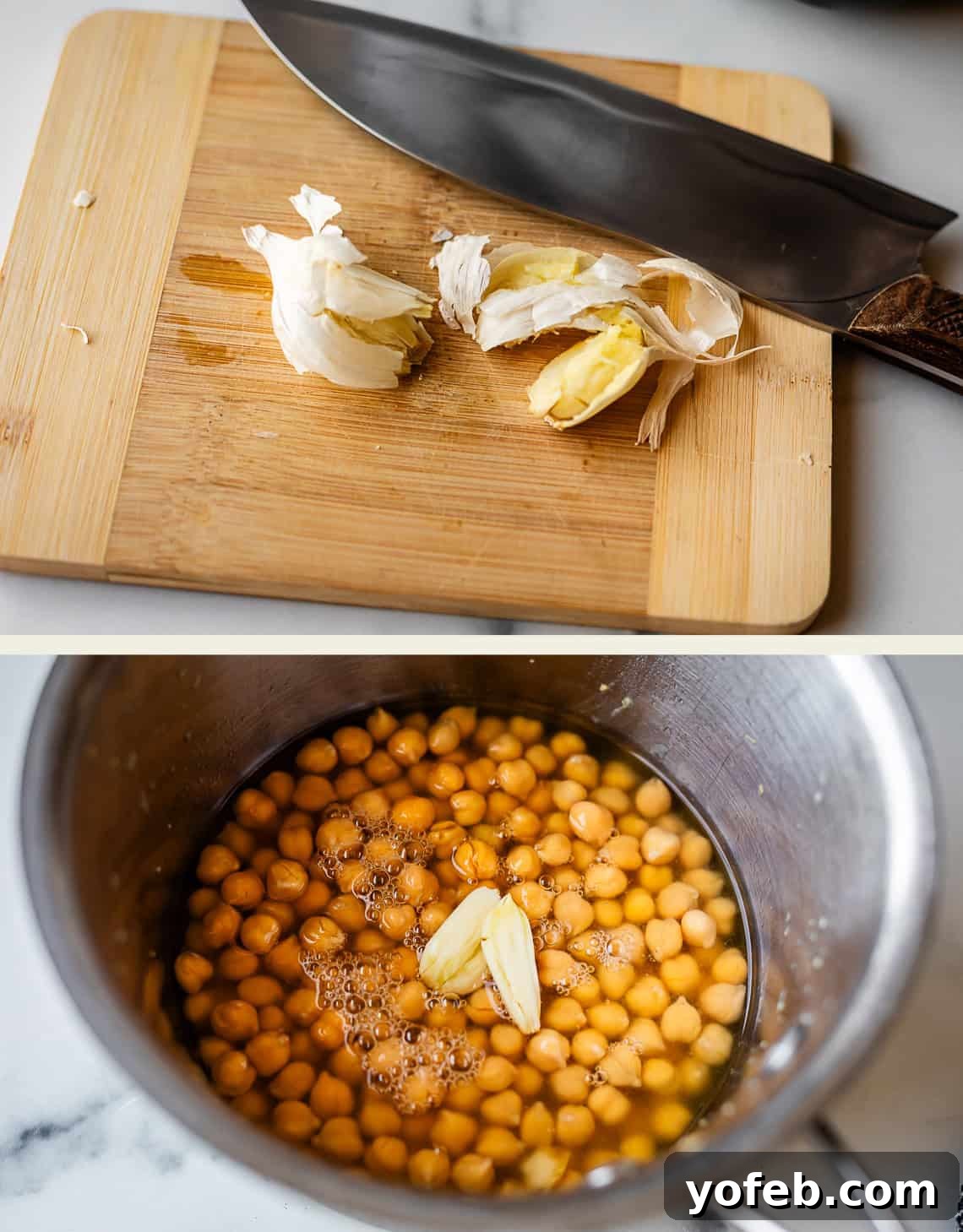
- Empty a 15-ounce can of chickpeas (including its liquid) into a small pot. Smash three garlic cloves; add two smashed cloves to the pot.
- Add about 1 cup water, bring to a boil, then simmer for 10 minutes until the chickpeas soften. The simmer deepens flavor and improves texture.
- Strain the chickpeas and garlic into a bowl, reserving a tablespoon of the cooking liquid.
- Combine chickpeas and boiled garlic in a food processor with 1 tablespoon cooking liquid, 1/2 cup well-stirred tahini, 1 fresh clove of garlic, 1/4 cup fresh lemon juice, 1 1/4 teaspoons kosher salt (or 1 tsp table salt), and a few grinds of pepper. Pulse until chunky.
- Add 2 ice cubes and blend until melted. Add one or two more cubes as needed, blending until the hummus reaches a light, fluffy, smooth consistency—be careful not to add so much ice that it becomes runny.
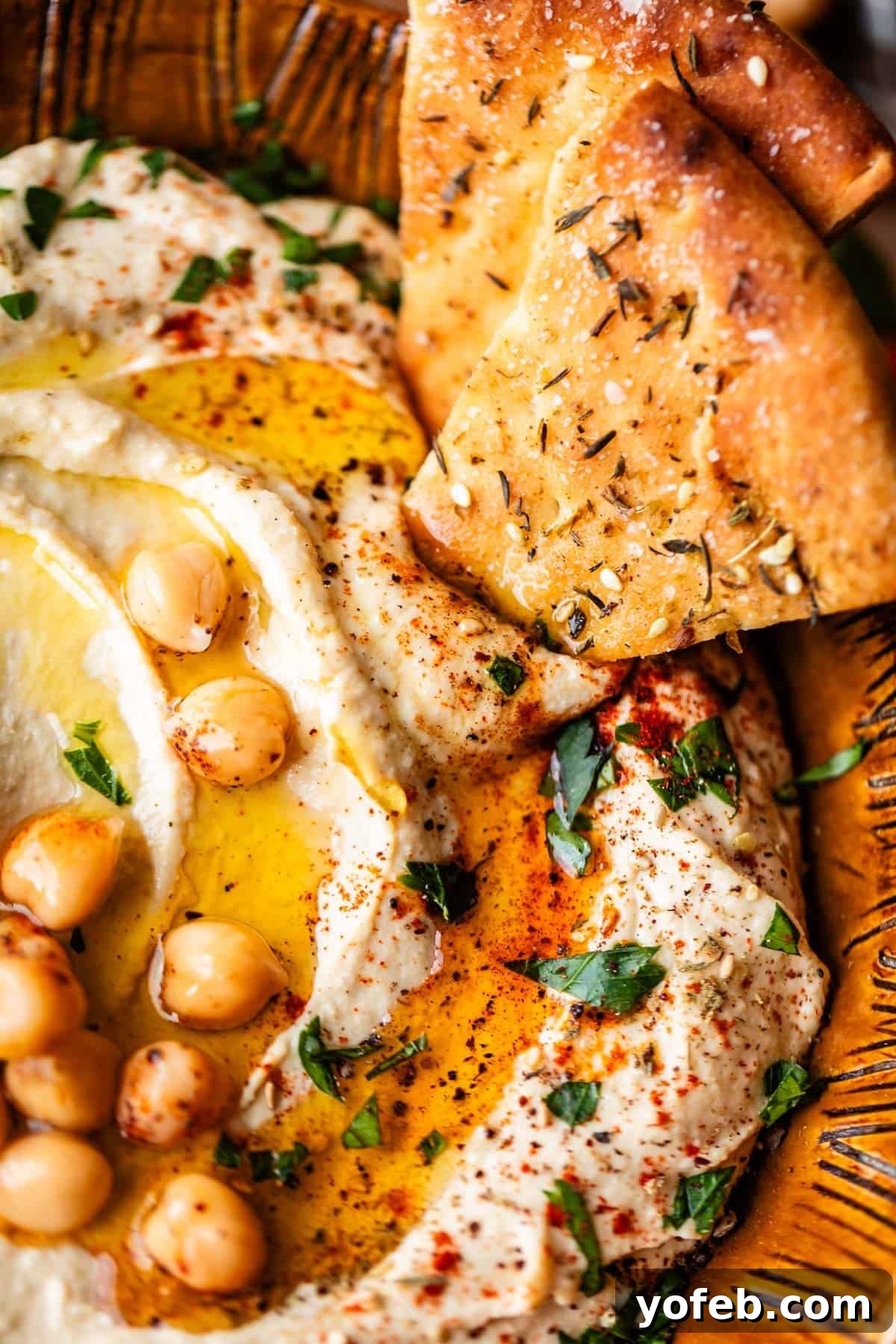
- Taste and adjust salt, lemon, or tahini to suit your preference. Transfer to a serving bowl and garnish with olive oil, extra chickpeas, parsley or dill, and a sprinkle of smoked paprika or sumac.
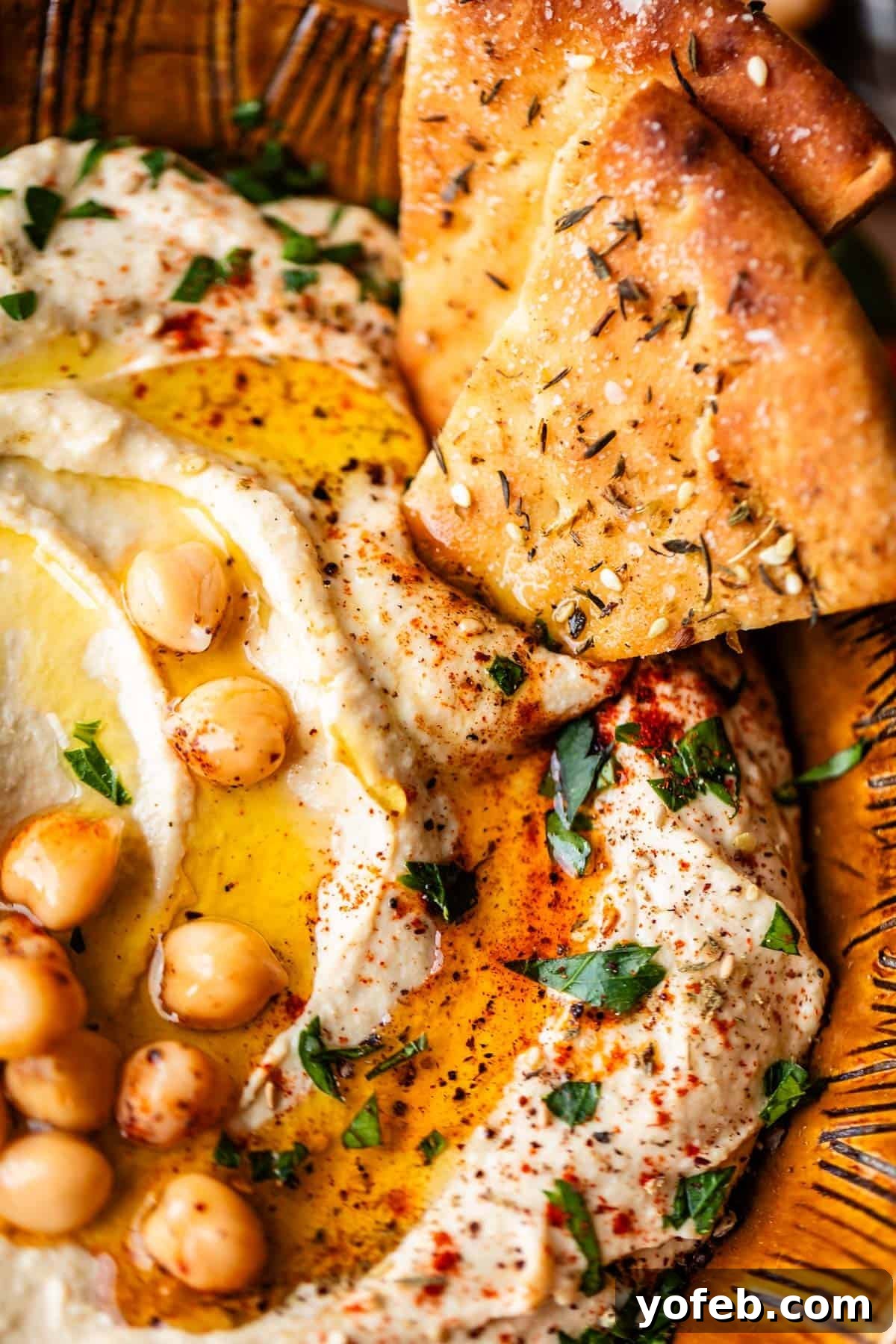
If you want to serve warm za’atar pita: brush pita with olive oil, sprinkle with kosher salt and za’atar, and bake at 350°F for 5–8 minutes until edges are crisp but centers remain tender.
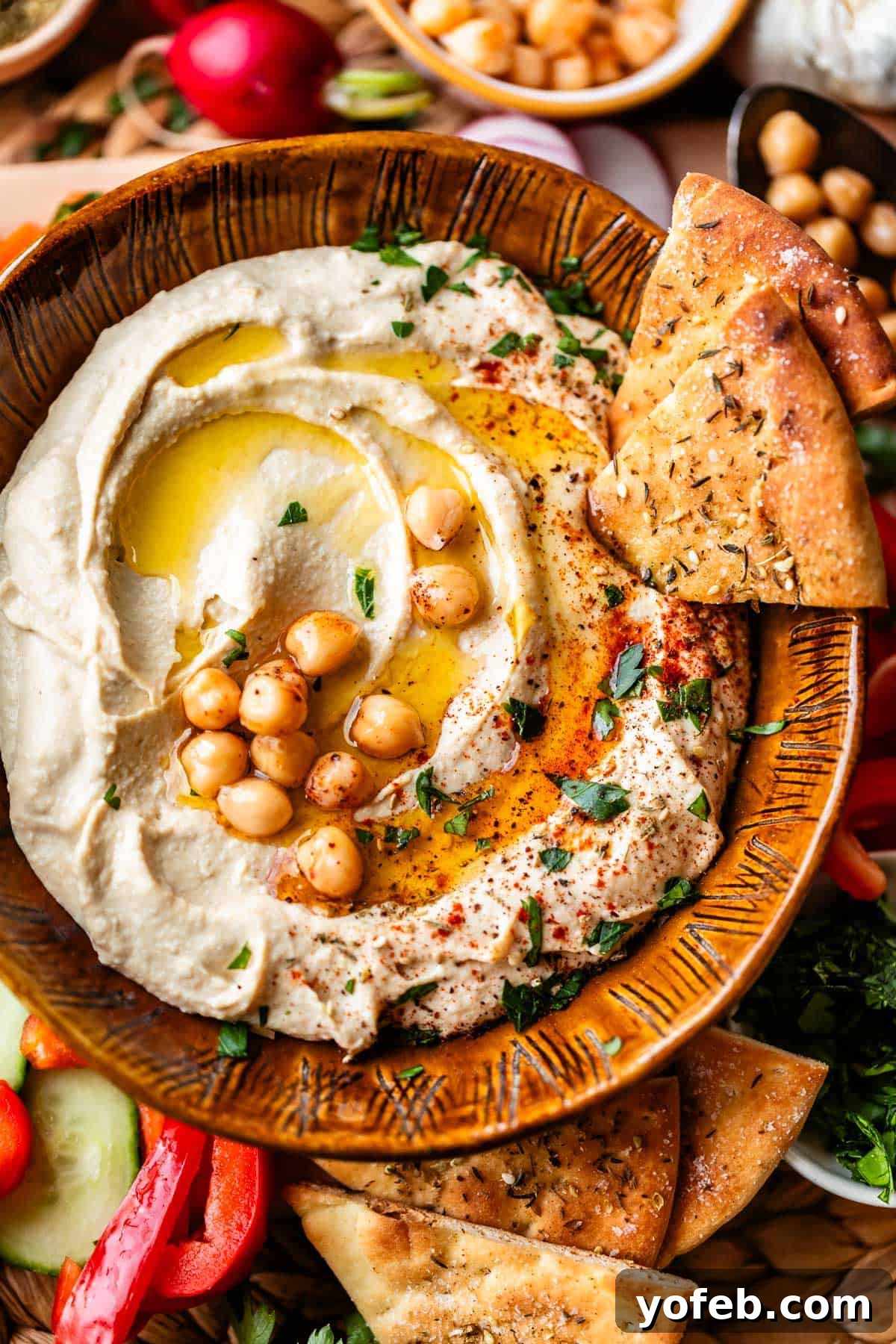
Garnish ideas: extra chickpeas, a drizzle of high-quality olive oil, chopped parsley or dill, sesame seeds, smoked paprika, or sumac.
What to serve with hummus
Hummus works as a simple snack or the centerpiece of a spread:
- Warm pita or za’atar pita slices
- Crackers or chips—pita chips, pretzels, or tortilla chips work well
- Fresh vegetables—carrots, cucumbers, radishes, cherry tomatoes, bell pepper
- Mediterranean mezze—olives, pickles, feta, baba ghanoush, or grilled meats and falafel
- Charcuterie-style boards—use hummus as a soft centerpiece for an assorted platter
Make your hummus a meal
Use hummus as a base or accompaniment for heartier meals: roasted chicken and vegetables, chicken shawarma, or a fresh Greek tomato-cucumber salad are all excellent pairings.
More ideas beyond dipping
- Spread hummus on sandwiches or wraps instead of mayo
- Thin with stock or pasta water to make a creamy pasta sauce
- Mix with yogurt or buttermilk for a bright salad dressing
- Use as a mayo replacement in deviled eggs or tuna salad
How to store leftovers
Store hummus in an airtight container in the refrigerator for 3–5 days. A thin layer of olive oil on top helps reduce air exposure. If you’ve made a larger batch, hummus freezes well—transfer to a freezer bag with air removed and freeze for 4–6 months.
Can you freeze hummus?
Yes. Freeze in a sealed bag or container. Thaw overnight in the fridge or at room temperature for a few hours. If separation or slight graininess occurs, whisk in a splash of tahini or lemon juice to revive the texture. Some people flash-freeze hummus in ice cube trays for single-portion use—handy for sauces or quick servings.
Facebook | Pinterest | Instagram

The Best Hummus (Easy!)
Ingredients
For boiling:
- 1 (15-ounce) can chickpeas, including liquid
- 1 cup water (for boiling; save 1 tablespoon)
- 2 cloves garlic (for boiling)
Add to the food processor:
- 1 tablespoon cooking liquid
- 1/2 cup tahini, well stirred
- 1 clove fresh garlic
- 1/4 cup fresh lemon juice
- 1 1/4 teaspoons kosher salt (or 1 tsp table salt)
- Black pepper, to taste
- 4 ice cubes (about 2 tablespoons water per cube)
Optional garnishes:
- Extra chickpeas
- High-quality olive oil
- Parsley or dill
- Smoked paprika or sumac
Instructions
- Boil the chickpeas: In a small pot add the can of chickpeas with its liquid, 1 cup water, and 2 smashed garlic cloves. Bring to a boil, then reduce to a medium simmer for about 10 minutes until the chickpeas soften.
- Strain and reserve liquid: Strain the chickpeas and garlic over a bowl and save about 1 tablespoon of the cooking liquid.
- Add the drained chickpeas and boiled garlic to a food processor.
- Prep: Stir the tahini well, juice a lemon for 1/4 cup juice, and smash 1 fresh clove of garlic.
- To the food processor add 1 tablespoon cooking liquid, 1/2 cup tahini, 1 fresh clove garlic, 1/4 cup lemon juice, 1 1/4 teaspoons kosher salt, and a few grinds of black pepper. Pulse until chunky.
- Add ice: Add 2 ice cubes and blend until melted. Add 1 more cube and blend until smooth. If needed, add another cube, but avoid making the hummus too runny.
- Taste and adjust salt, lemon, or tahini as desired. Transfer to a serving bowl and garnish with olive oil, extra chickpeas, herbs, and spices.
- Za’atar pita (optional): Preheat oven to 350°F. Brush pita slices with olive oil, sprinkle with kosher salt and za’atar, and bake 5–8 minutes until edges crisp and centers remain tender.
- Serve with fresh veggies, crackers, pita chips, or use as a spread on sandwiches.
Notes
The quality of tahini and chickpeas matters. If you can find jarred chickpeas at a specialty store, they can be more flavorful. This recipe uses about 9–10 ounces (1 1/2 cups) of chickpeas (not including canning liquid) if you prefer to use jarred beans.
Nutrition
Calories: 74 kcal | Carbohydrates: 3 g | Protein: 2 g | Fat: 6 g | Fiber: 1 g
Mention @thefoodcharlatan or tag #thefoodcharlatan