
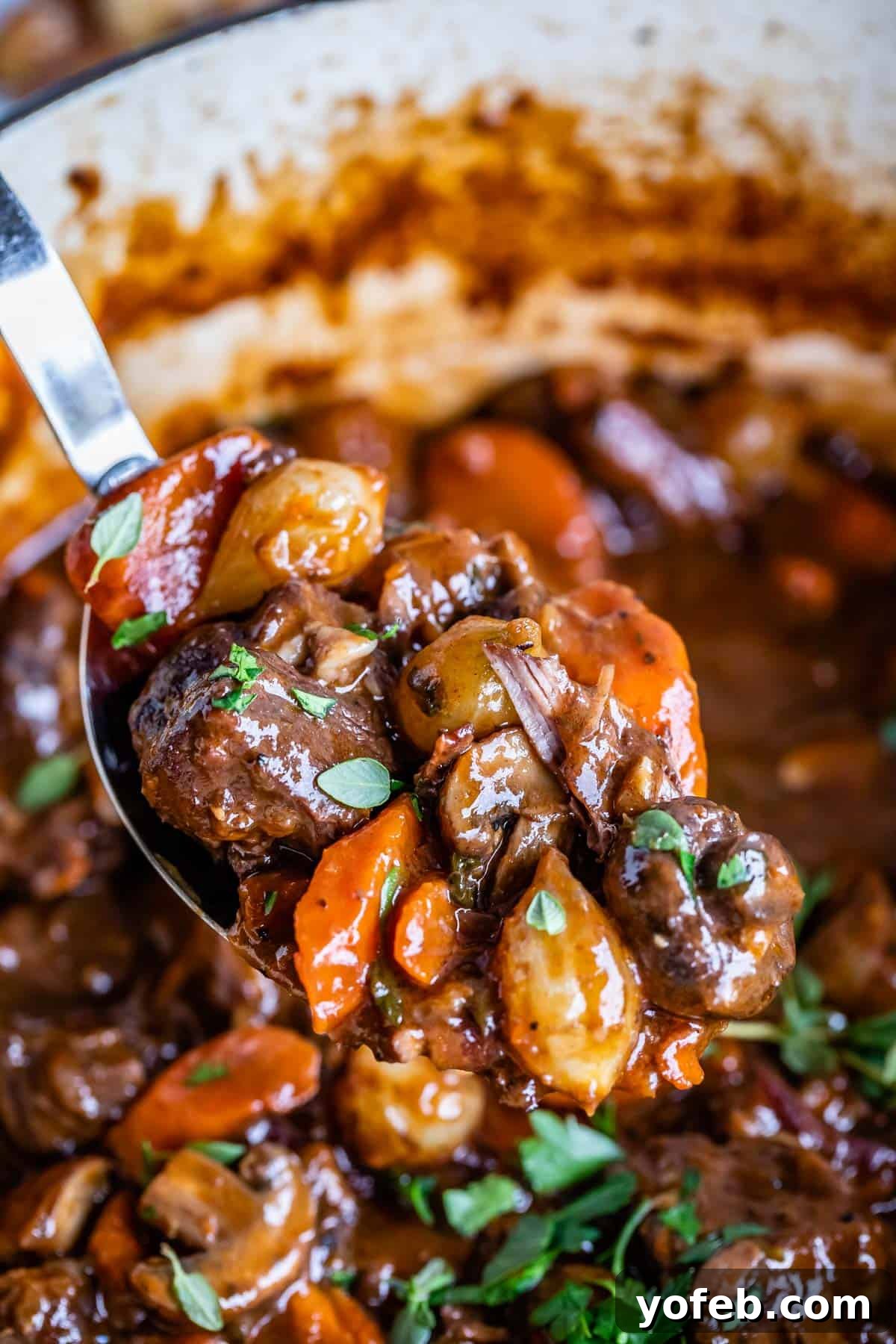
Is it even Beef Bourguignon if you don’t follow Julia Child’s recipe? This question often arises when discussing one of France’s most iconic and beloved beef stews. The answer, as it turns out, is a resounding yes! This magnificent French dish, renowned for its rich Burgundy wine-infused sauce and fork-tender beef, is famous for excellent reasons. It transcends the realm of an ordinary beef stew, distinguished by its profoundly rich, thick, and flavorful wine sauce. Furthermore, meticulous attention is paid to ensuring the vegetables are cooked to perfection, avoiding any hint of overcooking. The culmination of these careful steps and exquisite ingredients results in a truly transcendent culinary experience that has captivated palates worldwide for generations.
Originally published January 14, 2021.
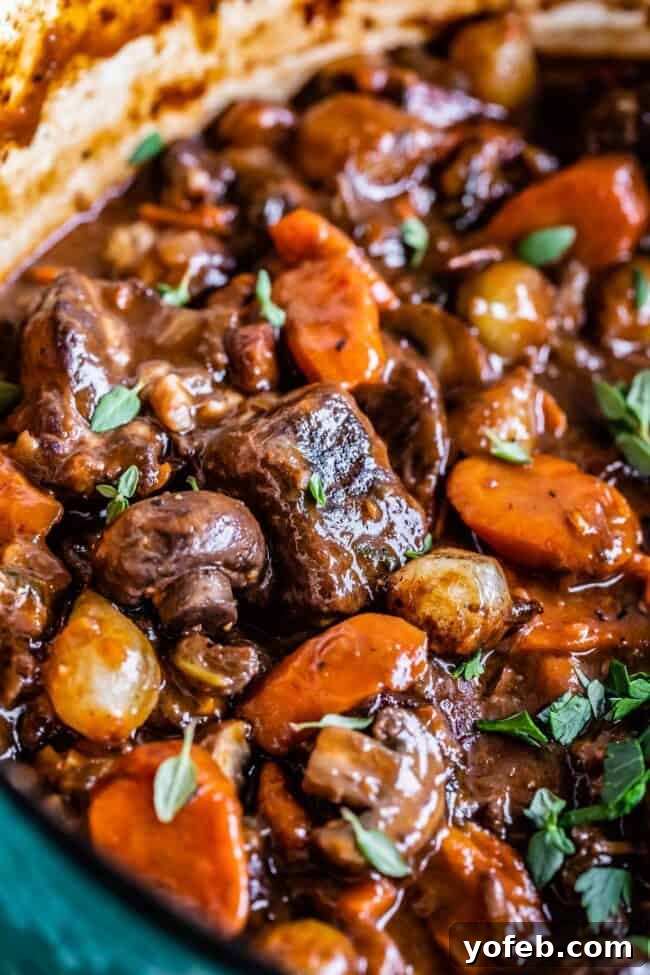
Table of Contents
- What is Beef Bourguignon? A Classic French Stew
- French Beef Bourguignon: Essential Ingredients
- Mastering the Art: How to Make Beef Bourguignon
- Beef Bourguignon Recipe: Substitutions and Variations
- Perfect Pairings: What to Serve with Beef Bourguignon
- Storage Tips for Your Beef Burgundy Masterpiece
- More Delectable Beef Recipes to Explore
- French Beef Bourguignon Recipe
This post is proudly sponsored by Zoup! Good, Really Good® Broth, whose exceptional quality perfectly complements this recipe. All opinions, of course, are my own. Thank you for supporting the fantastic brands that help keep The Food Charlatan thriving!
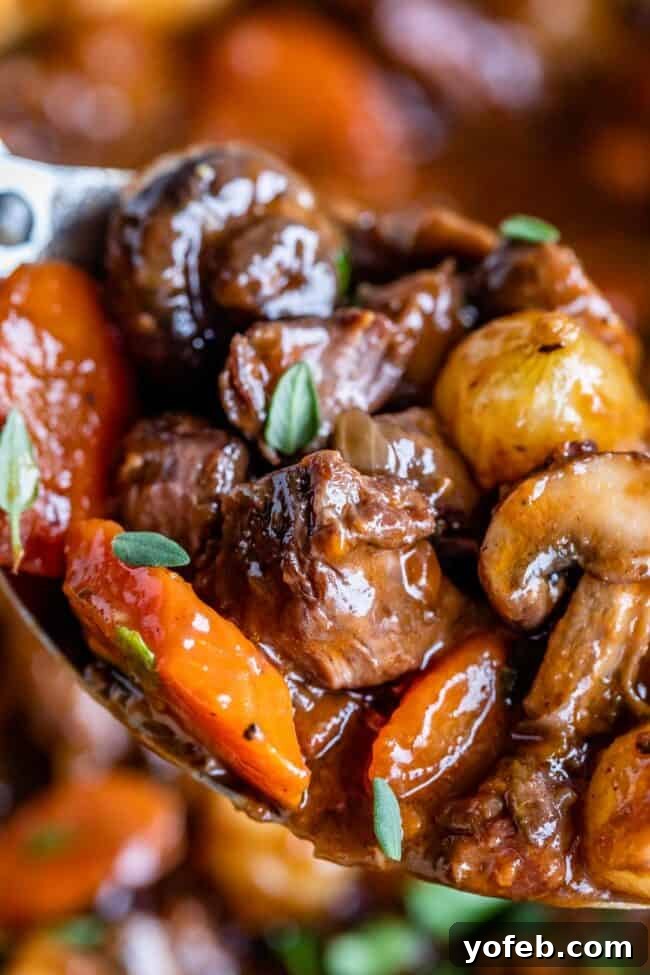
There’s something universally comforting and profoundly satisfying about a truly well-made stew. It evokes feelings of home, warmth, and culinary tradition. We often carry a set of unspoken rules or preferences, often inherited from family, into our kitchens. Whether it’s how we fold laundry, where we store Worcestershire sauce, or how we approach a classic recipe, these traditions shape our habits. But sometimes, it’s liberating to discover that even iconic dishes, like Beef Bourguignon, allow for a touch of personal flair without sacrificing authenticity. While Julia Child undeniably popularized this dish for American home cooks, the beauty of French cuisine lies in its foundational techniques, allowing for individual interpretation once those principles are understood.
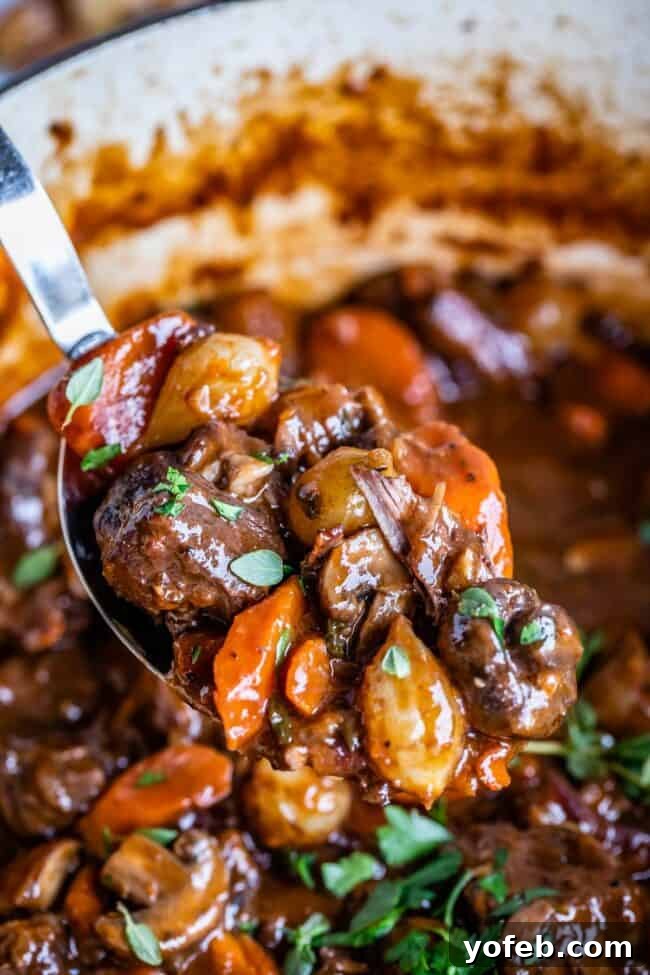
This culinary journey is about respecting the origins while embracing the joy of cooking it your way, making it even better. Like many family traditions, the process can evolve, leading to new, equally delicious outcomes.
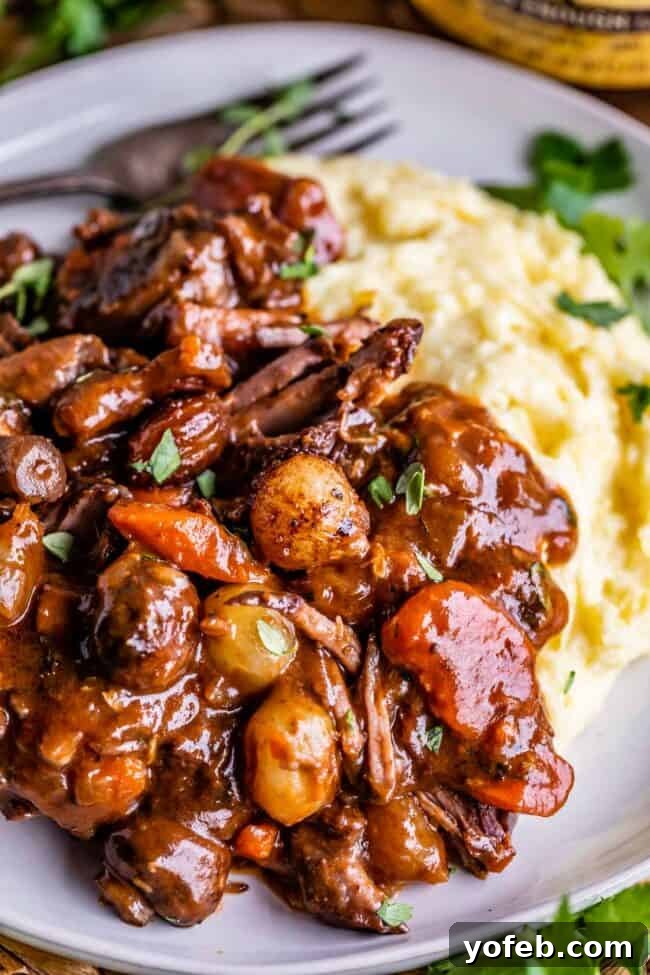
What is Beef Bourguignon? A Classic French Stew (Also known as Beef Burgundy or Boeuf Bourguignon)
Beef Bourguignon, also known as Beef Burgundy or the original French “Boeuf Bourguignon,” stands as a titan in the world of French cuisine. This iconic dish isn’t just a meal; it’s a celebration of slow cooking, rich flavors, and culinary tradition. Hailing from the Burgundy region of France, famed for its exceptional beef and exquisite Pinot Noir wines, it combines humble ingredients into an extraordinarily sophisticated and satisfying experience. For many, the very name conjures images of rustic French kitchens and the comforting aroma of a stew simmering for hours.
Indeed, there’s often a sense of reverence, even intimidation, when approaching such an iconic recipe. Julia Child’s meticulous version, introduced to American homes decades ago, set a high standard and became the gold standard for many. Her groundbreaking work demystified French cooking, but also instilled a belief that deviation from her methods might be sacrilege. However, as Julia herself noted in her seminal work, there are “more ways than one to arrive at a good boeuf bourguignon.” This wisdom reminds us that while foundational techniques are crucial, personal interpretation and adaptation are part of the culinary journey. So, while respecting tradition, don’t be afraid to find your own rhythm in creating this masterpiece. It’s ultimately a hearty beef stew, elevated by the magic of Burgundy wine.
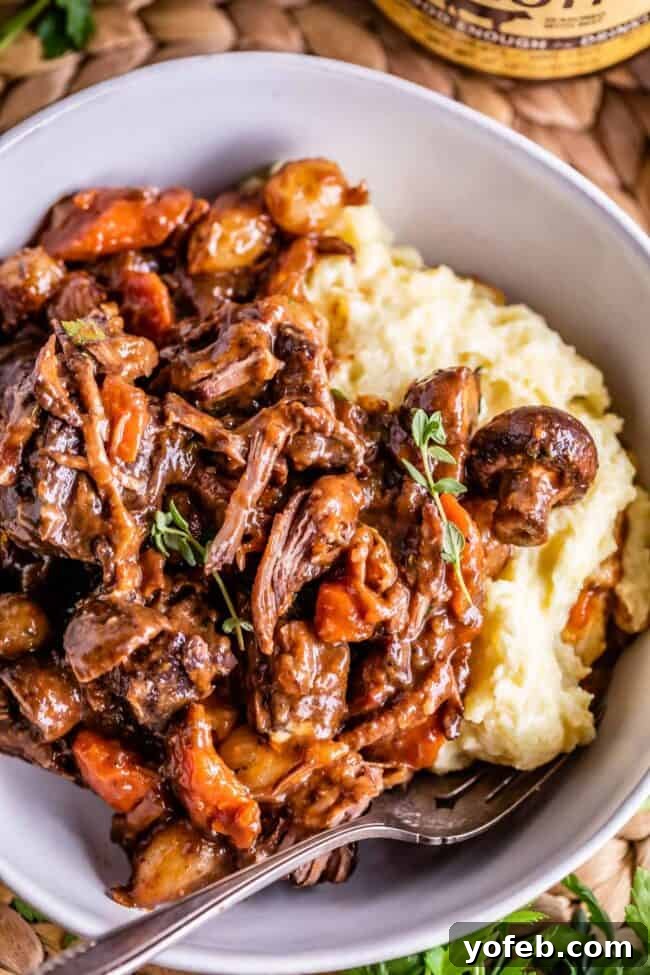
Beef Bourguignon vs. Traditional Beef Stew: What’s the Difference?
While often grouped, Beef Bourguignon is far more than just “beef stew.” The primary distinction lies in its sophisticated flavor profile and preparation method. A classic beef bourguignon always features red Burgundy wine as a primary braising liquid, which imbues the dish with a depth of flavor that a regular beef stew, typically made with only broth, cannot match. The wine, often combined with high-quality beef stock, creates a sauce that is notably richer, thicker, and more velvety. Furthermore, Bourguignon emphasizes specific vegetable preparation: carrots, onions (often two types – regular and pearl), and mushrooms are sautéed separately to enhance their individual flavors and textures, then added to the stew at strategic times to prevent them from becoming overcooked or mushy. This attention to detail elevates the dish from a simple, rustic meal to a culinary masterpiece, celebrated for its complex layers of taste and perfectly textured ingredients.
French Beef Bourguignon: Essential Ingredients
Creating an authentic and delicious French Beef Bourguignon relies on a carefully selected palette of ingredients, each playing a crucial role in building the dish’s signature deep, rich flavors. Here’s a quick overview of the key components you’ll need. Refer to the detailed recipe card below for precise measurements and comprehensive instructions:
- Salt pork (or high-quality, unsmoked bacon)
- Well-marbled beef (chuck roast is ideal)
- Premium beef stock
- Dry red wine (Pinot Noir or Cabernet Sauvignon)
- All-purpose flour
- Fresh garlic cloves
- Unsalted butter
- Olive oil
- Carrots
- Yellow onions
- Frozen pearl onions
- Fresh mushrooms (cremini or button)
- Tomato paste
- Fresh thyme sprigs
- Fresh parsley
- Bay leaves
While the list might seem extensive, each ingredient is thoughtfully chosen to contribute to the rich aroma and exquisite taste profile of this classic French stew. Let’s dive into the specifics of why each component truly matters.
The Foundation: Bacon or Salt Pork for Unmatched Flavor
A truly exceptional Beef Bourguignon begins with a crucial flavor base: pork. Traditionally in France, cooks utilize lardon, which are small, thick pieces of cured, unsmoked pork belly, similar to thick-cut bacon but without the smoky element. Most bacon available in the US is smoked, which can impart an untraditional flavor to the stew.
Julia Child, recognizing this difference, famously suggested blanching bacon in boiling water for about 10 minutes to reduce its smoky flavor. While this technique aims for authenticity, I’ve found that it often strips away too much of the bacon’s inherent richness and character, leaving behind pale, somewhat flavorless fat. For a dish that thrives on depth, this felt counterproductive.
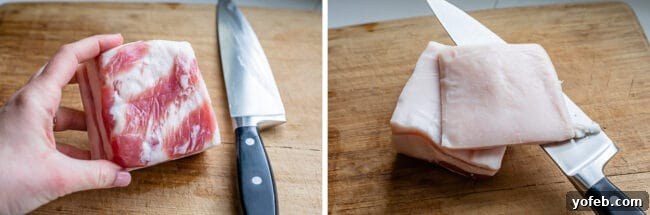
Instead, I prefer to use salt pork in this stew. Salt pork is cut from the same part of the pig as bacon (the belly) but is cured solely with salt, not smoked. This provides the desired rich, fatty flavor and crispy texture without any smoky notes, bringing it much closer to the traditional French lardon profile. When fried, it develops a delicious crispiness that’s hard to resist. Be aware that salt pork is, as its name suggests, quite salty. I typically adjust other salt additions in the recipe accordingly, usually just a sprinkle on the beef before searing.
If salt pork isn’t readily available, fear not! You can absolutely use regular thick-cut bacon. Simply fry it without the blanching step. Your stew will have subtle smoky undertones, which, while not strictly traditional, are undeniably delicious and add another layer of complexity. After all, who could say no to bacon?
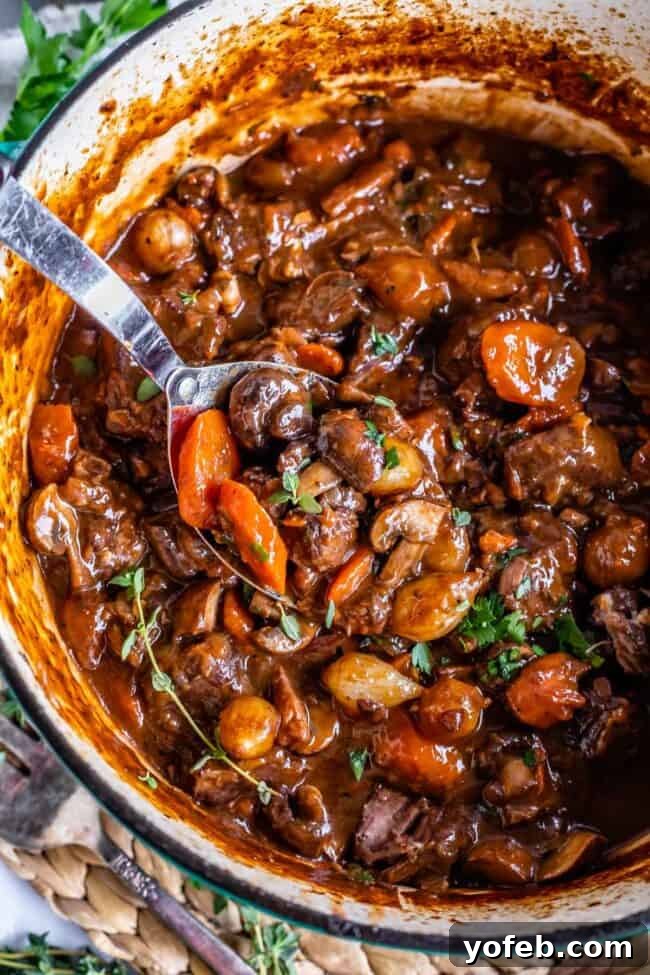
The Star: Choosing the Best Cut of Meat for Beef Burgundy
The success of your Beef Bourguignon hinges on selecting the right cut of beef. Since this dish involves low and slow cooking, we’re looking for cuts that will transform from tough to magnificently tender. My absolute favorite for this purpose is a simple, affordable chuck roast. Its generous marbling and connective tissue make it perfectly suited for braising. Other excellent choices include:
- Chuck roast: My top recommendation for its balance of fat and collagen.
- Brisket: Another fantastic option that breaks down beautifully with slow cooking.
- Round cuts: Rump roast, bottom round, or even top round will work, though they are leaner and may require slightly longer cooking to achieve optimal tenderness.
You might wonder why these “tough” and often cheaper cuts are preferred for such a special dish. The magic lies in their composition. These cuts come from muscles that get a lot of exercise, making them less fatty but rich in connective tissue, primarily collagen. When subjected to long, slow cooking in a moist environment (like a stew), this collagen gradually breaks down and converts into gelatin. This gelatin is what gives the meat its incredible melt-in-your-mouth tenderness and adds a luxurious body to the sauce. Chuck roast, in particular, offers the best of both worlds: plenty of collagen for tenderness and enough fat for rich flavor.
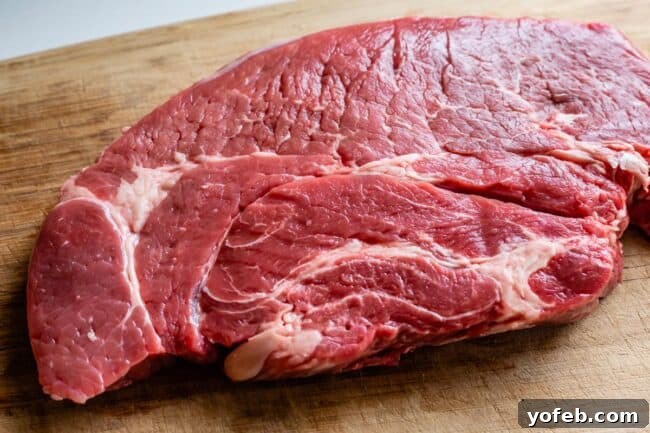
A word of caution regarding pre-packaged “stew beef” found at the grocery store: while sometimes convenient, these packages can contain a mix of different beef scraps, some of which may not be ideal for braising. The quality and type of cuts can vary greatly depending on your butcher. For the best results and peace of mind when making a dish as significant as Beef Bourguignon, it’s always best to purchase a specific cut like chuck roast and either chop it yourself or ask your butcher to do so. This ensures consistent quality and guarantees that your beef will achieve that desired succulence.
The Liquid Gold: The Importance of High-Quality Beef Stock
Just as a sturdy foundation is crucial for a house, high-quality beef stock is indispensable for a truly exceptional Beef Bourguignon. The better your beef stock, the more profound and complex the flavors of your stew will be. Today, I’m thrilled to highlight my partnership with Zoup! Good, Really Good® Broth and share why their products are an absolute game-changer for this recipe, and for my kitchen in general. I consistently use Zoup! Broth in my favorite soups and stews, from comforting classics to innovative creations like the Creamy Turkey Wild Rice Soup I made last year.
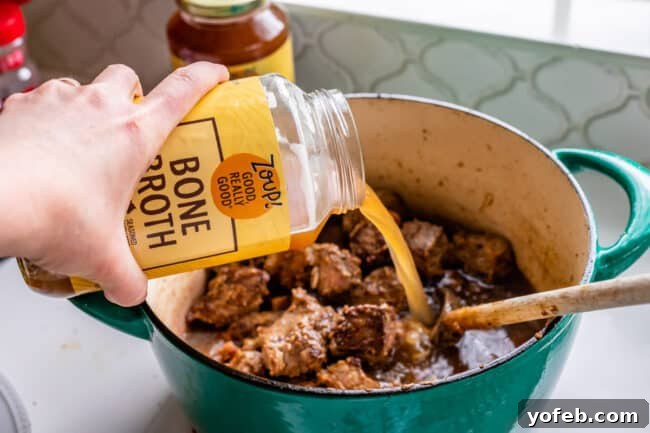
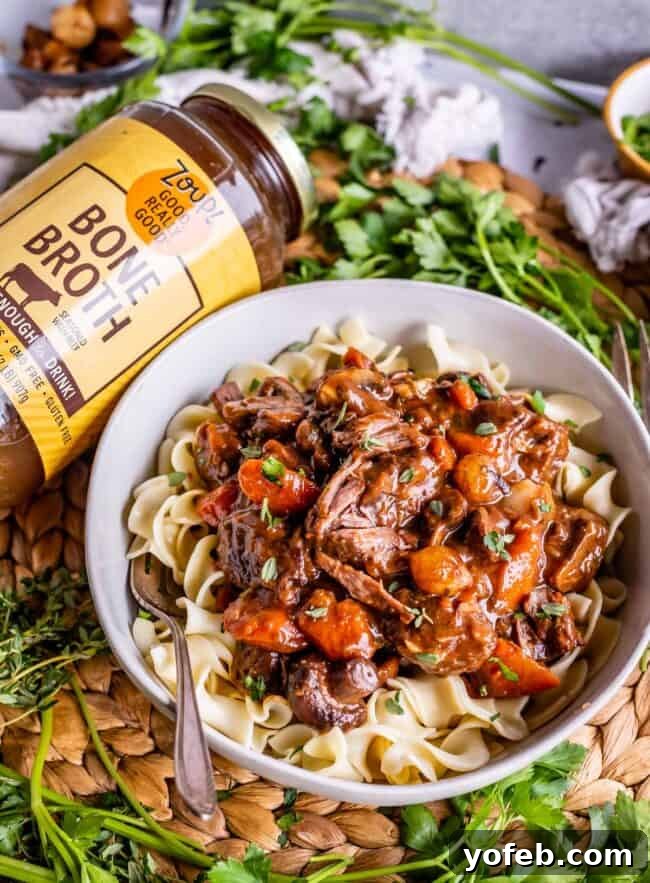
Zoup! Good, Really Good® Beef Bone Broth is specifically formulated to be a perfect ingredient for this Beef Bourguignon. What sets it apart is its unique kettle-cooked, small-batch process. This method yields a significantly richer, more nuanced flavor compared to standard, mass-produced beef broths. It’s so flavorful, in fact, that it’s genuinely good enough to sip on its own. Beyond its incredible taste, Zoup! Broth is also a conscious choice for many dietary preferences: it’s low in calories, paleo-friendly, and completely free of artificial ingredients, preservatives, hormones, gluten, GMOs, fat, trans fat, and saturated fat, making it a healthy and delicious addition to any meal.
The expertise behind these broths is impressive; they were developed by a seasoned soup veteran with over 20 years of experience and the dedicated team behind Zoup Eatery, a renowned restaurant specializing exclusively in soup. This dedication to soup perfection is evident in every carton. If anyone understands what makes a truly good broth, it’s a collective of soup experts! You can now easily find Zoup! Broth products at many grocery stores nationwide (I found mine at a local Savemart), or conveniently purchase them online through ZoupBroth.com and Amazon. Their expanding product line includes a new seafood broth, a new spicy chicken bone broth, and all the beloved staples like classic chicken broth, low-sodium chicken broth, savory veggie broth, and chicken bone broth, alongside organic chicken and veggie broth options. To learn more and explore their full range of products, visit ZoupBroth.com and follow them on social media: @ZoupGoodReallyGood on Facebook and Instagram, and @ZoupGoodReallyGoodBroth on Pinterest.
Selecting the Best Wine for Beef Bourguignon
The hallmark of Beef Bourguignon, as its name suggests, is the incorporation of Burgundy wine. This isn’t just any red wine; traditionally, it refers to Pinot Noir from the Burgundy region of France, which contributes a distinct fruitiness and acidity crucial to the stew’s complex flavor profile. However, don’t feel pressured to splurge on an expensive bottle for cooking. My philosophy is simple: the “best” wine for cooking is often the one that offers good value and complements the dish without breaking the bank.
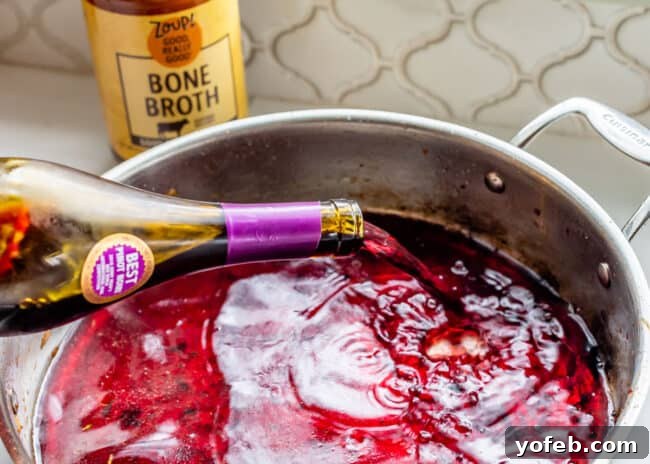
While I may not be a wine connoisseur myself, Julia Child’s guidance is invaluable here: she recommends “a full-bodied, young red wine such as one of those suggested for serving.” This means a dry red wine like a Pinot Noir or a Cabernet Sauvignon will yield excellent results. For cooking, the subtleties of a $30 bottle are largely lost over hours of simmering. A moderately priced, drinkable red wine that you enjoy (if you’re a wine drinker) or an affordable yet decent quality bottle will be perfectly adequate. I often opt for a budget-friendly Pinot Noir, as it closely mimics the traditional Burgundy flavor without the premium price tag. Using designated “cooking wine” is generally discouraged as it often contains added salt and preservatives that can negatively impact the final taste, especially when using salty ingredients like salt pork.
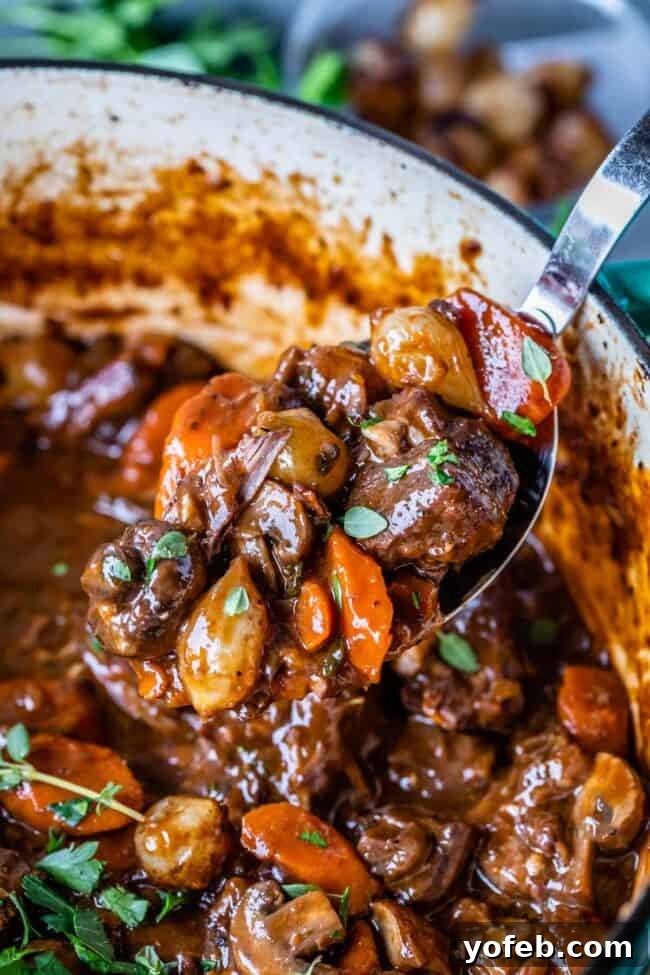
What if you prefer to omit alcohol entirely? This is where you significantly alter the essence of Beef Bourguignon. The wine is not merely a liquid; it contributes crucial acidity, tannins, and complex fruit notes that define the dish’s character. While you can substitute beef broth for the red wine, the resulting dish, though tasty, will essentially be a rich beef stew rather than a true Bourguignon. The wine is a non-negotiable ingredient for achieving the authentic flavor profile of this classic French masterpiece.
The Supporting Cast: Perfectly Prepared Vegetables
The vegetables in Beef Bourguignon are far more than mere fillers; they are essential components that contribute layers of flavor, texture, and visual appeal. Traditionally, this hearty stew includes carrots, two distinct types of onions (standard yellow onions for foundational flavor and delicate pearl onions for bursts of sweetness), and earthy mushrooms. While some recipes might incorporate potatoes, they are less common and not part of the classic Bourguignon profile.
The “fussy” reputation of Beef Bourguignon largely stems from the careful, multi-step preparation of these vegetables. The goal is twofold: to imbue them with as much flavor as possible through sautéing, and to cook them just enough so they are tender yet retain their structure – never mushy. Considering the beef needs to braise for 2-3 hours, simply adding all vegetables at the beginning would result in a sadly overcooked, disintegrated mess. This is why the extra steps are crucial.
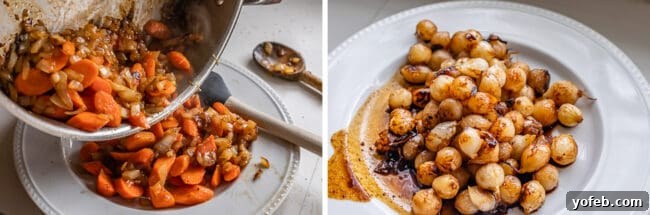
This recipe, therefore, calls for sautéing most of the vegetables individually or in small batches. They are then set aside and reintroduced to the stew later in the cooking process. While this might seem like an extra, annoying step, it is precisely what elevates Beef Bourguignon to its legendary status. This method allows the beef to cook down and develop a profoundly rich, creamy, and thick sauce. Without the early addition of vegetables, which release significant amounts of liquid, the sauce can concentrate more effectively. The carrots emerge perfectly tender, with a slight bite, rather than dissolving into the sauce. The pearl onions become soft and sweet, offering delightful bursts of flavor with each bite. And the mushrooms, instead of turning into a slimy texture, remain plump, earthy, and perfectly textured, often rivaling the meat in their deliciousness. This careful dance of timing and technique is truly what makes Beef Bourguignon an unforgettable experience.
Mastering the Art: How to Make Beef Bourguignon
Let’s embark on the journey of creating this classic French masterpiece, step by step. Precision and patience are key to unlocking the incredible depth of flavor that defines Beef Bourguignon.
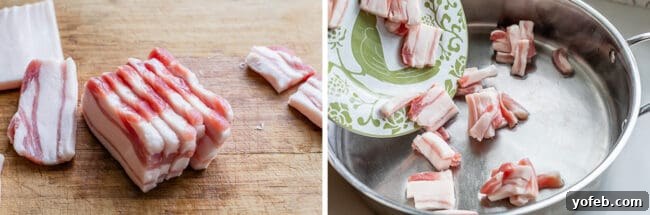
Begin by preparing your salt pork: slice it into strips and render it in your heavy-bottomed, oven-safe pot. This initial step is vital for building a deep flavor foundation.
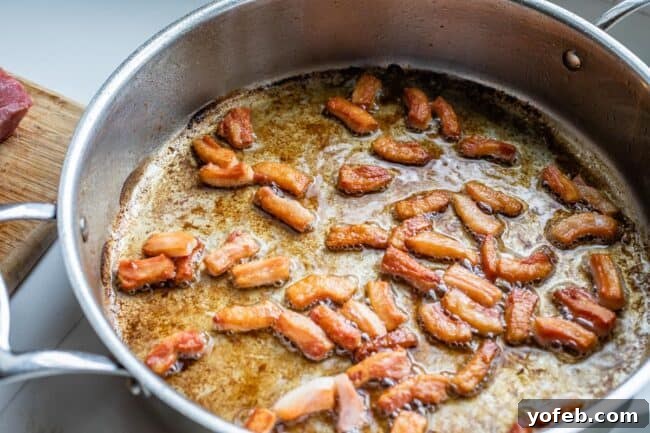
Observe how gloriously crispy and fatty the salt pork becomes, releasing all its savory goodness. Once perfectly rendered, remove the salt pork pieces and set them aside. Crucially, leave all that flavorful rendered fat in the pot; it’s the next stage’s secret weapon.
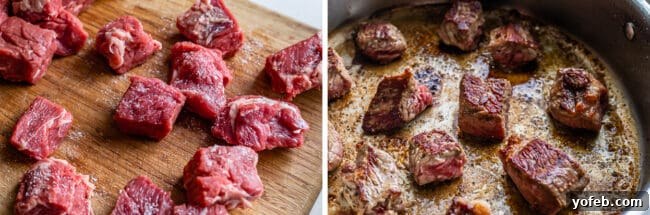
Next, prepare your beef. Ensure each piece is thoroughly patted dry with paper towels – this is essential for achieving a beautiful, deep brown sear. Season generously with salt and pepper. Add the beef in batches to the hot pork fat, ensuring not to overcrowd the pan. A proper sear is key to locking in flavor.
After searing all the beef, return it to the pot along with the cooked salt pork. Add a tablespoon of butter and allow it to melt, then sprinkle flour over the mixture. Stir well to coat every piece of meat, creating a roux that will thicken your stew.
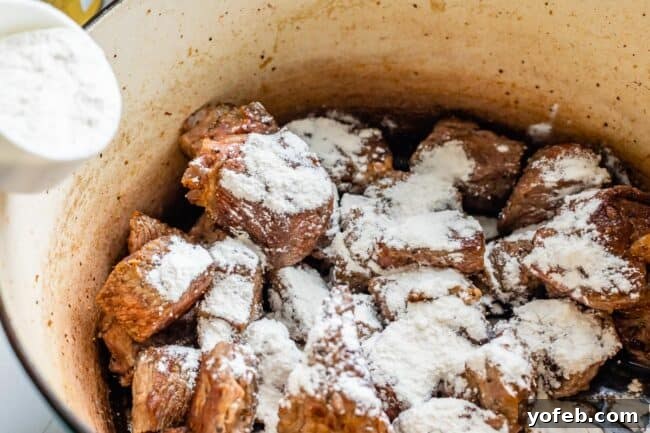
Cook this flour-coated mixture for a minute or two over medium heat to allow the flour to toast slightly and lose its raw taste. Remove from heat and set aside.
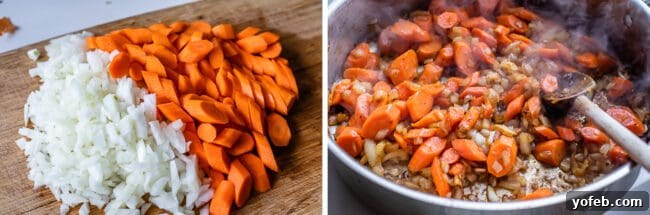
Meanwhile, in a separate skillet, sauté your chopped onions, carrots, and garlic until they are lightly browned and fragrant. This step develops their sweetness and depth before they join the stew later. Once sautéed, remove them to a plate and set aside.
Using the same skillet where you cooked the carrots, pour in the red wine. This optional but recommended step helps to reduce the wine, mellowing its astringency and concentrating its fruity notes before it’s added to the stew. Bring the wine to a boil, scraping up any browned bits from the bottom of the pan to deglaze and incorporate additional flavor. Let it reduce by about a cup. This pre-reduction prevents the wine from overpowering the stew and ensures a smoother, more integrated flavor.
Now, pour the reduced wine over the beef and flour mixture in the main pot. Add enough high-quality beef broth to almost cover the beef. Stir in the tomato paste, fresh parsley, thyme sprigs, bay leaves, and if you saved it, the salt pork rind, which adds an incredible depth of savory flavor during the long simmer. Bring this mixture to a gentle boil on the stovetop, then cover the pot and transfer it to a preheated 300°F (150°C) oven. Allow it to braise for approximately 3 hours, ensuring the beef becomes wonderfully tender.
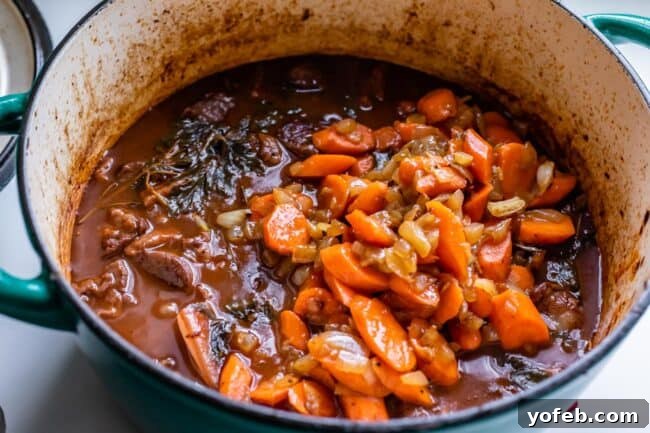
Roughly halfway through the cooking time (after about 1.5 hours), carefully remove the pot from the oven. Stir in the sautéed carrots and onions. Return the covered pot to the oven to continue braising. Adding the carrots later ensures they cook through but remain firm and distinct, preventing them from becoming mushy.
As your Beef Bourguignon nears completion, typically when its intoxicating aroma fills your kitchen, it’s time to prepare the pearl onions and mushrooms. In the same skillet used for the wine, combine frozen pearl onions with water, kosher salt, and butter. Poach them gently until tender, allowing the water to evaporate, then brown them in the residual butter. This dual cooking method ensures they are both soft inside and beautifully caramelized outside.

Follow a similar meticulous process for the mushrooms. Sauté them in butter and olive oil in batches. This method, while seemingly “fussy,” prevents crowding in the pan, allowing them to sear and brown beautifully rather than steam. The result is perfectly plump, savory mushrooms with an incredible texture that can truly rival the tender beef.
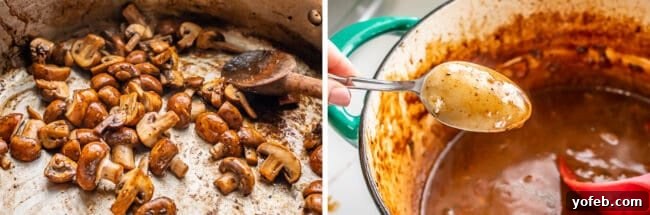
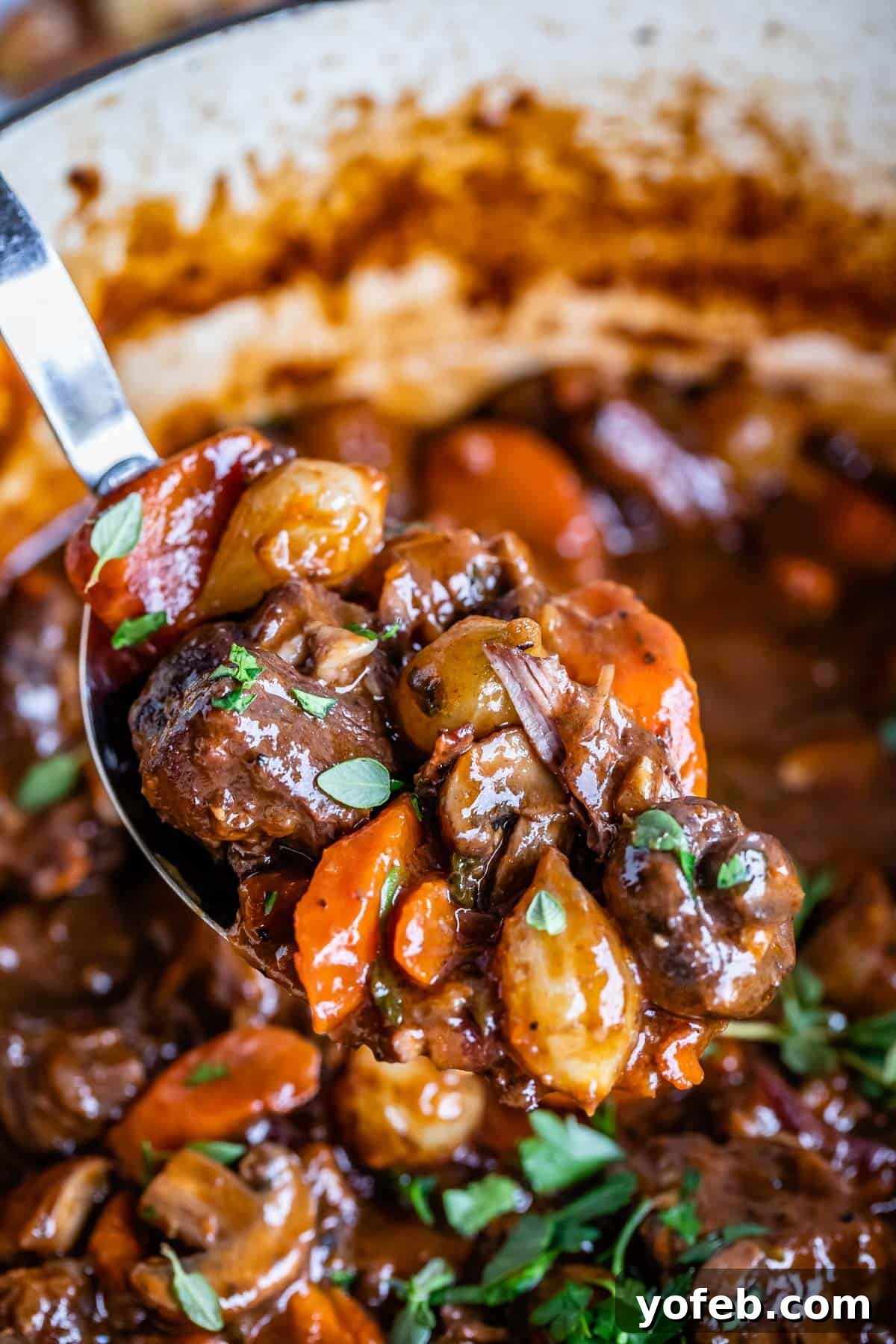
After the full braising time, check the consistency of your sauce. It should be rich, creamy, and thick enough to coat the back of a spoon. If it’s too thin, you can carefully strain the solids, reduce the sauce on the stovetop, or thicken it further with a beurre manié (a paste of butter and flour). Beef Bourguignon is not a soup; its luxurious sauce is part of its charm. Finally, remove the herb stems and salt pork rind, then gently fold in the perfectly cooked pearl onions and mushrooms. Stir everything together, taste, and adjust seasoning as needed. Your magnificent Beef Bourguignon is now ready to be served, a testament to patience and technique.
Beef Bourguignon Recipe: Substitutions and Variations
While the classic Beef Bourguignon recipe is a masterpiece in itself, it’s helpful to know what substitutions are possible without compromising the dish’s integrity too much, and where to draw the line.
Finding the Right Burgundy Wine Substitute
As mentioned, “Burgundy wine” primarily refers to Pinot Noir grown in the Burgundy region of France. It’s the traditional choice, lending its characteristic fruitiness and earthy notes to the stew. If you can’t find or prefer not to use a specific Burgundy wine, your best substitutes are other dry, full-bodied red wines that share a similar flavor profile. Pinot Noir from other regions (like Oregon or California) is an excellent choice, as is a Cabernet Sauvignon. The key is to select a wine that is dry, not sweet, and has a good body. Remember, you don’t need an expensive bottle for cooking; a moderately priced, drinkable red wine will perform beautifully once it simmers down and melds with the other ingredients.
Can I Make Beef Bourguignon Without Red Wine?
This is a common question, and the honest answer is: while you can cook beef stew without red wine, it ceases to be Beef Bourguignon. The red wine is a foundational ingredient, absolutely crucial to developing the signature deep, complex, and slightly acidic flavor that defines this French classic. If you strictly avoid alcohol, you can certainly substitute beef broth for the wine. Your stew will still be savory and comforting, but it will lack the distinctive character, richness, and depth that only the Burgundy wine can provide. It becomes a delicious beef stew, but not a “Bourguignon.” For an authentic experience, I highly recommend finding a way to include the wine. If it’s simply a matter of not having wine on hand, save this recipe for a day when you do, or explore other fantastic beef stew recipes that don’t rely on wine.
Perfect Pairings: What to Serve with this Recipe for Beef Bourguignon
Beef Bourguignon is a hearty, deeply flavorful dish that pairs wonderfully with simple, comforting sides designed to soak up its magnificent sauce. Traditionally, it’s often served over boiled potatoes, which offer a neutral canvas for the rich stew. My personal favorites include creamy mashed potatoes or rich, buttered egg noodles. Both provide the perfect texture and absorption for every drop of that exquisite gravy.
When it comes to complementary side dishes, a fresh, vibrant green salad is an ideal choice. Its lightness and acidity cut through the richness of the stew, creating a balanced meal. Consider an Apple Gorgonzola Salad for a touch of sweetness and tang, or a simple yet elegant Fancy No Chop Salad. Other excellent green vegetable options include Julia Child’s suggestion of buttered peas, or any other seasonal greens like tender Roasted Brussels Sprouts, crisp Green Beans, or lightly steamed Broccoli with Feta and Fried Almonds. The freshness of these vegetables provides a lovely counterpoint to the deep flavors of the stew.
And of course, no French stew is complete without some crusty bread! A warm, crusty baguette or homemade artisan bread is perfect for mopping up every last bit of that luscious sauce. Try this One Hour French Bread for a quick and satisfying accompaniment.
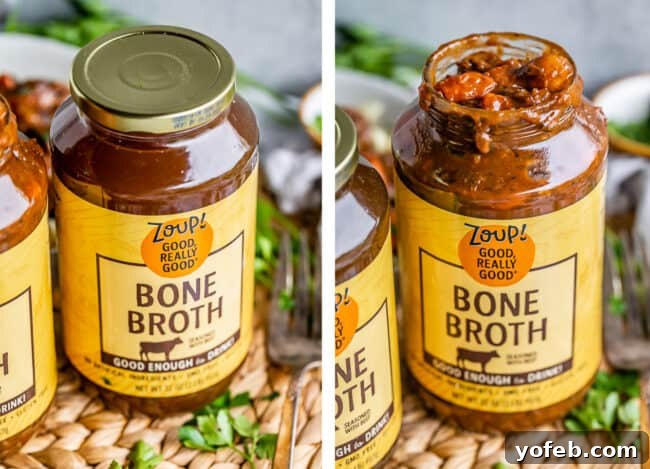
One of my favorite, practical aspects of using Zoup! Broth is the opportunity to reuse their high-quality, recyclable jars. After emptying a jar of broth, I immediately repurpose it to store portions of whatever delicious creation I’ve just made. The convenient quart-size jars are perfect for either sharing with a friend or stashing in the freezer for a future busy day. Beef Bourguignon is truly a labor of love, and it would be a shame not to extend that joy. Whether it’s gifting a homemade meal to loved ones or simply treating your future self to an incredible, ready-made lunch, these jars make it effortlessly easy to share and savor your culinary efforts.
Storage Tips for Your Beef Burgundy Recipe
Once you’ve invested the time and effort into creating a magnificent Beef Bourguignon, proper storage ensures you can enjoy its rich flavors for days to come. This stew often tastes even better the next day as the flavors deepen and meld.
- Refrigeration: Leftover Beef Bourguignon can be stored in an airtight container in the refrigerator for 3 to 4 days. When ready to eat, simply reheat individual servings gently on the stovetop over low to medium heat, or in the microwave until thoroughly warmed through. Adding a splash of extra beef broth or water can help if the sauce has thickened too much in the fridge.
- Freezing: Beef Bourguignon freezes exceptionally well, making it perfect for meal prep or saving for a quick, comforting meal later. To freeze, scoop the cooled stew into freezer-safe bags or containers. If using bags, flatten them out before freezing; this saves space and allows for quicker thawing. You can create individual, quart-size portions for easy single-serve lunches, or larger bags for family meals.
- Reheating from Frozen: To enjoy frozen Beef Bourguignon, transfer it from the freezer to the refrigerator the night before to allow it to thaw slowly. Once thawed, reheat it in a pot on the stovetop over medium-low heat, stirring occasionally, or in the microwave until piping hot.
Having a stash of homemade Beef Bourguignon in your freezer is like having a gourmet meal waiting for you, a delicious reward for your culinary efforts!
More Delectable Beef Recipes to Explore
If you’ve enjoyed the rich flavors of this Beef Bourguignon, you’ll love exploring these other fantastic beef recipes, perfect for any occasion:
- Classic Beef Stroganoff >> A comforting, creamy dish that’s similar in spirit to a stew but with a quicker preparation time.
- Easy Fall-Apart Pot Roast with Carrots >> One of the most popular recipes on my site, delivering incredibly tender meat every time.
- How to Cook Ribeye Steak >> Master the art of searing for the most tender, flavorful steak of your life.
- How to Cook Tri Tip >> If you haven’t tried this cut of meat, you’re missing out on a delicious and versatile option!
- How to Cook Flank Steak >> Perfect when paired with a vibrant Chimichurri Sauce for a burst of fresh flavor.
- The Best Chili Recipe I’ve Ever Made >> A bold claim, but this recipe truly lives up to its name.
- Classic Shepherd’s Pie with Crispy Cheddar Topping >> A timeless comfort food, reimagined with a deliciously crispy twist.
- Ultimate Slow Cooker Beef Stew from Dinner Then Dessert >> Effortless slow-cooked goodness for busy days.
- The Best Instant Pot Beef Stew from Family Fresh Meals >> For those who love the convenience and speed of the Instant Pot.
- Pressure Cooker Irish Stew from Noshtastic >> A hearty, flavorful stew that comes together quickly under pressure.
Facebook | Pinterest | Instagram

French Beef Bourguignon
45 minutes
2 hours
30 minutes
3 hours
15 minutes
6
Ingredients
- 8 ounces bacon OR salt pork*
- 3 pound chuck roast, chopped into 2 inch pieces
- salt and pepper
- oil for searing beef and sautéing veggies
- 1 tablespoon butter, for coating beef with flour
- 1/3 cup flour
- 1 large onion, chopped
- 1 pound carrots, about 7-8 medium, chopped into 1-inch pieces
- 6 cloves garlic, smashed and sliced
- 3 cups red wine, 750ml bottle
- 2-4 cups Zoup! Good, Really Good® Beef Bone Broth
- 2 tablespoons tomato paste
- 1/3 cup parsley, chopped
- 6 fresh thyme sprigs
- 2 bay leaves
- rind from salt pork, if using
For the pearl onion garnish
- 14 ounces frozen pearl onions
- 2 cups water
- 1/2 teaspoon kosher salt
- 2 tablespoons butter
For the mushroom garnish
- 1 pound mushrooms, halved or quartered
- 4 tablespoons butter, divided
- 2 tablespoons olive oil, divided
Instructions
-
If using bacon: Cut the bacon into 1-inch pieces and cook over medium heat in a large oven-safe pot that has a lid. I prefer an enameled cast iron pot like this one from Lodge. Do not overcook the bacon. Set the cooked bacon aside on a paper towel-lined plate; leave all the rendered grease in the pot. (Turn off the heat if your beef is not ready for searing.)
-
If using salt pork: Cut the rind off the end of the salt pork and set aside (we will add it to the stew later for extra flavor). Slice the salt pork into strips approximately 1/4 inch by 1/4 inch by 1.5 inches (refer to photos for visual guidance). Cook the salt pork in a large oven-safe pot with a lid over medium heat. Arrange the strips in a single layer and cook until well browned on all sides. The goal is lightly crispy, flavorful salt pork. Remove the cooked salt pork to a paper towel-lined plate, reserving all the rendered grease in the pot. (Turn off the heat if your beef is not ready for searing.)
-
Sear the beef. Chop your chuck roast into roughly 2-inch pieces; precision isn’t paramount, but aim for consistency. Crucially, use paper towels to thoroughly dry each piece of beef. This step is essential for achieving a proper, deep brown sear instead of simply steaming the meat. Season the beef generously with salt and pepper on all sides.
-
Heat the rendered bacon/salt pork grease in the pot over medium-high heat. Ensure there are at least 2 tablespoons of fat; if not, add additional olive oil. Once the fat is shimmering hot, add about 1/3 of the beef pieces to the pot, ensuring ample space (1-2 inches) between each piece for proper searing. Overcrowding will prevent browning. Allow the beef to cook undisturbed for 1-2 minutes until deeply browned, then flip with tongs and sear the other sides. Remove the seared beef to a clean plate and continue searing the remaining beef in batches, adding more oil as needed and adjusting the heat to prevent burning.
-
Coat beef with flour. Once all batches of beef are seared, return all the beef and the cooked bacon or salt pork to the pot. Reduce the heat to medium. Add 1 tablespoon of butter and let it melt, then stir to evenly coat all the meat. Sprinkle 1/3 cup of all-purpose flour over the top. Stir again until each piece of beef is coated with flour. Cook over medium heat for 1-2 minutes, stirring constantly, allowing the flour to absorb the fat and cook through to eliminate any raw flour taste. Turn off the heat and set the pot aside.
-
Sauté veggies. Meanwhile, in a separate 12-inch high-sided skillet, heat 1 tablespoon of olive oil over medium-high heat. Add the chopped large onion and chopped carrots. Sauté for 3-4 minutes until they begin to soften and develop some light browning.
-
Add the 6 cloves of smashed and sliced garlic to the carrots and onions in the skillet (add additional oil if the pan is dry). Sauté the garlic for about 30 seconds to 1 minute until fragrant. Be careful not to burn it. Remove the sautéed vegetables to a plate or bowl and set aside.
-
Reduce the wine (optional but recommended).** In the same 12-inch high-sided skillet (no need to wash it), pour in 3 cups of red wine (approximately one 750ml bottle). Bring the wine to a boil over high heat, using a wooden spoon to scrape up any browned bits from the bottom of the pan to deglaze it and incorporate extra flavor. Reduce the heat to a rolling simmer and let the wine cook until it has reduced by about a cup, approximately 10-15 minutes. This step mellows the wine’s acidity and concentrates its flavor.
-
Preheat the oven to 300 degrees F (150°C).
-
Bring the stew to a simmer on the stovetop. Once the wine is reduced, pour it directly over the flour-coated beef in the main pot. Add enough high-quality beef broth to almost cover the beef (typically 2-4 cups), leaving just a few pieces peeking above the surface. Place the pot over medium-high heat on the stovetop and bring it to a gentle simmer, scraping the bottom to prevent sticking.
-
Stir in 2 tablespoons of tomato paste, 1/3 cup of chopped fresh parsley, 6 fresh thyme sprigs, 2 bay leaves, and the reserved rind from the salt pork (if using). Stir everything thoroughly to combine. (Do not add the sautéed carrots and onions yet.)
-
Once the stew is simmering, cover the pot tightly with an oven-safe lid. Carefully transfer the covered pot to the preheated oven, placing it on a rack in the lower third. Cook at 300 degrees F (150°C) for 1 hour and 30 minutes.
-
After the initial hour and a half of cooking,*** carefully remove the pot from the oven. Stir in the reserved sautéed carrot and onion mixture. Cover the pot again and return it to the oven for another 60-90 minutes. The beef should braise for a total minimum of 2.5 to 3 hours. Adding the carrots halfway through prevents them from becoming mushy while allowing the beef to become incredibly tender.
-
Meanwhile, prepare the pearl onions. Add the frozen pearl onions to the same 12-inch high-sided skillet used for the wine reduction (no need to wash). Add 2 cups of water, 1/2 teaspoon of kosher salt, and 2 tablespoons of butter. Bring to a boil over high heat, then reduce the heat to medium and let the onions simmer for about 20 minutes, stirring occasionally. Once all the water has evaporated, continue to sauté the onions in the remaining butter until they are beautifully browned on all sides. Remove the onions to a plate and set aside.
-
Prepare the mushrooms. Clean the mushrooms thoroughly and dry them very well to ensure they sear, not steam. Leave small mushrooms whole, and halve or quarter any larger ones. In the same pan used for the pearl onions, melt 2 tablespoons of butter and 1 tablespoon of olive oil over medium-high heat until very hot. Add HALF of the mushrooms to the hot pan in a single layer. Sauté for about 4-5 minutes. Initially, the mushrooms will absorb the fat, then they will begin to release their liquid and brown beautifully. Once browned, remove them to a plate. Repeat this process for the second batch of mushrooms. (Sautéing in batches is a “fussy” but crucial step that allows the mushrooms to sear and develop deep flavor, rather than steaming in an overcrowded pan. Embrace the fussiness for an authentic Bourguignon!) Remove all the mushrooms to a plate and set aside.
-
When your beef has been cooking for a minimum of 2.5 hours, remove the pot from the oven and test the meat. It should be incredibly tender, easily breaking apart with a wooden spoon. If it is still too tough, return it to the oven for an additional 20-40 minutes, checking every 20 minutes.
-
Taste the sauce and thicken if necessary. At this stage, traditionally, Julia Child’s recipe calls for straining the entire stew to reduce the sauce further. However, with the flour-coating method, I often find this unnecessary. The sauce should be rich, creamy, and thick enough to generously coat the back of a spoon. If your sauce is too thin, carefully use a colander to strain out all the meat and vegetables (collecting the sauce in a separate bowl or pot). Return only the sauce to the main pot and bring it to a simmer over medium heat. Continue simmering, stirring occasionally, until the sauce has reached your desired thickness.****
-
Remove the thyme stems, bay leaves, and the salt pork rind (if using) from the stew. Add the perfectly prepared pearl onions and mushrooms back into the pot with the beef and carrots. Stir everything gently to combine. Taste and adjust the seasoning with additional salt and pepper as needed.
-
Serve this glorious Beef Bourguignon immediately over creamy mashed potatoes, buttered egg noodles, or with a side of crusty bread to savor every drop of the rich sauce. Enjoy your culinary masterpiece!
Notes
**Reducing the wine before adding it to the stew is an optional but recommended step. I prefer to cook down the red wine a bit, as this helps to mellow its acidity and astringency, concentrating its deeper fruit flavors. This ensures the wine seamlessly integrates into the stew, contributing richness rather than a sharp, overpowering taste. Most traditional Beef Bourguignon recipes often call for adding the wine directly over the beef without pre-reduction, which is also acceptable if you prefer a bolder wine flavor.
***At this point, if you wish to take a shortcut, you can add the raw mushrooms and frozen pearl onions directly to the pot with the carrots. They will cook through just fine during the remaining braising time. However, be aware that they will not achieve the same depth of flavor, beautiful browning, or tender-yet-firm texture as they would if sautéed separately. The individual sautéing of these vegetables is a signature technique that truly elevates Beef Bourguignon.
**** If your sauce is significantly thinner than desired, a quick fix is to create a beurre manié. In a small bowl, combine 2 tablespoons of softened butter with 2 tablespoons of all-purpose flour to form a smooth paste. Whisk this paste into the simmering sauce. Bring the sauce back to a gentle simmer and cook over medium heat for about 20 minutes, stirring frequently, until it has thickened to your preference.
Source: adapted, of course, from the culinary legend herself, Julia Child.
Nutrition
Main Course
American
1013
Beef, bourguignon
Did you make this? I’d love to see it!
Mention @thefoodcharlatan or tag #thefoodcharlatan!