
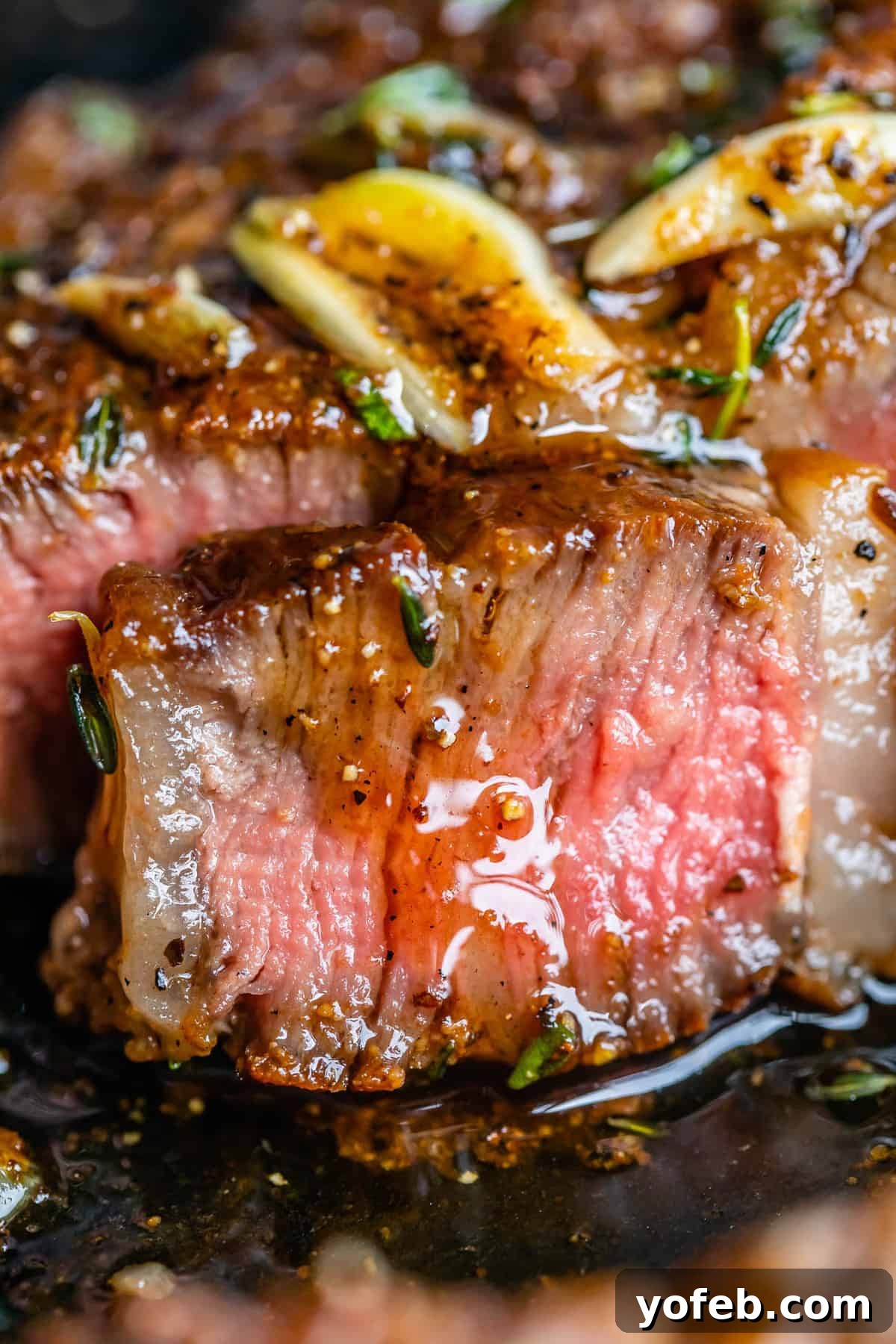
Prepare to transform your perception of steak. This isn’t just another ribeye recipe; it’s a revelation! Discover the secrets to cooking an incredibly tender, unbelievably juicy ribeye steak, whether on the grill or stovetop. The magic lies in strategic pre-salting and a generous slathering of aromatic garlic butter. Get ready for all the details you need to master this ultimate steak experience.
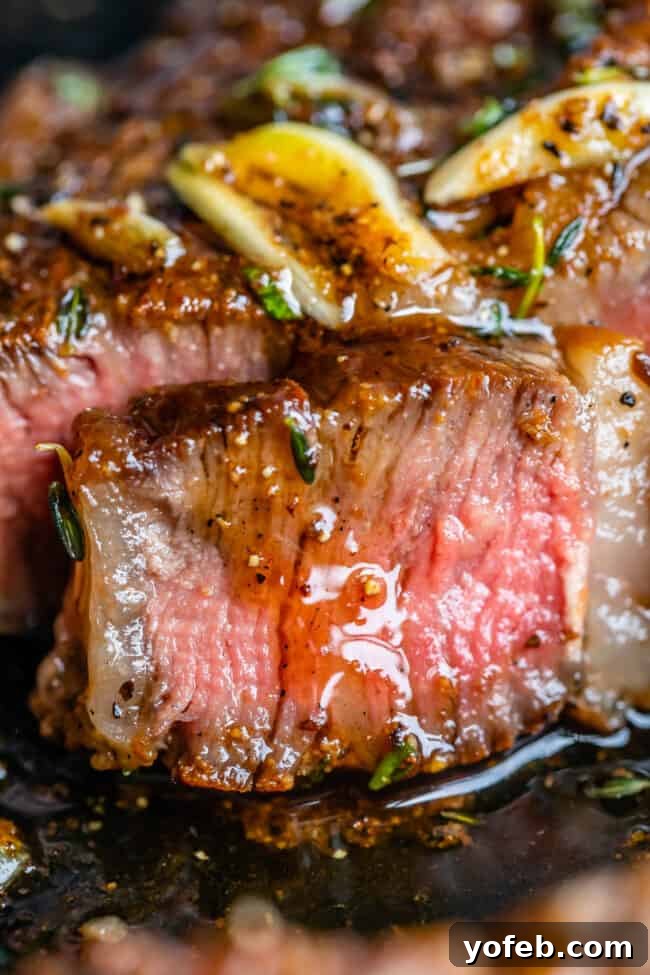
Table of Contents
- Mastering the Perfect Ribeye Steak: Your Ultimate Guide
- Why This Ribeye Recipe Will Change Your Steak Game
- What is Ribeye Steak? A Cut Above the Rest
- Selecting the Best Ribeye Steak for Unrivaled Flavor
- Essential Ingredients for Your Unforgettable Ribeye
- How to Cook Ribeye Steak to Perfection
- Achieving Your Desired Ribeye Doneness
- Preserving the Excellence: Ribeye Storage Tips
- Frequently Asked Questions About Ribeye Steak
- What to Serve with Your Decadent Ribeye Steak
- Steakhouse-Worthy Side Dishes to Complement Your Ribeye
- Ribeye Steak Recipe
Mastering the Perfect Ribeye Steak: Your Ultimate Guide
Gone are the days of tough, underwhelming steak dinners. If you, like me, once believed you weren’t a big fan of steak, prepare to have your mind (and taste buds) completely changed. This guide is dedicated to unlocking the full potential of a ribeye, transforming it into an unforgettable culinary experience.
Summer means grilling season, and there’s no better time to perfect your steak game. Whether it’s for a special occasion like Father’s Day or simply a weekend indulgence, a perfectly cooked ribeye is always a crowd-pleaser. With the right techniques, you can achieve steakhouse-quality results right in your own kitchen or backyard.
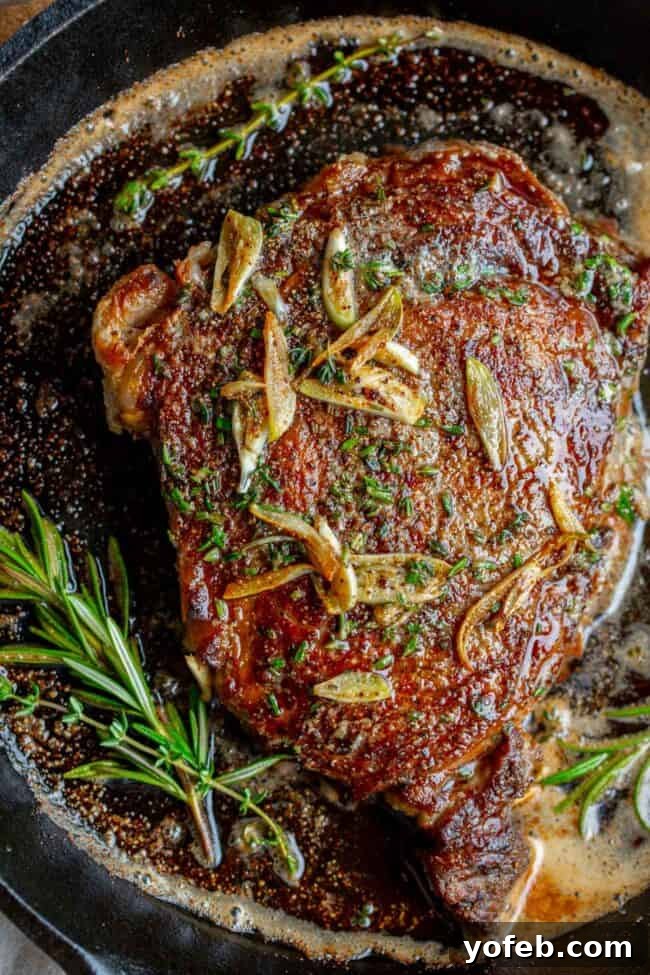
For too long, I struggled with tough, flavorless steaks, leading me to believe steak wasn’t my preferred dish. But through extensive research and countless trials, I’ve uncovered the definitive method for achieving a truly killer ribeye. The key lies in a few crucial steps: salting your steak generously and well in advance, allowing it to air-dry uncovered in the refrigerator for an impeccable sear, cooking it in a screaming hot cast iron pan, and then, the pièce de résistance, drenching it in copious amounts of rich garlic butter. Trust me, the butter isn’t optional—it’s transformative!
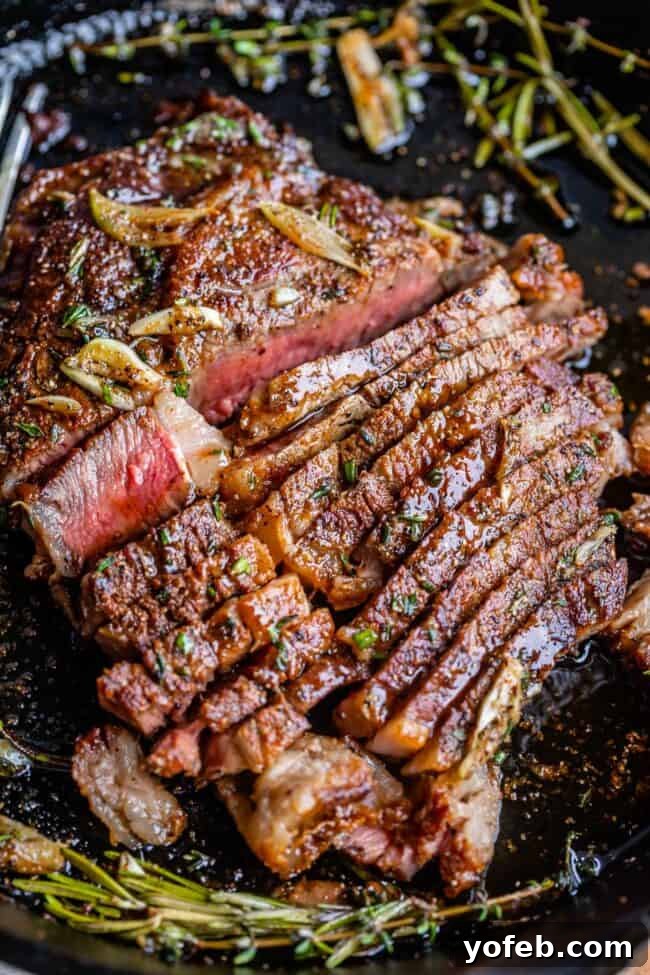
Why This Ribeye Recipe Will Change Your Steak Game
This isn’t just a recipe; it’s a paradigm shift for steak lovers. If you thought steak couldn’t get any better, prepare to be amazed by the addition of abundant garlic butter. It takes an already fantastic cut of meat and elevates it to legendary status. This method consistently delivers a steak so tender and bursting with flavor, it will rival any high-end steakhouse.
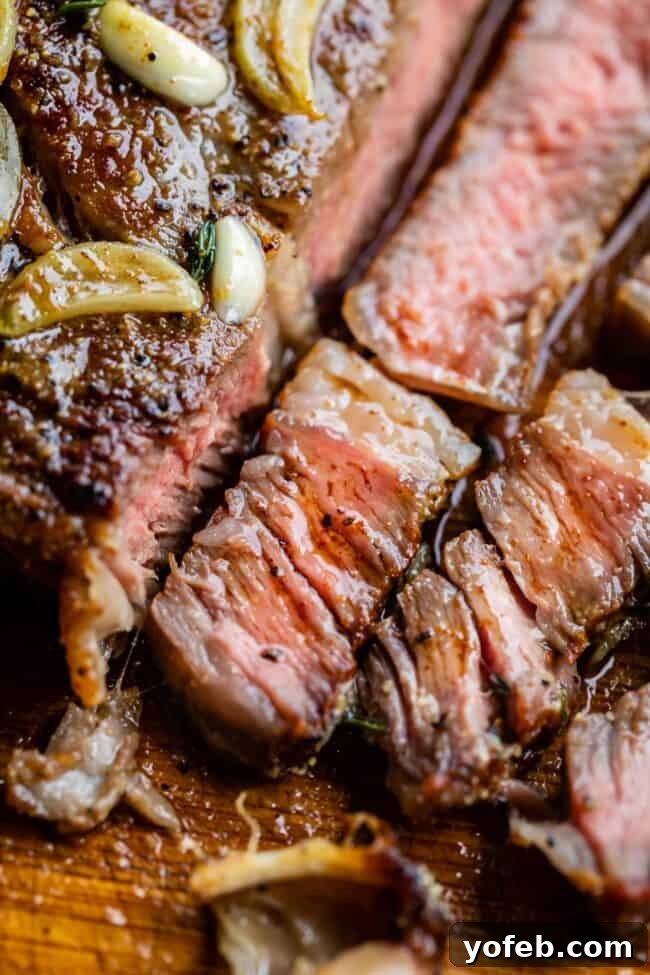
Featured Comment
“I’ve tried many steak recipes, including Gordon Ramsay’s, but this one has been my family’s favorite!”
– Ana
See All Comments
What is Ribeye Steak? A Cut Above the Rest
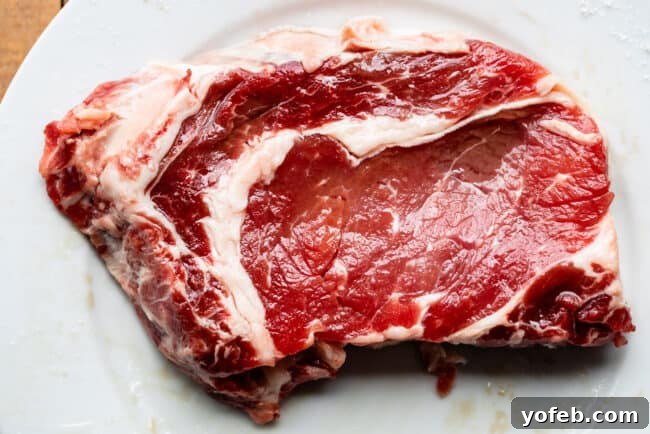
Ribeye steaks are a premium cut of beef, sourced from the upper rib cage area of the cow. This particular section of muscle is lightly worked, resulting in exceptional tenderness. What truly sets the ribeye apart is its generous fat marbling – those beautiful streaks of white fat woven throughout the red meat. This marbling is crucial because it melts during cooking, basting the meat from within, infusing it with incredible flavor, and ensuring a remarkably juicy and tender texture. This characteristic makes ribeye ideal for high-heat, fast-cooking methods, which we will employ to achieve culinary perfection.
(Note: This photo was taken approximately 5 hours after salting. Notice how the salt has been completely absorbed into the steak, a testament to its magical tenderizing process! More on salting techniques below.)
When selecting your ribeye, you’ll generally encounter three USDA grades in most grocery stores: Prime, Choice, and Select. USDA Prime is the highest quality, boasting the most abundant and finest marbling. Choice is a very good middle-ground option, offering good marbling and flavor. Select, while leaner, will generally require marinating or slower cooking methods to achieve desired tenderness, and is not recommended for this recipe’s high-heat approach.
While not all stores explicitly label steaks with these grades, higher-end butchers and specialty grocers typically stock Prime or high-quality Choice cuts. Don’t hesitate to ask your butcher for guidance; they can help you pick the best steak for your needs.
Selecting the Best Ribeye Steak for Unrivaled Flavor
Choosing the right ribeye is paramount to the success of this recipe. The most critical factor is seeking out abundant white marbling – those delicate veins of fat interwoven throughout the red muscle. Remember, fat equals flavor and juiciness! As your steak cooks, these fat deposits will render, basting the meat from within and ensuring an ultra-tender, succulent result.
Ribeye is an investment, so you want to ensure you cook it perfectly. This isn’t a difficult task, but it does require attention to detail and, crucially, a reliable meat thermometer. It’s the single most important tool to guarantee your steak is cooked exactly to your preferred doneness, avoiding both undercooking and overcooking this magnificent cut.
Essential Ingredients for Your Unforgettable Ribeye
Here’s a quick overview of what you’ll need to create the best ribeye steak. For precise measurements and step-by-step instructions, please refer to the full recipe card below.
For the Ribeye Steak:
- Ribeye Steak: Opt for a 1-pound ribeye with excellent marbling. Refer to the guidance above for selecting a top-quality cut.
- Kosher Salt: Essential for tenderizing and seasoning the steak from within. While table salt can be substituted, use about 1½ teaspoons total for this recipe, as it’s much denser.
- High-Heat Oil: Vegetable or canola oil is perfect for achieving a superb sear without burning.
For the Decadent Garlic Butter Sauce:
- Salted Butter: Any butter, salted or unsalted, will work as you’ll adjust seasoning to taste.
- Garlic Powder: Provides a consistent garlic flavor throughout the sauce.
- Freshly Ground Black Pepper: For a touch of subtle spice and aroma.
- Thyme: Fresh or dried, this herb adds an earthy, aromatic note.
- Rosemary: Fresh or dried, rosemary contributes a distinct, woody fragrance that beautifully complements beef.
- Fresh Garlic Cloves: Smashed and sliced to infuse the butter with intense garlic flavor.
While dried herbs are convenient, fresh herbs are a small luxury that truly elevates the dish, especially when you’re already investing in a quality ribeye!
How to Cook Ribeye Steak to Perfection
Grilling with a Cast Iron Pan: The Ultimate Method
My preferred method for cooking a ribeye steak is undoubtedly in a cast iron pan placed directly on the grill grates. This technique is a game-changer for several reasons. Remember how fat equals flavor? When you grill directly on a rack, some of that precious rendered fat drips away. A cast iron pan captures all those magnificent juices, ensuring every drop of flavor stays with your steak. Furthermore, cooking meat at such high temperatures generates a significant amount of smoke. By performing this on an outdoor grill, you can achieve that perfect sear without fear of setting off your indoor smoke alarm.
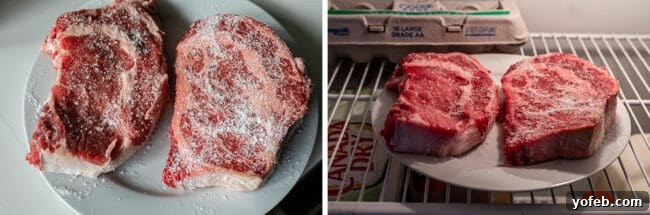
Begin your preparation roughly 24 hours in advance by generously salting your steak. (If time is tight, a minimum of 4 hours will still yield good results.) For a 1-pound steak, I recommend using approximately 1 teaspoon of kosher salt per side, ensuring the edges are also coated. While this may seem like a lot, a remarkable process occurs: the salt initially draws moisture out of the steak, then it is reabsorbed, carrying the salt’s flavor deep into the meat and contributing significantly to its tenderness. Place the salted steak uncovered in your refrigerator. This step, though unconventional, is vital for drying out the steak’s surface, which is key to achieving that incredibly desirable, crusty sear.
It’s crucial to use kosher salt, not fine table salt, for this step. Kosher salt’s larger, coarser flakes allow for more even distribution and better control over seasoning, significantly reducing the risk of over-salting compared to finer-grained table salt. More importantly, kosher salt dissolves more slowly, allowing it to penetrate and season the meat more thoroughly over time. Additionally, kosher salt is typically free of anti-caking agents and iodine, which can impart an undesirable metallic taste sometimes associated with table salt.
While I advocate for these measurements, if you are particularly sensitive to salt, you may reduce it slightly to ½ teaspoon of kosher salt per side, but no less, to ensure proper flavor penetration and tenderization.
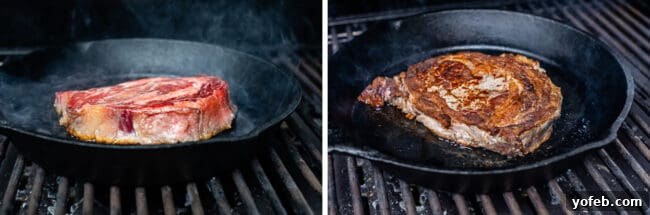
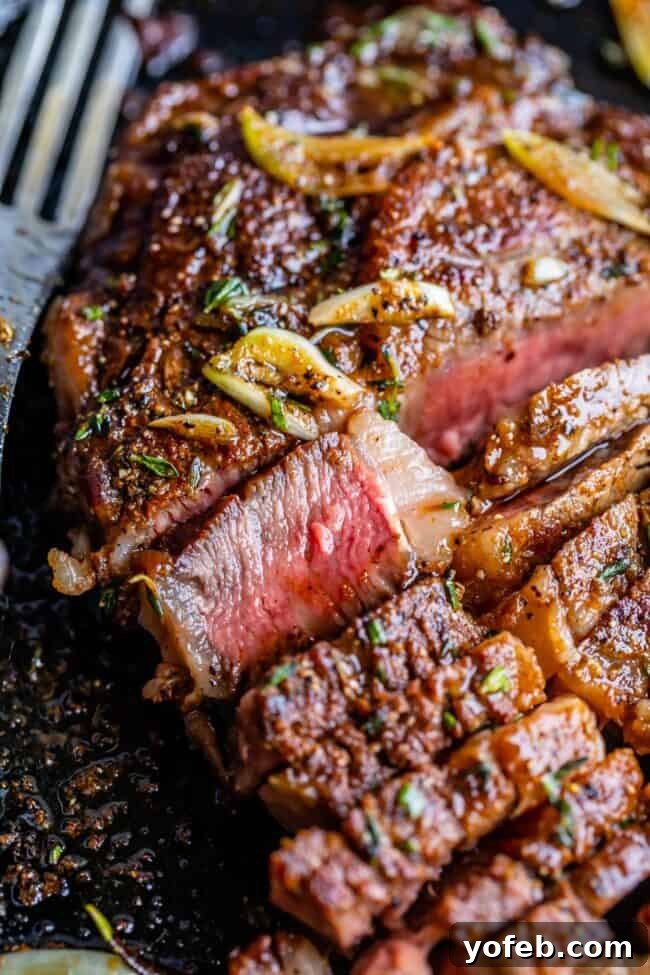
Observe that gorgeous, deep brown crust forming – that’s the sear we’re after, locking in all the delicious juices!
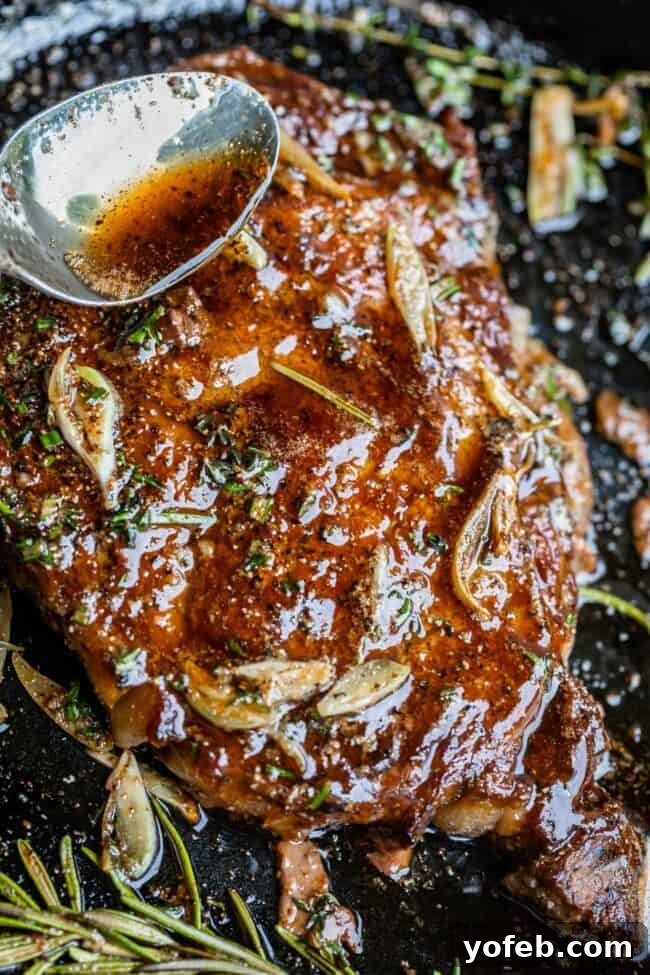
After achieving a perfect sear on both sides, reduce your grill’s heat to low. Now, introduce the star of the show: the garlic butter. As it melts and mingles with the pan drippings, it transforms into a nutty, aromatic elixir. Using a spoon, continuously baste the steak with this magical butter, ensuring every inch is coated and infused with flavor as it finishes cooking.
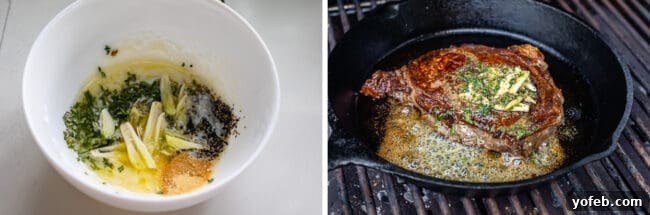
Continue basting and cooking on low heat until your steak reaches your desired internal temperature (refer to our cooking time chart below). A reliable meat thermometer is your best friend here, ensuring perfect doneness every time.
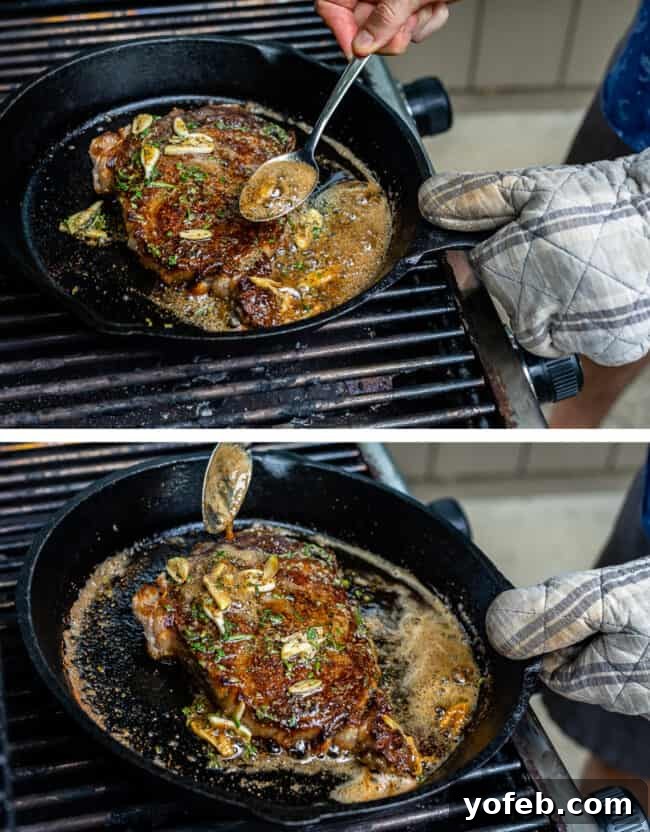
The entire cooking process, once searing begins, takes approximately 10 minutes. Remember to always use hot pads when handling the cast iron pan, especially on a hot grill! This outdoor method minimizes smoke and mess in your kitchen. Always remove the steak from the heat about 5 degrees Fahrenheit below your target doneness, as it will continue to cook as it rests (this is known as carryover cooking).
While cooking in a cast iron pan on the grill is my top recommendation, I understand that not everyone owns a skillet suitable for grilling. Fear not! I’ve included detailed instructions in the recipe card for cooking your ribeye directly on the grill rack. The core principles remain the same: achieve a super high-heat sear, flip, sear again, then reduce heat to low for finishing, and finally, top with that amazing garlic butter once off the grill. Consult the recipe card for a step-by-step guide tailored for grill rack cooking.
Cooking Ribeye Steak on the Stovetop
Full disclosure: cooking a ribeye to perfection indoors on the stovetop, especially with high heat, will likely set off your smoke alarm (and potentially your neighbor’s). But trust me when I say, IT IS ABSOLUTELY WORTH IT! The incredible flavor and sear you achieve are unparalleled.
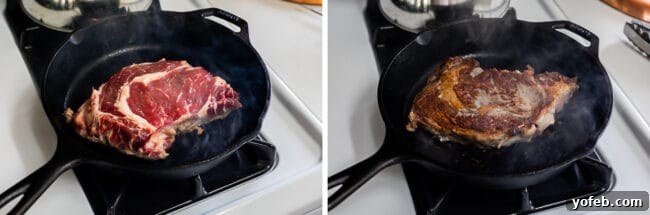
First and foremost, invest in a quality cast iron pan. While you can use any truly heavy-bottomed pan, a cast iron skillet delivers the best possible sear. Avoid flimsy, non-stick pans; they simply cannot handle the extreme heat required for this method. Cast iron’s superior heat retention and distribution are key to developing that irresistible crust.
The stovetop method mirrors the cast iron grill technique: sear both sides of the steak on super-high heat, then reduce the heat to low and continually baste with your rich garlic butter. It’s a rapid and effective way to cook. Just be prepared with open windows and a towel for your smoke detector! This is precisely why cooking it in a cast iron pan on the grill is often preferred – all the incredible flavor of a pan-seared ribeye, without the smoky indoor environment.
Achieving Your Desired Ribeye Doneness
For a 1-inch thick ribeye steak, expect a total grilling time of approximately 9-12 minutes. For a 1½-inch thick steak, this extends to about 12-15 minutes. This includes searing time on both sides and finishing on lower heat. Please note: these are total cooking times, meaning about 4-6 minutes per side! The most accurate way to cook steak is by temperature, not by time. Always use a reliable meat thermometer to ensure perfect doneness.
Once cooked, cover your steaks lightly with foil and allow them to rest for 5-10 minutes before slicing. This crucial resting period allows the juices to redistribute throughout the meat, resulting in a more tender and flavorful steak.
If your steak is thicker than 1½ inches, you may need to adjust the cooking time upwards. For very thick cuts, sear the meat aggressively on both sides over high heat, then move it to an area of indirect heat on your grill to finish cooking until it reaches your desired internal temperature.
Don’t just take my word for it, here’s a detailed guide to achieve your perfect steak doneness:
| Your Preference | Remove from Heat at this Temperature |
Final Cooked Temperature |
| Rare | 120-125°F | 125-130°F |
| Medium Rare | 130-135°F | 135-140°F |
| Medium | 140-145°F | 145-150°F |
| Medium Well | 150-155°F | 155-160°F |
| Well Done | 160-165°F | 165-170°F |
*A note on spelling: You might notice “Rib Eye” and “Ribeye” used interchangeably throughout this post. Both spellings are widely accepted. Interestingly, this cut of beef is known as “Scotch fillet” in Australia and New Zealand. The more you know!
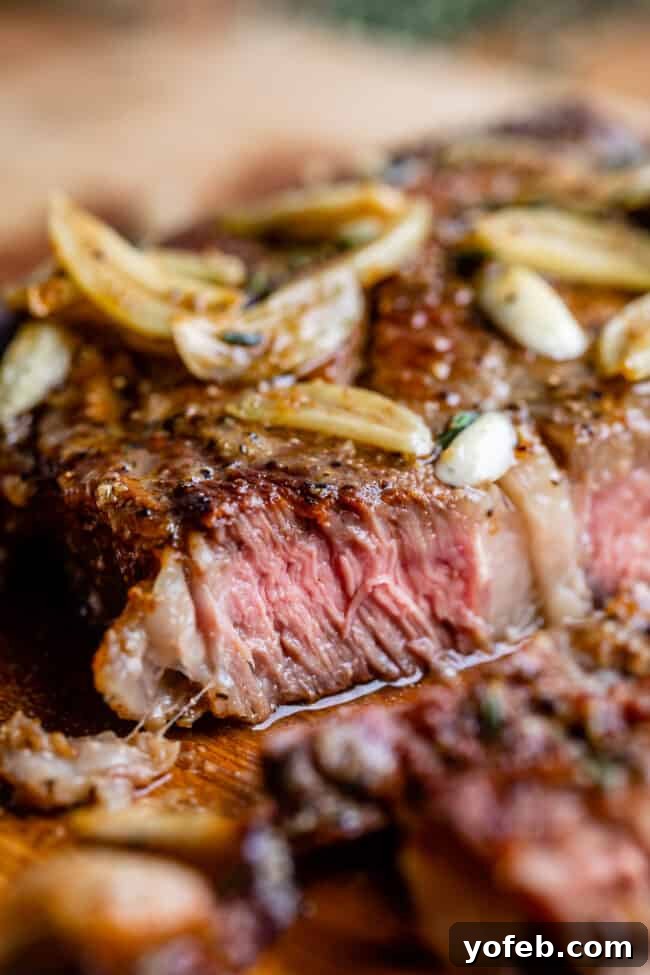
How Can I Make My Ribeye Juicy and Tender?
The beauty of a ribeye steak is its inherent juiciness and tenderness, thanks to its exceptional marbling. Your primary goal isn’t to tenderize a tough cut, but rather to preserve and enhance the natural quality of this premium meat. This comes down to a few critical steps:
- The Power of Salt: Salting well in advance is the secret weapon. Initially, salt draws moisture from the steak, but then it reabsorbs, carrying flavor deep into the meat and naturally tenderizing every fiber, not just the surface. If using fine table salt instead of kosher salt, remember to reduce the quantity to about 1½ teaspoons total to avoid over-salting.
- Mastering the Sear: After salting, place your ribeye uncovered on a plate in the refrigerator. This essential step allows the surface of the steak to dry out completely, which is crucial for achieving that incredible, crusty sear when it hits the hot pan or grill. A dry surface means a better sear and a more flavorful crust.
- Room Temperature Start: Approximately 30 minutes before cooking, remove your salted steak from the refrigerator and let it come to room temperature on the counter. Cooking a cold steak can lead to uneven results – overcooked edges and an undercooked center. A room-temperature steak cooks more evenly.
- Never Overcook: This cannot be stressed enough. A ribeye’s natural tenderness and juiciness are easily compromised by overcooking. Invest in a reliable meat thermometer and use it! Pull your steak off the heat a few degrees before your target doneness to account for carryover cooking during resting.
Preserving the Excellence: Ribeye Storage Tips
Let’s be honest: a freshly cooked ribeye, hot off the grill or pan, is an experience best enjoyed immediately. While it’s perfectly safe to store cooked ribeye in the refrigerator for 3-5 days, reheating it improperly will significantly diminish its quality. Microwave reheating is almost guaranteed to ruin its tender texture and perfect doneness, transforming a beautiful medium-rare into a sad, overcooked piece of meat. To avoid this culinary tragedy, I strongly recommend cooking only the amount you intend to consume right away.
However, if you do find yourself with leftovers, the best method for reheating is the oven. Preheat your oven to a low 250°F (120°C). Place the steak on a wire rack over a baking sheet and gently warm it for about 15-20 minutes, or until just heated through. This low, slow method helps preserve its moisture and prevents further cooking, allowing you to enjoy a near-perfect experience the second time around.
Frequently Asked Questions About Ribeye Steak
For a high-quality cut like ribeye, a marinade is generally unnecessary and can even mask its inherent rich flavor. The marbling in a ribeye provides all the natural tenderness and flavor you need. My philosophy is: when you invest in a prime cut, let its natural attributes shine! A simple, generous salting well in advance is all that’s required to enhance its flavor and texture. Save those marinades for leaner, tougher cuts that genuinely benefit from their tenderizing properties.
Absolutely! The ribeye is widely considered one of the finest cuts of steak, especially for those who appreciate a rich, beefy flavor and incredibly tender, juicy texture. Its generous marbling ensures a melt-in-your-mouth experience when cooked correctly. It’s essentially the individual serving version of a prime rib roast. When paired with a USDA Prime or high-Choice grade, a ribeye is an exceptional choice for any steak enthusiast.
In the United States, “rib steak” and “ribeye” refer to the same cut of meat. The primary distinction often lies in whether the bone is still attached. A “bone-in ribeye” might simply be called a “rib steak.” If you’ve encountered a “tomahawk steak,” that’s essentially a bone-in ribeye with an extended rib bone, giving it a distinctive “handle” appearance. While visually impressive, the bone-in variety often commands a higher price.
My absolute favorite method is cooking ribeye steak in a cast iron pan placed directly on an outdoor grill. This ingenious approach combines the intense, even heat of cast iron for a phenomenal sear with the benefits of outdoor cooking, keeping smoke and grease splatter out of your kitchen. It also ensures those delicious pan juices stay with your steak. This versatile method is also fantastic for burgers!
For ribeye steak, fast and hot is the way to go! This cut thrives on high-heat searing to develop a beautiful, flavorful crust while maintaining a tender and juicy interior. Tougher cuts of meat benefit from low and slow cooking to break down connective tissues, but a well-marbled ribeye requires minimal cooking time to reach perfection.
Both methods are excellent, and combining them, as I suggest, offers the best of both worlds. Grilling provides that wonderful smoky char, while pan-frying (especially in cast iron) ensures a consistent, all-over sear and retains all the flavorful juices. My preferred “hybrid” method of using a cast iron pan on the grill mitigates the mess and smoke of indoor pan-frying while maximizing flavor and sear quality. It’s a method that promises a calm (or calmer!), delicious endeavor.
What to Serve with Your Decadent Ribeye Steak
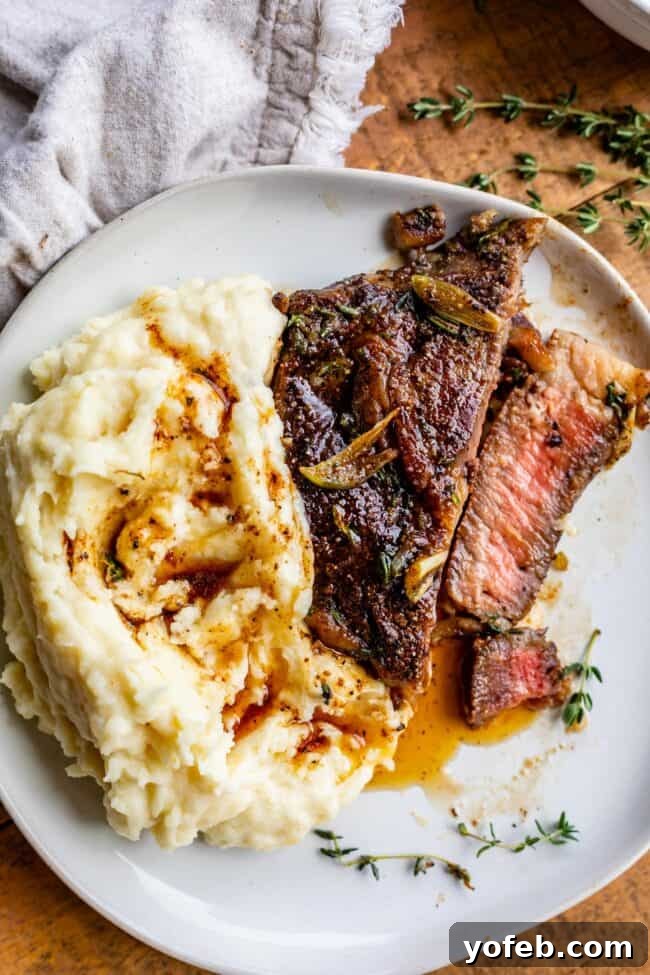
A phenomenal ribeye steak demands equally incredible accompaniments. My absolute favorite pairing is with a generous dollop (or, let’s be real, a mountain!) of creamy mashed potatoes. While some might suggest lighter, healthier sides, I firmly believe that steak night is the perfect occasion to indulge in the sublime combination of rich beef and decadent potatoes. Trust me, once you try this duo, you’ll understand that steak + potatoes = life.
With potatoes as creamy and flavorful as Aunt Shirley’s Mashed Potatoes, you won’t even need gravy. The richness of the garlic butter sauce from the steak is designed to be spooned over everything on your plate, including those fluffy potatoes. Cooked hot and fast, this butter sauce develops a deep, nutty, browned butter flavor that is utterly distinct and heavenly. Imagine drizzling that browned butter over your mashed potatoes – pure bliss!
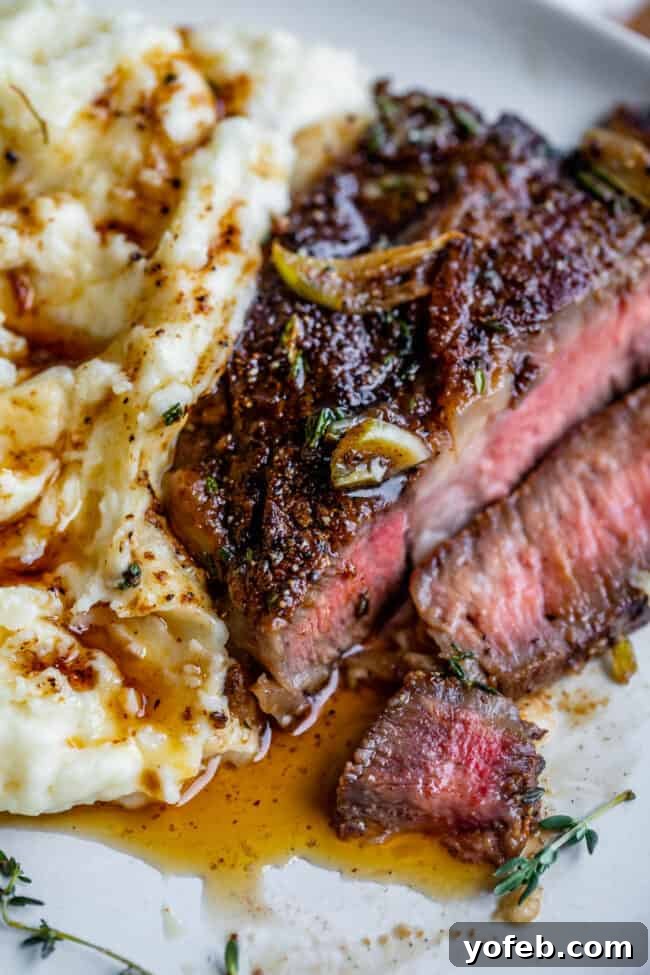
Steakhouse-Worthy Side Dishes to Complement Your Ribeye
Beyond the classic mashed potatoes, here are more incredible side dish ideas to elevate your steak dinner to a true steakhouse experience. Because for me, it’s always #TeamPotatoes, but variety is also the spice of life!
- The BEST Mac N Cheese – A rich, creamy, and undeniably perfect classic that pairs beautifully with a hearty steak.
- Roasted Red Potatoes in Oven – Crispy on the outside, tender on the inside, these potatoes offer a delightful textural contrast.
- Roasted Brussels Sprouts and Roasted Sweet Potatoes – A vibrant and flavorful combination of roasted vegetables that adds both sweetness and earthiness.
- Parmesan Potato Gratin – Layers of thinly sliced potatoes baked with savory Parmesan cheese create an indulgent, cheesy side.
- Soft and Fluffy Parker House Rolls – Unbelievably soft and buttery, these rolls are perfect for soaking up every last bit of that delicious garlic butter.
- Strawberry Spinach Salad – For those seeking a lighter, refreshing counterpoint to the rich steak, this vibrant salad is ideal.
- Caesar Salad from Two Peas and Their Pod – A timeless steakhouse favorite with a zesty, creamy dressing.
- Creamed Spinach from Preppy Kitchen – Luxuriously creamy and flavorful, this is a classic steakhouse staple for a reason.
- Mini Wedge Salads from The Yummy Muffin – Crisp lettuce, crunchy bacon, and blue cheese dressing make for a perfectly balanced side.
I genuinely hope you take the opportunity to try this incredible ribeye steak recipe soon. It’s a guaranteed way to impress, whether for a special occasion or just a fantastic weeknight meal!
Facebook | Pinterest | Instagram

Ribeye Steak
10 minutes
10 minutes
8 hours
20 minutes
2
Servings
Equipment
-
Cast Iron Skillet
-
Meat Thermometer
Ingredients
-
1
pound
ribeye steak,
well marbled (see notes on selecting) -
2
teaspoons
kosher salt *,
use less salt if you don’t have kosher, see note -
1-2
teaspoons
vegetable or canola oil
For the Garlic Butter Sauce
-
3-4
tablespoons
salted butter,
melted -
1/2
teaspoon
garlic powder -
1/2
teaspoon
black pepper -
1
teaspoon
fresh thyme,
or 1/2 teaspoon dried thyme -
1
teaspoon
fresh rosemary,
or 1/2 teaspoon dried rosemary -
2
cloves
garlic,
smashed and sliced into strips -
2-3
sprigs fresh thyme -
2-3
sprigs fresh rosemary -
additional salt,
to taste, as needed
Instructions
-
1. Choose your ribeye steak: Select either bone-in or boneless ribeye for this recipe. Prioritize high-quality steak, ideally USDA Prime or, at minimum, Choice grade. Avoid Select grade for this high-heat method. Look for generous white marbling throughout the meat, as fat equals flavor and juiciness.
-
2. Prepare your ribeye steak (4-48 hours in advance): Generously rub your steak with kosher salt. For a 1-pound steak, use 2 teaspoons of kosher salt (1 teaspoon per side, ensuring edges are coated). This may seem like a lot, but the salt will first draw out moisture, then reabsorb, tenderizing and flavoring the entire steak. Place the salted steak uncovered on a plate in your refrigerator. This allows the steak to dry out, which is essential for an incredible sear. (NOTE: If using fine table salt, use a total of 1¼ teaspoons, or even less if you are salt-sensitive).
-
3. Bring to room temperature (30 minutes before cooking): Remove your salted steak from the fridge and let it rest on the counter for at least 30 minutes. Cooking a cold steak can lead to uneven cooking. Just before cooking, drizzle the steak with 1-2 teaspoons of canola or vegetable oil (or any high-heat oil) and rub it all over the steak, ensuring it’s well coated.
-
4. Make the garlic butter sauce: In a small, microwave-safe bowl, melt 3-4 tablespoons of salted butter. (More butter means more delicious drizzling sauce!) Stir in ½ teaspoon garlic powder, ½ teaspoon black pepper, 1 teaspoon fresh thyme leaves, and 1 teaspoon chopped fresh rosemary (or ½ teaspoon each dried thyme and rosemary). Smash two garlic cloves with the side of a chef’s knife, peel them, and slice into strips. Add the sliced garlic to the butter mixture. Stir well and set aside. If using fresh herb sprigs, have them ready nearby.
Grill Method with Cast Iron Skillet
-
1. Preheat grill and skillet: Place your dry cast iron skillet directly onto the grill rack. Preheat your grill to high heat (aim for 600-700°F if possible) with the lid closed for at least 15 minutes. Ensure the skillet is also screaming hot. If using a charcoal grill, create two heat zones: one for high heat and another for low/indirect heat.
-
2. Oil the steak: If you haven’t already, drizzle the steak with 1-2 teaspoons of high-heat oil (canola or vegetable) and rub it evenly over the entire surface.
-
3. Prepare your tools: Have hot pads, tongs, a meat thermometer, your prepared garlic butter, and a basting spoon readily available. Review the doneness temperatures in the notes section to decide your desired outcome.
-
4. Sear the steak: Carefully place the well-oiled steak into the dry, screaming hot skillet. It will produce a lot of smoke, which is normal. Sear the first side for 1-3 minutes with the grill lid open, until a very dark, beautiful brown crust forms. Flip the steak with tongs and sear the second side for another 1-2 minutes until similarly browned. Keep the lid open during searing.
-
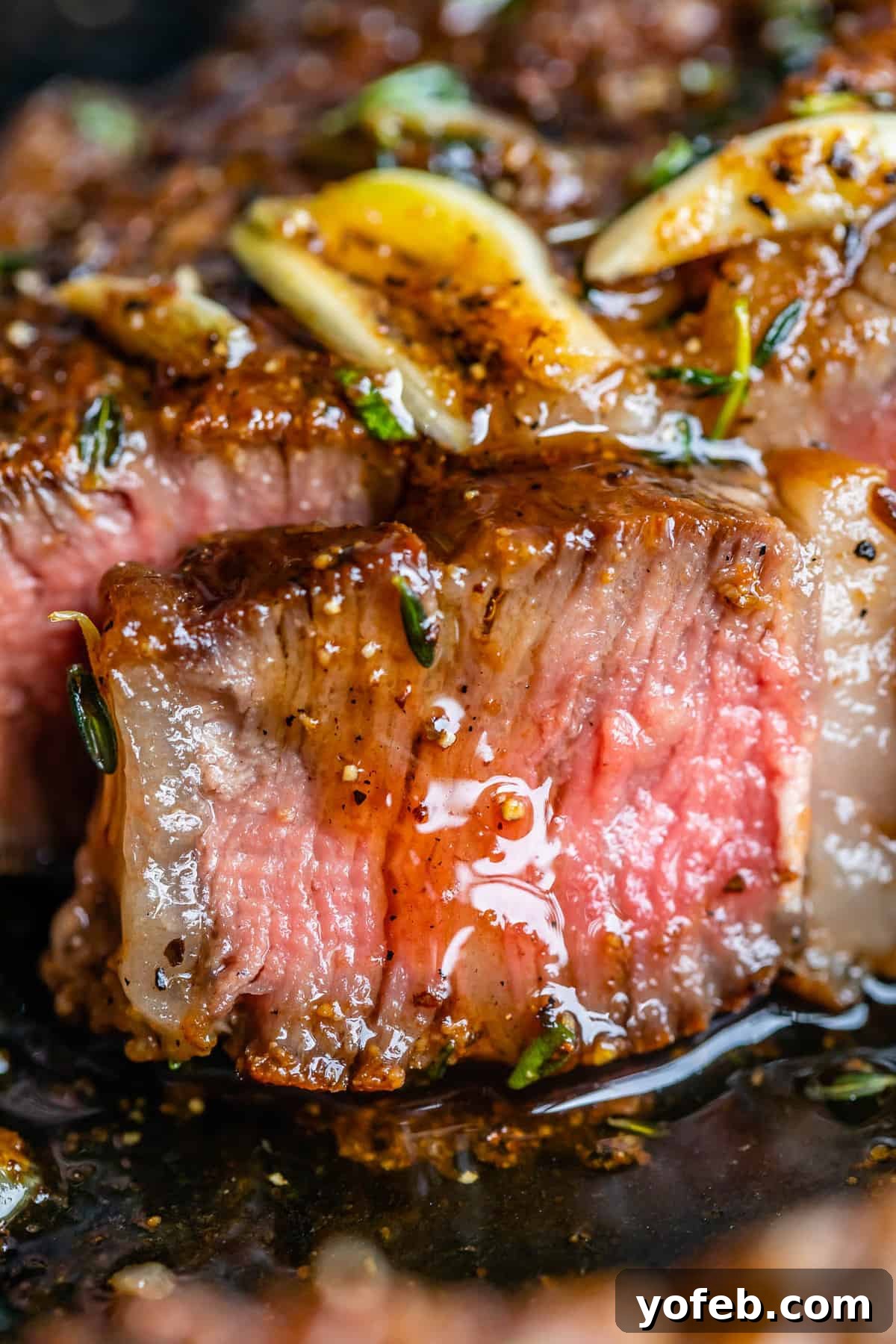
5. Finish cooking and baste with garlic butter: Reduce the grill heat to low (or move the skillet to the low-heat zone). When the steak’s internal temperature is about 5-10 degrees below your target doneness, add the garlic butter mixture directly onto the steak in the pan. If using fresh herb sprigs, add them to the pan now. Using hot pads, carefully tilt the pan to allow the butter to pool, then use your spoon to continuously drizzle and baste the steak with the melting garlic butter. Move the garlic slices and herbs around to ensure even infusion of flavor, then spoon them onto the steak once slightly browned to prevent burning.
-
6. Check temperature and rest: For medium-rare perfection (my personal favorite, and what the photos show), the steak should finish cooking in about 5 minutes on low heat after searing. Remove your steak from the heat when it reaches approximately 120°F (for a 125°F medium-rare final temperature), remembering that it will continue to cook as it rests.
-
7. Serve: Transfer the steak, along with all the delicious pan juices and garlic butter, to a plate or rimmed platter. Tent loosely with foil and let it rest for a crucial 5-10 minutes before slicing against the grain. Serve immediately, passing the remaining garlic butter sauce at the table for guests to spoon over their steak.
Grill Method without Skillet (Direct Grilling)
-
1. Preheat grill: Preheat your grill to high heat (aim for 600-700°F) for at least 15 minutes. If using a non-gas grill, establish two heating zones: one high heat, one low heat. Ensure your grill grates are clean.
-
2. Oil the steak: Drizzle the steak with 1-2 teaspoons of high-heat oil (canola or vegetable) and rub it all over the steak.
-
3. Prepare the garlic butter: In a small saucepan, combine 3-4 tablespoons butter, ½ teaspoon garlic powder, ½ teaspoon black pepper, 1 teaspoon fresh thyme leaves (or ½ teaspoon dried), 1 teaspoon fresh rosemary (or ½ teaspoon dried), and 2 cloves sliced garlic. Add fresh herb sprigs if using. Cook over medium heat for 2-4 minutes until the butter browns lightly and the garlic is fragrant and slightly toasted. Remove from heat and set aside.
-
4. Grill and finish: Lightly oil the grill grates. Place the steak over high heat, close the lid, and sear for 1-3 minutes until distinct grill marks appear. Flip the steak and sear the other side for another 1-3 minutes. Turn the grill heat to low (or move the steak to your low-heat zone). Continue cooking with the lid shut for 3-5 minutes, checking with a meat thermometer until it registers 5 degrees below your desired final temperature (refer to notes for doneness). For medium-rare, a 1-inch steak typically takes 9-12 minutes total. I remove mine around 120°F.
-
5. Rest and serve: Remove the steak to a plate or rimmed platter. Immediately spoon the cooked garlic butter generously over the top of the steak. Cover with foil and let rest for 5-10 minutes before slicing against the grain and serving.
Stovetop Method (Pan-Seared)
-
1. Oil the steak: Drizzle the steak with 1-2 teaspoons of high-heat oil (canola or vegetable) and rub it all over the steak.
-
2. Preheat skillet: Place your dry cast iron skillet on a burner over high heat. Allow the pan to preheat for at least 5 minutes until it’s very hot and possibly smoking lightly – this is crucial for a good sear.
-
3. Sear the steak: Carefully add the well-oiled steak to the dry, hot pan. Sear for 1-3 minutes until a deep golden-brown crust forms. Use tongs to flip and sear the other side for another 1-3 minutes.
-
4. Reduce heat: Turn the burner heat down to low.
-
5. Baste and finish: When your steak is about 10 degrees below your target doneness (typically around the time you reduce the heat), add the garlic butter mixture on top of the steak in the pan. If using fresh herb sprigs, add them now. Use hot pads to tilt the pan, allowing the butter to pool, then continually spoon and baste the steak with the rich garlic butter. Move the garlic slices and herbs to ensure they brown slightly, then spoon them onto the steak to prevent burning.
-
6. Check temperature and rest: For medium-rare (my recommendation), the steak should finish cooking in approximately 5 minutes on low heat after searing. Remove your steak from the heat when it reaches about 120°F, knowing it will continue to cook and rise about 5 degrees during resting.
-
7. Serve: Transfer the steak and all the flavorful juices to a plate or rimmed platter. Cover loosely with foil and let it rest for a vital 5-10 minutes before slicing against the grain and serving. Be sure to pass the remaining butter sauce at the table!
Video
Notes
This recipe is easily scalable! Feel free to double or triple the ingredients as needed. (And yes, you absolutely can double the garlic butter sauce – you won’t regret it!) If you only have one cast iron pan, cook the steaks in batches. Scrape the pan well between batches to prevent any leftover bits from burning. Keep cooked steaks warm by covering them and placing them in an oven set to 170°F (77°C).
Doneness Temperatures
Crucially, remove your steak from the heat when its internal temperature is 5 degrees below the desired final doneness listed below. This accounts for “carryover cooking,” where the steak continues to cook as it rests. For example, if you aim for a final medium-rare at 125°F (which is what the photos depict and my preferred level), take it off the heat at 120°F.
Rare: 120°F (final 125°F)
Medium Rare: 125°F (final 130°F)
Medium: 135°F (final 140°F)
Medium Well: 140°F (final 145°F)
Well done: (I highly discourage this for a ribeye. Consider making a pot roast instead.)
Nutrition
Serving:
1
serving
|
Calories:
643
kcal
|
Carbohydrates:
1
g
|
Protein:
46
g
|
Fat:
51
g
|
Saturated Fat:
27
g
|
Polyunsaturated Fat:
2
g
|
Monounsaturated Fat:
20
g
|
Trans Fat:
1
g
|
Cholesterol:
183
mg
|
Potassium:
629
mg
|
Fiber:
1
g
|
Sugar:
1
g
|
Vitamin A:
562
IU
|
Vitamin C:
1
mg
|
Calcium:
25
mg
|
Iron:
4
mg
Main Course
American
643
ribeye, Steak, grilled ribeye, pan-seared steak, garlic butter steak
Did you make this? I’d love to see it!
Mention @thefoodcharlatan or tag #thefoodcharlatan!