
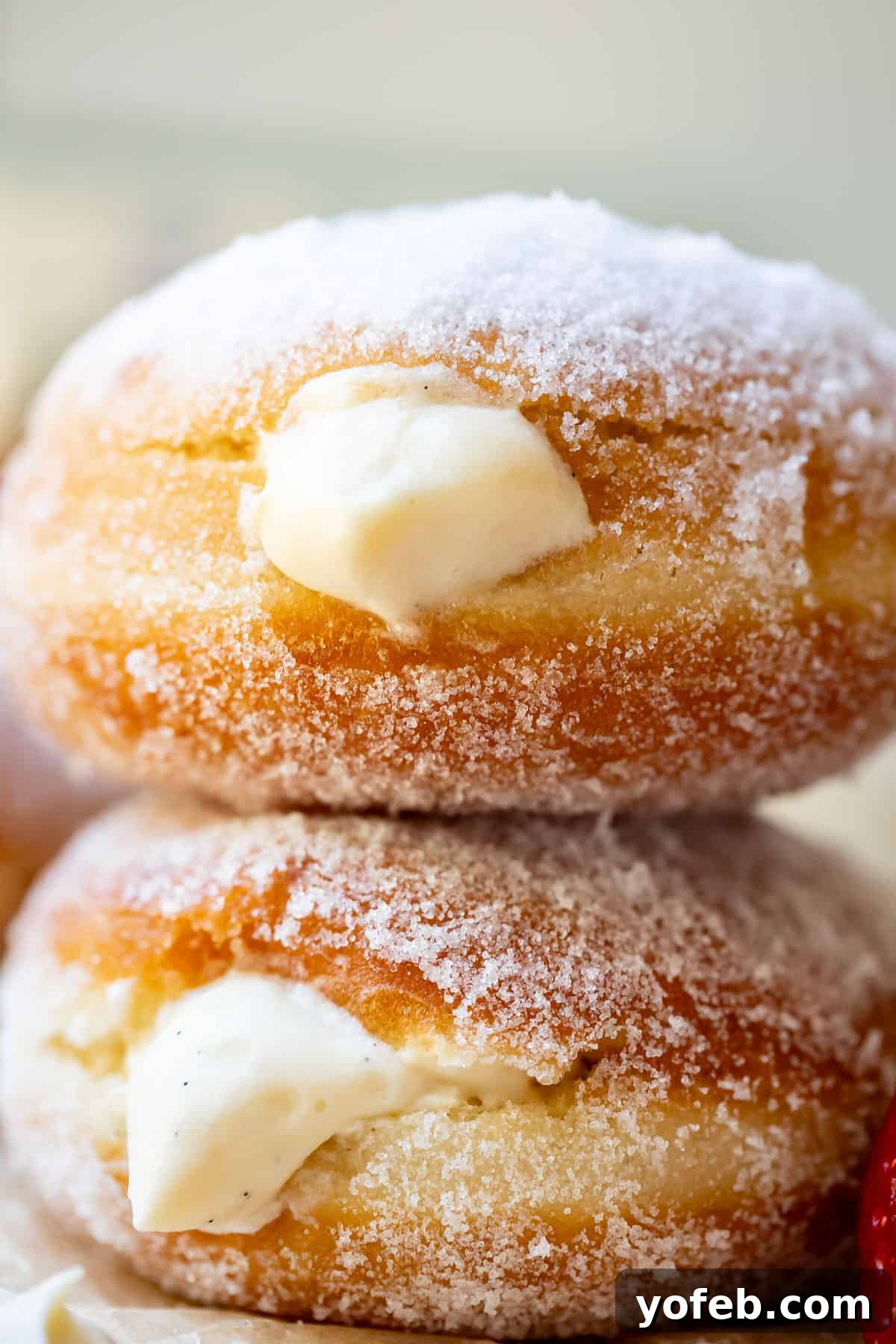
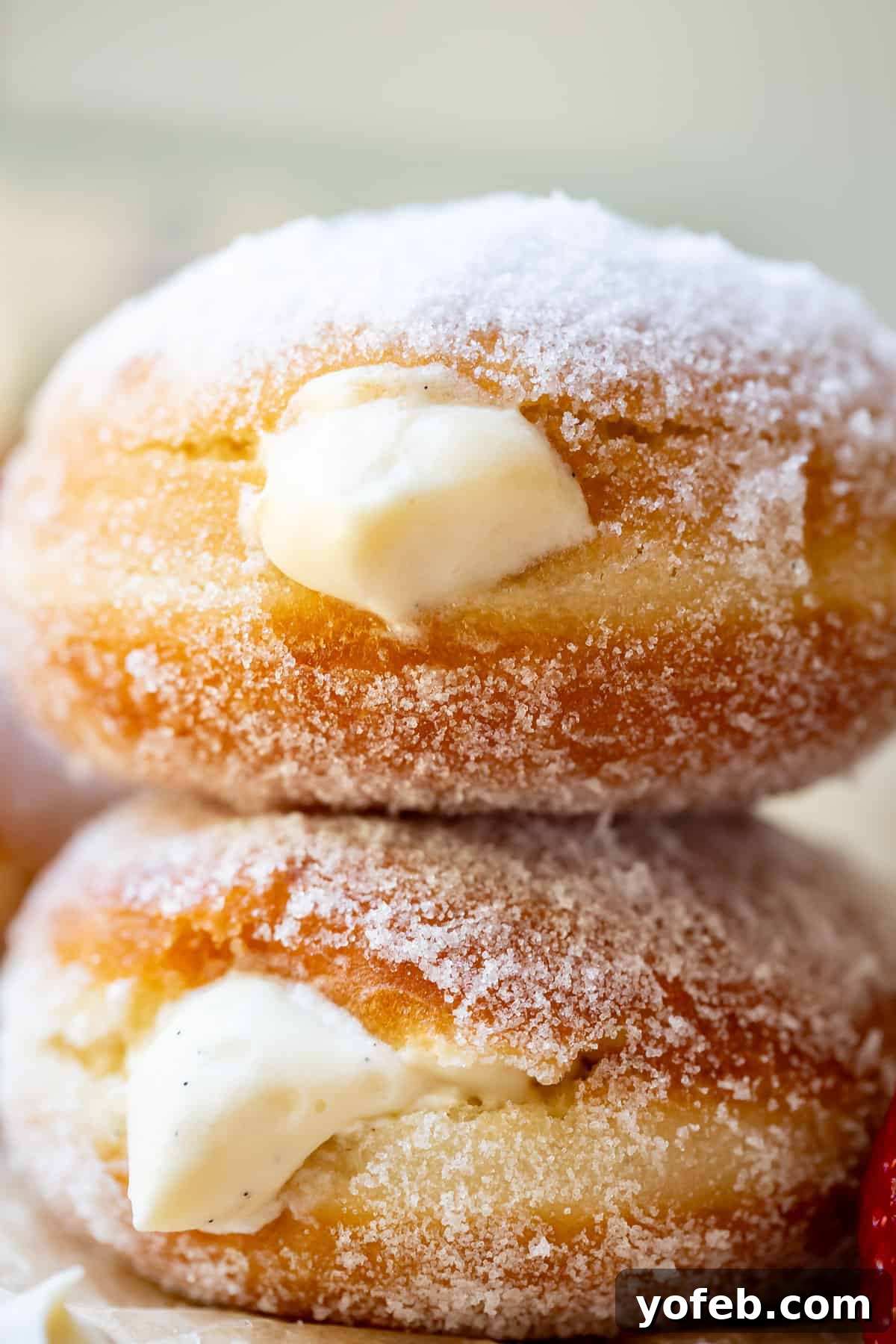
There are few things as comforting and utterly delightful as a freshly baked donut. But what takes a soft, puffy donut to an entirely new level of indulgence? A rich, creamy filling! Enter the **Bavarian Cream Donut**, a timeless classic that has captured hearts (and taste buds) for generations. Imagine a perfectly fried, airy dough, generously rolled in glistening sugar, then bursting with a luscious, vanilla-infused custard that’s been lightened with whipped cream. This isn’t just a treat; it’s an experience – a truly irresistible and decadent masterpiece that promises pure bliss with every bite. If you’ve ever dreamed of recreating this bakery favorite in your own kitchen, you’re in the right place. I’m going to guide you through every step, ensuring your homemade Bavarian Cream Donuts are nothing short of spectacular.
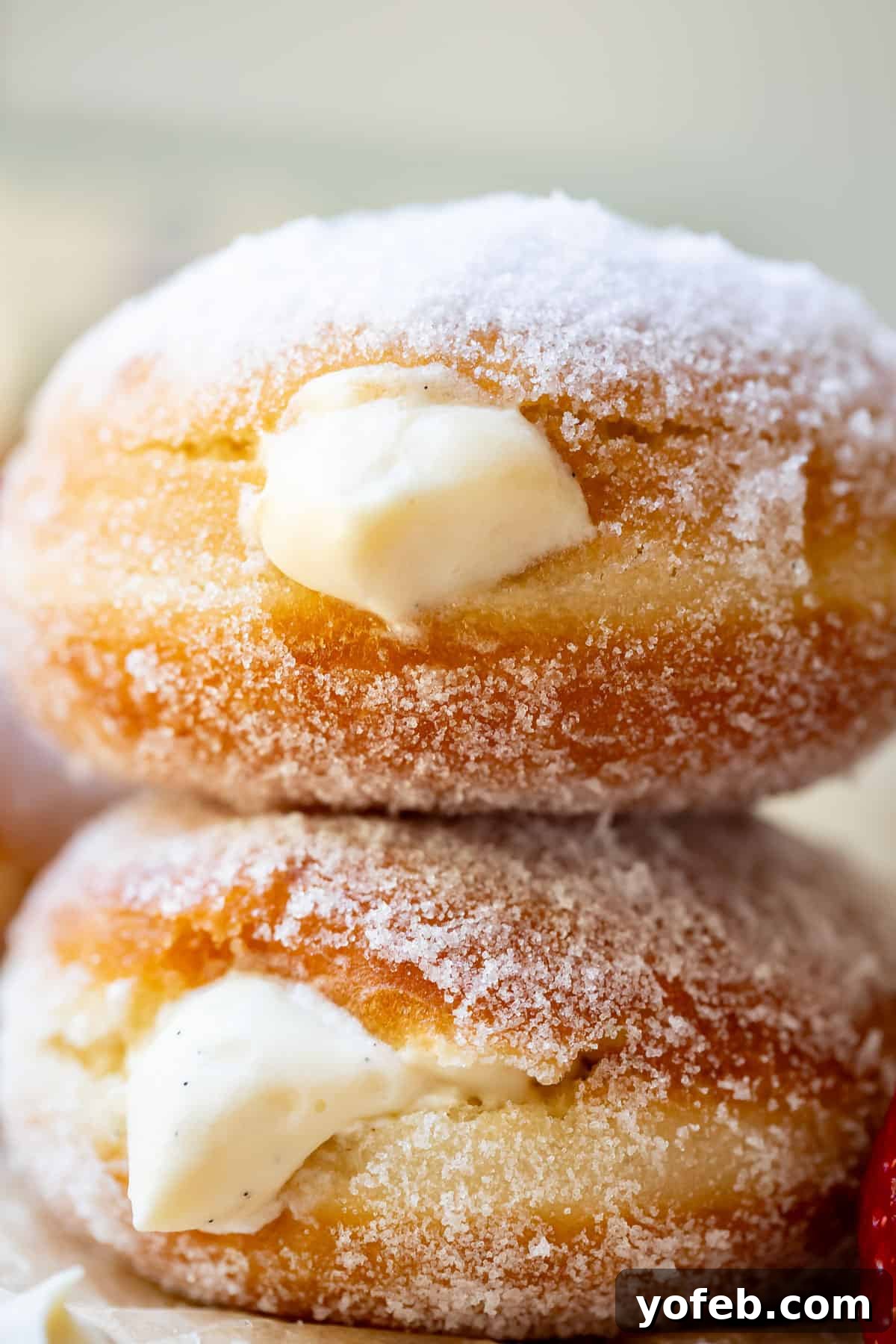
Table of Contents
- Bavarian Cream Donuts: The Ultimate Guide
- What Exactly is a Bavarian Cream Donut?
- Essential Ingredients for Bavarian Cream Donuts
- Step-by-Step: Crafting Your Own Bavarian Cream Donuts
- Beyond Bavarian: Creative Donut Filling Ideas
- Perfect Pairings: What to Serve with Cream-Filled Donuts
- Storing Bavarian Cream Donuts: Refrigeration Essentials
- Freezing Cream-Filled Donuts: What You Need to Know
- Frequently Asked Questions About Bavarian Cream Donuts
- More Irresistible Pastry Recipes You’ll Love!
- Bavarian Cream Donuts Recipe Card
Life can be a bit chaotic sometimes, filled with unexpected surprises (like mistaking a bag of frozen cauliflower rice for a reusable ice pack, a story for another day!). But amidst the everyday hustle, there’s always room for a little homemade joy. For me, that joy often comes in the form of freshly baked goods, especially these heavenly cream-filled donuts. There’s something truly therapeutic about the process of kneading dough, watching it rise, and then transforming simple ingredients into a treat that brings smiles to everyone’s faces. So, when the world feels a little off-kilter, whipping up a batch of these glorious Bavarian Cream Donuts is my go-to remedy. It’s a rewarding culinary adventure that always pays off with pure, sweet delight.
These Bavarian Cream Donuts are more than just a recipe; they are a celebration of comfort food at its finest. They’re perfect for special occasions like birthdays and holidays, but also simple enough to brighten any lazy weekend. Imagine gathering with friends or family, making these together, and savoring the warm, sweet aroma filling your home. This recipe is designed to be approachable for home bakers, ensuring that even if you’re new to donut making, you’ll achieve impressive, bakery-quality results. Let’s dive into creating these pillowy, cream-filled dreams!
Bavarian Cream Donuts: The Ultimate Guide
Welcome to the grand finale of our donut-making series! If you’ve been following along, you’ve already mastered our irresistible Glazed Donut recipe and whipped up a batch of our silky smooth homemade Pastry Cream. Now, it’s time to bring all those delicious components together to create the ultimate Bavarian Cream Donut. This recipe combines the best of both worlds: a light, airy yeast donut base with a rich, velvety custard filling. Get ready to experience pure donut perfection!
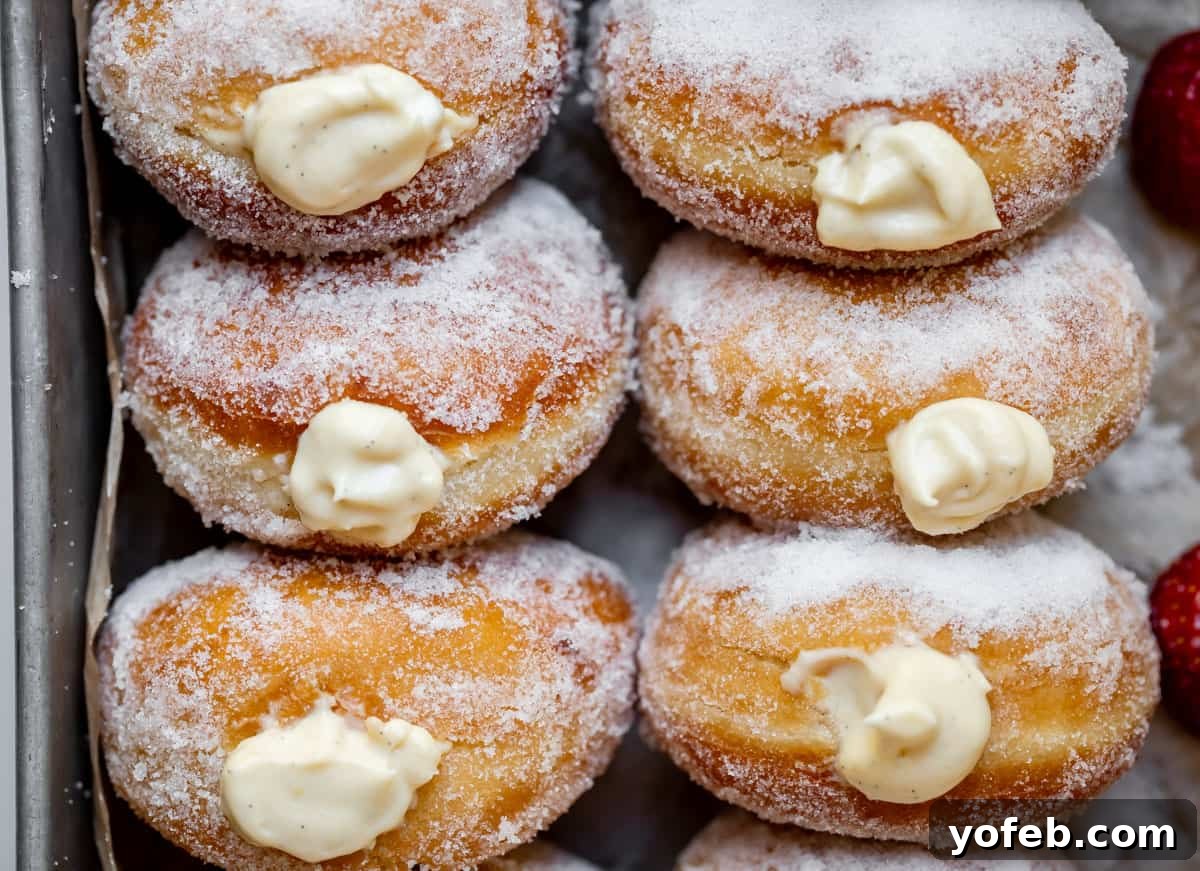
What Exactly is a Bavarian Cream Donut?
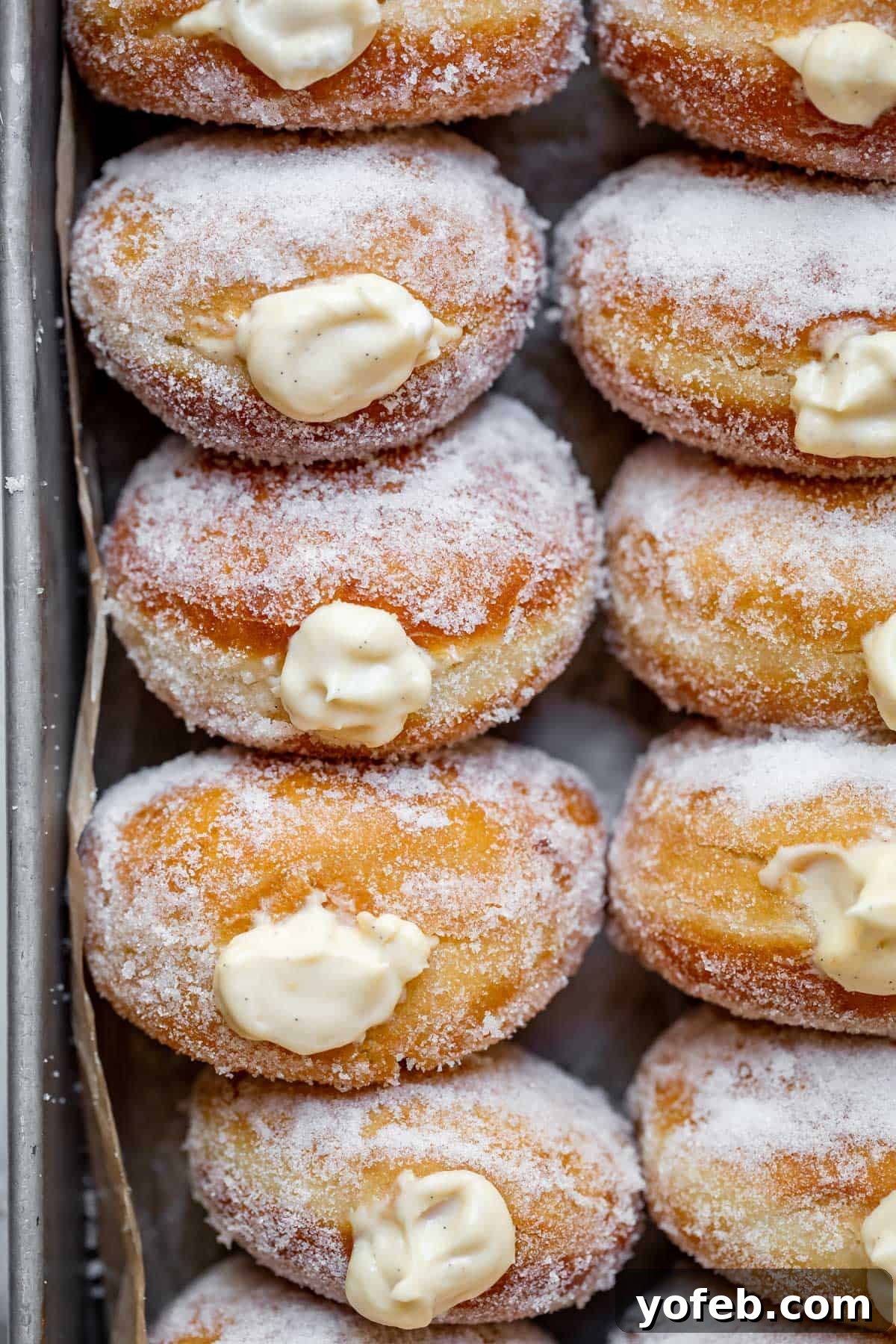
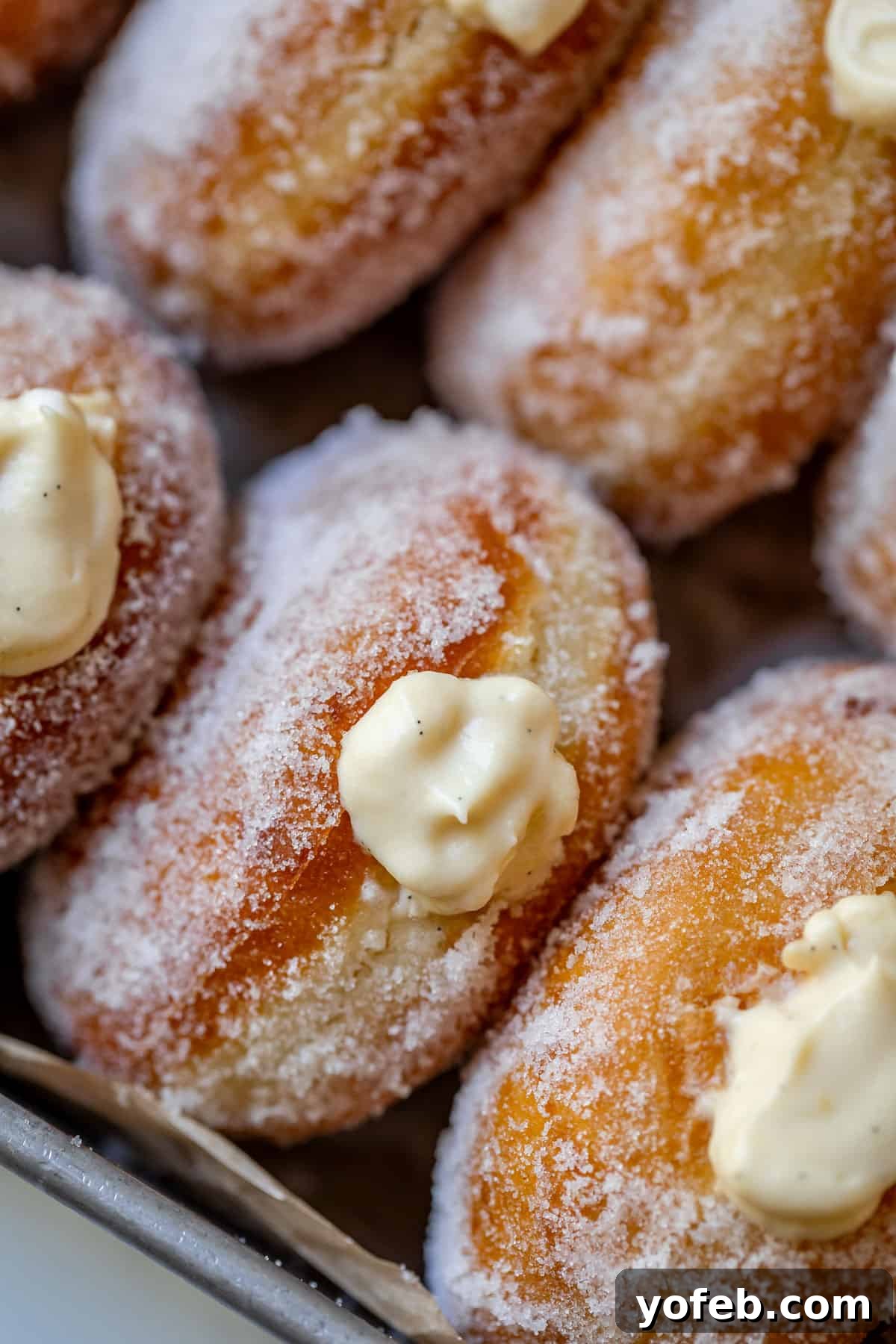
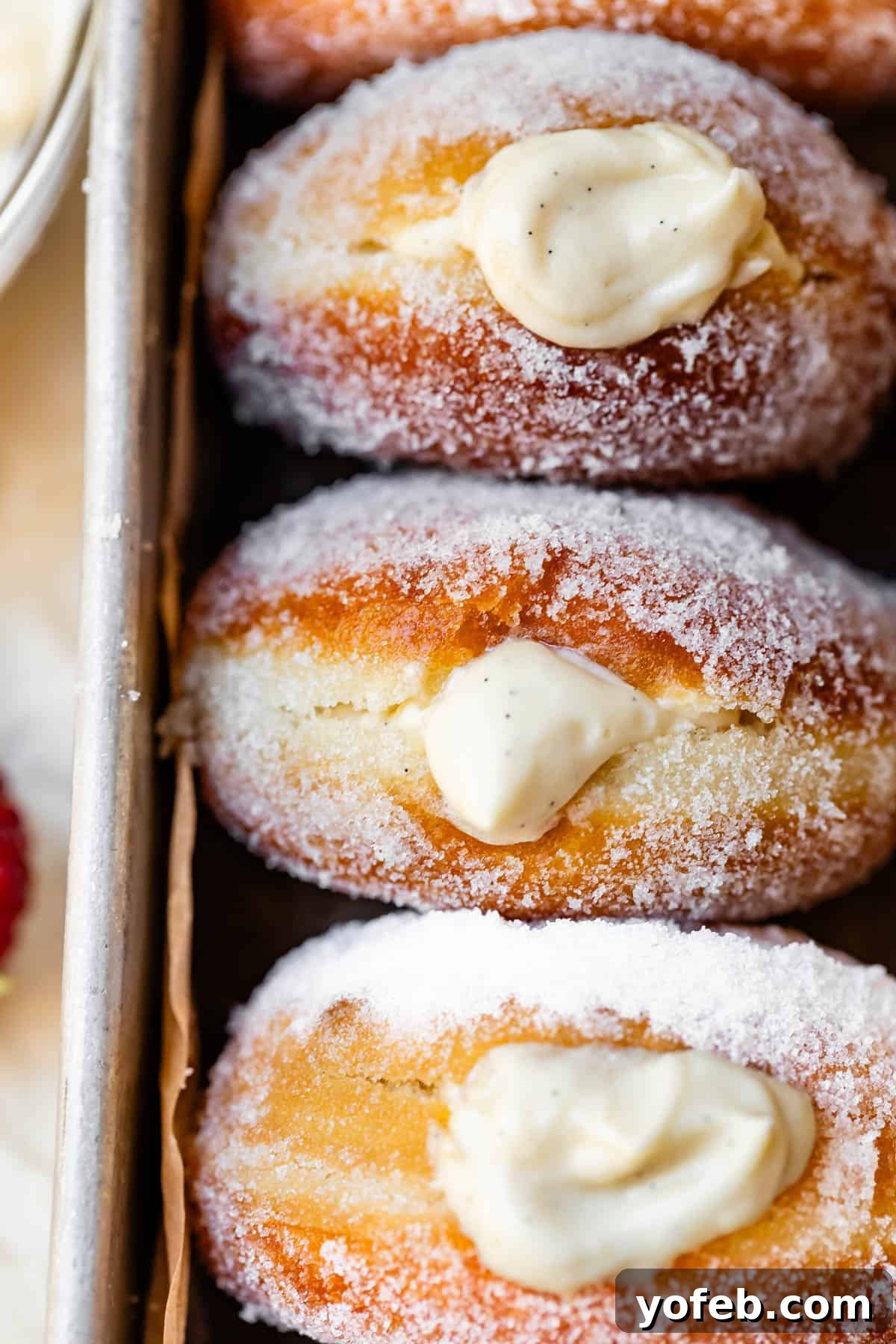
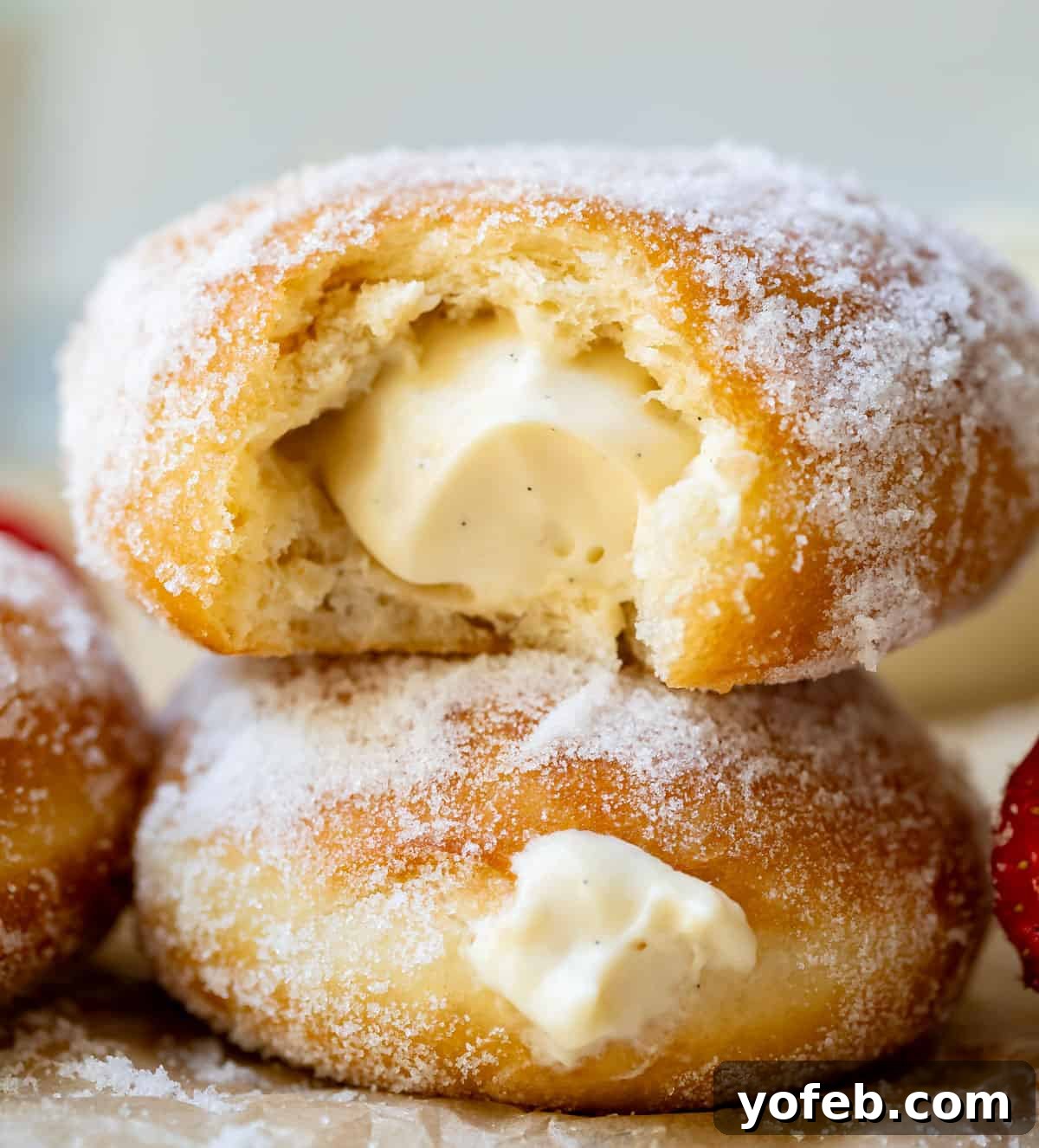
Imagine the lightest, fluffiest donut you’ve ever tasted, generously rolled in a sparkling coating of granulated sugar. Now, envision that ethereal donut filled to the brim with the dreamiest, creamiest vanilla custard. That, my friends, is the essence of a Bavarian Cream Donut. It’s truly a donut’s version of getting dressed up for a special occasion – elegant, rich, and utterly captivating.
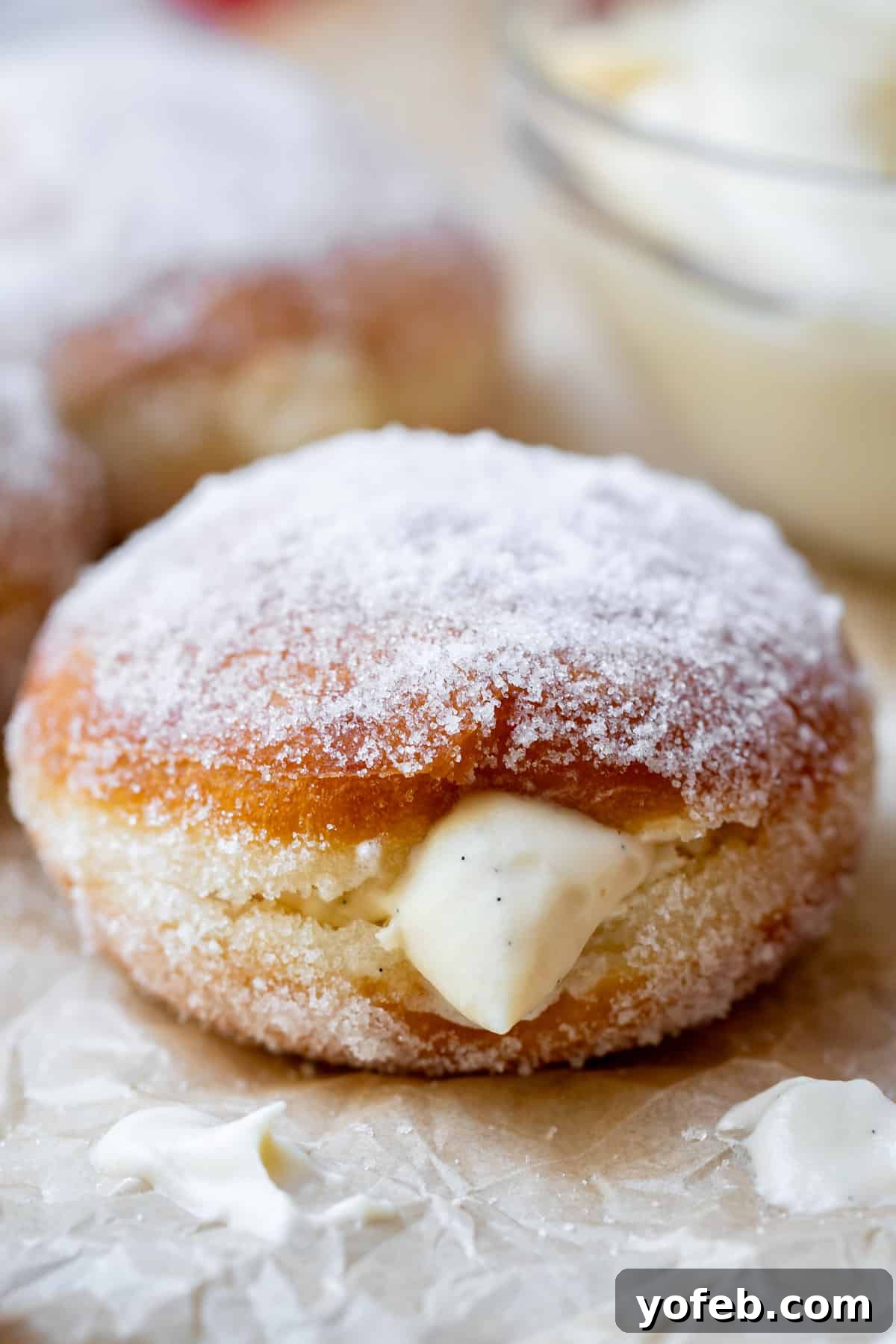
In the United States, “Bavarian cream donut” is a broad term often used for any donut filled with a sweet, creamy custard. While traditionally, Bavarian cream is a specific type of dessert involving custard thickened with gelatin and lightened with whipped cream, the donut filling commonly referred to as “Bavarian cream” in bakeries often takes a slightly different approach. Our recipe, for instance, streamlines the process by using egg yolks and cornstarch to achieve that perfect, luscious thickness for our Pastry Cream, completely skipping the gelatin. This makes it more accessible for home bakers without sacrificing any of the decadent texture or flavor.
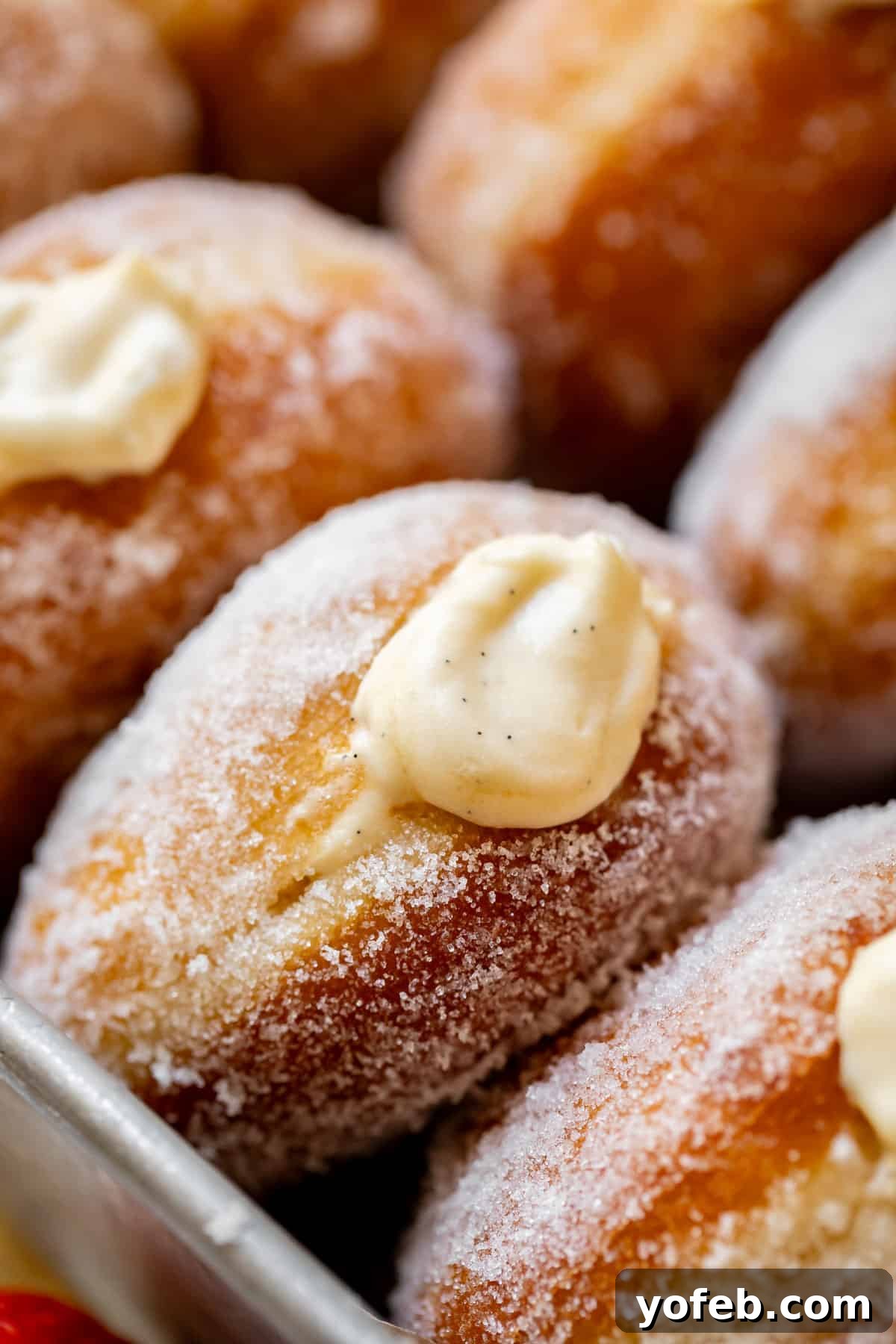
The filling for these donuts is what the French elegantly call Crème Légère (light cream). It’s created by taking a rich, chilled pastry cream – essentially a thickened vanilla pudding – and delicately folding it into freshly whipped cream. This combination results in a filling that is incredibly smooth, airy, and bursting with vanilla flavor. It’s light enough to complement the fried dough but rich enough to feel truly luxurious. While some Bavarian cream donuts are round, others are rectangular, but the hallmark is always that glorious, vanilla-flavored creamy custard piped generously into the center. Trust me, this filling is so good, you’ll be tempted to eat it straight from the bowl with a spoon!

Essential Ingredients for Bavarian Cream Donuts
One of the best things about making homemade Bavarian Cream Donuts is that you don’t need any exotic or hard-to-find ingredients. Chances are, most of what you need is already in your pantry or easily accessible at your local grocery store. Even the star of our filling, the Pastry Cream, relies on common staples. Using high-quality ingredients, however, can truly elevate the flavor and texture of your donuts, so opt for fresh dairy and good quality flour if possible. The full, detailed list of ingredients and precise measurements can be found in the comprehensive recipe card below!
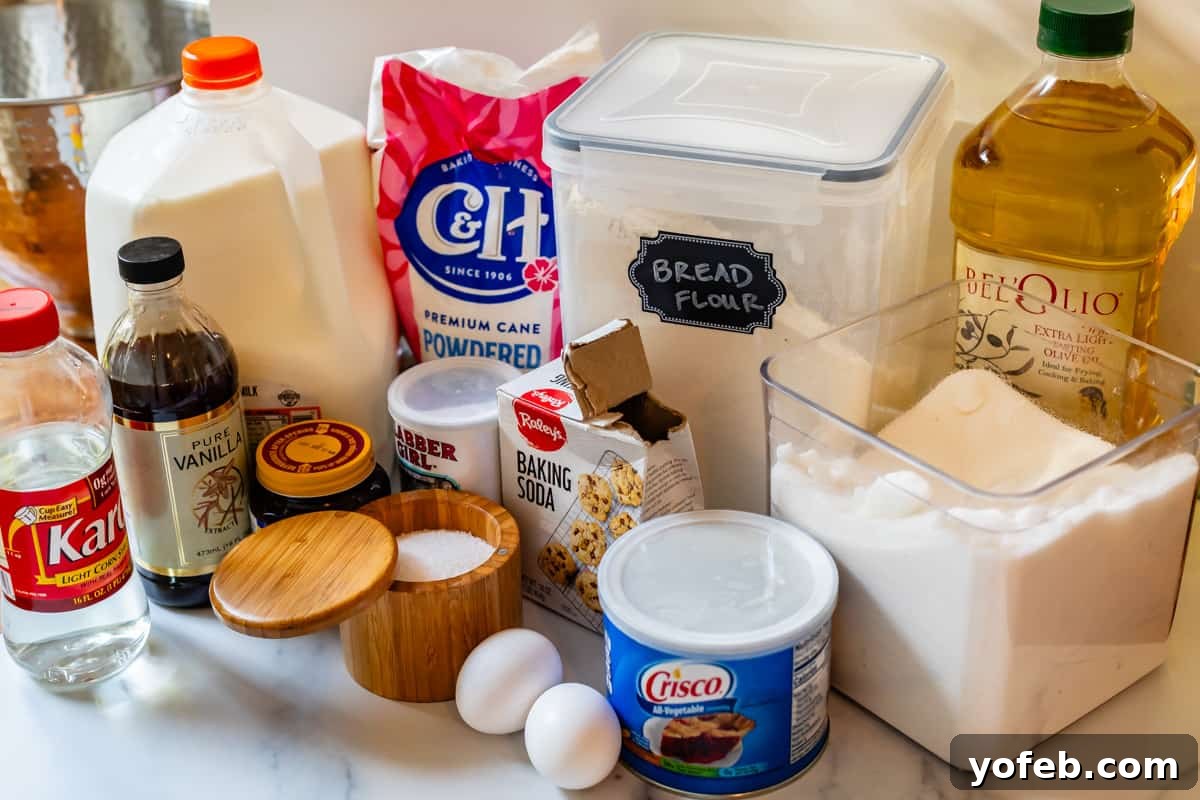
For the Donut Dough:
- Whole milk (provides richness and helps activate yeast)
- Active dry yeast (the leavening agent for that signature puffiness)
- Granulated sugar (sweetens the dough and feeds the yeast)
- Shortening (contributes to a tender crumb)
- Eggs (add richness, color, and structure)
- Vanilla extract (enhances overall flavor)
- Bread flour (higher protein content creates a chewy, desirable texture)
Additional Ingredients:
- Kosher salt (balances sweetness and strengthens gluten)
- Baking powder & Baking soda (for extra lift and a lighter texture)
- Pastry Cream (our essential custard filling – tap for recipe!)
- Heavy cream (for lightening the pastry cream into a “light cream” filling)
- Powdered sugar (sweetens the whipped cream for the filling)
- Oil for frying (canola or peanut oil for deep frying to perfection)
Step-by-Step: Crafting Your Own Bavarian Cream Donuts
Making Bavarian Cream Donuts might seem like a multi-step process, but each stage is straightforward and incredibly rewarding. We’ll break it down into manageable parts to ensure success. Precision and patience are your best friends here!
1. Prepare Your Pastry Cream
Your first step is crucial: prepare your Pastry Cream. This delicious, creamy custard needs ample time to chill and fully set in the refrigerator, ideally at least 2 hours, or even overnight. Having it thoroughly chilled is key to achieving the perfect filling texture later. Head over to our dedicated Pastry Cream recipe for all the detailed instructions on how to make it silky smooth.
2. Assemble the Yeast Dough
Next, we’ll create the foundation of our donuts: the rich, soft yeast dough. The process for the donut dough is identical to our Homemade Donut recipe, where you can find more detailed photos and tips on dough handling. The goal is a beautifully elastic and pliable dough that will fry up into light, airy puffs.
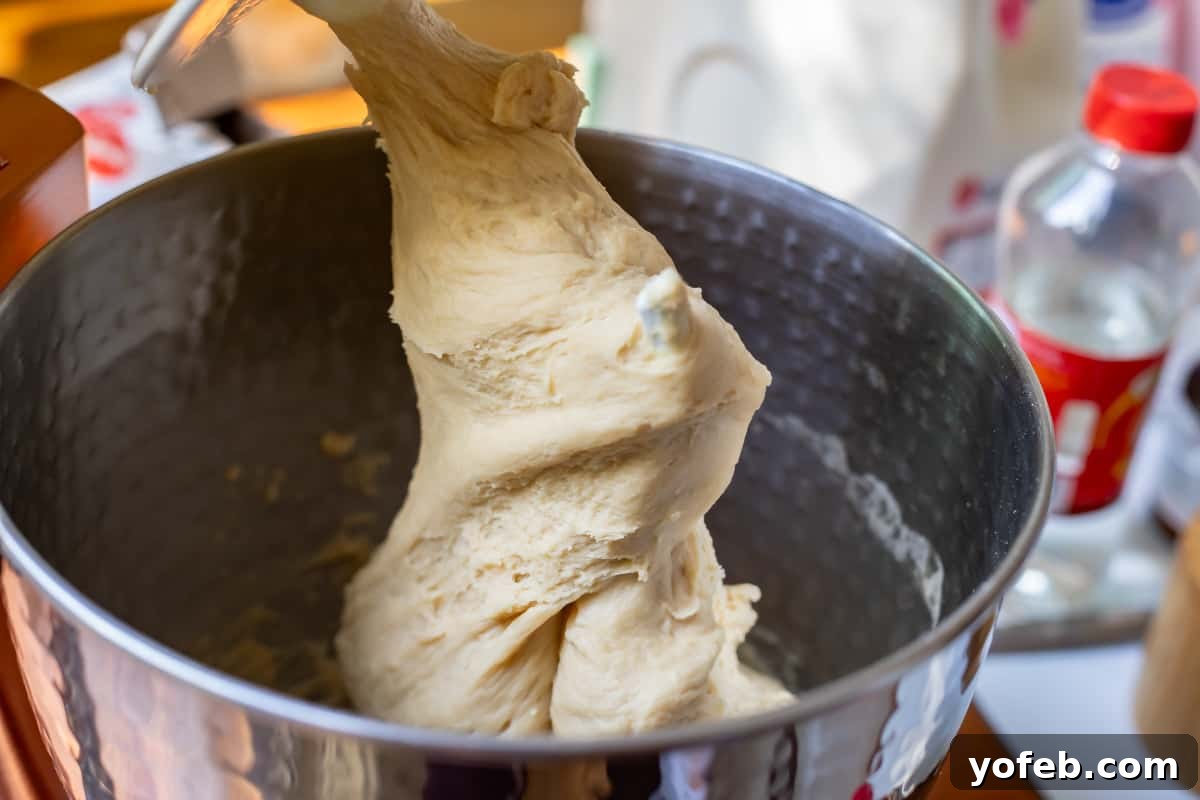
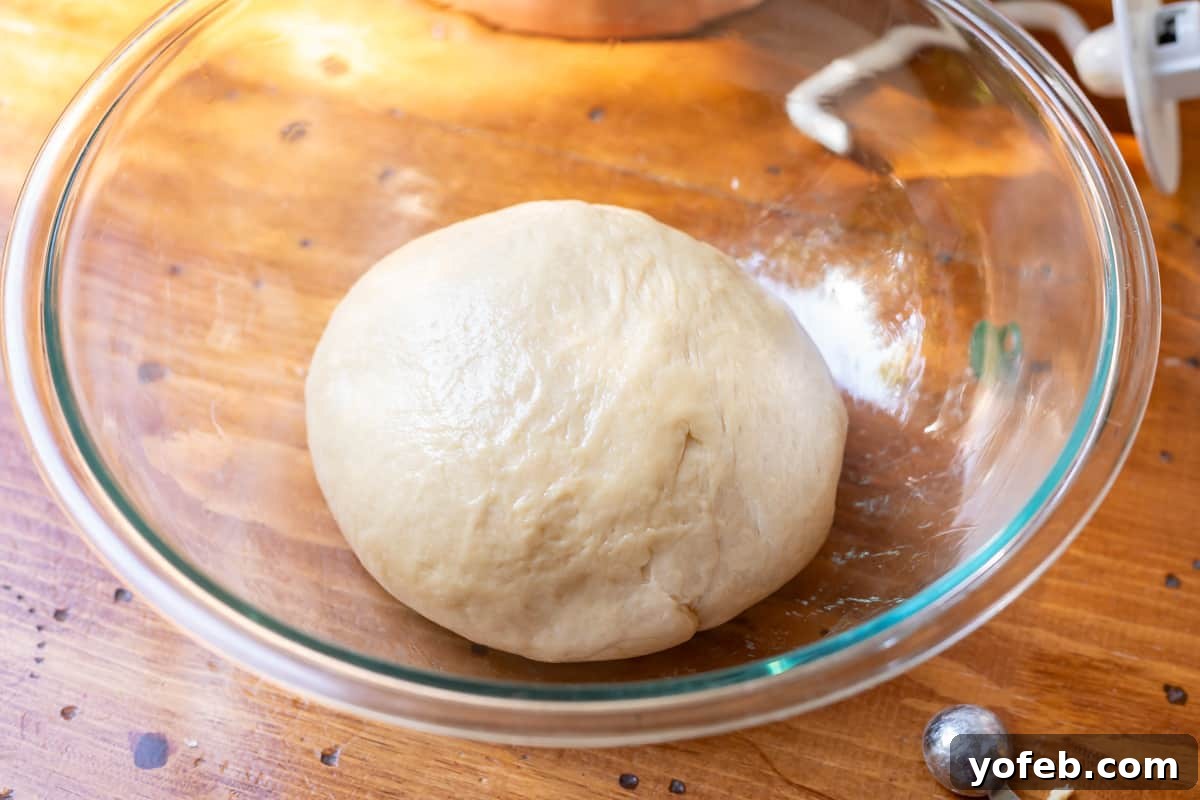
After kneading for about 5 minutes, your dough will be wonderfully soft, smooth, and stretchy. Take a moment to appreciate its elasticity – this is the sign of perfectly developed gluten, which will give our donuts their incredible chew. Place the dough ball into a generously oiled bowl, flipping it once to ensure both sides are coated. This prevents it from sticking as it rises.
3. The Art of Proofing (First Rise)
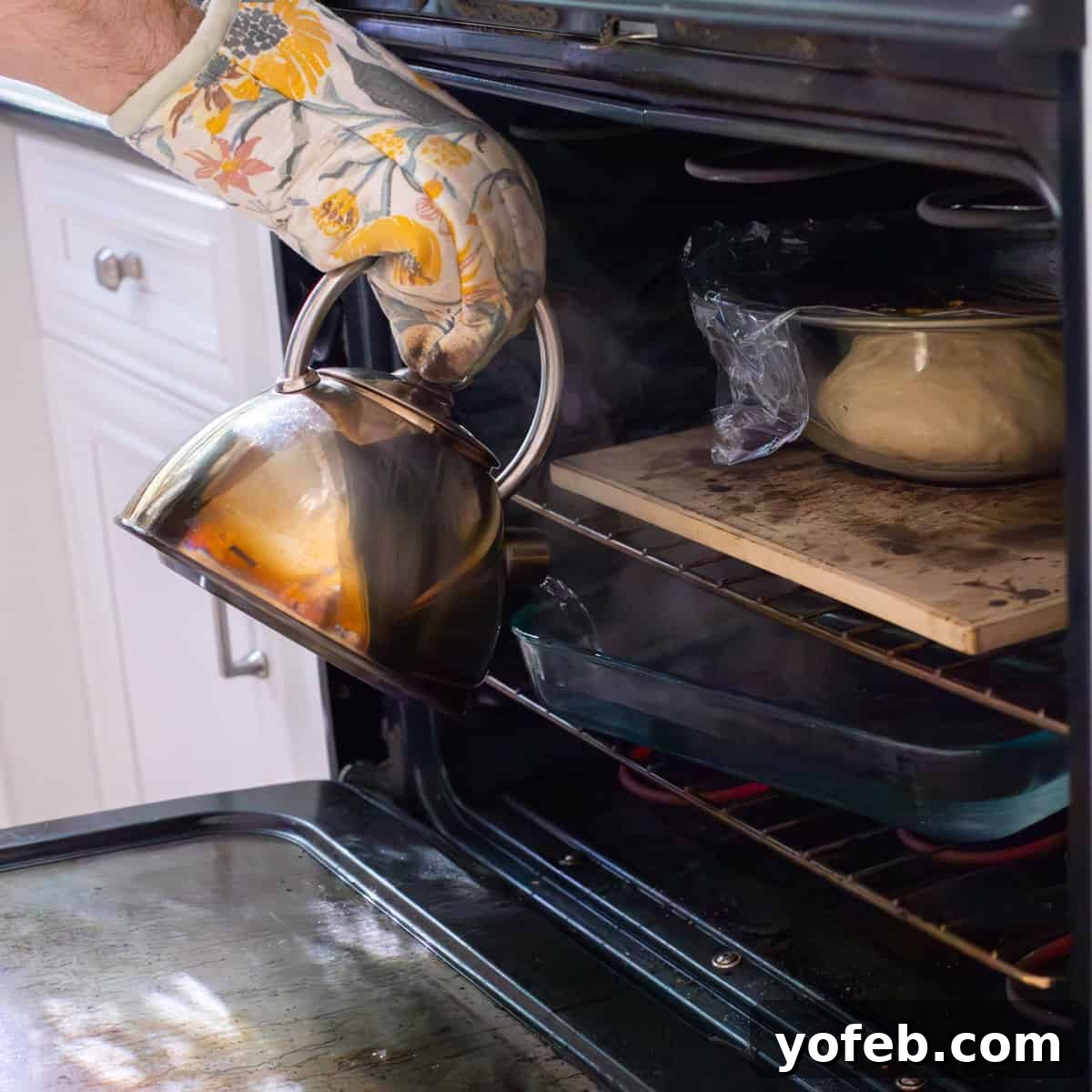
Professional bakers often use specialized proofing boxes with controlled temperature and humidity to get that perfect rise. We can replicate this ideal environment right in your home oven! This “fake proofing box” method is incredibly effective for encouraging yeast activity, resulting in wonderfully puffy donuts. I use the same technique for my fluffy Cinnamon Rolls!
To create your proofing box, turn your oven on for just about a minute until it’s gently warm inside – it should never be hot enough to make you pull your hand away from the racks. Boil a kettle of water and carefully pour it into a sturdy pan (like a 9×13 inch baking pan) placed on the bottom rack of your *turned-off* oven. The steam from the hot water will create a warm, humid atmosphere perfect for your dough. Place your covered bowl of dough on an upper rack, close the oven door immediately to trap the steam, and let it rise for about an hour. The dough should visibly double in size.
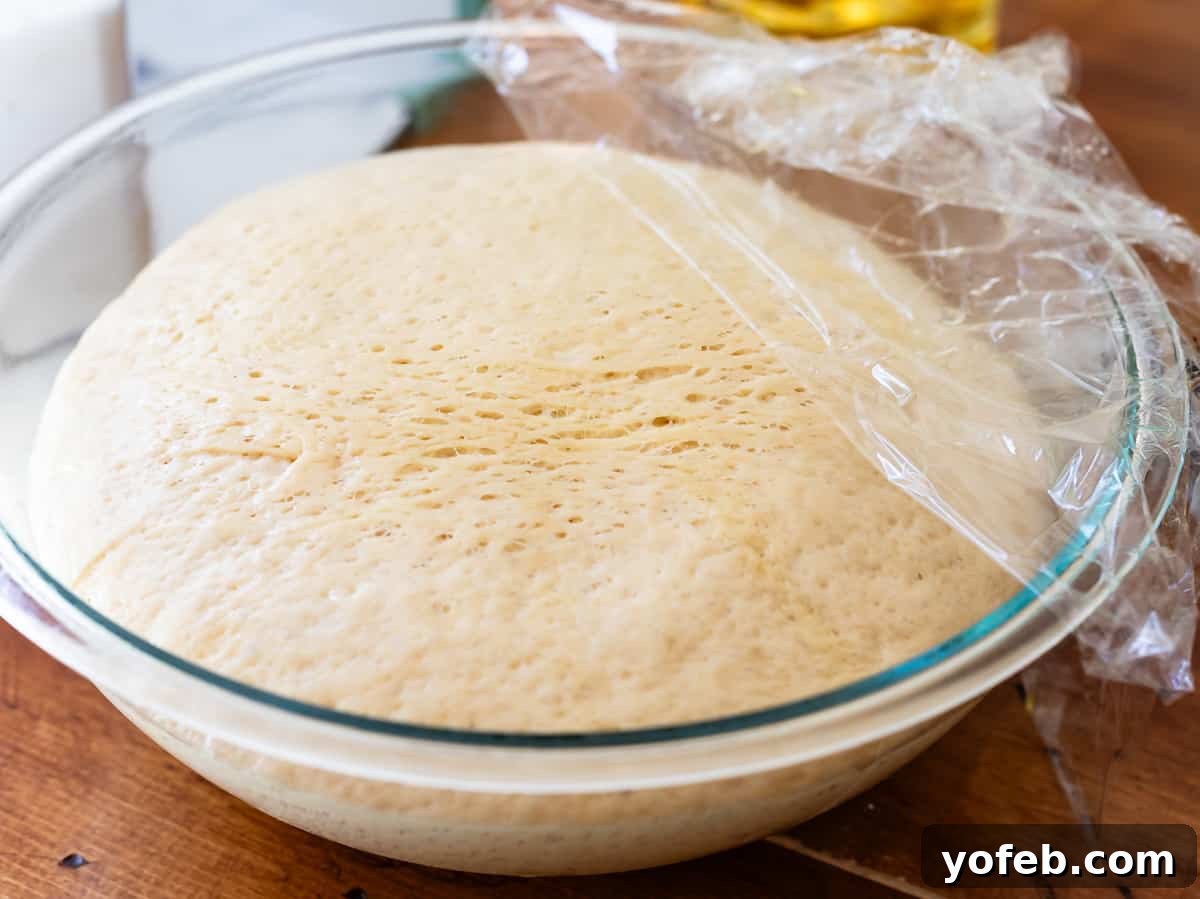
After its hour of rest, your dough will emerge beautifully risen, a testament to the power of yeast and a warm, humid environment. It should look plump and airy, ready for the next stage of transformation into delicious donuts.
4. Shaping the Donuts
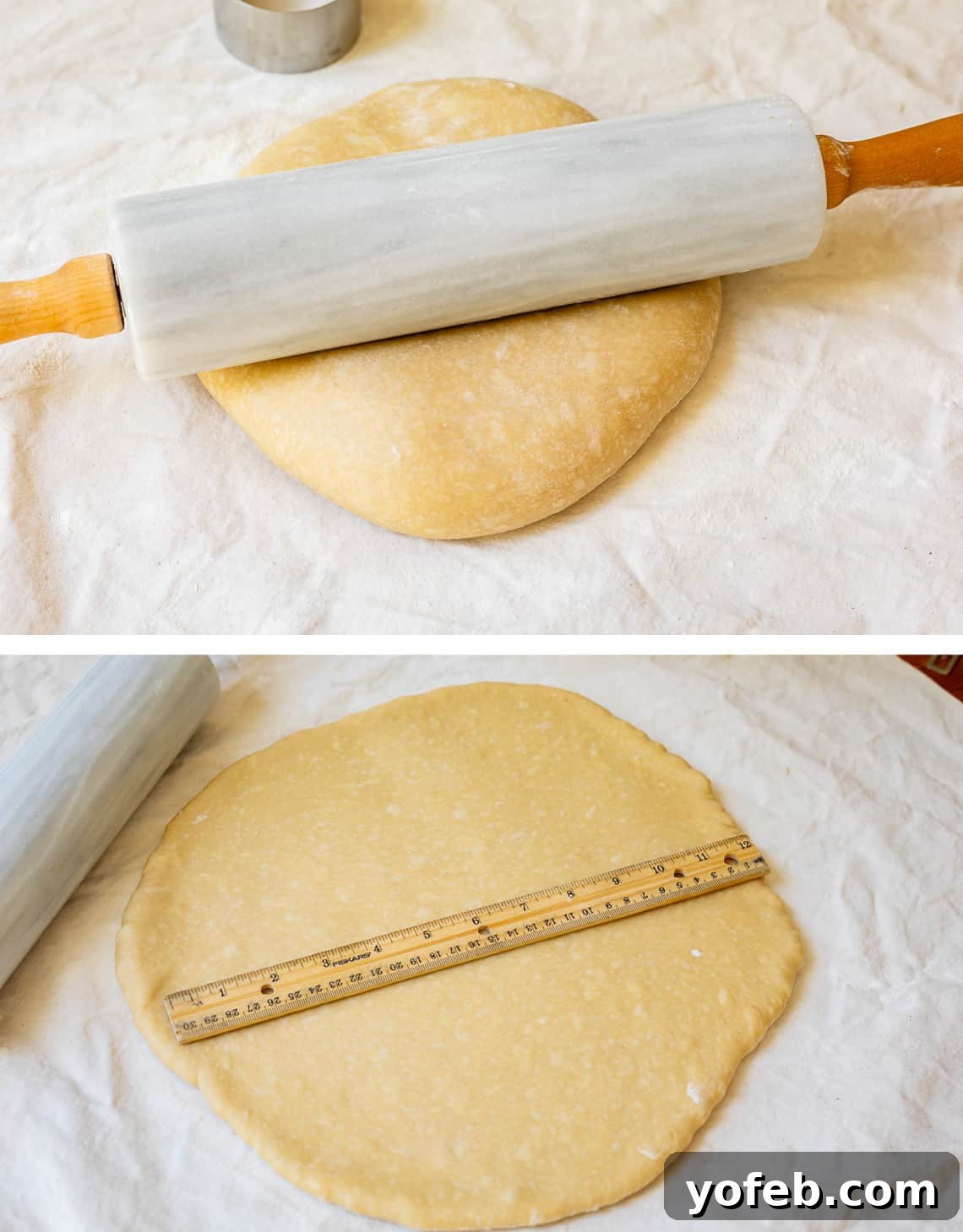
Now, it’s time to gently deflate your risen dough and prepare it for cutting. Lightly flour your work surface or use a pastry mat. Roll the dough out to an even thickness of about ½ inch. Aim for a roughly 12×12 inch square or circle. The key here is not to roll it too thin; a good, plump donut starts with a substantial dough thickness.
Using a 2 ½ inch biscuit cutter, cut out individual donut rounds. When pressing the cutter, push straight down and avoid twisting it. Twisting can seal the edges of the dough, which can inhibit a proper second rise. Place each cut donut onto its own small square of parchment paper on a baking sheet. These individual parchment squares are a game-changer for handling the delicate risen donuts later. Ensure there’s ample space between each donut, as they will expand significantly during the second rise.
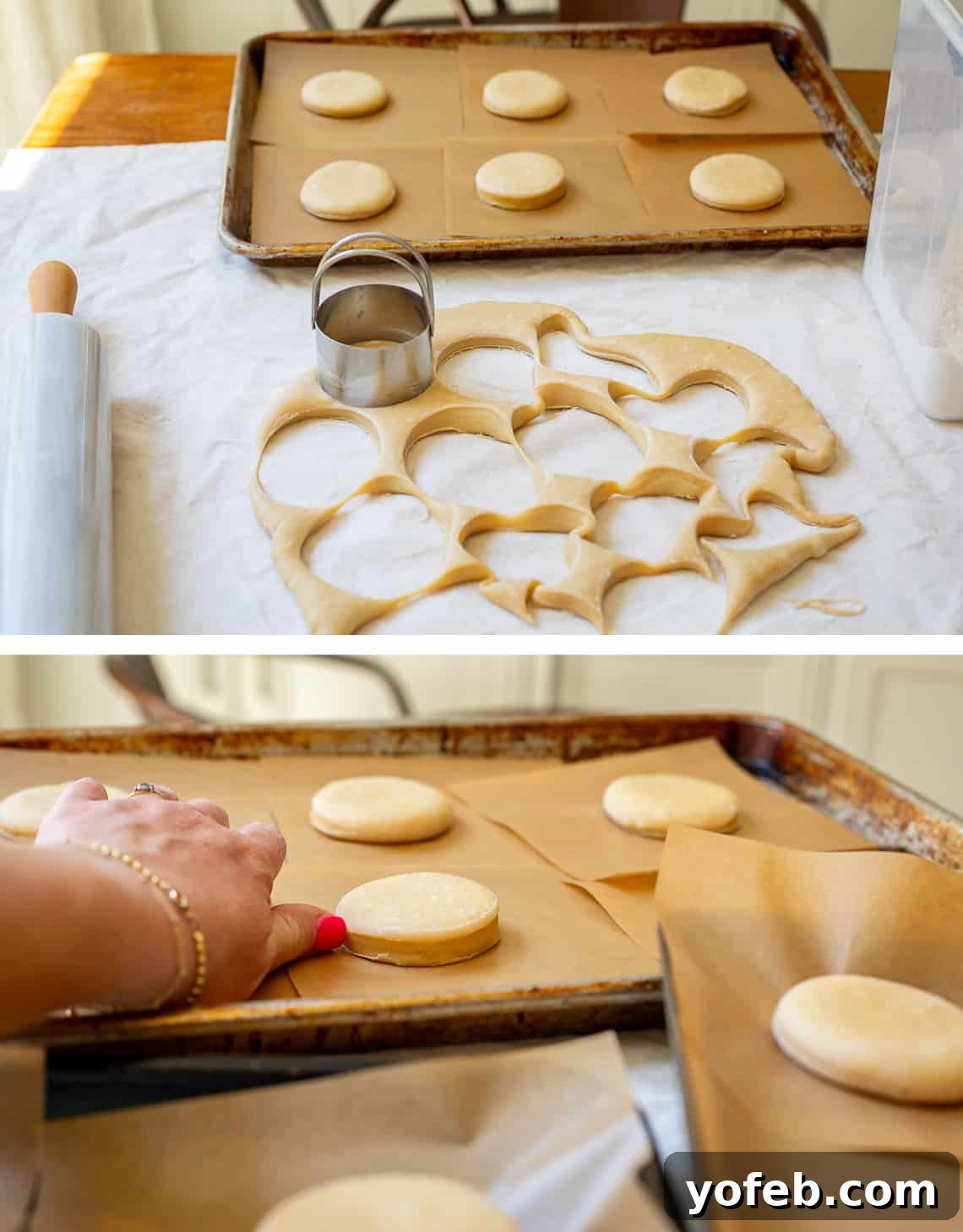
5. Second Rise for Ultimate Fluffiness
Once again, we’ll utilize our homemade proofing box for the second rise. Repeat the process: gently warm your oven for 30-60 seconds, then turn it off. Replace the pan of hot water on the bottom rack. Carefully arrange your baking sheets with the shaped donuts in the warm, humid oven. Close the door swiftly to lock in that steam. Let the donuts rise for 30-45 minutes, or until they have visibly doubled in size and look incredibly airy. Keep a close eye on them; over-proofing can lead to deflated donuts once they hit the hot oil.
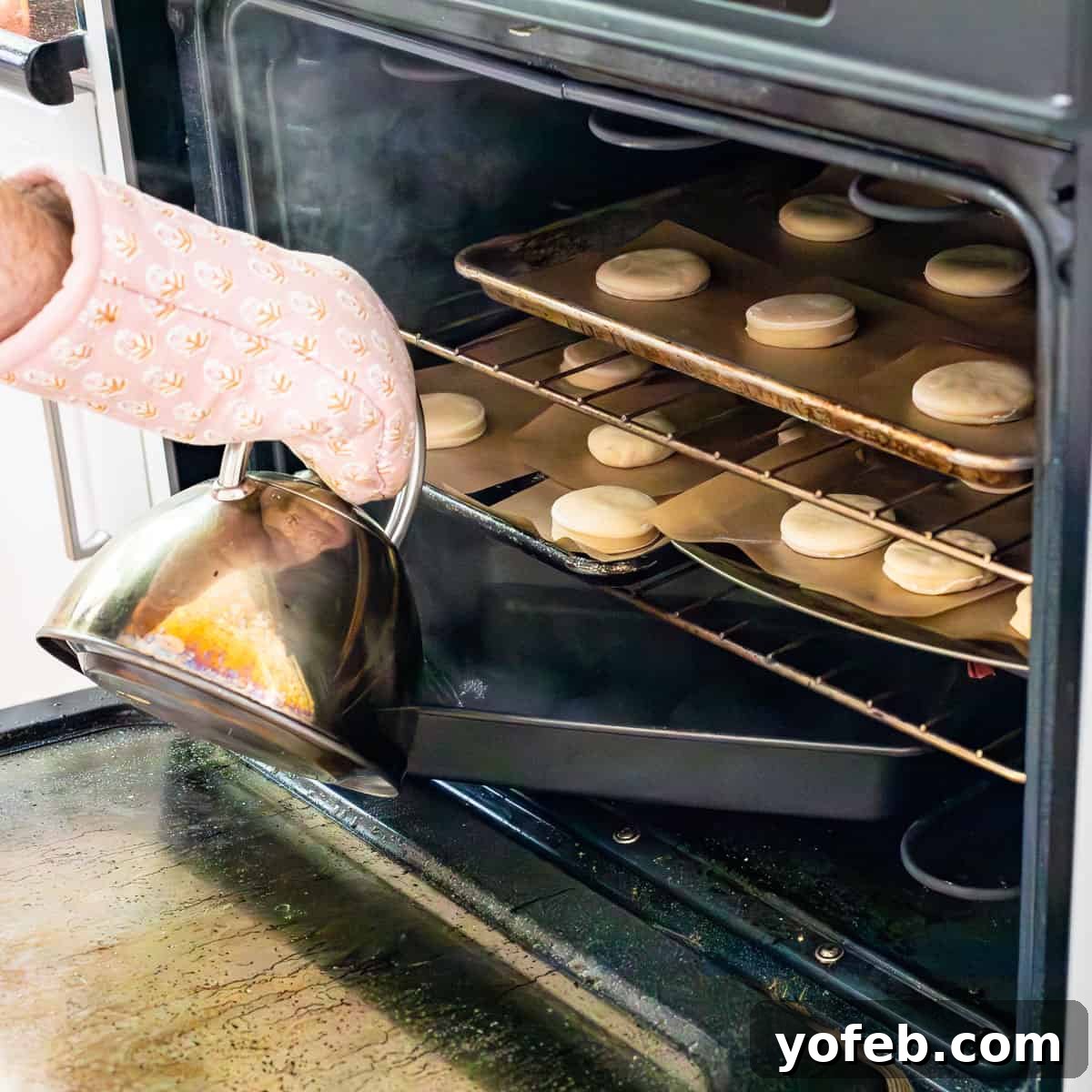
6. Frying for Golden Perfection
While your donuts are enjoying their second rise, it’s time to prepare your frying station. This step requires a bit of attention to detail for the best results. Pour at least 2 inches of canola or peanut oil into a large, high-sided pot or Dutch oven. Heat the oil over medium heat, using an instant-read or candy thermometer to monitor the temperature. The sweet spot for frying donuts is a steady 350°F (175°C).
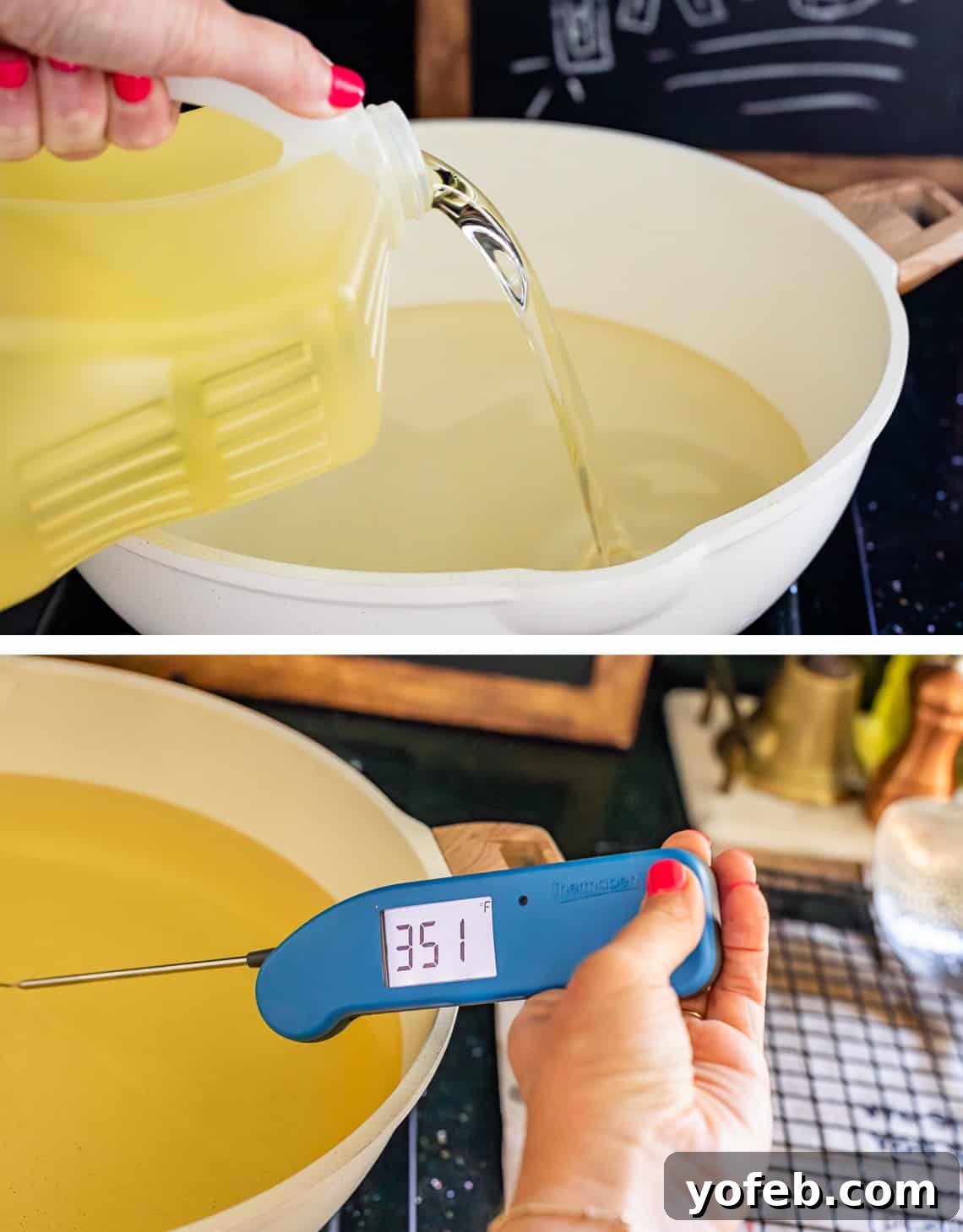
A consistent oil temperature is paramount for perfectly fried donuts. If the oil is too hot, the donuts will brown too quickly on the outside and remain raw inside. Too cool, and they’ll absorb too much oil, becoming greasy. Expect the temperature to drop slightly when you add the donuts, so allow a minute or two between batches for it to recover. Keep that thermometer handy and adjust the heat as needed.
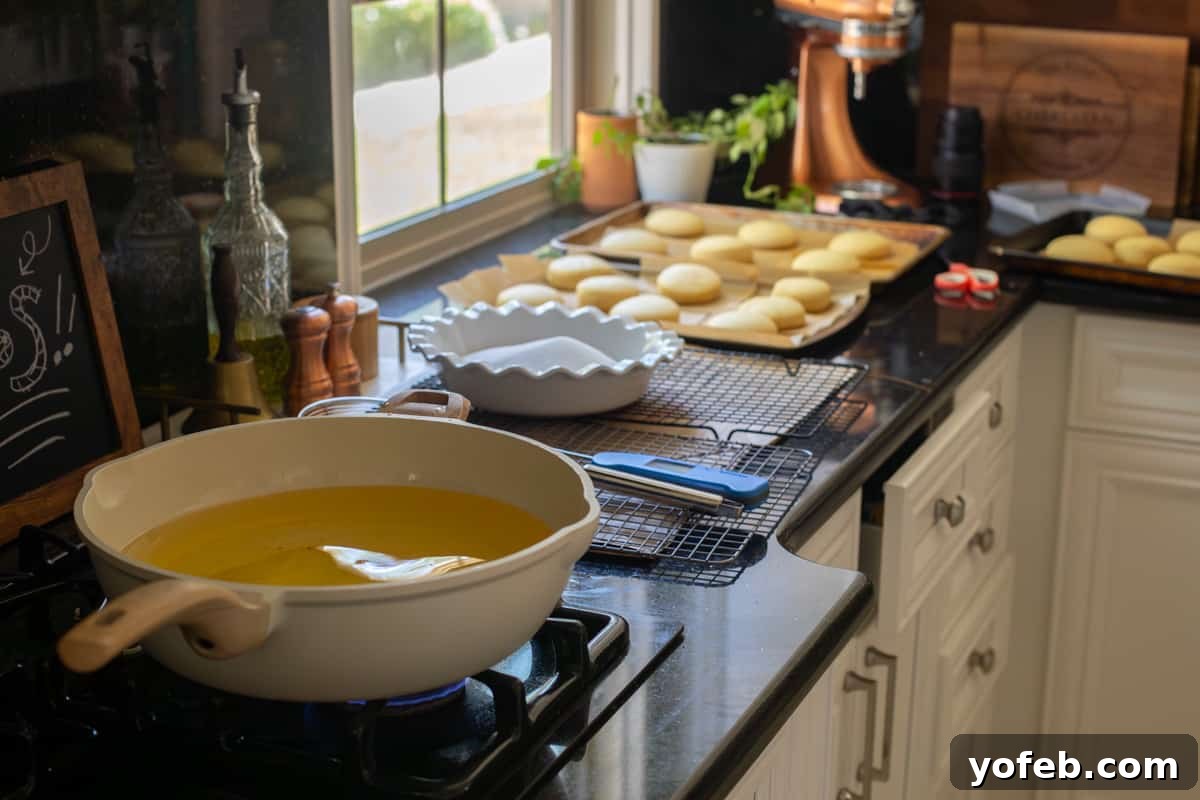
Set up your “fry station” efficiently: hot oil with a thermometer, a spider strainer or tongs for handling, a wire cooling rack placed over paper grocery bags or paper towels (to absorb excess oil), and a shallow bowl filled with granulated sugar for coating. Have your perfectly risen donuts nearby, ready for their dip in the hot oil.
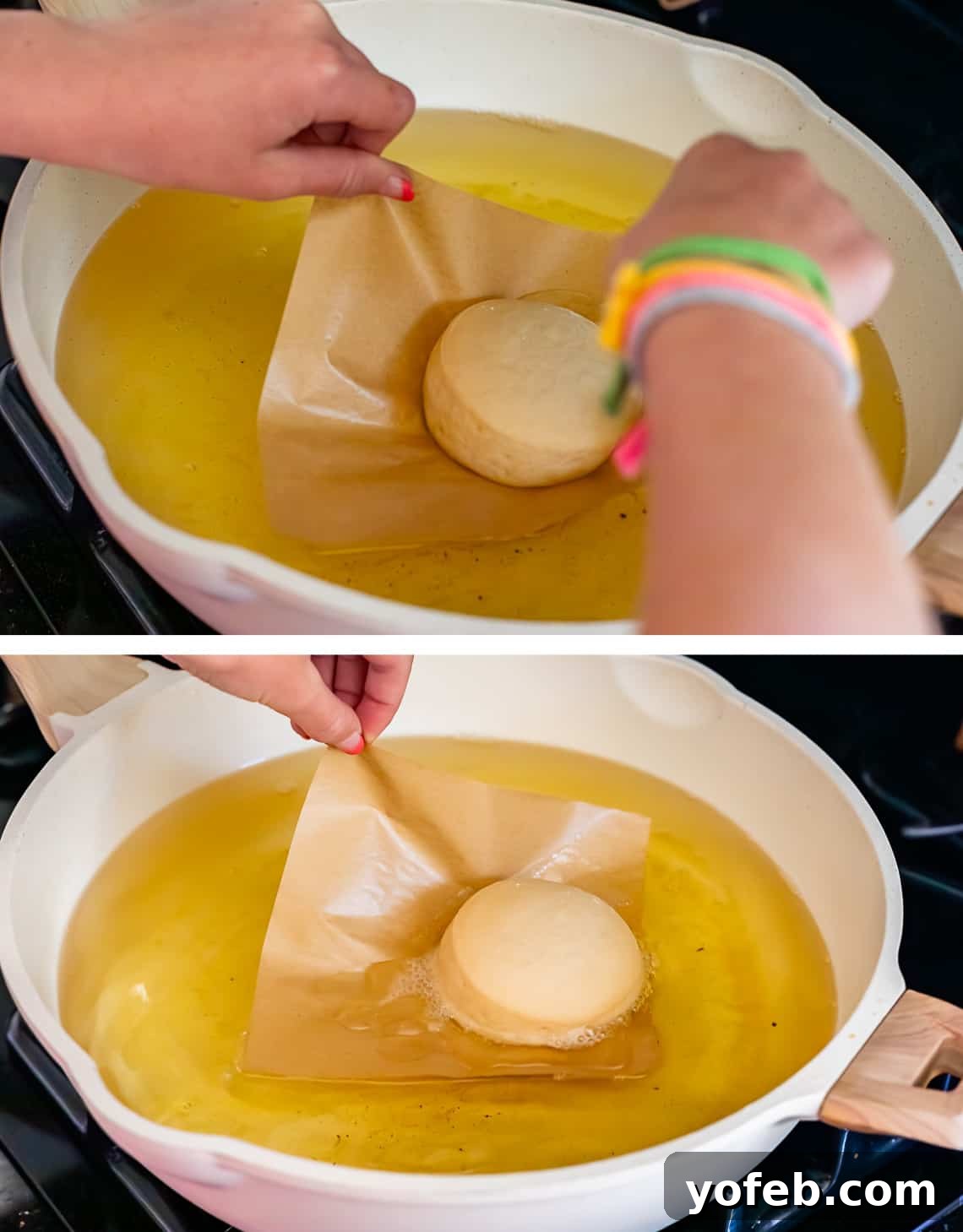
Here’s a fantastic trick for frying yeast dough: gently lower the donut, still on its parchment square, directly into the hot oil. Hold onto one corner of the parchment and allow the donut to fully submerge. The paper will float free as the donut fries. This method prevents deflating the delicate risen dough, a common pitfall when trying to transfer donuts with a spatula. Once the donut separates, remove the parchment paper with tongs and reuse it for the next batch if it’s not too oily.
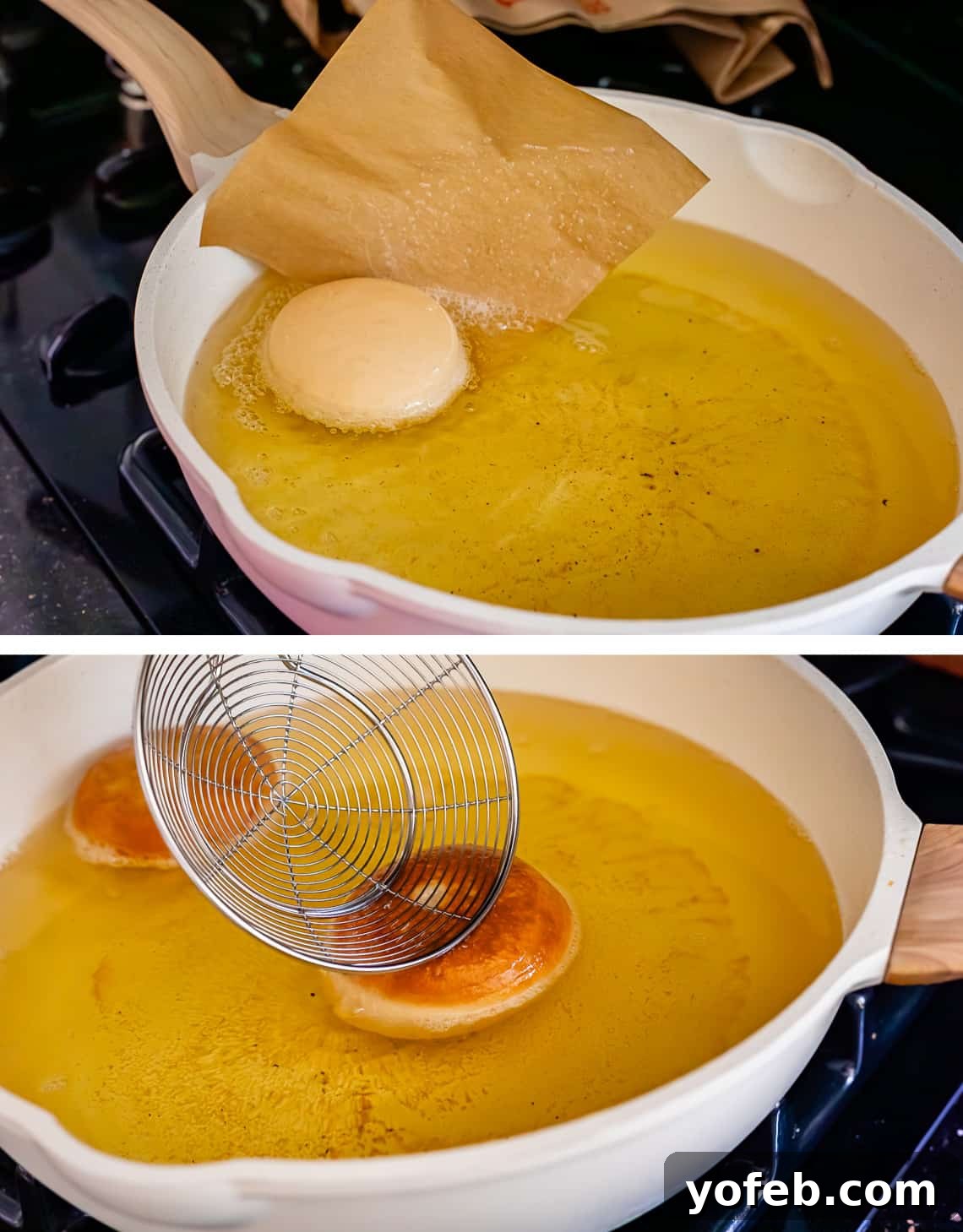
Fry each side for about 30-60 seconds, or until a beautiful golden brown. The donuts will continue to cook slightly after removal, so don’t over-fry. If a donut refuses to fully submerge or brown evenly after flipping, you can gently hold it down in the oil with your tongs for a few seconds. Once cooked, transfer the golden-brown donuts to the wire rack to drain excess oil. Remember to check and adjust your oil temperature between batches to maintain that consistent 350°F.
7. Sugaring and Cooling
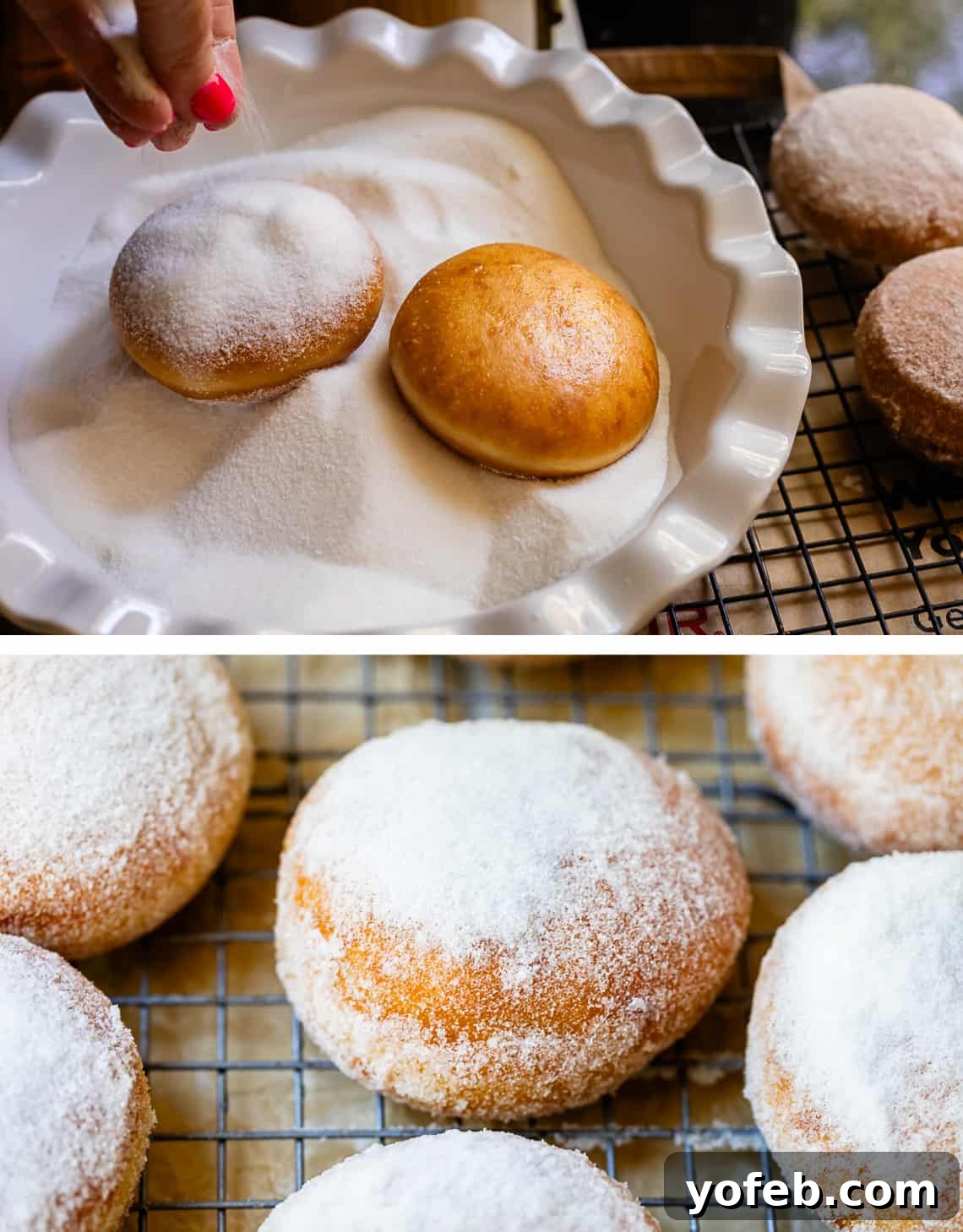
Once the donuts have cooled for just a minute or two – they should still be quite warm, but not so hot that they burn your fingers – it’s time for their sugar coating. Roll each donut generously in granulated sugar, ensuring it’s completely covered. The warmth of the donut will help the sugar adhere beautifully. For a delightful twist, consider adding a couple of tablespoons of cinnamon to your sugar for a fragrant cinnamon-sugar coating. Let the sugared donuts cool completely on the wire rack before filling.
8. Crafting the “Light Cream” Filling
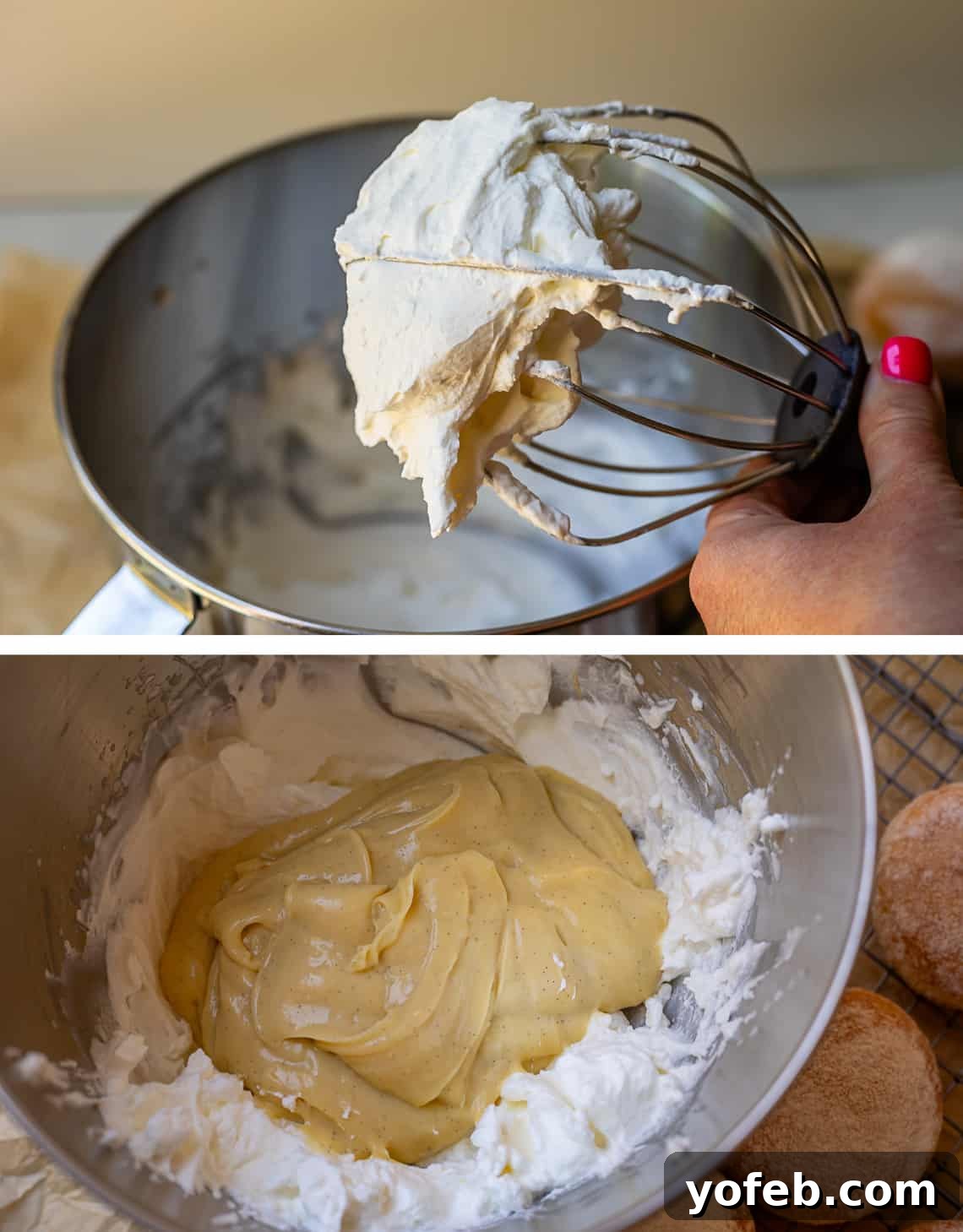
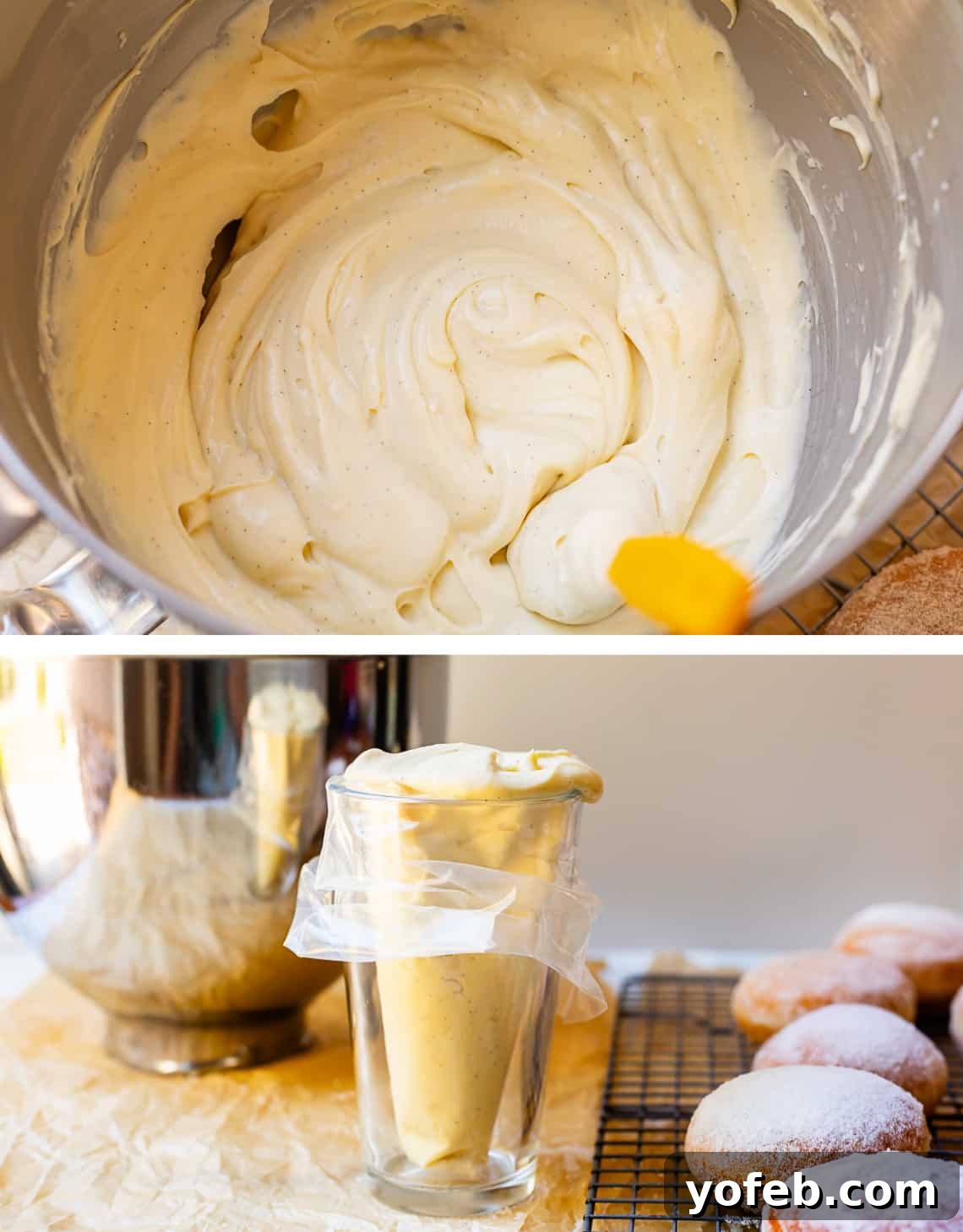
While your donuts cool, prepare the glorious filling. In a large bowl, whip cold heavy cream with a couple of tablespoons of powdered sugar until stiff peaks form. This creates a fluffy, slightly sweetened whipped cream. Retrieve your thoroughly chilled Pastry Cream from the fridge. Give it a vigorous whisk to smooth out any lumps, then gently fold it into the whipped cream using a rubber spatula. Use as few strokes as possible to combine them, preserving the airy texture of the whipped cream. This delightful blend is our Crème Légère, the heart of our Bavarian Cream Donuts.
For easy filling, transfer the cream mixture to a piping bag. A pro tip: stand the piping bag upright in an empty tall glass, then fold the edges over. This creates a stable “cup” that makes spooning the filling into the bag much cleaner and easier. You don’t necessarily need a fancy piping tip; simply snipping off the end of the bag (or a sturdy Ziploc bag) will work perfectly for filling donuts.
9. Filling Your Donuts
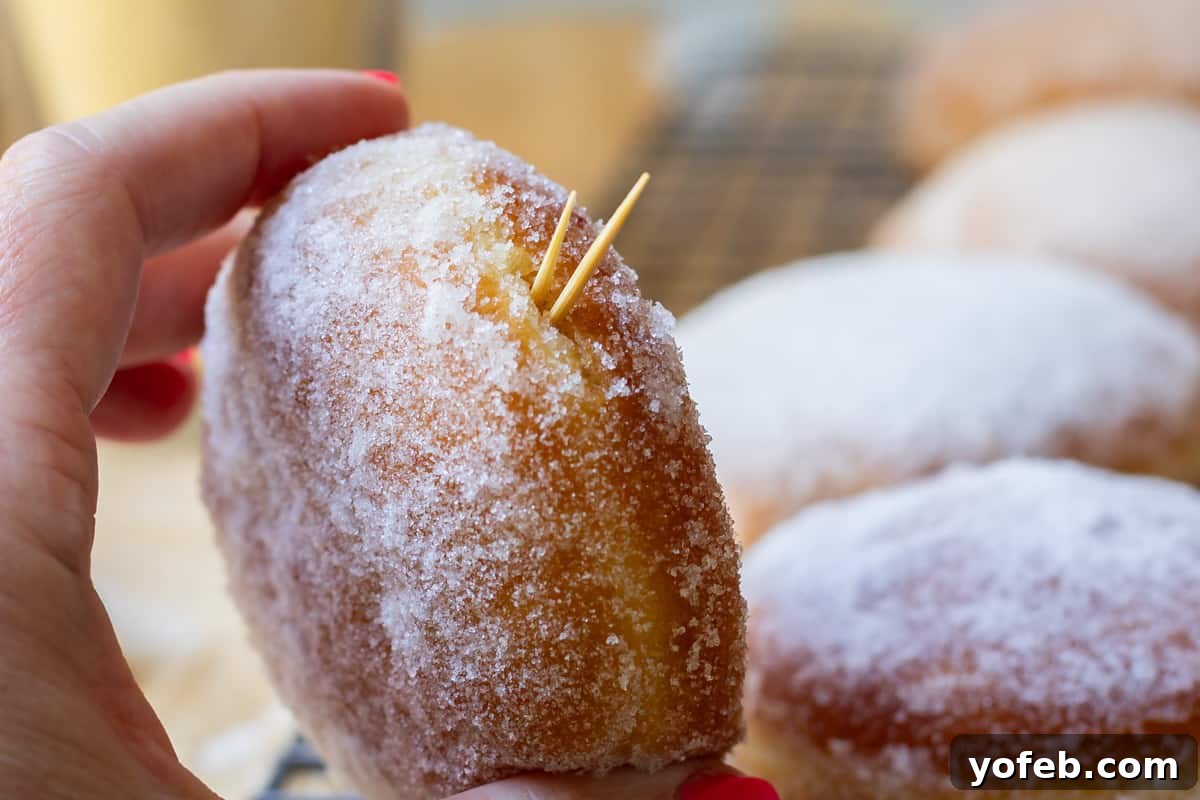
Once your donuts are completely cooled, it’s time for the magic! Use a small paring knife, a chopstick, or even a toothpick to carefully poke a hole into the side of each donut. Gently twist the tool around to create a pocket inside for the filling. This ensures an even distribution of cream without tearing the donut.
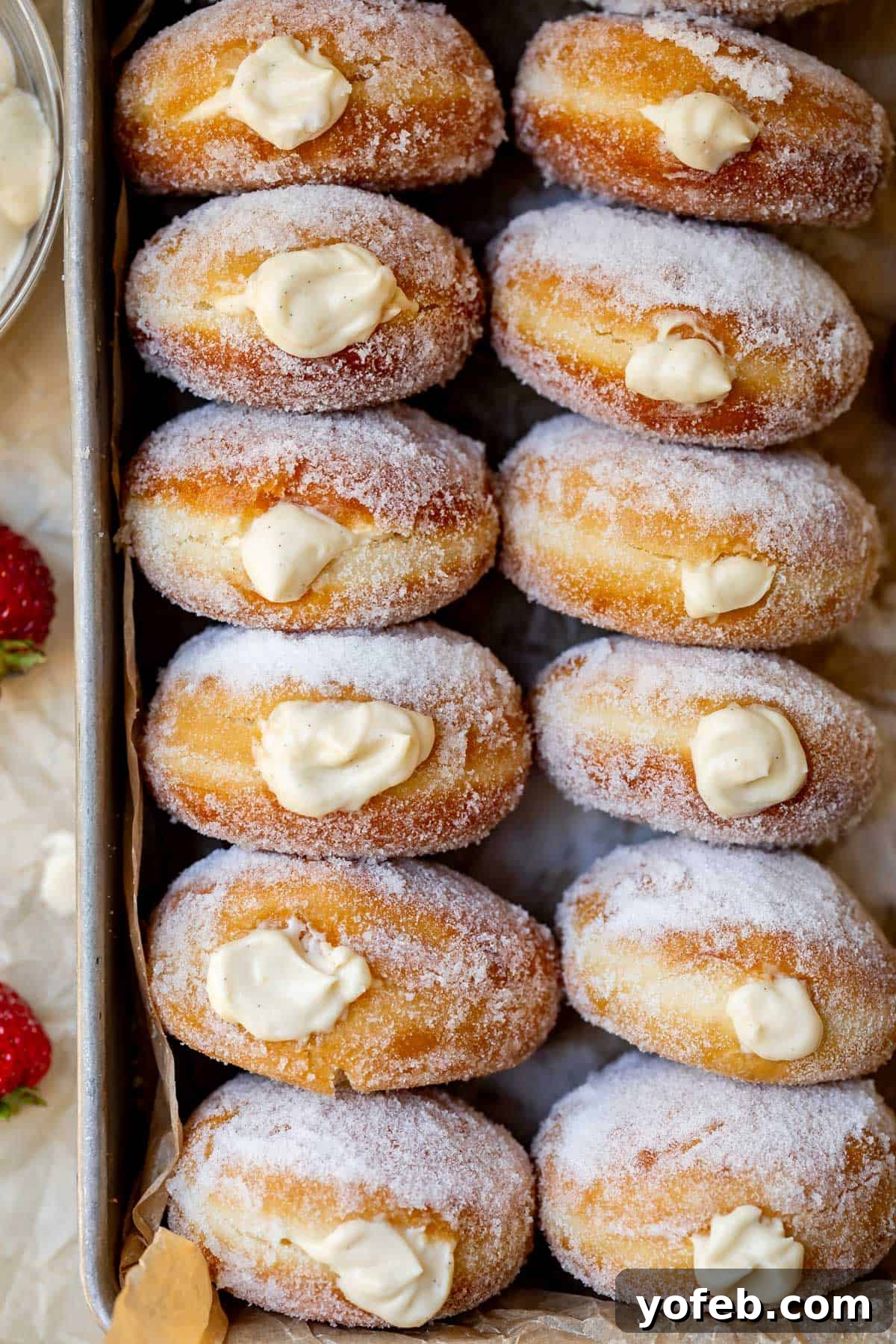
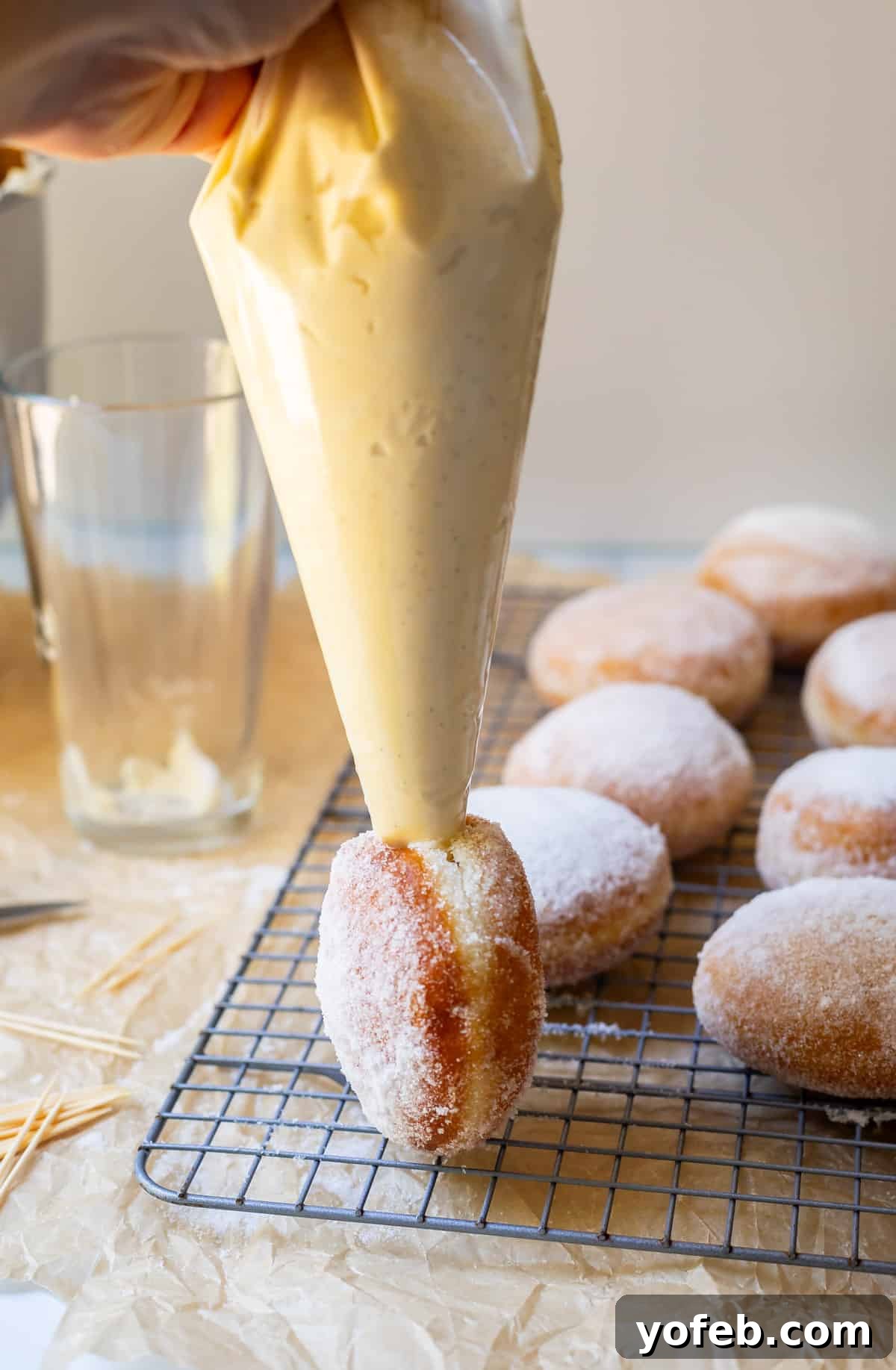
Insert the tip of your piping bag into the prepared hole and gently squeeze, filling the donut until it feels plump and slightly heavy. You’ll see the donut expand slightly as it fills – a satisfying sign of a perfectly filled treat! Be generous with your filling; there’s nothing worse than a skimpy cream-filled donut.
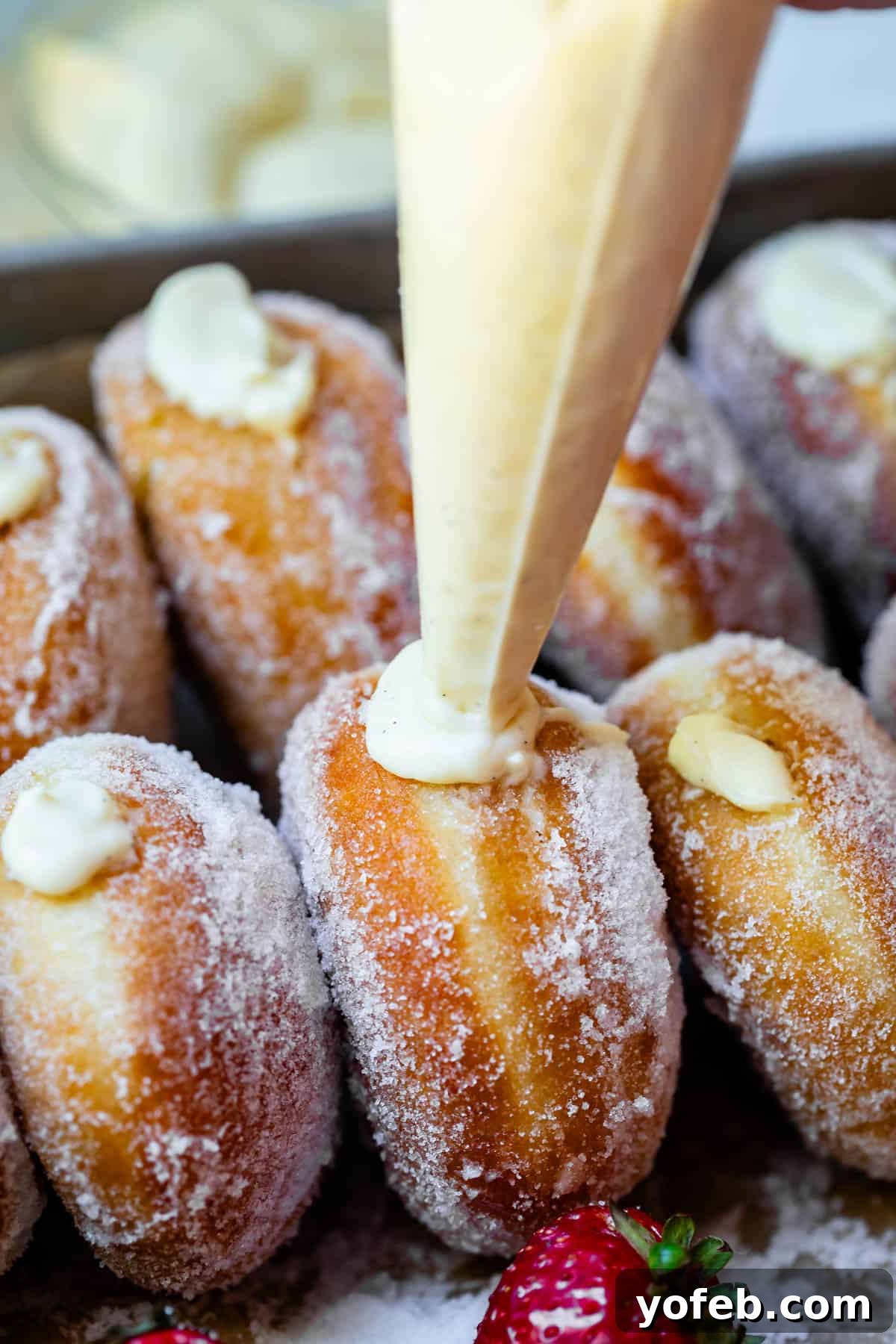
If you’re serving a crowd, arranging the filled donuts artfully on their sides in a beautiful casserole dish, with the filling opening facing upwards, makes for a stunning presentation. This also prevents them from getting squashed. Remember, these filled beauties are best enjoyed fresh, so only fill the number of donuts you plan to devour right away. Invite your friends over, they will absolutely adore these!
Beyond Bavarian: Creative Donut Filling Ideas
While our classic Bavarian cream filling is utterly divine, the possibilities for cream-filled donuts are truly endless! Once you have the perfect donut dough, you can get incredibly creative with what you pipe inside. Here are some fantastic alternatives to inspire your next batch of homemade donuts:
- Luscious Lemon Curd: Oh my goodness, this is a must-try! Imagine the bright, tangy burst of fresh lemon curd perfectly complementing the sweet, fried dough. The contrast of flavors is absolutely incredible. I once had a lemon curd-filled donut on vacation in Australia years ago, and it was unforgettable. You could even fold a little whipped cream into the lemon curd for a lighter, more ethereal filling.
- Decadent Nutella: Do I even need to elaborate? The rich, creamy hazelnut-chocolate spread is a match made in heaven for soft donuts. In fact, it’s so good we have an entire post dedicated to Nutella Stuffed Donuts. For a lighter touch, try folding Nutella into whipped cream, similar to how we make our Bavarian cream filling – it’s simply divine!
- Classic Jelly or Jam: This is a traditional favorite for a reason! Whether it’s strawberry, raspberry, apricot, or any fruit preserve, a dollop of sweet, fruity jam inside a donut is always a hit. Just like with lemon curd or Nutella, you could fold jam into whipped cream for an even lighter and fluffier texture.
- Any Pudding Flavor: Homemade or instant pudding offers a quick and easy way to create diverse donut fillings. Think chocolate pudding, banana cream, or even pistachio. Just prepare your favorite pudding, chill it thoroughly, and then pipe it into your donuts for a delightful treat.
- Rich Chocolate Ganache: For the ultimate chocolate lover, a thick, smooth chocolate ganache makes an incredibly luxurious filling. Allow it to cool until it’s thick enough to pipe but still spreadable, then fill your donuts for an intense cocoa experience.
Perfect Pairings: What to Serve with Cream-Filled Donuts
While a Bavarian Cream Donut can certainly stand on its own as a glorious solo treat (and often does in my house!), they also pair wonderfully with a variety of beverages and savory breakfast items, especially if you’re serving them for a brunch or a larger gathering. Think of complementary flavors and textures that balance the sweetness and richness of the donuts. Here are some ideas for a complete and satisfying spread:
- Coffee, Tea, or Milk: This is a non-negotiable! A warm cup of coffee or tea is the quintessential companion to any donut, cutting through the sweetness and offering a comforting contrast. Cold milk is also a classic, refreshing choice, especially for kids (or adults who feel like a kid again!).
- Crispy Baked Bacon: The salty crunch of perfectly baked bacon offers a fantastic savory counterpoint to the sweet donuts. Baking bacon is incredibly easy and frees up your stovetop for other dishes, making it a perfect brunch addition. It’s ready in just 10-15 minutes with minimal fuss!
- My Best Quiche Recipe: For a more substantial offering, a savory quiche is an excellent choice. Our recipe is packed with flavor and so satisfying, you’ll wonder why you ever bought one from a bakery. It provides a creamy, savory balance that elevates the entire meal.
- Make-Ahead Scrambled Eggs: These are a lifesaver for entertaining! Prepare them in advance, keep them warm, and you’ll have wonderfully creamy and tender scrambled eggs ready to serve alongside your fresh donuts. This allows you to focus on those last-minute donut fillings.
- Cheesy Hashbrown Breakfast Casserole with Ham: A hearty, crowd-pleasing casserole is always a hit for brunch. This recipe is one of the most popular on our site for a reason – it’s comforting, packed with flavor, and wonderfully cheesy, offering a satisfying savory anchor.
- Easy Chili Rellenos Casserole: If you’re looking for something with a bit of a kick, this casserole is surprisingly easy to make and delivers on flavor. The mild spice and cheesy goodness provide an exciting contrast to the sweet donuts.
- Cheesy Ham and Broccoli Frittata: Quick, easy, and bursting with flavor, a frittata is a versatile dish that works perfectly for brunch. It’s a great way to incorporate vegetables and protein, making for a well-rounded meal.
- Refreshing Classic Fruit Salad from Downshiftology: A vibrant and fresh fruit salad is ideal for lightening up the meal and adding a healthy, colorful element. The natural sweetness and juiciness of the fruit provide a lovely palate cleanser between bites of donut.
Storing Bavarian Cream Donuts: Refrigeration Essentials
The golden rule for Bavarian Cream Donuts is to enjoy them fresh! The combination of delicate fried dough and creamy filling means they are at their absolute peak shortly after being made. However, if you find yourself with leftovers or want to prepare ahead, there are best practices to maintain their quality.
The optimal approach is to only fill the number of donuts you anticipate eating on the same day. Unfilled donuts store much better. You can keep the leftover Pastry Cream separately in an airtight container in the refrigerator, with plastic wrap pressed directly onto the surface to prevent a skin from forming. The unfilled donuts can be stored in a loosely closed paper bag on the counter for a day or two. The paper bag helps absorb any residual oil, keeping the donut from getting overly soggy. Then, simply fill any additional donuts as desired, ensuring each one is as fresh as possible.
If you’ve already filled your donuts and have some remaining, consider a “donut party” – sharing these delightful treats with neighbors, friends, or family is always a good idea! It’s a wonderful way to spread joy and ensure no deliciousness goes to waste. If a donut party isn’t an option, you can refrigerate filled Bavarian Cream Donuts in an airtight container for approximately 3-4 days. Be aware, however, that the texture of the donut will gradually deteriorate, becoming softer and potentially a bit soggy from the cream. For the best experience, freshness truly is key!
Freezing Cream-Filled Donuts: What You Need to Know
When it comes to cream-filled donuts, a strong word of caution: do not attempt to freeze them once filled! The delicate cream filling, especially one made with cornstarch like our Pastry Cream, will almost certainly separate upon thawing, resulting in a watery, unappetizing mess. Furthermore, the donut itself will absorb moisture from the thawing cream, leading to a soggy, undesirable texture. For these reasons, it’s best to always plan to fill only the donuts you intend to eat fresh.
However, you absolutely *can* freeze the **unfilled** donuts to enjoy at a later date! This is a fantastic way to prepare ahead and have fresh donuts whenever the craving strikes. Here’s how to do it properly:
- Flash Freeze: Place the cooled, unfilled donuts in a single layer on a baking sheet. Flash freeze them for 20-30 minutes until they are firm.
- Store: Once firm, transfer the frozen donuts to a large, freezer-safe resealable bag. To prevent them from sticking together, place pieces of wax paper or parchment paper between each donut.
- Shelf Life: Stored correctly, your frozen unfilled donuts will maintain their quality in the freezer for about 2-3 months.
- Thawing and Reheating: When you’re ready to enjoy them, simply take the desired number of donuts out of the freezer and let them thaw on the counter overnight. For an extra boost of freshness, warm them in a 300°F (150°C) oven for 5-10 minutes.
Remember, you’ll need to prepare a fresh batch of Pastry Cream and whip it with heavy cream for the filling. While freezing and thawing can sometimes compromise the texture of cooked starches, our pastry cream is so quick and easy to make that it’s worth the fresh effort. A fresh, creamy filling will ensure your reheated donuts taste just as incredible as the day they were made, offering that perfect soft, fluffy texture with a luscious center.
Frequently Asked Questions About Bavarian Cream Donuts
A Bavarian cream donut is a classic yeast-risen donut, deep-fried to a golden perfection, typically rolled in granulated sugar, and then generously filled with a rich and creamy custard. The filling is often a lightened vanilla custard, or Crème Légère, which gives it its signature taste and texture. These donuts can be found in various shapes, most commonly round or rectangular.
Yes, the core of the Bavarian cream donut filling is indeed a creamy vanilla custard. Our recipe for Bavarian cream uses a delicious Pastry Cream, which is then lightened by folding in whipped cream. This combination is known as Crème Légère in French patisserie, creating an incredibly smooth, airy, and luscious filling. It’s essentially an elevated, fluffy vanilla pudding.
A Bavarian cream donut offers a delightful sensory experience. You get the soft, slightly chewy texture of a freshly fried, sugar-coated donut, followed by a burst of sweet, smooth, and velvety vanilla-flavored cream. It’s the perfect harmony of a classic simple donut and the creamiest, fluffiest vanilla custard you can imagine – a truly irresistible combination that melts in your mouth.
Bavarian cream donuts and Boston cream donuts are very closely related and share many similarities. The donut dough itself is essentially the same, and the creamy vanilla custard filling is often interchangeable between the two. The primary distinction lies in their topping: a Bavarian cream donut is traditionally rolled in granulated sugar, providing a simple, sparkling finish. A Boston cream donut, on the other hand, is topped with a generous layer of glossy chocolate glaze, offering a distinct chocolate flavor to complement the creamy interior.
More Irresistible Pastry Recipes You’ll Love!
If you’ve enjoyed making these glorious Bavarian Cream Donuts, you’ll love exploring more of our indulgent pastry recipes. Whether you’re craving another donut variation, a fluffy cinnamon roll, or a decadent sticky bun, we have something to satisfy every sweet tooth. Dive into these other homemade delights:
- The Best Homemade Donut Recipe >> Sometimes, all you need is a classic, perfectly glazed donut. This recipe delivers pure, unadulterated donut joy.
- Maple Donut Recipe (Maple Bars) >> One of my all-time favorite donuts! These elongated beauties are topped with a luscious, sweet maple glaze that’s utterly addictive.
- Nutella Stuffed Donuts >> Soft, puffy donuts bursting with creamy, hazelnut-chocolate Nutella. A dream come true for chocolate lovers!
- 4 Ingredient Apple Cider Doughnuts >> Incredibly easy to make and perfect for fall, these donuts capture the cozy essence of apple cider with minimal effort.
- 30-Minute Maple Bars >> A shortcut version of our beloved maple bars, for when you need that maple fix fast without compromising on flavor.
- Best Cinnamon Roll Recipe >> Achieve bakery-level cinnamon rolls at home – incredibly fluffy, gooey, and easily prepared overnight for a fresh morning treat.
- Soft Caramel Pecan Sticky Buns Recipe >> A truly decadent recipe that tastes like it came straight from a gourmet bakery, featuring soft rolls drenched in sticky caramel and crunchy pecans.
- One Hour Almond Rolls >> Similar to cinnamon rolls, but with the most incredible honey-caramel sauce and a delightful almond crunch.
- Maple Butter Twist Coffee Cake >> A beautiful, swirled coffee cake with layers of maple-brown sugary goodness baked into a buttery, tender bread.
- Homemade Frosted Brown Sugar Cinnamon Pop Tarts from Sally’s Baking Addiction >> A nostalgic treat, elevated with homemade goodness and a sweet frosting.
- Danish Pastries from Brown Eyed Baker >> Flaky, buttery, and endlessly customizable, these Danish pastries are a testament to classic baking.
Facebook | Pinterest | Instagram

Bavarian Cream Donuts
Rate this Recipe
Print Recipe
Equipment
- nonstick spray
- parchment paper squares
- pastry mat
- 2 & 1/2 inch biscuit cutter
- 12 inch high sided skillet
- candy thermometer
- spider strainer
- piping bag
Ingredients
For frying and sugaring
For the filling
Instructions
- Make the Pastry Cream. This is your first step! The pastry cream needs to be completely chilled before use, so prepare it in advance and refrigerate it.
- Make the dough. In a glass measuring cup, warm 1 cup of whole milk in the microwave until it’s warm but not hot (about 105-110°F). Add 3 tablespoons of active dry yeast and 1 tablespoon of granulated sugar. Let it sit for a few minutes until bubbles form, indicating the yeast is active. If no bubbles appear, the yeast may be dead, and you’ll need to start again.
- Add the activated yeast mixture to a large bowl or the bowl of a stand mixer. Stir in 1/2 cup granulated sugar, 1/4 cup shortening, 1 large egg, 1 large egg yolk, and 1 1/2 teaspoons vanilla extract using a rubber spatula.
- Measure 3 1/4 cups of bread flour carefully (spoon into the measuring cup and level off). Add the flour to the yeast mixture. Then, add 2 1/2 teaspoons kosher salt, 1/2 teaspoon baking powder, and 1/2 teaspoon baking soda to the flour mixture. Stir these dry ingredients into the flour before combining with the wet ingredients.
- Knead the dough. Using a dough hook on a stand mixer (or a wooden spoon, then by hand on a lightly floured surface), mix until the dough comes together. Knead for 5 full minutes until the dough is smooth, stretchy, and elastic. If it’s too sticky, add an extra 1/4 cup (or more) of bread flour until it’s workable but still soft.
- Grease a large bowl with oil or nonstick spray. Form the dough into a ball, place it in the bowl, and turn it over to coat both sides with oil. Cover the bowl with plastic wrap that has been generously sprayed with nonstick spray.
- Create a proofing box in your oven for the first rise: Bring 8-10 cups of water to a boil. Turn your oven on to 350°F for 30-60 seconds, then turn it off. The oven should be warm but not hot to the touch. Place the covered bowl of dough on the top rack. Place a 9×13 inch cake pan on the bottom rack and carefully pour the boiling water into it. Quickly shut the oven door to trap the steam.
- Let the dough rise in this warm, humid environment for 1 hour, or until it has doubled in size. Remove from the oven once risen.
- Prepare three half baking sheets by lining them with parchment paper. If you have them, use 6×6 inch parchment paper squares (one per donut). If not, cut your own squares. Lay them out on the baking sheets, ensuring enough space between squares for donuts to rise.
- Shape the donuts. Scrape the risen dough onto a greased pastry mat or lightly floured surface. Gently knead the dough a couple of times, then roll it into a circle or square approximately 1/2 inch thick (about 12×12 inches). Avoid rolling too thin; we want thick, puffy donuts.
- Use a 2 1/2 inch biscuit cutter to cut the donuts. Press straight down without twisting the cutter to avoid sealing the edges. Place each cut donut on its individual parchment square on the baking sheets, ensuring they are not crowded. Do not cover them.
- Let rise in the “proofing box” for the second time. Repeat the proofing box process: warm the oven (350°F for 30-60 seconds, then off). Heat water (you can reuse the water from before) and pour it into the 9×13 inch pan. Place the pans of shaped donuts in the warm oven, with the pan of hot water on the bottom rack. Quickly shut the door. Let the donuts rise for 30-45 minutes, or until doubled in size. Monitor carefully to prevent over-proofing.
- Heat the oil. About halfway through the second rise, begin heating your frying oil. In a 12-inch high-sided skillet or Dutch oven, add canola or peanut oil until it reaches about 2 inches deep. Heat over medium heat until a candy thermometer reads a steady 350°F (175°C). Keep the oil container nearby for disposal later.
- Prep your work station. Line a few paper grocery bags or paper towels on the counter and place 2 wire cooling racks on top. Have tongs or chopsticks ready, and keep your thermometer nearby to continuously check the oil temperature.
- Fry the donuts. Once the donuts have doubled in size, carefully remove the pans from the oven. Gently lift each parchment square with a donut on it using two hands. Slowly lower the donut, paper and all, into the hot oil. Hold one corner of the parchment, let the donut submerge, and gently shimmy the paper back and forth until the donut slides off. Remove the paper immediately.
- Fry the donut on the first side for 30-60 seconds until light brown. Flip with tongs or chopsticks and fry for another 30-60 seconds until the second side is also light brown. (Donuts will darken slightly after cooking.)
- Using a spider strainer, slotted spoon, or tongs, gently lift the fried donut and transfer it to the cooling rack set over absorbent paper.
- Before frying the next batch, allow the oil temperature to recover to 350°F. Maintaining a steady temperature is crucial for preventing greasy or undercooked donuts. Fry 3-4 donuts per batch, or whatever fits comfortably without crowding the pan.
- Once all donuts are fried, turn off the heat and allow the oil to cool completely before disposing of or storing it.
- Sugar the donuts. While the fried donuts are still pretty warm (but cool enough to handle), roll each one generously in granulated sugar, ensuring it’s completely coated. For a flavorful twist, you can add 2 tablespoons of cinnamon to your sugar.
- Let the sugared donuts cool completely on wire cooling racks before filling.
- Make the filling. In a large bowl, beat 3/4 cup of cold heavy cream with 2 tablespoons of powdered sugar for 2-4 minutes until stiff peaks form (this is your whipped cream). Retrieve your chilled Pastry Cream from the fridge, whisk it vigorously to smooth it out, then gently fold it into the whipped cream using a rubber spatula until just combined. Be careful not to overmix, as we want to keep the filling light and fluffy.
- Fill the donuts. Transfer the cream filling to a piping bag (or a gallon Ziploc bag with the corner snipped off). For stability, place the piping bag in an empty drinking glass and fold the top over before spooning in the filling.
- Once the donuts are cooled, use a paring knife, chopsticks, or a couple of toothpicks to poke a hole into the side of each donut. Twist gently to create a space inside for the cream.
- Insert the tip of the piping bag into the hole and fill the donut to the brim, until it feels plump and looks visually full.
- Storage Notes: Only fill the donuts that you plan to eat on the same day. Filled donuts do not store well overnight and can become soggy. Unfilled donuts can be stored in a loosely closed paper bag to absorb oil. Leftover pastry cream should be stored in the fridge with plastic wrap pressed directly onto the surface to prevent a film.
- Leftover oil disposal: Once the oil is completely cool, funnel it back into its original container or into mason jars. Use a strainer over the funnel to catch any dough bits. This oil can be reused 2-3 times before it should be disposed of in the trash.
Notes
Overnight instructions: You can do EITHER rise in the fridge overnight. I recommend using active dry yeast, not instant yeast for this method.
First rise overnight: Mix and knead the dough, then place in a greased bowl overnight, covered well. Chill 8-12 hours. Let the dough rest at room temperature for a few minutes, then shape your donuts. Let rise as usual, using the proofing box method as described, and continue with the recipe as written.
Second rise overnight: Alternatively, you can mix and knead the dough, let it rise for an hour, then shape the dough into donuts and place on the baking sheets. Cover with VERY well greased plastic wrap. Chill overnight. Take the pans out of the fridge. Continue with the proofing box method and let rise in the oven for 30-45 minutes. Follow the rest of the recipe as instructed!