
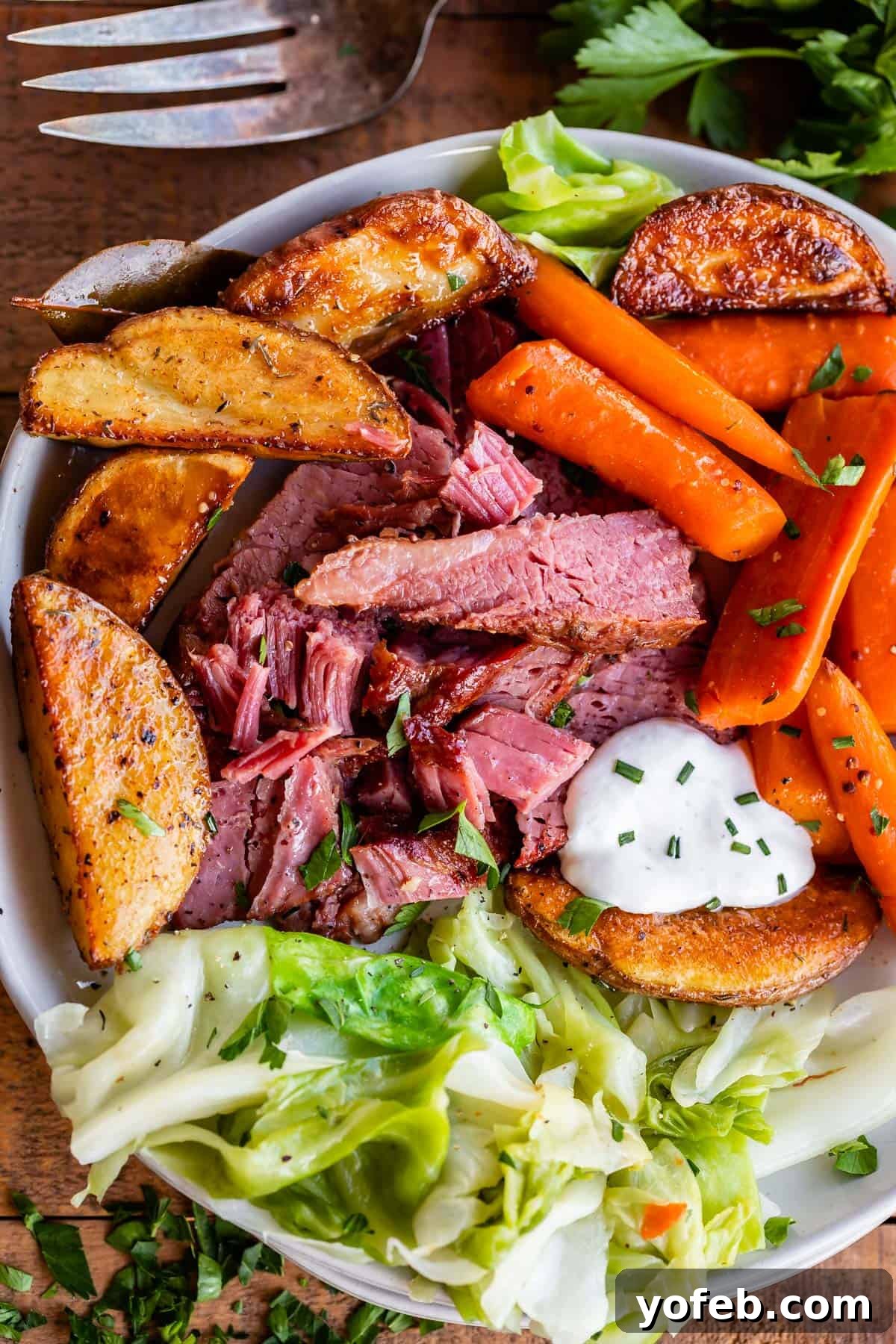
Welcome to the ultimate guide for crafting the most tender, juicy, and flavorful corned beef and cabbage you’ve ever tasted! Perfect for a festive St. Patrick’s Day celebration or any comforting weeknight meal, this recipe simplifies the process, whether you prefer the convenience of a slow cooker or the consistent heat of an oven. Forget dry, tough meat and mushy vegetables – we’re achieving culinary perfection here. Get ready to impress your family and friends with this foolproof method, best served alongside Irish Soda Bread, crispy Roasted Red Potatoes, and a zesty Homemade Horseradish Sauce. This timeless recipe was first shared on March 12, 2012, and has been a favorite ever since!
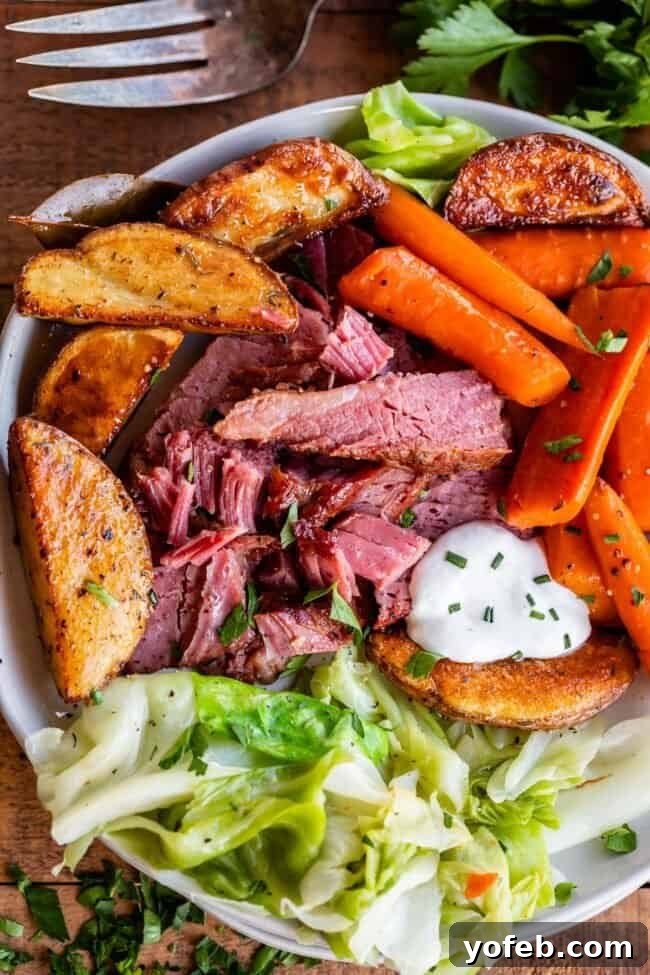
Table of Contents
- The Story Behind St. Patrick’s Day Feasting
- Why This is the Best Corned Beef and Cabbage Recipe You’ll Find
- Understanding Corned Beef: History and Cuts
- What Exactly is Corned Beef?
- Choosing the Best Brisket for Corned Beef
- The Ultimate Cooking Method: Slow Cooker or Oven
- Essential Ingredients for Your Perfect Corned Beef Meal
- Mastering Slow Cooker Corned Beef and Cabbage
- Preparation and Searing for Maximum Flavor
- The Secret to Tender Corned Beef: Low and Slow Cooking Times
- Elevating Your Vegetables: For Optimal Texture and Taste
- How to Perfectly Cut Cabbage for Your Dish
- Why Your Potatoes Deserve Better Than a Crockpot
- Oven Roasted Corned Beef and Cabbage Method
- Presentation Matters: How to Serve Corned Beef and Cabbage Beautifully
- The Art of Slicing: Against the Grain
- Perfect Pairings and Leftover Inspirations
- Storage and Reheating Tips for Corned Beef
- Corned Beef and Cabbage FAQs
- More St. Patrick’s Day Recipe Ideas
- Recipe Card
The Story Behind St. Patrick’s Day Feasting
Ah, St. Patrick’s Day! A holiday filled with shamrocks, leprechauns, and all things green. Growing up, my mom took the “green” theme to an entirely new level. Picture this: waking up to find our milk magically transformed into an intense shade of green by those mischievous leprechauns – quite a shock when pouring it over your morning cereal! We’d have green mashed potatoes, green broccoli, and even green beef gravy (a color not for the faint of heart, or polite company, for that matter!).
The peak of her green culinary adventures arrived the year she managed to dye the pork chops green. Yes, you read that right! She used green ketchup, a short-lived trend from back in the day, to prepare her famous Saucy Pork Chops. The chops tasted as wonderful as ever, of course, but I may have eaten them with my eyes closed. That was probably the year I realized the “leprechauns” might just be my wonderfully whimsical mom.
While my mom’s St. Patrick’s Day meals were always a memorable spectacle of green, for me, the holiday simply isn’t complete without a perfectly prepared corned beef and cabbage. It’s a tradition many of us cherish, and for good reason! This dish, when done right, is a masterpiece of flavor and texture, offering a salty, savory, and incredibly tender experience that truly melts in your mouth.
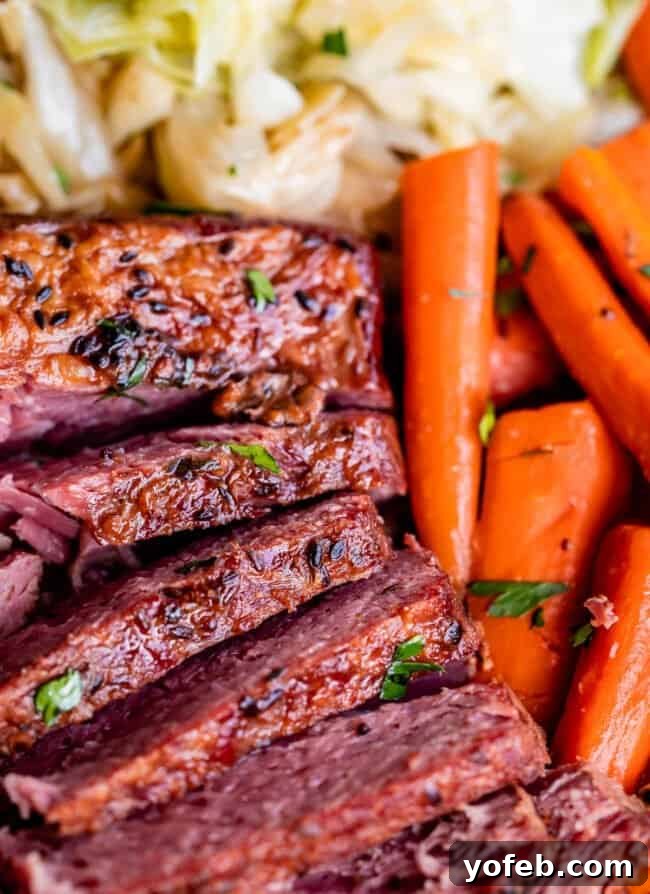
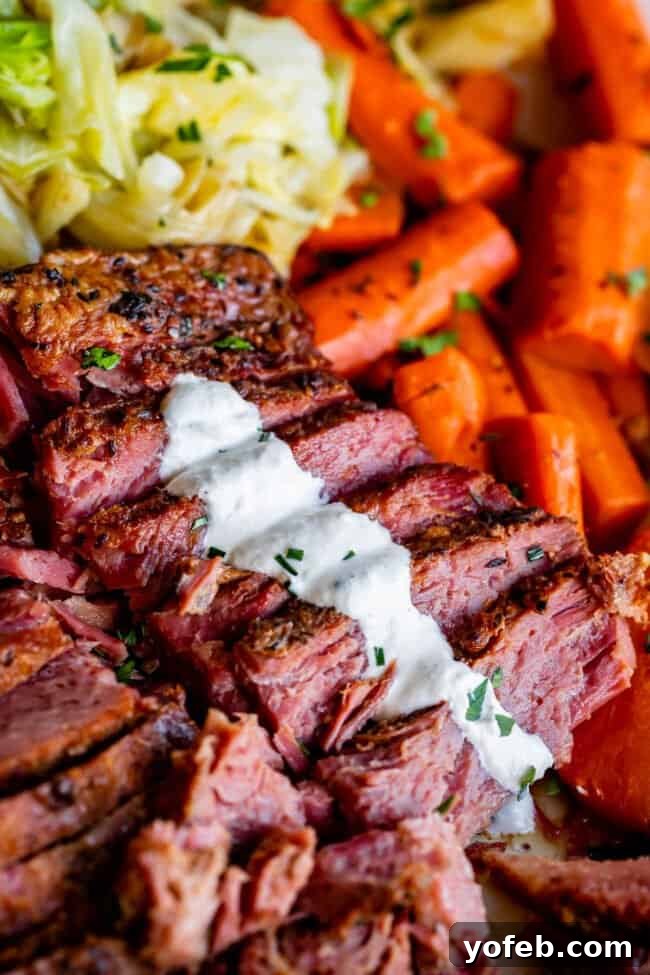
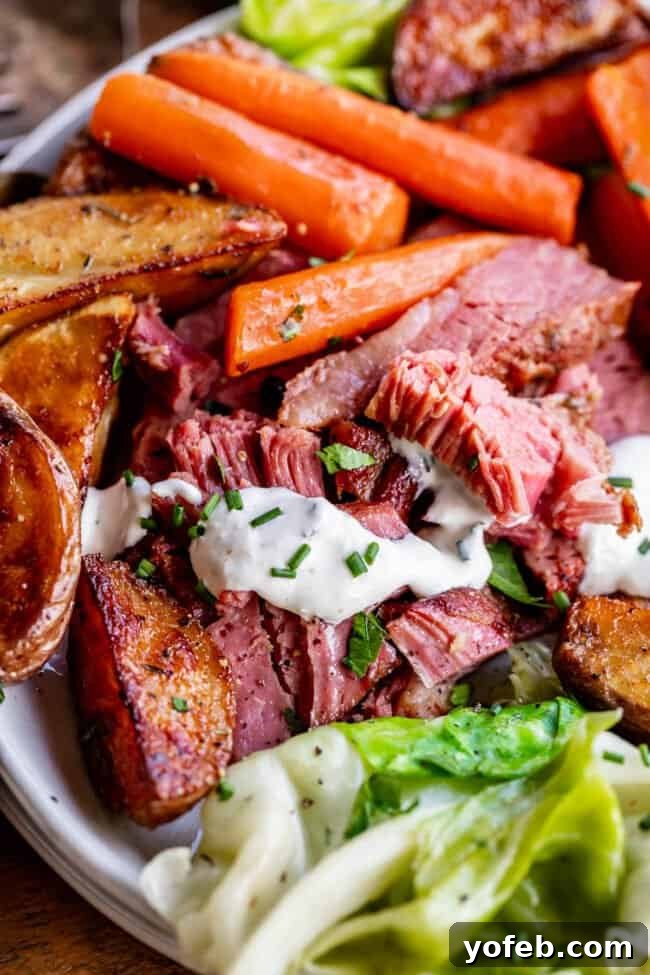
Why This is the Best Corned Beef and Cabbage Recipe You’ll Find
Corned beef, in its ideal form, is profoundly flavorful and unbelievably tender. After simmering for hours, low and slow, it achieves a fall-apart consistency that truly melts in your mouth. The distinct salty, briny taste is unique and, well, ‘Irish-ish’ – more on its American origins later. Regardless, we’re talking about quintessential comfort food here.
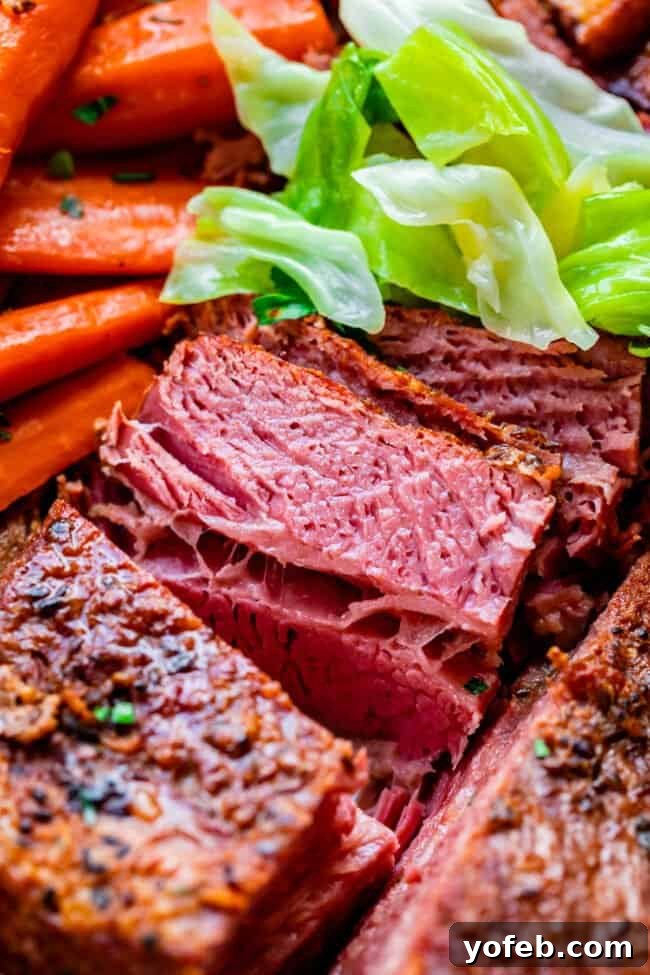
However, corned beef can easily go wrong. Have you ever encountered a piece that’s too tough, excessively salty, or just bland? And let’s not even begin to discuss overcooked, mushy vegetables! My steadfast rule: SAY NO TO MUSHY VEGGIES! I’m here to guide you through every step to achieve perfectly tender, succulent corned beef complemented by vegetables that are appealingly fresh and crisp, not sad and droopy. But first, let’s revisit the fundamentals.
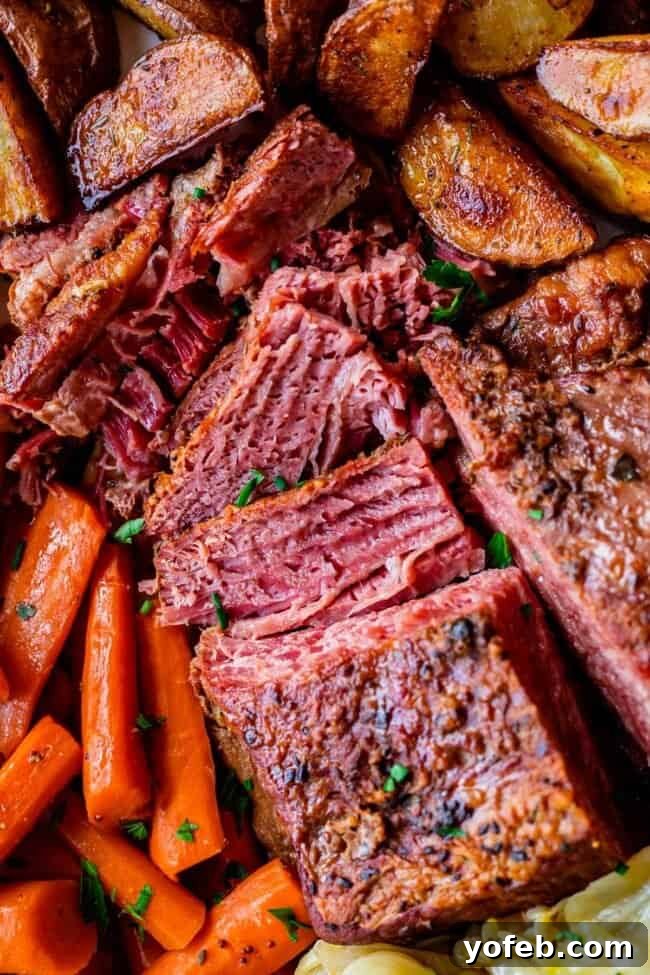
Understanding Corned Beef: History and Cuts
What Exactly is Corned Beef?
Corned beef is typically a cut of beef, most commonly brisket, that has undergone a curing process in a salt brine. The term “corned beef” originated from the “corn-kernel-sized” salt crystals historically used in 17th-century Ireland to brine the meat. This brined brisket was then traditionally boiled or braised for an extended period until it became remarkably tender. This curing and slow-cooking method transforms a naturally tough piece of meat into an exceptionally tender, juicy, and flavor-packed dish.
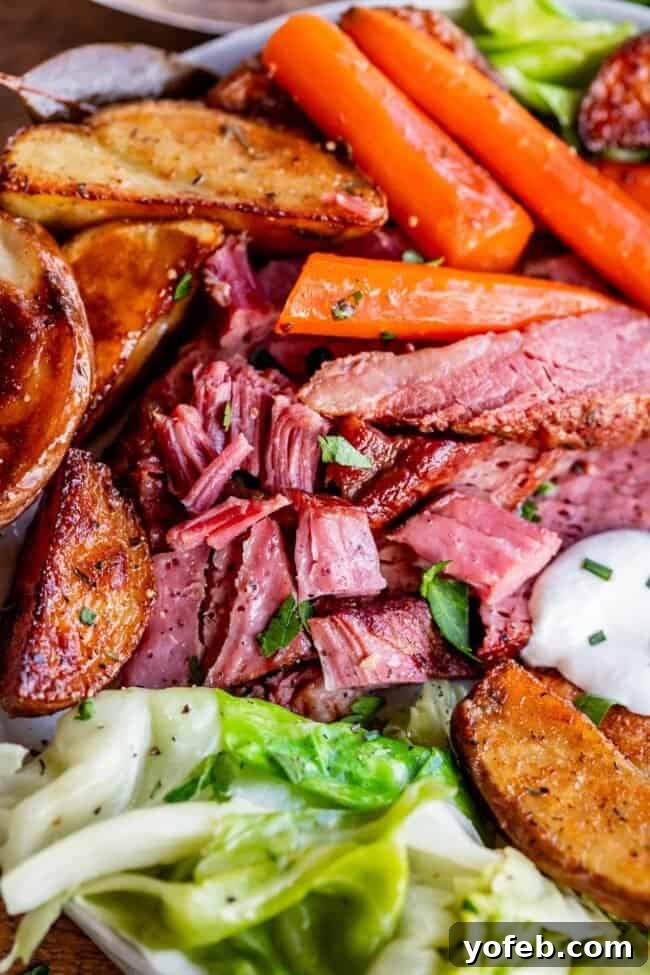
Choosing the Best Brisket for Corned Beef
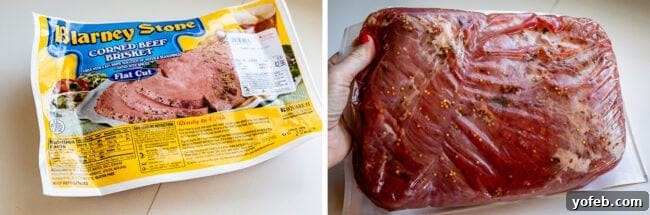
Your journey to perfect corned beef begins at the grocery store. You’ll typically find a few different cuts of brisket: Flat Cut, Point Cut, or sometimes Bottom Round. While any of these will work beautifully for this recipe, I highly recommend selecting a cut that has ample fat and marbling. Why? Because fat equals flavor! The fat renders down during the long cooking process, infusing the meat with incredible richness and keeping it wonderfully moist. A well-marbled piece will yield the most succulent and delicious results.
The Ultimate Cooking Method: Slow Cooker or Oven
My culinary philosophy for corned beef is simple: “set it and forget it.” This mantra perfectly encapsulates the beauty of using a slow cooker or oven for this dish. Slow cooking ensures that the brisket, a cut rich in collagen, has ample time to break down and transform into gelatin. This process saturates the meat, resulting in incredibly tender, melt-in-your-mouth slices of briny perfection. While my slow cooker is often my go-to for convenience, the oven yields equally fantastic results. I’ve included detailed instructions for both methods below, so you can choose what works best for your kitchen and schedule.
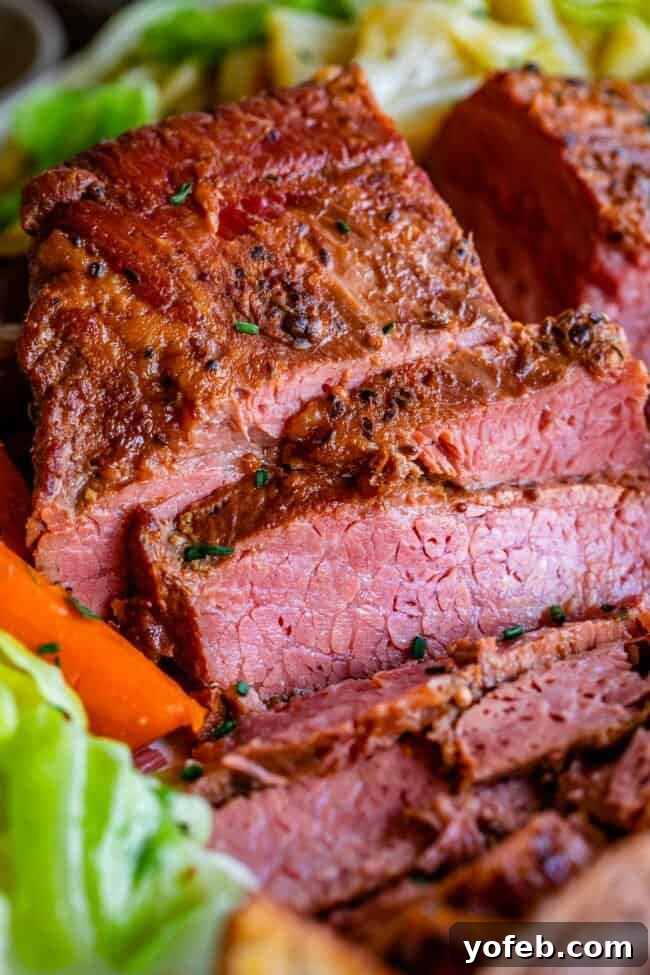
Essential Ingredients for Your Perfect Corned Beef Meal
Before you dive into cooking, here’s a comprehensive list of what you’ll need. For detailed measurements and step-by-step instructions, please refer to the full recipe card at the end of this article.
- Corned Beef Brisket (Flat or Point Cut)
- Cooking Oil (for searing)
- Beef Broth
- Whole Grain Mustard
- Fresh Garlic Cloves
- Large Onion
- Whole Peppercorns
- Fresh Thyme Sprigs
- Bay Leaves
- Carrots
- Unsalted Butter
- Large Head of Green Cabbage
- Kosher Salt
- Roasted Red Potatoes (prepared separately)
- Horseradish Sauce (for serving)
- Fresh Parsley or Chives (for garnish)
Mastering Slow Cooker Corned Beef and Cabbage
Let’s get cooking! The initial step is to prepare your corned beef brisket. You’ll notice that many corned beef packages come with a spice packet, while others have the spices pre-mixed into the brine. If your package includes a separate spice packet, set it aside for now. Regardless, ensure you drain all the brine from the packaging thoroughly into the sink. The brine has already done its job of salting and curing the meat, so there’s no need to rinse the beef itself.
Preparation and Searing for Maximum Flavor
This is one of the rare instances where I’ll advise you NOT to pre-salt your meat before searing! The brine has already imparted plenty of salt. Instead, focus on achieving a beautiful, rich brown crust on both sides of the brisket. Heat a large skillet over medium-high heat with a bit of oil until it shimmers. Carefully place the drained corned beef in the hot pan and sear for 2-4 minutes per side. This crucial step, known as the Maillard reaction, develops deep, savory flavors and a delightful crispiness that will enhance the final dish.
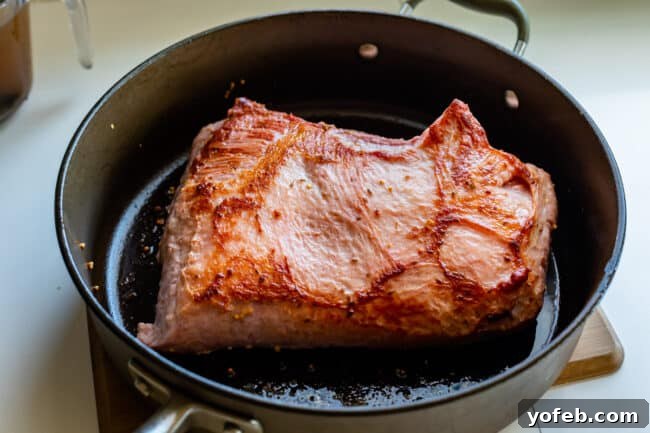
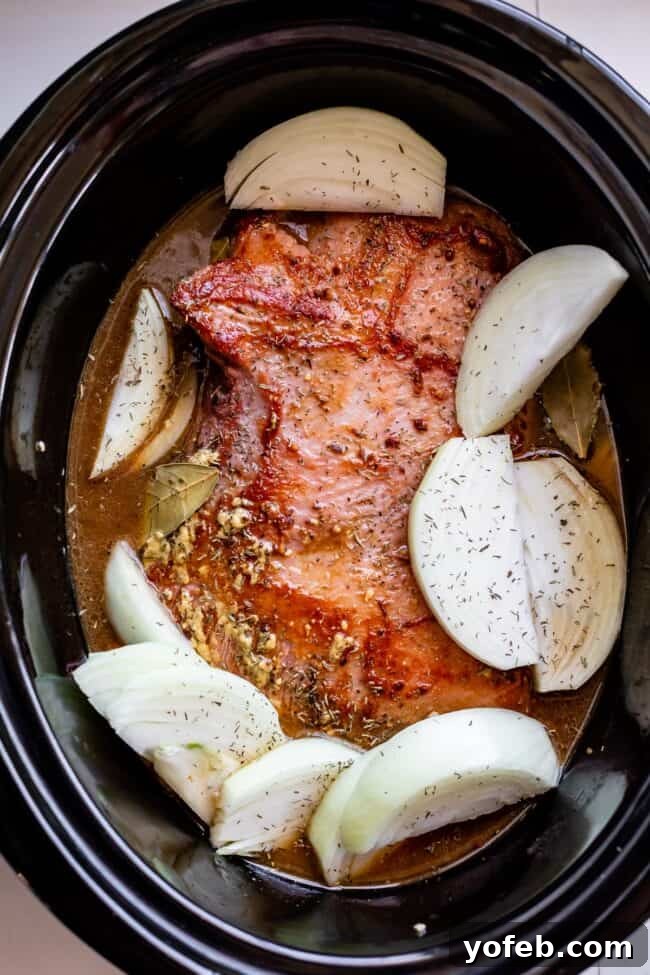
Once seared, transfer the brisket to your slow cooker, ideally fat-side up. In the same skillet, deglaze the pan with beef broth mixed with whole grain mustard, scraping up all those flavorful browned bits. Pour this aromatic liquid over the corned beef. Then, add your aromatics: smashed garlic cloves, onion wedges, whole peppercorns, fresh thyme sprigs, and bay leaves. If you had a separate spice packet, now is the time to sprinkle it over everything. These ingredients will slowly infuse the beef with incredible depth of flavor as it cooks.
The Secret to Tender Corned Beef: Low and Slow Cooking Times
Patience is key when it comes to truly tender corned beef. While many recipes might suggest rushing the process by cooking on high heat, I strongly advise against it. For the most succulent, fall-apart results, your brisket needs a good 8-10 hours on the low setting in your slow cooker. This extended cooking time allows the collagen in the brisket to slowly break down and convert into gelatin, which in turn saturates the meat, making it unbelievably tender and juicy. Rushing it will only result in chewy, less enjoyable meat – and we’re aiming for perfection!
Elevating Your Vegetables: For Optimal Texture and Taste
Now, let’s talk about the vegetables – a crucial component that can make or break your corned beef and cabbage experience. A common mistake is adding all the vegetables at the beginning, leading to an unappetizingly mushy mess. To avoid this, we’ll stage their introduction.
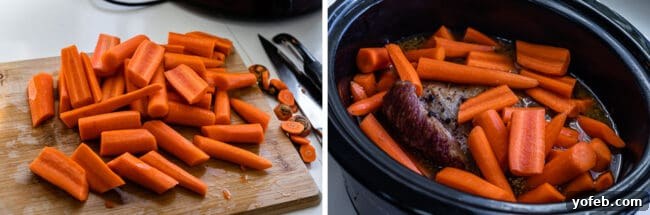
**Carrots:** While you *could* add carrots at the beginning, they would become sad, overcooked, and disintegrating. Carrots are delicate and deserve respect! They only require about 1-2 hours of cooking in the slow cooker to become tender-crisp. Add them after the brisket has cooked for approximately 6-7 hours, ensuring they retain their flavor and pleasant texture.
**Cabbage:** This is where I draw a firm line. Cabbage absolutely MUST be added towards the very end of the cooking process. Overcooked cabbage turns grey, acquires an unpleasant odor, and loses its vibrant flavor. It only needs about 30-60 minutes in the slow cooker to soften beautifully and absorb the delicious flavors from the beef. Any longer, and you risk ruining it.
How to Perfectly Cut Cabbage for Your Dish
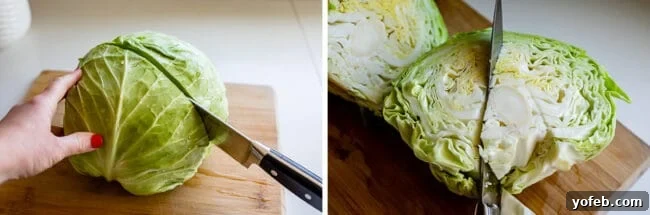
For corned beef and cabbage, I prefer generous, substantial pieces of cabbage. Start by cutting the cabbage head in half through the core. Then, remove the tough, triangular core from each half. Place the cut side down on your cutting board and slice the cabbage into wedges, roughly ¾ to 1 inch thick. These larger pieces will hold their shape better and offer a satisfying bite.
Now, for a truly game-changing step: sauté your cabbage in a generous amount of butter before adding it to the slow cooker. Yes, an entire stick of butter! While you *could* add raw cabbage directly to the cooker for it to soften, you’d be missing out on an incredible depth of flavor. Sautéing in butter creates richly flavored, slightly browned edges and a wonderfully tender yet still structured cabbage that complements the beef perfectly. It will turn your cabbage a beautiful golden-yellow hue, which, while different from bright green, is undeniably delicious. (For photography, I sometimes reserve a few raw slices to showcase the green, but for taste, sautéing is the way to go!)
Why Your Potatoes Deserve Better Than a Crockpot. Ever.
I’m firm on this, folks. Potatoes do not belong in a slow cooker with your corned beef. As I’ve stressed in my beloved Fall-Apart Pot Roast and Carrots recipe, potatoes are meant for culinary greatness beyond the confines of a slow cooker. If you enjoy soggy, grey, over-saturated potatoes, then by all means, add them alongside your carrots. However, if you crave potatoes that are crisp, golden brown, and wonderfully tender inside, you absolutely must roast them separately in the oven. I apologize if I sound a bit bossy, but potatoes deserve better than to be an afterthought in a crockpot. This is a hill I’m willing to die on!
Oven Roasted Corned Beef and Cabbage Method
If you prefer using your oven, this method will still yield a remarkably tender and juicy corned beef. The key is monitoring the internal temperature of the meat. Corned beef should be cooked until it reaches approximately 200°F (93°C). At this temperature, the tough connective tissues fully break down, the fat renders beautifully, and the meat becomes incredibly succulent and easy to slice. In the oven, this typically takes about 4 hours. Similar to the slow cooker method, you’ll want to add your carrots and cabbage at staggered intervals to ensure they cook perfectly without becoming overdone or mushy.
Presentation Matters: How to Serve Corned Beef and Cabbage Beautifully
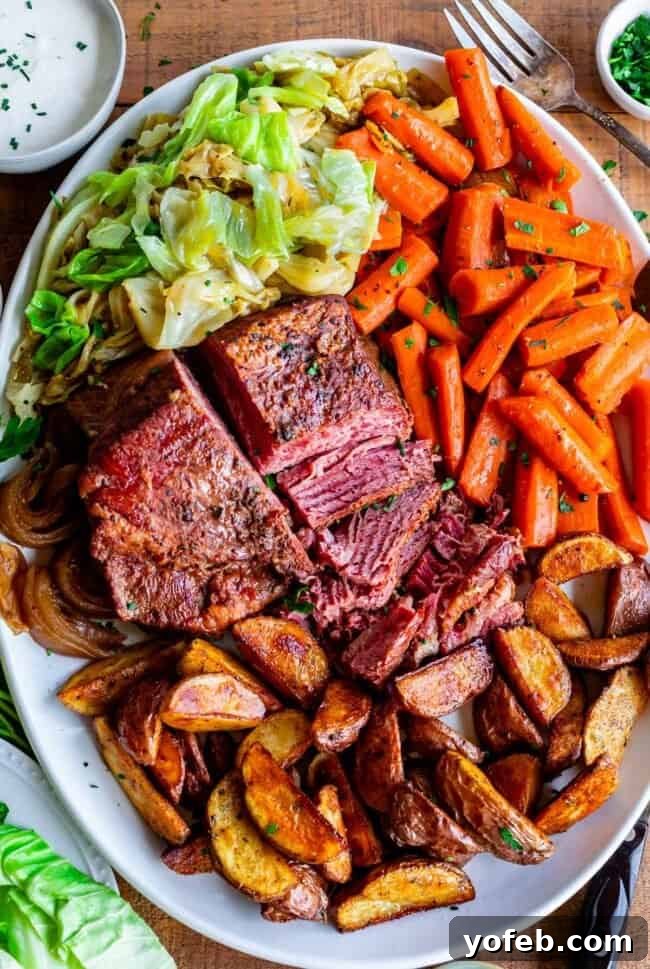
Let’s be honest: corned beef can sometimes resemble a “hot plate of garbage” if not presented with care. And since we eat with our eyes first, a little attention to plating goes a long way! Grab one of your largest, most attractive platters. Using a slotted spoon, carefully remove the cooked vegetables from the broth, separating the cabbage, carrots, and any roasted potatoes you’ve made separately. The cooking liquid is often too salty for a gravy, so it’s best to discard it, along with the spent garlic and onions (their primary purpose was flavoring, though you can eat them if you wish!).
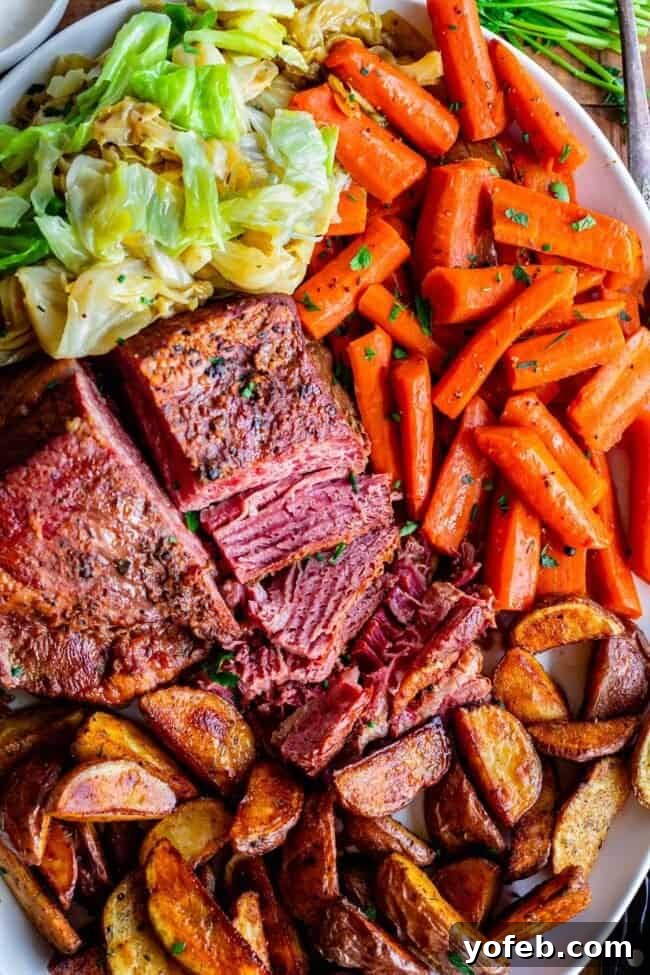
Arrange the carrots neatly in one corner of the platter, the cabbage in another, and the roasted potatoes in a third. After your corned beef has rested (this is crucial!), slice it thinly against the grain and place it prominently in the center of the platter, surrounded by the vibrant vegetables. Finish with a sprinkle of freshly chopped parsley or chives for a pop of color, and serve with a bowl of zesty Horseradish Sauce. These simple steps transform a rustic dish into an utterly irresistible meal, proving that even comfort food can be elegant!
The Art of Slicing: Against the Grain
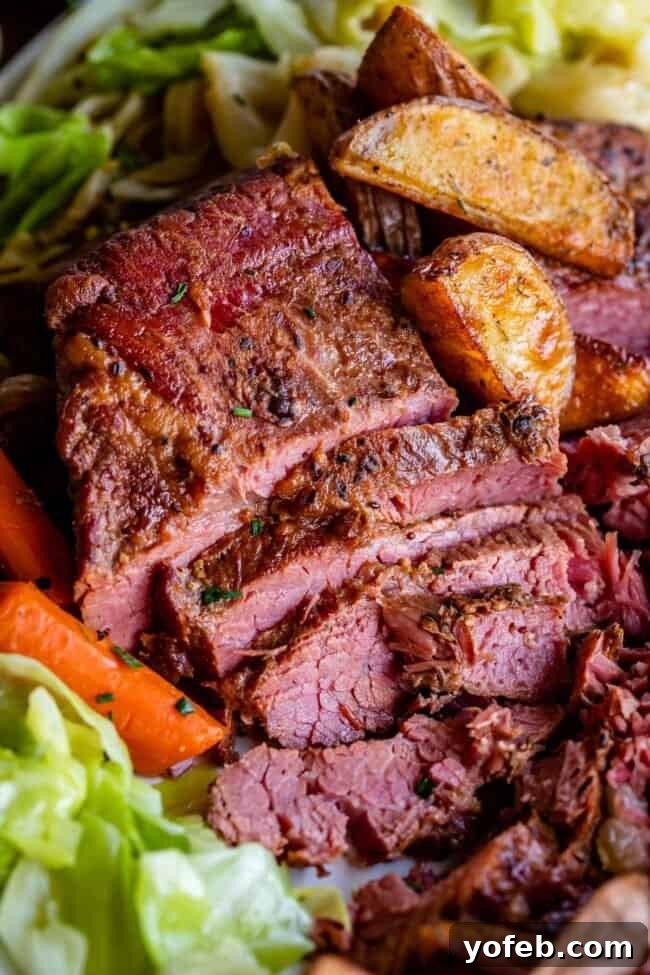
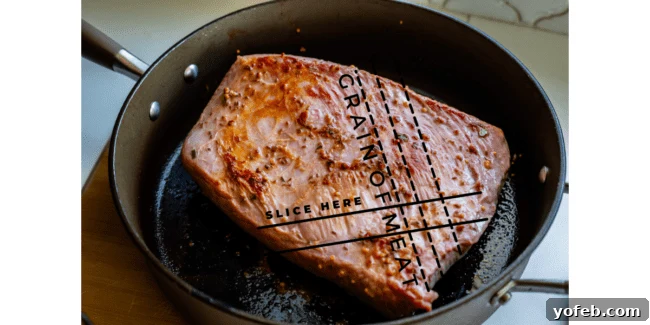
Once your beautifully cooked corned beef is fork-tender and ready, remove it from the slow cooker or oven and let it rest on a cutting board for a few minutes. This allows the juices to redistribute throughout the meat, preventing them from running out when you slice. The key to incredibly tender slices is to cut *against the grain*.
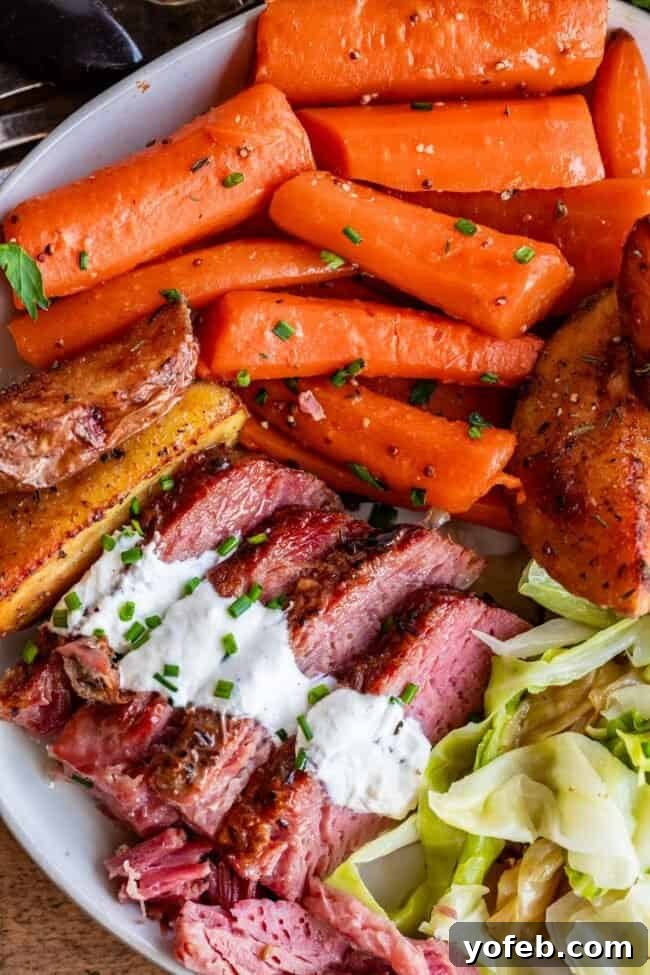
Imagine the meat has long, parallel muscle fibers (the “grain”). You want to slice perpendicular to these fibers. While the grain is often easier to spot in raw meat, look for the faint lines running through your cooked brisket. Instead of cutting along them, cut across them. Thin slices, cut against the grain, will provide short muscle fibers that are easy to chew and truly melt in your mouth. This technique transforms an otherwise tough cut into an effortless, delightful bite, saving your jaw from unnecessary work!
Perfect Pairings and Leftover Inspirations
No corned beef and cabbage meal is truly complete without the right accompaniments. A creamy, spicy Horseradish Sauce is a non-negotiable condiment, adding a tangy kick that perfectly cuts through the richness of the beef. It’s incredibly quick to whip up and ties the entire meal together beautifully. With the carrots and (roasted) potatoes already on the side, this dish is almost a complete meal on its own! Add a simple green salad, and you’re all set.
However, if you’re looking to diversify your potato and vegetable sides, here are some fantastic alternatives:
- Cheesy Scalloped Potatoes: A rich, creamy, and decadent potato dish.
- Gruyere-Crisped Potatoes Au Gratin: For a sophisticated and cheesy potato experience.
- Sautéed Carrots & Shallots: A fragrant and slightly sweet side.
- Apple Cider Roasted Carrots: Sweet and tangy, a lovely counterpoint to the savory beef.
And you can never go wrong with a side of freshly baked bread:
- Irish Soda Bread: The quintessential classic for this meal!
- Famous Buttery Dinner Rolls: Soft, fluffy, and perfect for soaking up juices.
- Parker House Rolls: Another classic, known for their tender texture.
Leftover Ideas!
One of the best things about making corned beef is the incredible leftovers! A Reuben Sandwich is an absolute must-make with any remaining beef. But don’t stop there! Get creative with these delicious ideas:
- Reuben-Stuffed Crescent Rolls: A fun, cheesy twist on the classic sandwich.
- Reuben-Stuffed Twice Baked Potatoes: Hearty and incredibly flavorful.
Storage and Reheating Tips for Corned Beef
To maximize freshness and flavor, it’s best to store your leftover corned beef and vegetables separately in airtight containers. Both will keep well in the refrigerator for about 4-6 days.
Corned beef, in particular, freezes exceptionally well. After allowing the meat to cool completely, transfer it to a freezer-safe zip-top bag, pressing out as much air as possible before sealing. It can be stored in the freezer for 4-6 months. If you wish to freeze the vegetables, follow the same steps, but use a separate bag. Always thaw frozen components in the refrigerator overnight before reheating.
How to Reheat Corned Beef and Cabbage
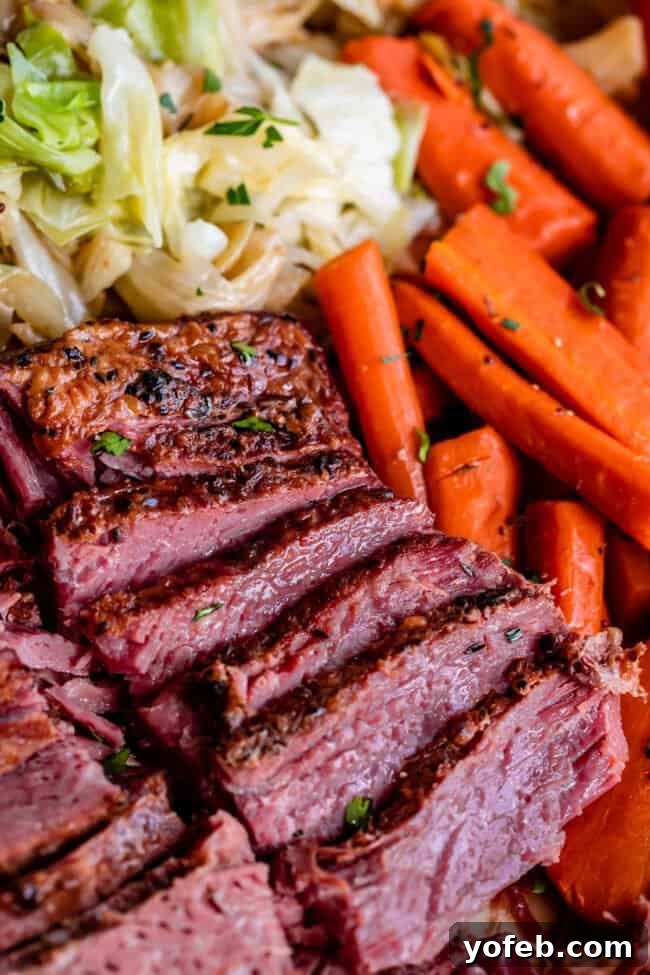
The key to reheating corned beef is to prevent it from drying out. For a larger quantity, transfer the (thawed) meat to a 9×13-inch baking pan, sprinkle 2-3 tablespoons of water over it, cover tightly with foil, and warm in a 350°F (175°C) oven until it reaches an internal temperature of 165°F (74°C). If the beef is already sliced, this should only take about 5-10 minutes. For unsliced portions, use a meat thermometer to ensure it’s heated through without overcooking and becoming tough. For a single serving in the microwave, add a small splash of water and heat at 50% power until warmed through.
For reheating cabbage, I recommend a quick sauté in a nonstick pan on the stove with a little butter or cooking spray. Leftover corned beef makes for fantastic lunches. You can also get creative: add leftover meat and veggies to a sauté pan and crack an egg on top for a delicious breakfast or brunch!
Corned Beef and Cabbage FAQs
It’s a common misconception that corned beef is a traditional Irish St. Patrick’s Day meal. In Ireland, celebrations often feature dishes like lamb, bacon, or Shepherd’s Pie. The tradition of eating corned beef and cabbage is actually an Irish-American one! When Irish immigrants arrived in the United States, they sought affordable meats. Brisket, being a tough cut, was inexpensive at the time (unlike today!). They adapted the traditional Irish curing methods for bacon and applied it to beef, creating “corned beef.” Cabbage was the most readily available and cheapest vegetable, making it a natural pairing. Thus, corned beef and cabbage became a staple of Irish-American cuisine, particularly for St. Patrick’s Day.
Historically, corned beef was often boiled for hours on the stovetop. However, boiling can easily lead to overcooked, tough meat if not meticulously monitored. For consistent tenderness and to prevent the meat from becoming stringy, slow cooking in a crockpot or oven is far superior. These methods allow the connective tissues to break down gradually, resulting in a juicy, fall-apart texture every time.
No, there is no need to rinse corned beef. The idea that rinsing removes “extra salt” is largely ineffective. The meat has already absorbed the necessary salt during the extended curing process in the brine. Rinsing it under water will not significantly reduce the salt content or alter the final flavor profile in a meaningful way.
Corned beef is done when it is incredibly “fork tender.” This means you can easily insert a fork into the meat, gently twist, and a piece will pull away without resistance. If the meat still feels firm or holds together as a single, cohesive piece when tested with a fork, it needs more time. This tenderness indicates that the tough connective tissues have fully broken down, creating that desirable melt-in-your-mouth texture.
No, you should always drain the liquid (brine) from the corned beef packaging before cooking. The brine is extremely salty and has served its purpose in curing the meat. If you were to cook the beef in this liquid, your final dish would be excessively salty and unpleasant to eat.
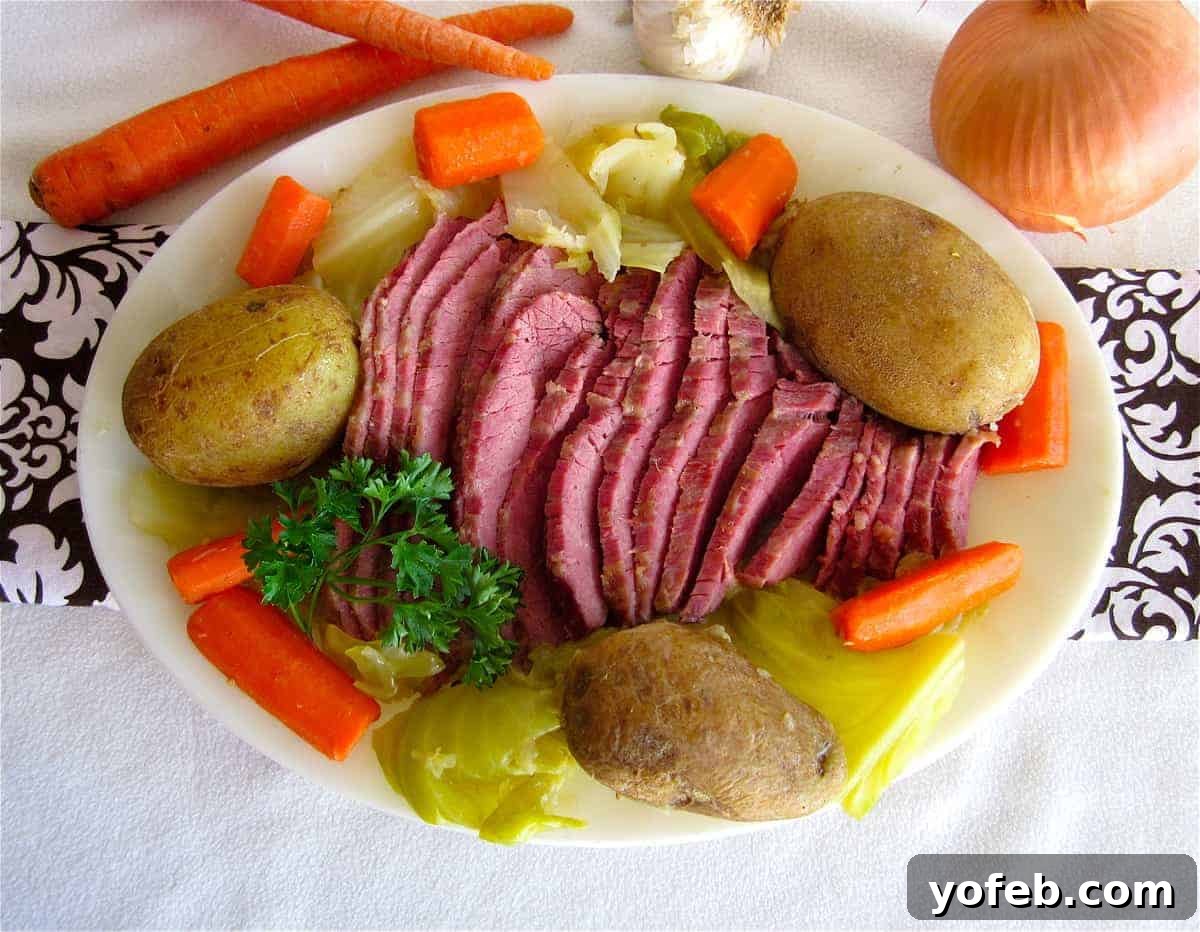
Just for a bit of fun, here’s a photo from the very first time I posted this recipe back in 2012! Yes, that’s a fuzzy white blanket I thought would make a good photo backdrop. Oh dear! Hey, at least I didn’t try to dye it green this time. We are evolving! Happy St. Patrick’s Day, everyone!
More St. Patrick’s Day Recipe Ideas
Looking for more delicious ways to celebrate St. Patrick’s Day? Here are some fantastic recipes you’re sure to love, from traditional Irish fare to festive green treats:
- Irish Soda Bread: The perfect traditional accompaniment to your corned beef and cabbage!
- Classic Shepherd’s Pie with Crispy Cheddar: A hearty, comforting classic that’s a hundred times better than any school lunch version.
- One Skillet Shepherd’s Pot Pie: All the savory goodness of Shepherd’s Pie, but with a flaky pie crust top and made in a single skillet.
- Shamrock Shake: While not traditional, this creamy, minty green shake is a fun, festive treat!
- Mini Chicken Pot Pie: Stupid easy and a definite kid-friendly favorite.
- Beef Stroganoff Recipe: A rich and creamy dish, just like you’d get at a fancy restaurant.
- Salisbury Steak: Pure comfort food, come to mama!
- Mom’s Saucy Pork Chops: A nostalgic family classic from the 50s – but remember, no green ketchup!
- Authentic Irish Colcannon Recipe from Boulder Locavore
- Slow Cooker Beef Stew from Kristine’s Kitchen
- Kielbasa and Cabbage Skillet from BellyFull
For a sweet finish, consider these delicious desserts:
- Mint Chocolate Chip Cookies
- Mint Chocolate Brownies!
Facebook | Pinterest | Instagram
Best Recipe for Corned Beef and Cabbage
Prep Time: 20 mins | Cook Time: 9 hrs | Total Time: 9 hrs 20 mins | Servings: 8
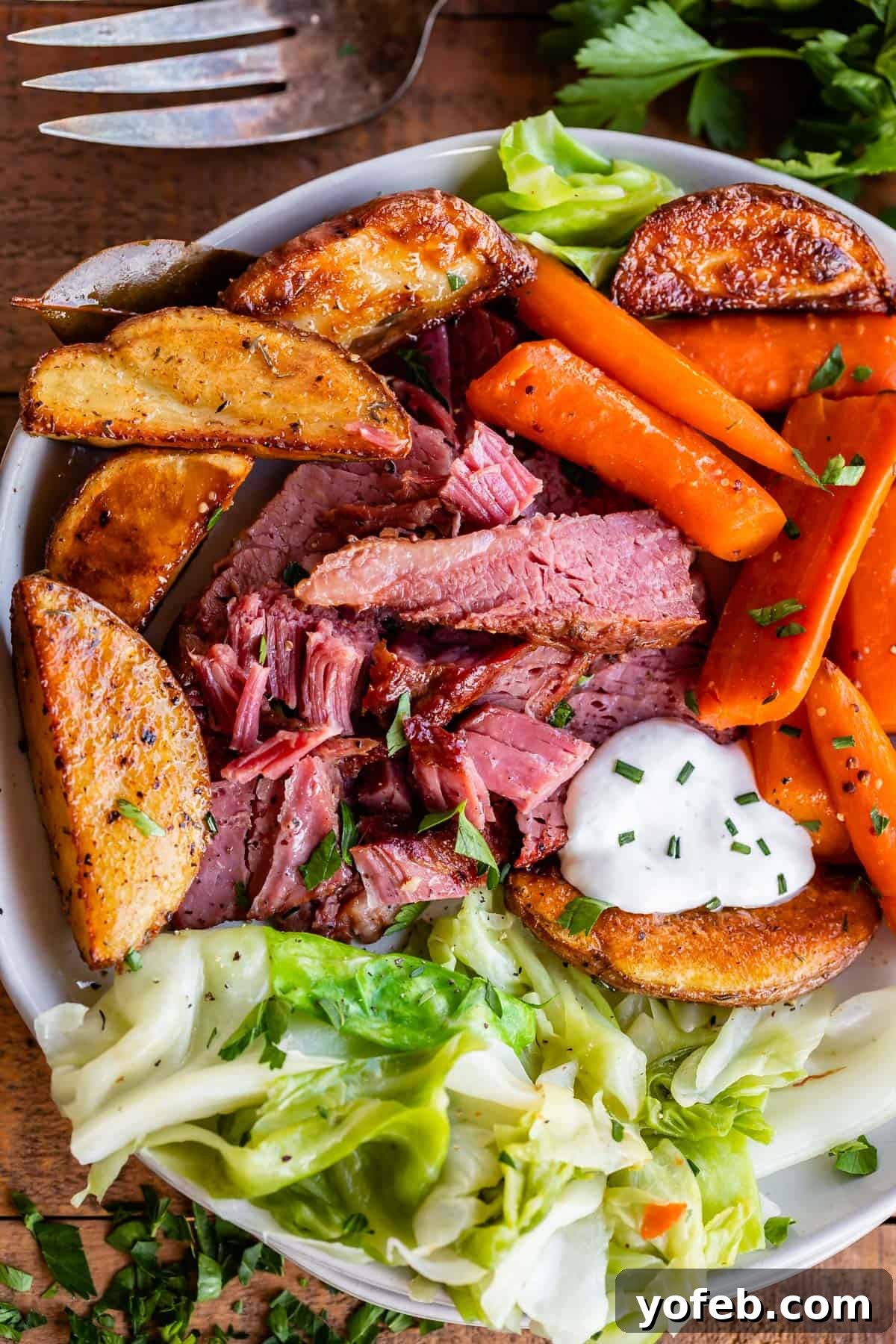
My absolute favorite recipe for corned beef and cabbage! This easy dinner is made in the slow cooker or in the oven, you can just set it and forget it! This method gives you the most tender and juicy corned beef you’ve ever had. Serve it with Roasted Red Potatoes and Horseradish Sauce for the perfect St. Patrick’s Day meal!
Ingredients
- 4 pounds corned beef brisket, flat or point cut, with spice packet*
- 2 tablespoons oil, for searing
- 1 & 1/2 cups beef broth**
- 3 tablespoons whole grain mustard
- 6 cloves garlic, smashed and left whole
- 1 large onion, sliced into wedges
- 15-20 whole peppercorns, or fresh cracked pepper to taste
- 8-10 sprigs fresh thyme, or 1 teaspoon dried thyme
- 2 bay leaves
- 2 pounds carrots, peeled and quartered (8-10 carrots)
- 1/2 cup butter, (1 stick)
- 1 large head green cabbage, sliced into wedges
- 1 teaspoon kosher salt
- 1 batch Roasted Red Potatoes, (2 pounds red potatoes needed)
- 1 batch Horseradish Sauce, for serving
- Parsley and or chives, to garnish
Instructions
- Heat a large 12-inch skillet over medium-high heat for at least 2 minutes. Open your package of corned beef and drain the brine into the sink. There is no need to rinse the corned beef. Some corned beef brands include a packet of spices*, but sometimes the spices are mixed into the brine. Save the spice packet if there is one.
- Add 2 tablespoons oil to the hot skillet; it should shimmer immediately. Swirl to coat, then add the drained corned beef. Sear for 2-4 minutes on one side until golden brown, then carefully flip with tongs and sear the other side for another 2-3 minutes.
- Place the seared corned beef in your crock pot, fat side up, but don’t put the skillet in the sink yet.
- In a glass measuring cup, combine 1 and 1/2 cups beef broth with 3 tablespoons whole grain mustard. (I always use Better Than Bouillon Beef Base and water to make my broth.)
- Add the liquid to the pan that you seared the beef in, and turn the heat to medium high. Let the mixture bubble as you scrape up the browned bits. Pour the mixture over your corned beef into the crock pot.
- Smash 6 cloves of garlic with the side of a chef’s knife, peel, and add to the crock pot. Roughly slice an onion into wedges and add to the pot. Add about 15-20 whole peppercorns. Add 8-10 sprigs of fresh thyme and 2 bay leaves, tucking them into the liquid. Sprinkle the spice packet* over everything.
- Cover with the lid and cook on low for about 6-7 hours.
- Prepare your carrots. Peel them and slice each carrot into thirds, slicing any large segments in half lengthwise. I actually prefer the larger carrots myself, so don’t break your back here.
- Add the carrots on top of the beef, cover again and cook for another 1-2 hours.
- Prepare the cabbage. Slice the cabbage in half, then cut out the stem. Slice the cabbage into large wedges. Melt 1/2 cup butter in a 12-inch skillet over medium-high heat. Add all the cabbage (it looks like it won’t fit, shove it all in!) and sprinkle with 1 teaspoon kosher salt. Sauté, stirring occasionally for about 10 minutes, until the cabbage is slightly wilted but not quite to the point that you would snag a bite yet. Add the cabbage on top of the carrots, and continue cooking on low for another 30-60 minutes, until the cabbage is softened and has absorbed some of the corned beef flavor.
- Meanwhile, make a batch of Roasted Red Potatoes in the oven. Potatoes do not belong in the crock pot. (Of course you can do it if you want. Add them with the carrots, they need 2-3 hours to cook. But don’t blame me when you get smooshy mooshy gray potatoes.)
- To serve: I like to serve corned beef on a large platter. I think it looks best when the ingredients are presented separately. Use a slotted spoon to remove all the cabbage to a colander to drain slightly. Place all the carrots together on the platter. Add the drained cabbage to the platter next to the carrots. Remove the corned beef to a cutting board and let rest for about 10 minutes. Slice against the grain, then add to the platter. Leave all the broth, onions, garlic, thyme stems, and bay leaves behind. (You can eat the onions and garlic if you want, I find them to be so overcooked that they are unappetizing. We add them to help flavor the other ingredients.) Add the roasted potatoes to the platter. Garnish with chopped parsley and chopped chives.
- Serve with a batch of homemade Horseradish Sauce! And Irish Soda Bread on the side. Both are super easy to whip up, and compliment the corned beef perfectly. Don’t skip it!
Oven Instructions:
- Sear the meat in a large oven-safe Dutch oven. Remove to a plate and set aside. Add the beef broth and mustard, scraping the browned bits from the bottom of the pan.
- Return the meat to the pot and add garlic, onion, peppercorns, thyme, bay leaves, and spice packet. Cover with a lid and roast at 300°F (150°C) for about 2 hours.
- Add sliced carrots, cover, and cook for 1 hour. Add the sautéed cabbage and cook another 30-60 minutes. The meat should register about 200°F (93°C) on a meat thermometer.
Notes
*Every brand of corned beef will have a different spice blend, and you might worry it won’t be flavorful enough. If you want to beef up your corned beef with extra spices, these are more or less the spices included: broken bay leaves, coriander, peppercorns, mustard seeds, anise, crushed red pepper, dill seeds, and fennel seeds. It also might include a small pinch of cloves, allspice, nutmeg, cardamom, or cinnamon, but definitely go easy on these, a little bit goes a long way. If I were to pick one I would choose cloves.
**I like to use 1 and 1/2 cups water mixed with 1 and 1/2 teaspoons Better Than Bouillon Beef Base.
Nutrition
Serving: 1 serving | Calories: 767kcal | Carbohydrates: 42g | Protein: 40g | Fat: 50g | Saturated Fat: 18g | Polyunsaturated Fat: 3g | Monounsaturated Fat: 22g | Trans Fat: 1g | Cholesterol: 153mg | Potassium: 1900mg | Fiber: 10g | Sugar: 13g | Vitamin A: 19528IU | Vitamin C: 139mg | Calcium: 152mg | Iron: 6mg
Course: Main Course | Cuisine: American | Calories: 767 | Keyword: cabbage, corned beef
Did you make this? I’d love to see it!
Mention @thefoodcharlatan or tag #thefoodcharlatan!