Say goodbye to bland, dry Snickerdoodle Cookies! This ultimate recipe delivers the BEST soft, chewy, and irresistibly flavorful Snickerdoodles, enhanced by a luxurious double dip in cinnamon sugar. Forget crumbly hockey pucks – I’ll share all my expert tips to ensure every bite is a perfect blend of tangy sweetness and tender perfection. Get ready to bake Snickerdoodles that are truly unforgettable!
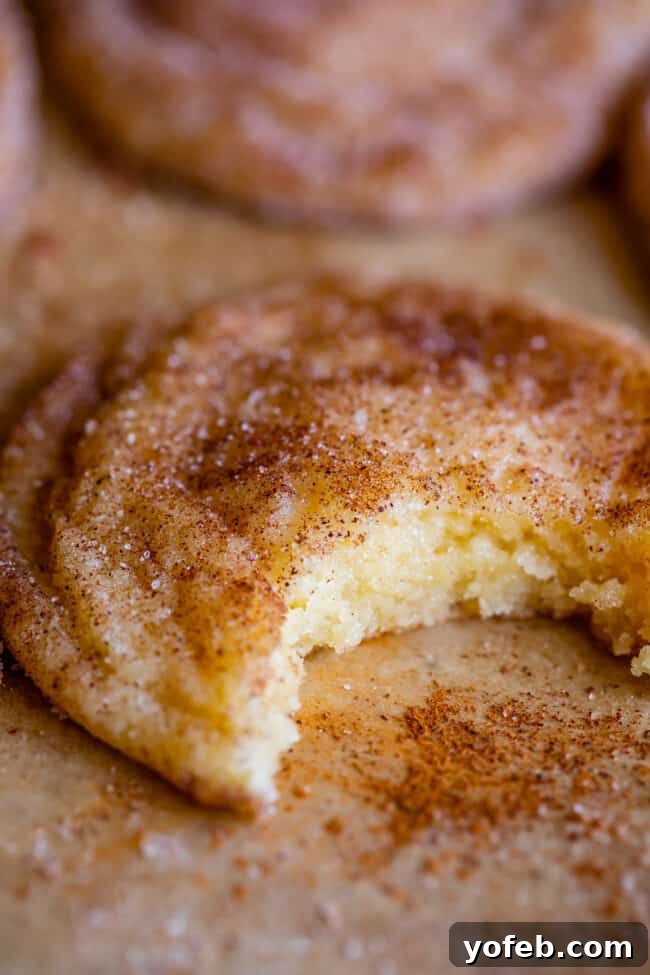
Table of Contents
- The Ultimate Snickerdoodle Recipe!
- What Defines a Perfect Snickerdoodle Cookie?
- The Intriguing Origin of the Snickerdoodle Name
- Essential Snickerdoodle Ingredients
- The Magic of Cream of Tartar in Snickerdoodles
- Step-by-Step: How to Make Snickerdoodles
- Solving the Mystery: Why Do Snickerdoodles Go Flat?
- Elevate Your Snickerdoodles: Next-Level Tips
- Storing and Freezing Your Snickerdoodle Cookies
- Frequently Asked Questions About Snickerdoodles
- Snickerdoodle Cookies Recipe Card
Last week, for my birthday, my husband Eric surprised me with new bed sheets. To my delight, they were the exact same brand and color as our existing set! “How wonderful,” I exclaimed, “now we have an extra set, no more waiting for laundry day!” His face, however, fell slightly. It turned out his intention was to impress me with a completely new, fancy set, having researched high-quality brands. Apparently, he didn’t realize my existing sheets were already top-tier in my book!
That’s how you know you’ve found your soulmate – when you instinctively align on something as specific as sheet preferences! My heart was full, and then I opened his next gift: a silk pillowcase. It was incredibly soft and luxurious. When I asked him how he came up with the idea, he mentioned browsing “what to get your wife for her birthday” lists online and then researching further. He then added, “I know you’re worried about your eye crinkles; apparently sleeping on silk can help.” Oh, Eric! I chuckled, thinking he sweetly calls them “eye crinkles” to make them sound less daunting, suggesting we’ve “earned them together.” Despite the comical comment, his attentiveness made it a truly thoughtful gift.
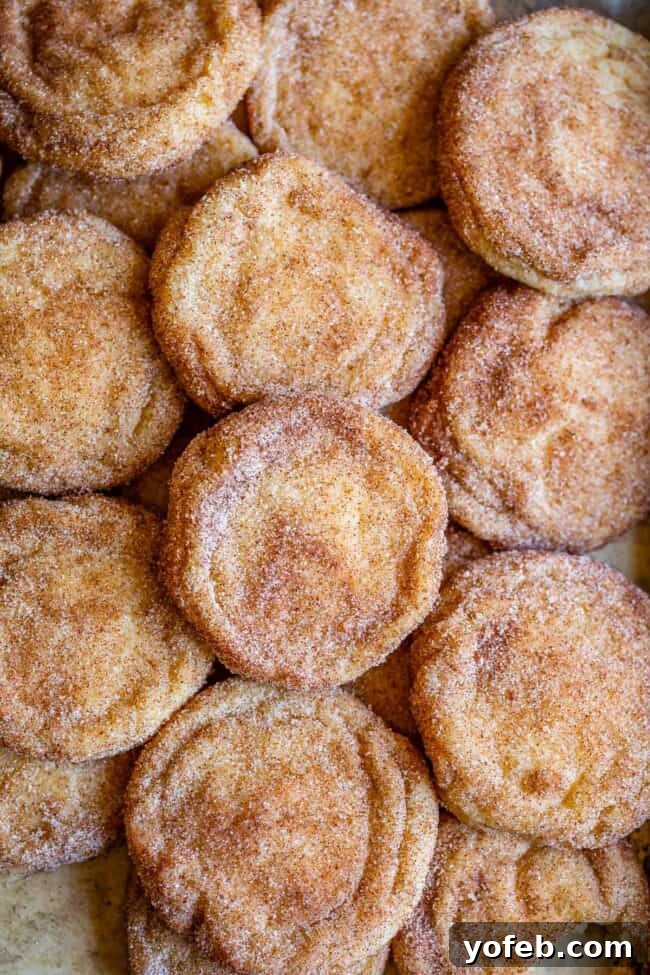
As I embrace another year, perhaps it is time to focus more on self-care, whether that’s through luxurious silk or simply indulging in the little things that bring joy. Speaking of joy, let me share with you a discovery that brings immense happiness: my quest for the perfect Snickerdoodle recipe, one that banishes blandness and embraces irresistible flavor. Prepare yourself for a cookie experience that will elevate your baking game and satisfy your deepest cinnamon cravings.
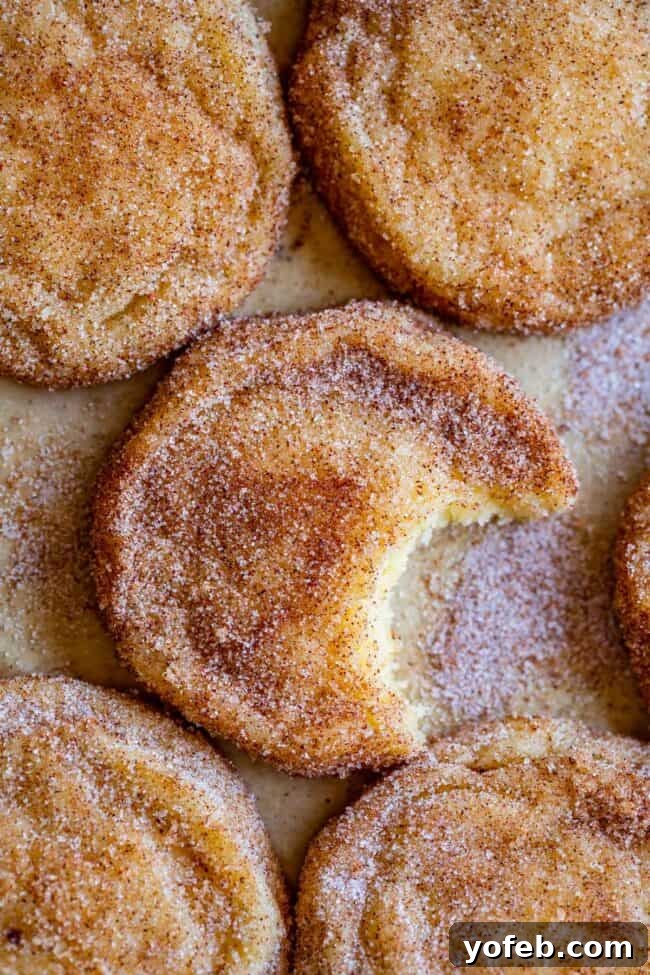
The Ultimate Snickerdoodle Recipe!
Eureka! I’ve finally perfected it! A Snickerdoodle recipe that I absolutely adore, from its crispy edges to its wonderfully soft center. For years, Snickerdoodles were never my go-to cookie, despite my deep love for cinnamon. I’d often pass them by, finding them underwhelming compared to other cookie choices.
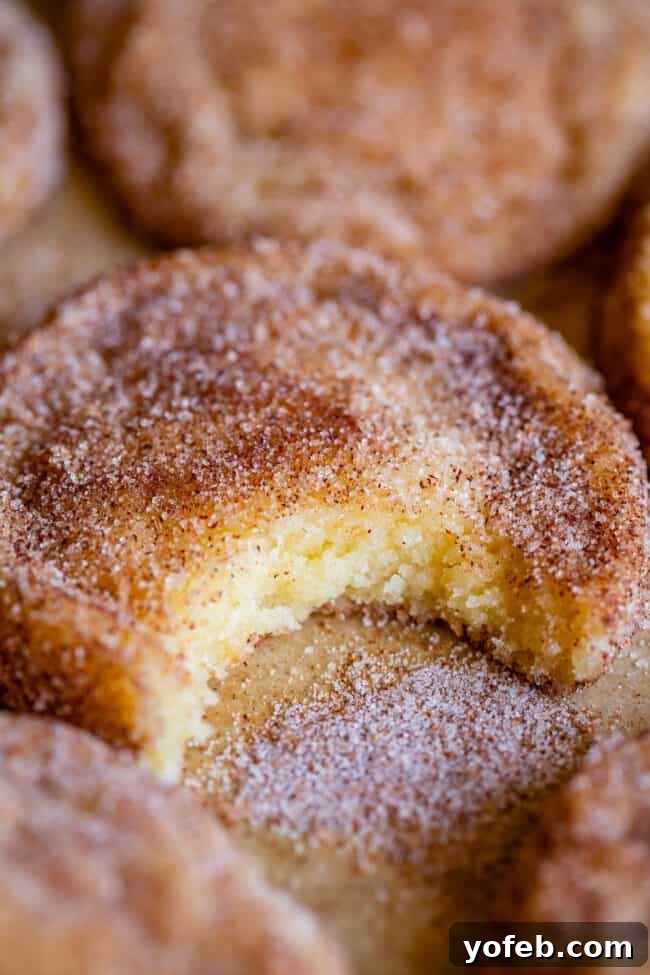
My past experiences with Snickerdoodles often left me wanting more – more flavor, more cinnamon, and certainly more of that moist, gooey chewiness I crave in a cookie. All too often, Snickerdoodles can be dry and boring, akin to chewing on a cotton ball. But those days are over! This recipe is a game-changer, transforming the humble Snickerdoodle into a cookie that truly stands out. It’s designed to banish dryness and infuse every bite with an explosion of rich, warm cinnamon, perfectly balanced with a unique tangy note. If you, like me, have been searching for a Snickerdoodle that lives up to its full potential, your search ends here. This recipe is destined to become your new favorite, delivering on the promise of a truly exceptional cookie experience.
What Defines a Perfect Snickerdoodle Cookie?
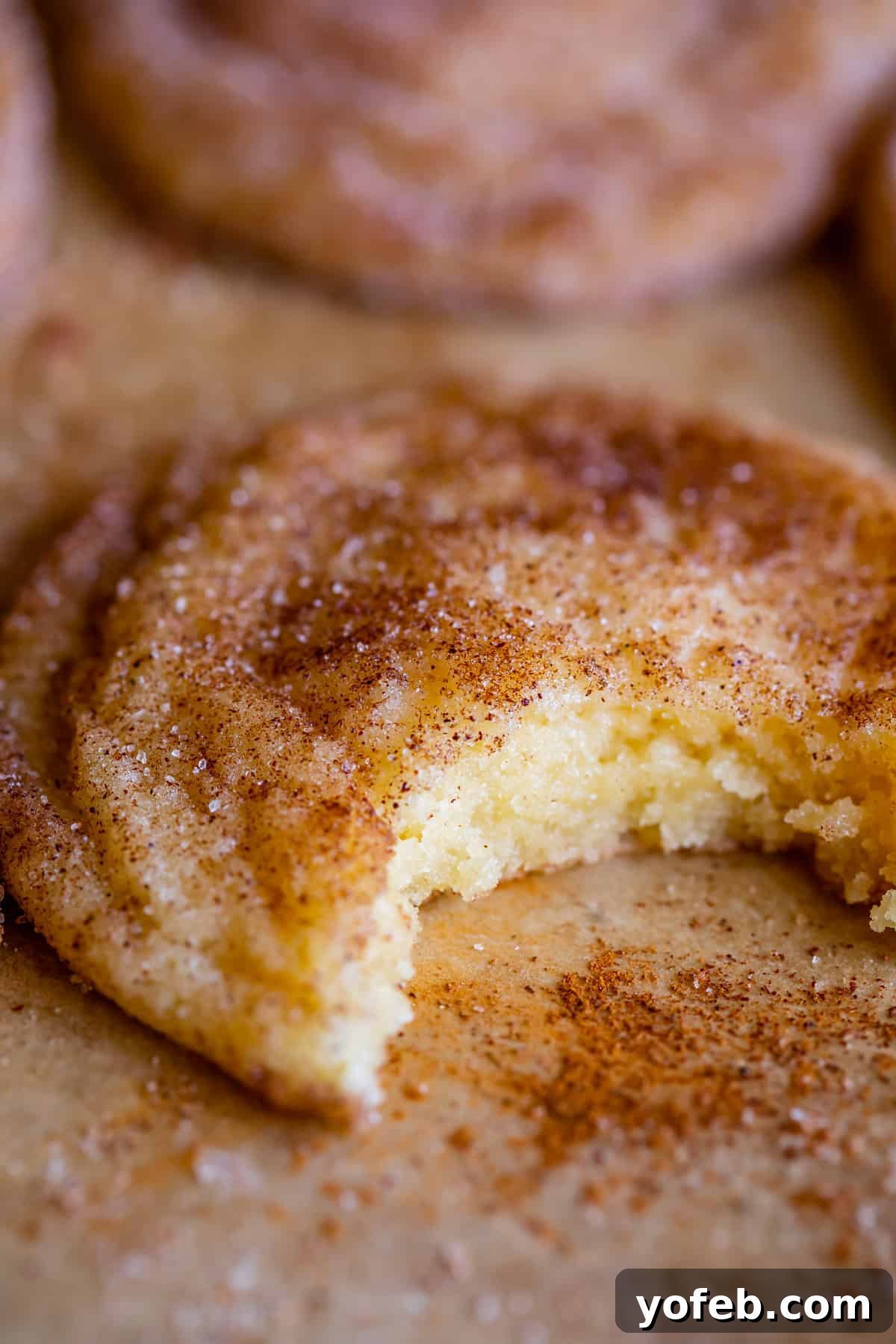
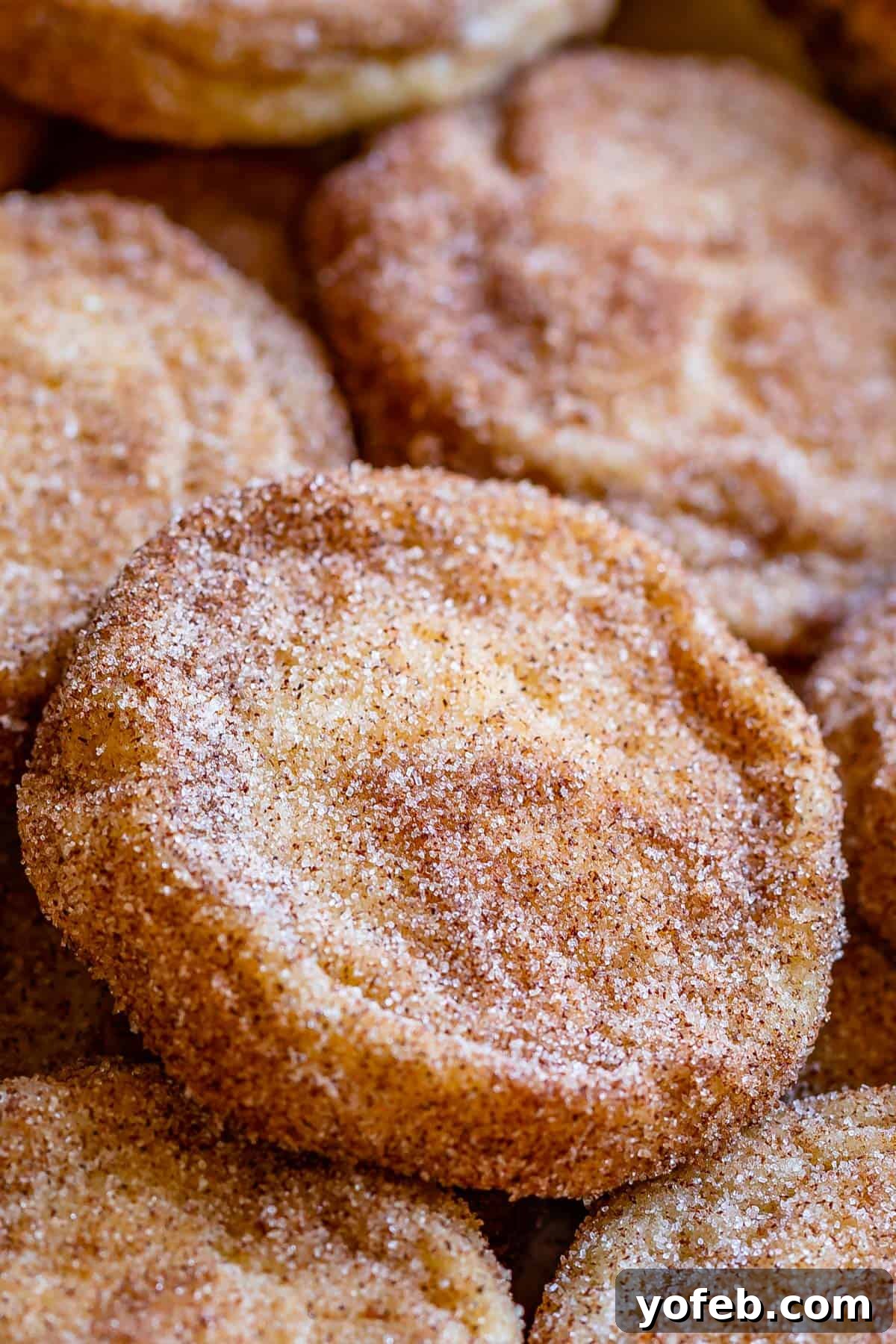
The ideal Snickerdoodle is a symphony of textures and flavors. It should be wonderfully chewy, with a tender, melt-in-your-mouth interior. Each bite should burst with vibrant cinnamon flavor, elevated by a subtle, distinctive tartness that sets it apart from a mere sugar cookie rolled in cinnamon. A truly perfect Snickerdoodle is never flat or overly crunchy; instead, it boasts a soft, substantial center with just a tiny, delicate crispness around its very edges. These qualities combine to create an experience that transports you straight to cinnamon-sugar heaven.
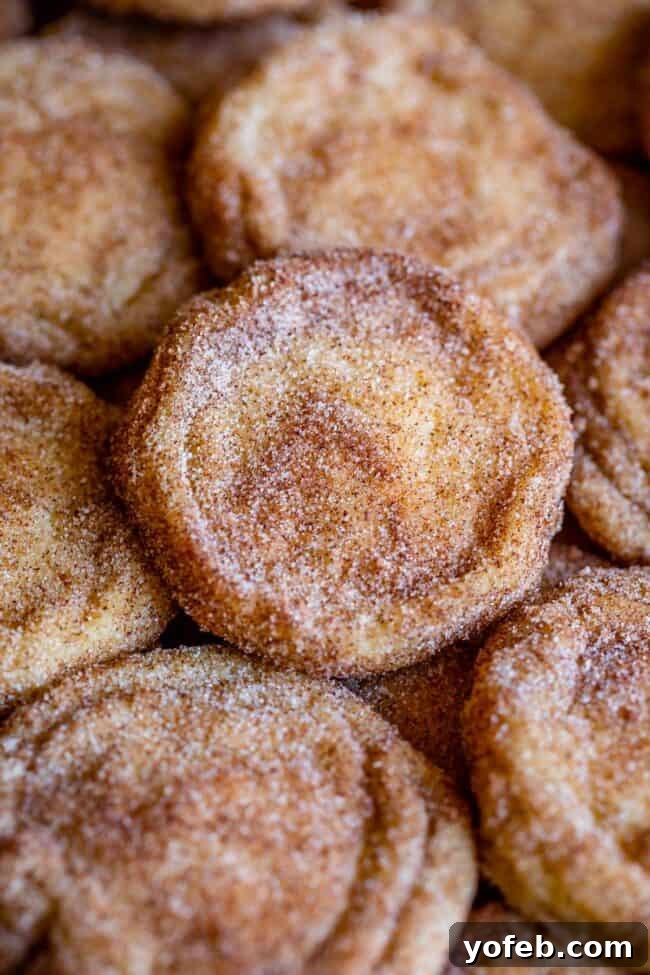
After much experimentation, I’ve cracked the code to achieve this Snickerdoodle dream. This recipe delivers exactly that: soft, chewy, flavorful cookies that will make your mouth water. And the best part? You can have these delectable treats ready in about 30 minutes! While the process is quick, there are a few key details and techniques that are crucial for success. These aren’t just any cinnamon sugar cookies; they are Snickerdoodles perfected. Let’s delve into the specifics and unlock the secrets to baking your best batch yet!
The Intriguing Origin of the Snickerdoodle Name
The exact origin of the whimsical name “Snickerdoodle” remains a delightful mystery, a common trait among many uniquely named foods. While its precise etymology is debated, several theories offer charming insights into where this beloved cookie might have gotten its peculiar moniker:
- One popular theory suggests it’s a variation of the German word “schneckennudel,” which translates to “snail noodle” or “snail dumpling.” This could refer to the coiled shape of a German cinnamon bun, a potential ancestor to the Snickerdoodle.
- Similarly, another possibility links it to the Dutch word “snekrad,” also meaning “snail,” further reinforcing a connection to coiled pastry.
- Some believe “Snickerdoodle” is simply a whimsical, nonsensical word coined in New England, much like other playful terms of the era, chosen for its charming sound rather than a literal meaning.
- An amusing theory combines the words “snicker” (a short, stifled laugh) and “doodle” (a foolish person), suggesting a lighthearted and perhaps silly association.
Regardless of its mysterious linguistic roots, one thing is certain: Snickerdoodles have earned their enduring popularity. Their unique tangy-sweet profile and comforting cinnamon spice make them the quintessential cookie for cinnamon lovers everywhere. It’s a name that might make you “snicker” but a taste that will always make you smile!
Essential Snickerdoodle Ingredients
You’ll be pleased to know that making perfect Snickerdoodles doesn’t require any exotic or hard-to-find ingredients. The magic happens with simple, everyday pantry staples that, when combined correctly, create an extraordinary cookie. Below is a concise list of what you’ll need; the full, detailed recipe card is available further down the page.
- Butter (always use good quality, unsalted for better control over saltiness)
- Granulated Sugar
- Brown Sugar (packed for moistness and flavor)
- Eggs (large, at room temperature for better emulsification)
- Vanilla Extract (pure vanilla for the best flavor)
- All-Purpose Flour (measured correctly, see tips below!)
- Salt (kosher salt is preferred for even distribution)
- Baking Soda
- Cream of Tartar (the secret ingredient for that classic Snickerdoodle tang and texture!)
- Cinnamon and Sugar (for rolling, a generous amount is key)
While the ingredients are straightforward, paying attention to their quality and how they are measured and combined will make all the difference in achieving those wonderfully soft and chewy results. Quality butter, fresh eggs, and proper flour measurement are fundamental to Snickerdoodle success!
What is a substitute for cream of tartar in snickerdoodles?
Let me be clear: I strongly advise against substituting cream of tartar in your Snickerdoodle recipe! I understand it might seem like a niche ingredient, and you might wonder why you should buy it just for one type of cookie. Here’s why it’s truly indispensable:
Cream of tartar is what gives Snickerdoodles their signature tangy flavor and creates that uniquely chewy yet soft texture. Without it, your cookies would simply be cinnamon sugar cookies, lacking the distinctive zesty kick and tender crumb that defines a true Snickerdoodle. Think of it this way: would you make chocolate chip cookies without the chocolate chips? Of course not! Cream of tartar is just as integral to the Snickerdoodle identity.
Beyond Snickerdoodles, cream of tartar is a versatile ingredient used in various baking applications, from stabilizing egg whites in meringues to preventing sugar crystallization in candies. So, it’s a worthwhile addition to your pantry! However, if you’re in a pinch and absolutely must bake Snickerdoodles right now without cream of tartar, you can try using two teaspoons of baking powder to replace both the cream of tartar and the baking soda (omitting both original leaveners). Please be aware that while this will produce a decent cinnamon sugar cookie, it won’t replicate the classic Snickerdoodle flavor and texture. For an authentic Snickerdoodle experience, cream of tartar is non-negotiable.
The Magic of Cream of Tartar in Snickerdoodles
So, what exactly is cream of tartar, and why is it so vital for Snickerdoodles? This fascinating ingredient is actually a byproduct of winemaking, specifically tartaric acid residue that forms on wine barrels. Its acidic properties play several crucial roles in creating the perfect Snickerdoodle:
- Achieves Ultimate Softness: Cream of tartar interferes with sugar’s natural tendency to form large crystals. In cookies, this means it helps prevent the sugar from binding too tightly, resulting in a softer, more tender crumb. This is key to avoiding dry, crumbly Snickerdoodles and ensuring that melt-in-your-mouth texture we all desire.
- Imparts Distinctive Tanginess: As an acid, cream of tartar contributes a subtle, yet unmistakable, tart flavor to the cookies. This zesty note is the perfect counterpoint to the deep, warm earthiness of cinnamon, creating a complex and balanced flavor profile that distinguishes Snickerdoodles from simple sugar cookies. It’s the unique “zing” that makes them so addictive.
- Boosts Leavening for a Lighter Texture: When combined with baking soda (an alkaline ingredient), cream of tartar reacts to produce carbon dioxide gas. This reaction is the same process that occurs when baking powder is activated. In Snickerdoodles, this effervescence helps the cookies rise, contributing to their light, airy texture without making them cakey. While baking powder contains both an acid and an alkali, using separate baking soda and cream of tartar allows for a more precise balance and maximizes the distinct tart flavor and unique texture that only cream of tartar can provide.
In essence, cream of tartar is the secret weapon that elevates Snickerdoodles from good to truly exceptional, ensuring they are soft, tangy, and perfectly chewy every time.
Step-by-Step: How to Make Snickerdoodles
Creating perfect Snickerdoodles is a straightforward process, but paying attention to each step ensures optimal results. Here’s how to whip up a batch of these irresistible cookies:
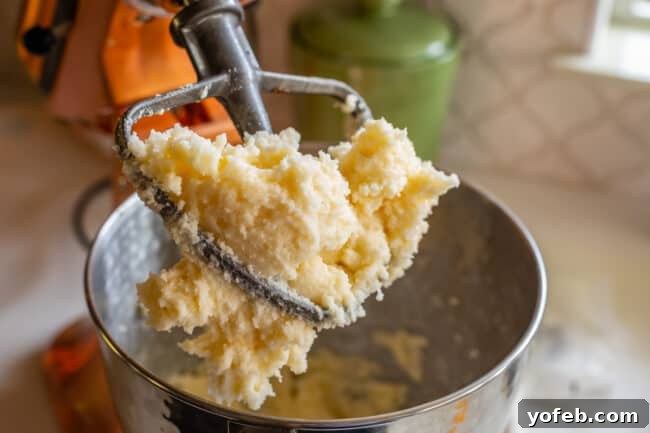
- Cream Butter and Sugar: Begin by creaming together your butter and both types of sugar (granulated and brown). If you’re using a stand mixer with a paddle attachment, you can start with cold butter; the mixer will do the work. For a hand mixer, allow your butter to soften slightly at room temperature first, but avoid letting it get too warm, as this can lead to a greasy dough. Beat these ingredients for at least 2-3 minutes on medium-high speed. The goal is to incorporate plenty of air, making the mixture light and fluffy. Make sure to frequently scrape down the sides and bottom of the bowl to ensure all ingredients are evenly combined and no butter lumps remain. This creaming process is crucial for a tender cookie.
- Incorporate Eggs and Vanilla: Next, add your eggs and vanilla extract to the creamed butter and sugar mixture. Beat these thoroughly for another 1-2 minutes until everything is fully incorporated and the mixture appears smooth and homogenous. Again, scrape down the bowl to catch any stray ingredients.
- Add Dry Ingredients (The Quick Way): Now, it’s time for the dry ingredients. Instead of using a separate bowl, we’re taking a shortcut! Add the all-purpose flour directly on top of the wet mixture. Then, sprinkle the salt, baking soda, and cream of tartar over the flour. This method saves you an extra bowl to wash!
- Mix Dough Until Just Combined: Gently mix the dry ingredients into the wet mixture on low speed. Be careful not to overmix! As soon as all the white streaks of flour disappear, stop beating. Overmixing develops the gluten in the flour, leading to tough, chewy cookies – and not in a good way. Use a spatula to scrape down the sides of the bowl one last time to ensure everything is incorporated, then stop.
- Prepare for Rolling: Your dough is now ready! In a shallow bowl, combine the granulated sugar and ground cinnamon for your signature coating. This is where the Snickerdoodle gets its iconic flavor.
- Scoop and Roll: Use a cookie scoop (I recommend one that’s about 1.5 to 2 inches in diameter) to portion out uniform balls of dough. Consistency in size ensures even baking. Roll each dough ball generously in the cinnamon-sugar mixture until fully coated. This double coating is part of what makes these Snickerdoodles so special!
- Arrange and Bake: Place the coated dough balls on your prepared baking sheets, leaving about 2 inches between each cookie to allow for spreading. Bake in a preheated oven at 350°F (175°C) for approximately 9-11 minutes. It’s critical not to overbake; the edges should be barely set, and the centers might still look a little shiny, about the size of a quarter. Slightly underbaked Snickerdoodles are the secret to that perfectly soft and chewy texture.
Following these steps carefully will lead you to a batch of Snickerdoodles that are consistently soft, chewy, and bursting with flavor. Enjoy the aroma that fills your kitchen and the delightful taste of these freshly baked treats!
Solving the Mystery: Why Do Snickerdoodles Go Flat?
No one wants a thin, flat, and overly crispy cookie when they’re craving a rich, chewy Snickerdoodle. The culinary world, much like fashion, has trends, and currently, the preference is for thick, substantial cookies – think the massive, revered Levain Cookies or the ever-popular Crumbl cookies. While these can be fun, sometimes they err on the side of being too thick, even cakey. For me, a truly great cookie must have a chewy, gooey center; anything too light and fluffy crosses the line into cake territory, which is fundamentally offensive to the cookie kingdom (unless it’s a specific “cakey” cookie like soft pumpkin cookies, of course). Cookies, in my humble opinion, are meant to be distinctly chewy!
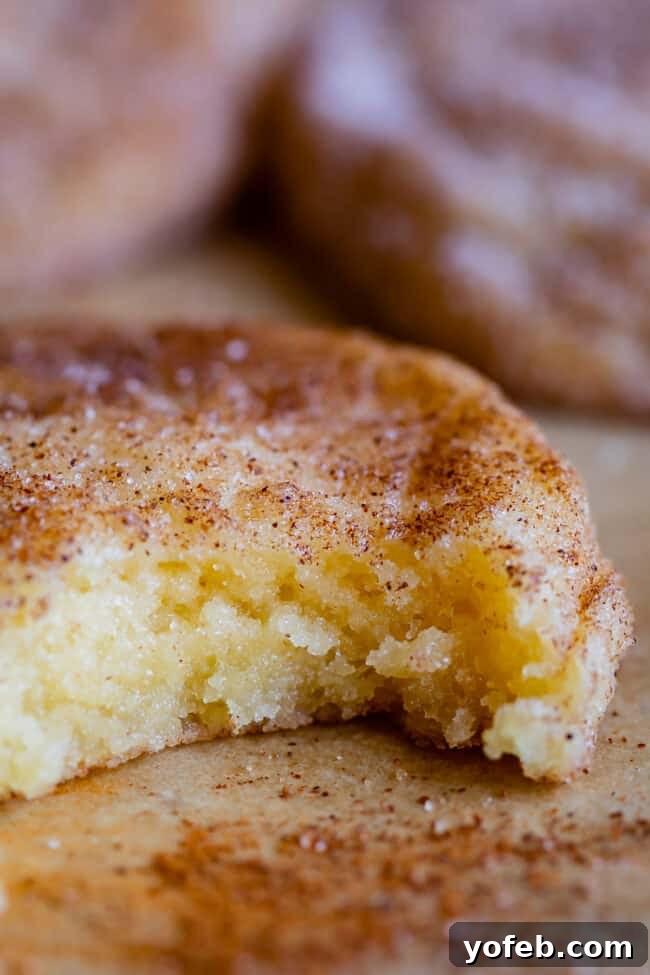
Achieving that sweet spot – a Snickerdoodle that is perfectly chewy and *not* flat – presents a couple of common challenges:
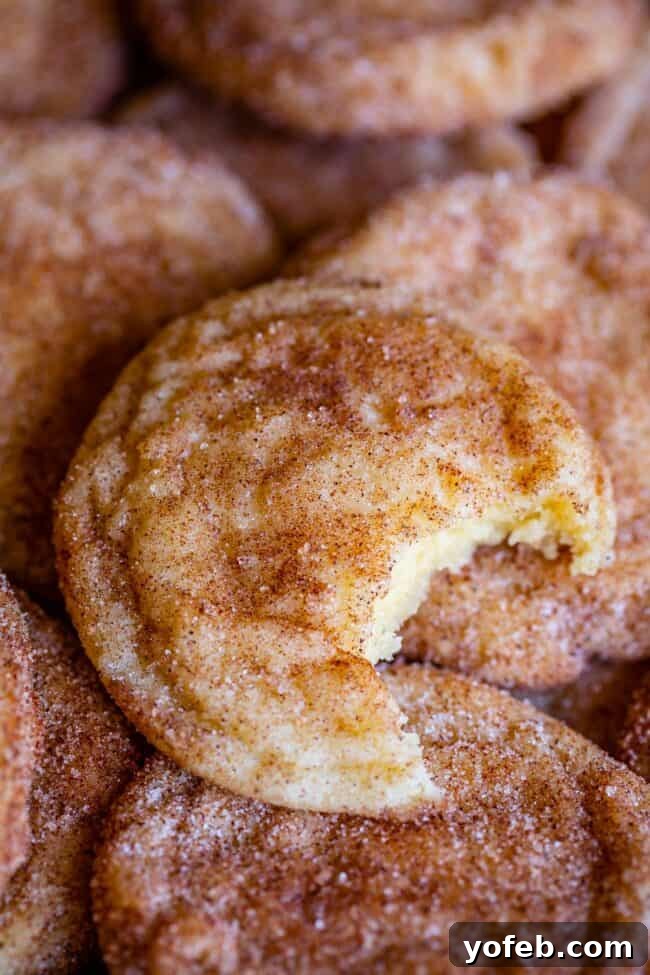
The Flour Conundrum: The dilemma with Snickerdoodles often boils down to flour. To achieve that coveted chewy texture, you typically need a minimal amount of flour in the dough. However, this often leads to cookies that spread too much in the oven, resulting in a flatter cookie with overly crispy edges. Conversely, if you add too much flour, the cookies might puff up nicely and *appear* thick and chewy. But this visual is often deceptive, as excess flour almost always leads to dry, crumbly, cake-like cookies. It’s a simple truth: if a Snickerdoodle looks exceptionally tall and textured on top, it often has too much flour and ends up tasting like cardboard, sacrificing chewiness for height. Proper flour measurement (spooned and leveled, not scooped directly from the bag) is paramount to avoiding this trap.
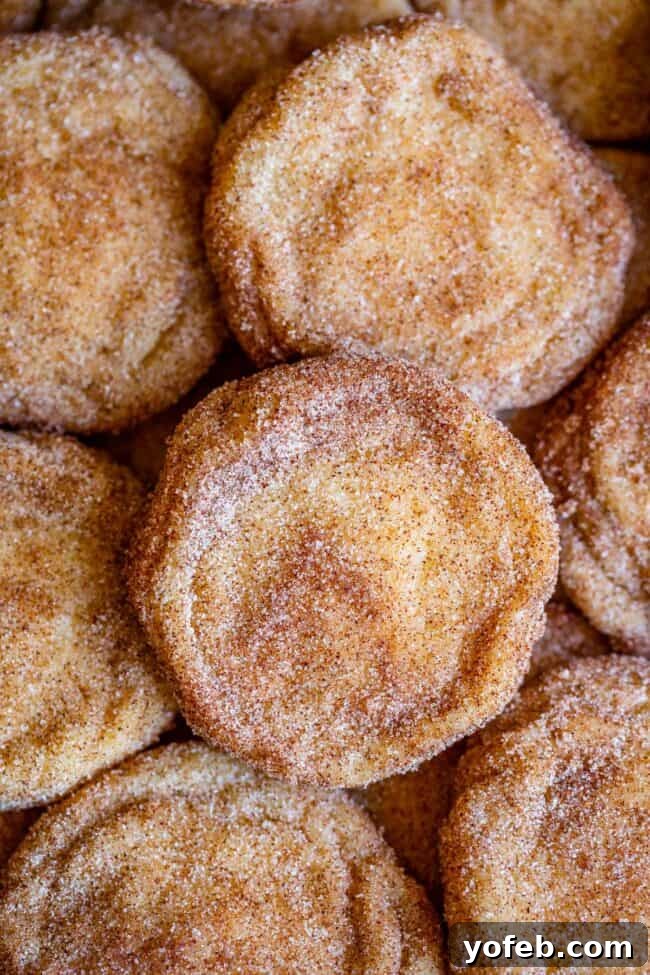
The Absence of Mix-Ins: Unlike many other popular cookies, Snickerdoodles don’t contain any mix-ins like chocolate chips, nuts, or dried fruit. In recipes like chewy chocolate chip cookies, these additions provide crucial structure and height, giving the dough something to “latch onto” and build around as it bakes. A plain cookie dough, without these structural elements, tends to spread more. If you were to bake your favorite chocolate chip cookie recipe without the chips, you’d likely get a cookie very similar in appearance to a Snickerdoodle – delicious and chewy, but flatter. To achieve a thicker, more “trendy” cookie without mix-ins, you’d be tempted to add more flour, which, as we’ve discussed, leads to a dry, cakey texture. It’s a frustrating cycle!
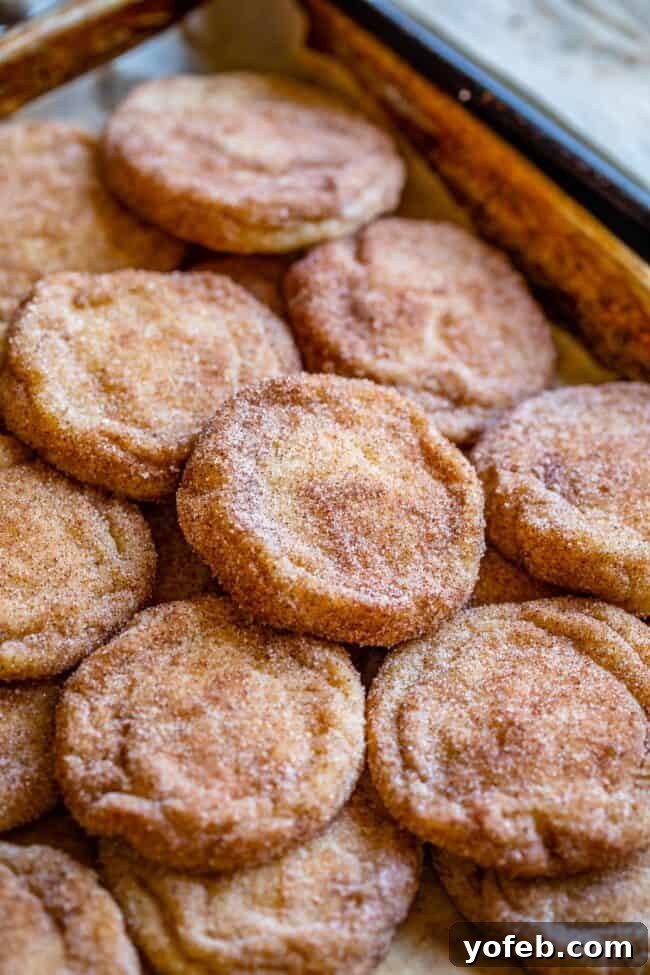
So, we can’t add more flour without compromising chewiness, and we can’t add traditional mix-ins without transforming it into something other than a Snickerdoodle. What’s a baker to do? The answer lies in clever post-bake shaping, a technique that allows us to achieve that desired thickness and chewiness without altering the dough itself. Read on to discover the game-changing secret!
Elevate Your Snickerdoodles: Next-Level Tips
The Spoon Trick – The secret to thick and chewy Snickerdoodle Cookies
I’m quite proud of the elegant name I’ve chosen for this technique: “the spoon trick.” It’s a method I now employ for almost every cookie baked in my kitchen because it’s incredibly simple, quick, and yields consistently amazing results. This trick addresses the challenge of achieving thick, chewy centers without adding excess flour to the dough.
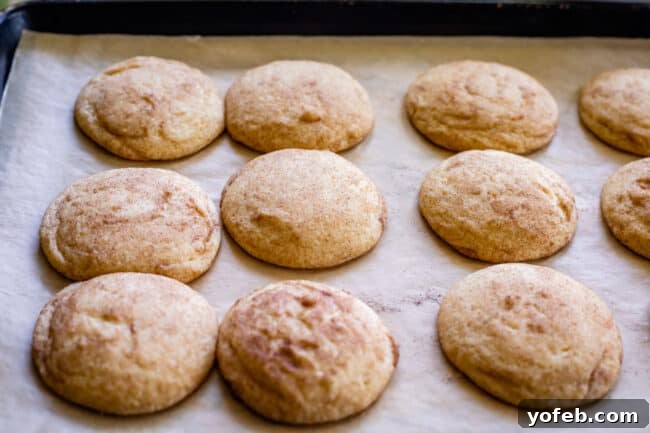
Observe these cookies immediately after they come out of the oven. They look wonderfully puffy and soft. However, if left untouched, their centers would naturally fall, resulting in flatter cookies with overly crispy, perhaps even brittle, edges. This is where the magic begins!
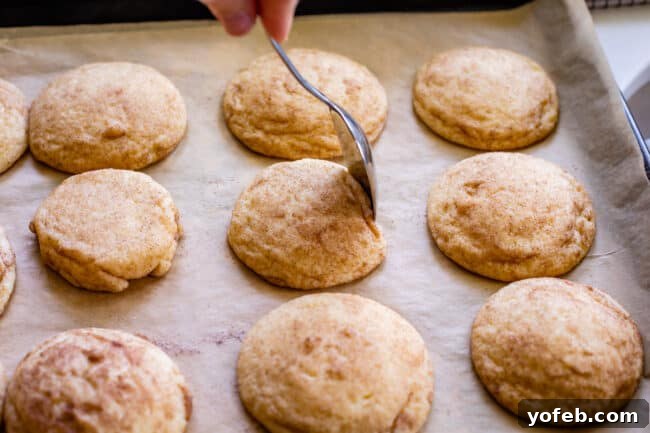
The moment your baking sheet emerges from the oven (and I mean *immediately*, within 30-40 seconds!), grab a spoon. Use the back of the spoon to gently, yet firmly, push the edges of each cookie inwards, towards its center. Don’t be shy; give them a little “smoosh.” At this stage, the edges of the cookies haven’t fully set, allowing us to manipulate their shape. We are essentially “telling” the cookies to maintain a thicker form.
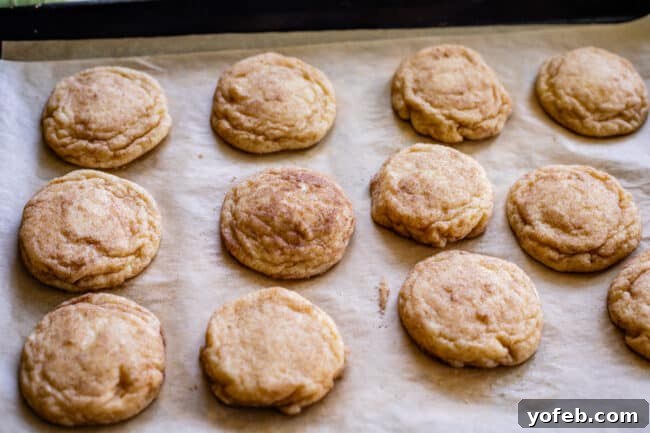
Can you see the difference? Compare this photo to the one just out of the oven. The cookies are no longer perfectly flat on top; they’ve developed that desirable “textured” look, with subtle ripples of dough layered within. The edges, while still crisping slightly, now possess a thicker, more substantial structure instead of a delicate, lacy crisp. Crucially, this technique ensures the middle of the cookie retains its height and soft chewiness, rather than collapsing completely. The “spoon trick” allows us to achieve a fudgier, thicker, and chewier center without resorting to the detrimental addition of extra flour, which would otherwise dry out our precious cookies.
Double dip in cinnamon-sugar for maximum flavor
Here’s another indispensable tip for truly next-level Snickerdoodles: embrace the double dip in cinnamon-sugar! I absolutely adore this technique for intensifying flavor and texture, applying it to other favorites like my Mexican Hot Chocolate Cookies (which are, in essence, chocolate Snickerdoodles!). It makes a world of difference.
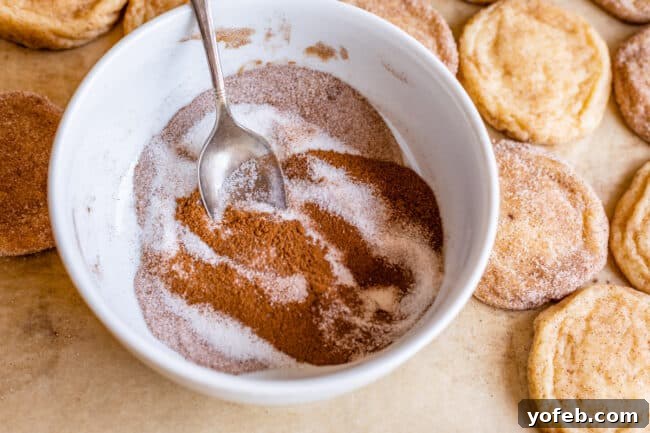
First, prepare a generous mixture of ground cinnamon and granulated sugar. You can use the same cinnamon-sugar mixture you used to roll the raw cookie dough if you’re comfortable with it (a little raw egg residue won’t phase most seasoned bakers!). The key is to have enough to really coat the cookies.
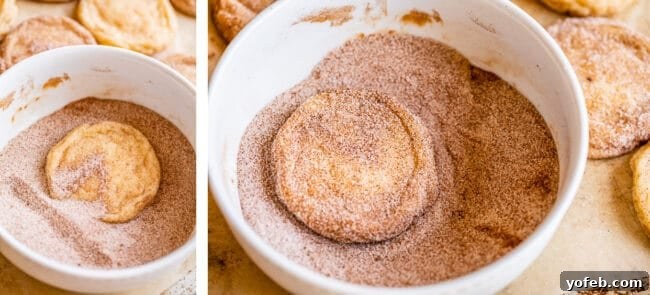
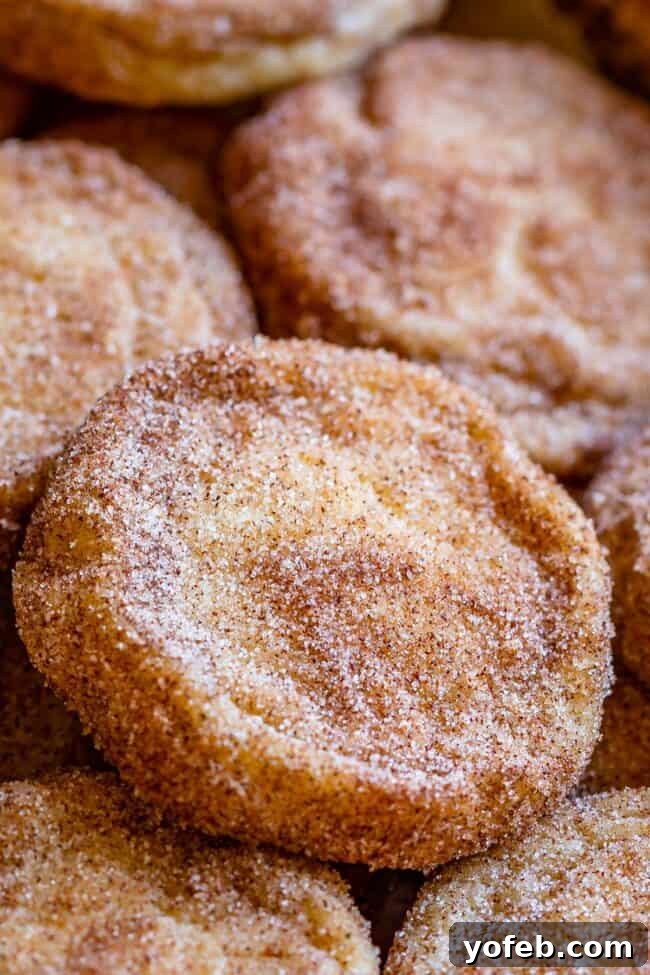
Once your baked cookies are cool enough to handle without falling apart but still warm, take each one and dunk it into the cinnamon-sugar bowl. Ensure both sides are thoroughly coated. The warmth of the cookies helps the sugar adhere beautifully, creating a stunning visual and a delectable textural contrast.
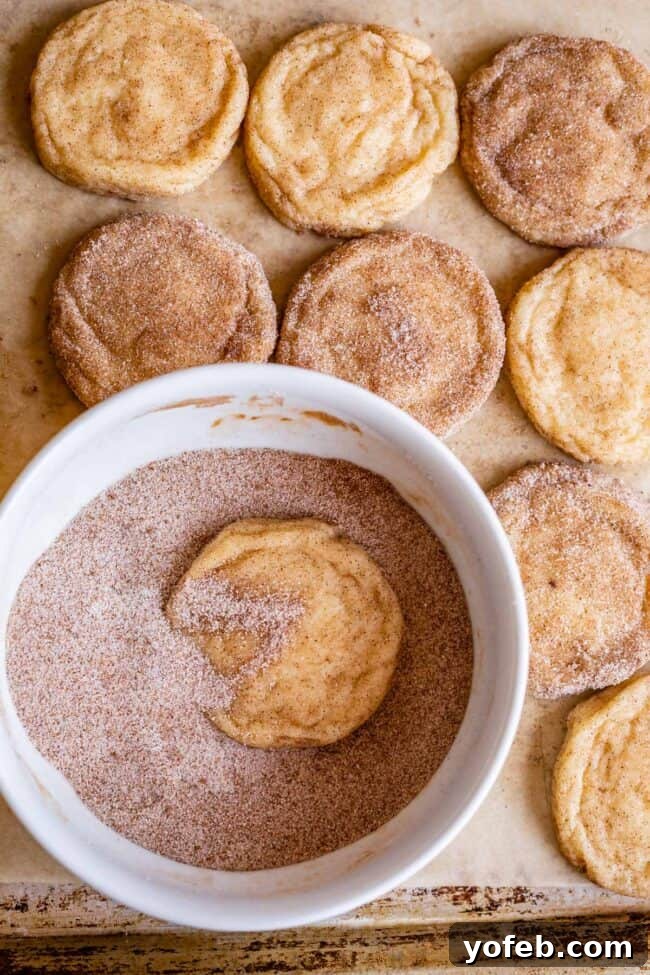
You can clearly see the striking difference between the cookies that have received this extra cinnamon-sugar bath and those that haven’t! While these Snickerdoodles are absolutely delicious even without the double dip, I wholeheartedly recommend it. It provides an explosion of added cinnamon flavor, a delightful textural contrast, and an irresistible crunch that takes these cookies from great to truly extraordinary. Who could possibly resist such a perfectly spiced, soft, and chewy treat?
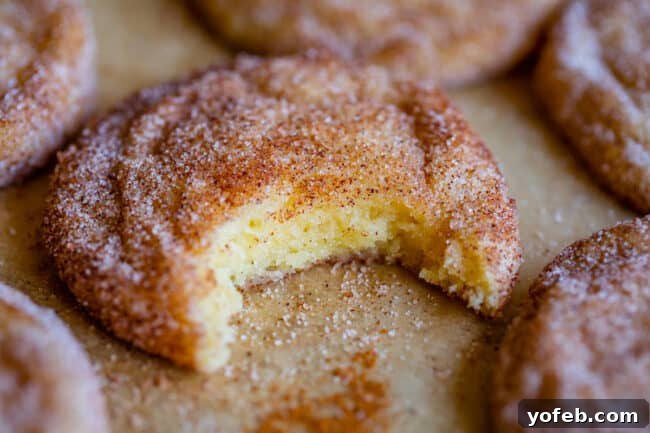
A warm, freshly baked Snickerdoodle, boasting a perfect balance of soft chewiness and a sugary-cinnamon crunch, is truly a sight to behold and a pleasure to devour. Enjoy one with a cold glass of milk for the ultimate comfort experience!
Storing and Freezing Your Snickerdoodle Cookies
To keep your Snickerdoodle cookies at their best, proper storage is key. Freshly baked Snickerdoodles are undeniably at their peak on day one, offering that perfect balance of softness and chewiness. However, with a few tricks, you can enjoy them for longer.
Storing Baked Cookies: Store baked Snickerdoodles at room temperature in an airtight container on your counter. They will typically retain their quality for 2-4 days, depending on your preference for softness. Over time, cookies can dry out, so for optimal enjoyment, I’ve developed a personal “cookie snob” rule: any leftover cookies go straight into the freezer. This ensures they maintain their delightful texture much longer.
Freezing Baked Cookies: Baked Snickerdoodles freeze beautifully for up to 3 months. Once completely cool, place them in an airtight freezer-safe container or a heavy-duty ziplock bag. To enjoy a “practically fresh” cookie, simply thaw it sealed in the bag at room temperature, then warm it gently in the microwave for about 10-15 seconds. This brings back their warmth and soft chewiness, almost as if they just came out of the oven.
Freezing Cookie Dough: You can also prepare the dough ahead of time and freeze it for future baking sessions. Shape the dough into individual balls, roll them generously in the cinnamon sugar mixture, and then place them in a single layer on a baking sheet to flash freeze for about an hour. Once firm, transfer the frozen dough balls to a ziplock freezer bag. They will keep well in the freezer for up to 3 months. There’s no need to thaw the dough before baking; simply bake them straight from frozen, adding an extra 2-3 minutes to the standard bake time. This method is incredibly convenient for having warm, fresh cookies on demand!
During my quest for the ultimate cinnamon experience, I even experimented with adding bits of cinnamon roll filling to the Snickerdoodle dough before baking. The result? Absolutely sensational! These Cinnamon Roll Cookies were so good that they earned their own dedicated recipe post. While the base dough is similar, the swirled filling transforms the flavor profile and appearance entirely. If you’re a true cinnamon enthusiast, you absolutely must check out the recipe for my Cinnamon Roll Cookies – prepare to be amazed!
Frequently Asked Questions About Snickerdoodles
Snickerdoodles are a quintessentially American cookie, believed to have originated in New England, influenced by German or Dutch immigrant baking traditions. While their exact documented appearance in cookbooks dates to the late 1800s, they were likely enjoyed in homes for a significant period before then, evolving into the beloved treat we know today.
Snickerdoodles can sometimes turn out overly puffy or cakey if too much flour is incorporated into the dough. The key to achieving that perfect soft and chewy texture, rather than a dry and crumbly one, lies in precise flour measurement. I always recommend the “fluff and scoop” method: gently fluff your flour with a spoon, then use that same spoon to lightly scoop the flour into your measuring cup before leveling it off with a straight edge. This prevents compaction, which can add significantly more flour than intended. Additionally, this recipe is formulated with a slightly reduced flour amount compared to some others, specifically to promote chewiness over excessive puffiness.
A perfect Snickerdoodle offers a delightful combination of flavors and textures. It is wonderfully chewy and incredibly soft, with a tender crumb that practically melts in your mouth. The dominant flavor is a warm, inviting burst of cinnamon, beautifully complemented by a distinct, subtle tanginess, thanks to the cream of tartar. This tart note is what truly differentiates it from a standard cinnamon sugar cookie. On the very outside, you’ll find just a hint of crispness, leading into that delightful soft interior.
Achieving soft and chewy Snickerdoodles involves a few crucial steps: using cream of tartar for its tenderizing and tangy properties, not overmixing the dough once flour is added to prevent gluten development, and most importantly, *not overbaking*. Cookies should be removed from the oven when the edges are just set and the centers still look a little glossy or underbaked. Additionally, the “spoon trick” (gently shaping the cookies immediately out of the oven) helps create a thicker, chewier center. These techniques work together to deliver that irresistible texture.
More cookie recipes you are going to love!
- The BEST Cinnamon Roll Cookies << This is almost the same as today’s recipe, but has cinnamon roll filling swirled into the dough. YES PLEASE.
- Cinnamon Roll Sugar Cookies << If you are a cinnamon lover, these are the cookies for you! Yes, I have 2 different recipes for cinnamon roll cookies and yes, you should definitely try them both 😉
- Salted Caramel Sandwich Cookies << the caramel cookie of your DREAMS, promise
- Mexican Hot Chocolate Cookies << these are basically Chocolate Snickerdoodles! I love them!
- Easy Sugar Cookie Recipe << these are old fashioned and crispy, not the kind with frosting.
- Texas Cowboy Cookies << these are big and huge and all the things. Bring it.
- Britta’s White Chocolate Chip Cookies << these have a light hint of cinnamon and I love them
- Perfectly Soft and Chewy Molasses Cookies << I make these by the dozens every Christmas
- The Best, Softest Peanut Butter Cookies of Your Life << no joke. They are so peanut buttery!
- Soft Cinnamon Cookies with Maple Pecan Frosting << have you tried this frosting yet??
- Double Chocolate Cookie Recipe from That Skinny Chick Can Bake
- Apple Pie Oatmeal Breakfast Cookies from Amy’s Healthy Baking
- 3 Ingredient Cake Mix Cookies from Carefree Kitchen
Facebook | Pinterest | Instagram

Snickerdoodle Cookies
Rated 4.86 out of 5 from 499 votes
Cook: 10 mins
Total: 30 mins
Servings: 33 cookies
Rate this Recipe
Print Recipe
Snickerdoodle Cookies do not have to be bland flavorless hockey pucks! My favorite easy recipe gives you the BEST soft and chewy Snickerdoodles that are bursting with flavor from a double dip in cinnamon sugar. I’ll give you all my tips to make sure your cookies don’t turn out dry and crumbly!
Equipment
- Baking sheet
- Cookie scoop I use this cookie scoop all the time!
Ingredients
- 1 cup salted butter, 2 sticks, softened
- 1 and 1/3 cup granulated sugar
- 1/3 cup brown sugar, packed
- 2 large eggs
- 2 teaspoons vanilla extract
- 3 and 1/4 cups all-purpose flour, spooned and leveled
- 1 teaspoon baking soda
- 3/4 teaspoon kosher salt
- 1 and 1/2 teaspoons cream of tartar
For rolling
- 1/3 cup granulated sugar
- 1 and 1/2 tablespoons cinnamon
Instructions
-
Preheat the oven to 350 degrees F (175 C) and prepare a few baking sheets with parchment paper, or line with a silicone mat.
-
Make the dough. In a large bowl or stand mixer, beat 1 cup butter for a couple minutes until smooth, scraping the sides and bottom a few times in between.
-
Add 1 and 1/3 cup white sugar and 1/3 cup packed brown sugar. Beat for 2 minutes, taking the time to scrape the bottom and sides of the bowl in between. Your butter and sugar should be light and fluffy with no chunks at all.
-
Add 2 eggs and 2 teaspoons vanilla. Beat well, scraping the sides and bottom of the bowl. Make sure you beat it long enough that it becomes smooth and homogenous.
-
Add 3 and 1/4 cups flour (be sure to spoon it into the measuring cup! Don’t dip your cup into the flour bin, you will pack your flour and end up with too much!) Don’t mix the flour in yet.
-
Use a small spoon (I use my teaspoon) to stir 1 teaspoon baking soda, 3/4 teaspoon kosher salt, and 1 and 1/2 teaspoons cream of tartar into the flour. Gently beat the flour mixture into the butter mixture. Don’t overdo it. There should still be flour streaks when you stop your mixer. Use a spatula to scrape down the edges of the bowl.
-
Continue beating just a few more seconds until all the flour streaks are gone. Do not over mix! You want to make sure all the ingredients are combined, but once that is done, stop mixing. Over mixing dough = tough cookies.
-
Use a large cookie scoop or a spoon to shape the dough. You want dough balls that are about 1 and 1/2 to 2 inches across. I used this cookie scoop.
-
Roll the cookies. In a small or medium bowl, add 1/3 cup sugar and 1 and 1/2 tablespoons cinnamon. Stir together. Roll the shaped cookies in the cinnamon-sugar to coat. (Reserve the remaining cinnamon-sugar!)
-
Place cookie dough balls on the prepared baking sheet with about 2 inches in between them. I can fit 12 cookies on an 11×17 baking sheet.
-
Bake the cookies at 350 for about 9-11 minutes, until the edges are barely set. It’s ok if the centers of the cookies (about the size of a quarter) are still shiny. The rest of the cookie should be matte. It’s VERY important to not over bake snickerdoodles; underbaking slightly is what helps give them that soft and chewy texture. (Dry Snickerdoodles taste like chalk. Don’t be like that.)
-
Shape the cookies. Immediately after taking the cookies out of the oven, use a spoon to push the edges of the cookies toward their centers. This makes the cookies round in shape and makes the center thicker and more chewy. You have to do this within 30-60 seconds of taking them out of the oven, before the edges harden. Enlist help if you can! See my Chewy Chocolate Chip Cookies recipe for more details about this technique!
-
Let the cookies set up on the pan for at least 3-5 minutes. Remove the cookies to a wire cooling rack and let cool for a few minutes.
-
While the cookies are still warm, but cool enough to handle (and not falling apart), place each cookie back into the bowl of cinnamon sugar*. Coat one side of the cookie, then flip it over and coat the other side. This gives you the ultimate cinnamon-sugar edge to your snickerdoodle! Enjoy one right away with a glass of milk!
-
Freezer instructions: You can freeze this dough and bake later! I like to shape the dough into balls, roll them in cinnamon sugar, and store them in a ziplock bag. They will keep in the freezer for up to 3 months. I never thaw cookie dough before baking. Just bake straight from frozen and add a couple minutes to the bake time. Voila!
Video

Notes
Nutrition
Cuisine: American
Calories: 147
Keyword: 30 Minute Recipes, Cinnamon, Cookies, snickerdoodle
Mention @thefoodcharlatan or tag #thefoodcharlatan!
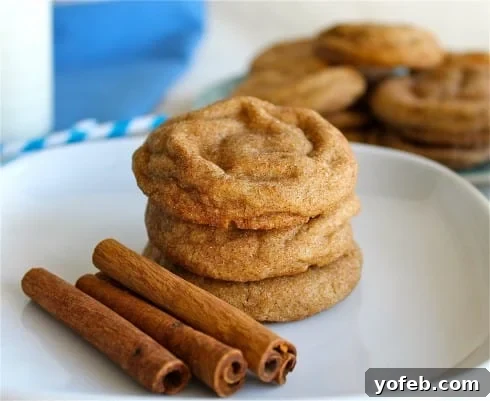
Here’s a nostalgic glimpse at my Snickerdoodle cookies from yesteryear! This recipe has truly evolved since I first posted a version on the blog back in 2013, continually refined to achieve the soft, chewy perfection you see today.