Just recently, in my post about No Bake Cheesecake, I briefly touched upon 10 insights I gained during our unforgettable June 2024 adventure to the captivating Baltic nations: Estonia, Lithuania, and Latvia. Revisiting those cherished memories brought such immense joy that I felt compelled to dedicate an entire article to our magical two-week dream vacation. It’s a journey I simply have to share, filled with unexpected delights, rich history, and breathtaking scenery.
While my blog typically revolves around delectable recipes, this trip to the Baltics was so extraordinary, so different from any destination I’ve explored before, that it warranted a special “travelogue” style post. Many of you expressed a keen interest in learning more, and your enthusiasm encouraged me to share these photos and detailed experiences. Be warned, it’s a comprehensive account, crafted not just for fellow travelers but also as a precious keepsake for myself and my family to relive the magic.
I pride myself on being a reasonably competent food photographer (most of the time, anyway! 🤣), but capturing sprawling landscapes and intricate architecture is an entirely different skill set. So, please bear with me if some of these travel photos aren’t professional-grade. I’m not a dedicated travel blogger, and you won’t find endless shots of palm trees and turquoise waters here. My humble iPhone 13 mini, with its less-than-stellar camera, didn’t always do justice to the stunning vistas. However, the higher-quality images you’ll encounter were graciously taken by my dad, Richard, an incredibly talented photographer, though even he relied on his phone for this adventure – no bulky, fancy cameras in sight.
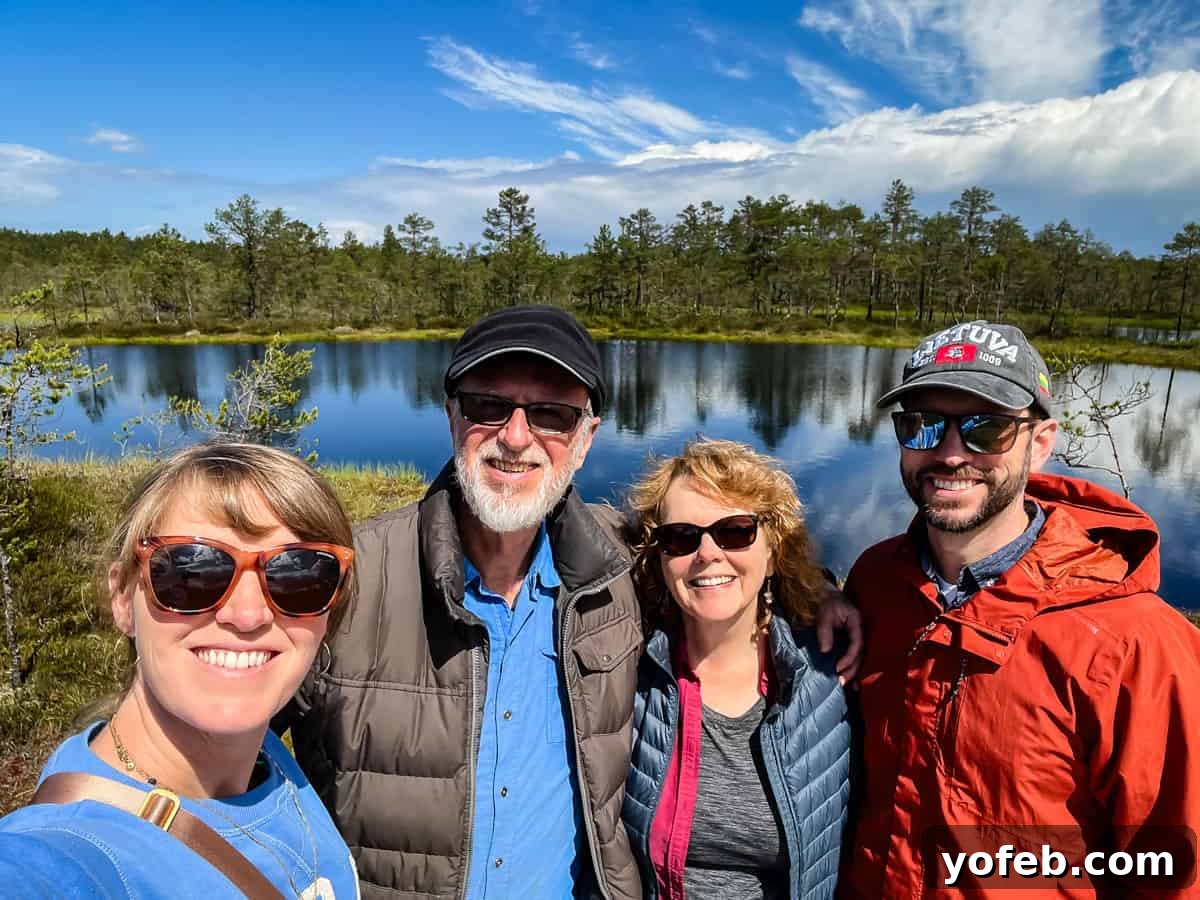
Discover the Enchanting Baltics: Why Choose This Unique Destination?
My parents, Richard and Janice, are truly seasoned globetrotters. With their upcoming expeditions to the “stans” (Uzbekistan, Turkmenistan, Tajikistan, Kyrgyzstan) and another trip to Malaysia, they’re poised to reach an impressive milestone of 100 countries visited. There’s a playful ongoing debate between them about the exact count, primarily concerning what truly constitutes a “country.” For instance, should Scotland and Wales be counted independently, or are they absorbed into the larger entity of the UK? Does French Polynesia make the list, given its status as a territory? I’m sure my Scottish, Welsh, and French Polynesian readers have strong opinions on the matter! 😉
An interesting anecdote that led us to the Baltics involves a remarkable Australian couple my parents met while camping next to a volcano in Ethiopia (yes, you read that right, I’m not kidding!). This couple had an extraordinary travel philosophy: work in Australia for two years, then quit their jobs to travel the world for a year, repeating this cycle for 25 years. They had literally been everywhere!
Naturally, my dad, always curious about off-the-beaten-path destinations, asked them for their top recommendations for amazing places that don’t typically appear on mainstream tourist lists. Their unanimous answer? The **Baltic countries**, without a doubt. (They also raved about Armenia and Georgia, which my parents later visited and found incredible, but that’s a tale for another time!) The Australian couple highlighted the Baltics’ incredible natural beauty, profound historical depth, lack of overwhelming crowds, and surprisingly affordable prices. These factors combined made a compelling case for choosing this region as our next family adventure.
Understanding the Baltics: Geography and Our Route
For those of you, like me, who might not immediately place the Baltics on a map (I once had to look up where Indiana was when Eric got into grad school at IUPUI – it borders Kentucky, who would have guessed? 😂), allow me to clarify. When my dad first suggested we embark on this journey together, I too had to consult Google Maps!
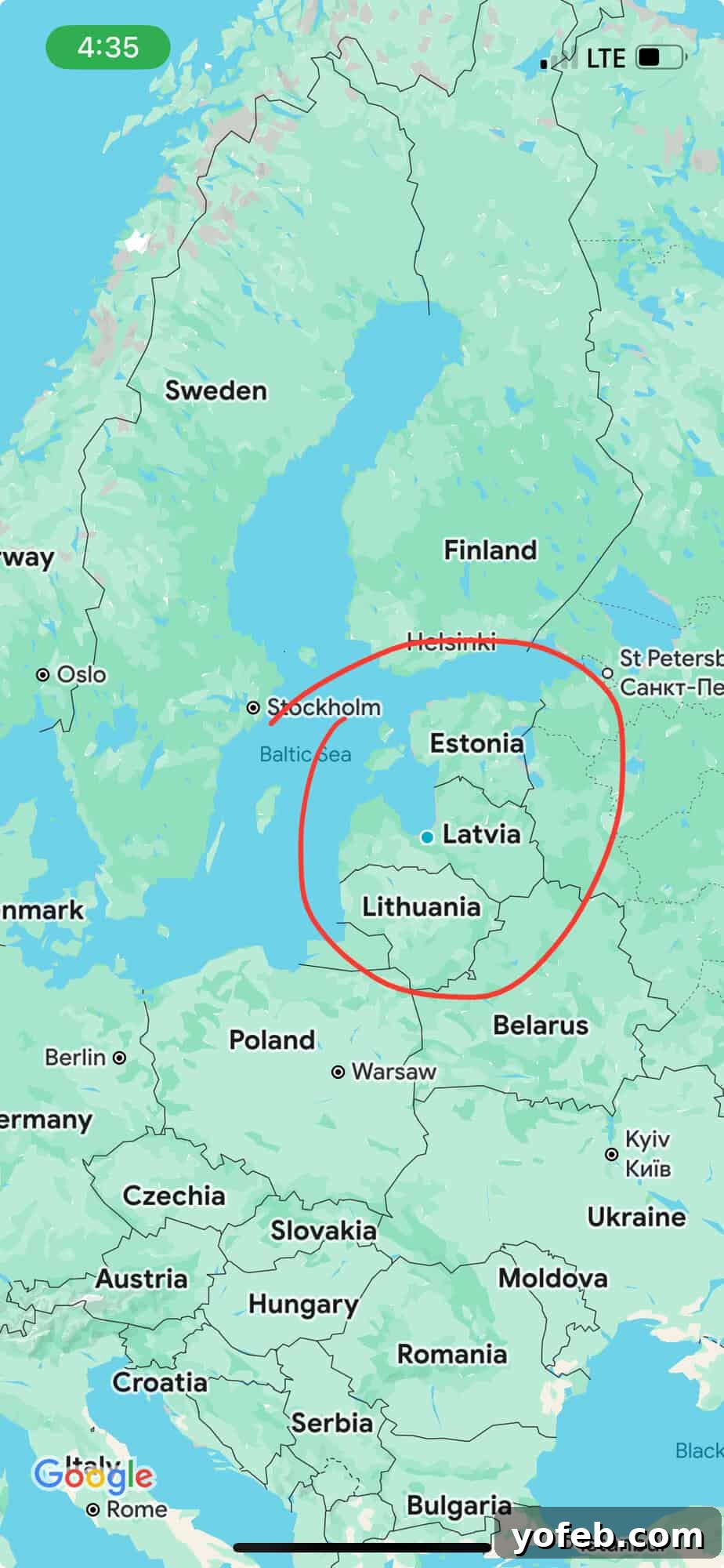
The Baltics comprise three distinct yet historically intertwined “sister countries”: Estonia, Latvia, and Lithuania. Each boasts excellent port access on the Baltic Sea, which gives the region its collective name. This strategic geographical advantage has historically been both a blessing and a curse, as these nations have valiantly struggled to maintain their independence, often targeted by stronger powers seeking control over these valuable trade routes and maritime access points.
I am eternally grateful to my dad for undertaking all the meticulous research and planning for this trip. Lately, my life feels like a whirlwind – I can barely manage to plan my weekly menu, despite running a food blog! 🤣 He began by exploring official guided tours of the Baltics, then ingeniously pieced together our custom itinerary, tailoring it to our specific interests and available time. This bespoke approach allowed us to truly immerse ourselves in the local culture and history at our own pace, avoiding the typical tourist traps and discovering hidden gems.
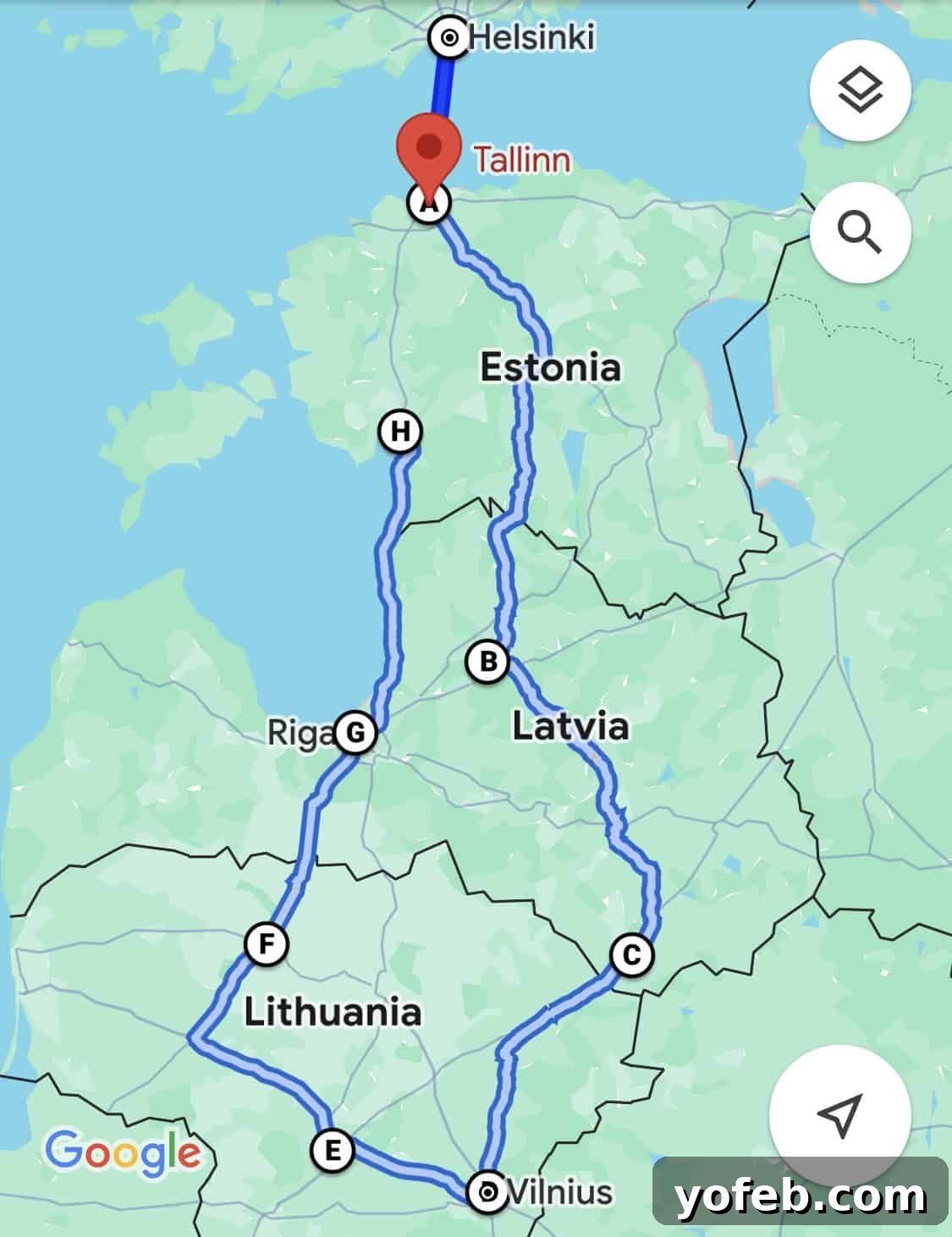
Our adventure commenced with a flight into Helsinki, Finland, followed by a picturesque ferry ride across the Baltic Sea to Tallinn, Estonia. We opted not to spend time in Tallinn at the start of our journey, instead immediately renting a car. Our route led us south through Latvia (B on the map), then further south into Lithuania, before looping back north through Latvia and concluding our grand tour in Estonia. We spent our final days in Tallinn, the stunning capital city, before taking the ferry once more to Helsinki and flying home. This circular itinerary allowed us to experience the diverse landscapes and unique cultures of all three Baltic countries efficiently and comprehensively.
Helsinki: The Vibrant Gateway to the Baltics
Our initial 24 hours in Helsinki, though brief, were incredibly enjoyable and provided a beautiful introduction to the region. We were so captivated that we’re already eager to return to Finland someday! We arrived in the afternoon, and I can confidently say that early June is the absolute ideal time to visit Helsinki; the city was awash with blooming lilacs, creating an enchanting fragrance and vibrant atmosphere everywhere we went.
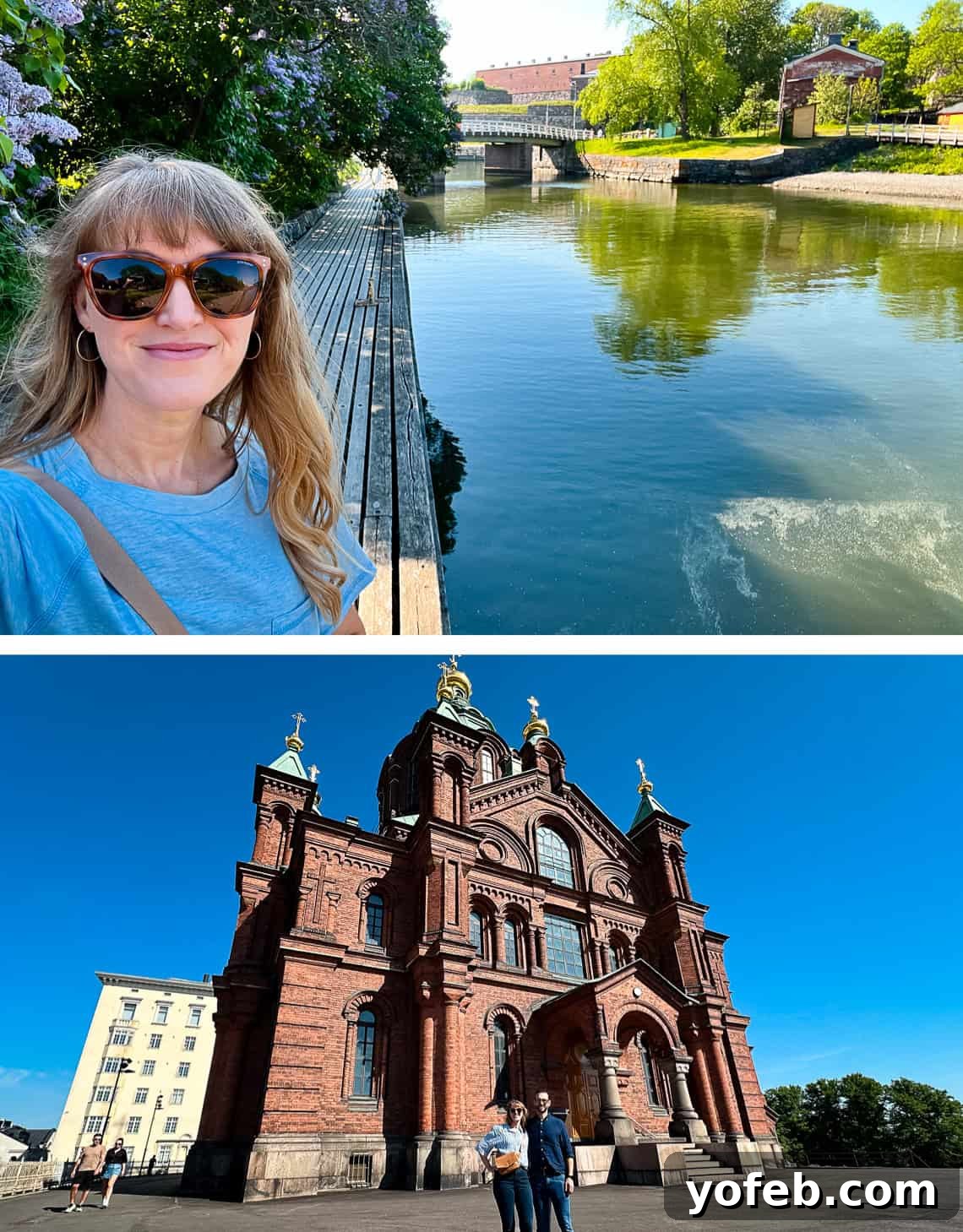
From our hotel, we enjoyed a leisurely stroll to a nearby Orthodox church, passing through a bustling street market along the way. The aromas were enticing, and Eric couldn’t resist trying the famous Finnish Salmon Soup (Lohikeitto), a ubiquitous dish on every menu in Finland. It was, as expected, absolutely delicious – a creamy, comforting bowl perfect for a slightly cool evening.
Later, we made our way to Savotta, a highly-regarded traditional Finnish restaurant, for dinner. While the major cities we visited offered a global culinary palette (think hamburgers, pizza, Georgian, Italian, Azerbaijani, Korean, and even Mexican food), Savotta delivered an authentic Finnish dining experience. We started with an appetizer platter featuring a variety of traditional samples. I was pleasantly surprised to find that many flavors resonated with what Eric’s family’s traditional Swedish Christmas Eve dinner is *supposed* to taste like (though, of course, their version has been lovingly Americanized over the past century). This made perfect sense, considering Finland was historically part of Sweden until a couple of centuries ago, sharing deep cultural and culinary roots.
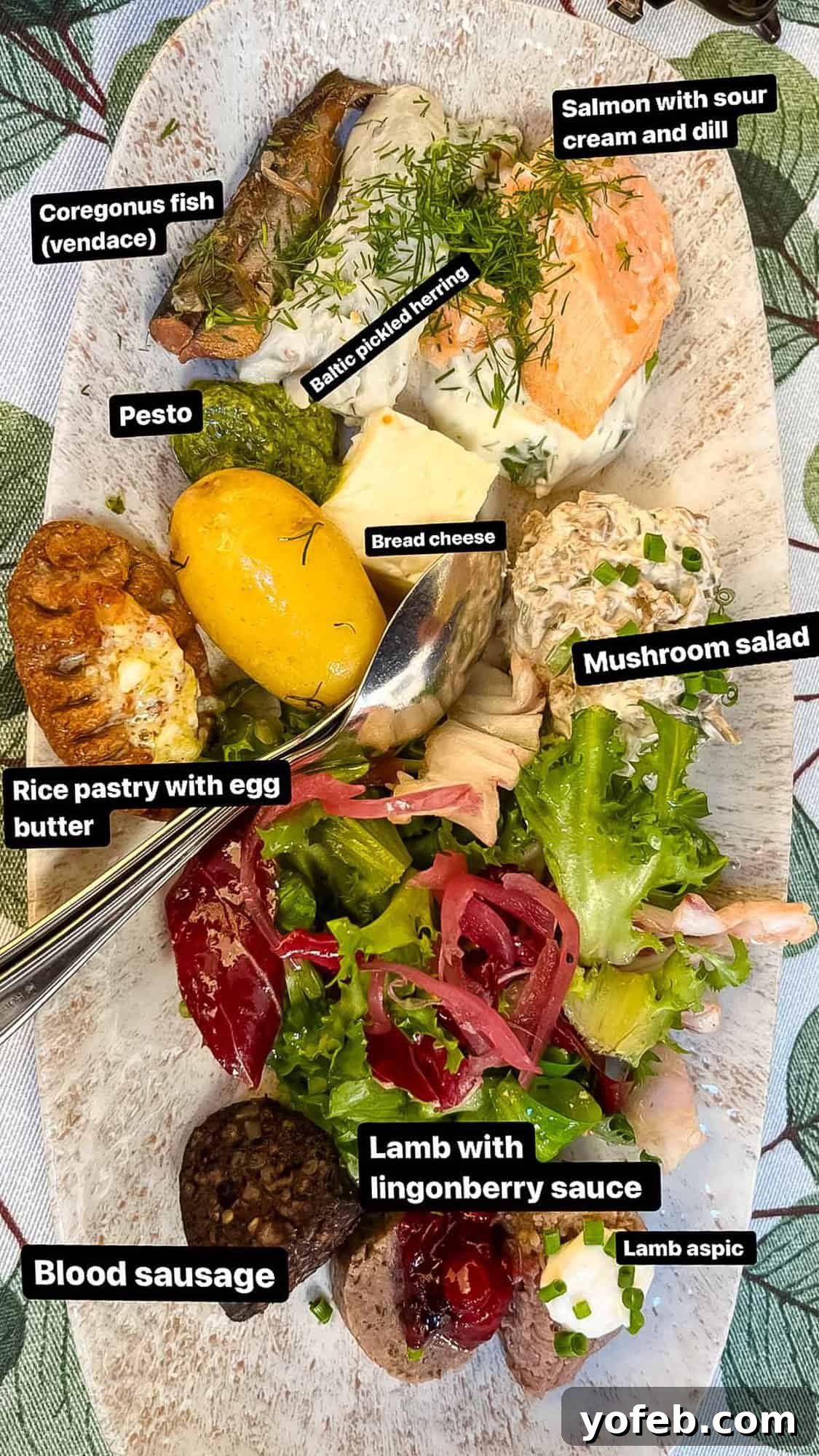
(That intriguing item in the middle on the left is a Karelian Pie – a rye pastry filled with rice, topped with egg butter. More on that delightful treat below!)
After our satisfying dinner, we strolled through the city, enjoying the prolonged “golden hour” as the sun lingered in the sky until an astonishing 10:30 PM. It felt like an endless twilight, adding a magical glow to the evening. We made a mandatory stop at a local grocery store – one of my favorite activities in any foreign country – to observe the local food culture. I was particularly fascinated by an entire wall dedicated to various salty licorice selections. Salty? Yes, intensely SALTY.
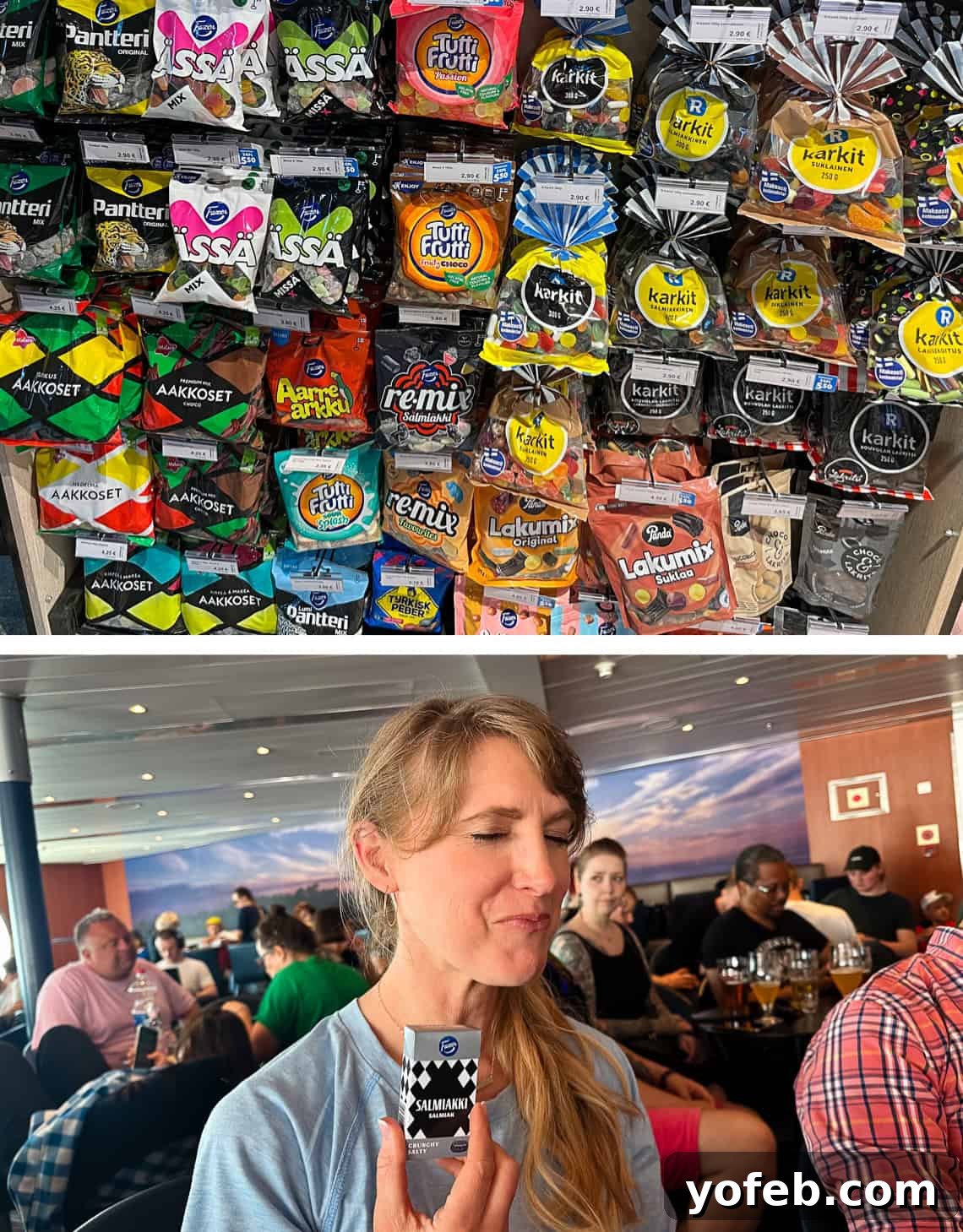
I bravely tried some and almost couldn’t swallow it; it’s truly that potent! Imagine the most licorice-y licorice imaginable, then infuse it with an overwhelming dose of salt. This is a beloved candy in Finland, and I still ponder its appeal. Someone, please, enlighten me on this unique culinary obsession!
The next morning, we descended for breakfast, expecting the typical continental fare of cold muffins and whole apples common in the States. Instead, we were met with an extravagant smorgasbord of Finnish cuisine – a truly impressive spread! There was a lavish cold meat charcuterie station, a diverse bread station, mini pancakes with strawberry sauce, whipped cream, and even marshmallows (an unexpected addition!). Beverage options included invigorating green juice and a curious but delicious blueberry soup, which was exactly as it sounds. Among the standout items were the savory Karelian Pies – rye flour pastries filled with savory rice pudding and topped with egg butter (a rich blend of boiled eggs mixed into butter; the Finns certainly don’t hold back on flavor!). The offerings continued with meatballs, white beans in sauce, ratatouille, delicate carrot pancakes, a moist rhubarb coffee cake, an egg tomato casserole, and unsweetened yogurt served with tart lingonberry sauce. I was utterly astonished by the sheer variety and quality, a little disappointed that I got full so quickly.
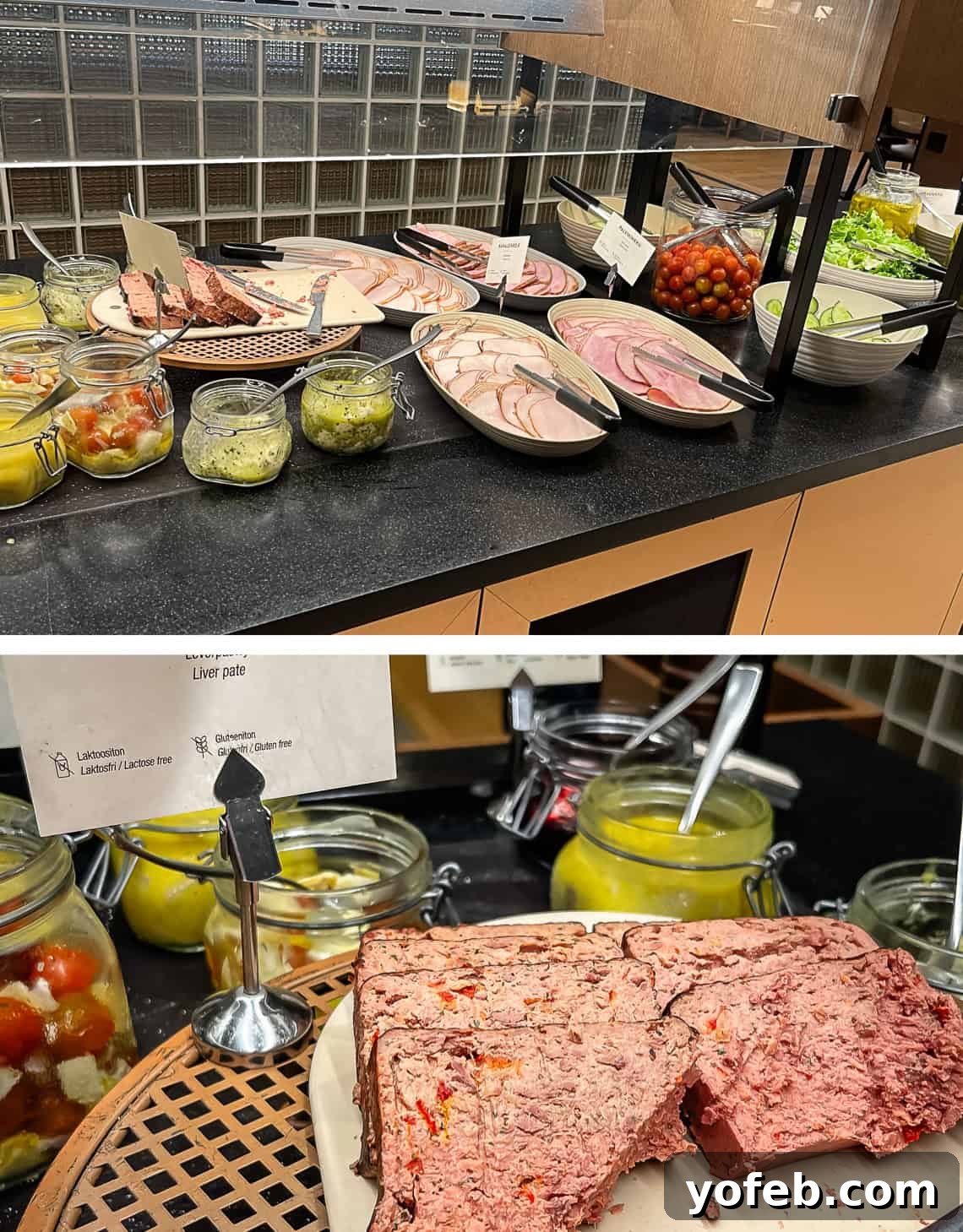
The Liver Pate from the charcuterie station, while a delicious staple on our Christmas Eve menu, was a bit too rich for me at 8 AM.
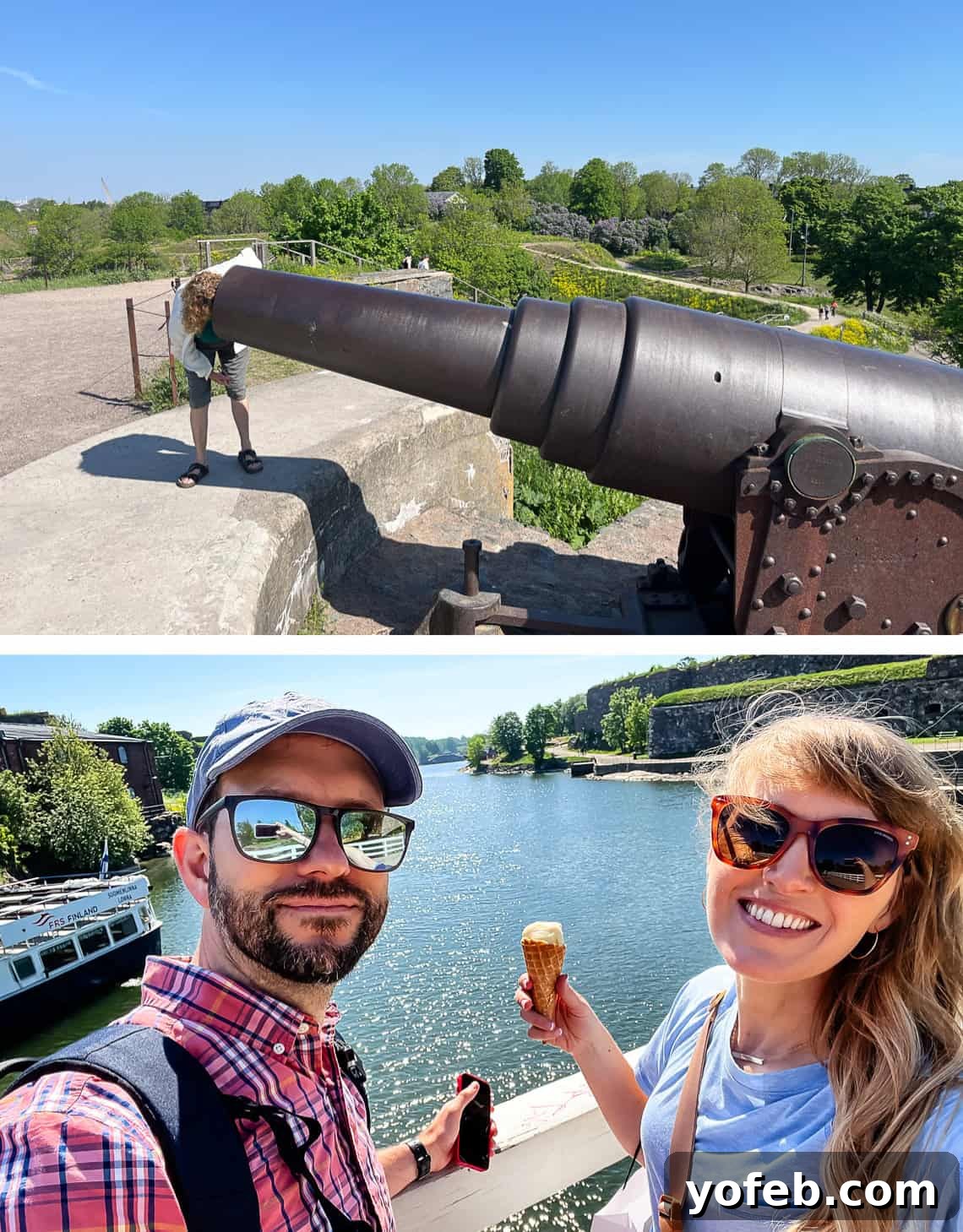
After breakfast, we took a ferry to a nearby island fortress, a truly stunning destination. Late May or early June is unequivocally the best time to visit Finland, with lush greenery and vibrant life everywhere. Here’s my mom, with her characteristic curiosity, humorously checking if a cannon was still operational. The island fortress itself offered a fascinating glimpse into Finland’s maritime history.
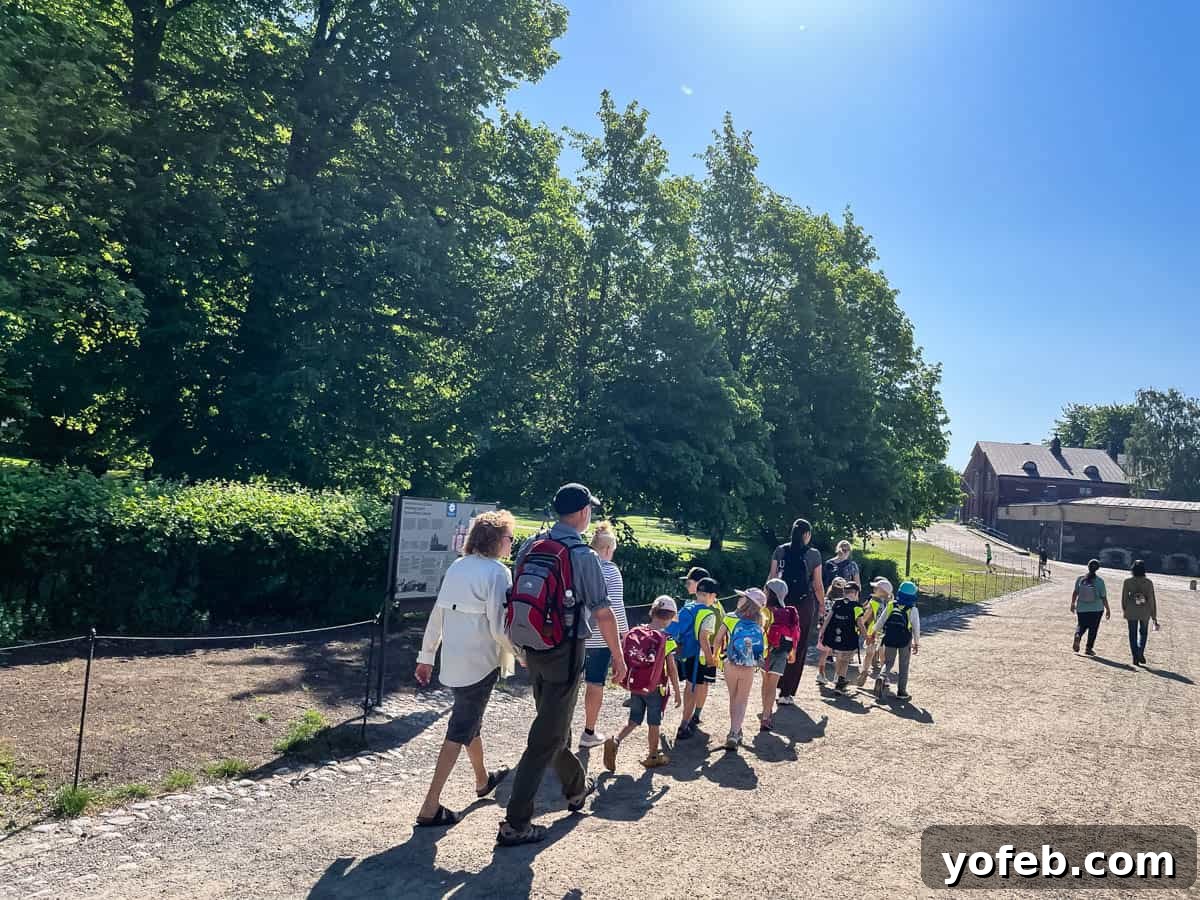
Coincidentally, it was the last day of school for the entire country, so the island was bustling with class field trips and students enjoying picnics. The atmosphere was incredibly sweet and quaint, filled with youthful exuberance. My parents, always up for a bit of fun, even playfully joined the end of a line of kindergarteners holding hands, much to everyone’s amusement! It was a heartwarming sight that captured the innocent joy of the day.
Later that day, I was thrilled to discover a Cardamom Bun with Pearl Sugar, which tasted remarkably similar to my own recipe, making me incredibly happy! We savored this treat while watching a military band march by in the street, adding another layer of local charm to our Helsinki experience. That afternoon, we boarded a two-hour ferry, once again crossing the beautiful Baltic Sea, this time bound for Tallinn, Estonia. From Tallinn, we embarked on a late-night drive deep into Latvia, heading towards the charming, lesser-known town of Cesis, ready for the next chapter of our Baltic adventure.
Cesis, Latvia: Medieval Castles and Local Flavors
Cesis is a quaint, small town in Latvia, often overlooked by mainstream tourists, which, for us, only added to its charm. Our primary reason for visiting was to explore its incredibly well-preserved castle, dating back to 1215. But before I delve into the castle’s fascinating history, I simply must share details about my breakfast – I’m always so intrigued by what people eat in different countries!
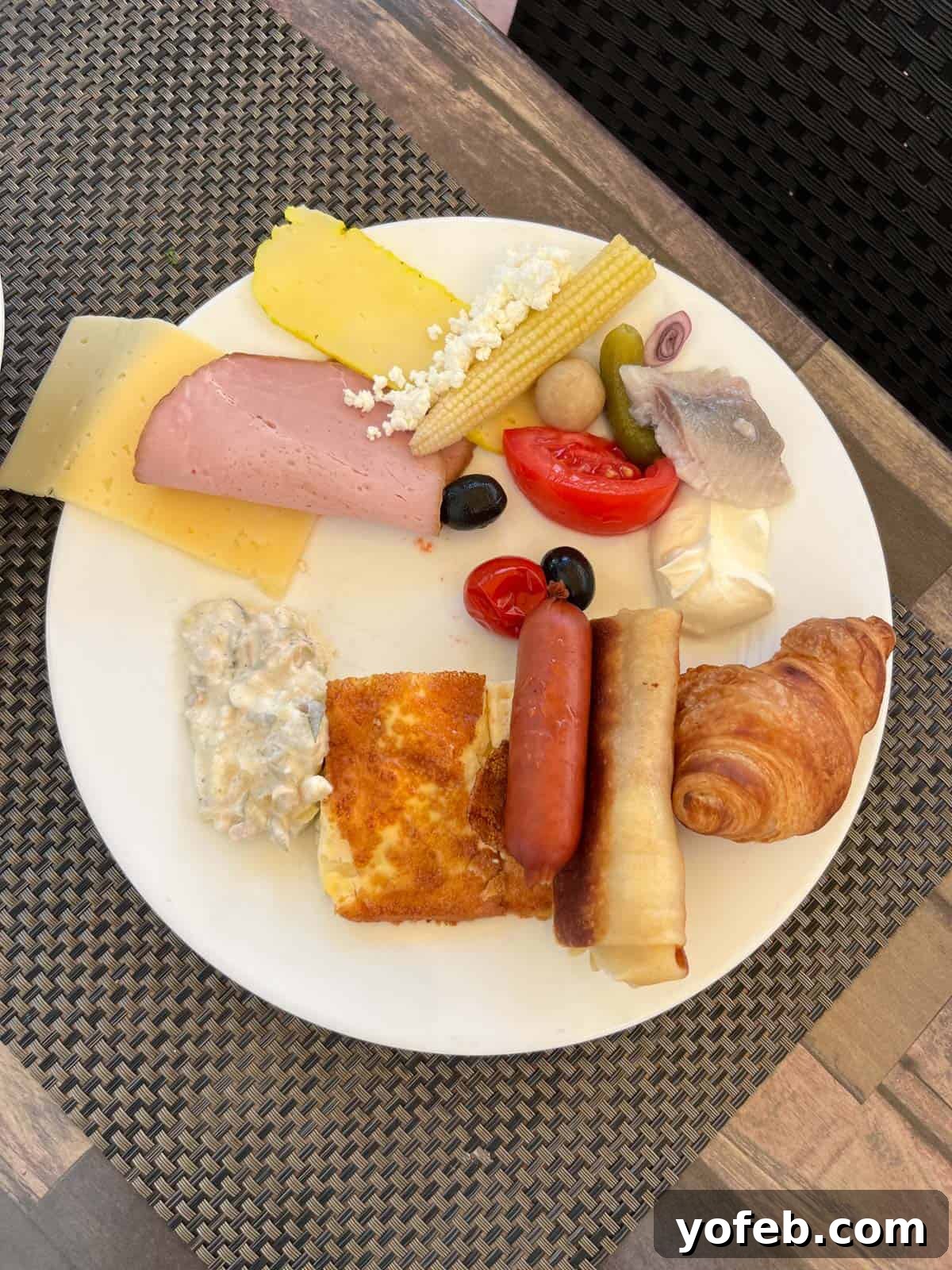
The breakfast spread was another delightful array of charcuterie-style meats and cheeses, accompanied by pickles, peppers, olives, baked eggs, and premade blintzes (like rolled pancakes with a cottage cheese-like filling). There was also pickled herring with red onions (which I bravely attempted, though my “herring trauma” from Swedish Christmas Eve persists!) and what tasted like a creamy tuna salad. Of course, all the usual breakfast staples like bread, jam, Nutella, granola, and yogurt were also present. I was incredibly excited to sample all these unique local foods at every meal!
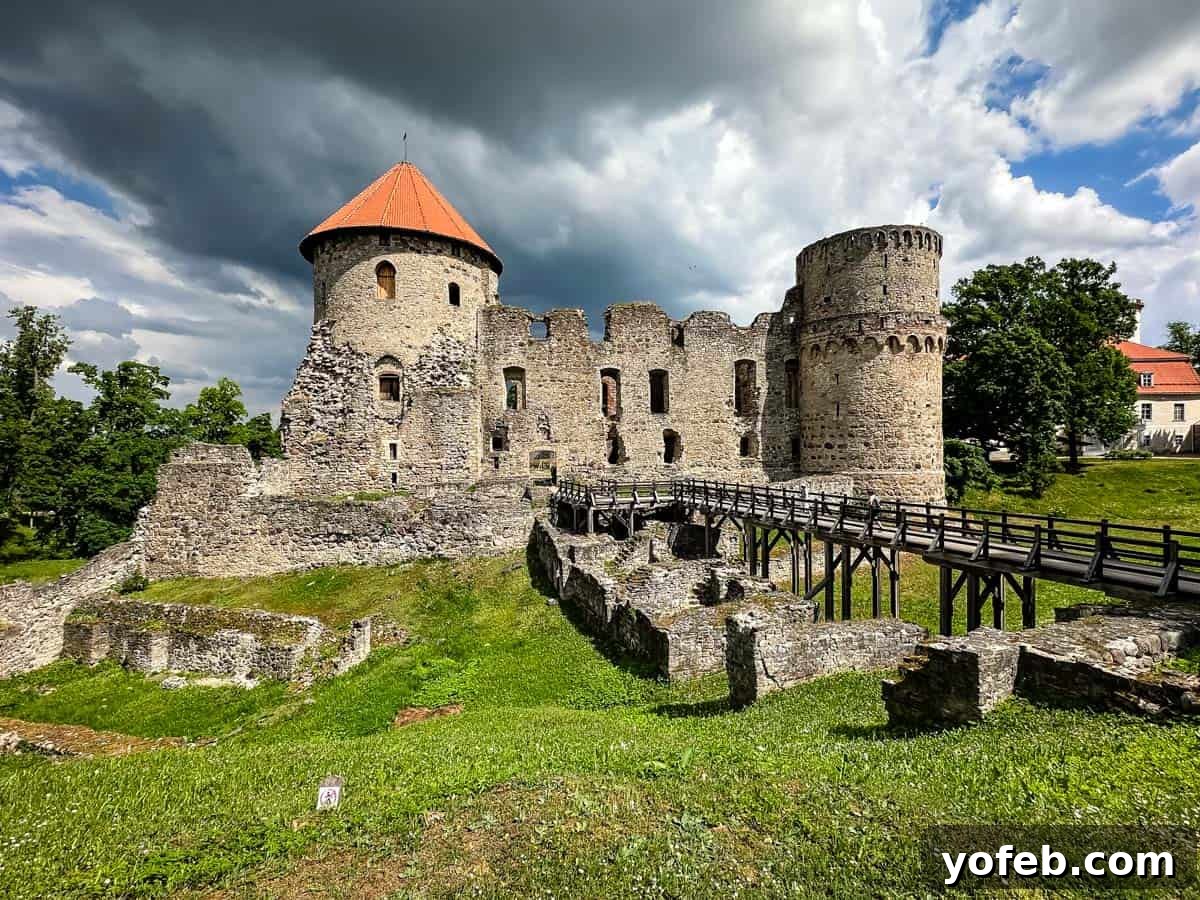
Cesis Castle was an absolute marvel. Unlike many other castles in the region that have been heavily restored with modern brick, Cesis retains much of its original character. To enhance the authentic medieval experience, visitors are provided with lanterns carrying lit candles for exploring the interior – a truly atmospheric touch. Built in 1215, the castle remained in active use until the late 1500s. A particularly somber historical event occurred in 1577 when Ivan the Terrible’s forces attacked from Russia. Knowing they were vastly outnumbered, the castle’s defenders, approximately 300 people, made the agonizing decision to ignite all their gunpowder and commit mass suicide rather than fall into enemy hands. It’s a stark reminder of the brutal realities of life in 1577. Beyond its grim history, the castle also features beautifully maintained historical gardens, where herbs and plants from centuries past are still cultivated by local tenders today.
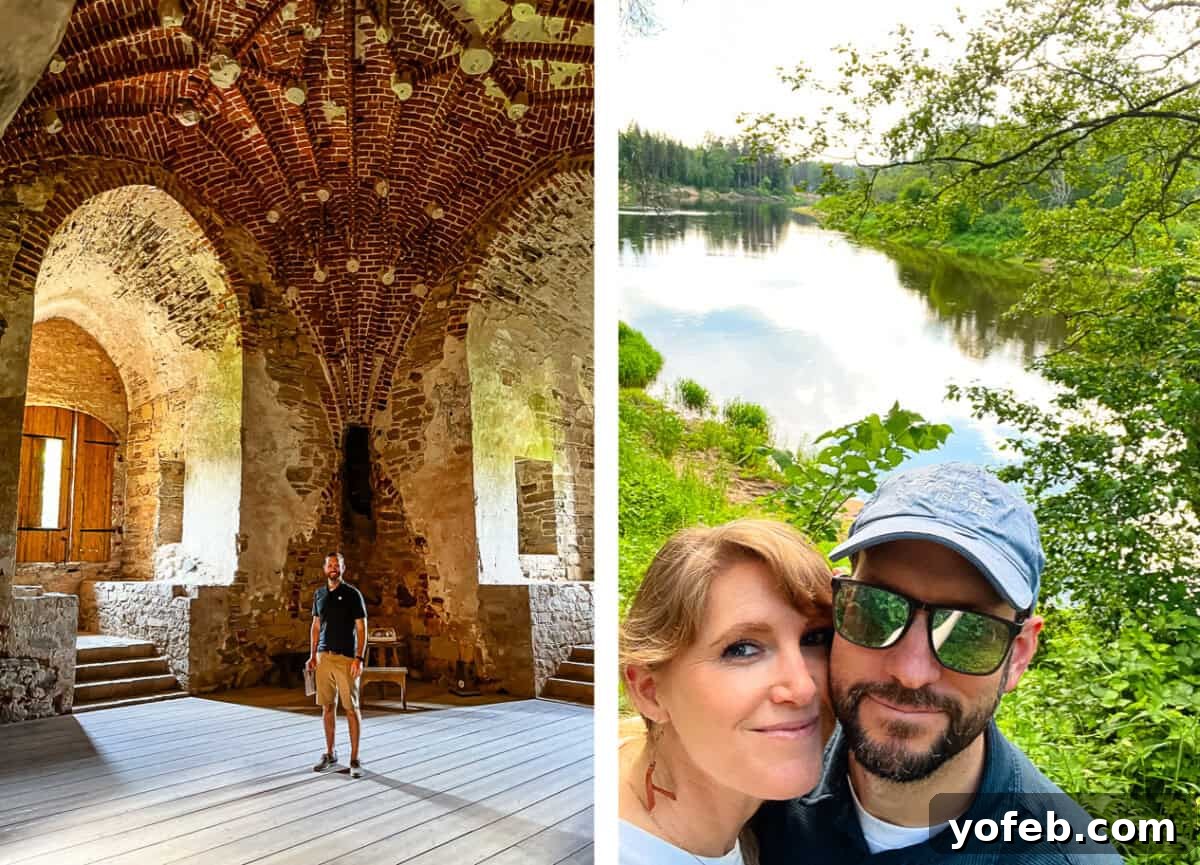
Later, we embarked on a hike, and towards the end, a gentle rain began to fall, creating a rather magical atmosphere. For dinner, we stopped at Janoga, a local restaurant. I was so intrigued by the menus in every country that I took photos of them all – is anyone else as fascinated by foreign menus as I am? We, of course, ordered all the desserts! People in Latvia primarily speak Latvian, but fortunately, English menus were almost always available. We also noticed a significant amount of Russian being spoken, which came as a surprise to me (it’s all Greek to me, as they say! 😂). However, all official signs and communications are exclusively in Latvian. (And to answer common questions: Lithuanians speak Lithuanian, and Estonians speak Estonian – not dumb questions at all, as these languages are distinct!)
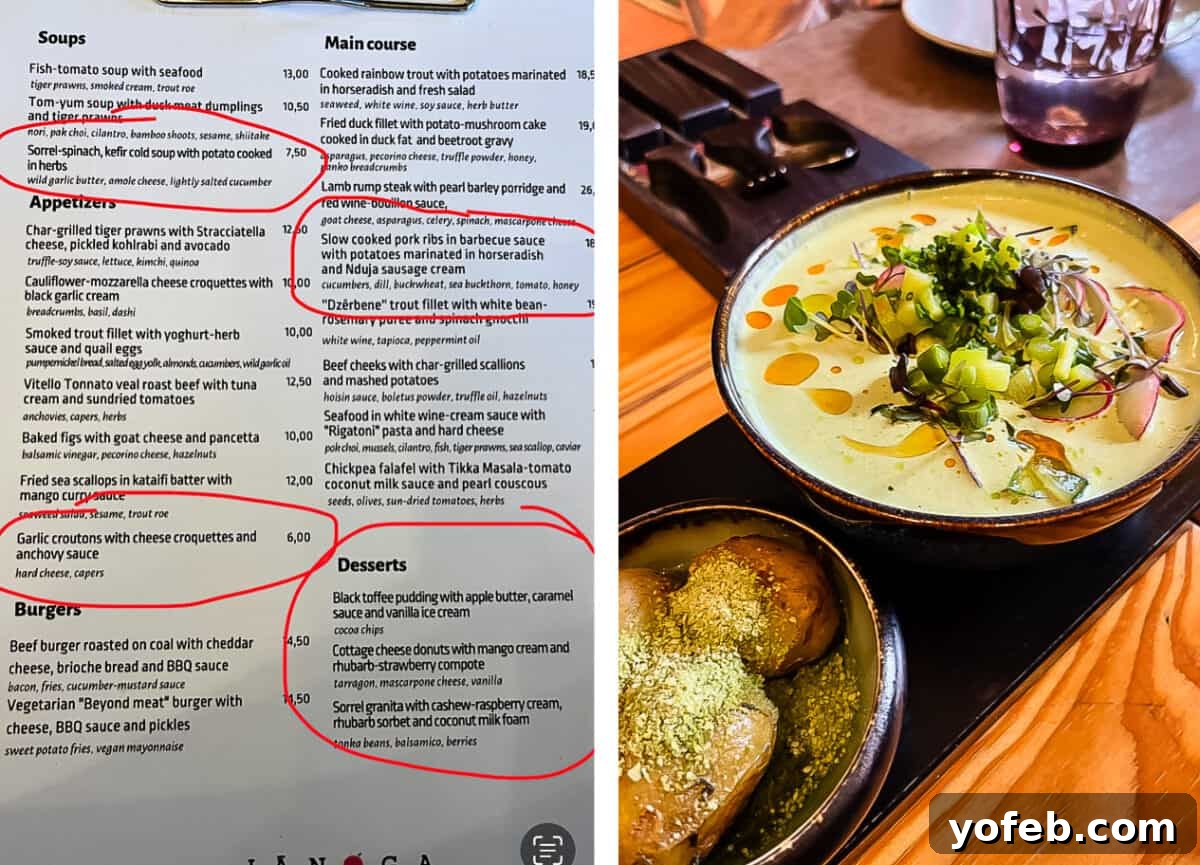
On the right in the image above, you can see the Sorrel-Spinach Soup, a truly outstanding dish that I highly recommend. Its fresh, herbaceous flavors were a wonderful discovery.
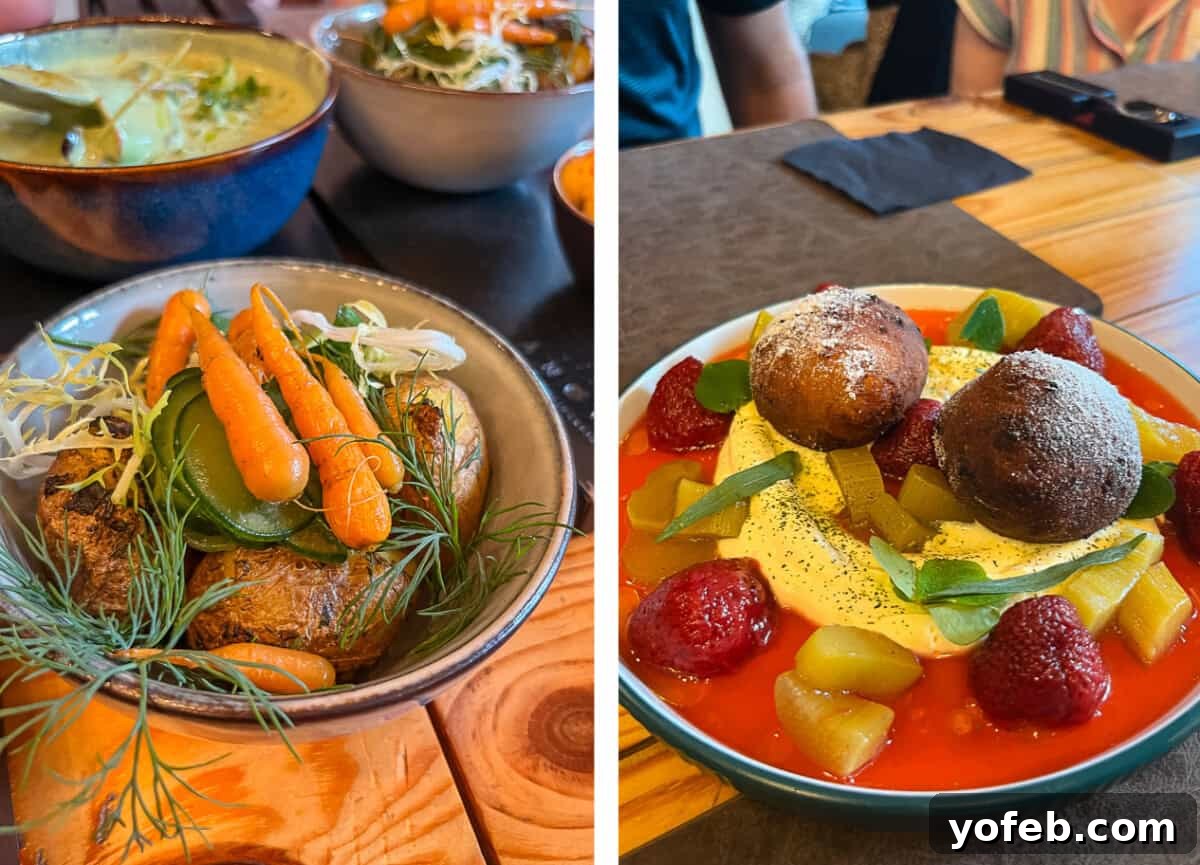
Dill, as we quickly learned, is an incredibly popular herb throughout the Baltics, gracing many savory dishes. The picture on the right showcases a delectable rhubarb doughnut dessert. Rhubarb is absolutely ubiquitous in the Baltics during summer, and I was thrilled by its widespread presence! We truly don’t consume enough rhubarb in the US; I find it baffling. It’s affordable, easy to cultivate, and incredibly delicious. It was a joy to see the sheer variety of culinary creations they fashioned with this versatile fruit, which we in America often limit to just Rhubarb Pie.
That night, we continued our journey to Daugavpils, another city that isn’t typically on the main tourist circuit. We knew this because whenever locals realized we couldn’t speak Russian or Latvian, they’d ask, “Where are you from? England?” And upon hearing “California,” their jaws would invariably drop. The surprise on their faces indicated just how rare American visitors were in these parts, making our trip feel even more authentic and exploratory.
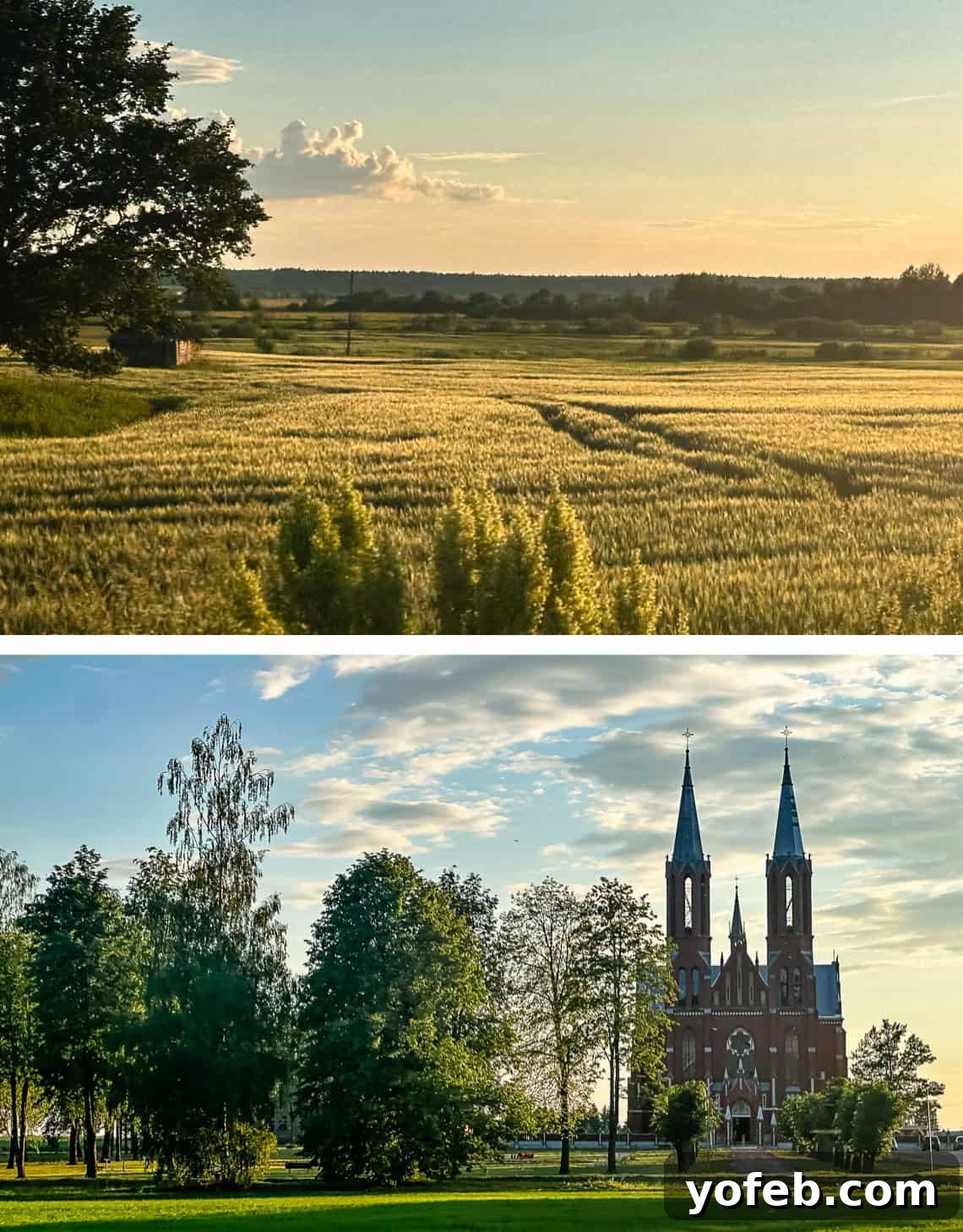
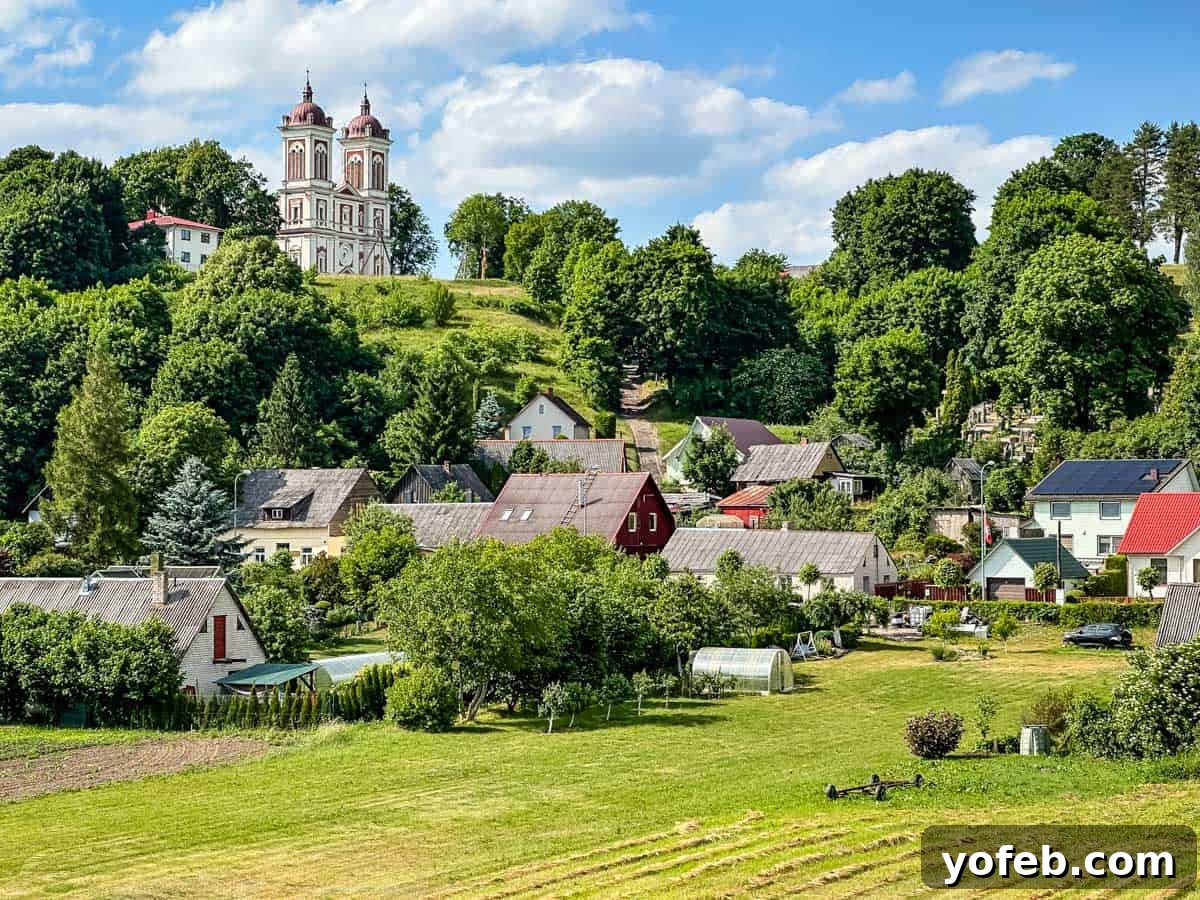
During our drive, we were treated to the absolutely gorgeous Latvian countryside, spotting this random, fairytale-esque church nestled among the rolling hills. The natural beauty of the region is simply incredible, a true hidden gem waiting to be discovered.
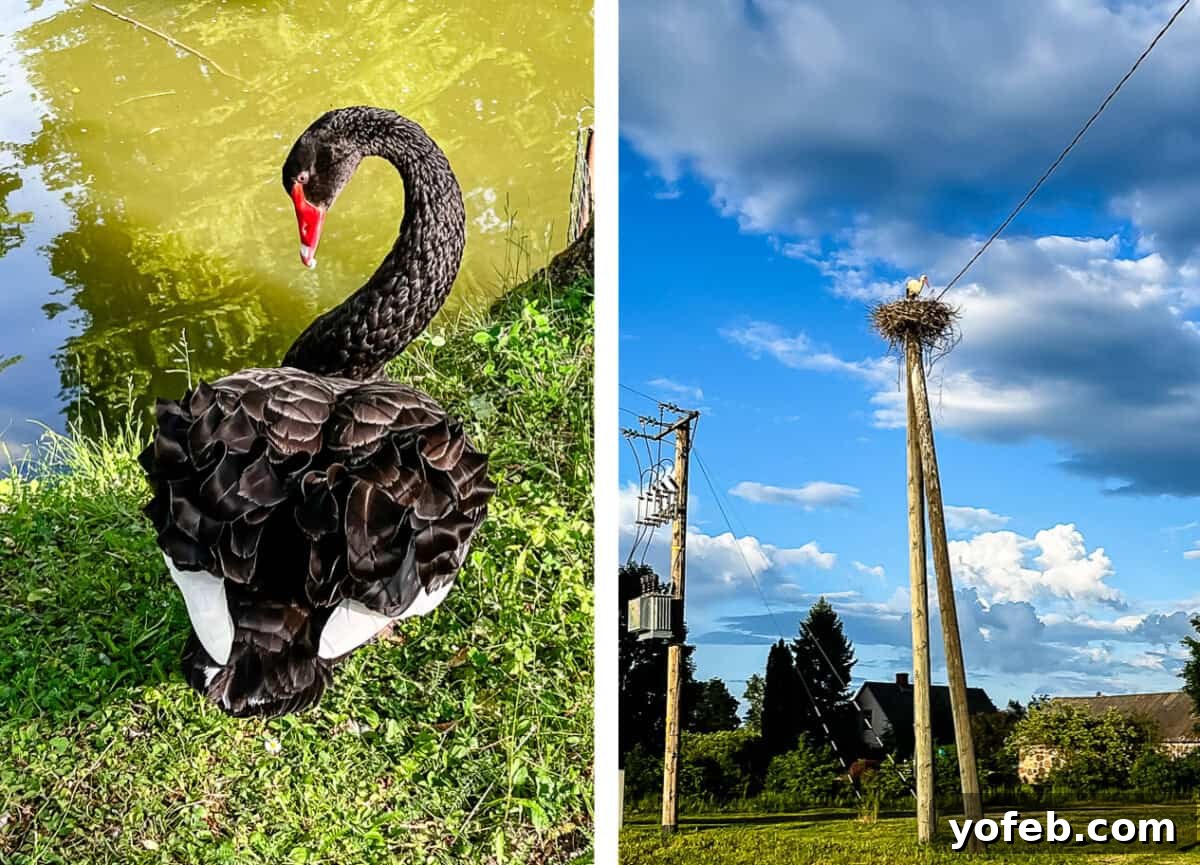
We saw dozens upon dozens of majestic storks perched in their colossal nests atop power lines. It was a sight that finally made me understand the folklore of storks delivering babies – they are certainly large enough to carry a newborn! The other photo captures a stunning black swan, a creature I had never seen before in person, adding another unique wildlife encounter to our trip.
Daugavpils, Latvia: A City of Unexpected Celebrations and Deep Faith
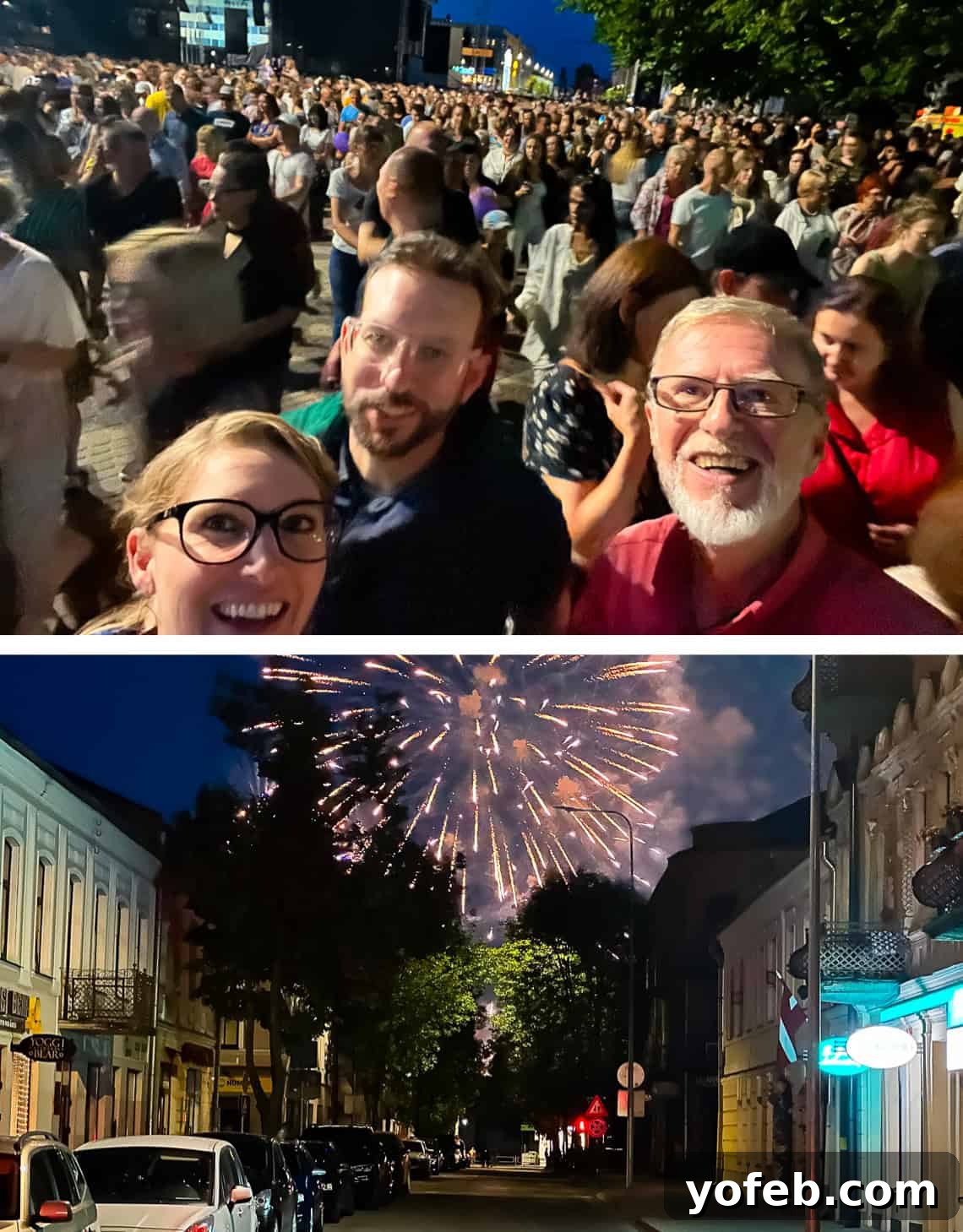
Upon our arrival in Daugavpils, we stumbled upon an incredible stroke of luck. The city was celebrating its 749th anniversary, and despite arriving at 10:30 PM, the entire town was out on the streets, brimming with festive energy! We couldn’t possibly miss it. We joined the crowds, wandering amidst numerous food vendors and multiple concert stages. The largest concert featured Loboda, a renowned Ukrainian singer, drawing an estimated 10,000 people. The atmosphere was exhilarating, filled with vibrant people-watching – girls dancing wildly, even small children with their families. It felt like an Eastern European equivalent of a Taylor Swift concert! 🤣 I’m now half-tempted to return for the 750th celebration next year, imagining it must be even more spectacular.
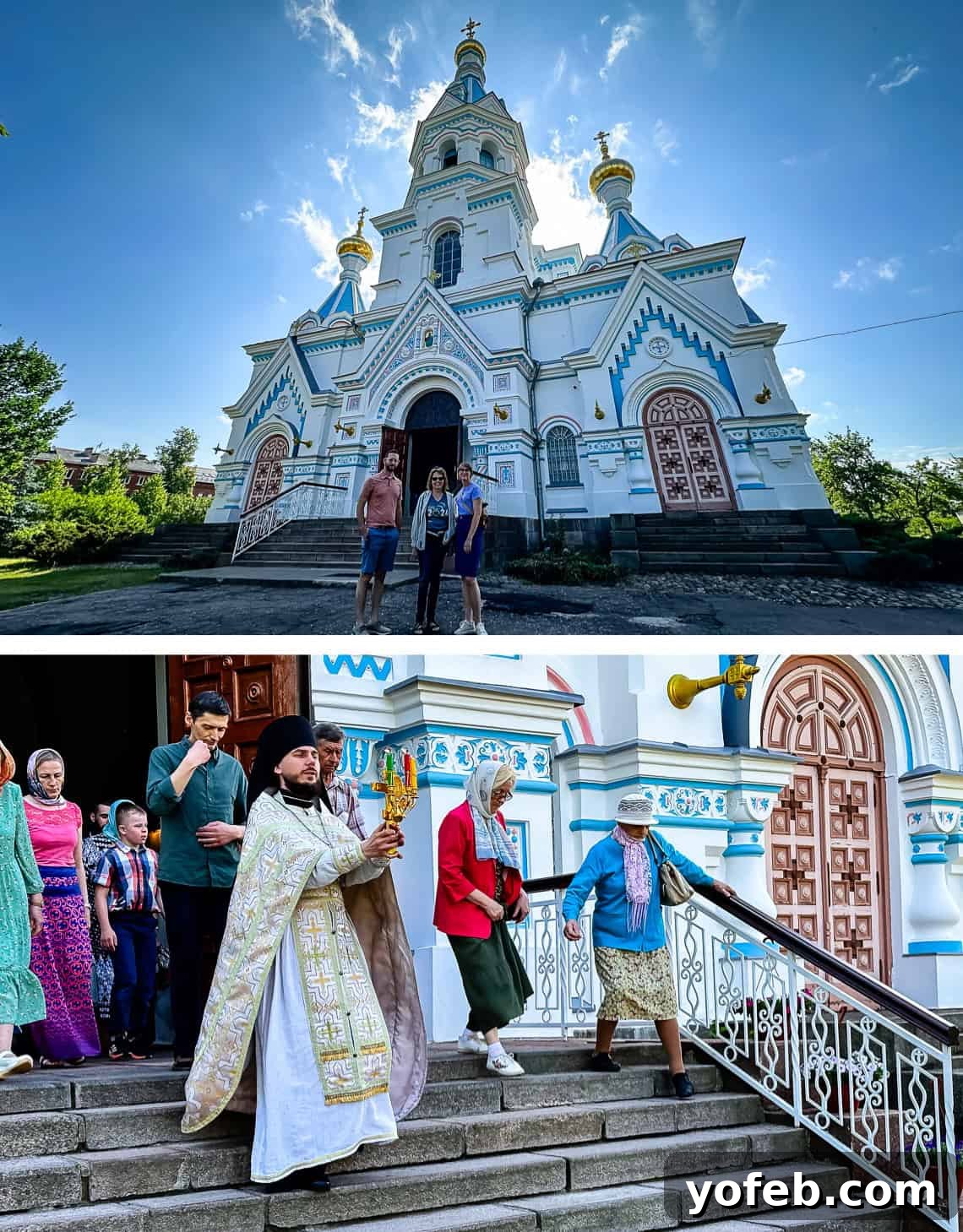
The following day was Sunday, and we visited “Church Hill,” an area featuring several churches clustered within a few blocks. My mom and I were respectfully asked to cover our heads with scarves provided in the foyer of the Orthodox church. We had the privilege of observing part of the beautiful service. It was truly lovely to see all the elderly women, impeccably dressed with their hair styled, wearing cute nylons and sensible shoes (kitty heels or tennis shoes), heads covered, devoutly crossing themselves. As a person of faith, I find it incredibly moving to witness others worshipping God in their preferred traditions and expressions.
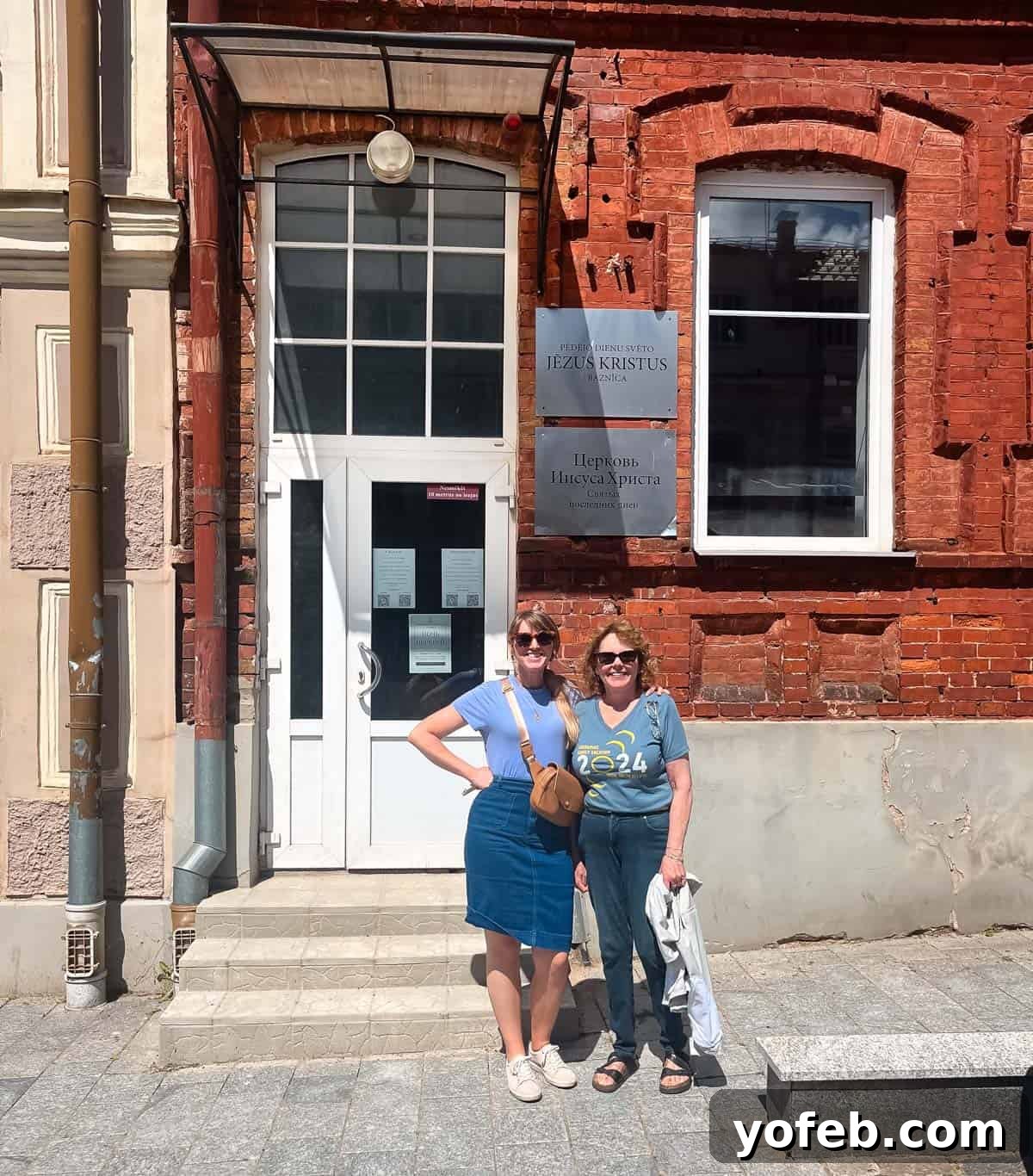
We even located our own church just a few blocks away, a comforting discovery amidst our travels.
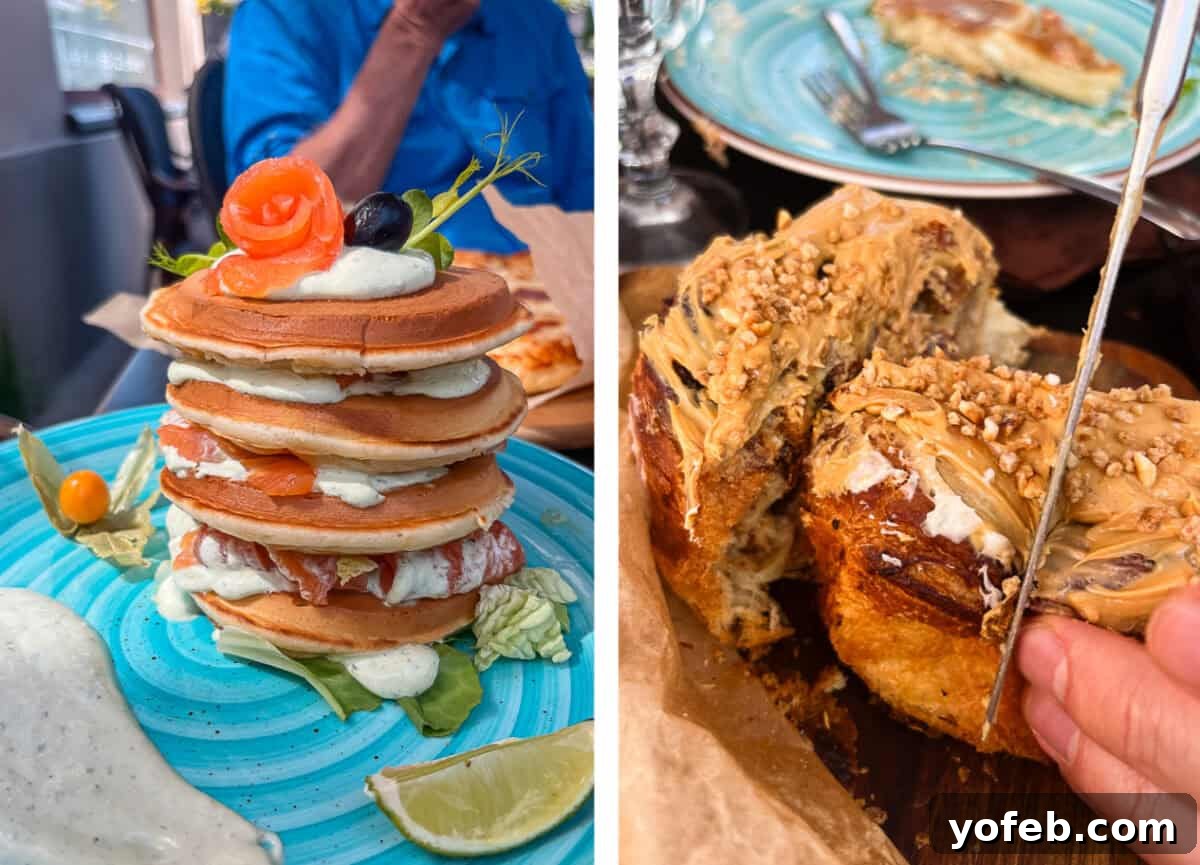
Lunchtime brought delightful surprises: savory salmon pancakes (!) and an incredibly decadent caramel pecan pastry. Both were absolutely superb. Afterwards, we visited the ruins of the city fortress. It’s astounding to absorb the layered history of this country; in one location, you encounter remnants of Russian Tsarist rule, Napoleon’s invasions, Holocaust camps, and Soviet-era apartment buildings. It’s a vivid tapestry of complex and often tragic events.
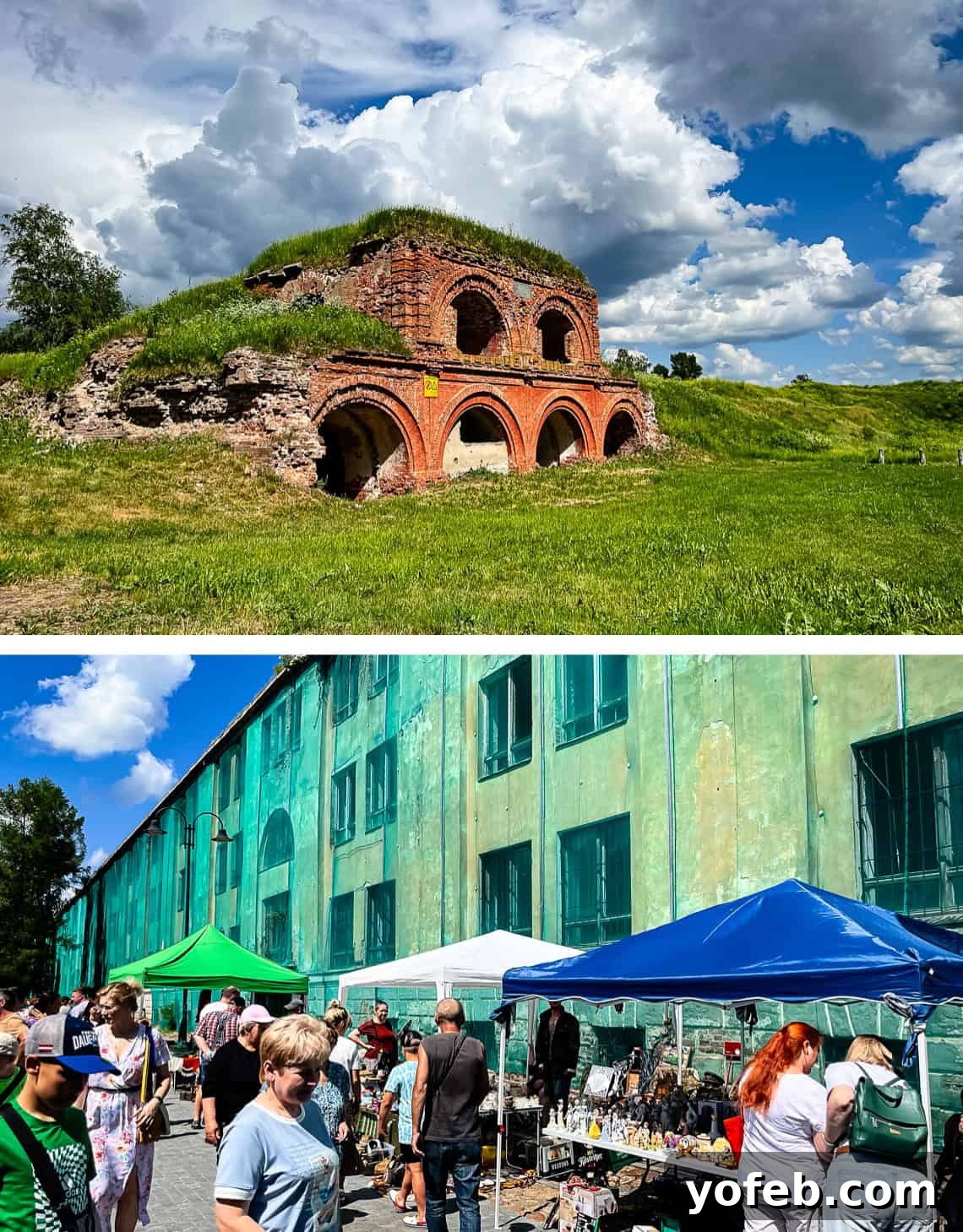
The image above shows a vibrant market we explored, with those characteristic Soviet-era apartment buildings in the background, draped in green netting. This netting, while an eyesore, serves a practical purpose: preventing debris from falling and injuring people, highlighting the urgent need for renovation which, sadly, appears to be hampered by a lack of funds.
Vilnius, Lithuania: A Journey Through Time
Our next destination was the capital of Lithuania, Vilnius. This marked our first encounter with a true “old city” on this trip, and it was utterly magical! Photos, unfortunately, can never truly capture the enchanting atmosphere. You genuinely feel as though you’ve stepped into a time machine, transported to a bygone era. The city captivates with its winding cobblestone roads, intricate tiny alleyways, and the vibrant life of locals residing in apartments above charming, independent shops. Ancient cathedrals stand majestically around every corner, their red tile roofs contrasting beautifully against the sky. Quaint 14th-century brick cafes spill onto the streets with inviting patio chairs, always ready to welcome visitors.
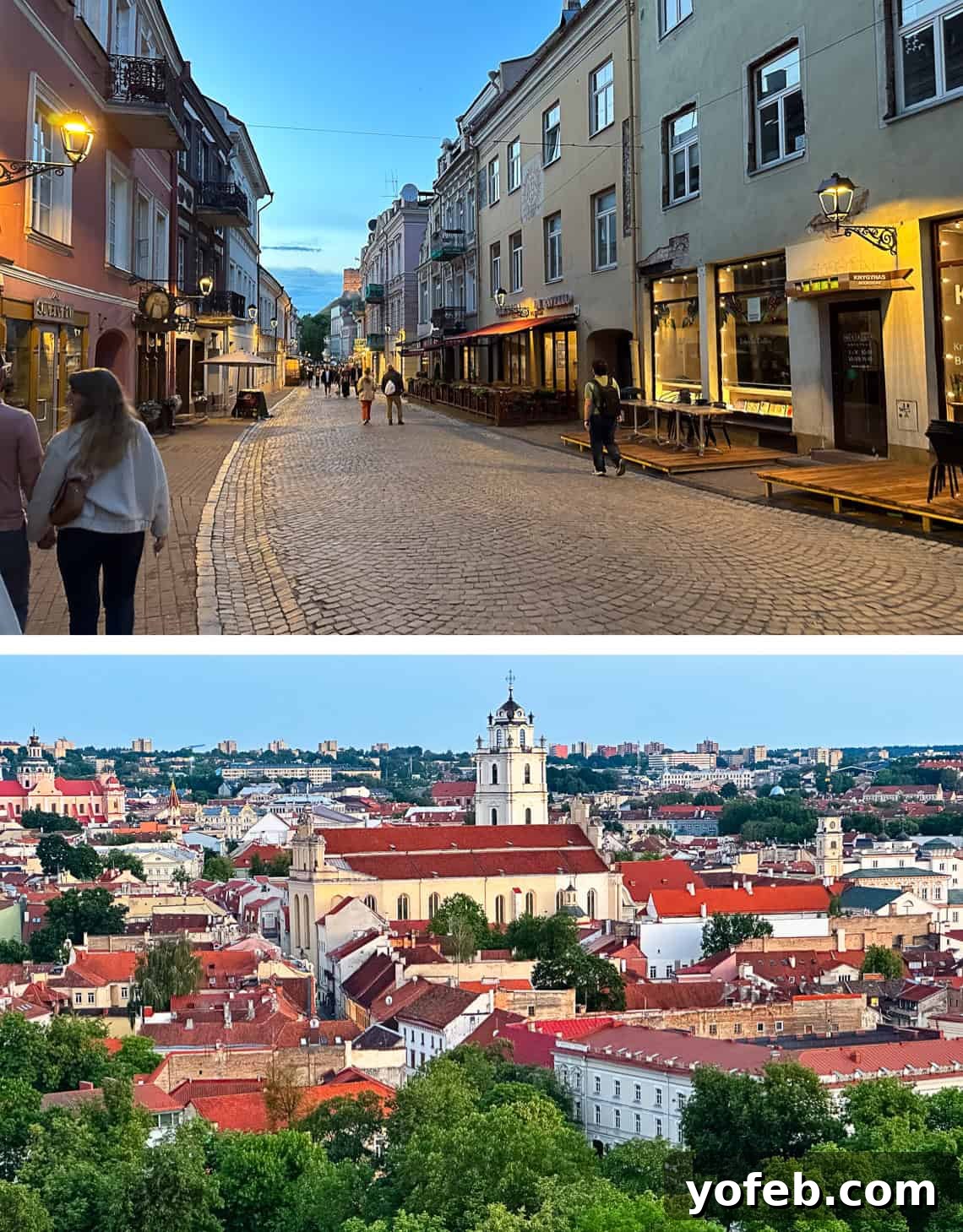
We dined at Etno Dvaras, a restaurant specializing in traditional Lithuanian cuisine, and the experience was incredibly satisfying. The most celebrated dish in Lithuania is the Potato Dumpling, known locally as Cepelinai. Etno Dvaras offered a massive menu with countless variations of this beloved dish, from different fillings to diverse sauces, making it an adventurous culinary exploration.
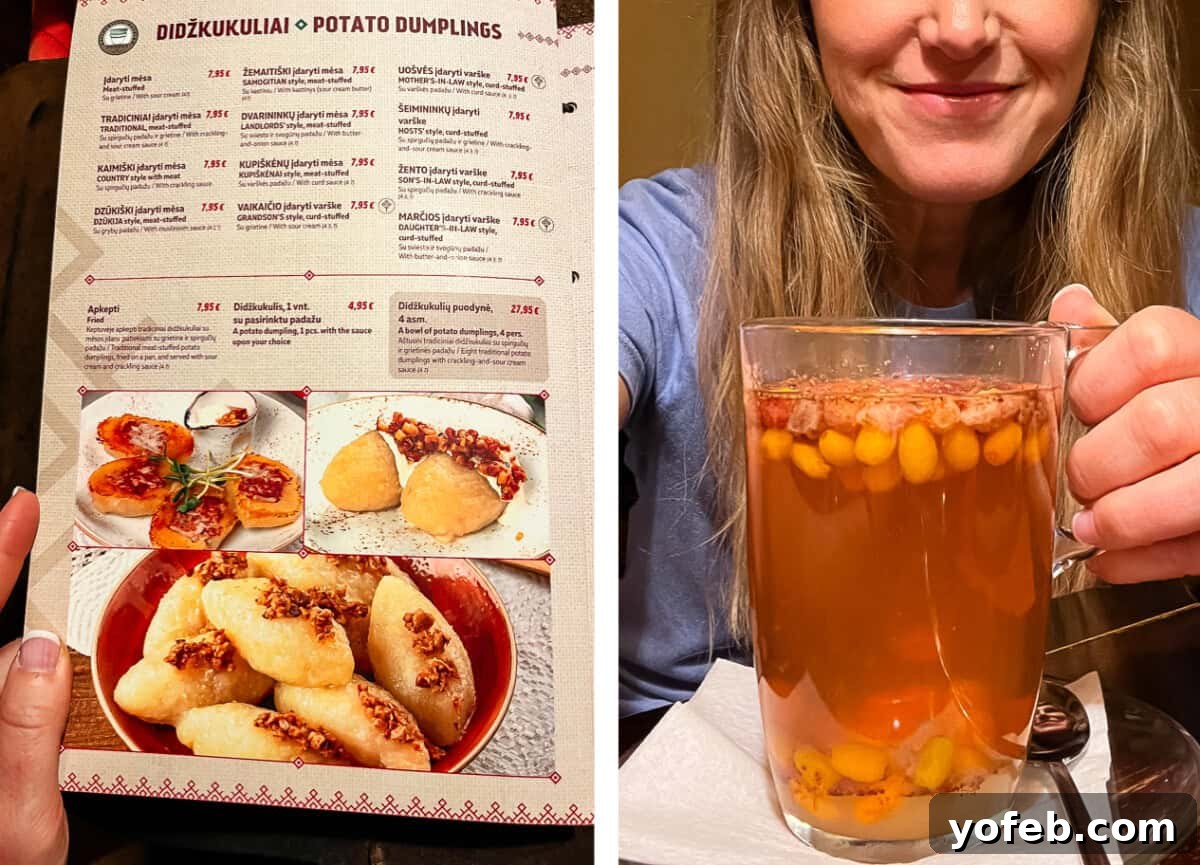
On the right in the photo, you’ll see Buckthorn Tea, another delightful Lithuanian specialty. It was tart and sweet, infused with berries from the Buckthorn tree – absolutely delicious! Eric, ever the adventurous one, ordered “acorn coffee” ( gilių kava ), which contains no actual coffee but is brewed from acorns. Surprisingly, it was incredibly good – who knew acorns could make such a fine beverage? The famous Potato Dumplings are a must-try; I’ve even found a recipe I’m eager to try recreating at home!
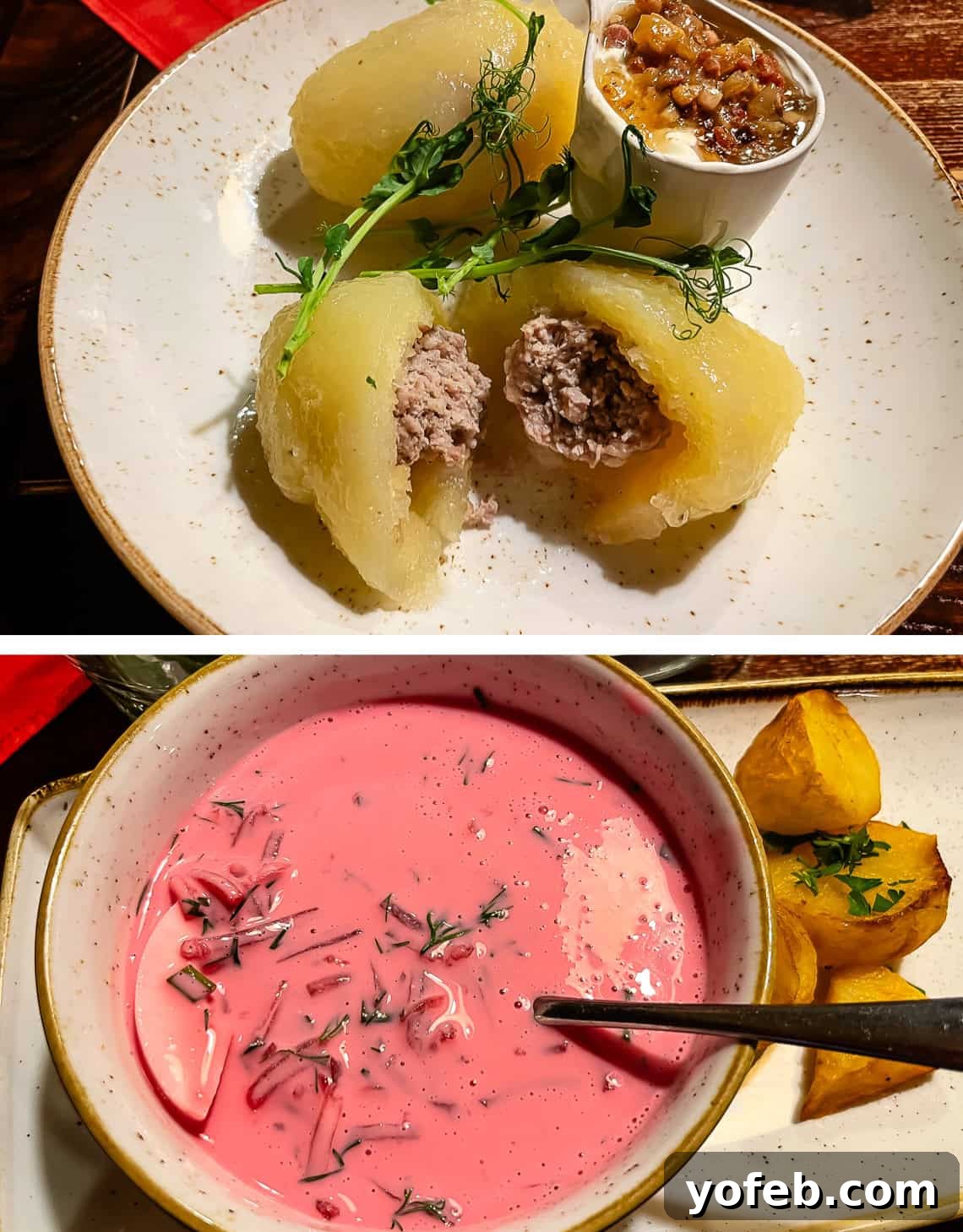
Above, you can see the captivating cold beet soup, known as Saltibarsciai, which I quickly became utterly obsessed with! I ordered it at least three different times during our stay in Lithuania. I’m typically not a fan of cold soups; gazpacho, for instance, isn’t my preference. But this soup was a vibrant Barbie pink, incredibly flavorful, and made with kefir, giving it a unique tang and creaminess. It was surprisingly refreshing and utterly addictive. I’ve already bookmarked two recipes to attempt recreating this culinary delight at home: Saltibarsciai and Jamie Oliver’s Chilled Beet Soup.
The next day, our exploration led us to a magnificent cathedral, built in the 1600s, whose interior was strikingly all white. All the intricate stone carvings were original and meticulously unrestored, preserving centuries of craftsmanship. Descending into the basement, we discovered a small museum housing Latin hymnals and handwritten scriptures, casually displayed. The earliest dates we observed were from the 1500s – an astonishing proximity to such ancient artifacts, making the history feel incredibly tangible.
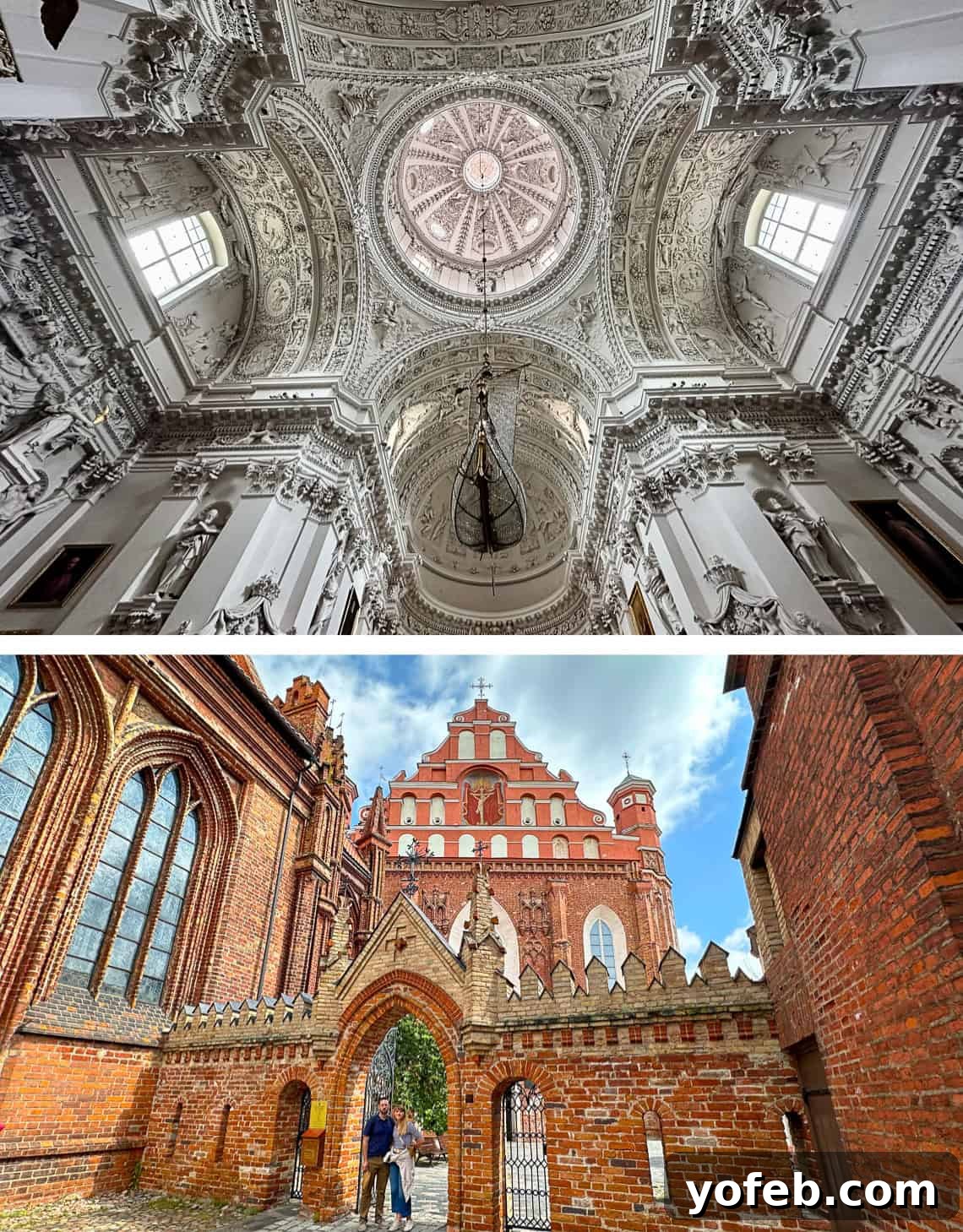
Above is Saint Anne’s Church, an architectural marvel completed in just six years in the early 1500s. A truly astounding feat of medieval engineering and artistry! 🤯
We also took a serene walk through an ancient cemetery. My mom, who serves as the board president for the cemetery in my hometown, has a particular fascination with these historical resting places – perhaps a slight obsession, but I’m certainly not complaining! It was, without a doubt, the most beautiful cemetery I have ever visited. Lush ferns and diverse plants grew everywhere, and almost every grave was adorned with fresh flowers, indicating the deep respect and continuous attention given to the deceased in this culture. We even spotted one grave with an actual lit candle, its flame gently wavering, having clearly been burning all week. You can faintly discern it at the bottom of this photograph, a poignant symbol of enduring remembrance.
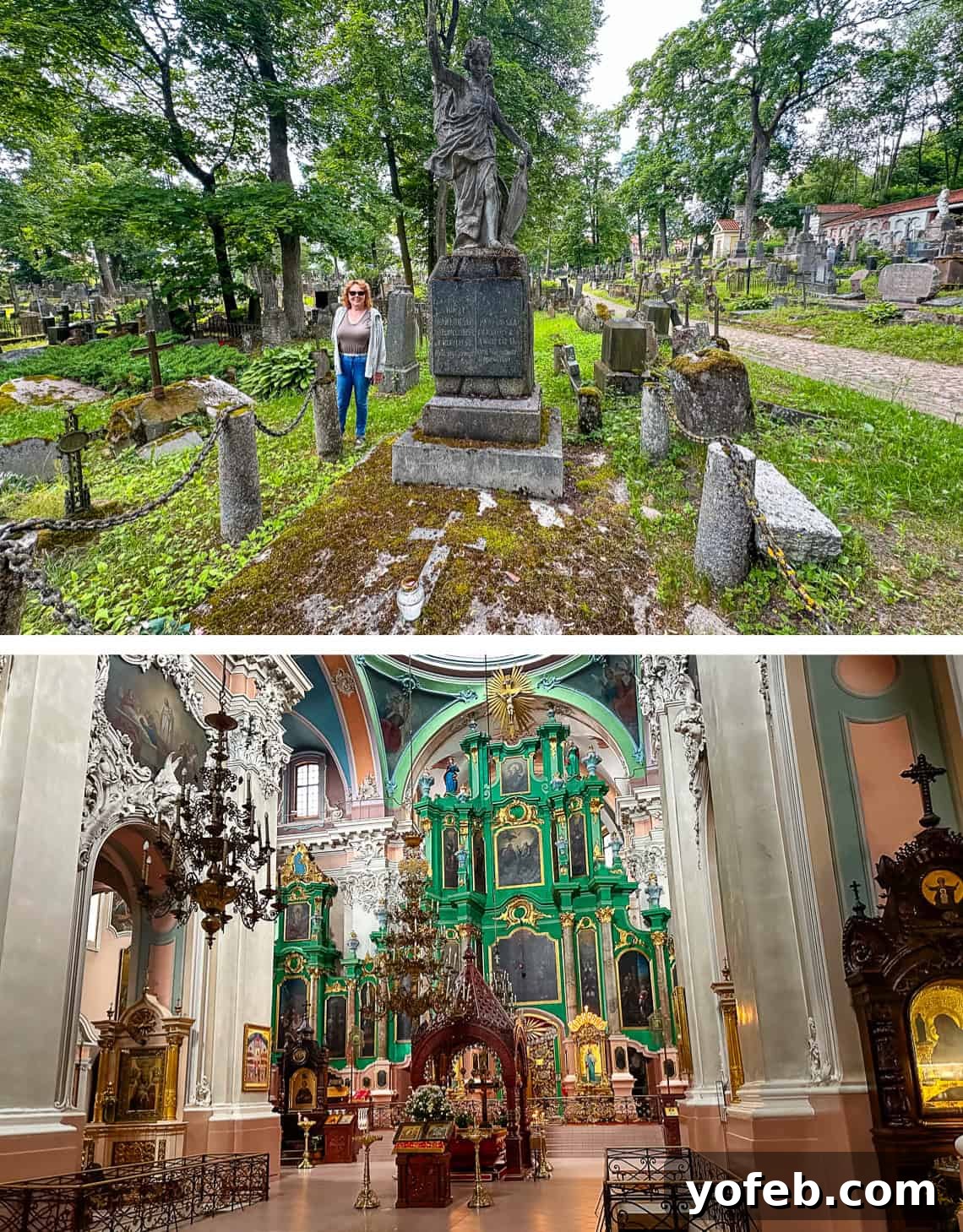
This vibrant Russian Orthodox church was another captivating stop, bursting with an explosion of color inside!
We paused at a local bakery and indulged in this exquisite caramel hazelnut tart. It was simply divine! So incredibly good, a perfect blend of sweet and nutty flavors.
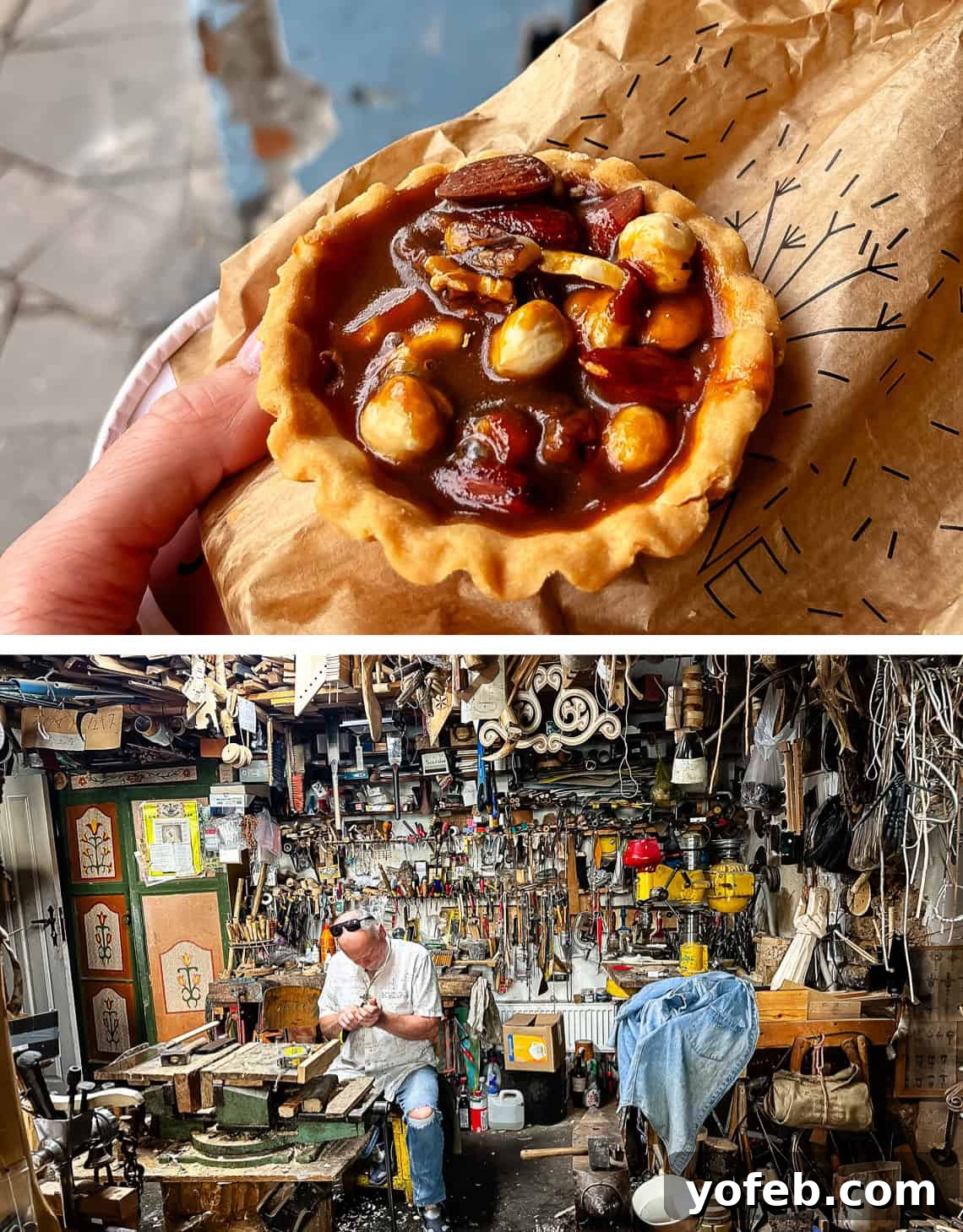
Our explorations also led us to a local woodworker’s shop, which proved absolutely fascinating. The artisan even had a “museum” beneath his shop, where we descended into centuries-old stone walls. He proudly shared that his father and grandfather were also woodworkers, and their creations were displayed downstairs. We saw a remarkable collection of wooden shoes, washboards, dough bowls, rolling pins – essentially, everything imaginable that people would have needed a carpenter for two centuries ago. It was a tangible link to generations of craftsmanship and daily life.
For dinner, we opted for a traditional Lithuanian appetizer platter, which was a fun way to sample a variety of local foods. While I wasn’t particularly fond of the rubbery, bacon-like items 😳, the rest of the platter was genuinely delicious. And, predictably, I ordered the beet soup again – I told you, I was obsessed!
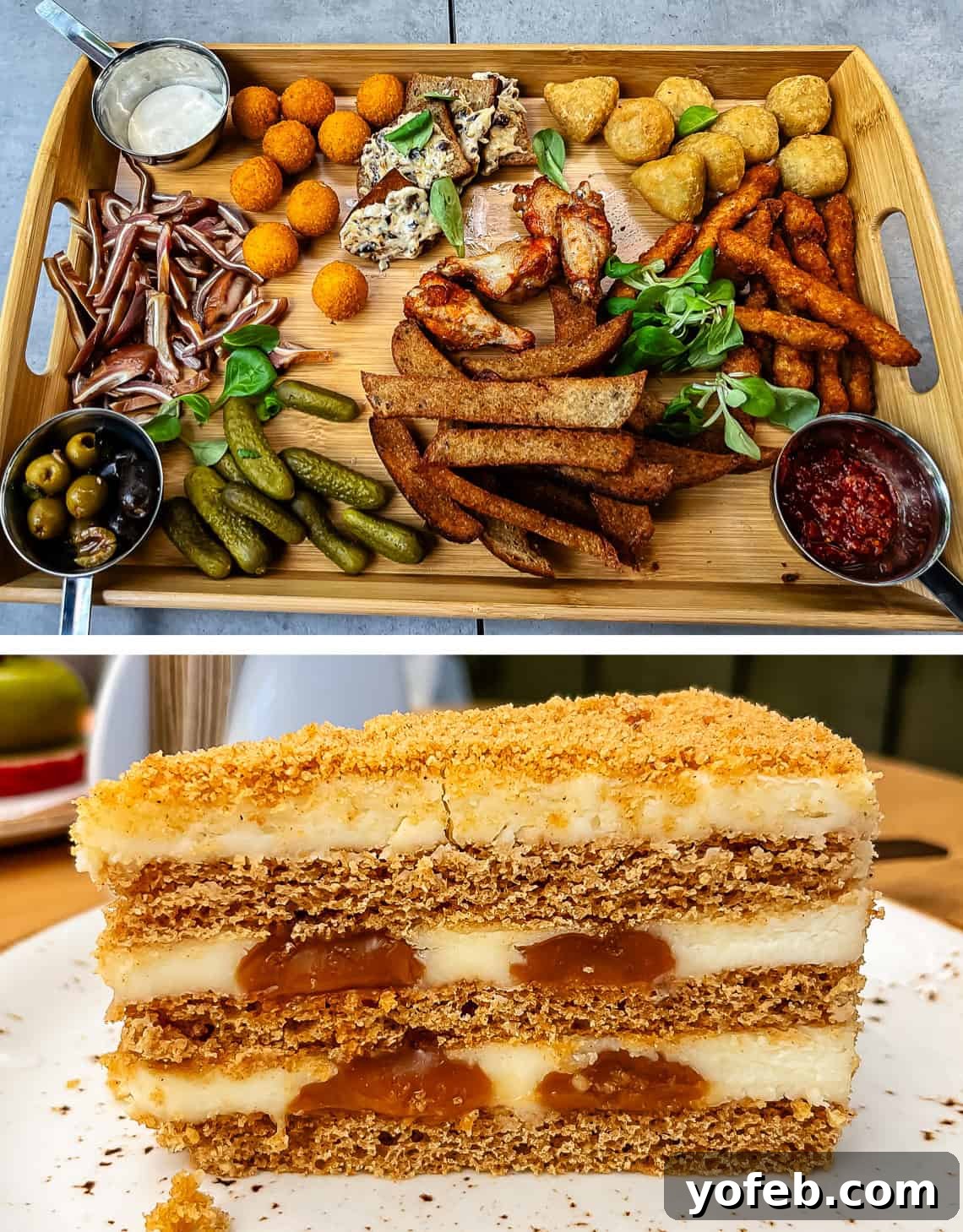
And to finish, a decadent caramel cake that perfectly capped off our meal.

In the evening, we ascended to Gediminas Castle. It’s truly challenging to go to bed before midnight in Vilnius, given that the sun doesn’t set until a glorious 10:30 PM, bathing the city in an extended golden glow.
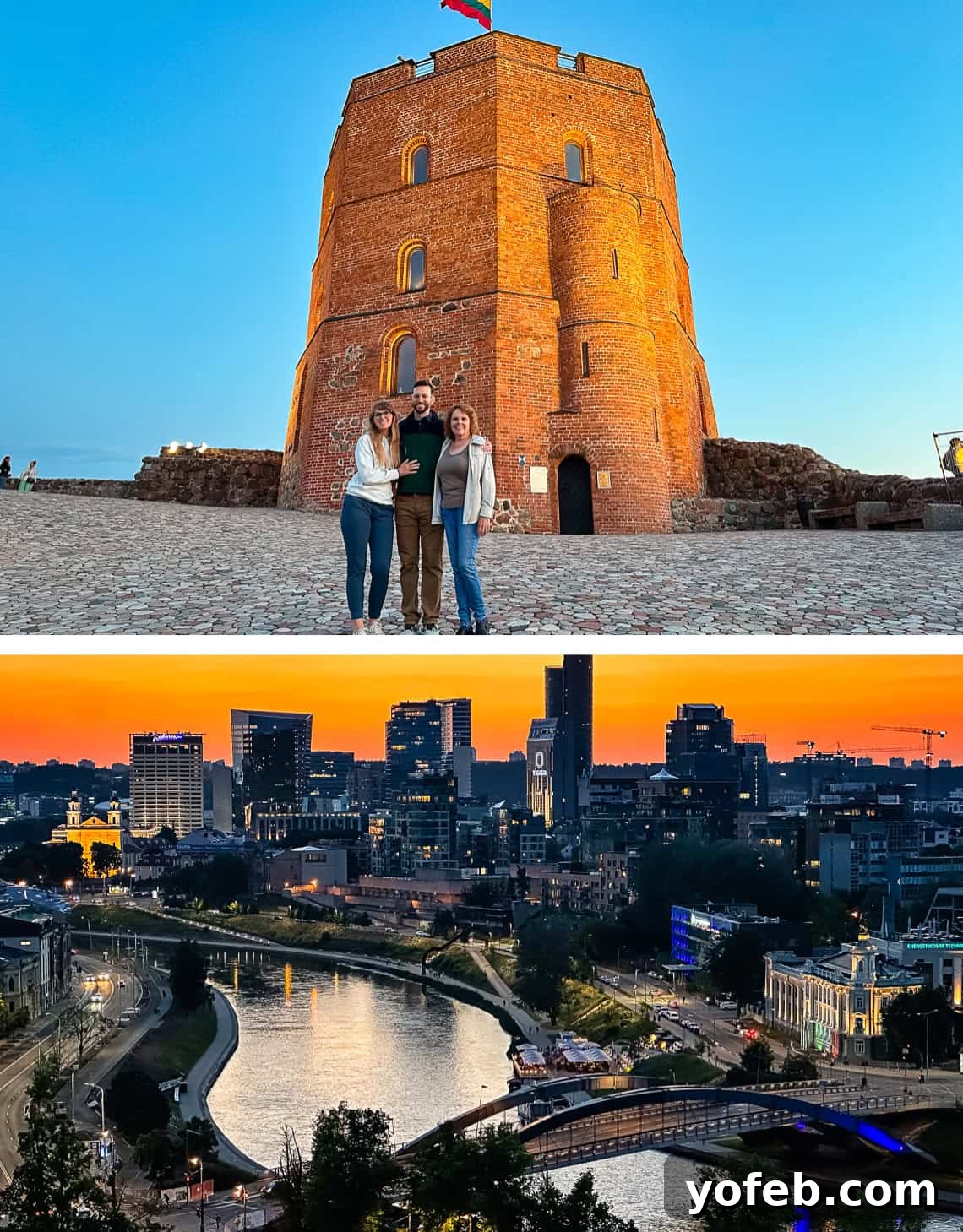
This is the breathtaking panoramic view from the historic castle hill, offering a mesmerizing perspective of Vilnius, especially as the evening lights begin to twinkle.
The next day, we visited the Lithuanian Money Museum, which offered a surprisingly creative exhibit. This photograph captures an art piece crafted entirely from shredded Lithuanian money notes. These notes became obsolete after the country transitioned to the Euro in 2015, and the museum ingeniously transformed them into a thought-provoking display, symbolizing change and transition.
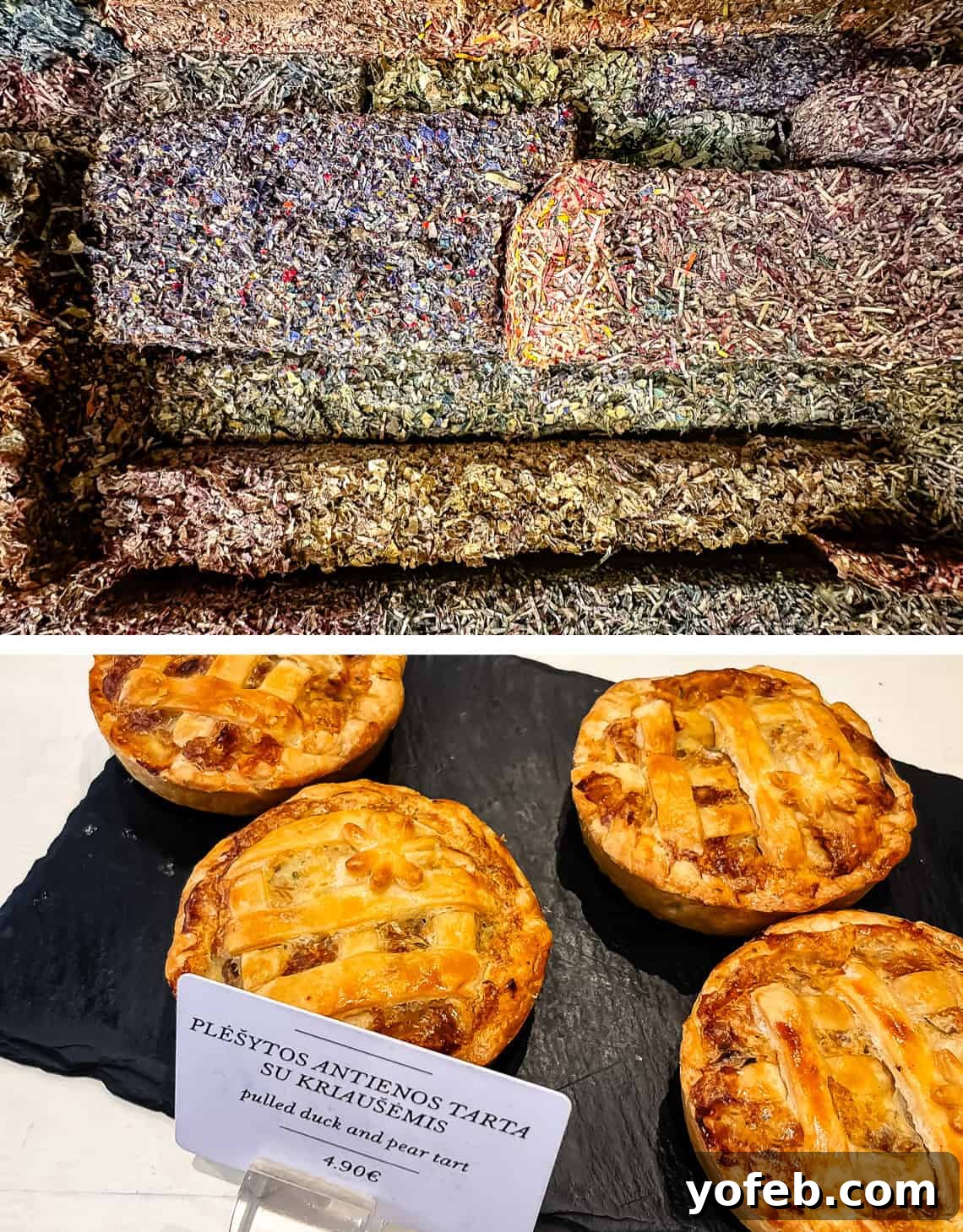
Later, we tried a pear and duck tart. It sounds unusual, doesn’t it? But it was actually incredibly delicious, a delightful fusion of sweet and savory flavors that truly worked!
Trakai Island: A Fairytale Castle on the Water
Our next enchanting stop was Trakai Island Castle. Doesn’t it look like something straight out of a fairytale, perhaps Sleeping Beauty’s castle? No, not really, but its picturesque charm and island setting certainly evoke that magical feeling!
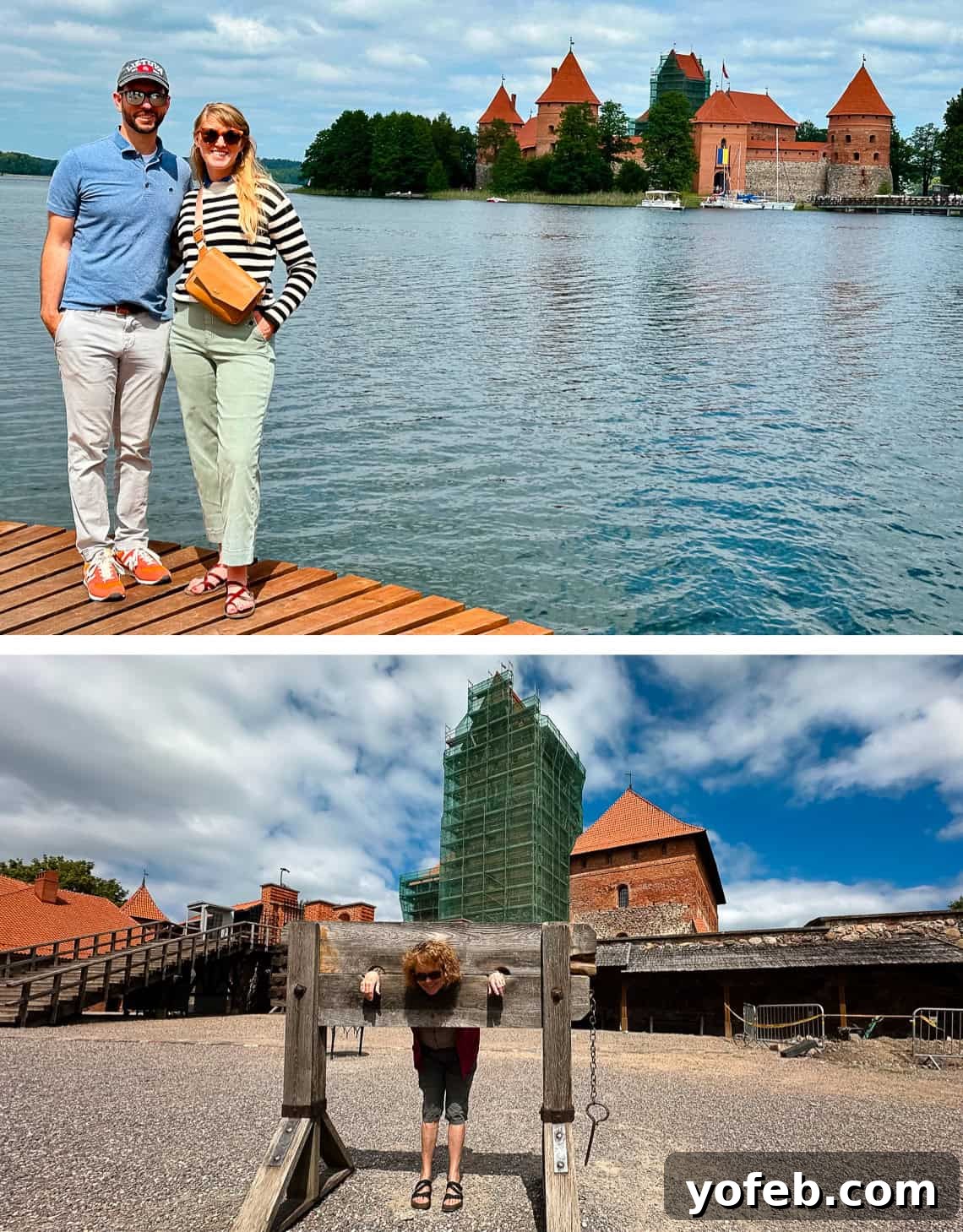
Inside the castle, they displayed ancient punishment devices, including a set of stocks where we humorously “locked up” my mom for a photo opportunity. During our visit, a section of the tower was undergoing renovation (notice the green netting in the background?). What truly astonished us was observing two workers using a simple plastic bucket and a hand pulley system to transport bricks to the top floor. The worker at the top was playfully throwing tiny pebbles at his colleague below, who was pulling the rope. I couldn’t believe they were still employing such an ancient, manual method for construction in the 21st century – it was both amusing and a testament to traditional work methods!
Kaunas, Lithuania: Modernism Meets Culinary Innovation
Our journey continued to Kaunas, another significant city in Lithuania. Here, we enjoyed a delightful dinner at Uoksas, a restaurant known for its innovative cuisine.
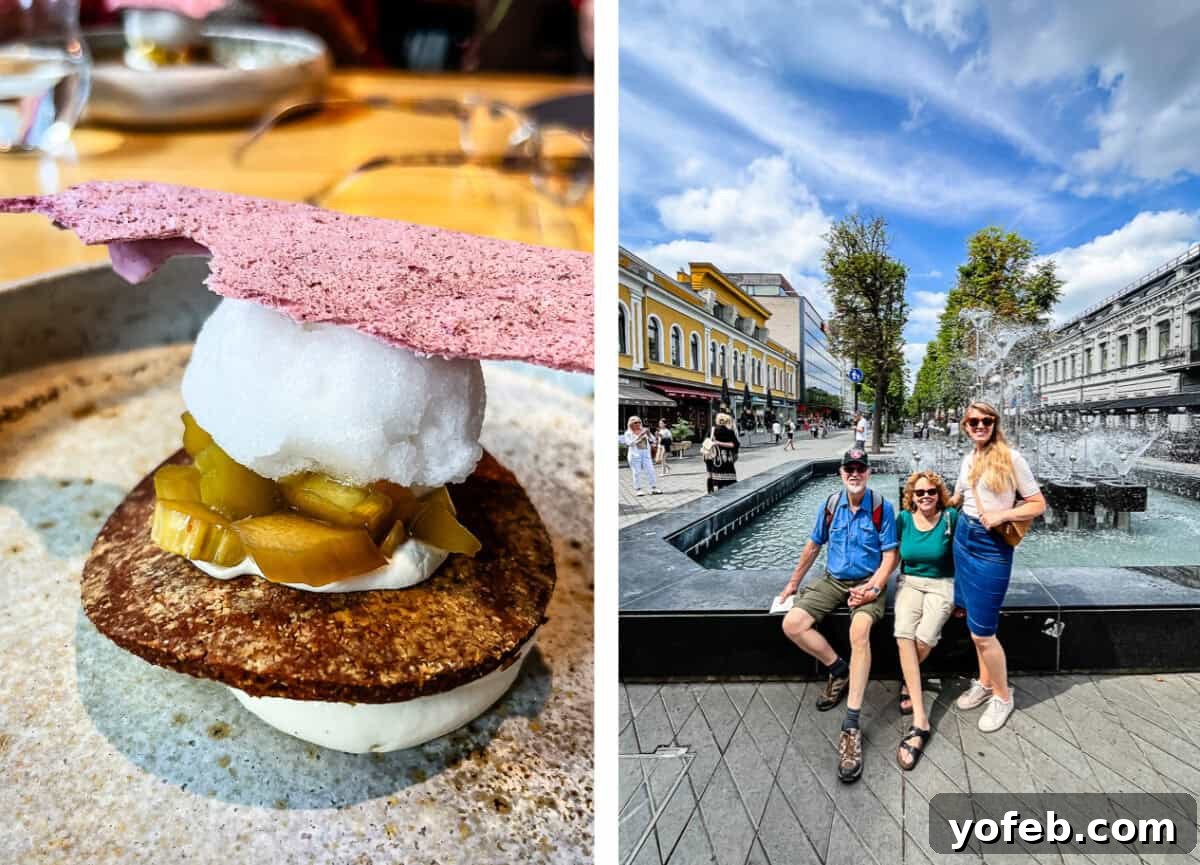
They served an absolutely incredible dessert: rhubarb sorbet, delicately paired with an almond wafer and a crisp meringue. (As I’ve mentioned, rhubarb was truly everywhere, and always a welcome treat!). The following day, we explored Kaunas, admiring its striking modernist buildings erected during the Soviet era. It’s a city that beautifully blends historical charm with distinct architectural periods.
My absolute favorite part of this day, however, was lunch:
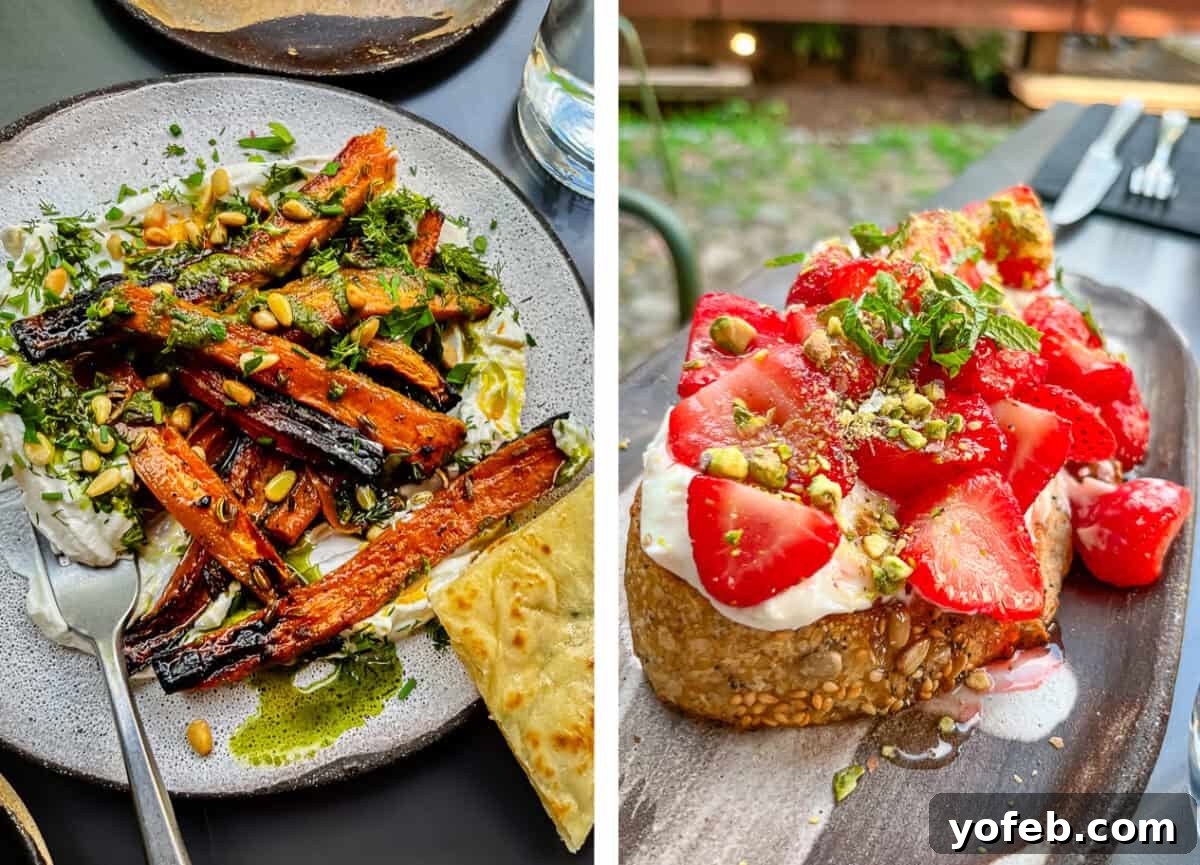
We savored exquisitely roasted carrots, drizzled with a creamy sauce, hints of Chimichurri, pine nuts, and the ever-present dill, served alongside freshly baked naan bread. And, unexpectedly, strawberry toast! “Wut?” was my initial reaction, but it was a surprisingly delightful combination. They even provided my mom with gloves to eat her burger, which, honestly, is quite a genius idea for keeping hands clean and enjoying a messy meal!
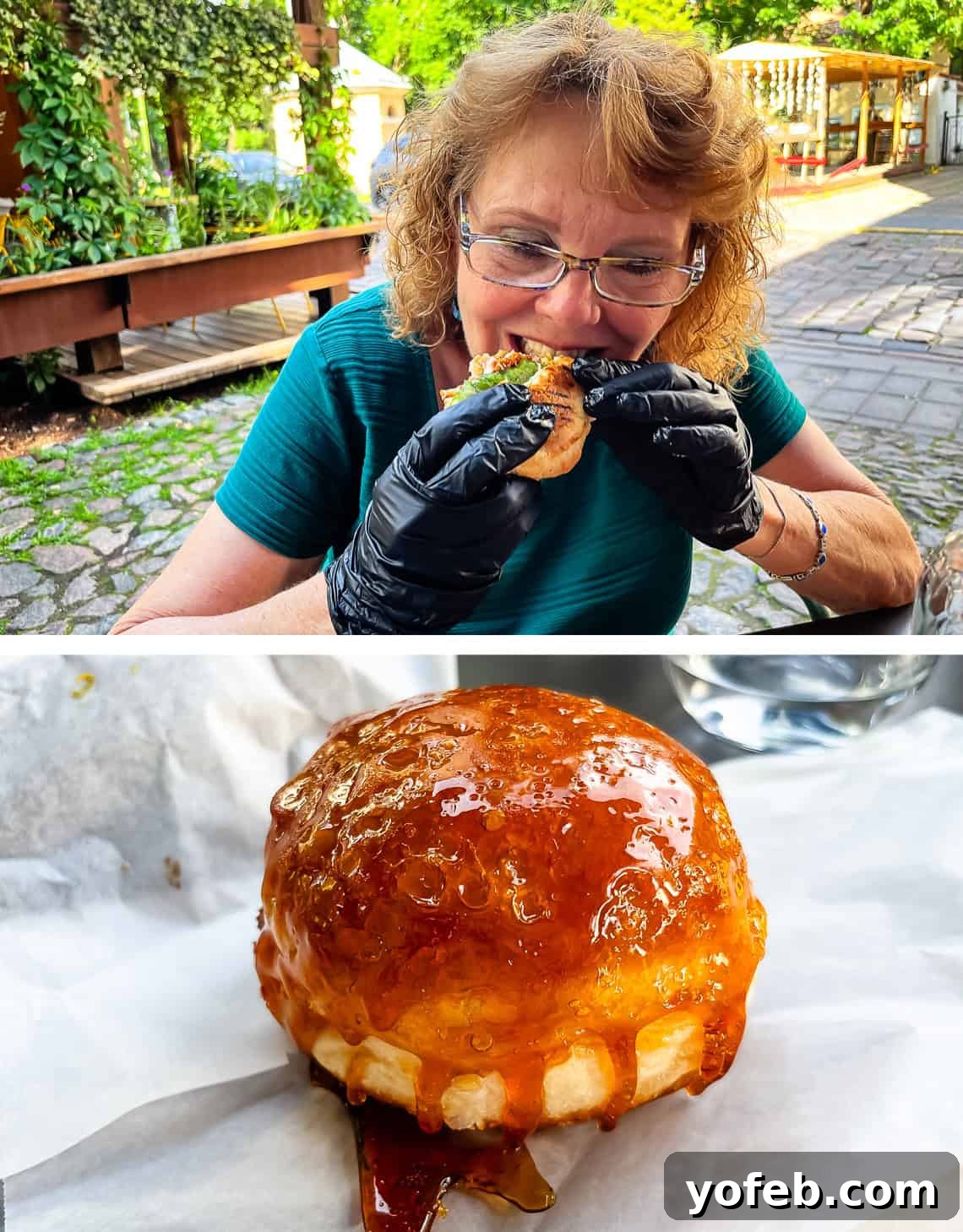
This crème brûlée donut was beyond incredible, a perfect indulgence. Of course, every old town worth its salt boasts a castle:
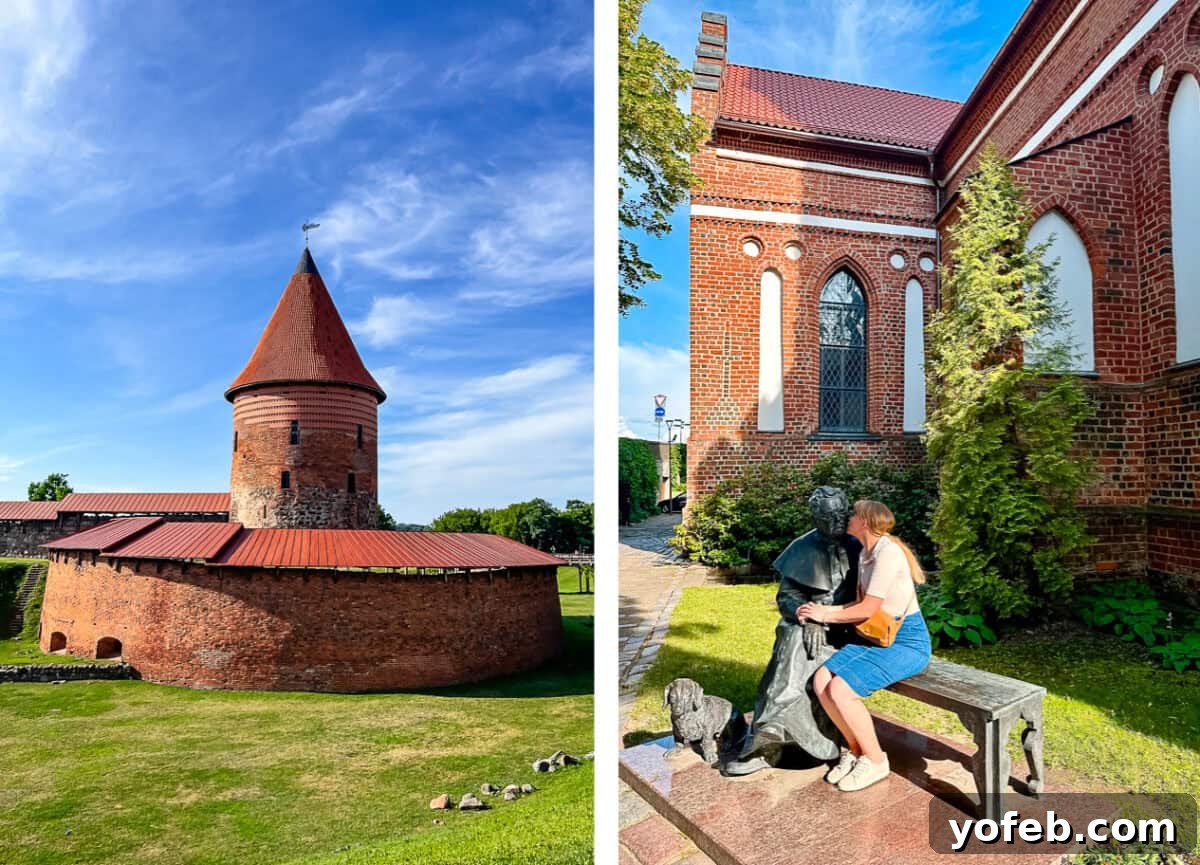
We walked an astonishing 14 miles this day. Have I mentioned my parents are in their 70s? They are truly hardcore travelers, full of energy and an insatiable desire to explore!
The Ninth Fort: A Somber Reminder of History
The next day, we made a poignant visit to The Ninth Fort of Kaunas. This location is one of those places that utterly confounds the mind with the sheer scale of history it has witnessed. How could so many significant and often horrific events have transpired in a single spot?
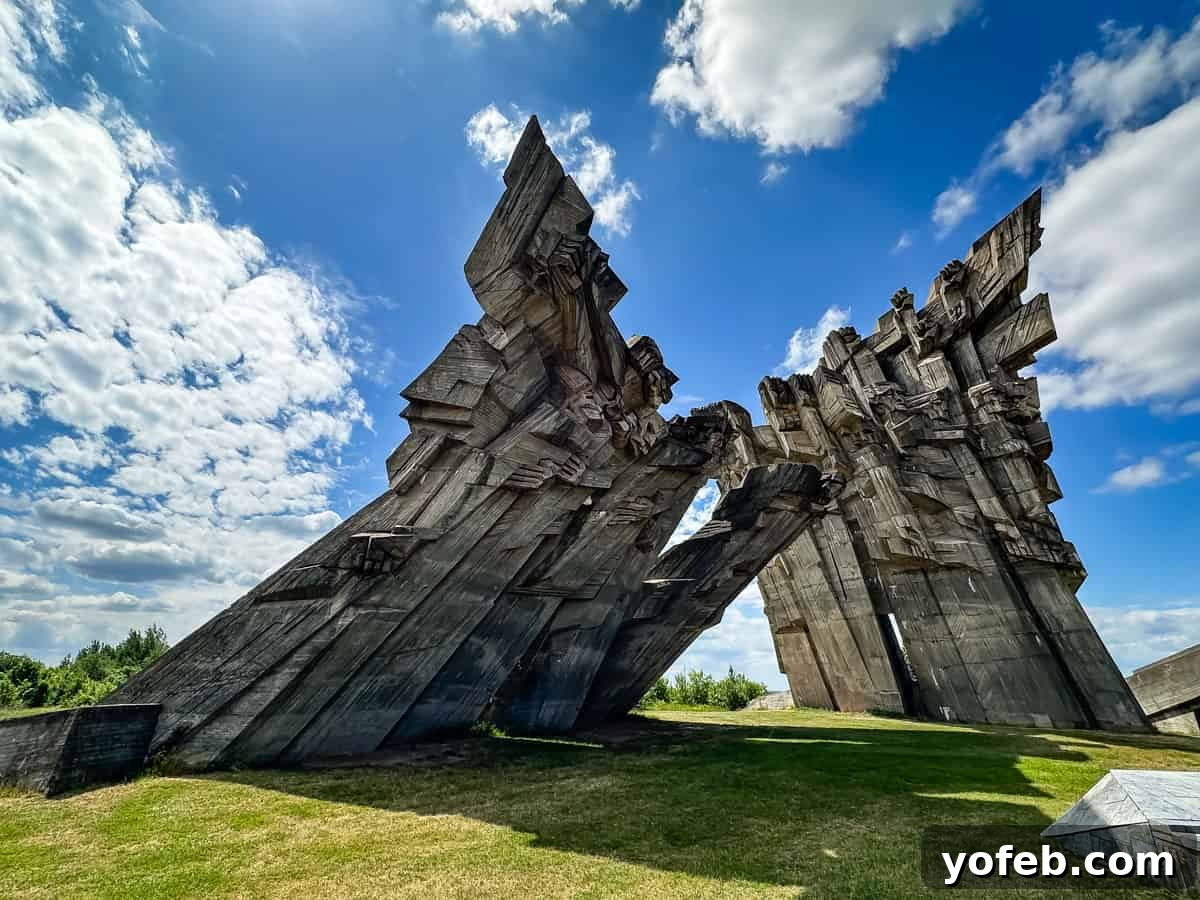
We were fortunate to hire an incredibly knowledgeable tour guide, and I’m immensely glad we did. She spoke nonstop for two hours, imparting a wealth of information that enriched our understanding of this solemn site. The Ninth Fort, originally a fortress built in 1912, largely escaped major gunfire during WWI. It then served as a Lithuanian prison, primarily for thieves and communists, throughout the 1920s and 30s. In 1940, it fell under Soviet control, only to be subsequently overthrown by the Nazis, who invaded from the west within a week of the Soviets invading Lithuania from the east – a terrifying squeeze for the nation.
In 1941, the Nazis forcibly relocated all Jewish residents to a ghetto outside the city. On October 25th, they marched approximately 30,000 men, women, and children to the Ninth Fort. A Nazi officer then divided the people based on perceived strength and work ability: “Go to the left and work, or go to the right and die.” On that single horrific day, 10,000 individuals, predominantly women, children, and the elderly, were summarily executed by gunfire.
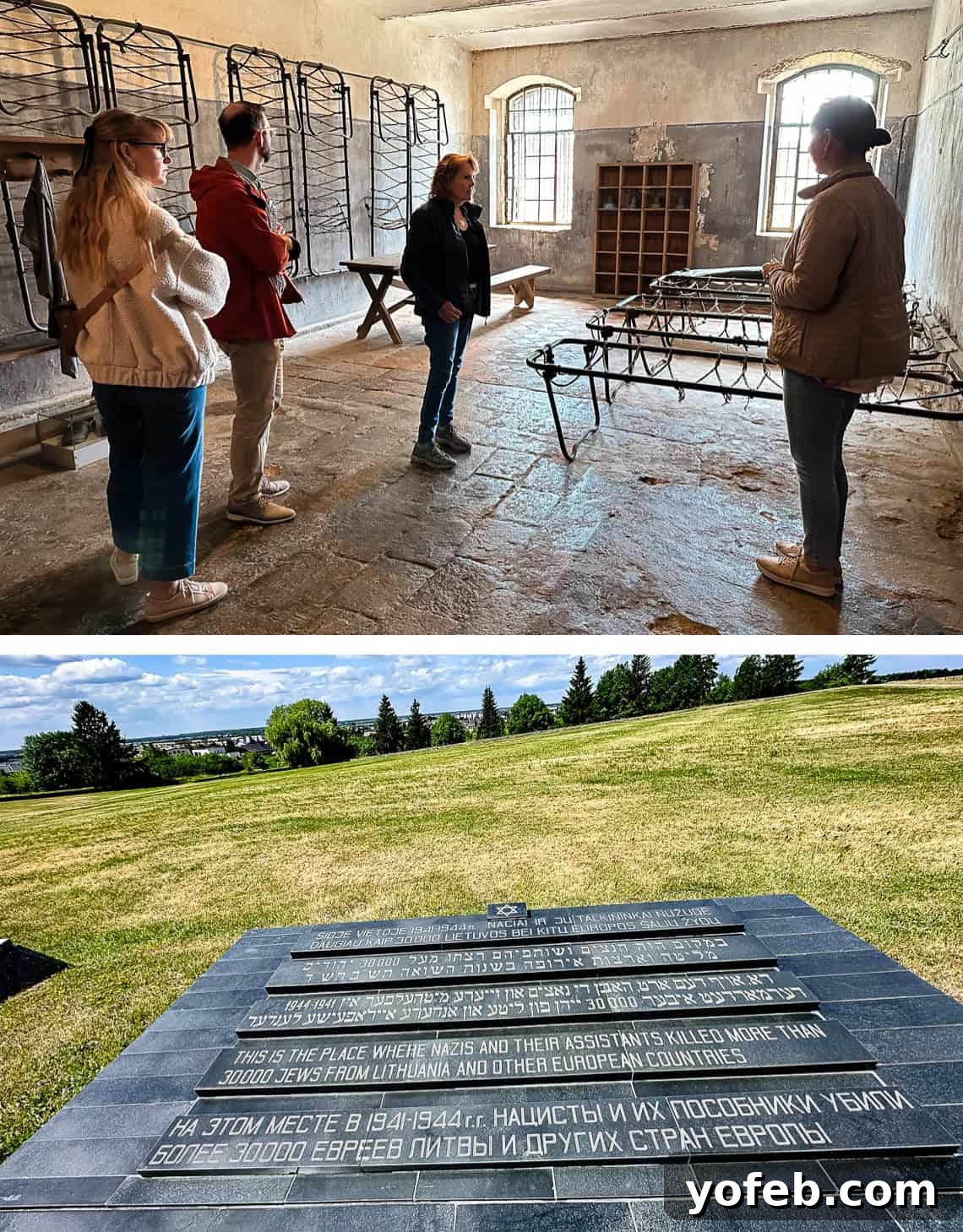
By 1944, as the tide of war turned against them, the Nazis assigned 64 Jewish prisoners from the ghetto the grim task of exhuming the 10,000 bodies, burning them, grinding the bones, and scattering the ashes to obliterate evidence of their war crimes. The prisoners, knowing they would ultimately be killed once their task was complete, desperately sought a way to preserve the memory of those murdered and to survive. They spent weeks meticulously orchestrating an escape for Christmas Day, which involved drilling holes in a metal door hidden behind equipment and constructing their own rope ladder to scale a formidable 7-meter concrete wall. Miraculously, 11 of them made it out alive, their bravery and ingenuity a testament to the human spirit. Over the four years of the war, a staggering 50,000 people were murdered at The Ninth Fort, with 30,000 of them being Jewish.
In every horrific story, as Mr. Rogers famously said, “look for the helpers.” The Ninth Fort’s history also contains tales of immense courage. There’s the story of a Lithuanian priest who tirelessly helped hide and provide false papers for over 120 children. After the Nazis left, he fell into the hands of the Soviets, who exiled him to Siberia for 10 years of brutal forced labor. He survived, eventually moving to the United States. Additionally, a Japanese diplomat and a Dutch diplomat, working at their respective consulates in Lithuania, illegally provided papers for over 6,000 Lithuanians, enabling them to flee to Japan and the Netherlands, saving countless lives.
At the end of our tour, our guide shared a chilling thought: she believes history repeats itself but desperately hopes the tragic past will not be re-enacted in Lithuania. She expressed profound gratitude to the United States for its participation in NATO and its efforts to protect Lithuania from potential Russian aggression. She even pointed out a road sign we had passed on the way in, identifying the Ninth Fort as an official state shelter in case of attack – a designated refuge for the people of Kaunas if necessary. This, she explained, was a stark reminder of the fragile geopolitical situation, especially concerning the ongoing conflict in Ukraine. It is absolutely chilling to consider this potential reality for them, a constant shadow hanging over their vibrant culture.
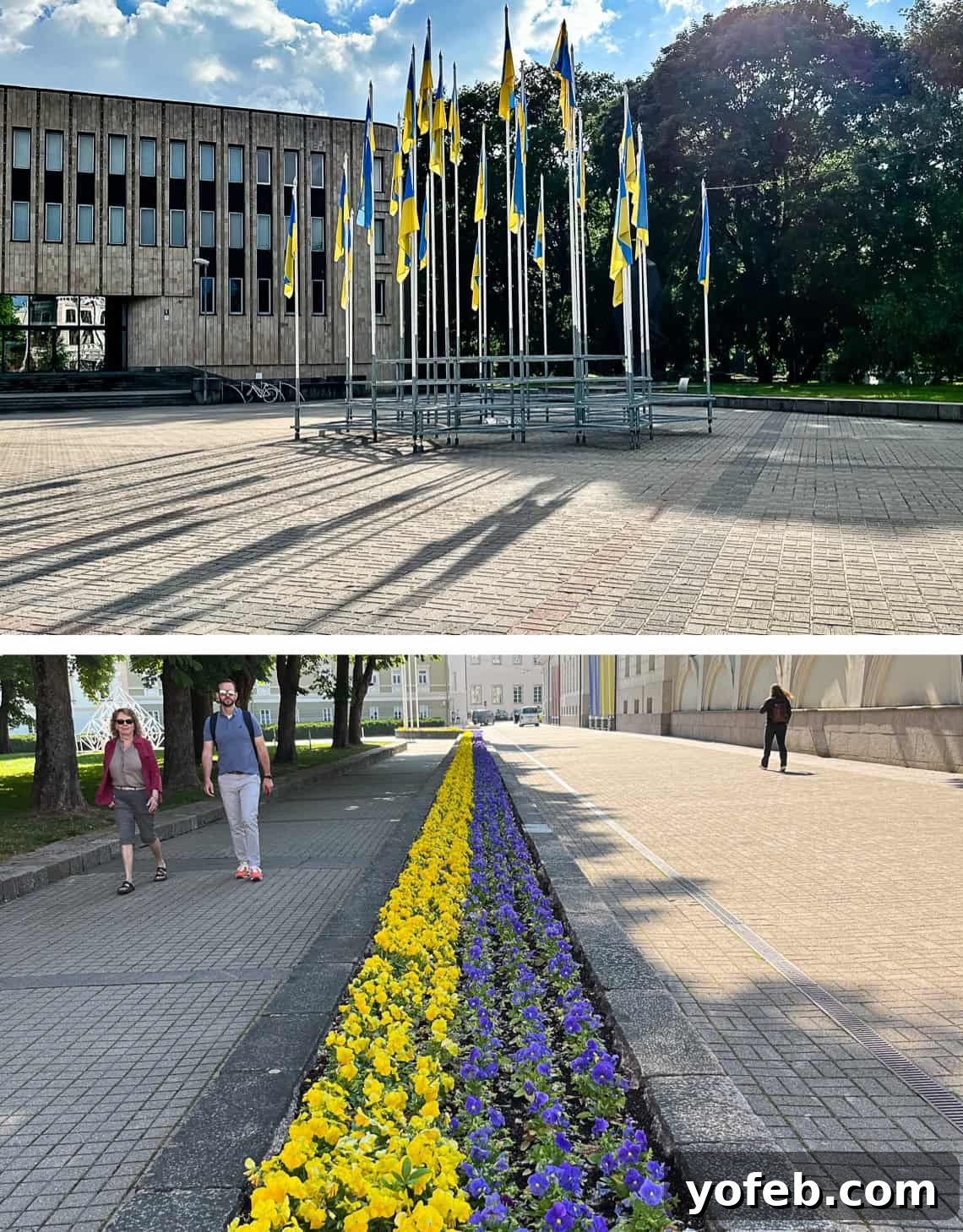
These next two photos, taken at various locations throughout the Baltics, illustrate a powerful and ubiquitous message: support for Ukraine is visible everywhere, a testament to the solidarity and shared understanding of geopolitical threats.
It’s incredibly challenging to simply “go back to normal life” after experiencing a place like the Ninth Fort. However, I believe it is profoundly important to remember these historical lessons and to teach them to our children. What else can we do but remember, learn, and strive for a better future?
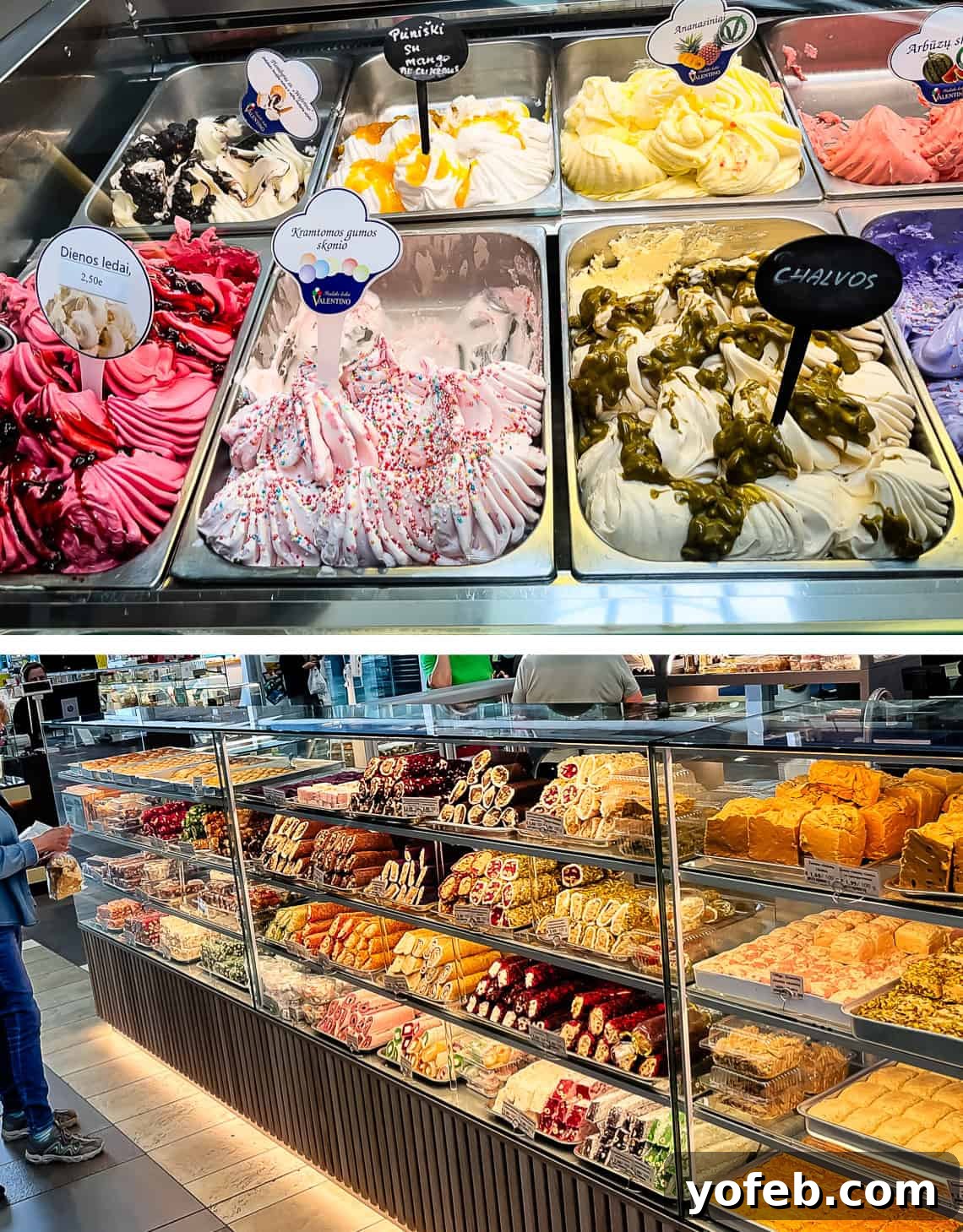
After such a heavy experience, we paused for some much-needed ice cream. Take a look at that wall of pastries! We noticed a significant Persian influence in many Baltic desserts, with treats like Chalvos (Halva) commonly available.
Raudone Castle: A Fairytale Come to Life
Our journey continued to Raudone Castle, which boasts the most classic, storybook-perfect princess fairytale tower imaginable! I know I keep repeating myself, but truly, just look at it! Where is Rapunzel, waiting to let down her long hair from that magnificent turret?
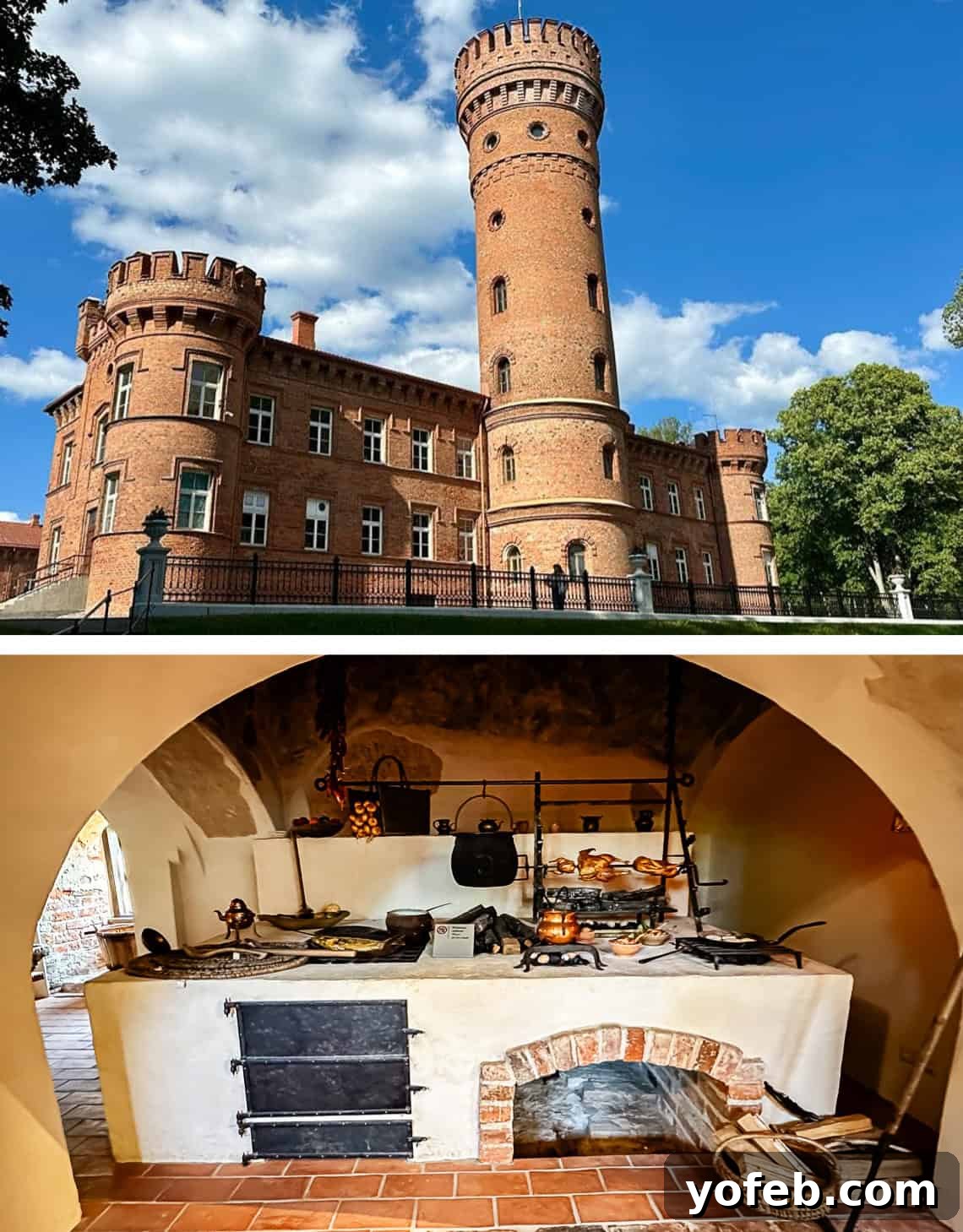
Inside, I was particularly thrilled to discover an ancient kitchen, complete with its original fire stove! Can you possibly imagine the intricate process of cooking a full meal on such a device, centuries ago? It offered a fascinating glimpse into historical domestic life.
Intriguingly, another castle stood just ten minutes away. I couldn’t help but wonder about the history between them – were they allies, rivals, or perhaps something else entirely?
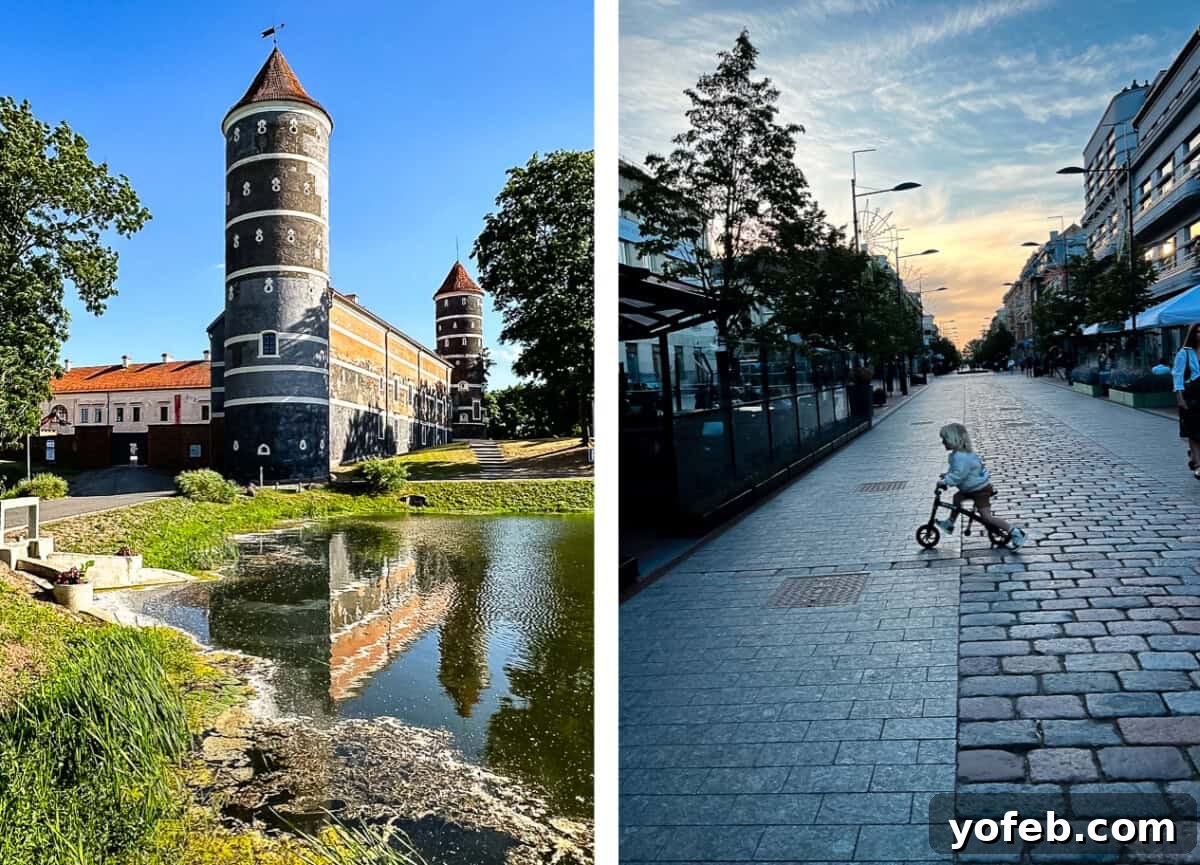
At sunset, around 10:30 PM, we arrived in Siauliai, a charming small town en route to Riga. I captured this heartwarming photo of a tiny boy playfully riding his bike in the street, while his parents enjoyed dinner on a nearby restaurant patio. Isn’t this just the essence of a relaxed, idyllic evening?
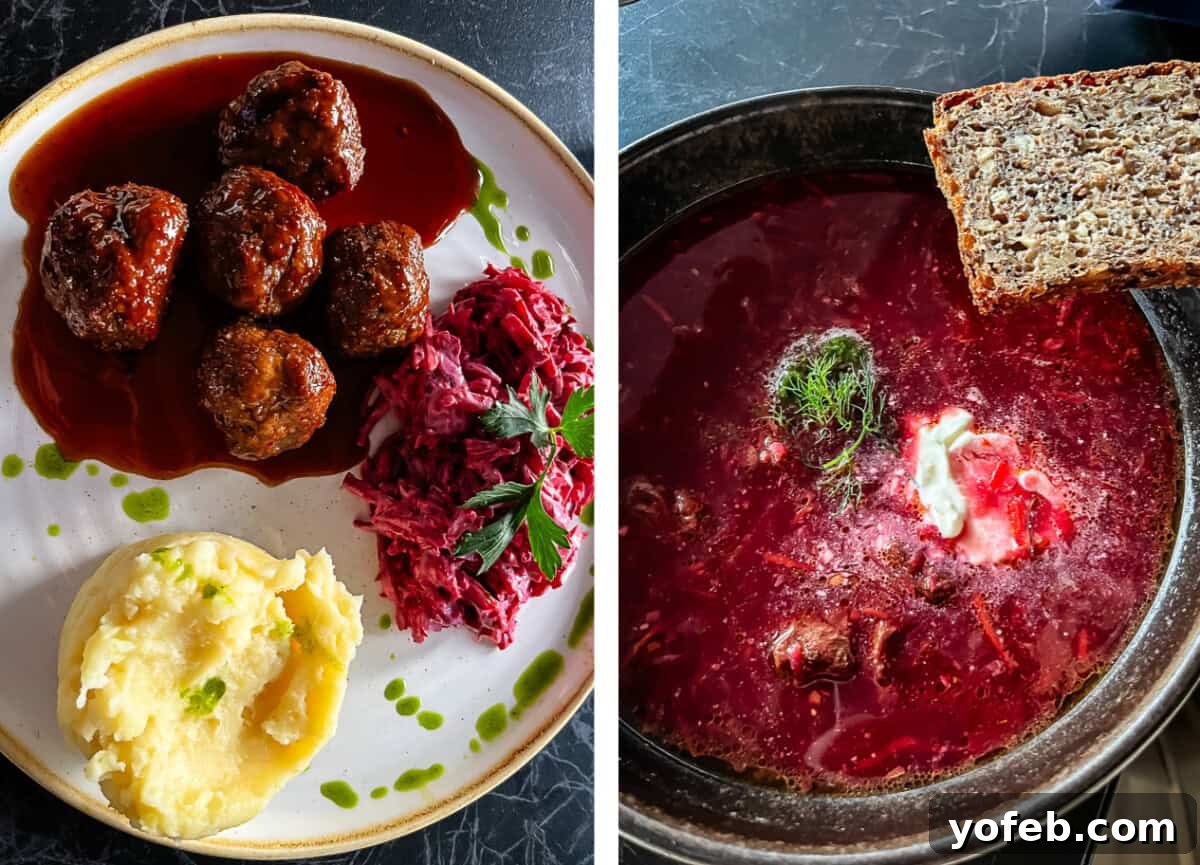
Eric ordered a borscht soup that was, hands down, the best I’ve ever tasted. I took extensive notes and am eagerly planning to recreate it very soon! On the left, you see savory meatballs accompanied by a beet salad; beets, prepared in this manner, are truly exceptional.
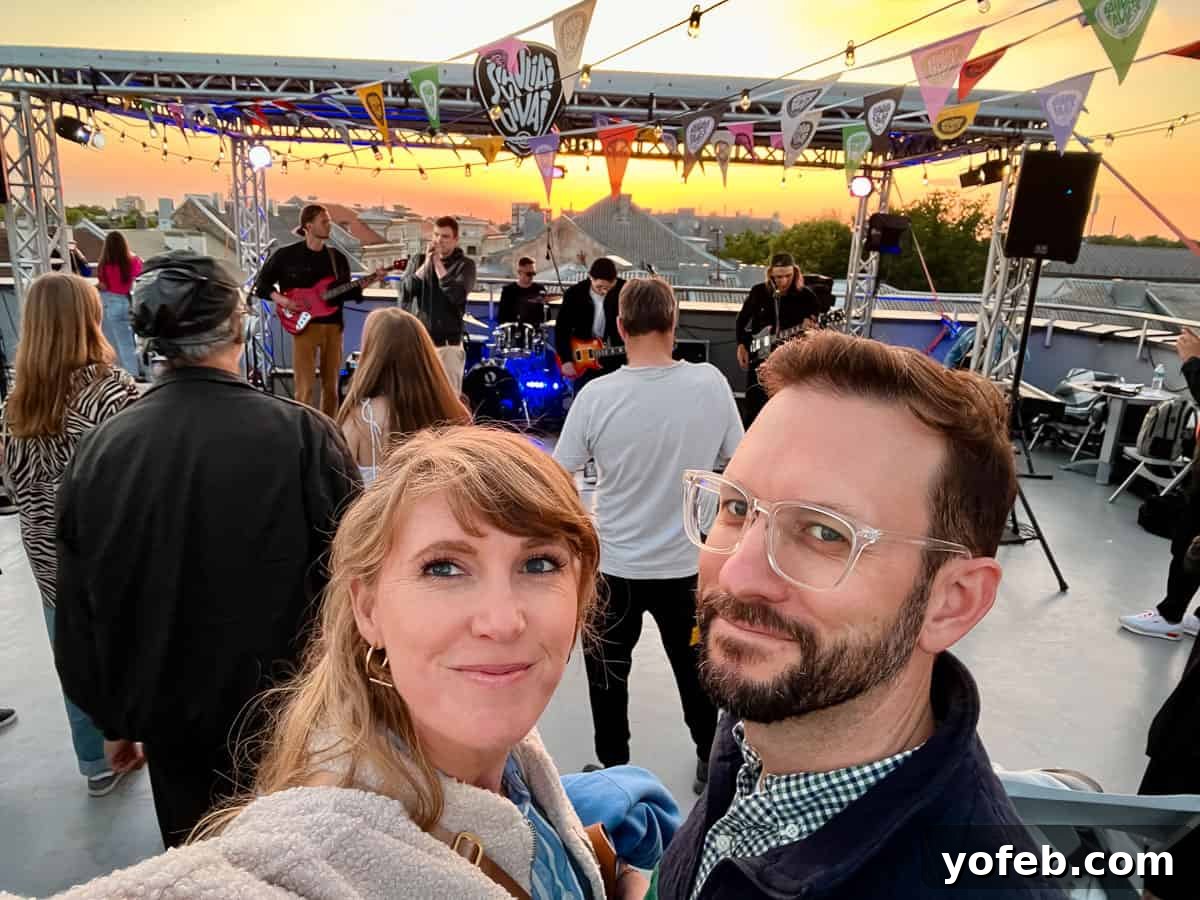
During dinner, Eric’s keen ear caught the sound of live music emanating from somewhere nearby. He went to investigate and discovered it on a rooftop museum just down the block. We quickly joined the festivities, soaking in the local atmosphere. I particularly enjoyed observing the Lithuanian teenage “stoner emo” fashion – it was a unique cultural snapshot! 😂 It was a truly memorable moment, enjoying live local music in a small Lithuanian town on a seemingly ordinary Thursday night.
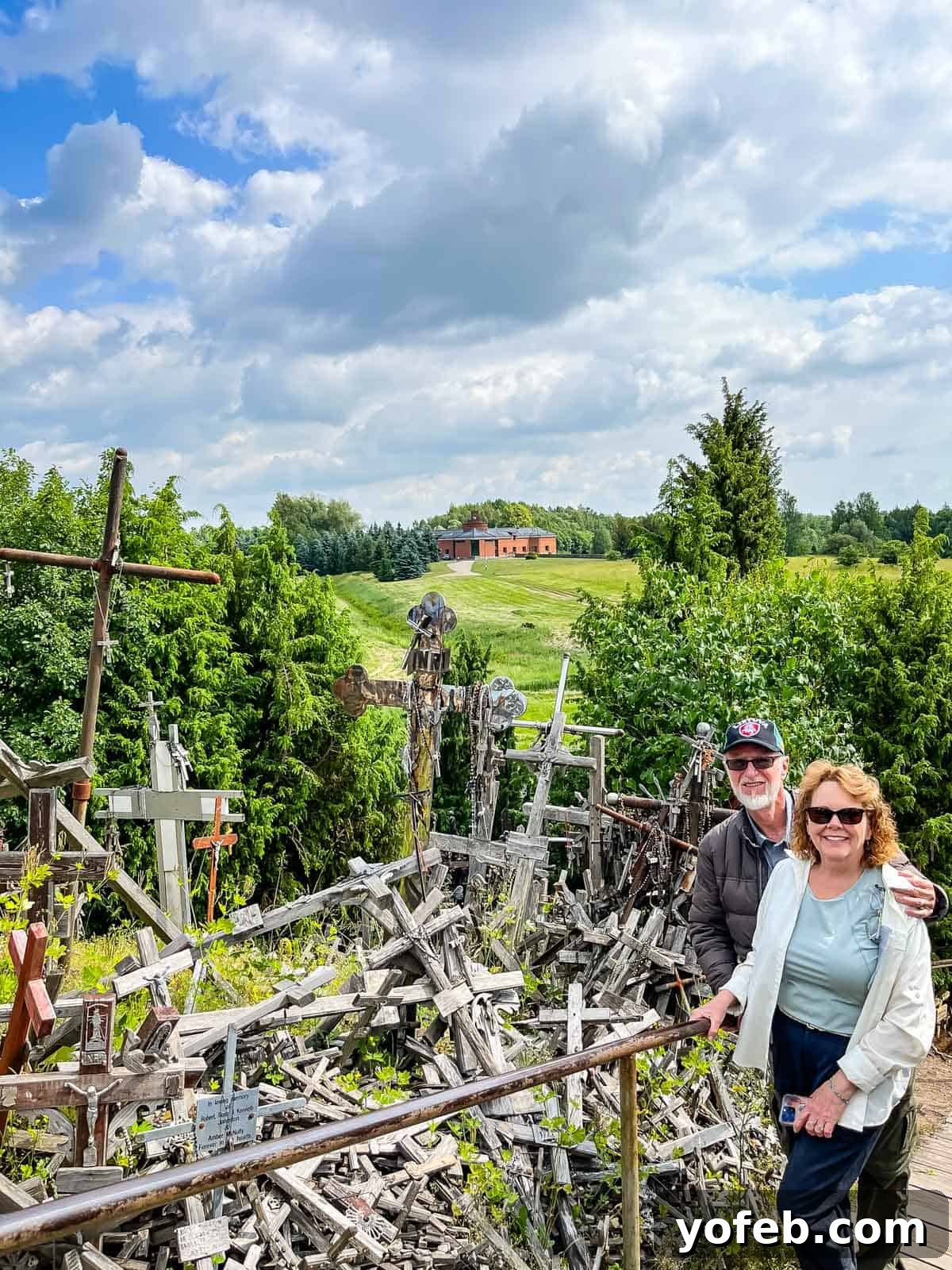
The next day, we drove to the poignant Hill of Crosses, just outside Siauliai. This site holds a powerful story of faith and resistance. When the Soviets took control, they systematically removed all crosses from this sacred cemetery. However, locals, risking their lives, would sneak in at night to replace them. The Soviets would tear them down again, but every night, new crosses would mysteriously appear. This defiant act of faith continued, transforming the hill into a symbol of resilience in the face of oppression. Today, people travel from all corners of the globe to place their own crosses here, creating a breathtaking monument to God and a powerful display of support for rebellion against tyranny. Viva la revolución!
Rundales Palace: The Versailles of Latvia
Rundales Palace is often affectionately referred to as the “Versailles of Latvia,” and it’s easy to see why! This exquisitely beautiful palace served as the 18th-century summer residence of a local duke and has been meticulously renovated to stunning perfection, restoring every detail to its original grandeur. It’s astonishing to consider the immense wealth and resources poured into creating such magnificent estates in that era.
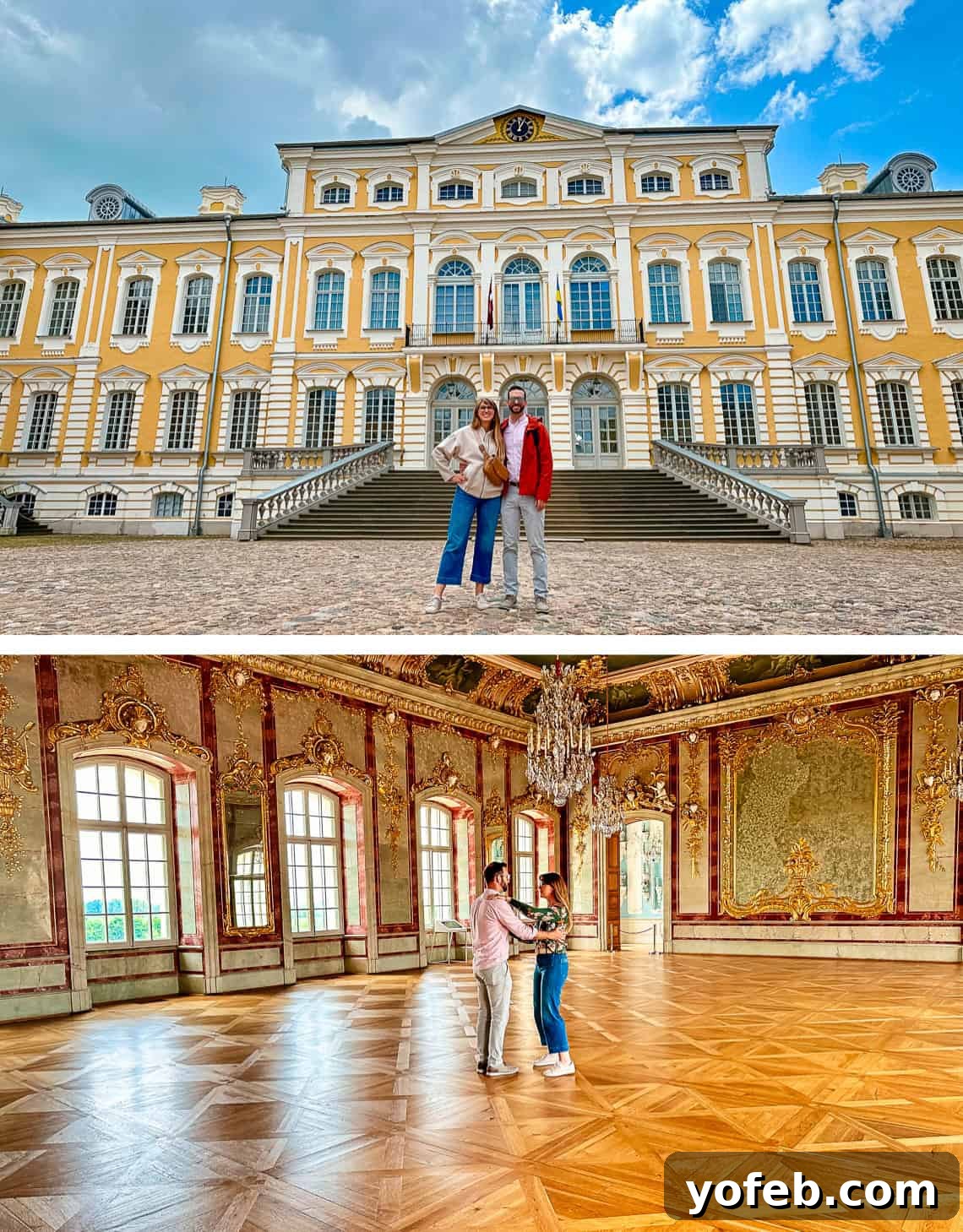
Eric and I, completely swept away by the opulent surroundings, even shared a dance in the grand ballroom. I truly felt like I was at Pemberley, living out a Jane Austen fantasy! (Just kidding about making Eric dive into the pond afterwards, Colin Firth-style, in a white shirt, of course!).
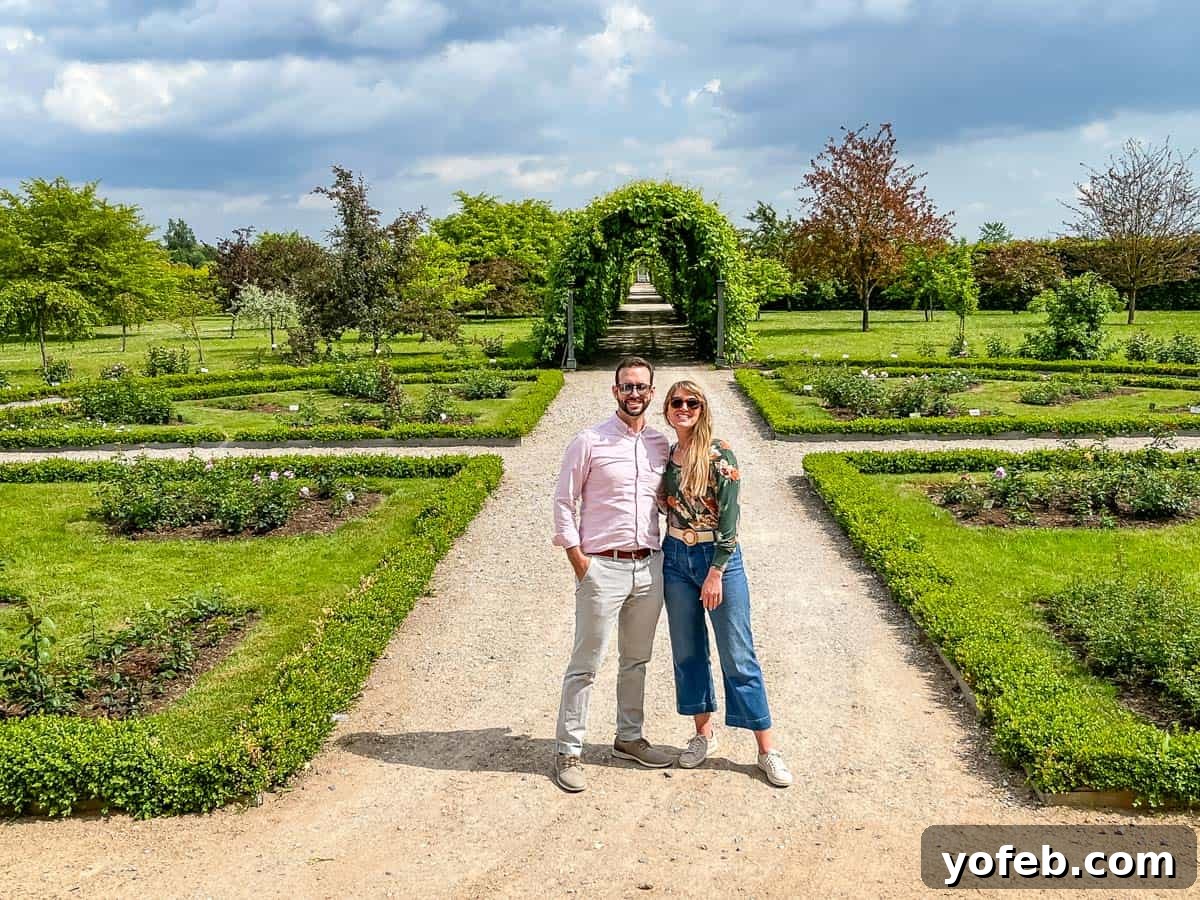
The palace grounds were equally breathtaking, featuring vast, intricately designed formal gardens. After exploring the lavish interior on foot, we opted to hire a small golf cart to navigate the sprawling estate, a wise decision given its immense size.
Riga, Latvia: Culture, Cuisine, and Charm
That night, we drove to Riga, the vibrant capital of Latvia, and were fortunate enough to attend a ballet performance at the city’s gorgeous Opera House. The experience was truly exquisite.
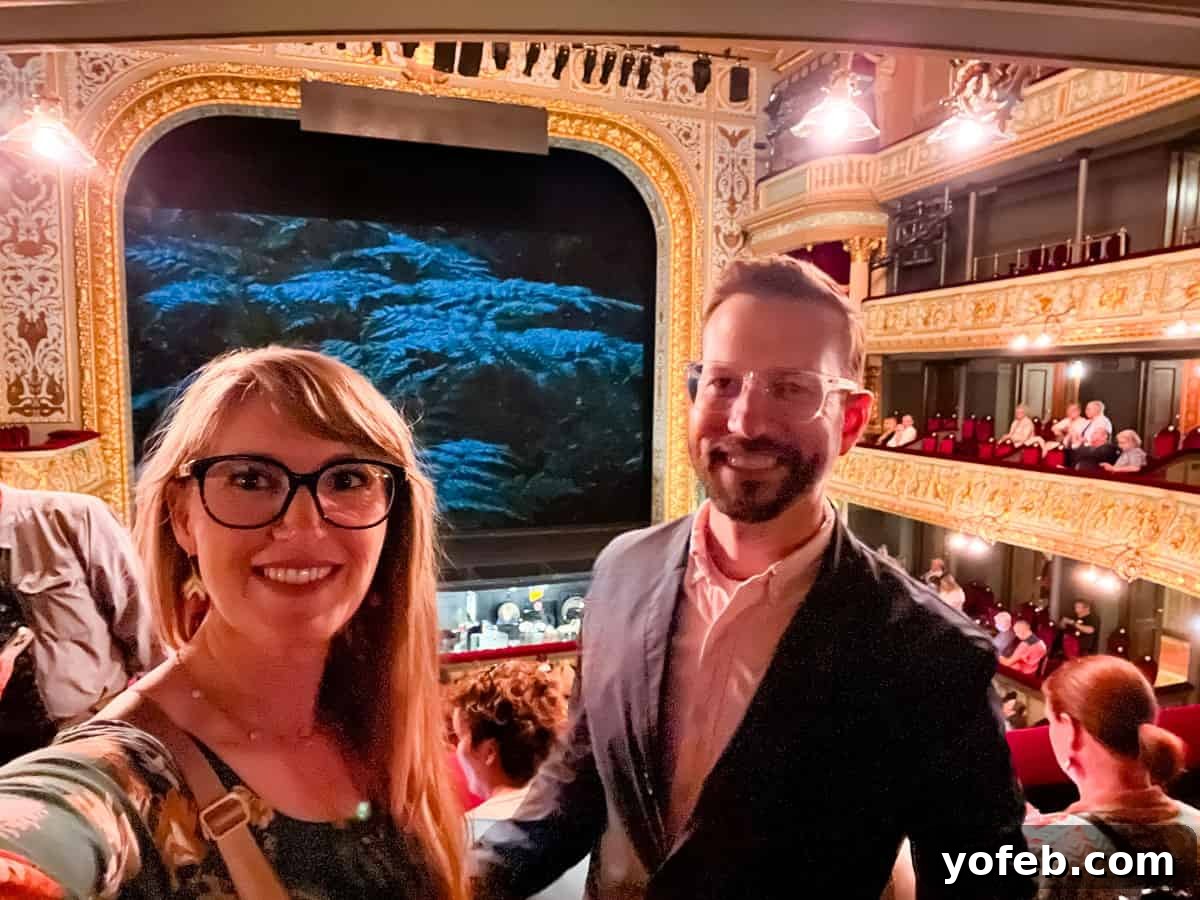
The performance was absolutely beautiful, and while we couldn’t understand the language, the universal language of dance transcended any barriers. Afterward, we sought out some late-night snacks to cap off the evening.
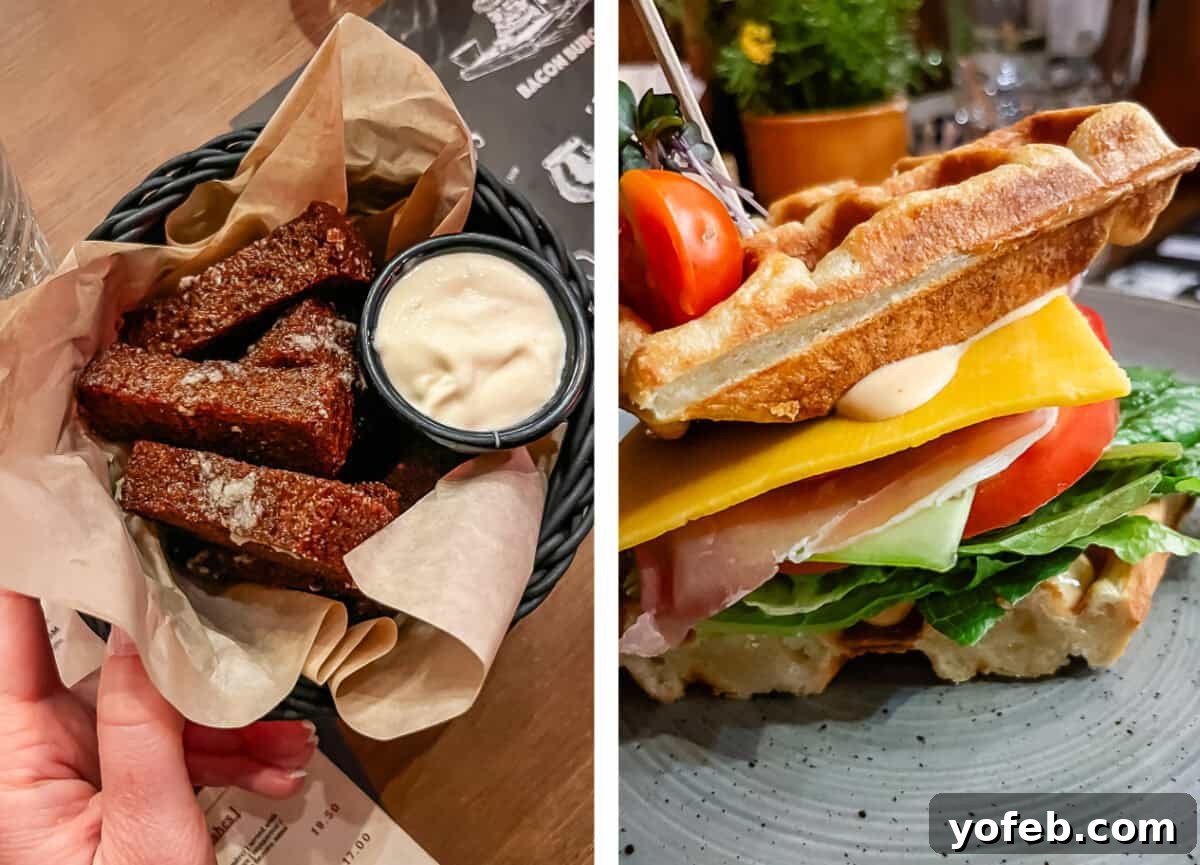
On the left, you can see the famous Latvian Garlic Rye Toasts, often served as a savory snack with beer. They were incredibly delicious, and I frankly didn’t care that I smelled of garlic for the next 24 hours – totally worth it! I’m genuinely eager to try making these at home, perhaps by triple-toasting Prudy’s Rye Bread. On the right is a waffle burger, a surprisingly popular and satisfying combination we discovered there.
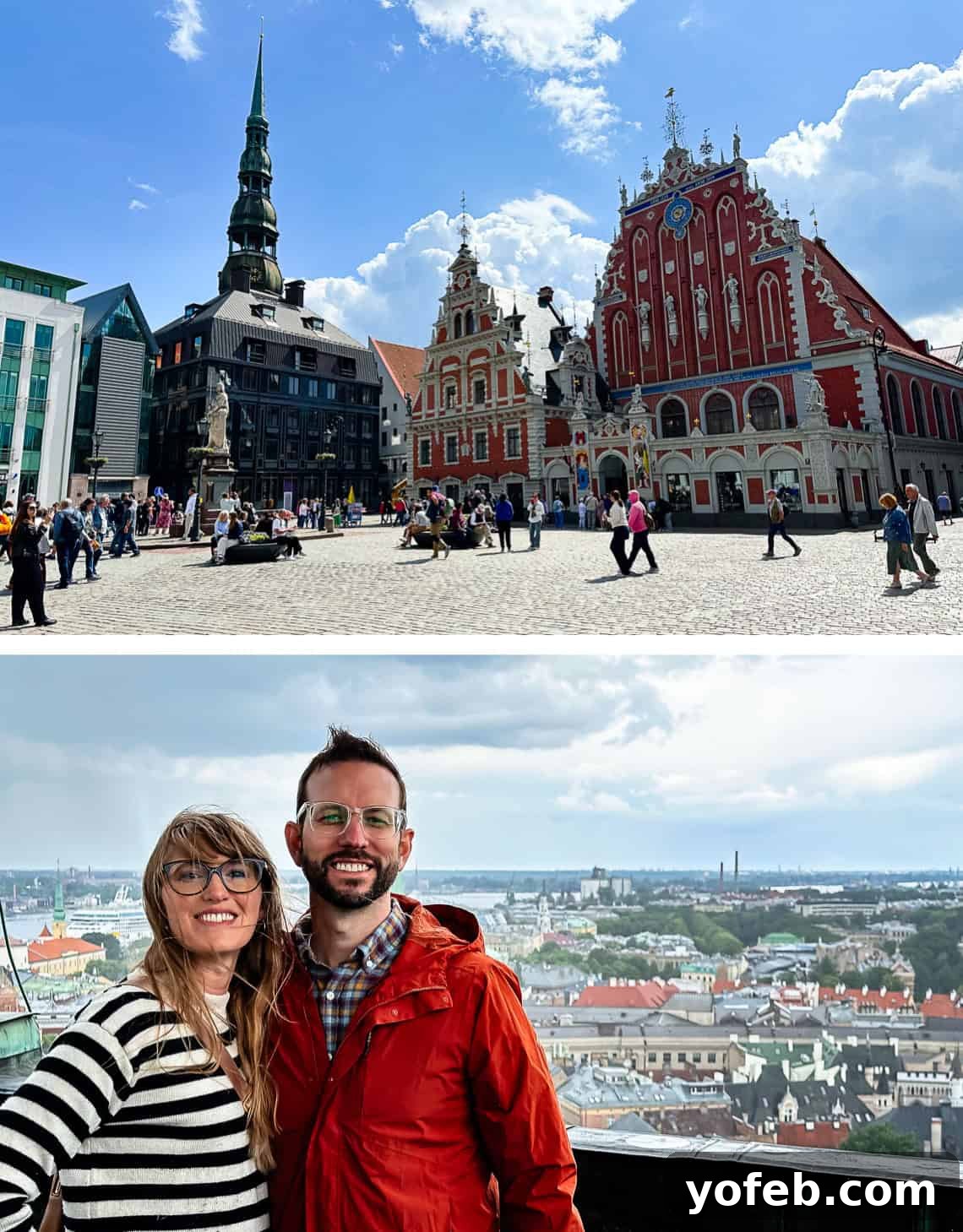
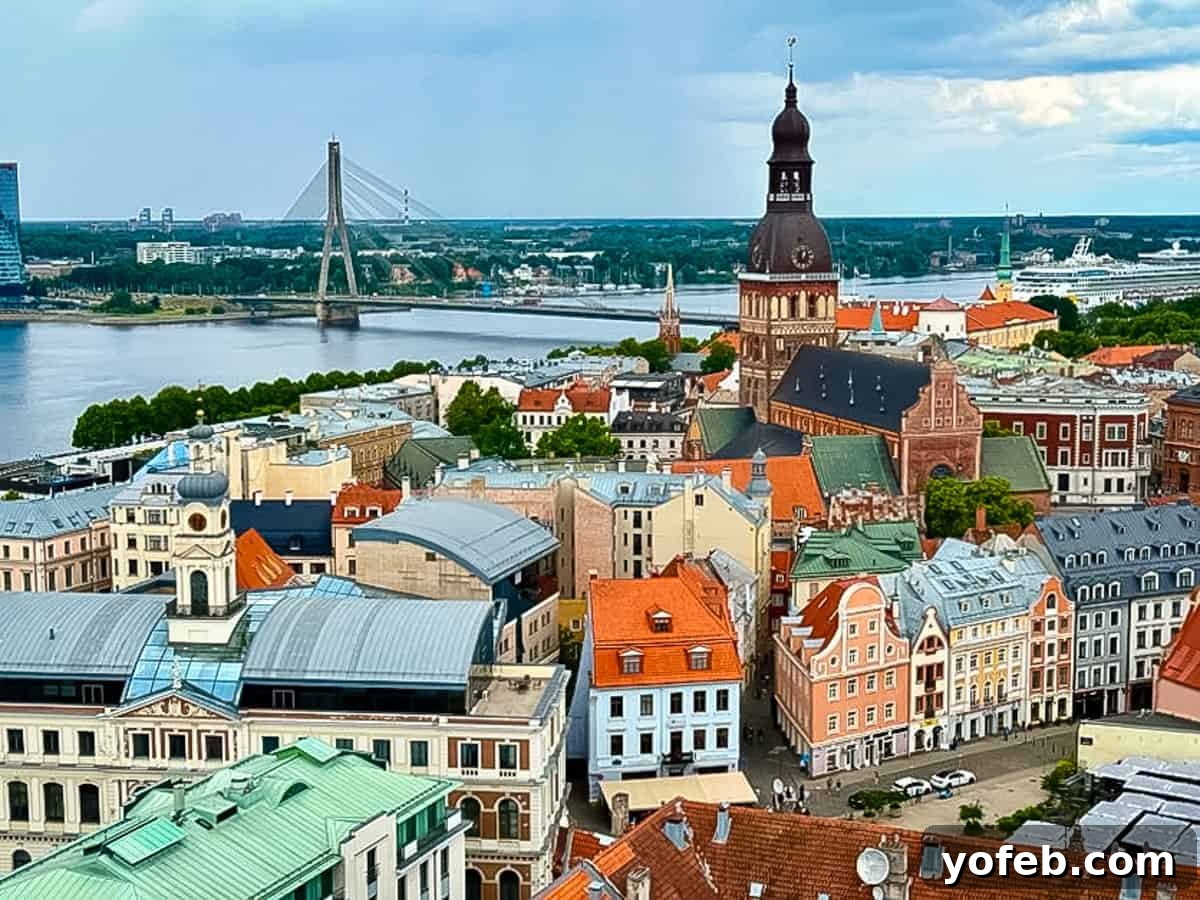
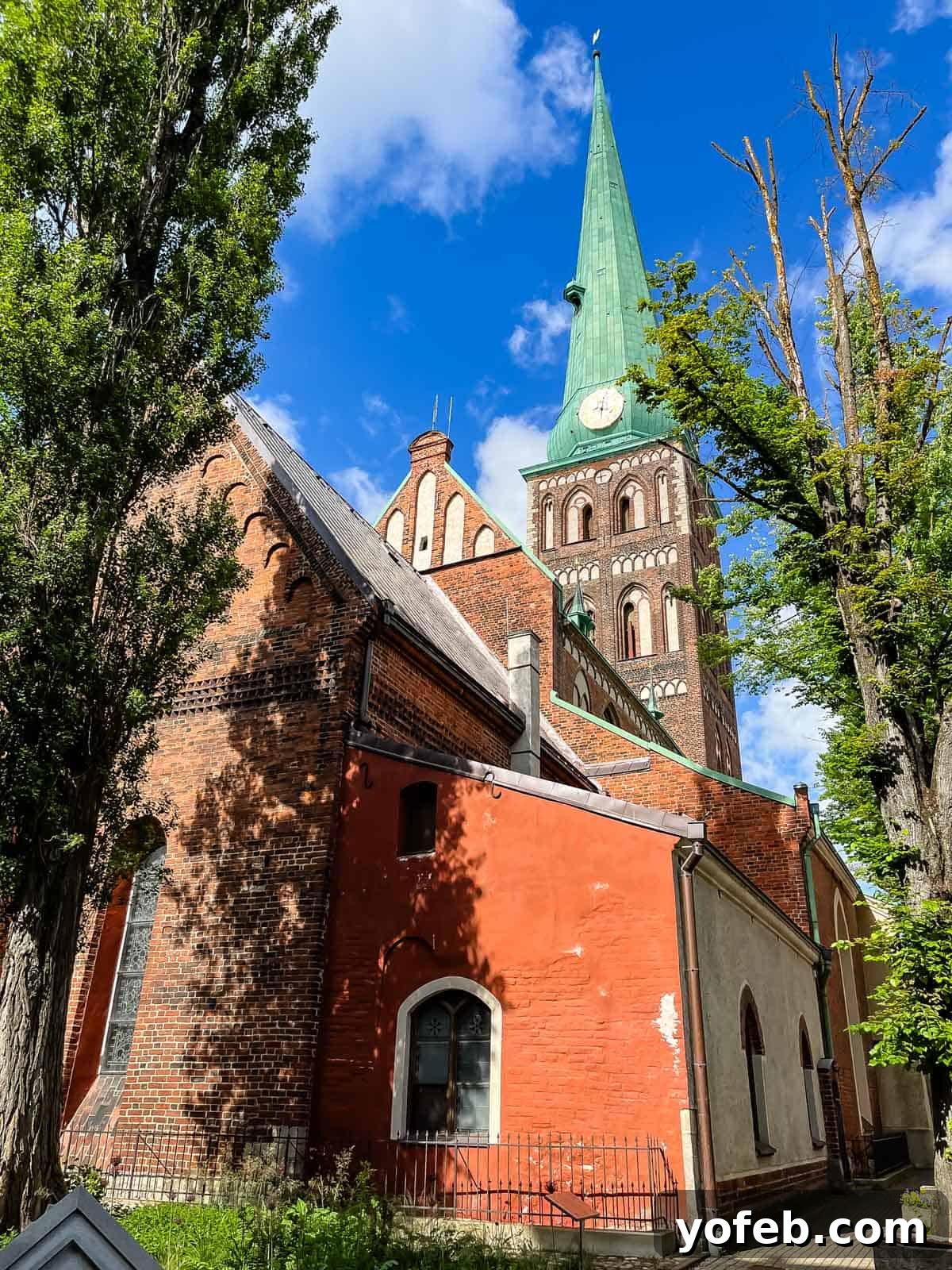
We dedicated the entire next day to exploring Riga’s Old Town, which is absolutely gorgeous. I could have easily spent five full days just in this captivating city, wandering its charming streets and soaking in its historic ambiance.
We also visited a bustling farmer’s market, where we discovered all sorts of fascinating foods and produce not typically seen back home!
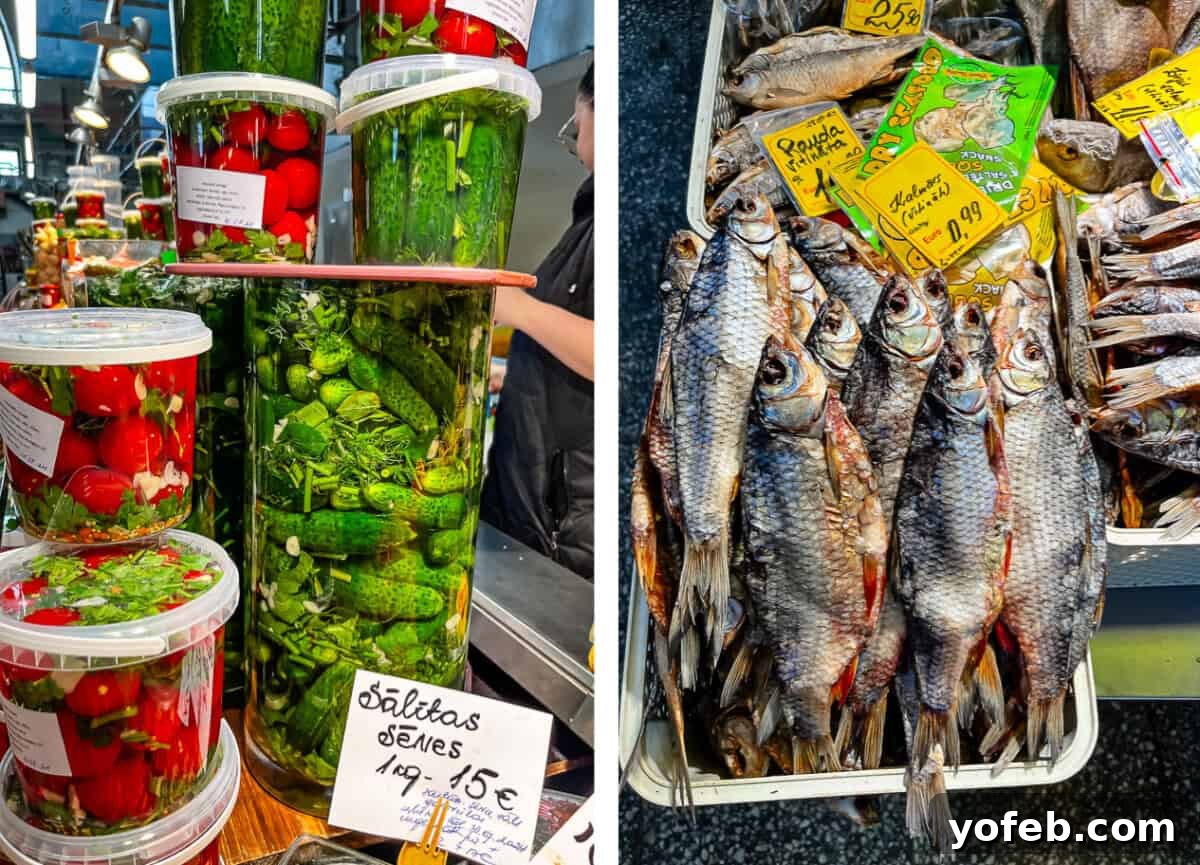
These stalls showcased an impressive variety of pickled vegetables and dried fish for sale, a true feast for the senses.
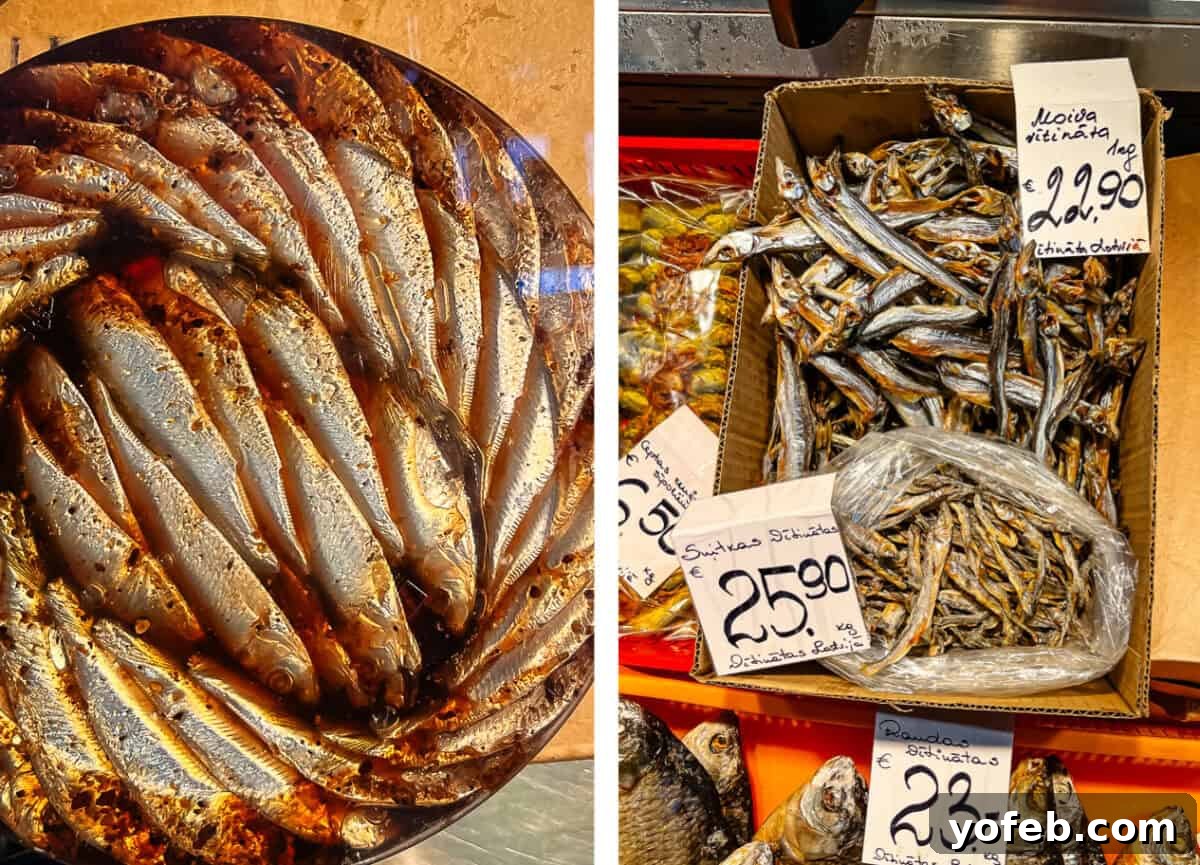
So many fish! And my adorable parents, always ready for an adventure:
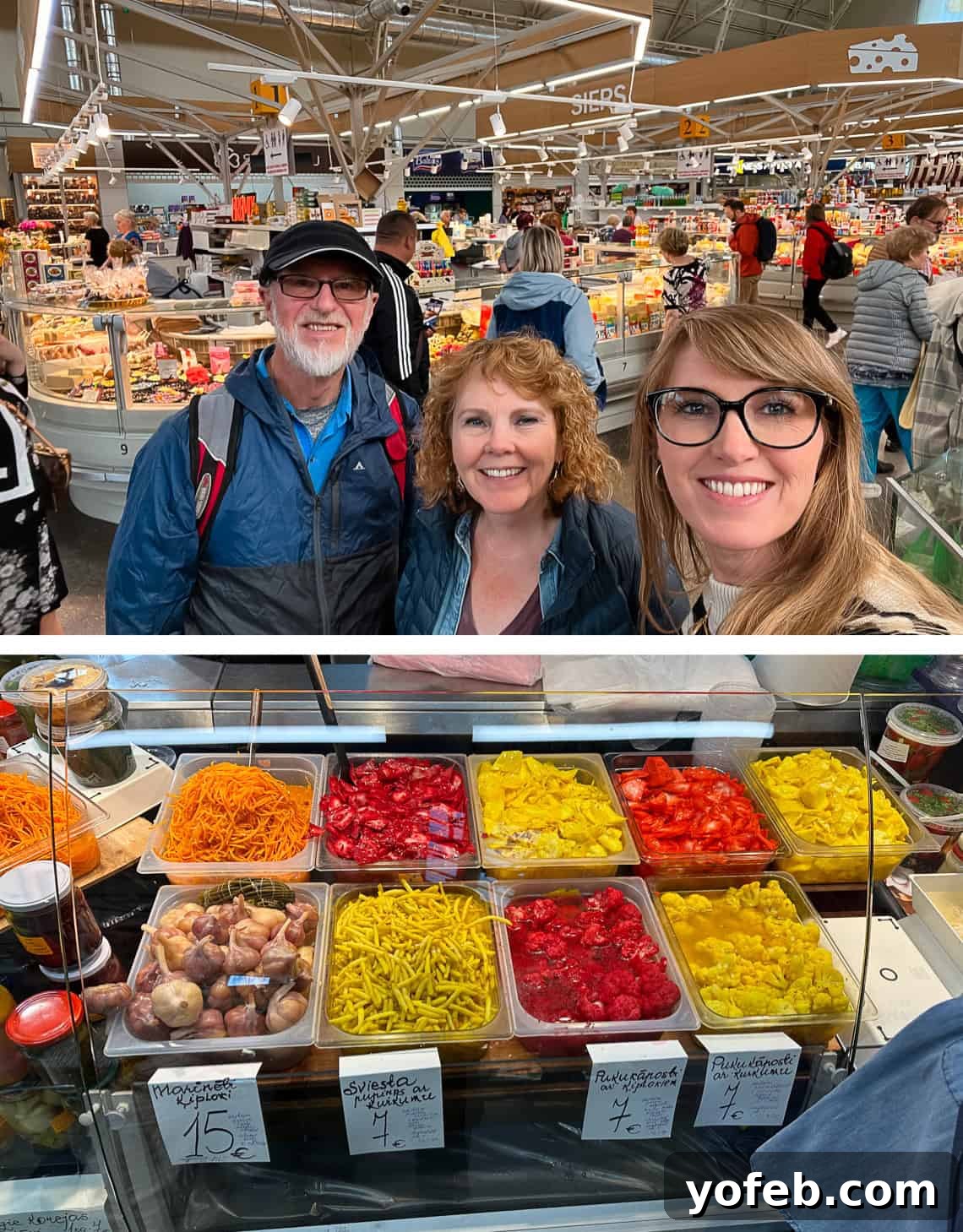
The market was a riot of colors and scents, and we had so much fun sampling everything on offer. I could have happily spent the entire day there, soaking in the vibrant local atmosphere.
Later, while walking through the city, we stumbled upon a lively beer festival with numerous street vendors. Amidst the festive chaos, we spotted this rather… unique culinary treasure:
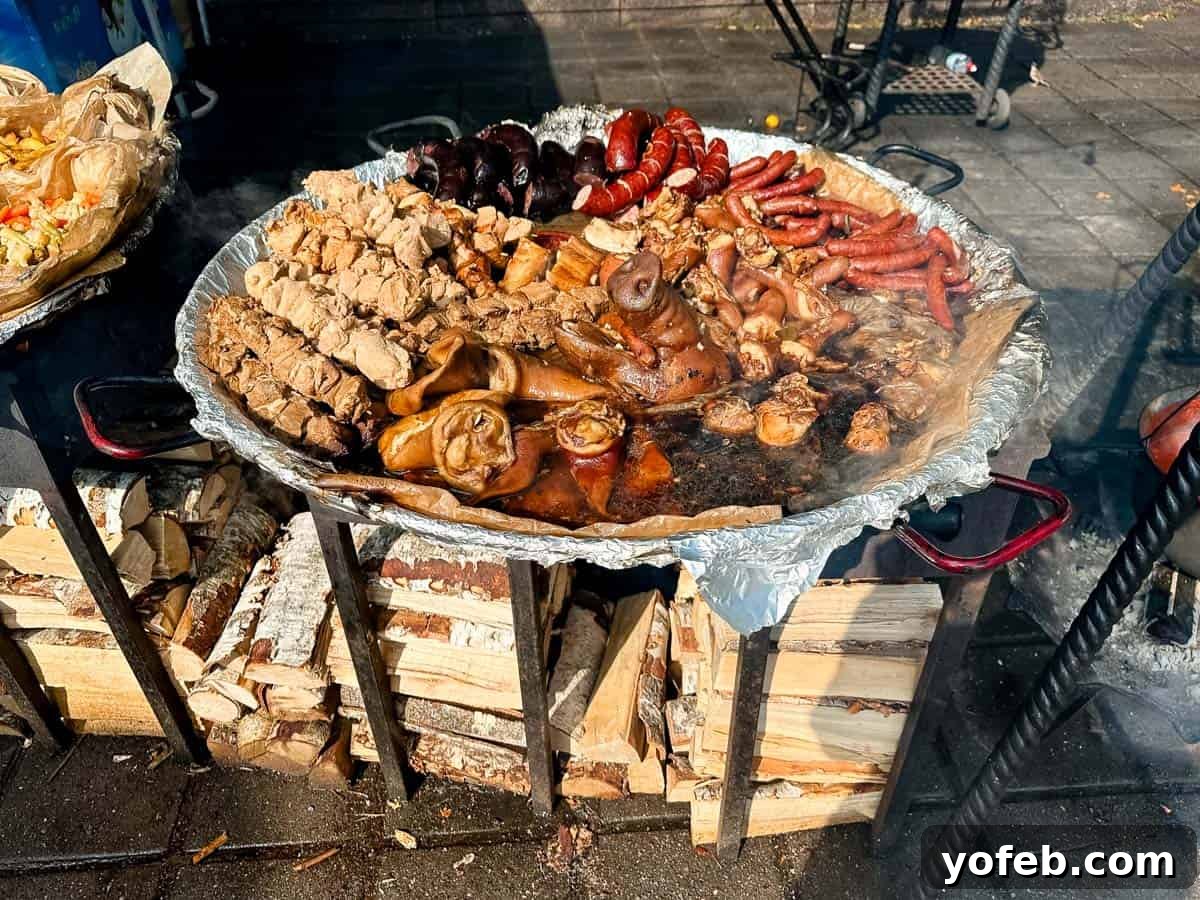
We politely skipped the pig’s head 🤣 and instead, that night, indulged in a truly memorable dining experience at a Michelin-star restaurant that Eric was particularly excited about. The food was absolutely incredible, a true culinary journey! Here’s a photograph of a chef meticulously preparing homemade pesto fresh in a mortar and pestle, using fragrant herbs and greens sourced directly from their garden.
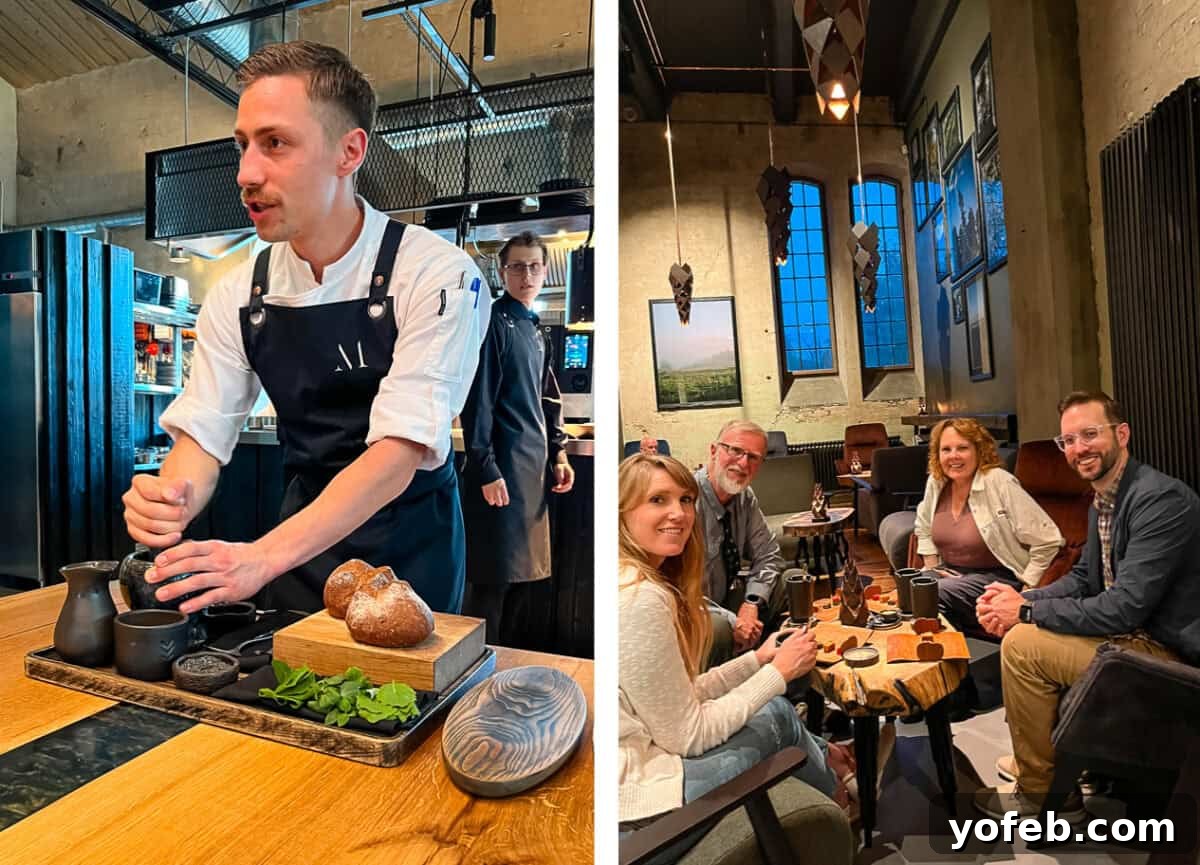
We concluded our exquisite meal with refreshing peppermint tea and decadent chocolates. Among my favorite dishes were the surprisingly delicious asparagus served with garlic ice cream (an innovative pairing!) and the perfectly cooked cod, wrapped in maple and rhubarb leaves, accompanied by a rich fish stock, seaweed, and potato. It sounds unconventional, but the flavors were utterly amazing, a testament to the chef’s creativity.
Next, we stopped in the charming small town of Parnu, Estonia, where we enjoyed the bracing cold and beautifully salty beaches of the Baltic Sea. It was a truly picturesque and refreshing stop on our journey!
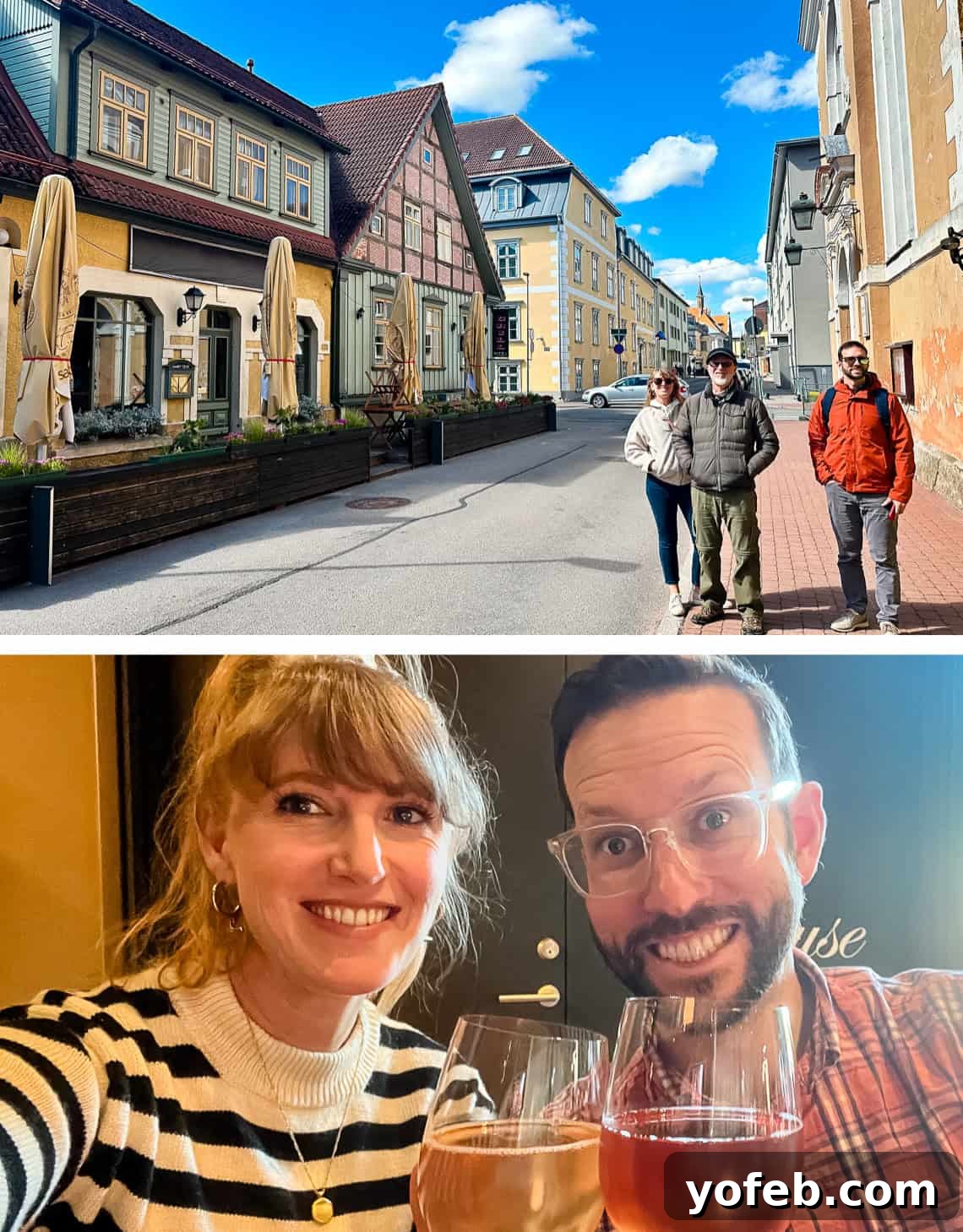
Although Eric and I don’t drink alcohol, our hotel in Parnu offered an array of intriguing non-alcoholic beverages. I believe these vibrant drinks were flavored with elderberry and rhubarb, offering delightful, refreshing options.
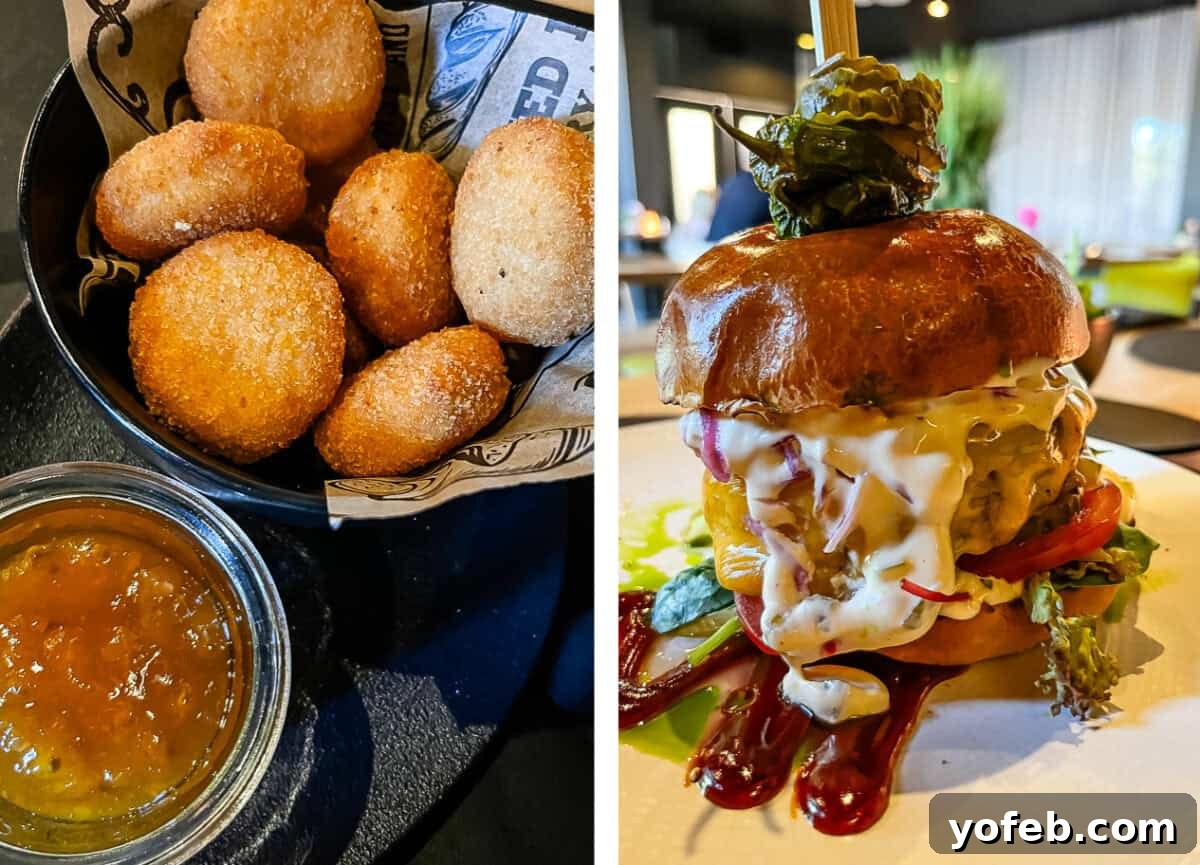
On the left, you’ll see fried Camembert cheese served with a delightful cloudberry jam for dipping. This was hands-down one of the absolute best things I ate on the entire trip. I had never even heard of cloudberries before; they are native to this region and incredibly delicious. My new life goal is now to master the art of breading and deep-frying Camembert!
The next morning, our hotel laid out yet another incredible breakfast spread, featuring the classic pickled herring, tuna salad, and other charcuterie-style options, maintaining the high standards of European hotel breakfasts.
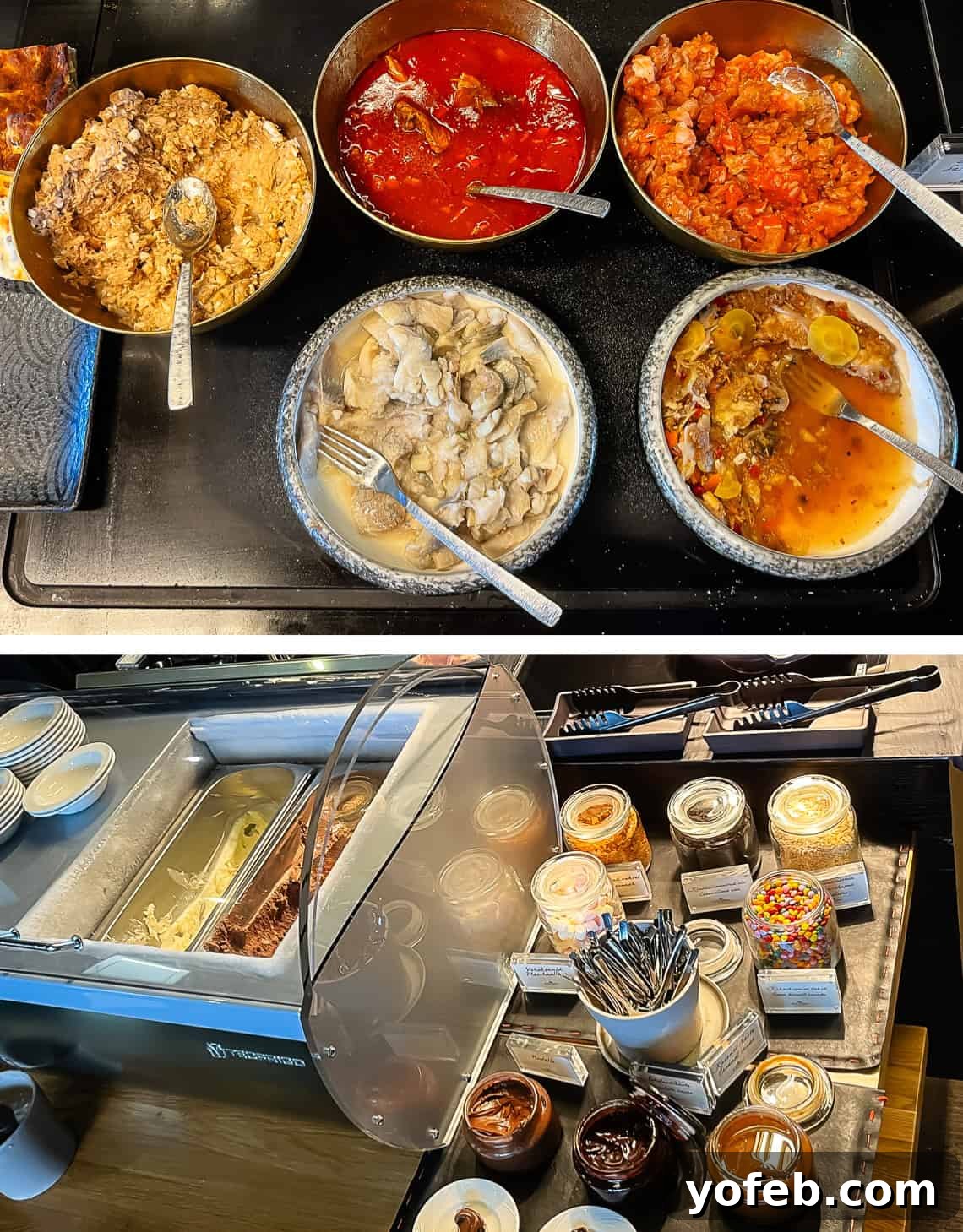
But the true highlight? They offered ICE CREAM FOR BREAKFAST! I came downstairs to find my mom with the biggest smile on her face, happily devouring a giant bowl of chocolate and vanilla ice cream drizzled with fudge sauce. I still don’t understand WHY we haven’t adopted this brilliant concept for hotel breakfasts back in the States… yet! It’s pure genius.
That afternoon, we embarked on a unique hike through a bog. Yes, a real bog! Complete with peat and all the characteristic flora and fauna. It was a truly distinctive experience, showcasing a type of terrain I had never before encountered, utterly beautiful in its own unique way.
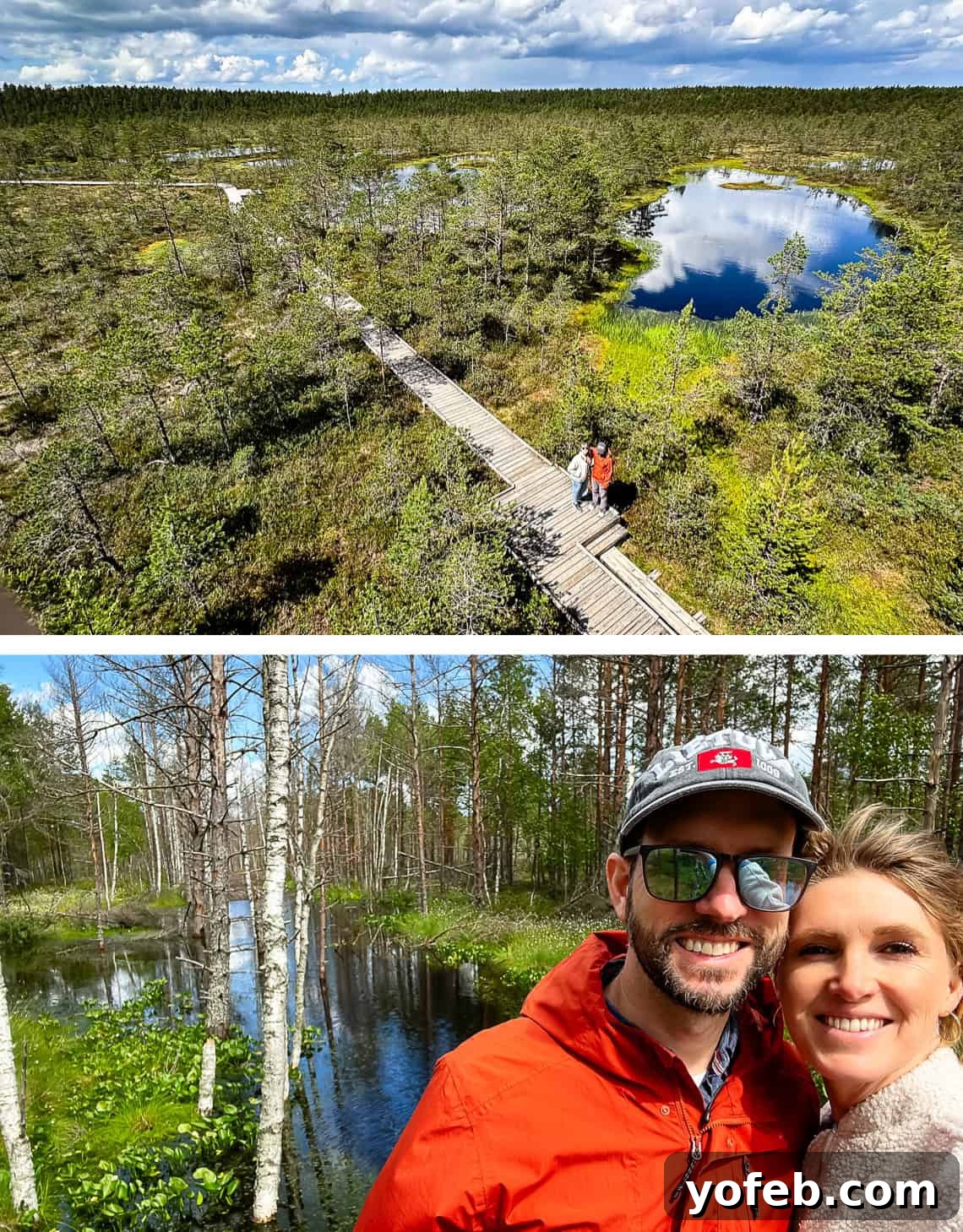
The landscape was stunning and profoundly different from anything I had ever seen, offering a refreshing change of scenery.
Architectural Wonders: A Love Affair with Baltic Doors and Floors
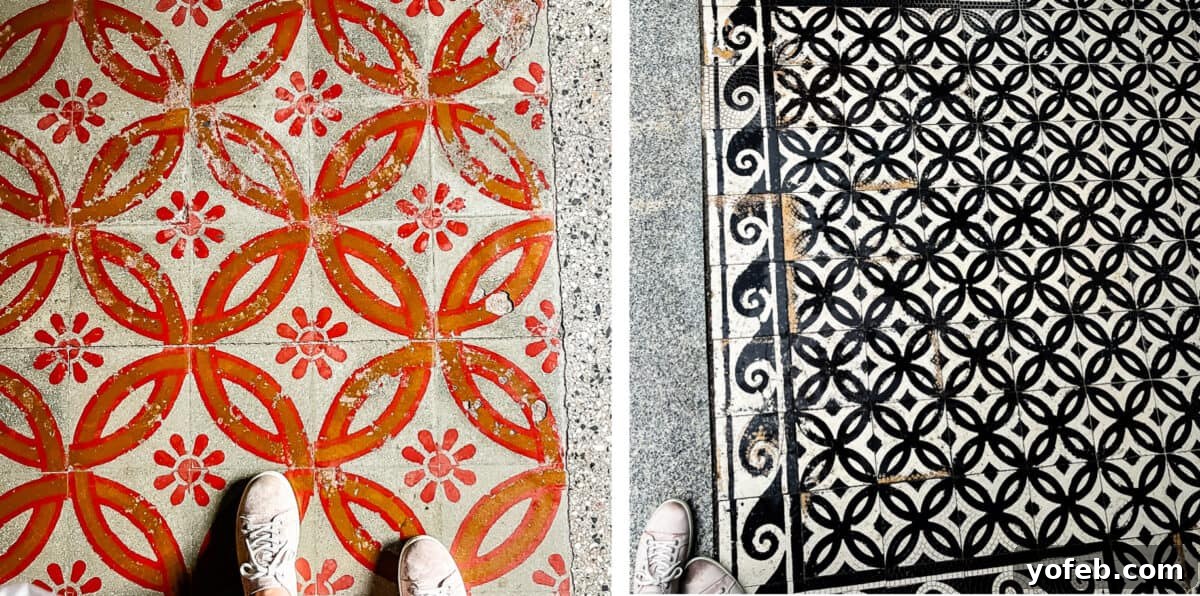
Taking a brief pause from our travel narrative, I simply must share my newfound obsession: the incredible doors and floors found throughout the Baltics. Why, oh why, don’t we have architecture with such character and artistic detail back home? Every doorway seemed to tell a story, and every floor was a work of art, a testament to centuries of craftsmanship and design.
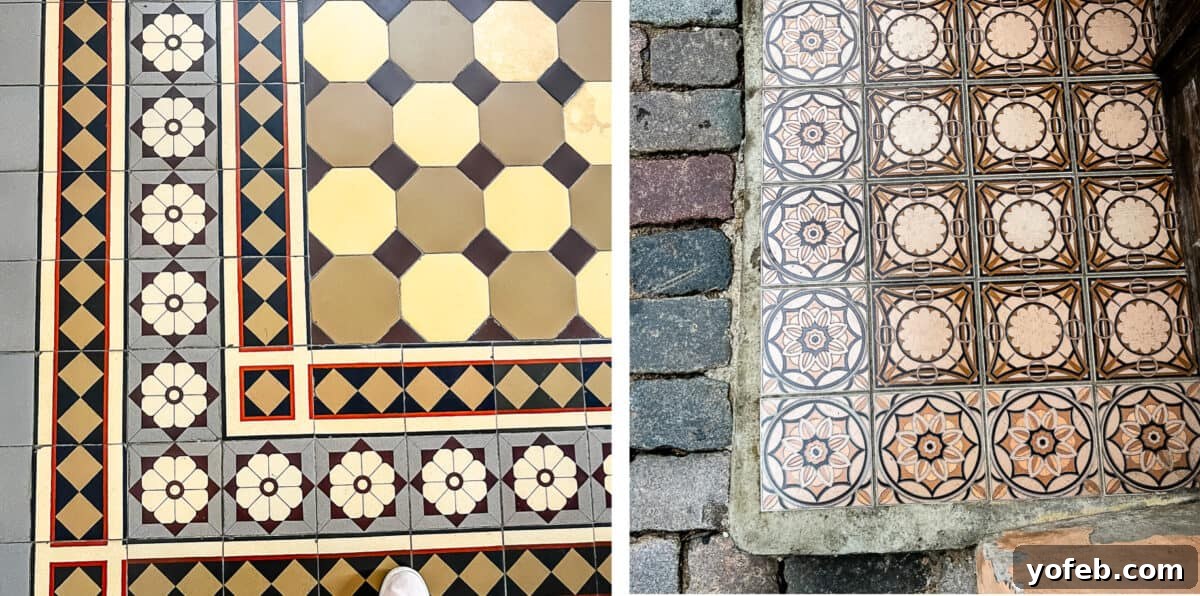
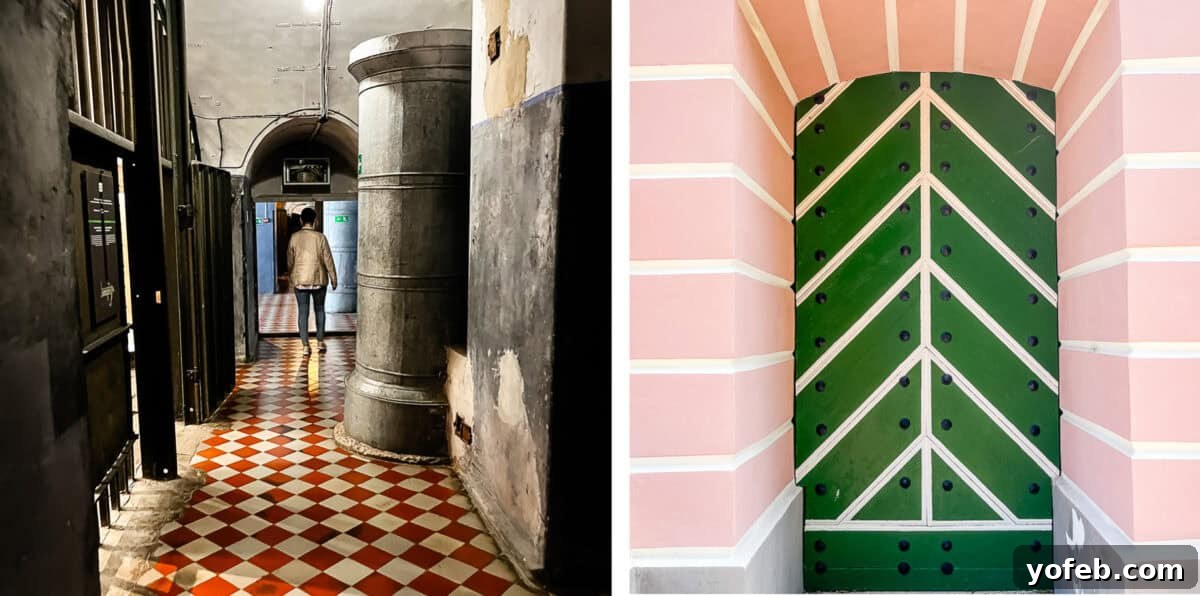
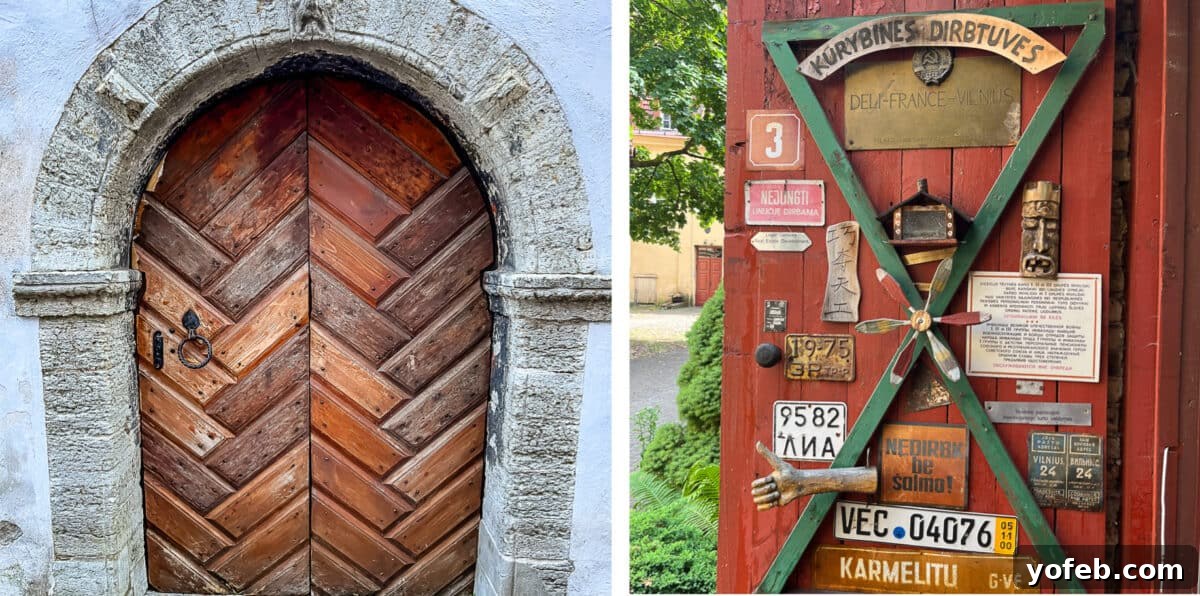
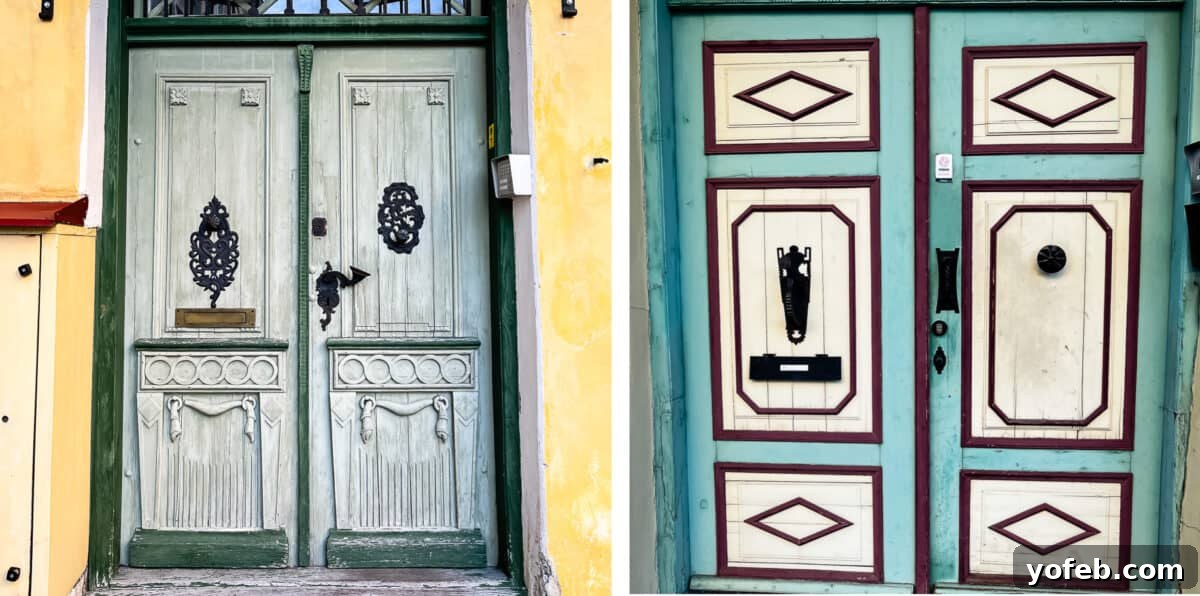
Tallinn, Estonia: The Crowning Jewel of the Baltics
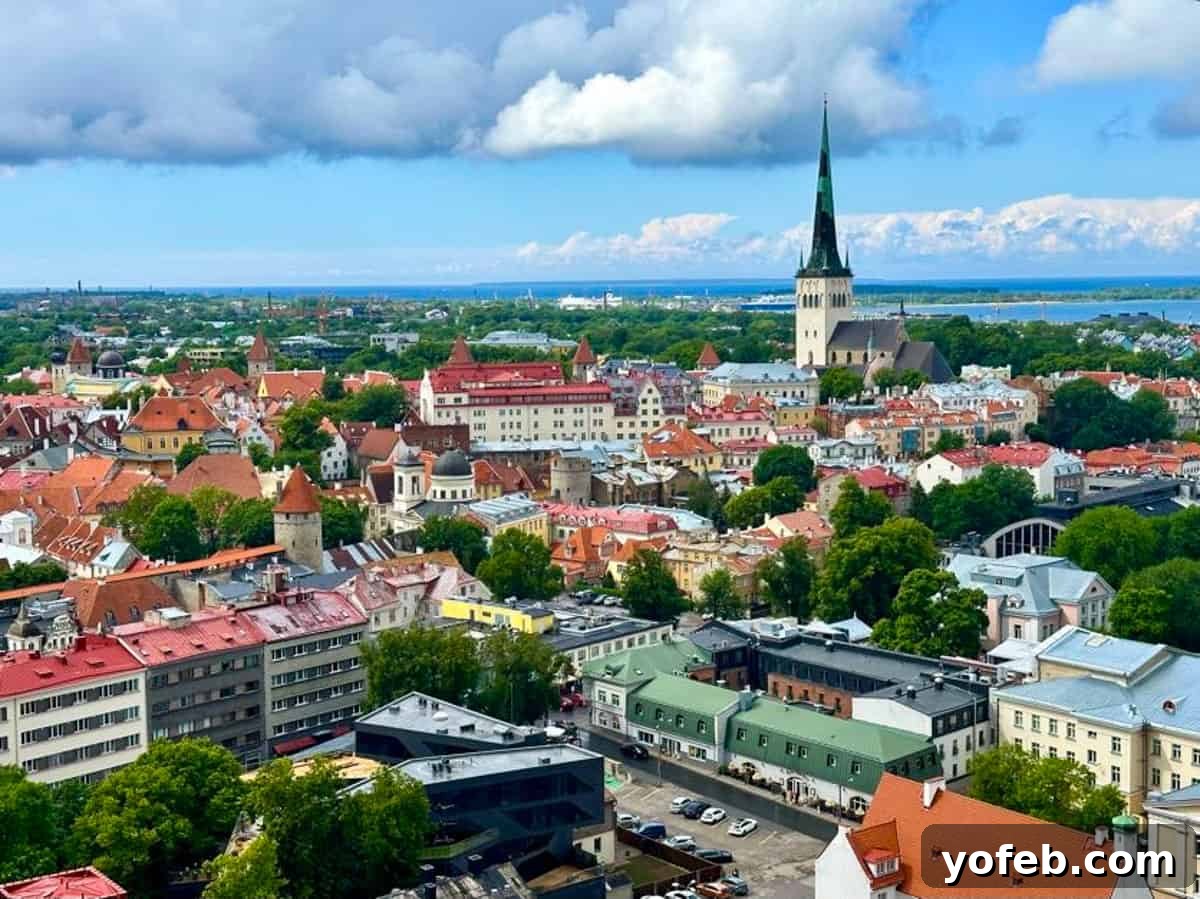
Our final destination, and arguably the most famous and breathtaking of all the cities we visited, was Tallinn, Estonia. This ancient capital truly felt like the crowning jewel of our Baltic adventure, blending medieval charm with modern vibrancy.
Naturally, I wasted no time in locating a local bakery – a top priority in any new city!
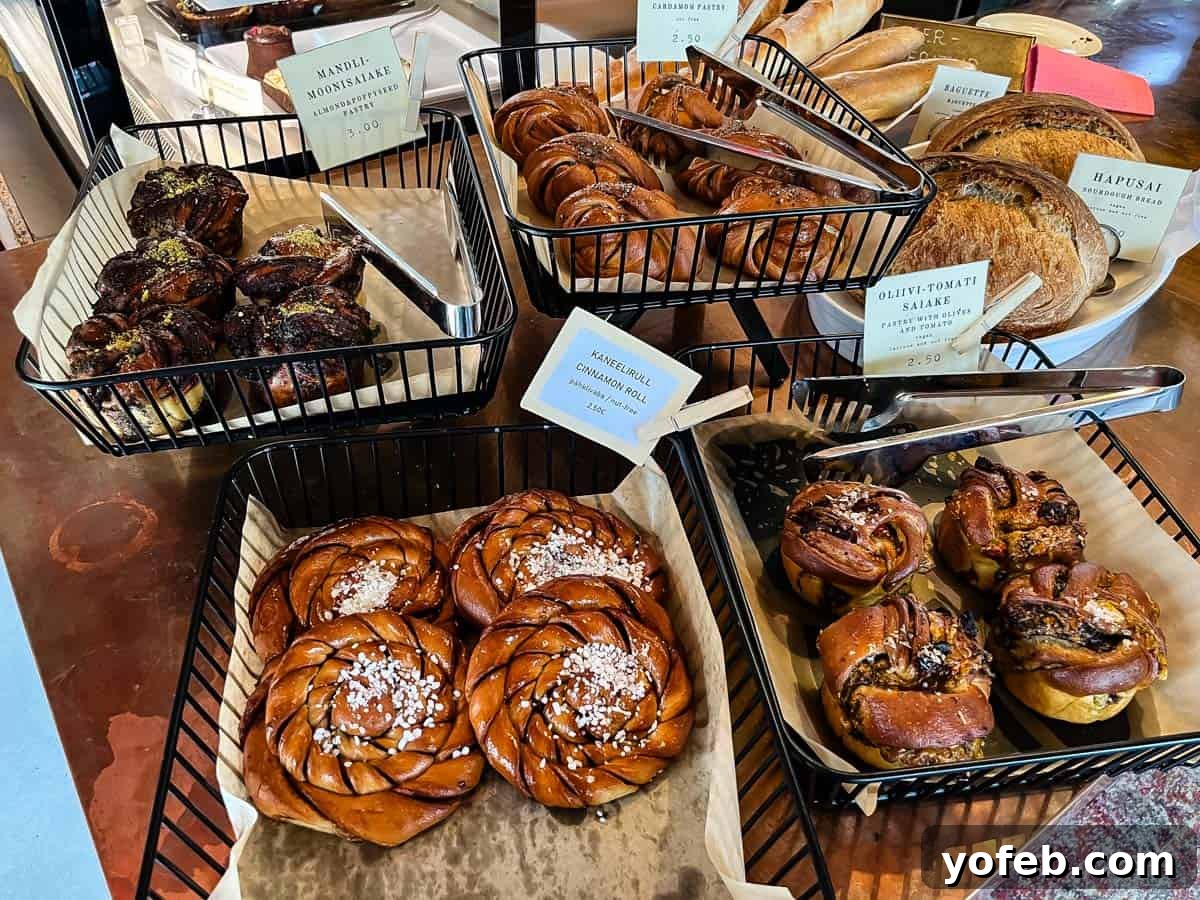
This country truly excels in its baked goods, I tell you. Cardamom, my favorite spice, was everywhere, infusing pastries with its warm, aromatic essence!
For lunch, we dined at (F-hoone), a fantastic modern restaurant, where we savored incredible meat dumplings and a delicious Liege Waffle generously topped with sweet cherries.
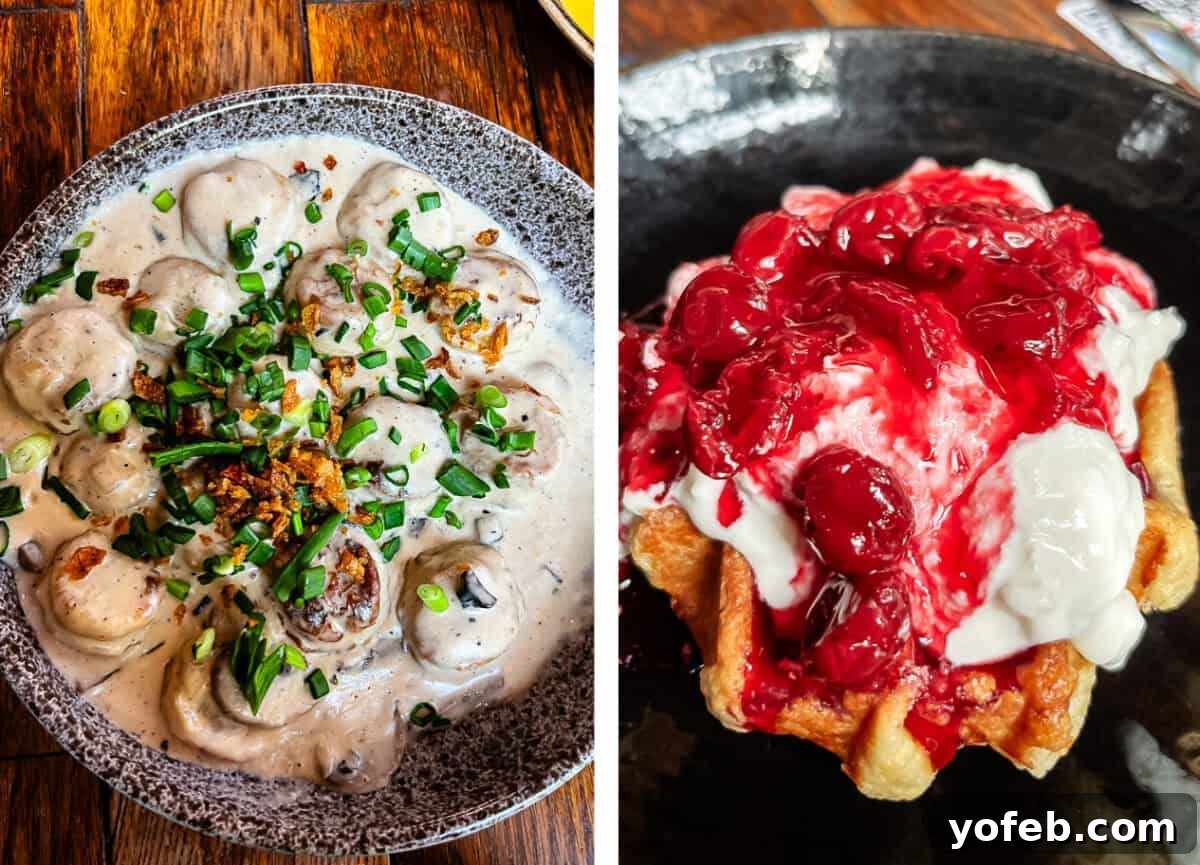
After our meal, we headed to our hotel nestled right in the heart of Tallinn’s Old Town. Navigating these ancient cities with a car can be a challenge; parking lots are virtually non-existent (after all, the city was established in the 1300s – people parked their horses by the door back then!). So, the drill is to drop off your rental car elsewhere and take an Uber or taxi into the Old Town with your luggage. It’s a small inconvenience, utterly worth it for the immersive experience of staying right in the historical core of the city!
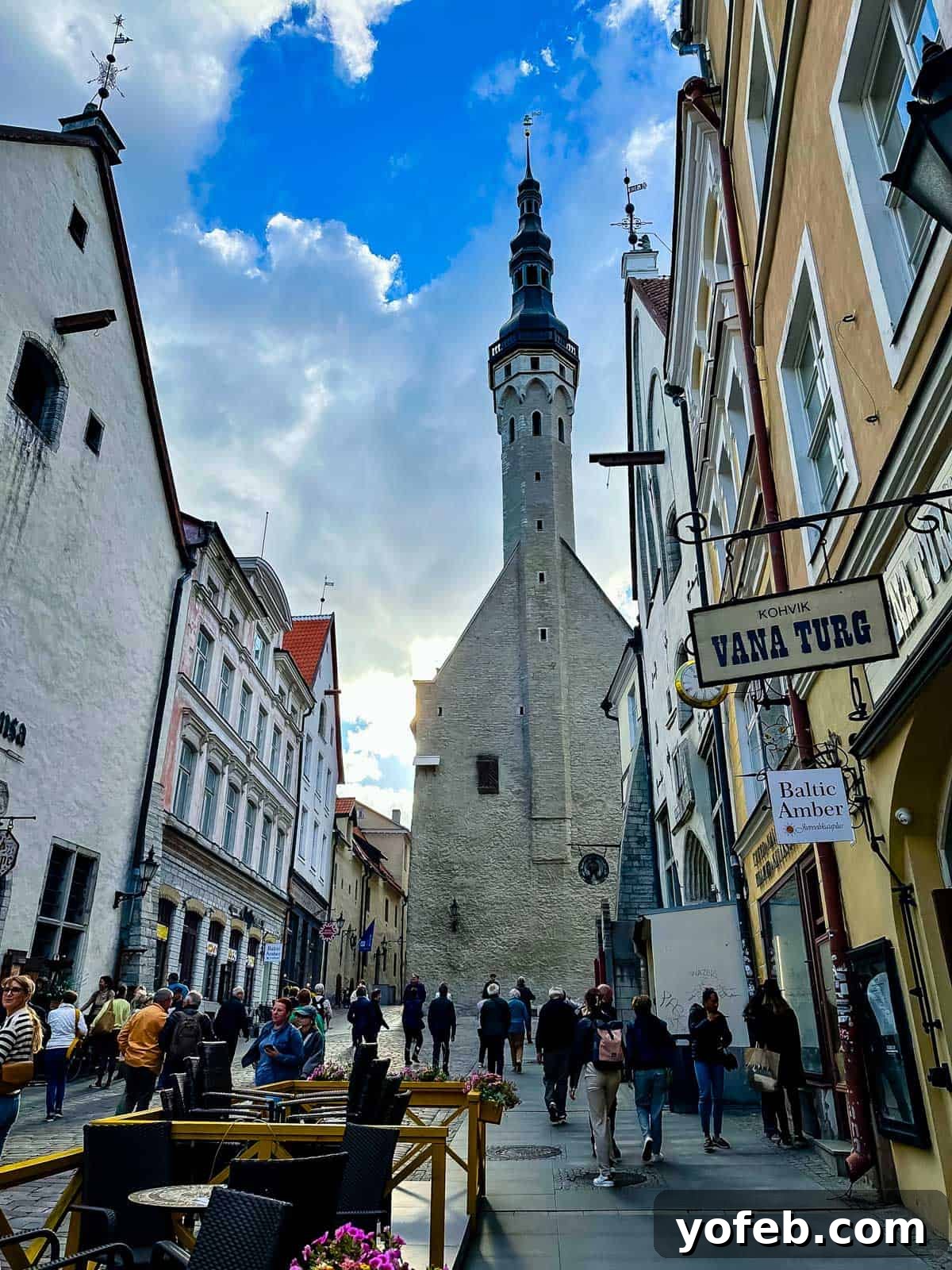
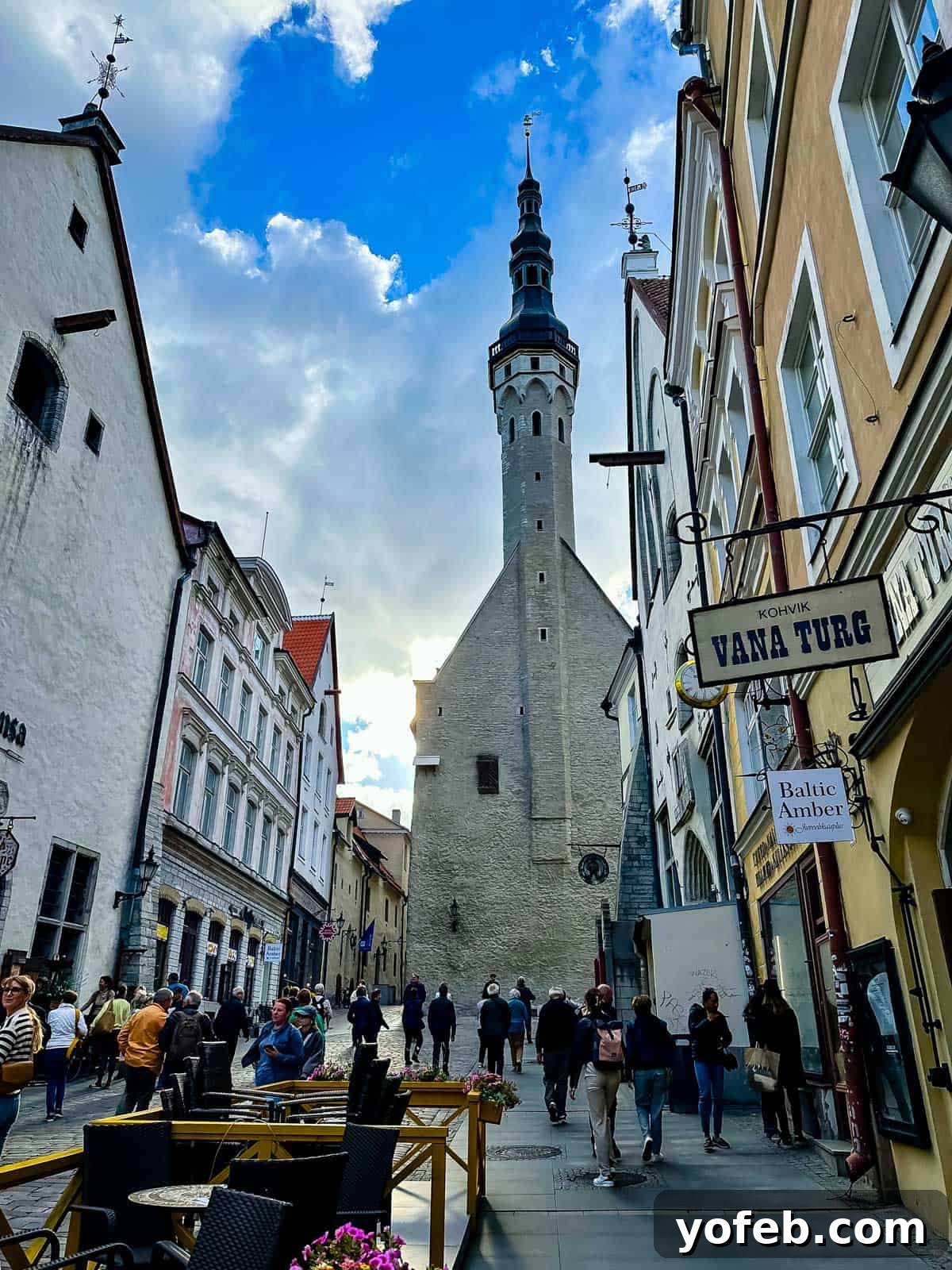
It is truly stunning to witness ancient castles, whose foundations were laid in the 1200s, standing proudly, while people today simply walk past them on their way to work or daily errands. This seamless blend of centuries past and present-day life is a defining characteristic of Tallinn.
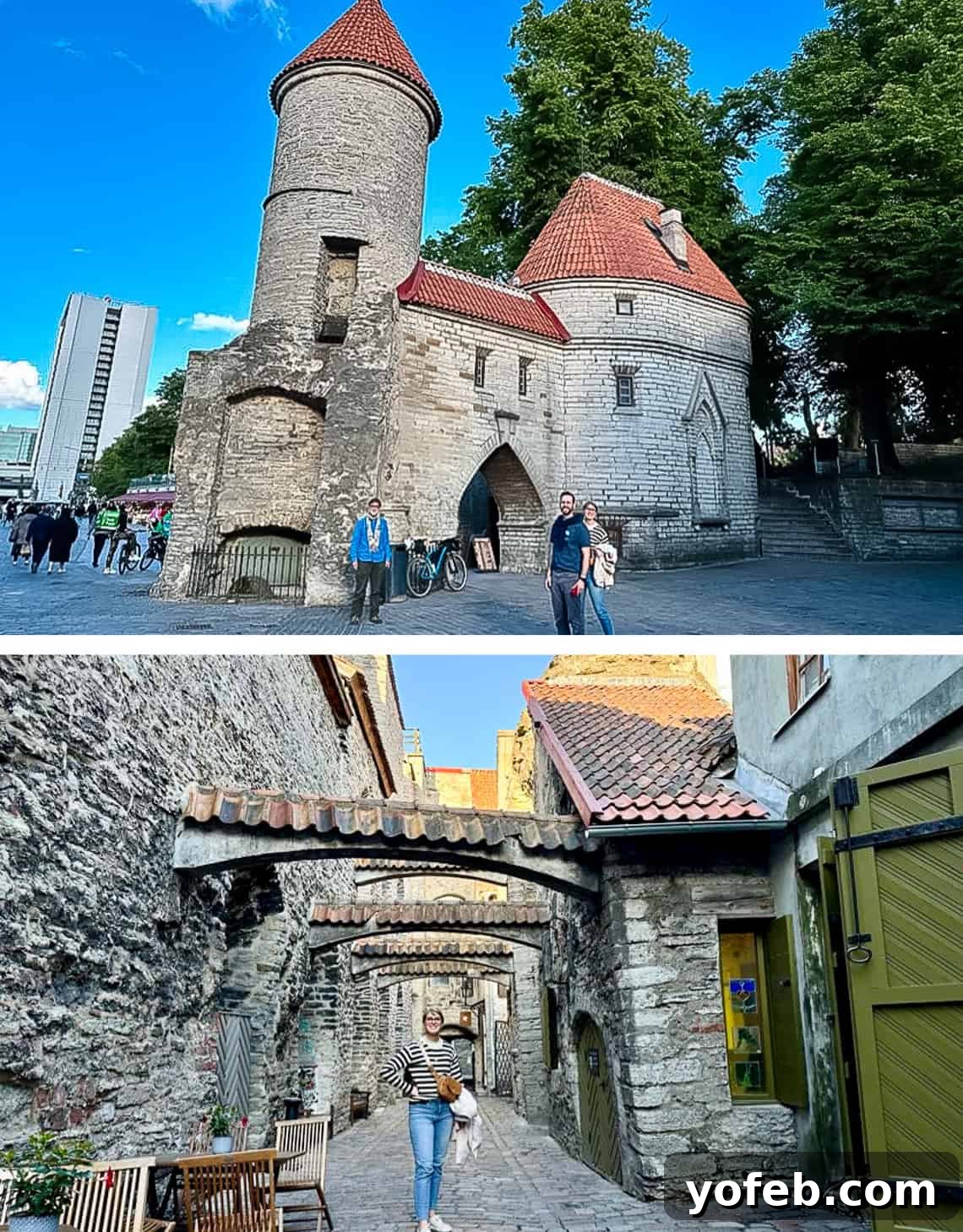
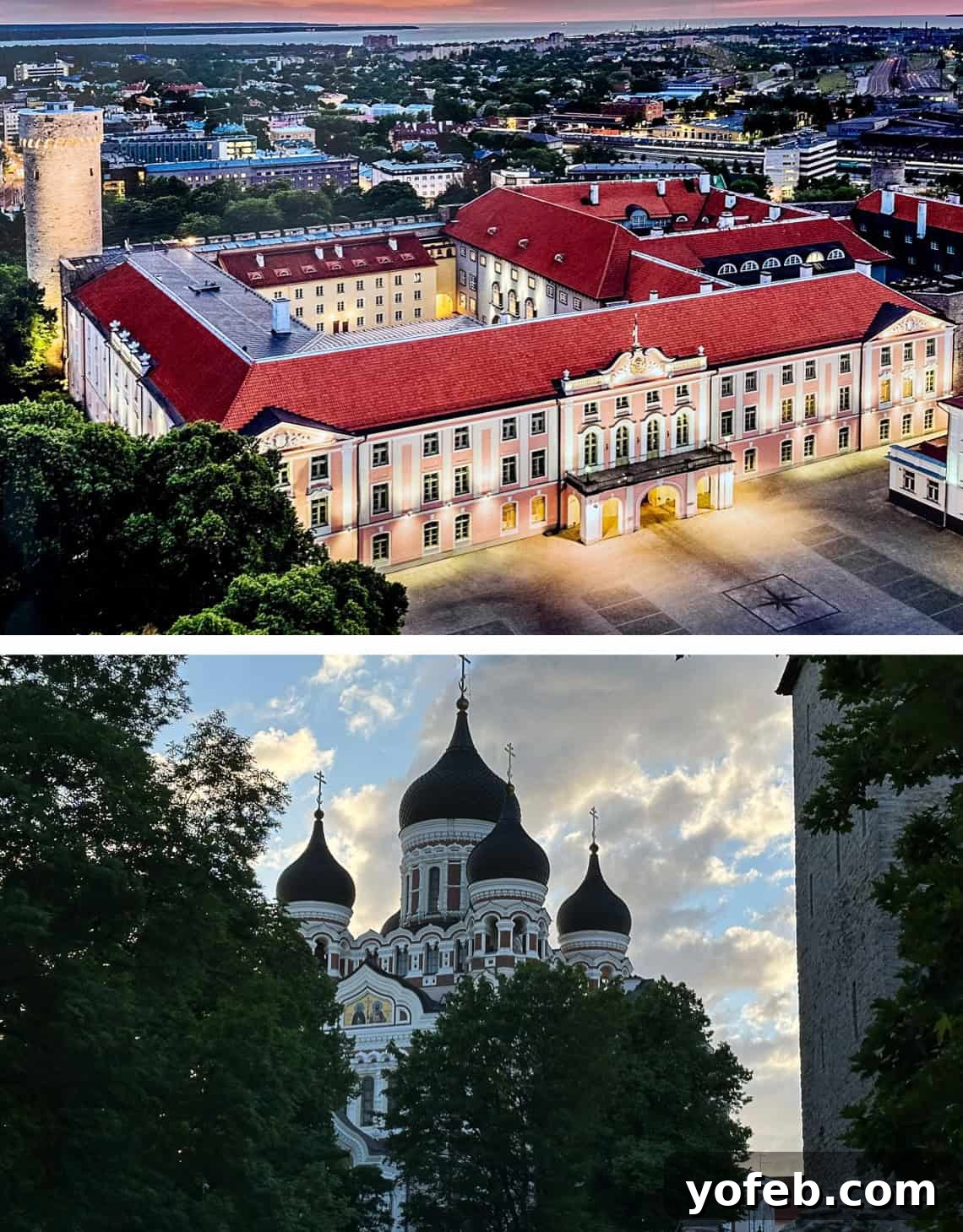
The Parliament building, where the Estonian government operates today, is built directly on the same foundation as Toompea Castle, which was first constructed in the 1200s. Can you spot the historic turret on the left? Estonia has been governed from this very spot for an astonishing 800 years or so 🤯 – a truly incredible legacy of continuous governance and architectural heritage!
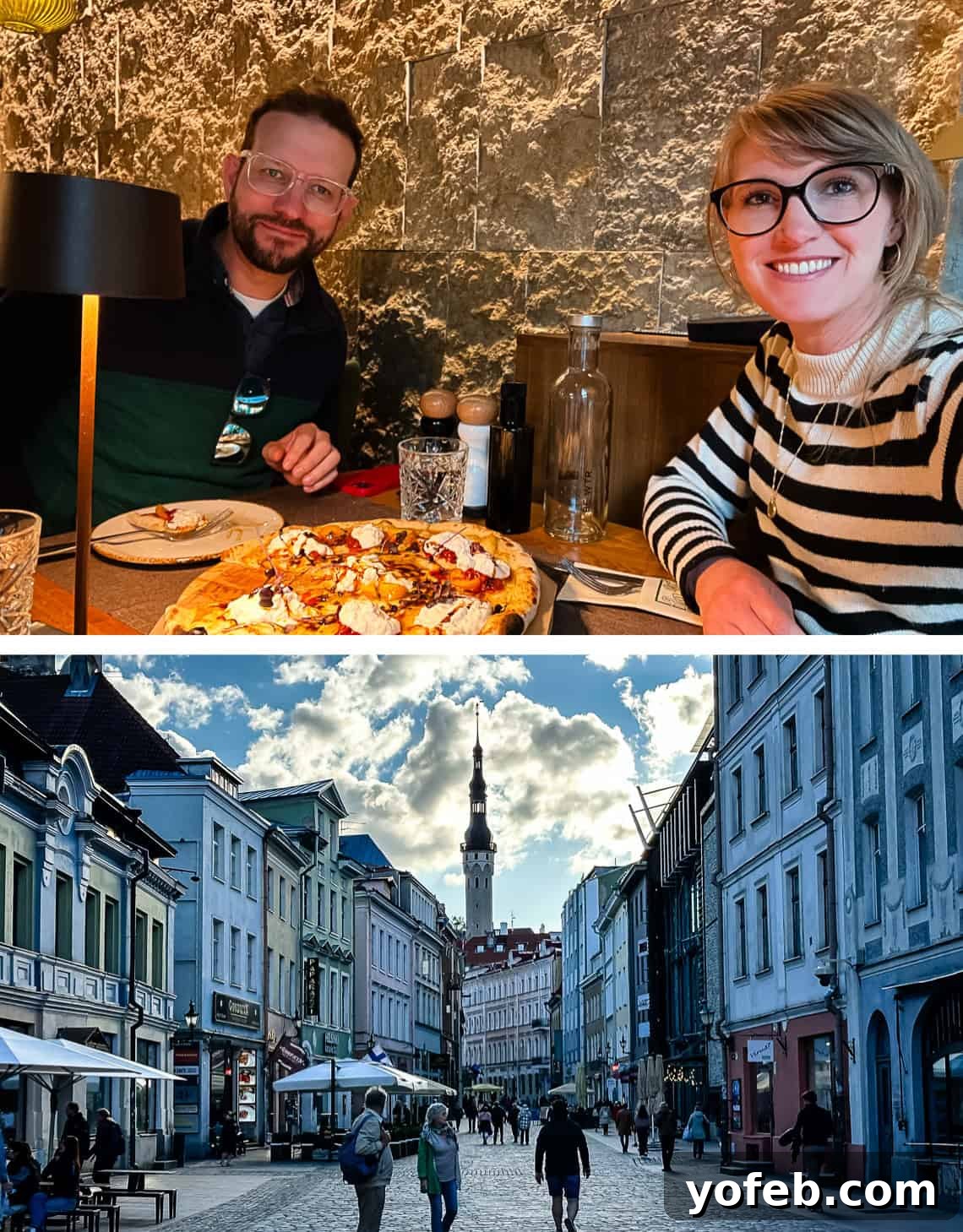
We discovered one of the best pizzas I have ever had at a charming little Italian restaurant, La Prima, nestled within the Old Town. It was absolutely delicious, a perfect blend of crisp crust and fresh toppings, proving that even in the Baltics, you can find world-class Italian food.
The following day, we ventured outside the Old Town to visit an Ethnographic Museum, an incredible outdoor facility that has gathered various historical buildings from across the country, each representing a different era of Estonian life and architecture. It’s like stepping into a living history book.
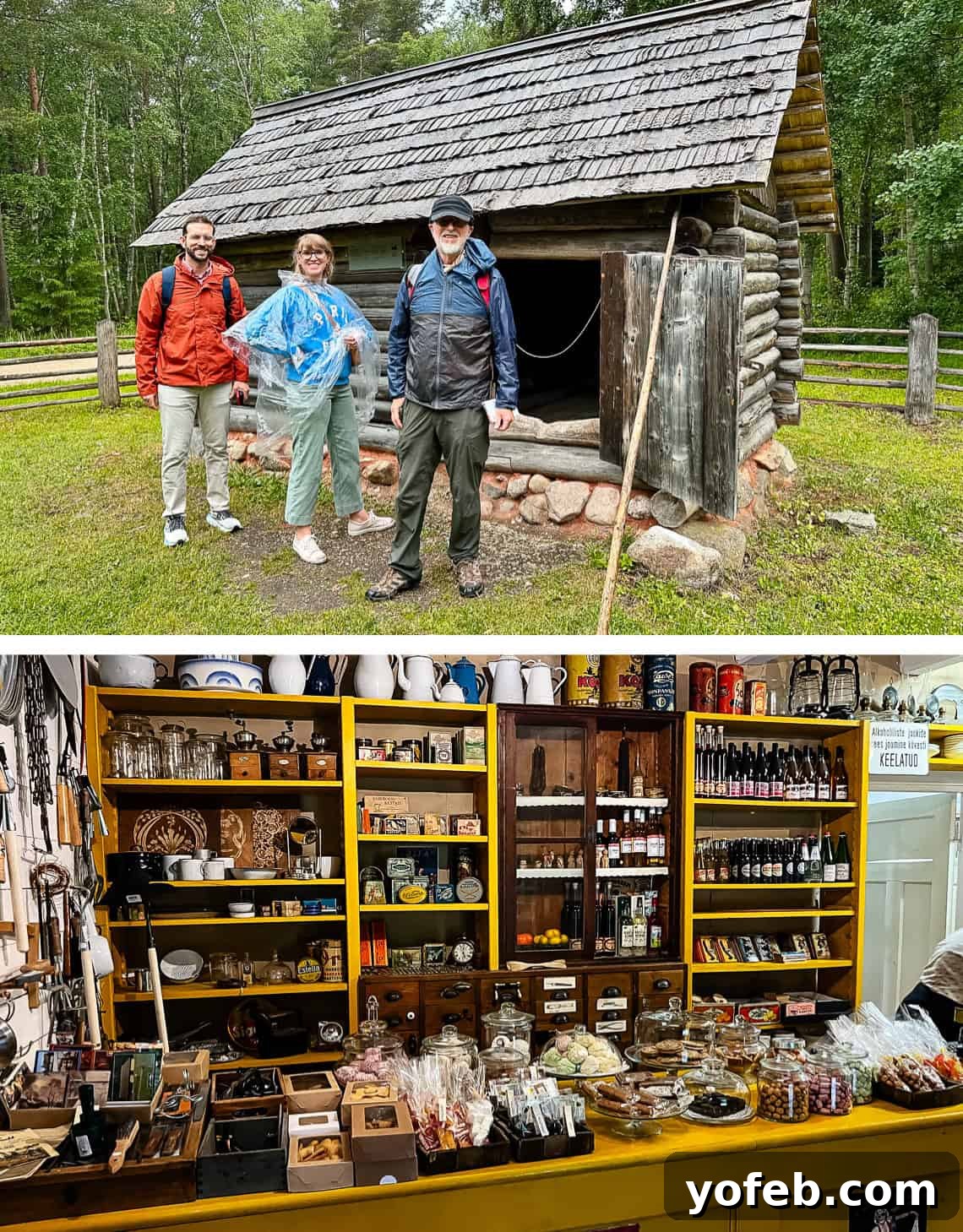
They even had an old-timey bakery set up, complete with traditional ovens and goods. You can bet I bought one of everything – I couldn’t resist sampling their authentic historical treats! 🤗
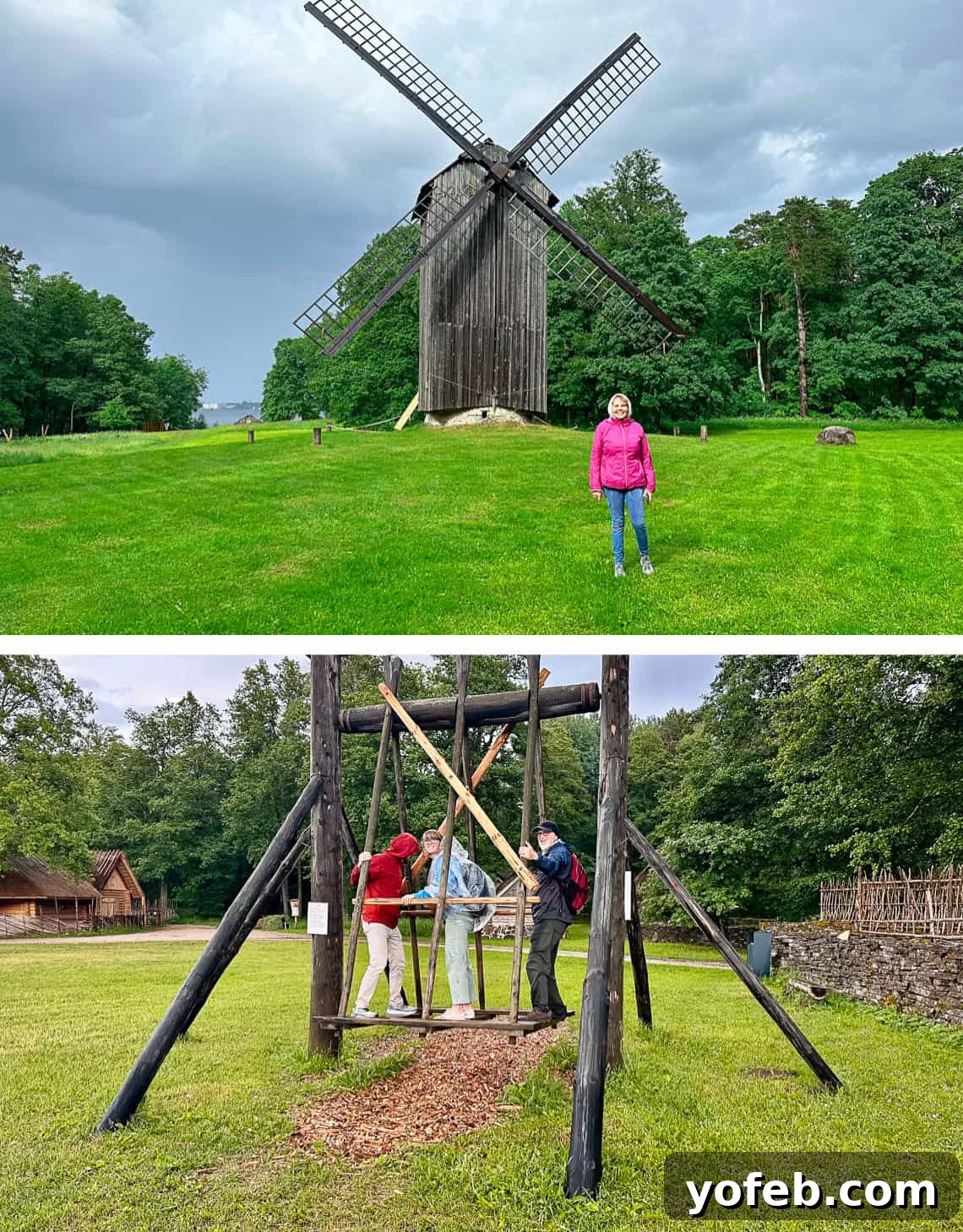
This intriguing structure is an ancient version of a swing; it required all three of us to coordinate our efforts just to get it moving!
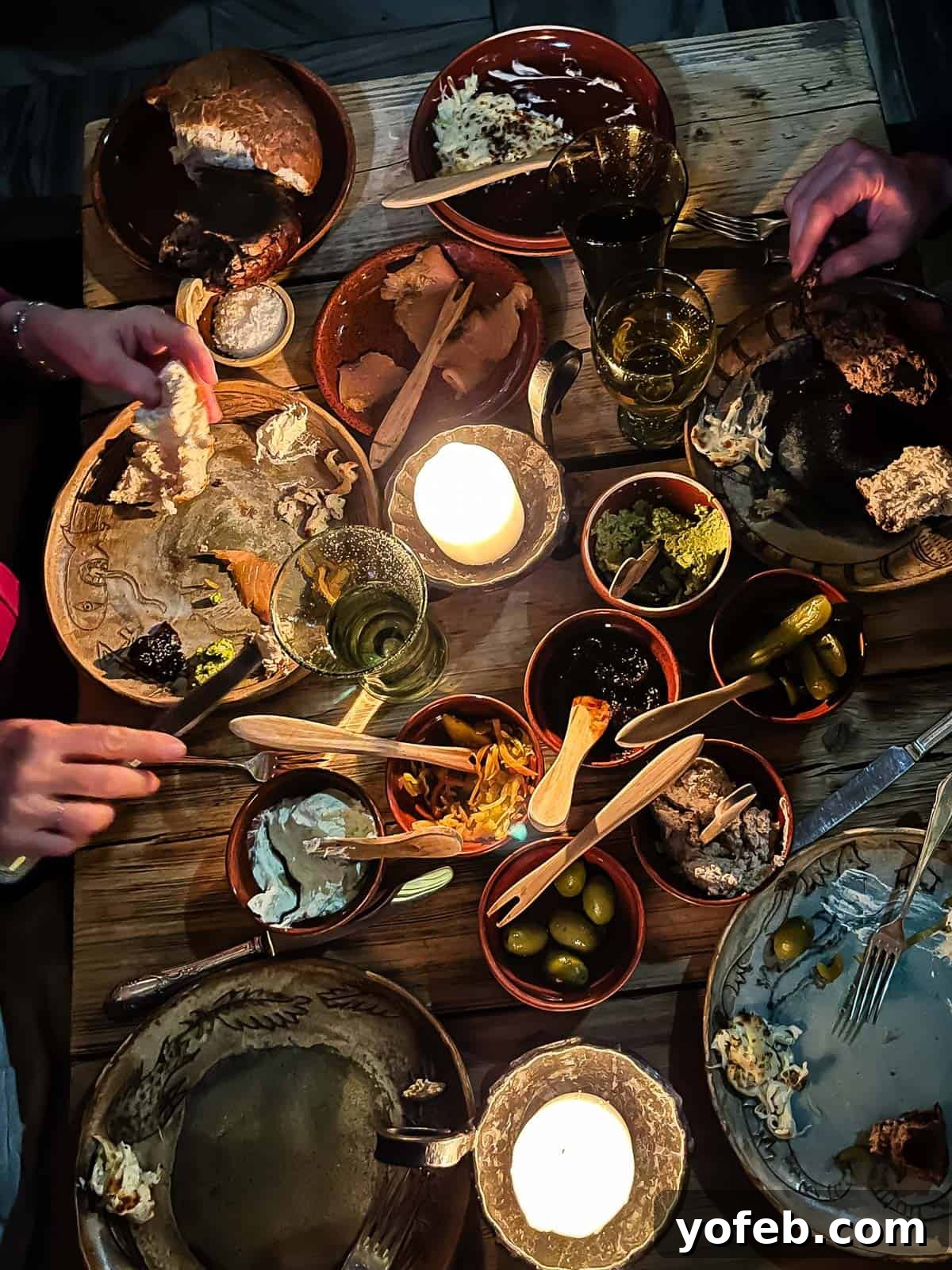
That night, we dined at a truly immersive medieval restaurant, Olde Hansa, housed in a beautifully preserved 13th-century merchant house. The menu was incredibly interesting, offering a true taste of medieval Estonian cuisine. We sampled exotic dishes like bear, wild boar, and duck liver, finishing with a unique rose pudding for dessert. It was certainly a different experience, but everything was surprisingly delicious and a lot of fun to try!
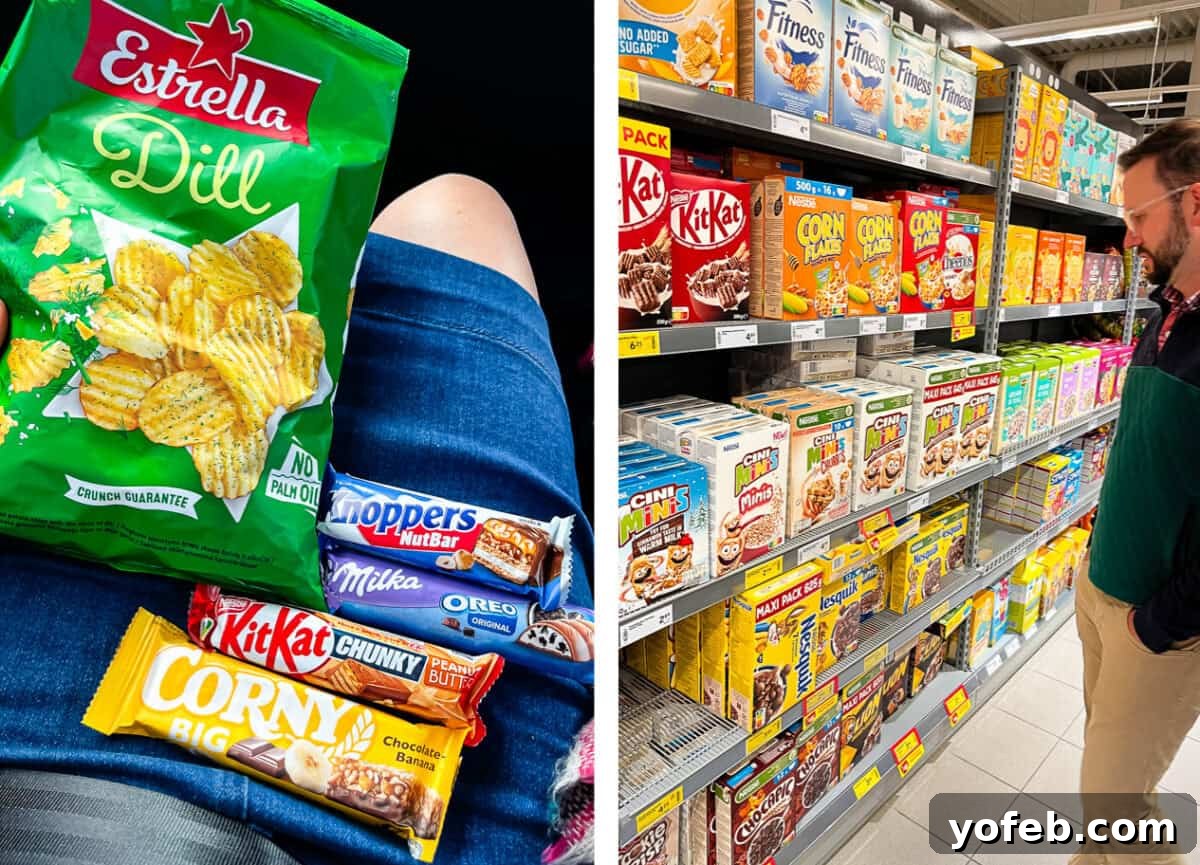
At another point, we stopped for snacks, and I’m always fascinated to see what local people are snacking on and what’s available in foreign grocery stores! These dill chips were genuinely delicious, a testament to the Baltics’ love for dill. However, I was also both interested and a little disturbed to see an entire aisle dedicated to “American level ridiculous cereals,” mirroring the sugary, brightly colored options we find back home.
Our journey then led us back across the Baltic Sea on the ferry, followed by a few more delightful hours in Helsinki before our flight home. We made the most of our final moments in Finland, seeking out memorable culinary experiences.
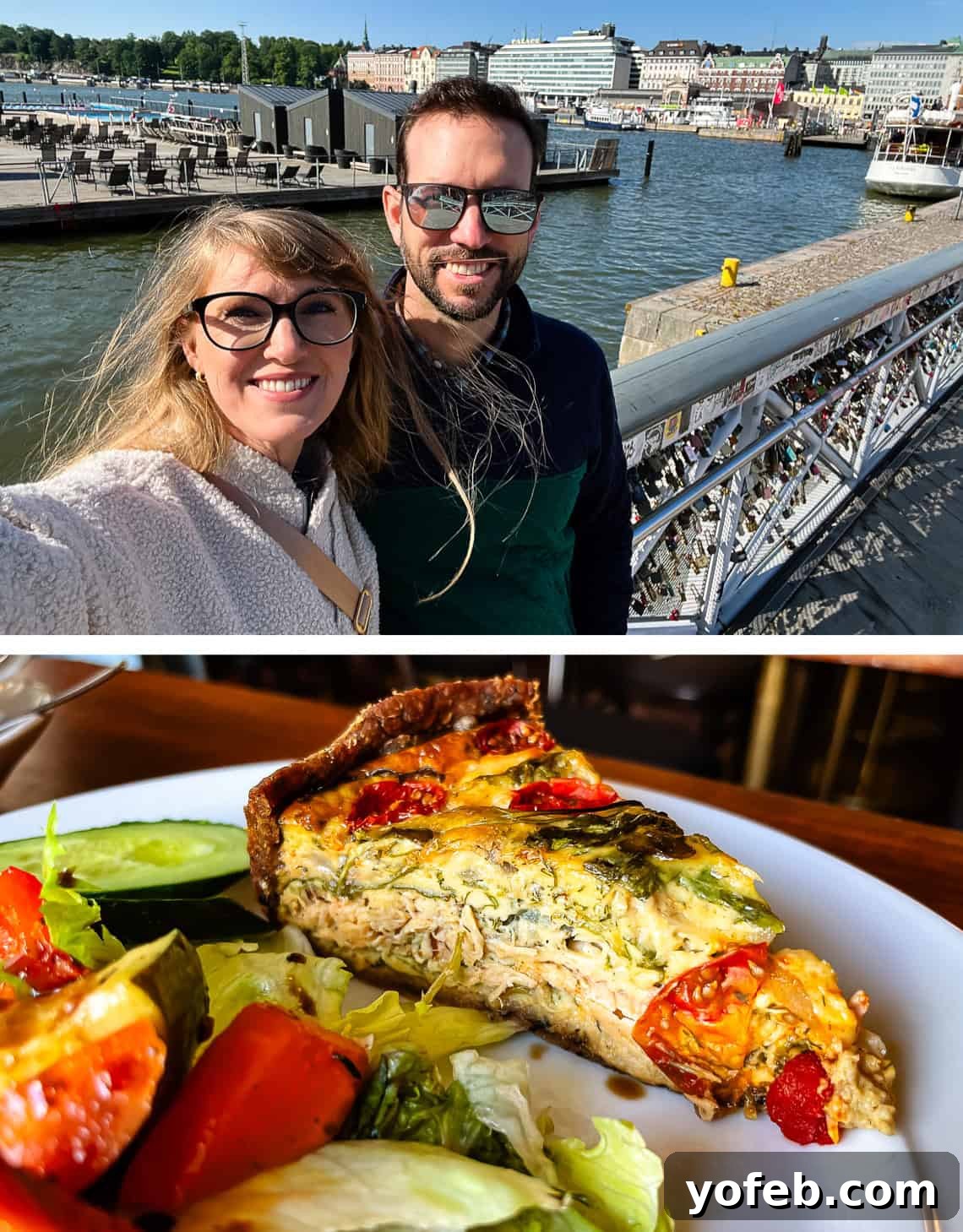
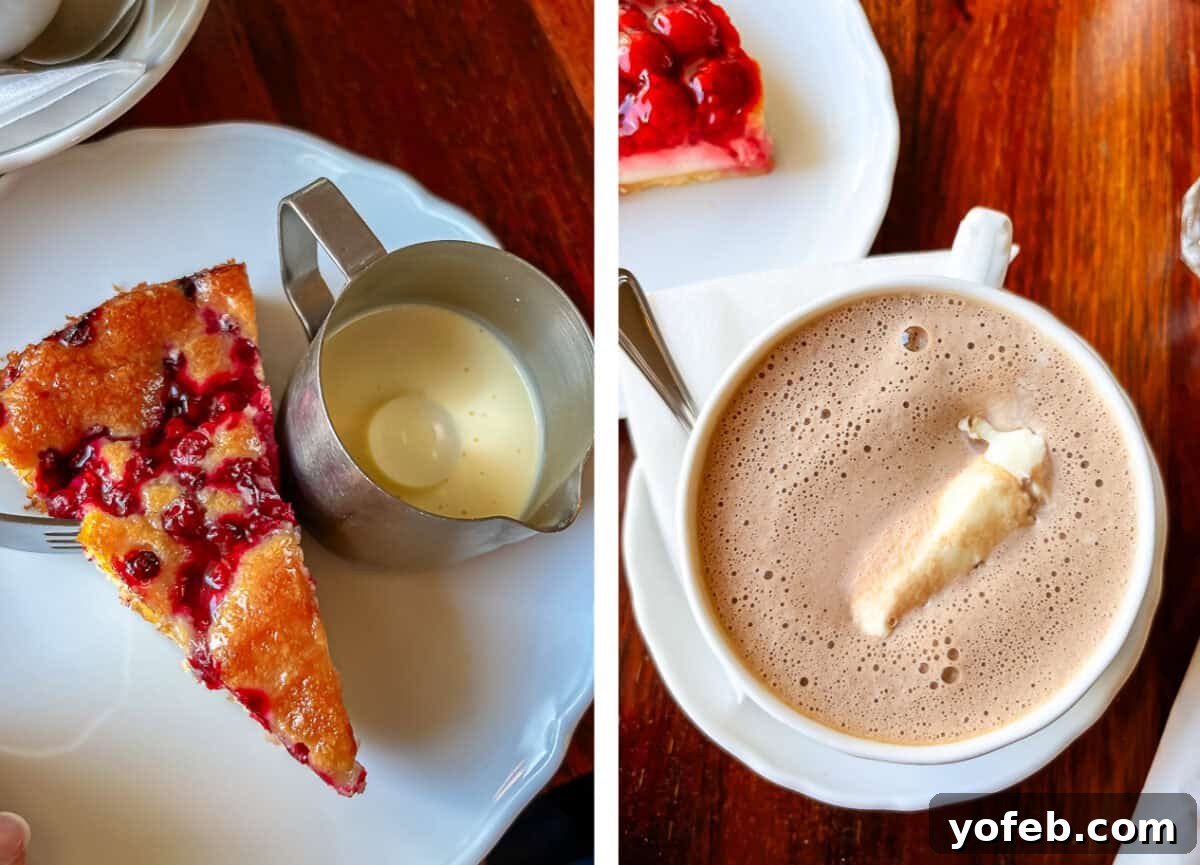
We visited an amazing little cafe, Cafe Engel, where I enjoyed a quiche infused with an insane amount of dill – it was simply superb! For dessert, we had a raspberry cake that came with a small pot of straight-up-cream to pour over it; rich and decadent, it was SO good. And to top it all off, the best hot chocolate I’d had in a long while, thick and comforting.
Finally, the moment arrived to return home. This last picture is probably my favorite from the entire trip. It perfectly captures the pure joy and intense relief of reunion. I think those kids missed us almost as much as we missed them. My daughter was holding on so tightly, a moment of pure, unconditional love after our incredible Baltic adventure.

And that, dear readers, concludes our epic journey through the Baltics! If you’ve made it through this entire post, you must truly be fascinated by these enchanting countries. This extensive travelogue was written primarily for me, to meticulously preserve every memory of this incredible experience. 🥰 If you ever plan to visit, please do tell me where your adventures take you! I would absolutely love to chat about it and share more insights. Happy travels, and may your own explorations be just as enriching and unforgettable!