

Welcome to the ultimate solution for a stress-free and spectacular morning meal: this incredible Eggs Benedict Casserole. Imagine waking up to the aroma of a classic Eggs Benedict, but with none of the frantic poaching, toasting, or sauce-making on a busy morning. This ingenious recipe transforms the beloved brunch staple into a convenient, make-ahead casserole that’s perfect for holidays, special occasions, or any time you crave a luxurious breakfast without the fuss. Prepare it the night before, let it work its magic in the fridge, and simply bake it fresh when you’re ready to serve. It’s truly an overnight wonder, bringing all the rich, savory flavors of traditional Eggs Benedict to your table with unparalleled ease.

Effortless Elegance: The Ultimate Eggs Benedict Breakfast Casserole
There’s nothing quite like the indulgence of Eggs Benedict – perfectly poached eggs, savory Canadian bacon, toasted English muffins, all drenched in a velvety hollandaise sauce. But let’s be honest, assembling it from scratch for a crowd, especially on a celebratory morning like Mother’s Day, Christmas, or Easter, can feel daunting. That’s where this Overnight Eggs Benedict Casserole shines. It takes all the iconic components of the classic dish and layers them into a single, bakeable creation, allowing you to enjoy a gourmet brunch without spending your precious morning in the kitchen. For many of you celebrating Mother’s Day, consider this your secret weapon. If someone else is making your breakfast, be sure to subtly (or not so subtly!) forward this recipe their way!
And if you’re the designated chef this Sunday (or any day), you’re still in luck, because this recipe practically makes itself while you sleep. It’s incredibly easy, bursting with flavor, and guarantees to be a crowd-pleaser. Once you try it, you’ll want to douse every breakfast casserole in luscious hollandaise sauce!

Beyond the simple preparation, the beauty of this make-ahead breakfast casserole lies in its ability to absorb all the delicious flavors overnight. The English muffins soak up the creamy egg mixture, creating a custardy texture that’s both comforting and elegant. When baked, the edges crisp up beautifully, providing a delightful contrast to the tender interior. It truly elevates the humble casserole to an entirely new level.

Speaking of things that get better with time, let me tell you about my mom. She’s a teacher who always carries a metal slinky in her coat pocket, ready to play with it when bored. She endearing refers to sticks of butter as “cubes” of butter. And she always, *always* answers her cell phone, even if she’s teaching. You’ll often hear her class in the background until you get the hint she’s busy. I’ve tried to explain the marvels of voicemail to her countless times, but to no avail!

My mom also has an impressive collection of patterned socks, with a different pair of Christmas socks for every single day of December (matching earrings included!). She’s consistently the top commenter on my blog and still sends me packages of her famous Butterscotch Wheaties Treats for even the most minor holidays. Her compassion knows no bounds; she’s always thinking of others. Before I get too sentimental, I’ll just say this: my mom is truly one-of-a-kind. Love you, Mom! Now, please don’t cry.

Why This Eggs Benedict Casserole is a Must-Make
If your mom is even half as wonderful as mine, she deserves something truly special for breakfast. And this Eggs Benedict Casserole is the perfect choice! It’s a delectable, hearty, and impressive brunch that requires minimal effort on your part, especially if you prepare it the night before. Seriously, it’s not just delicious; it’s incredibly easy to make. Consider it ten times simpler than preparing traditional Eggs Benedict. After all, have you ever attempted to poach an egg for a crowd? It can be an absolute nightmare!

The magic starts with buttering and toasting English muffins, creating those wonderfully craggy surfaces that are perfect for soaking up flavor. These are then layered in a casserole dish with savory Canadian bacon, and finally, a rich egg mixture is poured over the top before baking. The result? A harmonious blend of textures and tastes, where the toasted English muffins transform into a fluffy, custardy base, infused with the essence of Eggs Benedict.
We could stop there, but why would we? The true crowning glory of any Eggs Benedict dish is the Hollandaise sauce! This creamy, tangy, and rich sauce is surprisingly easy to whip up, especially if you use a blender. While today’s Hollandaise recipe adds a touch of extra cream for an even more luxurious texture (and trust me, no apologies needed for that!), it perfectly complements the casserole. Whether you use the recipe provided below or opt for a quick Blender Hollandaise Sauce, this golden elixir will elevate your casserole from simply good to absolutely unforgettable.
Essential Eggs Benedict Casserole Ingredients
The full, detailed recipe card is provided below, but here’s a quick overview of the simple ingredients you’ll need for this overnight breakfast marvel. It’s incredibly straightforward!
- English muffins: The foundation of our casserole, providing a delightful texture once baked.
- Canadian bacon: The savory, tender meat that defines the Eggs Benedict experience.
- Eggs: The custardy heart of the casserole, combined with dairy for richness.
- Milk & Cream: These create the perfect custardy base for the eggs and help everything bake beautifully.
- Spices: A thoughtful blend that enhances the savory profile without overpowering the classic flavors.
- Cheese (optional): While not traditional for Eggs Benedict, a sprinkle of cheese adds an irresistible casserole twist.
- Hollandaise sauce: The essential, luxurious topping that makes this dish truly extraordinary. (Recipe included below!)
Crafting Your Delicious Eggs Benedict Casserole: Step-by-Step
Creating this make-ahead Eggs Benedict Casserole is surprisingly simple. Follow these steps for a perfect brunch every time:
First, toast your English muffins and generously slather them with butter. This step is technically optional, but honestly, why would you skip the chance to enjoy a bite of hot, buttered English muffin? Just try not to eat them all before they make it into the casserole!

Next, chop the toasted English muffins into bite-sized pieces and layer them in a casserole dish with chopped Canadian bacon.

A Quick Note on Canadian Bacon: What’s the difference between Canadian bacon and regular ham? While similar in taste, they come from different parts of the pig. Canadian bacon is sourced from the pork loin and is often brined, resulting in a leaner, more tender cut. Ham, on the other hand, comes from the pig’s leg and is typically smoked. In Canada, it’s often referred to as “back bacon.” For this recipe, stick to Canadian bacon or sliced ham. Avoid using regular American bacon (which is pork belly cooked until crisp), as its texture and fat content are not suitable for this casserole style.
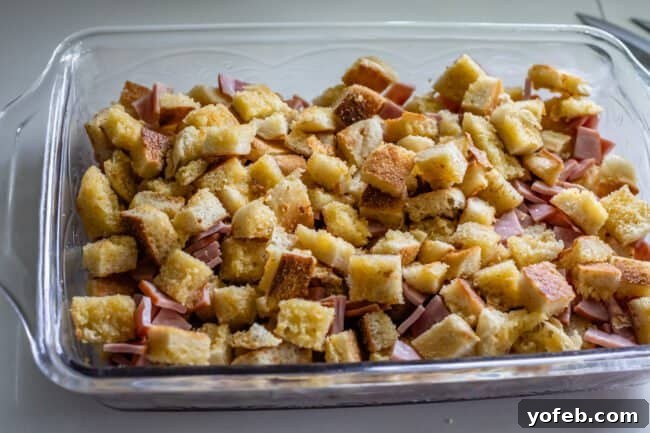
Continue layering: add a portion of Canadian bacon, then chopped English muffins, and repeat until all ingredients are distributed evenly.
Now, it’s time to prepare the creamy egg mixture. In a large bowl or a stand mixer, whisk together eggs, cream, milk, and your chosen spices.

You might be wondering if this is one of those perfectly staged blog photos where I poured milk into a charming jar just for the aesthetic. Think again! My two-year-old, Edison, decided our mostly-full milk jug needed an entire banana peel, which we couldn’t retrieve. So, into jars the milk went! Yes, that’s banana-peel-adjacent milk going into my casserole. And honestly, it still tastes amazing! As for spices, I recommend a blend of onion powder, paprika, dried mustard powder, and a little seasoned salt for that perfect savory kick. Feel free to adjust these to your preference.
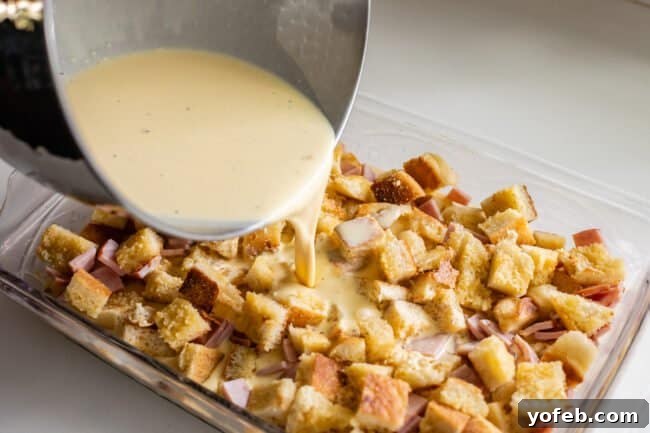
Pour the egg mixture evenly over the English muffins and Canadian bacon in the casserole dish. Gently press down on the bread with your hands to help it fully absorb the liquid. This is a crucial step for achieving that wonderfully moist and custardy texture.

If you’re a fan of a little extra richness, sprinkle some shredded cheese (like Monterey Jack) over the top. While traditional Eggs Benedict doesn’t feature cheese, a casserole often benefits from it, and I simply couldn’t resist! This step is completely optional, as the casserole is fantastic both with and without it. Finally, cover the casserole tightly with foil and refrigerate it overnight. If you’re pressed for time, you can bake it right away, and it will still be delicious, though the texture might be slightly less custardy as the English muffins won’t have had as much time to fully absorb the liquid.
Refrigeration Time: How Long is Too Long?
For the best texture and flavor, aim to refrigerate your overnight egg casserole for at least 4 hours, and ideally, up to 24 hours before baking. This extended soak allows the English muffins to fully absorb the egg mixture, resulting in that wonderfully moist and fluffy interior when baked. However, you don’t want to go much longer than 24 hours. If the English muffins become overly saturated, the texture of your casserole can turn out “funky” – and nobody wants a funky casserole!

When it’s time to bake, simply pop it in the preheated oven. Bake until the center is set (it might jiggle slightly but shouldn’t be liquid-y) and the edges are beautifully browned and crispy. Just look at this golden goodness!
Now It’s Time to Holla… for Hollandaise!
We’re about to take this already fantastic casserole from good to absolutely amazing, my friends. Hollandaise sauce is one of the five “mother sauces” of French cuisine, a glorious emulsion of egg yolks and melted butter, often brightened with lemon juice and a touch of cayenne. It’s the essential accompaniment that truly defines Eggs Benedict.

Our recipe today elevates it further by adding cream, making it even thicker and richer – a decadent complement to the savory casserole. While you can certainly make Hollandaise on the stovetop with a whisk (which is also detailed in the notes below), a blender makes the process incredibly easy and foolproof. The key is to add the warm, melted butter slowly and steadily while the blender is running. This allows the fats to properly emulsify with the egg yolks, creating a smooth, velvety sauce. Be warned: this stuff is so good, you might find yourself constantly dipping your spoon into it!
You can prepare the Hollandaise sauce ahead of time, but a crucial tip: never reheat it in the microwave. The direct heat will cause the egg yolks to curdle, turning your smooth sauce lumpy. Instead, gently warm it by placing the container of sauce in a bowl of hot (not boiling) water for a few minutes, stirring occasionally until it reaches your desired temperature.

Eggs Benedict Bake FAQs
How to “Eggs Florentine” Your Casserole
The Florentines truly know how to elevate a classic! Eggs Florentine is simply the addition of cooked spinach to your dish. Some people replace the Canadian bacon with spinach, but in my opinion, why choose when you can have both? My preference is to simply add it right on top of the meat layer for an extra boost of flavor and nutrition. It’s incredibly easy to do:
- Chop about 2 cups of packed fresh spinach.
- Sauté the spinach in a lightly oiled pan for 1-2 minutes until it’s perfectly wilted. Add a sprinkle of salt for enhanced flavor – you know what’s good for you!
- Once the spinach has cooled slightly, gently squeeze out any excess moisture. This step is essential to prevent your casserole from becoming watery.
- Layer the prepared spinach over your first layer of Canadian bacon in the casserole dish. That’s it! Enjoy your enhanced Eggs Benedict Florentine Casserole.

Troubleshooting: Why is My Egg Casserole Rubbery?
A rubbery egg casserole is usually a sign of too much moisture. The key to a tender, custardy casserole is ensuring your ingredients don’t release excessive water during baking. Here are a few common culprits and how to avoid them:
- Wet Vegetables: Did you add fresh spinach or another watery vegetable without pre-cooking it and squeezing out the moisture? Always sauté vegetables like spinach, mushrooms, or peppers before adding them to your casserole, and then gently press out any excess liquid.
- Frozen Meat: If your Canadian bacon (or any other meat) was frozen, make sure it’s fully thawed and patted thoroughly dry before adding it to the casserole. Excess ice or water will melt and dilute the egg mixture.
- Overbaking: While less common for rubberiness (it usually leads to dryness), overbaking can also affect the texture of eggs. Bake until just set; the center might have a slight jiggle, but should not be liquid.
By keeping an eye on moisture content and baking times, you’ll achieve a consistently perfect, non-rubbery Eggs Benedict Breakfast Casserole!
Storing and Reheating Instructions for Your Casserole
While this casserole is undeniably at its best enjoyed fresh on day one, I’m certainly not one to turn down delicious leftovers! Proper storage and reheating will ensure you can savor it again later.
- Casserole Leftovers: Store any leftover casserole tightly sealed in an airtight container in the refrigerator for up to 4-5 days. This prevents it from drying out. To reheat individual portions, simply microwave for 1-2 minutes, or until heated through. For larger portions, reheat in a preheated oven at 350°F (175°C) for 10-20 minutes, or until warmed through to the center.
- Hollandaise Sauce: Always store the Hollandaise sauce separately from the casserole in its own airtight container in the fridge. As mentioned earlier, Hollandaise will curdle and become lumpy if microwaved directly. To reheat, place the sealed container of sauce into a bowl of very hot (but not boiling) water for several minutes, stirring occasionally until it reaches a warm, smooth consistency.

Can This Eggs Benedict Casserole Be Frozen?
Absolutely! This casserole is an excellent candidate for freezing, making it perfect for even more advanced meal prep, especially for busy holiday mornings or unexpected guests. You have two main options:
- Freezing Unbaked: You can freeze the entire casserole *before* cooking for up to 2 months. Make sure to seal it exceptionally well to prevent freezer burn (I highly recommend using heavy-duty plastic wrap followed by a layer of foil, or placing the casserole dish inside 2-gallon freezer bags for extra protection). When you’re ready to bake, transfer the frozen casserole to the refrigerator to thaw overnight. Once thawed, bake as directed in the recipe. This is a brilliant strategy for getting a significant head start on holiday breakfast preparations!
- Freezing Baked: If you’ve already baked the casserole and wish to save leftovers for later, allow it to cool completely. Then, seal it well (ziplock freezer bags work great for individual portions, or an airtight container for larger sections) and freeze for up to 2 months. Remember to freeze the Hollandaise sauce separately, using the same sealing method. When ready to enjoy, thaw the casserole completely in the refrigerator. Reheat in a preheated oven at 300°F (150°C) for 20-30 minutes, depending on the portion size, until it’s hot throughout. Warm the Hollandaise sauce as described above.

And there you have it! The classic Eggs Benedict, masterfully transformed into a convenient and crowd-pleasing casserole. It’s the ideal choice for Mother’s Day brunch, Easter gatherings, Christmas morning, or any occasion that calls for a special breakfast without the morning rush. The ability to prepare it the night before is a game-changer, making it a guaranteed hit with everyone at the table. Enjoy this delightful dish!
More Incredible Overnight Breakfast Recipes!
- The FLUFFIEST Homemade Cinnamon Rolls of Your Life (Can Make Overnight) << These are an absolute favorite!
- Cheesy Overnight Hashbrown Breakfast Casserole << A guaranteed crowd-pleaser every time!
- Banana Blueberry Overnight Oats with Honey << A simple, healthy, and easy option for busy mornings!
- Easy Overnight French Toast Casserole from A Mind “Full” Mom << Another fantastic make-ahead sweet treat.
- Overnight Breakfast Burritos from Reluctant Entertainer << Perfect for grabbing on the go!
- Overnight Steel Cut Oats from Well Plated << A hearty and healthy start to your day.
Facebook | Pinterest | Instagram
Eggs Benedict Casserole

This Eggs Benedict Casserole recipe is an overnight wonder. English muffins are layered with Canadian bacon, then topped with an egg mixture before you bake. It has all the flavor of classic Eggs Benedict, but you can make it the night before. It’s easy, delicious, and the perfect make-ahead meal for holidays! Overnight breakfast casseroles forever!
Ingredients
- 6 English muffins
- 12 ounces Canadian bacon, chopped
- 8 large eggs
- 1 & 1/3 cups cream*
- 2/3 cup whole milk, or any milk
- 1 teaspoon kosher salt
- 1/2 teaspoon seasoned salt, I like Lawry’s
- 1/2 teaspoon black pepper
- 1 teaspoon onion powder
- 1/2 teaspoon paprika
- 1/2 teaspoon dried mustard powder
- 1 cup Monterey Jack, shredded, optional
For the Sauce
- 4 egg yolks
- 1/2 cup cream*
- 2 tablespoons lemon juice
- 1 teaspoon Dijon mustard
- 1/8 teaspoon cayenne pepper
- dash kosher salt
- 1/2 cup butter, melted
Instructions
-
Grease a 9×13 inch casserole dish with butter, or spray with non-stick spray.
-
Chop all the Canadian bacon into bite-sized pieces. Add HALF to the bottom of the casserole dish and spread out evenly.
-
Split the English muffins with a fork. Toast each half, spread with butter, and then chop them all into 1-inch pieces (try not to take too many bites!). You can also do this step in the oven: spread each muffin half with butter, chop them into pieces, then broil on an ungreased baking sheet for 1-2 minutes until golden, flip, and broil again until toasty.
-
Add half of your English muffin pieces to the casserole dish, on top of the Canadian bacon. Repeat the layers: add the remaining Canadian bacon, then add the rest of the English muffins.
-
Make the egg mixture. In a large bowl or stand mixer, whisk together 8 eggs, 1 and 1/3 cups cream, 2/3 cup milk, 1 teaspoon kosher salt, 1/2 teaspoon seasoned salt, 1/2 teaspoon black pepper, 1 teaspoon onion powder, 1/2 teaspoon paprika, and 1/2 teaspoon mustard powder. Beat until well mixed and uniform.
-
If using, sprinkle 1 cup of shredded cheese over the top of the layers. This is optional but adds a delicious touch!
-
Pour the egg mixture over the English muffins and Canadian Bacon, ensuring the liquid is distributed evenly throughout the casserole.
-
Cover the casserole well with foil and refrigerate overnight, or for at least 4 hours. This allows the bread to fully absorb the liquid, creating a wonderfully moist texture.
-
Remove the casserole from the refrigerator while you preheat the oven to 375°F (190°C). Ensure the casserole is covered with foil if it isn’t already. Bake at 375°F for 35 minutes. Remove the foil and continue baking for another 10-15 minutes, or until the center is set and a butter knife inserted into the center comes out clean with no wet egg mixture. The casserole may jiggle slightly, but should not be liquid or “sloshy.”
-
Make the hollandaise sauce. This is easiest in a blender. Add 4 egg yolks, 1/2 cup cream, 2 tablespoons lemon juice, 1 teaspoon Dijon mustard, 1/8 teaspoon cayenne pepper, and a dash of salt to a blender. Blend on high for at least 30 seconds. This blending time helps warm the yolks, making them more ready to emulsify with the butter.
-
Melt 1/2 cup butter in the microwave for about 15-20 seconds, until it is mostly melted but not fully steaming hot. Stir until any remaining butter melts. You want the butter warm and melted, but not scorching hot when you add it to the eggs.
-
With the blender running on low to medium speed, slowly drizzle the warm melted butter into the small opening on the lid of your blender. Continue blending until all the butter is added and the mixture is smooth, thick, and creamy. (See notes below for stovetop instructions if you prefer not to use a blender).
-
Serve the hollandaise sauce over the baked casserole. You can drizzle the sauce over individual portions, or spoon it over the entire casserole for a beautiful presentation.
-
Store leftover casserole in an airtight container in the fridge for 4-5 days.
-
Remember, hollandaise sauce does not reheat well in the microwave as it tends to curdle. Store it separately from the casserole. To warm it again for serving, set the container of hollandaise into a bowl of very hot or simmering water for a few minutes, stirring gently until warm.
Notes
*Cream is a dairy product derived from cows, typically found near the milk in your grocery store. You can use heavy cream, whipping cream, or ultra-heavy whipping cream for this recipe. Please do not use coffee creamer.
**I’ve been that impatient person who couldn’t wait! If you want to bake this casserole right away instead of refrigerating overnight, gently press the English muffins into the pan with your hands a bit after pouring on the egg mixture to help them absorb the liquid. Bake as instructed. Your casserole will still be quite delicious, though it may not be quite as moist and fluffy as one that has had time to soak overnight.
To make the hollandaise sauce on the stove: In a double boiler or a heatproof metal bowl set over simmering water (ensure the bowl does not touch the water), constantly whisk all the hollandaise ingredients (egg yolks, cream, lemon juice, Dijon mustard, cayenne pepper, and a dash of salt – *except the butter*) until the mixture reaches 160°F, or is thick enough to coat the back of a spoon. Reduce the heat to low. Slowly drizzle in the warm melted butter, whisking constantly until the sauce is smooth and emulsified. Serve immediately with the casserole. You can drizzle it over the whole pan or portion it onto individual plates.
Nutrition
Mention @thefoodcharlatan or tag #thefoodcharlatan!