
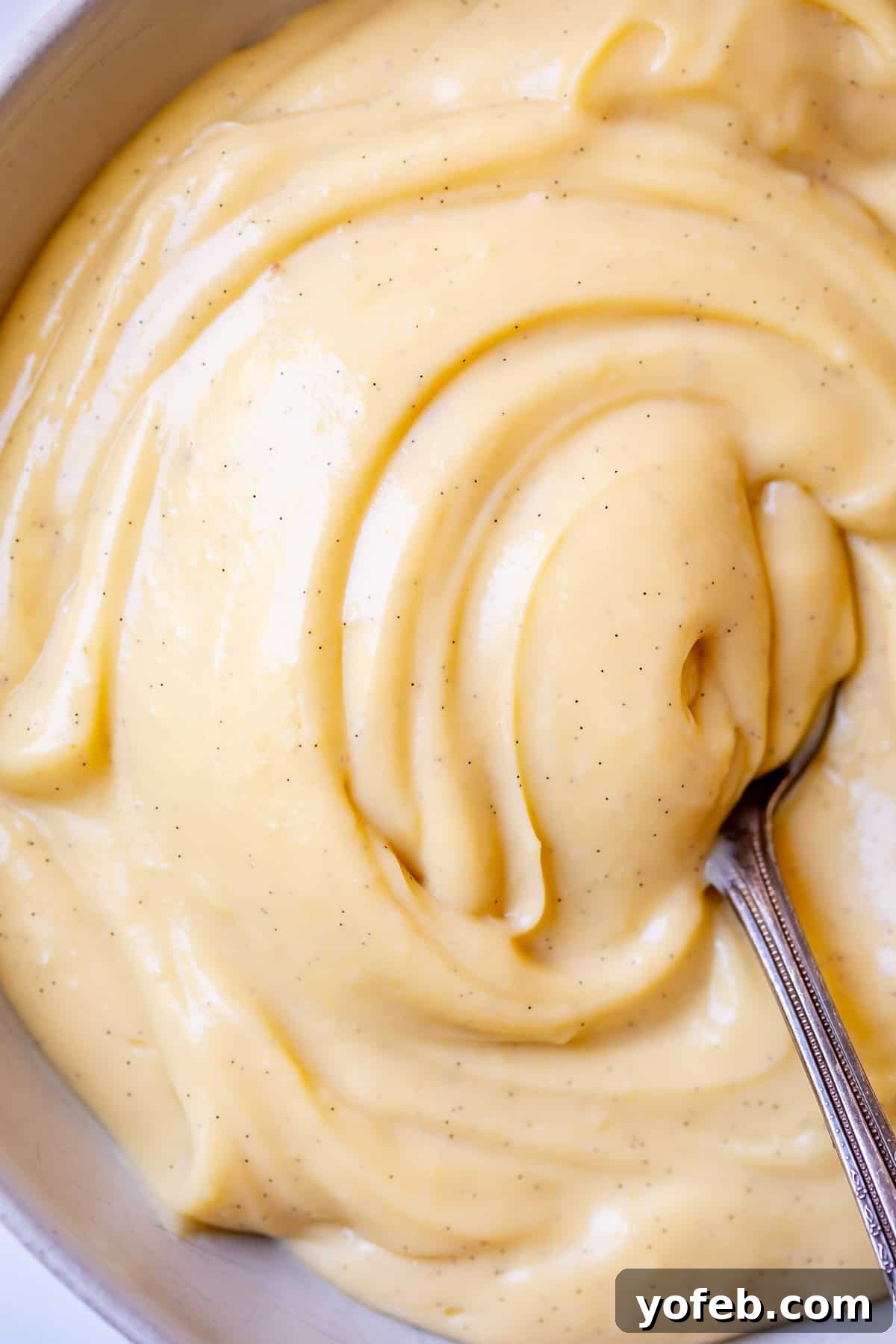
Pastry cream is a delicious pudding-like custard that you never knew you needed! Also called Crème Pâtissière, this French recipe is an important part of many desserts, like eclairs and fruit tarts. It is similar to vanilla pudding but much thicker (perfect for piping and filling Bavarian Cream Donuts!) It is made in 10 minutes and uses pantry staples: egg yolks, milk, and cornstarch. Originally published September 28, 2023.
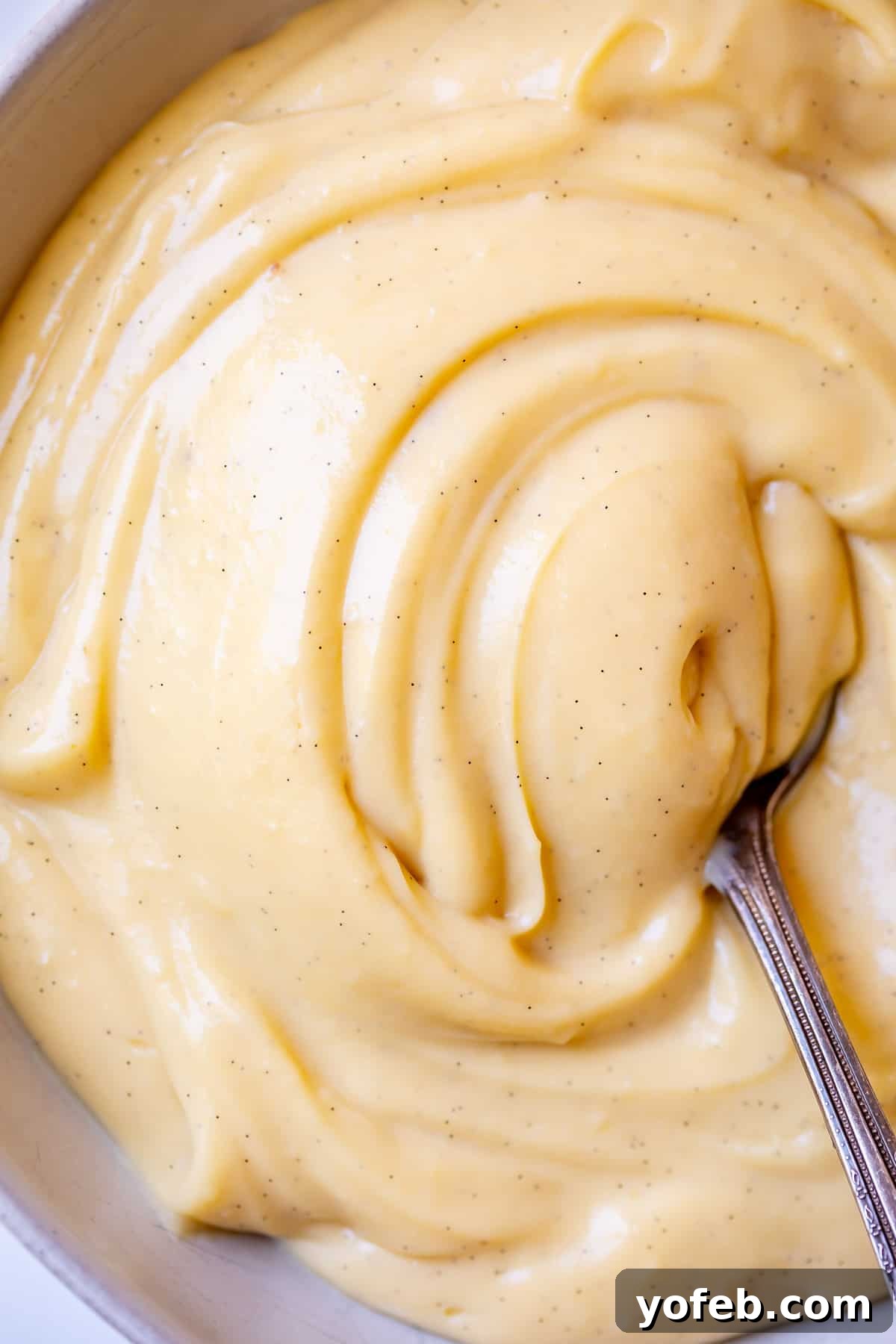
Table of Contents
- The Only Pastry Cream Recipe You’ll Ever Need: Master Crème Pâtissière
- What is Pastry Cream (Crème Pâtissière)? A Delicious Culinary Essential
- Why This Recipe is a Game-Changer (No Tempering!)
- Essential Pastry Cream Ingredients: Simple Pantry Staples for a Gourmet Treat
- Step-by-Step Guide to Making Perfect Pastry Cream (No Tempering Required!)
- Creative Ways to Use Your Delicious Pastry Cream Filling
- Clever Ideas for Leftover Pastry Cream: Don’t Let a Drop Go to Waste!
- Storage Tips for Homemade Pastry Cream: Keeping It Fresh and Delicious
- Frequently Asked Questions About Pastry Cream (Crème Pâtissière)
- More Irresistible Dessert Recipes to Explore
- Easy Homemade Pastry Cream Recipe
Every parent knows the struggle of wrangling kids, and in our house with six energetic humans, it often feels like herding a particularly mischievous flock of cats. Just last night, as we attempted to gather for our usual family prayer, my three-year-old son, Edison, vanished into his bedroom. Despite my best efforts—and an actual dinner bell meant to encourage serene tinkling rather than my usual “GET YOUR BOOTIES DOWN HERE NOW”—Edison has a unique knack for testing even my seasoned mom patience.
After a brief, spirited chase, he eventually rejoined our circle, nonchalantly munching on something. My immediate investigation led me to an enormous, Costco-sized bag of popcorn tucked away in the corner of his closet. My initial thought was, “What on earth? Who does this kid think he is, sequestering midnight snacks?” But then I tasted it, and the shocking staleness revealed a longer history than I anticipated. Apparently, my little secret snack thief had been at it for quite a while!
Further exploration of his clandestine hideaway revealed a treasure trove of other stolen household items, as if he were Dobby the house elf, diligently gathering trinkets. I unearthed an open tube of toothpaste, a collection of my hair clips, Charlotte’s missing socks, a full glass of water, and even some dental floss. Perhaps he’s brushing and flossing diligently after every secret dive into the popcorn bag? One can only hope!
Honestly, I don’t know why I continue to be surprised by my own children. They are a constant source of unpredictable antics. Just the other day, while helping Edison get dressed, he looked me straight in the eye and slyly declared, “Close your eyes, Mom, I’m naked.” Three years old, my friends! Excuse me while my eyes perform a dramatic roll into the back of my head.
The Only Pastry Cream Recipe You’ll Ever Need: Master Crème Pâtissière
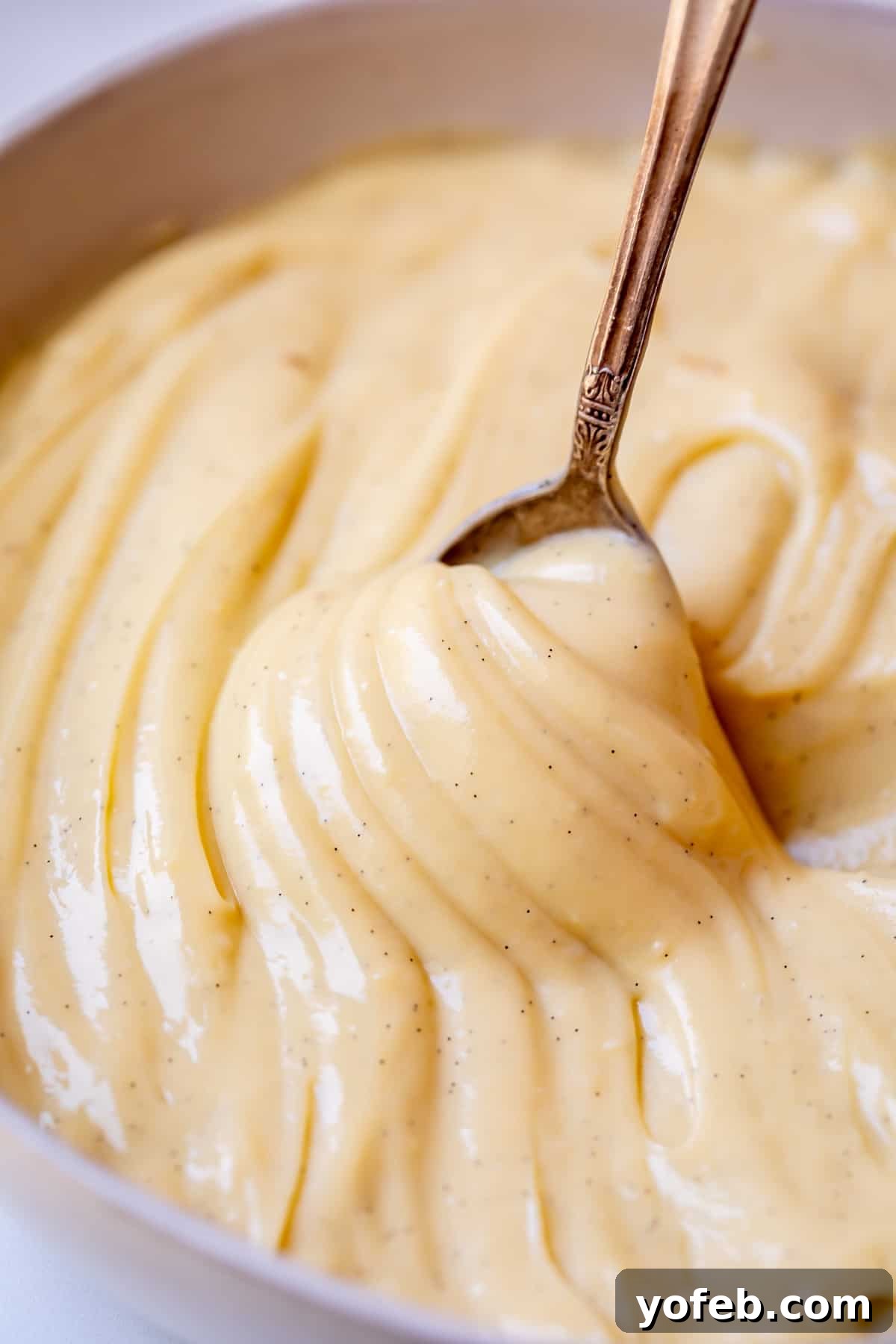
Today, I have a truly special treat for you: a recipe for homemade pastry cream that will revolutionize your dessert game! This simple yet sophisticated Crème Pâtissière is the foundational step to creating countless amazing desserts, from elegant fruit tarts to delectable Bavarian Cream Donuts. If you’ve ever dreamt of crafting bakery-quality treats at home, mastering pastry cream is your secret weapon.
Just like any classic culinary staple, there are myriad ways to prepare pastry cream. However, I’ve refined this recipe to be incredibly easy and utterly foolproof, even for those new to French patisserie. If you’ve been following my culinary adventures, you know I favor practical, delicious recipes over overly complicated techniques. French cooking can often feel intimidatingly fancy, but I promise, this approach strips away the complexity without sacrificing flavor or texture.
Why This Recipe is a Game-Changer (No Tempering!)
One of the most daunting aspects of traditional pastry cream recipes is the egg-tempering process. This involves slowly whisking hot liquid into egg yolks to gradually raise their temperature, preventing them from curdling. While effective, it requires a careful, continuous whisking motion that often feels like you need an extra set of hands or a professional sous chef! My simplified method bypasses this fuss entirely, making homemade pastry cream accessible to everyone.
Instead of the traditional tempering dance, we harness the power of a hand mixer and a microwave. This innovative technique allows you to quickly heat the milk and then pour it into the egg mixture while vigorously beating. The rapid whisking effectively emulsifies the ingredients, ensuring a smooth, lump-free custard without any risk of scrambled eggs. It’s a truly dreamy solution that saves time and effort, letting you focus on the joy of baking.
Another unique touch in this recipe is the optional addition of a little brown sugar. While completely untraditional for classic Crème Pâtissière, I adore the subtle, caramel-like depth it adds to the flavor profile. If you prefer a more classic taste, feel free to substitute with an equal amount of granulated sugar. But I encourage you to try the brown sugar at least once; it introduces a wonderful warmth that complements the vanilla beautifully, making this pastry cream uniquely irresistible.
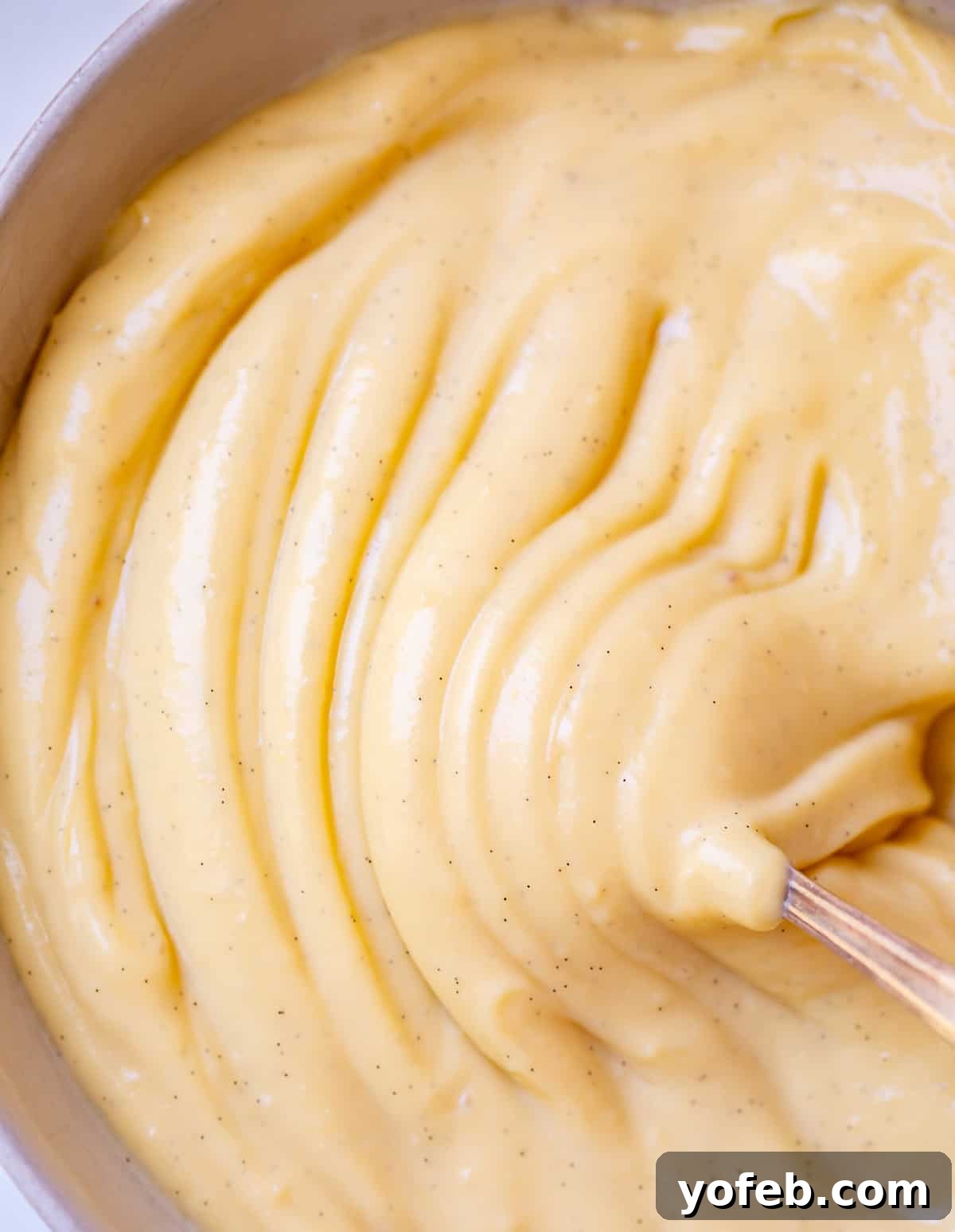
What is Pastry Cream (Crème Pâtissière)? A Delicious Culinary Essential
At its heart, pastry cream is precisely what its name implies: a rich, creamy filling found within pastries. It’s the delightful surprise you encounter when biting into a perfectly crafted donut or a delicate eclair, realizing it’s not just a plain bread interior, but a luscious, vanilla-infused “good.” This beloved French custard, known as Crème Pâtissière, is a foundational element in classical and modern baking, distinguishing many desserts with its unparalleled texture and flavor. The English term “pastry cream” is simply a more approachable way for us to refer to this exquisite French creation, saving us from attempting (and likely butchering) its elegant pronunciation.
Think of pastry cream as a more robust, sophisticated cousin to traditional vanilla pudding. While both are milk-based custards thickened with egg yolks, pastry cream incorporates a crucial ingredient: cornstarch. This addition is key to its distinctive properties, making it significantly thicker and more stable than typical pudding. In my quest to perfect various custards—especially for the ultimate cream-filled donut—I experimented extensively. While my vanilla pudding recipe achieves a wonderfully creamy texture perfect for eating with a spoon, pastry cream takes it a step further.
The added thickness of pastry cream offers several distinct advantages, making it ideal for filling baked goods:
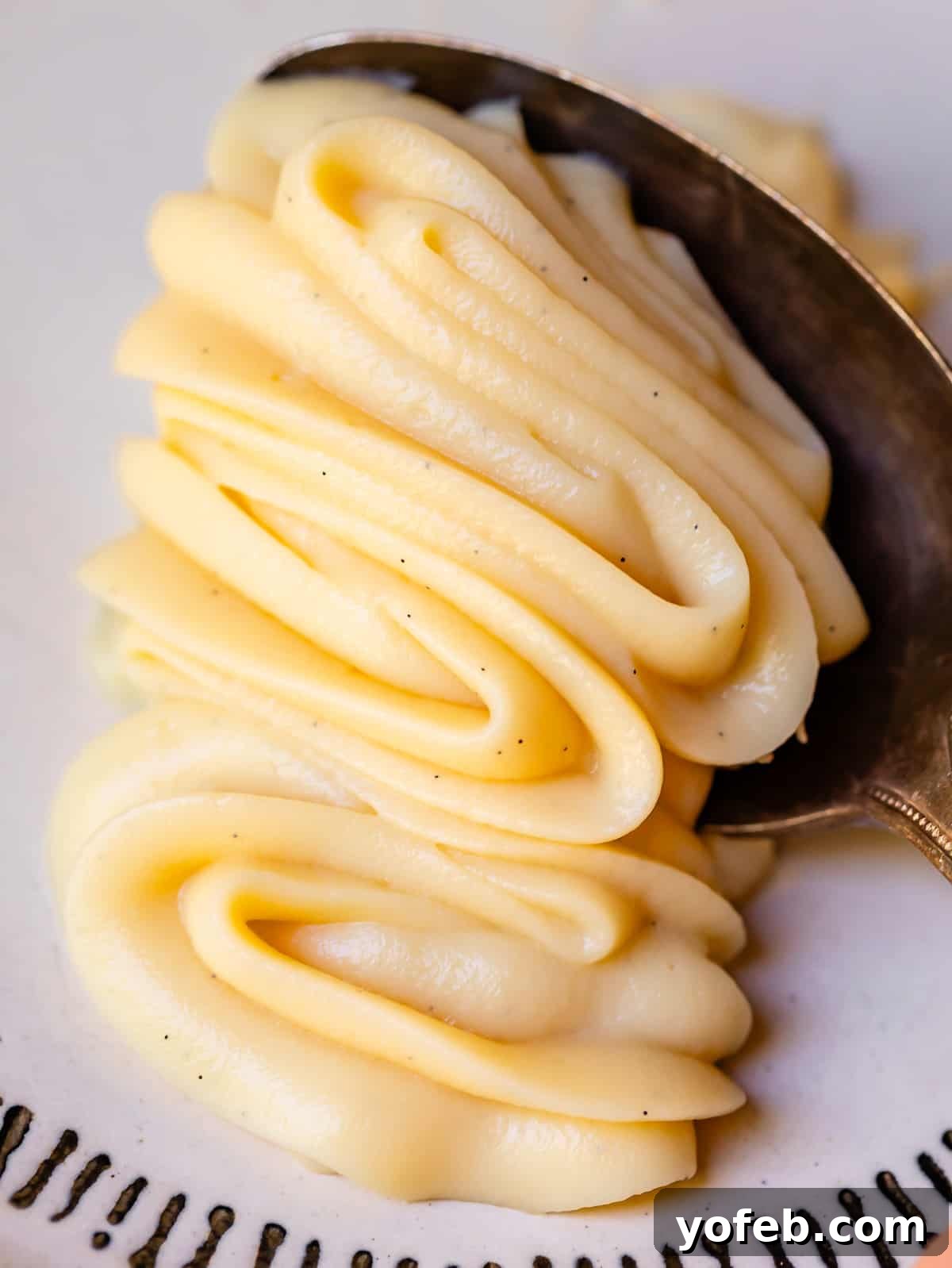
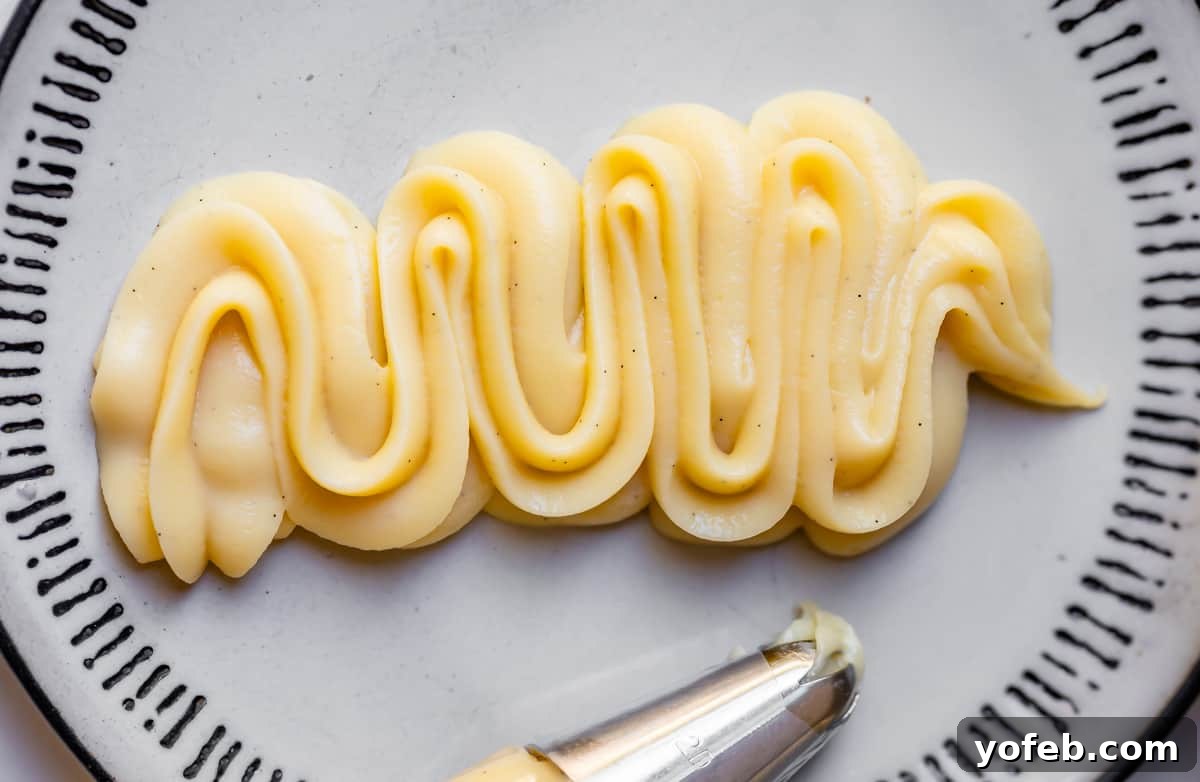
- **Superior Shape Retention:** Its robust consistency allows pastry cream to hold its shape beautifully, making it perfect for piping into eclairs, cream puffs, or donuts. You won’t have to worry about it oozing out the sides, maintaining the integrity and presentation of your desserts.
- **Prevents Soggy Pastries:** Unlike thinner fillings, pastry cream is less likely to absorb into delicate pastry shells. This means your flaky, buttery crusts will remain crisp and delightful, complementing the creamy filling rather than being overwhelmed by it. Nobody wants their perfectly baked choux pastry or fruit tart shell compromised by a too-wet interior.
In essence, pastry cream provides the perfect balance of richness, sweetness, and structural integrity, making it indispensable for any baker looking to elevate their dessert repertoire. Its smooth, velvety texture and deep vanilla flavor transform simple baked goods into extraordinary culinary experiences.
Essential Pastry Cream Ingredients: Simple Pantry Staples for a Gourmet Treat
One of the many beauties of homemade pastry cream is that it relies on a handful of basic ingredients, many of which you likely already have in your pantry or refrigerator. This recipe proves that you don’t need exotic items to create something truly delicious and impressive. With just a few quality components, you can whip up a batch of rich, velvety Crème Pâtissière that will elevate any dessert.
Here’s a quick overview of what you’ll need. For the full, precise measurements and detailed instructions, refer to the recipe card below. While most ingredients are readily available, consider splurging on a vanilla bean if you’re looking to achieve that authentic, restaurant-quality vanilla flavor; otherwise, high-quality vanilla extract works beautifully.
- **Egg Yolks:** These are crucial for richness, color, and thickening. They give pastry cream its signature luxurious texture.
- **Granulated Sugar:** Provides essential sweetness and helps with the custard’s smooth consistency.
- **Brown Sugar (optional!):** A non-traditional but highly recommended addition that lends a subtle, warm caramel note. You can easily substitute it with more granulated sugar if preferred.
- **Kosher Salt:** A pinch of salt balances the sweetness and enhances all the other flavors, making the cream taste more vibrant.
- **Cornstarch:** This is the magic ingredient that provides the necessary stability and thickness, allowing the pastry cream to hold its shape for filling and piping.
- **Whole Milk:** The base of our custard. Whole milk provides the richest flavor and creamiest texture. While other milks can be used, whole milk yields the best results.
- **Butter:** Stirred in at the end, butter adds a silky mouthfeel and an extra layer of luxurious flavor, contributing to the cream’s smooth finish.
- **Vanilla Bean or Vanilla Extract:** The star flavor! A fresh vanilla bean offers unparalleled depth with its tiny flecks of pure vanilla, but a good quality vanilla extract is a perfectly acceptable and delicious alternative.
Gathering these simple ingredients is the first step towards creating an incredibly versatile and irresistibly delicious homemade pastry cream that will become a staple in your baking repertoire.
Step-by-Step Guide to Making Perfect Pastry Cream (No Tempering Required!)
Creating luscious homemade pastry cream might seem intimidating, but with this simplified method, you’ll achieve perfect results every time. Follow these steps carefully to master this essential dessert filling.
1. Prepare the Egg Yolk Base
First things first, we need to separate our eggs. The yolks are packed with flavor and are essential for achieving that wonderfully thick, creamy texture we desire for our pastry cream. Carefully separate 4 large egg yolks, reserving the whites for another recipe if you wish.
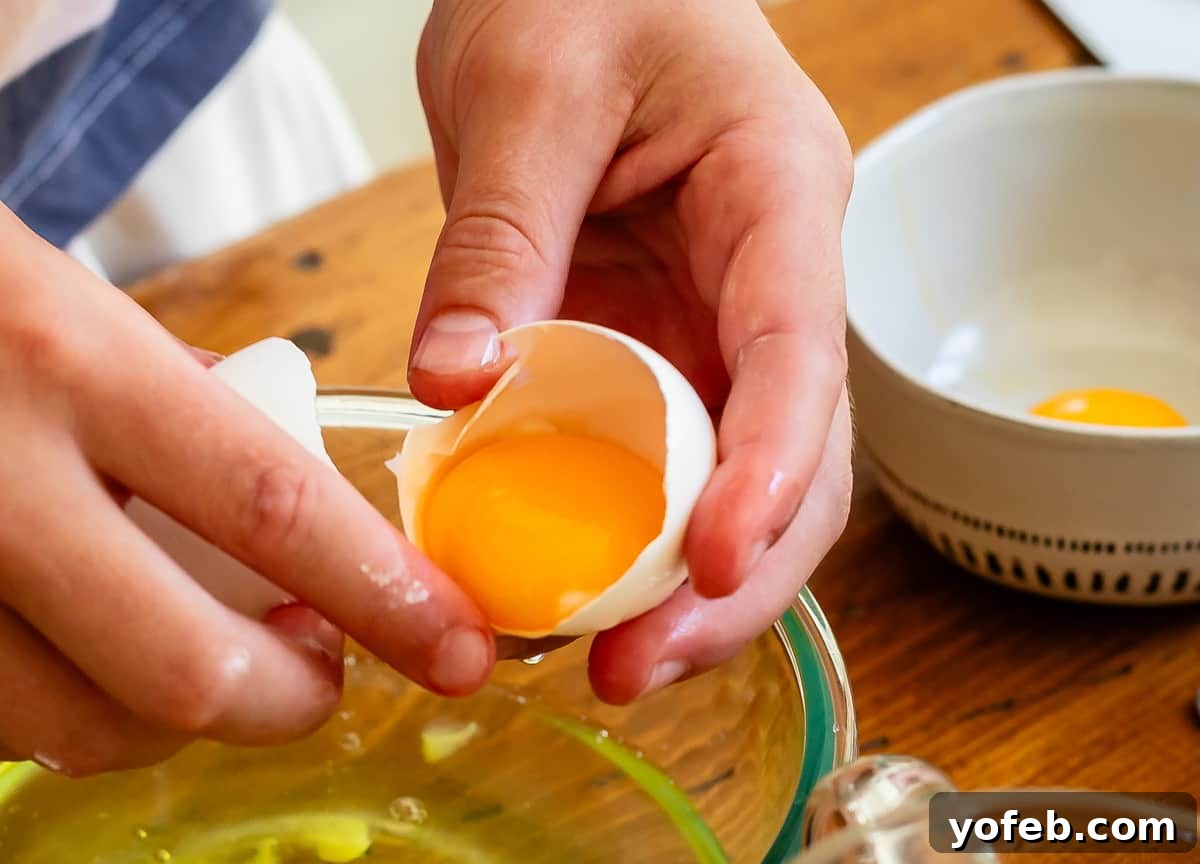
Add these vibrant egg yolks to a 3-quart saucepan. Importantly, ensure the saucepan is *not* on the stove yet. For now, it’s simply acting as your mixing bowl.
2. Combine Dry Ingredients and Initial Milk
To the saucepan with the egg yolks, add your dry ingredients: 1/2 cup granulated sugar, 1/4 cup packed brown sugar (or substitute with more granulated sugar for a classic flavor), and 1/2 teaspoon kosher salt, and 1/4 cup cornstarch. The cornstarch is crucial here, as it provides the stability and thickness that differentiates pastry cream from regular pudding.
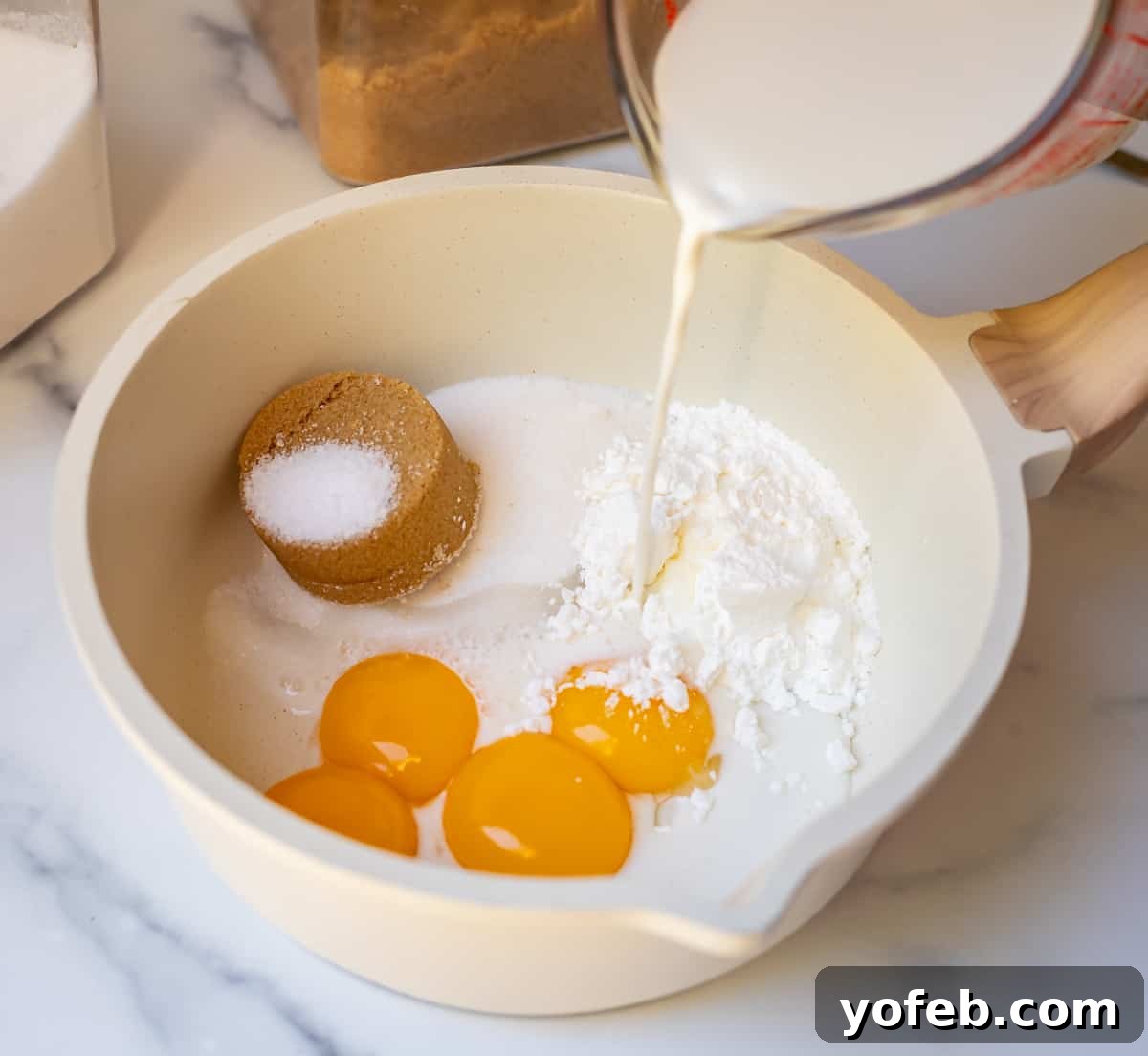
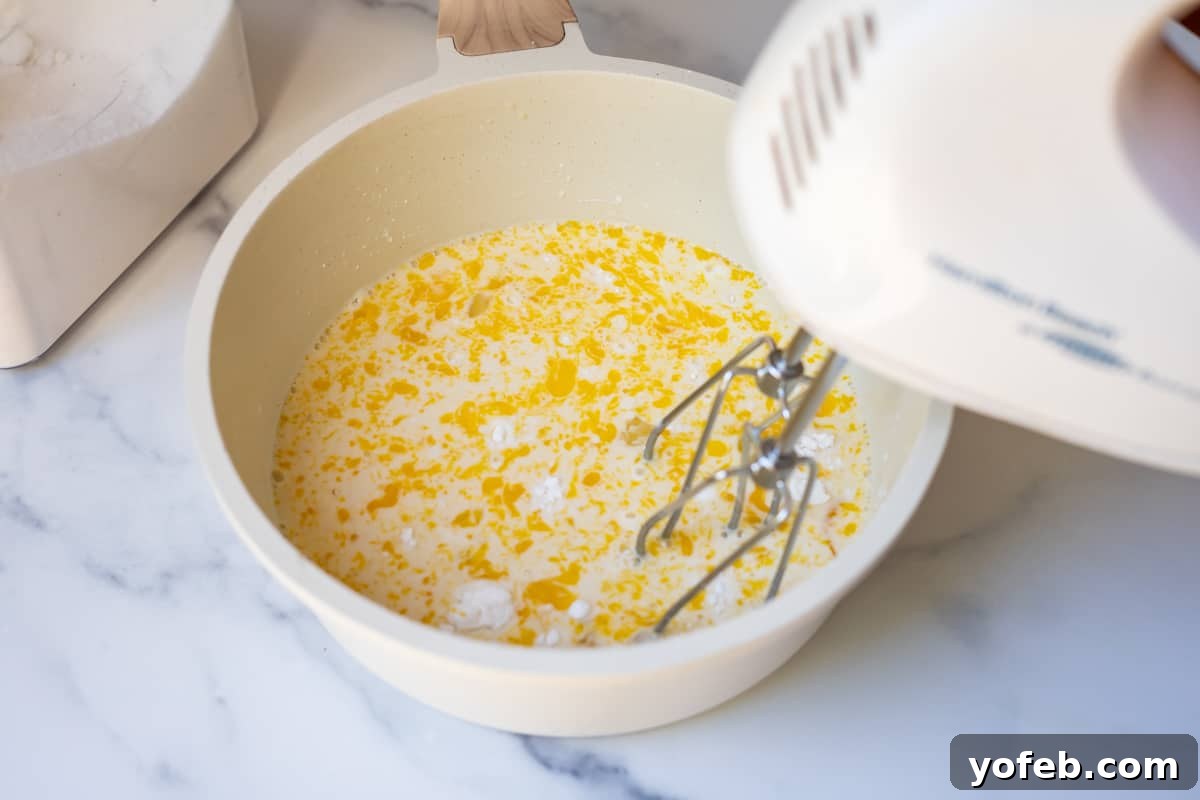
Next, pour in 1 cup of whole milk (this is half of the total milk required). Using a hand mixer, beat the mixture on high speed for at least one minute. Continue beating until the mixture is completely smooth and you no longer see any distinct yellow streaks from the egg yolks. This vigorous mixing is vital for achieving a silky, lump-free custard.
3. Infuse and Heat the Remaining Milk
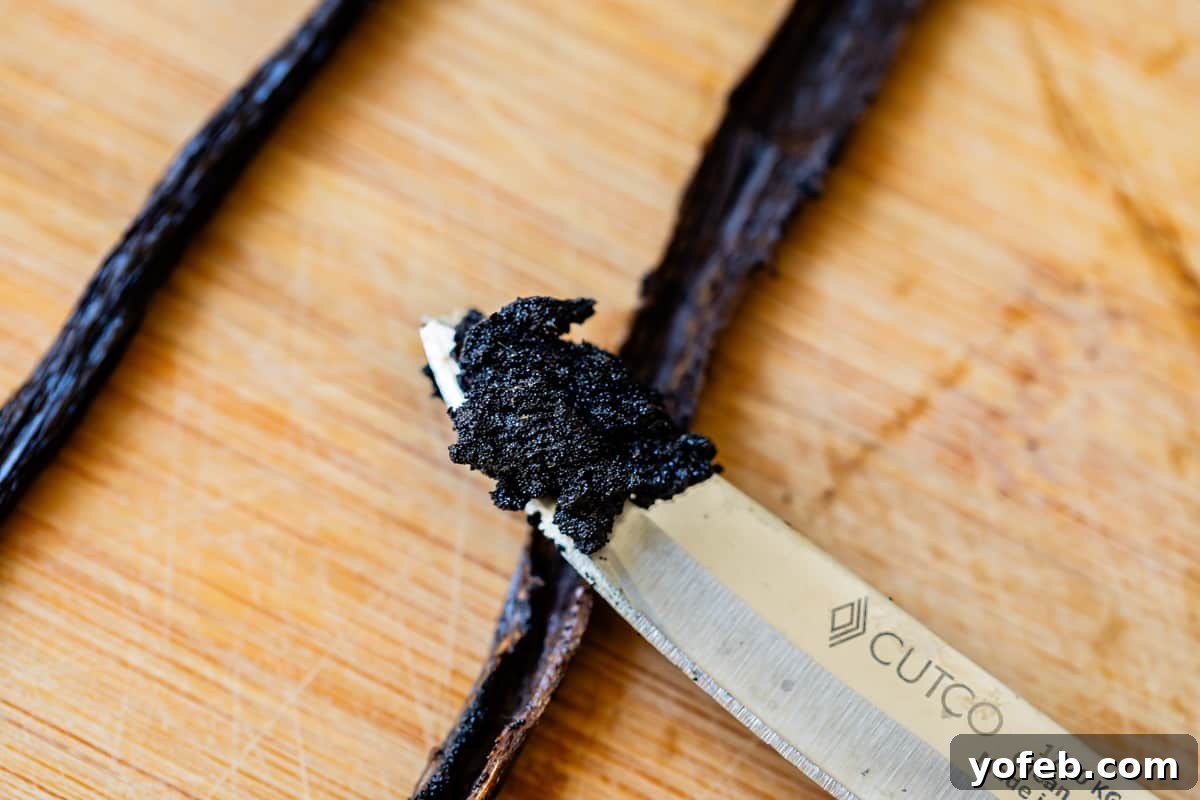
Once your egg mixture is frothy and smooth, turn your attention to the vanilla. If using a vanilla bean, carefully slice it in half lengthwise. Use the back of your knife to scrape out the tiny, aromatic seeds and add them to a glass measuring cup or a microwave-safe bowl with a spout. Pour in the remaining 1 cup of whole milk.
Microwave this milk for 2-3 minutes, keeping a close eye on it. You want the milk to reach a gentle simmer, just bubbling and foaming at the edges. As soon as you see bubbles, remove it immediately from the microwave. This step helps to infuse the milk with deep vanilla flavor and heats it sufficiently for the next crucial stage.
4. Combine Hot Milk with Egg Mixture (No Tempering Trick!)
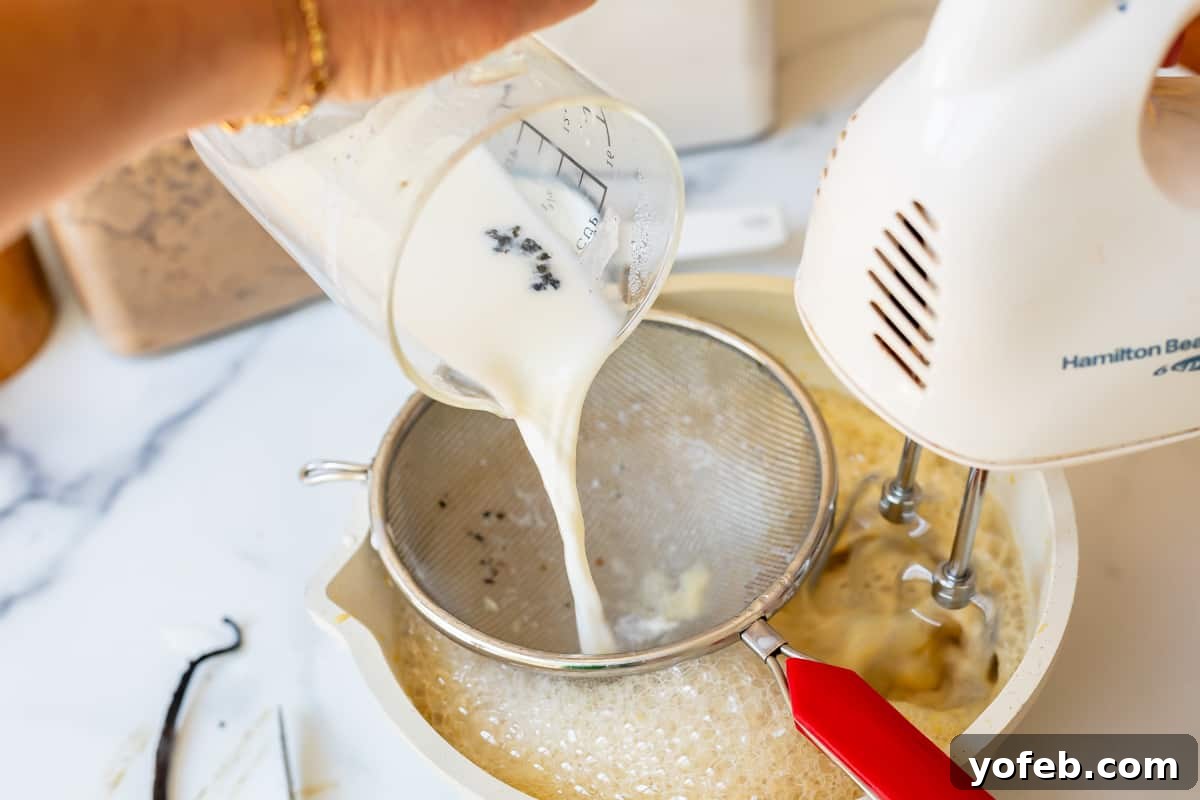
This is where our no-temper technique shines! Working quickly, turn your hand mixer back on to medium speed, vigorously beating the egg mixture in the saucepan. While the mixer is running continuously, carefully and steadily pour the hot vanilla-infused milk into the egg mixture. The rapid whisking will prevent the eggs from curdling, effectively emulsifying the mixture without the need for traditional tempering. You may notice a thin film on top of the hot milk; it’s best to leave this behind and not scrape it into your custard. Do your best to scrape in as many vanilla bean seeds as possible, if you’re using them. (As shown in some photos, I sometimes pour the hot milk through a fine-mesh strainer to catch any larger bits of the vanilla pod.)
Continue beating the now-warm egg and milk mixture with the hand mixer for another minute until it becomes foamy. This ensures everything is well combined and homogenized.
5. Cook and Thicken on the Stove
Now, transfer your saucepan to the stove and set the heat to medium. (Don’t worry if your pot looks different from some photos; I used a few different ones during testing!).
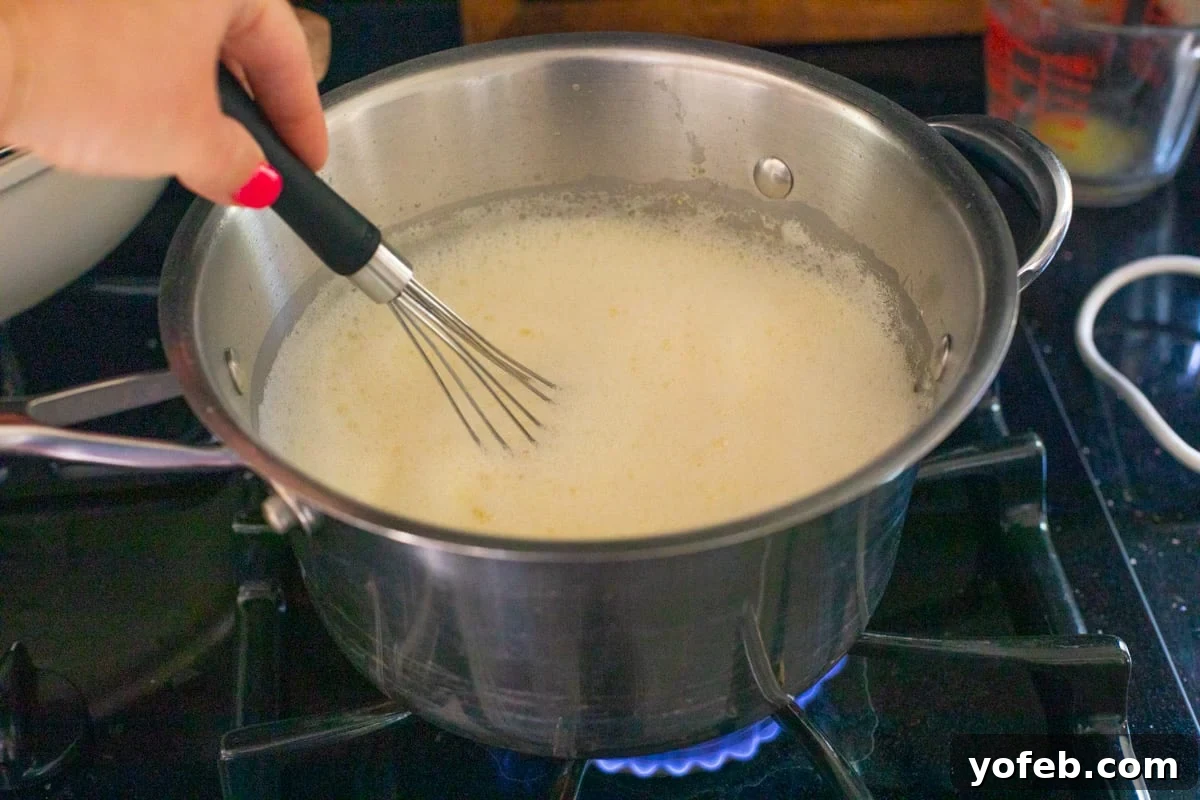
This step requires your full attention: you must stir constantly to prevent lumps from forming and to ensure even cooking. I highly recommend using a flat whisk for this task, as its design allows it to scrape into the corners of your pot very effectively. Cook the mixture over medium heat for approximately 2-5 minutes, continuously stirring, until it visibly thickens and starts to bubble. Once it begins to bubble, whisk vigorously for another 15-45 seconds to ensure the cornstarch is fully activated and the cream reaches its peak thickness.
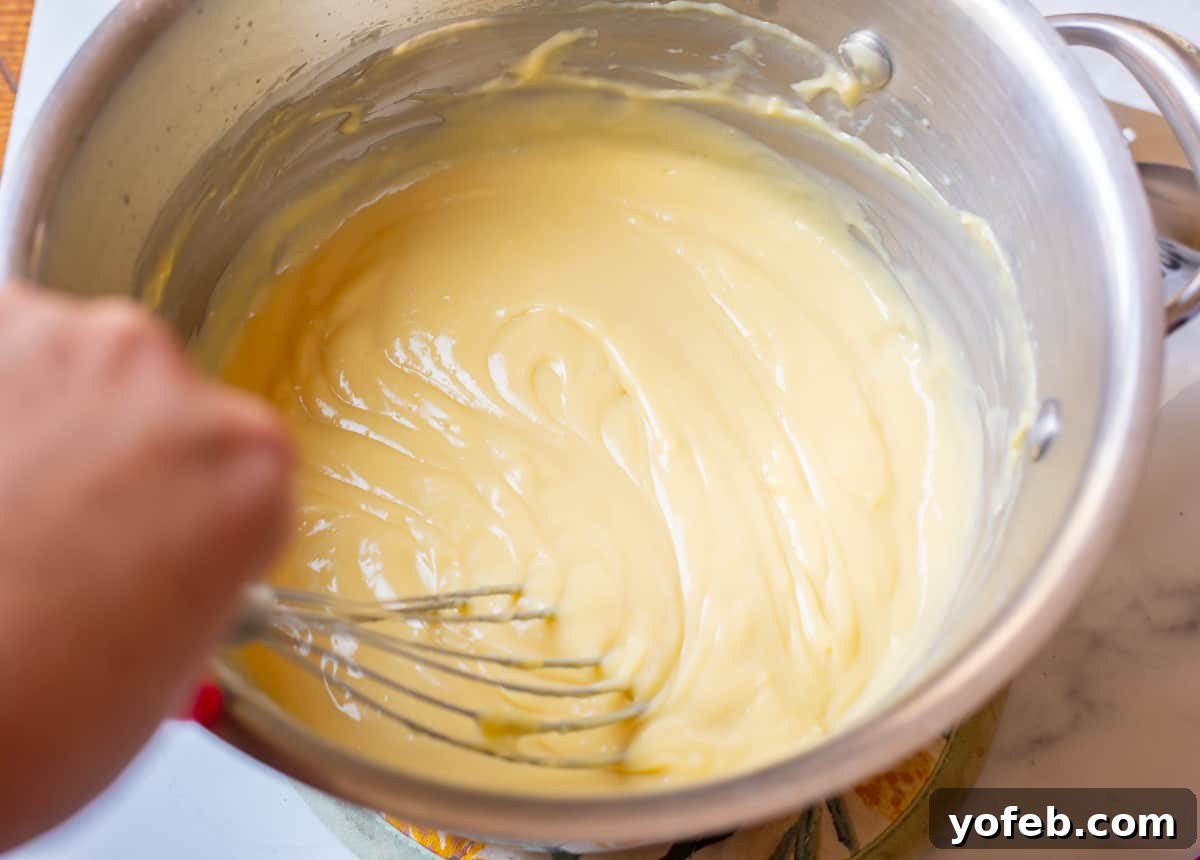
You’ll know your pastry cream is ready when a whisk leaves clear, distinct marks on the surface as you drag it across. The mixture should feel quite thick, but remember it will continue to firm up as it cools. For precise consistency, especially if you plan on piping, you can use a thermometer to check; it should reach 200°F (93°C). If it doesn’t quite hit 200°F, it’s generally okay, but your custard might be slightly less sturdy, which could impact piping applications.
6. Finish with Butter and Vanilla
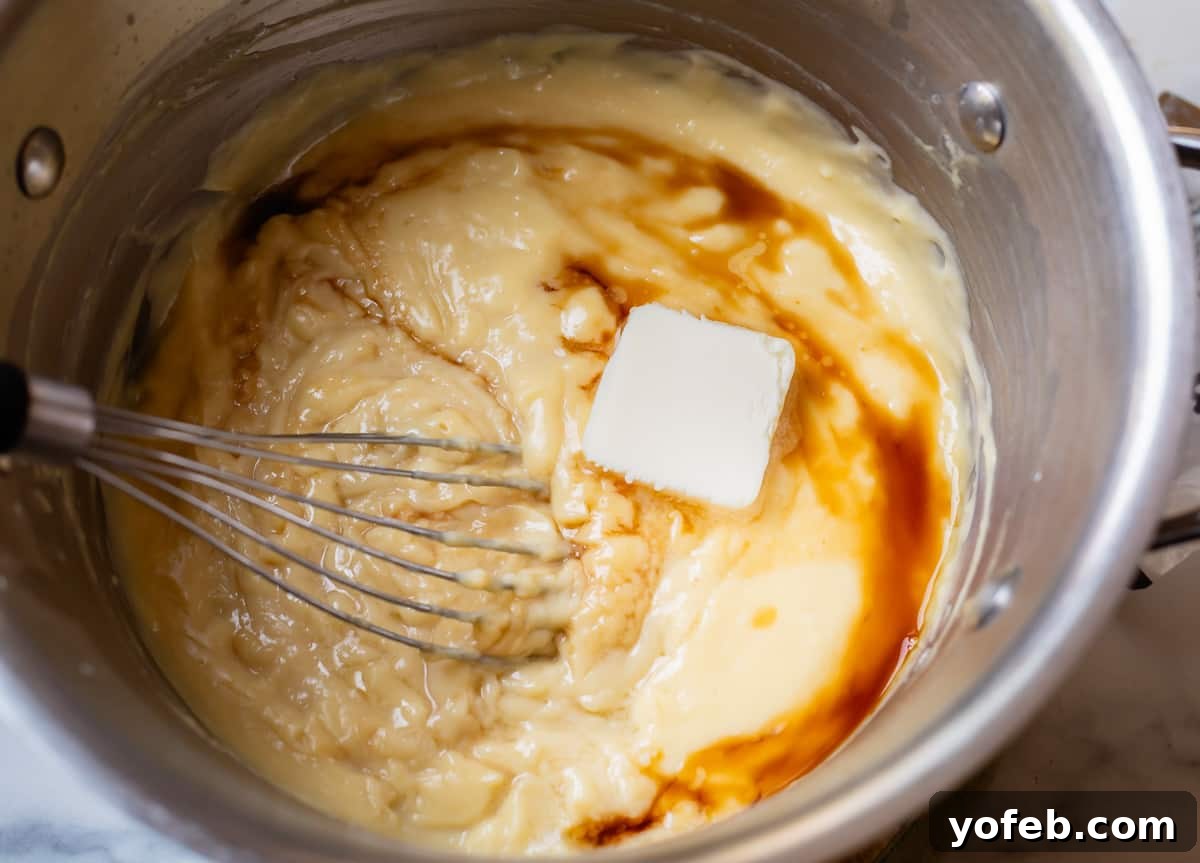
Remove the pot from the stove. Stir in 2 tablespoons of butter until it’s fully melted and incorporated, adding a luxurious sheen and smooth texture. If you opted for vanilla extract instead of a vanilla bean, now is the time to stir in 1 tablespoon of high-quality vanilla extract. Whisk thoroughly to ensure everything is evenly distributed.
7. Strain for Ultimate Smoothness
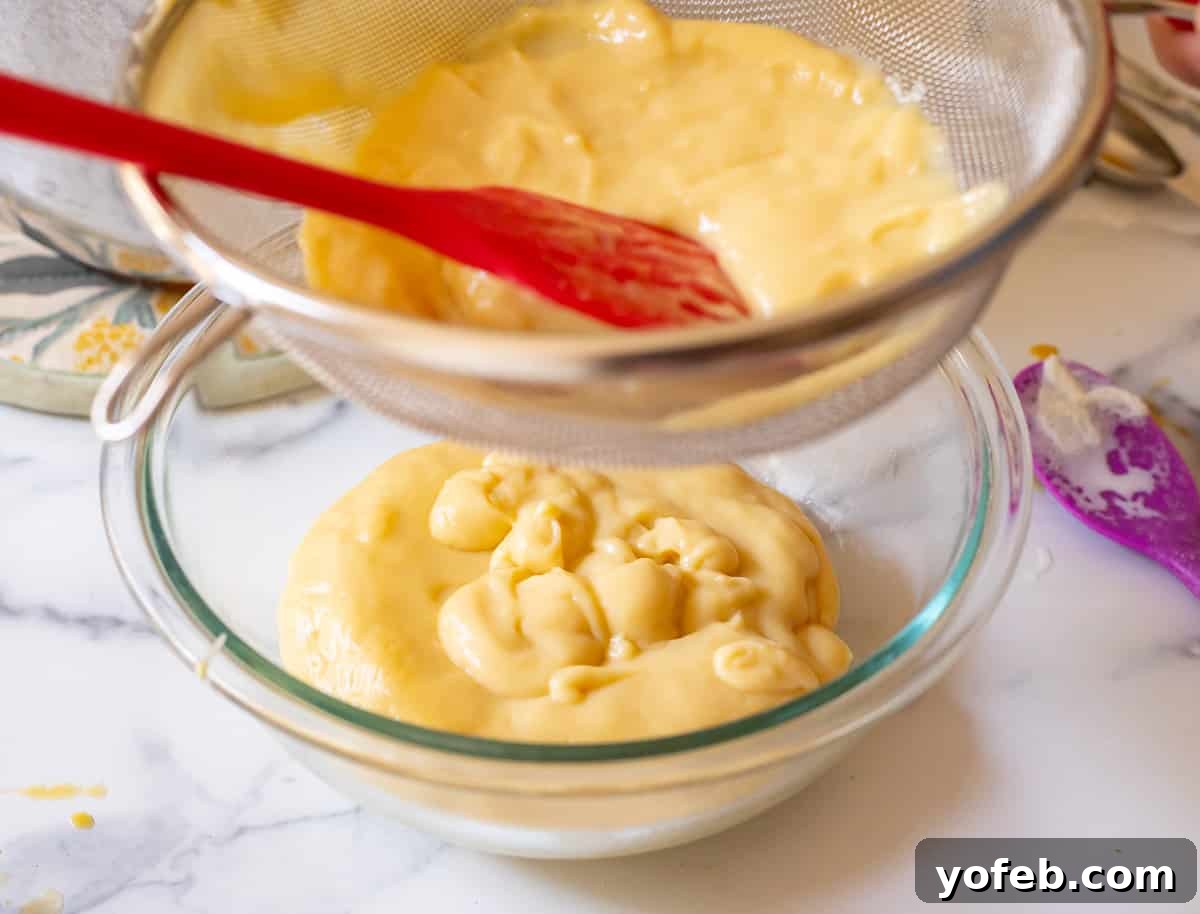
For an exceptionally smooth and lump-free pastry cream, press the hot mixture through a fine-mesh strainer into a clean medium bowl. This step ensures that any tiny bits of cooked egg or undissolved cornstarch are removed, leaving you with a perfectly silky custard.
8. Chill Properly
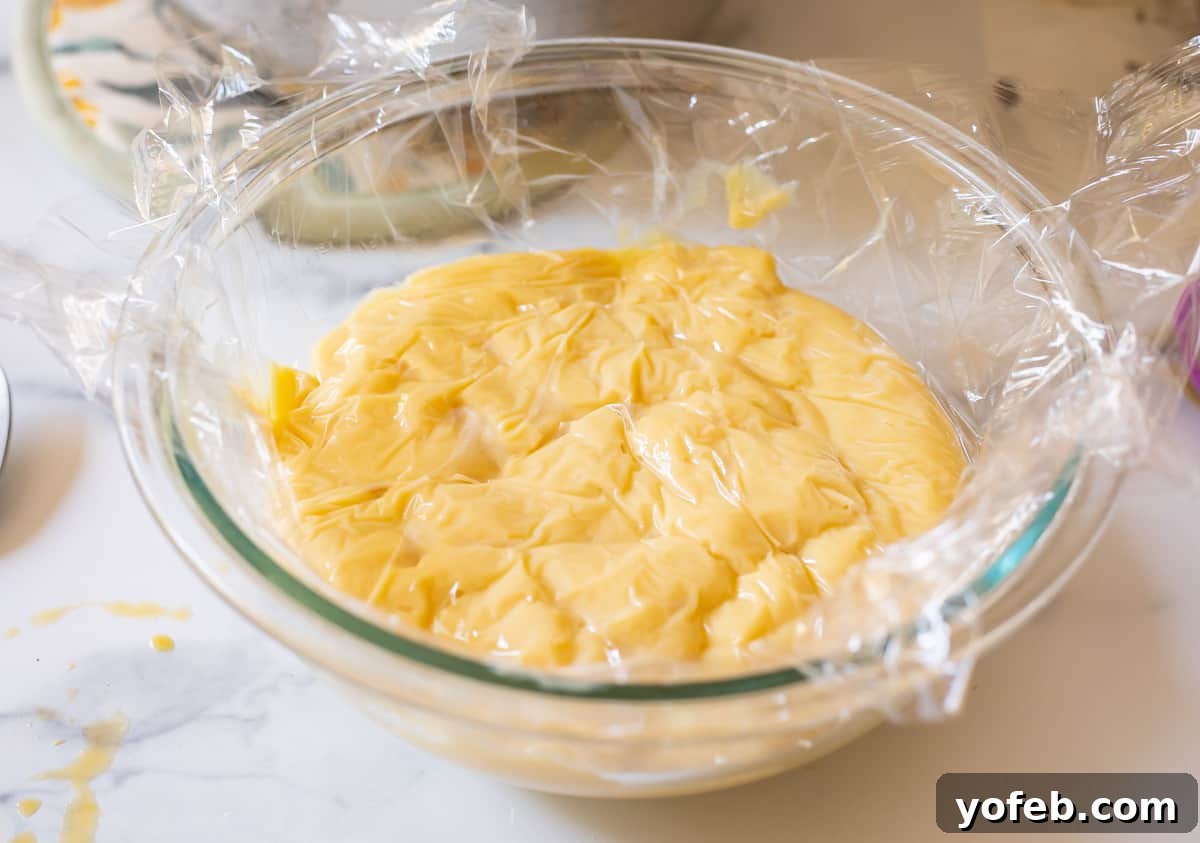
Immediate and proper chilling is crucial. Cover the pastry cream directly with plastic wrap, pressing the wrap onto the surface of the custard to eliminate any air bubbles. This vital step prevents a “skin” or film from forming on top as it cools, which can lead to lumps when stirred. Refrigerate the pastry cream for at least 2-4 hours, or until it is completely chilled and firm. For a quicker chill, you can place it in the freezer for the first 30 minutes, but remember to transfer it to the refrigerator afterward, as freezing will ruin the texture by causing it to become watery upon thawing.
9. Whisk Before Using
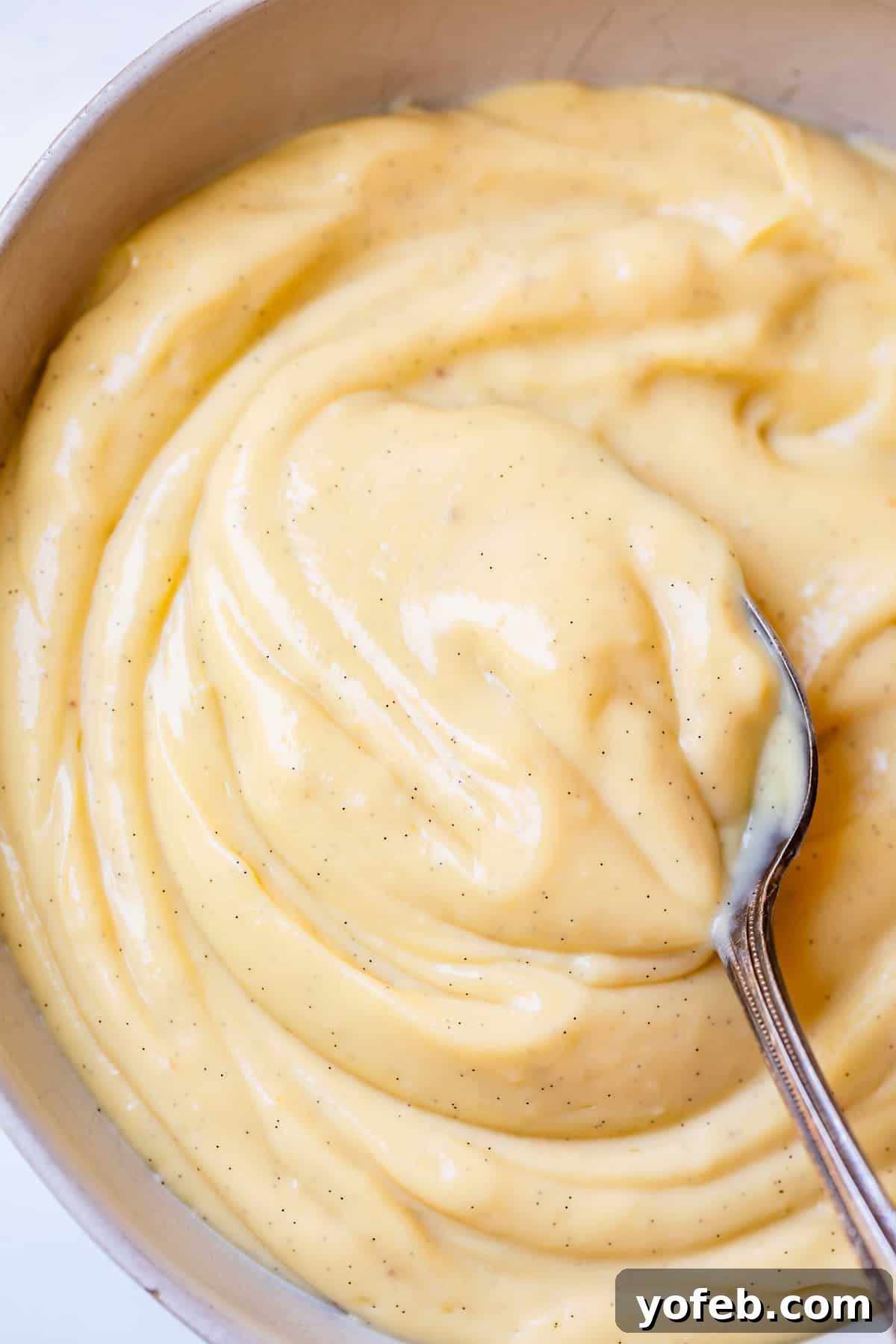
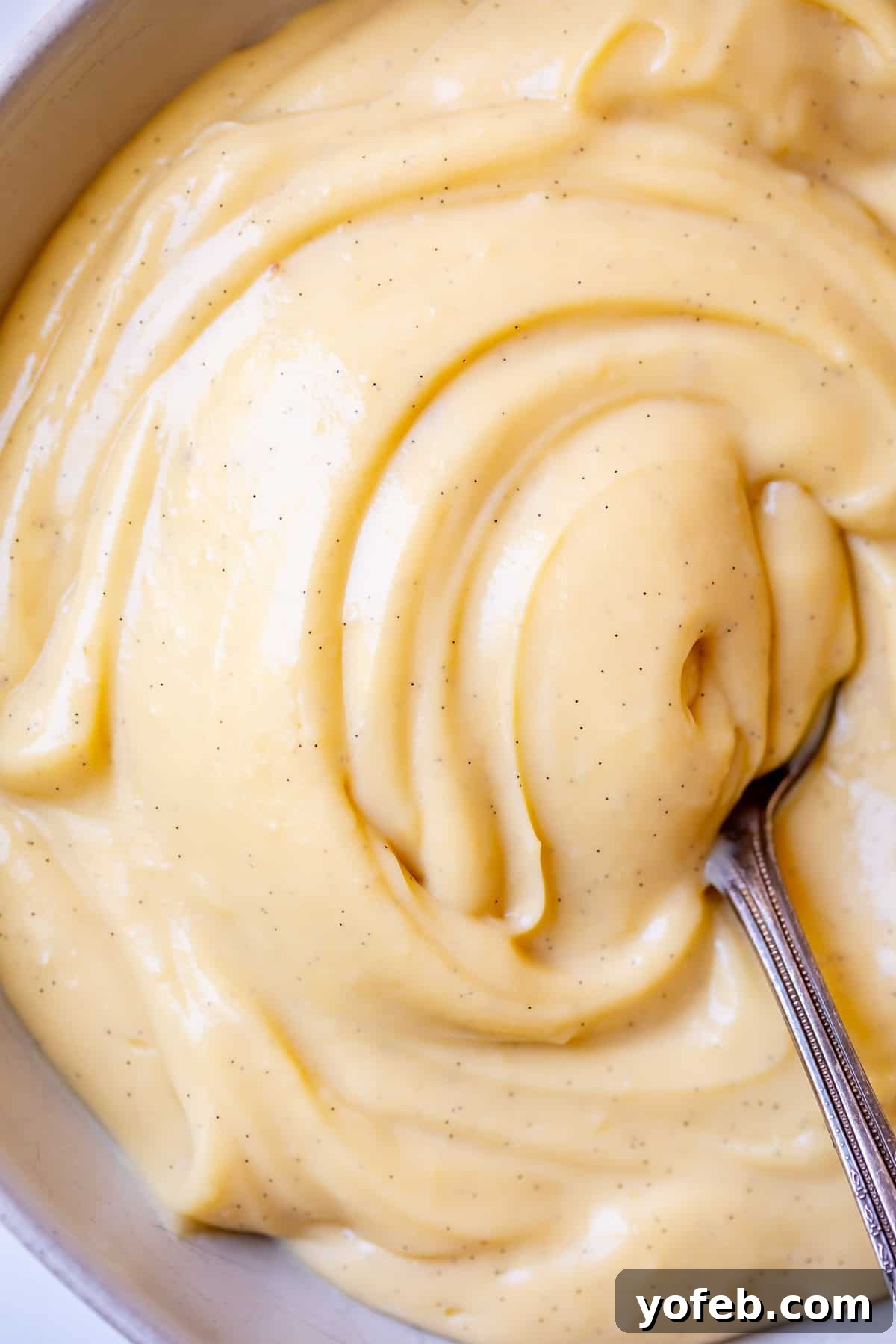
Once completely chilled, your pastry cream will be quite firm. Before using, remove the plastic wrap and give the cream a good, vigorous whisk until it returns to its smooth, dreamy, creamy glory. This may require a bit of elbow grease and patience, but it’s essential to restore its spreadable and pipable consistency. Go ahead, grab a spoonful right away for a taste test – you’ve earned it!
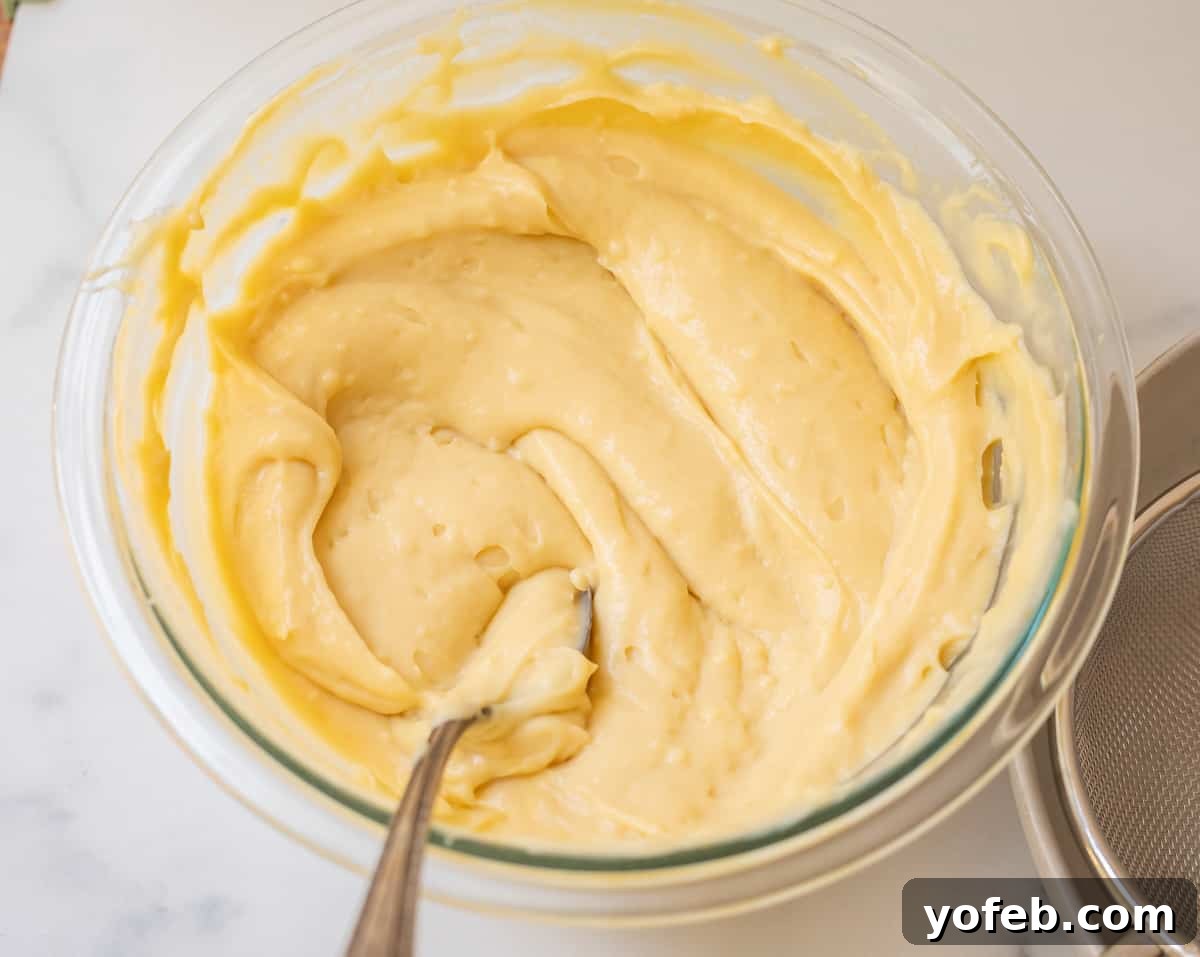
Now your perfectly prepared pastry cream is ready to be incorporated into your favorite dessert recipes!
Tip for Filling a Piping Bag
For easy and mess-free filling of a piping bag, place it inside an empty, tall drinking glass. Fold the top edges of the bag over the rim of the glass, creating a wide opening. This stabilizes the bag and frees up both your hands to scoop in the pastry cream efficiently.
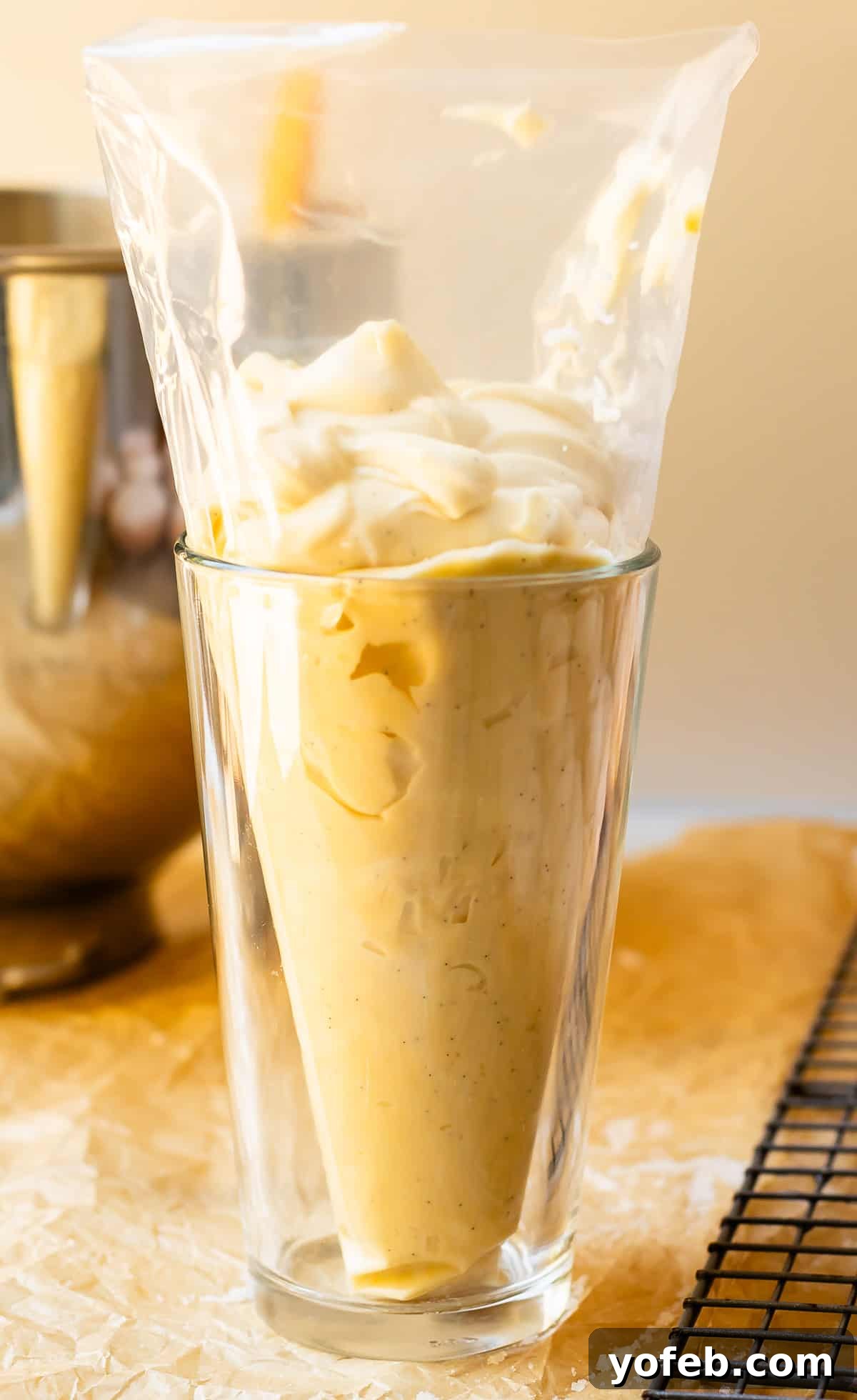
Finally, for an even lighter, airier filling, you can fold your pastry cream with freshly whipped cream to create a mixture known as Crème Légère. This is a classic, irresistible filling for many desserts, especially donuts! You can find detailed instructions on how much whipped cream to add in my Bavarian Cream Filled Donuts post, which inspired this recipe.
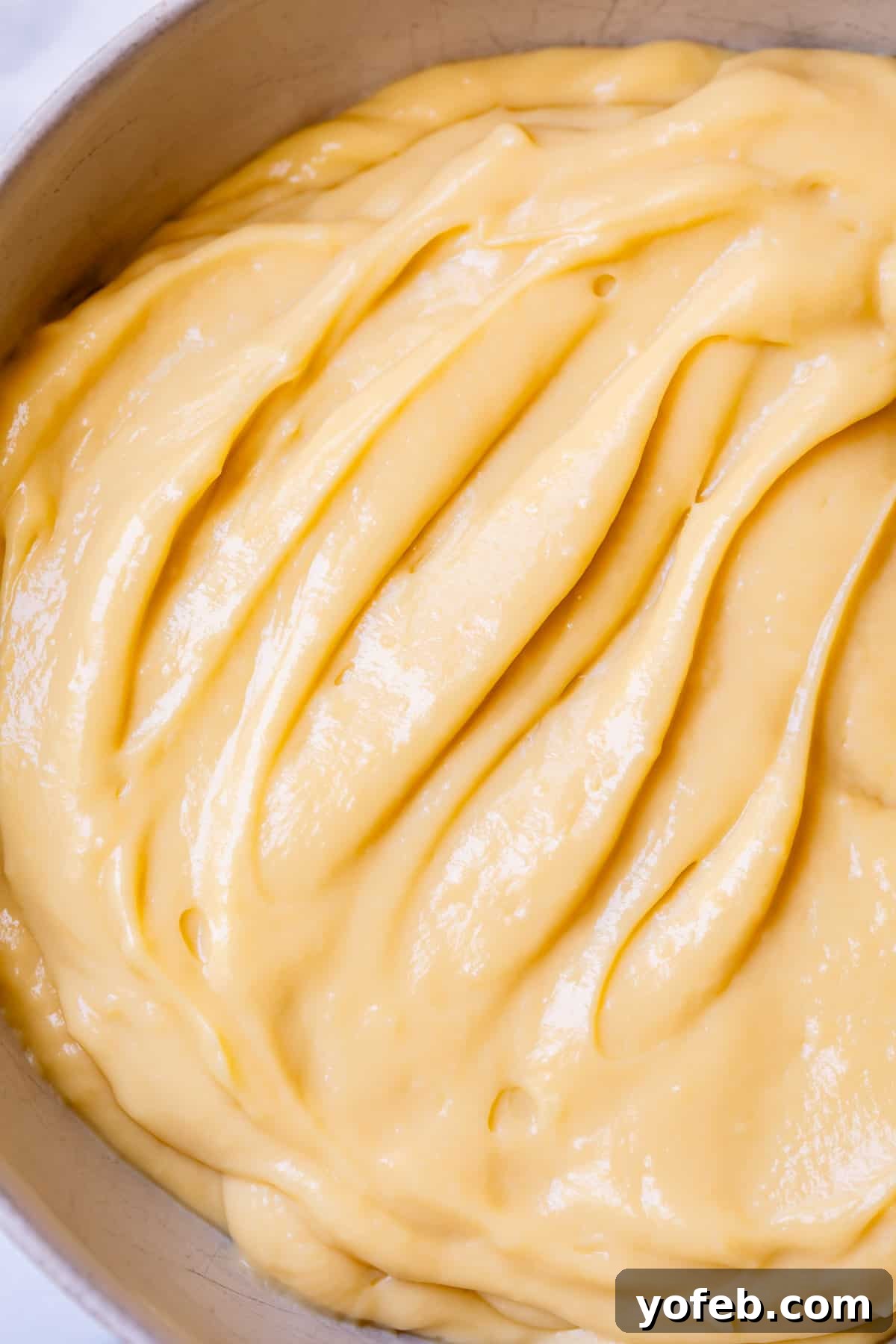
Creative Ways to Use Your Delicious Pastry Cream Filling
Pastry cream truly reigns supreme as the ultimate dessert filling. Its smooth, rich texture and impressive stability make it the ideal choice for a wide array of sweet treats. If you have a dessert that calls for a sweet, custard-like filling, pastry cream (or Crème Pâtissière) is almost always your best and most versatile option. It’s not only easy to make but also delicious and sturdy enough to maintain its perfect shape inside any baked good. Here are some fantastic ideas to put your freshly made pastry cream to delicious use:
- **Bavarian Cream Donuts:** This is the very reason I perfected this recipe! The thick pastry cream makes the perfect, stable filling for fluffy yeast donuts.
- **Cream Puffs & Eclairs:** Elevate classic cream puffs and eclairs by using pastry cream instead of plain whipped cream. Its firm texture holds beautifully within the choux pastry shells. As Norine brilliantly quips, “Cream Puffs and Eclairs are basically the same thing…the only difference? Shape! (Kind of like me and Scarlett Johansson…same thing…just different shapes!)”
- **Layered Desserts:** Use it between layers of delicate puff pastry to create elegant mille-feuille or in a trifle for a rich, creamy component.
- **Cupcake Filling:** Pipe it directly into the center of cupcakes for a delightful surprise with every bite.
- **Fruit Tarts:** Pastry cream is the quintessential base for fruit tarts. Its stability prevents the crust from becoming soggy and provides a beautiful canvas for fresh berries and sliced fruits.
- **Stuffed Croissants & Danish Pastries:** Transform plain croissants or danishes into gourmet treats by filling them with pastry cream before or after baking.
- **Fruit Pinwheels:** Roll pastry cream into puff pastry with fruit for elegant, baked pinwheels.
- **Fruit Dip or Dessert Topping:** Blend your pastry cream with whipped cream to create a lighter, airier Crème Légère. This makes an incredible fruit dip or a luxurious topping for cakes and pies.
- **Enriched Buttercream Frosting:** Fold pastry cream into your buttercream frosting for an exceptionally rich, buttery, and decadent frosting that’s perfect for cakes and cupcakes.
- **Pastry Cream Ice Cream:** Yes, you heard that right! This innovative idea from Out of the Ordinary Food transforms pastry cream into a surprisingly delicious ice cream base.
- **Simple Snacking:** Honestly, it’s so good you might just want to dip fresh fruit, graham crackers, or even Oreos directly into a bowl of chilled pastry cream.
With its versatility and irresistible flavor, homemade pastry cream will quickly become one of your favorite components for crafting truly memorable desserts.
Clever Ideas for Leftover Pastry Cream: Don’t Let a Drop Go to Waste!
You’ve meticulously prepared your homemade pastry cream and filled your baked goods, but what about those delicious leftovers? Just like its cousin, vanilla pudding, pastry cream is incredibly versatile and can be repurposed into a variety of delightful treats. Don’t let a single spoonful go to waste! Here are some creative and delicious ideas to enjoy any remaining Crème Pâtissière:
- **Simple Dessert in a Bowl:** The easiest way to enjoy leftovers! Serve a scoop of pastry cream in a small bowl, perhaps topped with a dollop of freshly whipped cream. A little dollop of whipped cream is almost always a fantastic finishing touch!
- **Fruit Medley Enhancer:** Mix in or layer with your favorite fresh, cut-up fruits like sliced berries (strawberries, raspberries), bananas, peaches, or any seasonal fruit you have on hand. The vibrant fruit contrasts beautifully with the creamy custard.
- **Crunchy Toppings:** Add texture with granola, crushed cookies (Oreos, Nutter Butters, or classic Vanilla Wafers work wonderfully), or toasted nuts.
- **Graham Cracker Layer Dessert:** Layer pastry cream between graham crackers, much like an icebox cake. Let it sit in the refrigerator for a few hours (or overnight) to soften the crackers, creating a deliciously simple layered dessert.
- **Pie Filling Upgrade:** If you’re making a pie that calls for a creamy filling, consider using your leftover pastry cream as a rich and flavorful base.
- **Candy Mix-Ins:** For a more decadent and playful treat, stir in chopped candy bits. Think chopped Reese’s peanut butter cups, Snickers, or M&M’s – perfect for a Halloween-themed delight!
- **Sweet and Salty Twist:** For an intriguing flavor contrast, try adding chopped nuts of your choice (like pecans or almonds) or crushed pretzels. The salty crunch perfectly balances the sweet creaminess.
- **Theme-Based Creations:** Get creative with themed combinations! For example, combine mini chocolate chips, crushed graham crackers, and a swirl of marshmallow creme for a “s’mores” inspired treat. Or, mix in cherry topping and crushed graham crackers for a quick “cherry cheesecake” experience.
With these ideas, your leftover pastry cream won’t just be an afterthought – it’ll be an opportunity to create even more delicious memories!
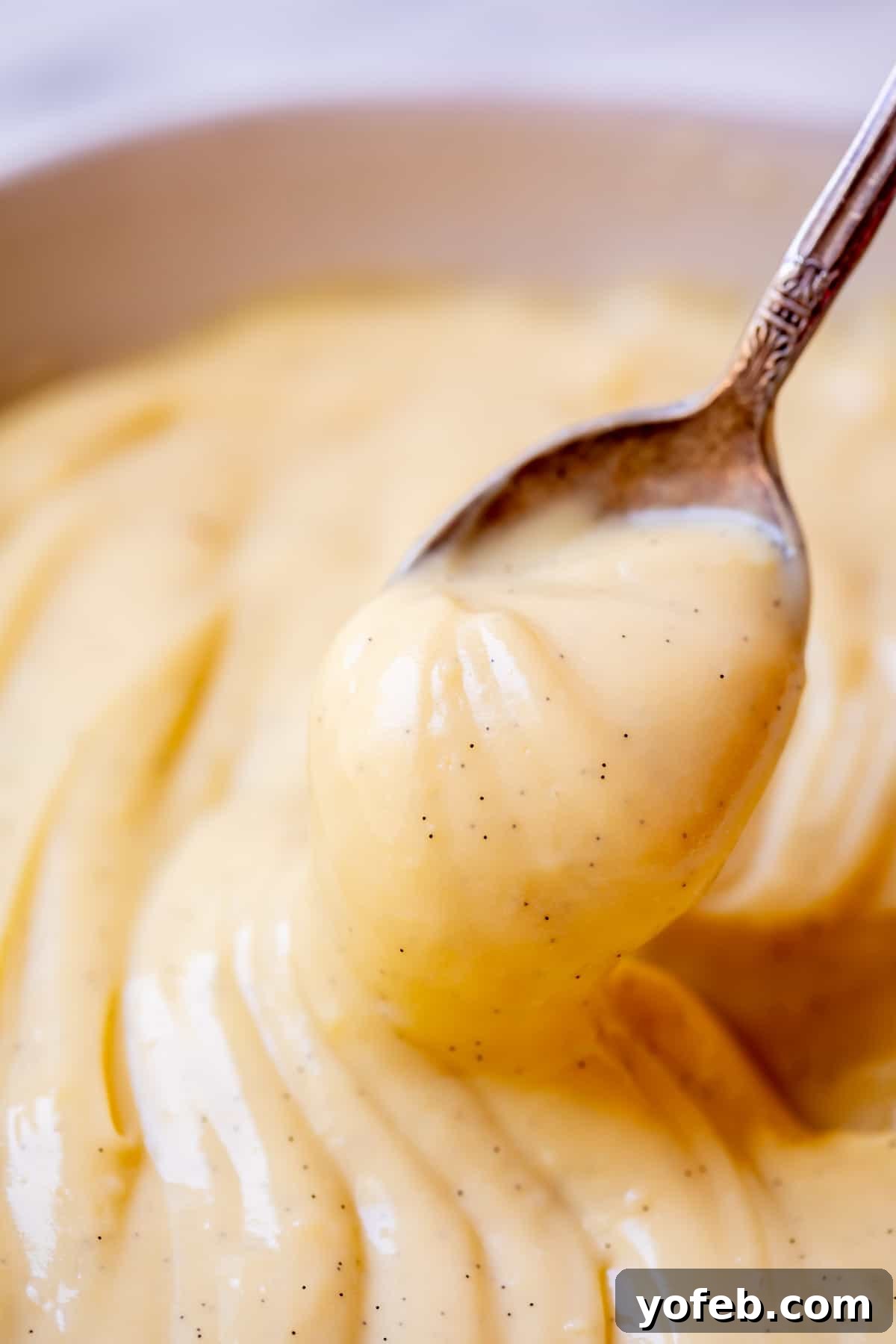
Storage Tips for Homemade Pastry Cream: Keeping It Fresh and Delicious
One of the practical advantages of making your own pastry cream is its excellent shelf life in the refrigerator, allowing for convenient advance preparation. This delicate filling stores beautifully for up to 5-7 days, making it perfect for preparing a day or two before you plan to assemble your desserts. This flexibility can significantly simplify your baking process, especially when tackling more elaborate pastries.
To ensure your pastry cream remains fresh and maintains its perfect texture, always store it in an airtight container. Crucially, press a layer of plastic wrap directly onto the surface of the filling, eliminating any air contact. This essential step prevents the formation of a dry “skin” or film on top, which can lead to lumps and an undesirable texture when you later stir it. Once covered with plastic wrap, seal the container with a lid, and it’s ready for the fridge. When you retrieve it from the refrigerator, you might notice a little moisture around the edges; simply give it a good whisk to restore its smooth, creamy consistency before transferring it to your pastry bag for filling.
While pastry cream excels in the refrigerator, I strongly advise against freezing this recipe. The delicate balance of ingredients and the cooking process that binds the cornstarch to the milk proteins can be severely compromised by freezing. Upon thawing, you’ll likely end up with a runny, watery, and separated mess, far from the luscious cream you intended. Fortunately, this recipe is so quick and easy to whip up, and it lasts for a good while in the fridge, making long-term freezing unnecessary. If you find yourself with an abundance of leftovers, consult the “Clever Ideas for Leftover Pastry Cream” section above for creative ways to enjoy every last bit!
Frequently Asked Questions About Pastry Cream (Crème Pâtissière)
Pastry cream is the direct English translation of the classic French culinary term “crème pâtissière.” It refers specifically to a rich, thick, and stable custard designed for filling various baked goods and desserts, such as eclairs, tarts, and donuts. Its robust consistency ensures it holds its shape beautifully within pastries.
Homemade pastry cream is surprisingly simple, crafted from readily available pantry staples. The core ingredients typically include egg yolks, granulated sugar, whole milk, cornstarch (or flour), a pinch of salt, butter, and vanilla (either from a vanilla bean or high-quality extract). These components combine to create its signature creamy, thick, and flavorful profile.
While often used interchangeably by home cooks, custard and pastry cream are distinct, though closely related. Both are milk-based sauces thickened with egg yolks over heat. However, pastry cream (crème pâtissière) includes an added starch, typically cornstarch or flour, which provides extra stability and a thicker consistency than traditional custard. This added starch is what makes pastry cream the preferred filling for desserts where shape retention is crucial.
Technically, no, Bavarian cream (crème bavaroise) and pastry cream are different, though they share a similar flavor base. Bavarian cream starts with a pastry cream-like custard base, but it’s typically thickened with gelatin instead of cornstarch. The mixture is then lightened and aerated by folding in whipped cream, giving it a mousse-like, softer texture compared to the firmer, richer pastry cream. Both are used as dessert fillings, but Bavarian cream offers a distinctly lighter mouthfeel. (For my donuts, I chose pastry cream because I found it easier and yielded a more satisfyingly rich filling!)
If a recipe specifically calls for crème pâtissière and you’re looking for a quick substitute, instant vanilla pudding can be used in a pinch. However, be aware that it will taste distinctly like instant pudding and will lack the profound richness, depth of flavor, and luxurious texture of authentic homemade pastry cream. It’s a convenient shortcut for times when ease is the top priority, but it won’t replicate the gourmet quality that pastry cream brings to a dish.
More Irresistible Dessert Recipes to Explore
If you’ve enjoyed mastering this easy pastry cream recipe, you’re likely a fellow lover of creamy, dreamy desserts. Here are some more irresistible recipes from my kitchen that I think you’ll adore. From classic puddings to decadent pies, these treats are sure to satisfy your sweet tooth and expand your baking repertoire:
- **Homemade Vanilla Pudding Recipe:** A very similar recipe to pastry cream, but designed to be slightly creamier and less thick, making it perfect for eating directly from a bowl rather than as a filling. It boasts a simply PERFECT vanilla flavor!
- **Layered Pudding Dessert with Golden Oreos:** An incredibly easy, no-bake dessert that feeds a crowd and is absolutely AMAZING. Perfect for gatherings!
- **Lemon Lush Dessert:** This is smooth, tart, lemony heaven in a pan. A refreshing and bright dessert that’s always a crowd-pleaser.
- **My Favorite Homemade Chocolate Cream Pie:** The only chocolate pie recipe you’ll ever need! Rich, decadent, and utterly satisfying.
- **Butterscotch Pudding with Roasted Banana Whipped Cream:** As rich and delicious as it sounds, this is one of my all-time FAVORITE puddings. Try making today’s pastry cream recipe but use all brown sugar for a butterscotch twist, and definitely don’t skip the caramelized bananas – it’s a game-changer!
- **Best Banana Cream Pie Recipe:** Say goodbye to mushy pie and hello to dreamy, creamy perfection! This recipe guarantees a firm, luscious banana cream pie.
- **Butterscotch Pie with Meringue Topping:** My beloved butterscotch pudding, transformed into a magnificent pie. What could be better?
- **Banana Cream Pie Cookies:** Imagine mini, hand-held pies with delicious banana cream pudding right on top of a soft cookie – irresistible!
- **Vanilla Coconut Rice Pudding:** A delightful and very coconut-y twist on the traditional Arroz con Leche, offering a tropical escape.
- **Creamy Banana Pudding Recipe** from Serious Eats: A classic, comforting banana pudding that’s always a hit.
- **Meyer Lemon Pudding** from The View from Great Island: A bright and tangy pudding featuring the exquisite flavor of Meyer lemons.
- **Holland Cream (White Cream Filling)** from Cook This Meal: Another versatile cream filling option to add to your repertoire.
Facebook | Pinterest | Instagram

Easy Homemade Pastry Cream (Crème Pâtissière)
Ingredients
- 4 large egg yolks
- 1/2 cup granulated sugar
- 1/4 cup brown sugar, packed (you can replace this with granulated sugar)
- 1/2 teaspoon kosher salt
- 1/4 cup cornstarch
- 2 cups whole milk, divided
- 2 tablespoons butter
- 1 vanilla bean, or 1 tablespoon vanilla extract
Instructions
-
Add 4 large egg yolks to a 3-quart saucepan that is not on the stove. (We’re just using it like a bowl for now.) Save those egg whites for your next omelette.
-
Add 1/2 cup granulated sugar, 1/4 cup packed brown sugar (or replace with granulated sugar), 1/2 teaspoon kosher salt, and 1/4 cup cornstarch.
-
Add 1 cup whole milk and use a hand mixer to beat on high speed for at least 1 minute, until the mixture is completely smooth.
-
In a glass measuring cup (or bowl with a spout), add 1 cup whole milk. If you are using a vanilla bean, slice the bean in half and use the back of your knife to scrape the seeds into the milk. Microwave the milk for 2-3 minutes, until the milk starts to bubble and foam at the edges. Once it bubbles (keep an eye on it!), take it out of the microwave right away.
-
Working quickly, turn your hand mixer on medium speed and beat the eggs again. Carefully pour the hot milk into the pot with the egg mixture, with the hand mixer running the whole time. There will be a film on top of the milk that will likely stick to the bowl as you pour – just leave it, don’t scrape it in. Do try to scrape in as much of the vanilla bean as you can. You can see in the photos that I poured my hot milk in through a strainer, this was to keep out any larger bits of the vanilla pod that may have been floating around.
-
Continue beating the now-hot egg mixture for about a minute, until it is foamy. Move the pot to the burner on your stove and set the heat to medium.
-
Use a whisk (I prefer a flat whisk) to stir the edges and corners of your pot. Do not walk away. Stir constantly until the mixture starts to bubble. It should only take 2-3 minutes. Once it bubbles, whisk vigorously for about 15-45 seconds.
You will know your pastry cream is ready when you drag a whisk across the top and it leaves well defined marks. It should feel pretty thick (but remember it will continue to thicken as it cools). If you are really unsure, use a thermometer; it should reach 200 degrees.
-
Remove from the stove. Stir in 2 tablespoons butter, and 1 tablespoon vanilla extract if you did not use a vanilla bean.
-
Strain the custard through a fine sieve into a medium bowl.
-
Cover the pastry cream immediately with plastic wrap. Press it right onto the custard itself, trying to get any air bubbles out. This will prevent a film from forming on top of the custard (and then if you were to stir in the film, it makes it lumpy, no thank you, we worked hard for this creamy texture.)
-
Refrigerate the pastry cream for at least 2-4 hours. I cheat and put mine in the freezer for the first 30 minutes to speed things up, but you cannot forget to transfer it to the fridge after about 30 minutes! You can’t freeze pudding (it ruins the texture. Freezing weakens the bond between the starch and the liquid, so it will thaw out all watery. bleh), so move it to the fridge before any freezing happens. I like to live life on the edge apparently.
-
When you are ready to use your pastry cream, take off the plastic wrap and lick it when no one is looking. Give the cream a good whisk to make it smooth again. This might take some elbow grease, keep whisking. Grab a spoonful right away! Then use it for whatever recipe you are making, I love it mixed with a little whipped cream and then stuffed into these Bavarian Cream Donuts.
-
Store leftovers covered in the fridge, always with plastic wrap pressed directly onto the cream. It will keep for up to 5-7 days!