
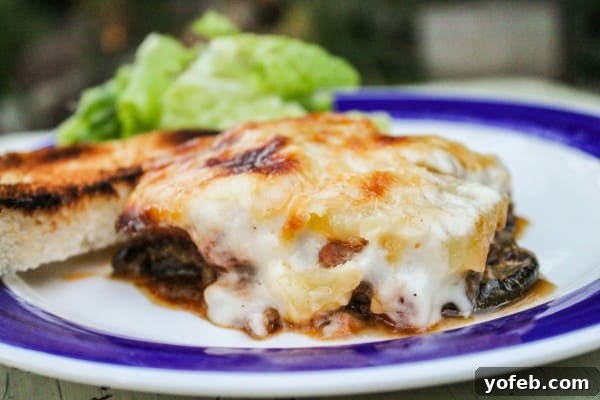
Authentic Greek Moussaka: A Timeless Culinary Journey
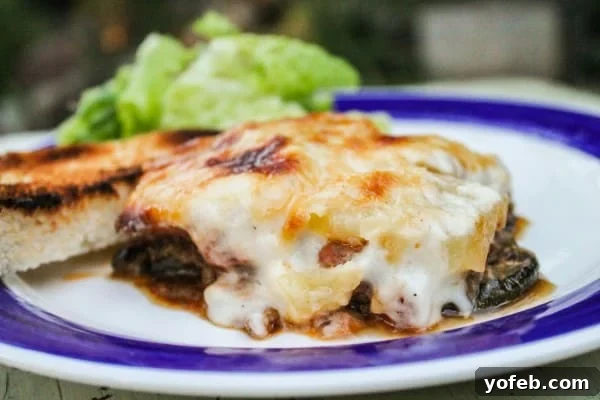
Step into the heart of Greek culinary tradition with Moussaka, a dish that epitomizes comfort, flavor, and artisanal preparation. Often likened to a savory lasagna, this iconic Greek casserole is a symphony of textures and tastes. It skillfully layers tender, pan-fried or baked eggplant, hearty slices of potato, and a rich, aromatic meat sauce traditionally made with ground lamb and infused with warm spices like cinnamon and cloves. Crowned with a luxurious, creamy béchamel sauce and a sprinkle of cheese, Moussaka bakes into a golden-brown masterpiece that’s utterly irresistible. This isn’t merely a meal; it’s a celebration of Mediterranean flavors, promising a deeply satisfying experience with every forkful.
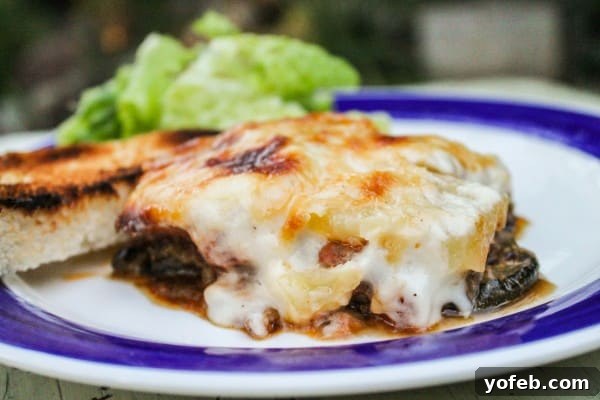
What Makes Moussaka a Greek Delicacy?
Moussaka holds a special place in Greek cuisine, celebrated for its complex flavors and comforting nature. While variations of similar layered dishes exist across the Balkans and the Middle East, the Greek version is distinct for its specific combination of ingredients and meticulous preparation methods. The essential components harmoniously blend to create this celebrated dish:
- Eggplant: Typically sliced into rounds, salted to draw out excess moisture and bitterness, then either pan-fried, grilled, or baked until tender and lightly caramelized. This forms a foundational layer, contributing both texture and a characteristic earthy flavor.
- Potatoes: Par-boiled and thinly sliced, potatoes add a comforting starchiness and substantial body to the casserole, creating an additional hearty layer that complements the eggplant.
- Ground Meat Sauce: The heart of Moussaka is its rich meat sauce, traditionally crafted with succulent ground lamb. This savory base is slow-cooked with diced onions, minced garlic, ripe tomatoes, and a distinctive blend of Greek spices. Cinnamon, often considered the signature spice of Moussaka, along with a hint of cloves or allspice, infuses the lamb with a unique warmth and aromatic depth that elevates the entire dish.
- Béchamel Sauce: A velvety, smooth, and creamy white sauce made from butter, flour, and milk. This luxurious topping acts as the binding agent, enveloping the savory layers below with its rich texture and delicate flavor, often enhanced with a pinch of nutmeg.
- Cheese: A generous sprinkle of grated hard Greek cheese, such as Kefalotyri or Kasseri, is spread over the béchamel before baking. As the Moussaka cooks, the cheese melts and browns, forming a delectable golden crust that is both visually appealing and incredibly flavorful.
The intricate layering and the careful balance of these ingredients result in a dish that is deeply satisfying, showcasing the robust and nuanced flavors that define authentic Greek cuisine. Each element contributes to a culinary experience that is both familiar and exotic, inviting you on a journey to the sun-drenched landscapes of Greece.
The Rich History and Cultural Significance of Moussaka
The story of Moussaka is as rich and layered as the dish itself, with roots deeply embedded in the culinary traditions of the Ottoman Empire, influencing various Mediterranean and Balkan cuisines. The term “moussaka” is believed to derive from the Arabic word “musaqqaa,” which means “moistened,” likely referring to a dish softened by liquid or sauce. However, the rendition of Moussaka we recognize today – particularly the Greek version with its signature creamy béchamel topping – is a more recent innovation. It was famously standardized in the early 20th century by Nikolaos Tselementes, a pioneering Greek chef. Tselementes, striving to “Europeanize” and elevate Greek cuisine, incorporated French culinary techniques, most notably introducing the béchamel sauce, which transformed Moussaka into the iconic dish beloved worldwide.
Beyond its culinary evolution, Moussaka holds profound cultural importance in Greece. It is more than just a recipe; it is a symbol of warmth, hospitality, and tradition. Moussaka frequently graces the tables at family gatherings, holiday feasts, and special occasions, embodying the spirit of Greek communal dining. The preparation of Moussaka is often a labor of love, a multi-step process that can bring families together in the kitchen, where recipes and techniques are lovingly passed down through generations. It fosters a deep connection to heritage, evoking the comforting taste of home and serving as a delicious expression of Greek identity and pride. Its presence signals celebration and conviviality, making it an indispensable part of Greek culinary heritage.
Embracing the Journey: Why Homemade Moussaka is Worth Every Moment
Let’s be candid: Moussaka is far from a quick-fix weeknight meal. Its preparation demands dedication, patience, and a genuine immersion into the art of cooking. From meticulously preparing the vegetables and simmering the deeply flavored meat sauce to crafting the perfect, silken béchamel, each step is a deliberate act contributing to a truly spectacular final product. Some may initially feel daunted by its multi-layered complexity, but those who embark on this culinary journey are consistently rewarded with an unparalleled depth of flavor and a profound sense of accomplishment. The effort invested translates directly into a taste that simply cannot be replicated by pre-made alternatives.
Consider Moussaka in the esteemed company of other time-honored dishes like a lovingly prepared French onion soup, a perfectly baked, flaky croissant, or an elaborately spiced Indian curry. These are not meals to be rushed; rather, they are culinary experiences that offer far more than mere sustenance. The true magic of Moussaka lies in the freshness of its ingredients and the thoughtful care poured into its creation. There is no shortcut to achieving its authentic taste and texture from a store-bought version. Making Moussaka can even transform into a delightful social activity, serving as an ideal project for a relaxed afternoon spent with friends or a thoughtful date night, where shared effort in the kitchen naturally sparks conversation and mutual enjoyment. The exquisite aroma that fills your home as it bakes is a reward in itself, a tantalizing prelude to the magnificent feast awaiting you.
Mastering the Key Components of Your Authentic Moussaka
Perfectly Prepared Eggplant and Potatoes
The foundation of an outstanding Moussaka begins with impeccably prepared vegetable layers. Eggplant, known for its porous nature, can absorb excessive oil if not handled correctly. The time-honored method involves slicing the eggplant into approximately 1/2-inch thick rounds, then generously salting them and allowing them to “sweat” for about 15-30 minutes. This crucial step extracts bitterness and draws out excess moisture, resulting in a firmer texture and significantly reducing oil absorption during cooking. After salting, it is imperative to rinse the slices thoroughly under cold running water to remove all traces of salt, then pat them completely dry with paper towels. For a healthier and less greasy Moussaka without compromising flavor, consider baking or broiling the eggplant (and zucchini, if included) until they are tender and exhibit a beautiful, light char. This method develops a delightful smoky note and ensures the vegetables are perfectly cooked before assembly.
Potatoes introduce a vital layer of starch and heartiness to the dish. Opt for starchy varieties such as Russets or Yukon Golds. Par-boil them whole until they are just tender enough to be easily pierced with a fork but still firm. Once cooled, slice them into uniform 1/4-inch thick rounds. This preparation ensures they cook evenly within the casserole, contributing a creamy texture without becoming mushy, which is essential for both the structural integrity and the overall taste experience of the finished Moussaka.
The Rich, Aromatic Lamb Meat Sauce
The meat sauce is undeniably the soul of Moussaka, imparting much of its characteristic flavor. Ground lamb is the traditional and preferred choice, offering a distinct, robust richness that pairs exquisitely with the array of spices. Begin by sautéing finely diced onions and minced garlic in olive oil until they become translucent and fragrant, thereby establishing a savory base. Next, thoroughly brown the ground lamb, ensuring it’s broken into small, consistent pieces. The true essence of Moussaka’s meat sauce is unveiled with the addition of concentrated tomato paste, diced tomatoes, and a splash of red wine (or red wine vinegar, for an equally flavorful non-alcoholic alternative). What truly distinguishes Greek Moussaka are the warming spices: whole cinnamon sticks (or ground cinnamon) and a subtle pinch of ground cloves. These spices are paramount; they do not introduce sweetness but rather impart an earthy, deeply savory aroma and a unique depth that is the hallmark of authentic Greek cuisine. Allow the sauce to simmer gently for at least 30 minutes, enabling all the flavors to thoroughly meld and deepen, and the liquid to reduce slightly, resulting in a thick, robust, and intensely flavorful filling.
Creamy, Velvety Béchamel (White Sauce)
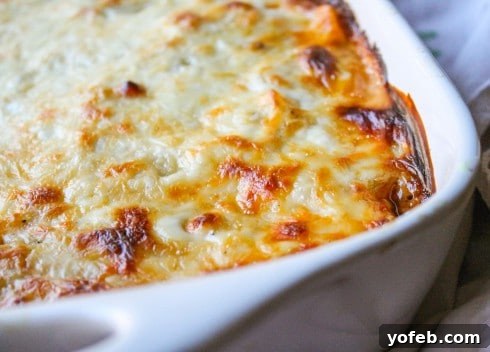
The crowning glory of Moussaka is its opulent béchamel sauce. A perfectly executed béchamel is smooth, entirely lump-free, and sumptuously creamy, providing a luxurious cap to the layered casserole. To achieve this, start by melting butter in a medium saucepan over medium heat. Whisk in an equal amount of all-purpose flour to create a roux. Cook the roux for 1 to 2 minutes, stirring constantly, to cook out the raw flour taste without allowing it to brown, which would alter its flavor and color. The key to a silky-smooth sauce is to gradually, and very slowly, whisk in cold or room-temperature milk, adding only a small amount at a time and ensuring each addition is fully incorporated before adding more. This deliberate, step-by-step process is crucial for preventing lumps. Continue stirring frequently over medium heat until the sauce visibly thickens to a pourable yet substantial consistency. Finally, stir in grated Parmesan cheese (or, for an authentic Greek touch, grated Kefalotyri or Kasseri cheese) and season with a subtle pinch of freshly grated nutmeg and salt to taste. Nutmeg is a classic complement to béchamel, enhancing its creamy notes without overwhelming the other flavors in the dish. Keep the sauce warm, or gently rewarm it, stirring occasionally, just before assembling your Moussaka.
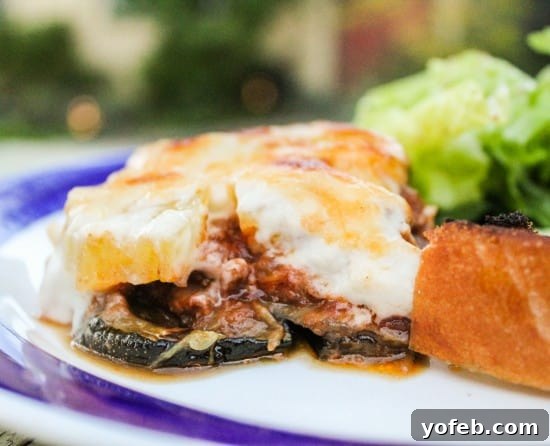

Moussaka
7 hrs 30 mins
45 mins
15 mins
8 hrs 30 mins
6 Servings
Ingredients
- 2 large potatoes, or 4 small
- 2 medium eggplants
- salt
- 1 large zucchini
- 2 tablespoons olive oil
For the Meat Sauce
- 2 tablespoons olive oil
- 1 cup onion, diced, from 1 medium, or 1/2 large onion
- 3 cloves garlic, minced
- 1 pound ground lamb
- 2 tablespoons tomato paste
- 2 bay leaves
- 2 cinnamon sticks, or 1/2 teaspoon ground cinnamon
- 1/8 teaspoon ground cloves
- 1 15-oz can diced tomatoes, undrained
- 1/4 cup red wine, or 1 tablespoon red wine vinegar
- salt, to taste
For white sauce
- 1/4 cup butter
- 1/4 cup flour
- 2 cups milk, divided
- 2/3 cup parmesan cheese, or grated kefalotyri
- pinch nutmeg
- salt, to taste
Instructions
- Peel the potatoes and boil them whole, until they are just tender. When cool, slice into 1/4 inch rounds and set aside.
- Slice the eggplants crosswise into 1/2 inch rounds and spread on a baking sheet or cutting board lined with paper towels. Sprinkle generously with salt on both sides, then top with another baking sheet weighted down with books, or any heavy object. You just need to squeeze out excess moisture. Set aside for about 15 minutes. Preheat your broiler.
- Pat the eggplant slices with paper towel to remove as much moisture as possible. Rinse under running water, and dry once again.
- Slice zucchini into 1/4 inch rounds. Toss zucchini and eggplant slices on baking sheet with 2 tablespoons of olive oil, then arrange in a single layer. (You might need a couple baking sheets to fit everything.) Broil on highest oven rack for 6 minutes, or until slightly charred, then flip slices and repeat on the other side. Set pan aside.
- Make the meat sauce: Heat 2 tablespoons olive oil in a large saucepan over medium heat. Add onions and cook until translucent, then add garlic and cook for 1 minute, or until fragrant. Add ground lamb and cook until browned, stirring often and breaking up the meat. Stir in tomato paste and cook 1 minute, then stir in diced tomatoes and red wine, or red wine vinegar. Add the bay leaves, cinnamon sticks, and cloves. Reduce heat to low and simmer, about 30 minutes. Season to taste with salt and pepper.
- Make the white sauce: Melt butter over medium heat in a medium saucepan. Stir in flour and cook 1 minute, stirring constantly (reduce heat if necessary; you want to cook out the starch, not brown it). Whisk in 1/4 cup of the milk until fully incorporated, then very slowly whisk in the remaining milk. Stir frequently until sauce is thickened. Slowly sprinkle in cheese and stir to combine. Season to taste with salt and nutmeg. Remove from heat, or leave it on low and stir occasionally.
- Assemble the moussaka: Preheat the oven to 350 degrees F (175 C). In a large 9×13 casserole dish, arrange the bottom layer with half of the charred eggplant and zucchini slices. Spread all the meat sauce over top. Add the rest of the eggplant and zucchini, then layer the potato slices. Pour the white sauce over top. Bake for 45 minutes to 1 hour, until bubbly and browned.
Notes
Nutrition
Calories: 646kcal |
Carbohydrates: 46g |
Protein: 25g |
Fat: 41g |
Saturated Fat: 17g |
Polyunsaturated Fat: 3g |
Monounsaturated Fat: 18g |
Trans Fat: 1g |
Cholesterol: 91mg |
Potassium: 1419mg |
Fiber: 9g |
Sugar: 14g |
Vitamin A: 707IU |
Vitamin C: 41mg |
Calcium: 302mg |
Iron: 4mg
Main Course
Greek
646
Moussaka, Greek Moussaka
Did you make this? We’d love to see it! Share your creation and tag us on social media using #AuthenticMoussaka or #GreekFoodJourney!
Expert Tips for the Best Homemade Moussaka
- Don’t Skip Salting the Eggplant: This step is critical for a non-watery Moussaka. It removes bitterness and reduces the amount of oil the eggplant absorbs, leading to a firmer, more flavorful layer.
- Broil, Don’t Fry: For a healthier and less greasy Moussaka, broiling or baking the eggplant and zucchini slices achieves a delicious caramelized flavor without excessive oil. Ensure they are arranged in a single layer on your baking sheets for even cooking and optimal browning.
- Quality Lamb Matters: Whenever possible, use high-quality ground lamb for the most authentic and intensely flavorful meat sauce. If lamb is not readily available or preferred, lean ground beef can serve as a suitable substitute, though it will subtly alter the traditional Greek flavor profile.
- Embrace the Spices: Do not hesitate with the cinnamon and cloves in the meat sauce. These spices are not meant to impart sweetness but rather to provide a distinctive, savory warmth and a complex aroma that is a hallmark of true Greek Moussaka.
- Smooth Béchamel is Key: Take your time when preparing the béchamel sauce. Gradually whisk in cold or room-temperature milk into the roux to prevent any lumps, and stir continuously over medium heat until the sauce reaches a perfect, silky-smooth, and thickened consistency. Patience here ensures a luscious topping.
- Resting is Essential: After removing your Moussaka from the oven, allow it to rest for at least 15-20 minutes before attempting to slice and serve. This crucial resting period allows the layers to set properly, preventing the casserole from falling apart and ensuring cleaner, more elegant slices.
- Make Ahead: Moussaka is an excellent dish for advance preparation. You can assemble the entire casserole a day ahead of time, cover it tightly, and refrigerate. Bake it just before serving; be aware it might require an additional 10-15 minutes in the oven to heat through thoroughly. The flavors often deepen and meld beautifully overnight.
Frequently Asked Questions About Moussaka
Can I make Moussaka vegetarian?
Absolutely! For a delicious vegetarian Moussaka, you can substitute the ground lamb with a robust mixture of finely chopped mushrooms, hearty lentils, or a high-quality plant-based ground meat alternative. Ensure your chosen vegetarian filling is seasoned generously with the same authentic Greek spices (cinnamon, cloves, tomato paste) to capture the true essence and depth of the traditional dish.
What kind of potatoes should I use?
Starchy potatoes, such as Russets or Yukon Golds, are highly recommended for Moussaka. Their starchy texture ensures they become tender and creamy when cooked, providing a delightful contrast to the other layers. While waxy potatoes tend to hold their shape more firmly, they may not offer the same desired creamy consistency that contributes to the overall richness of Moussaka.
How do I prevent my béchamel from becoming lumpy?
The secret to achieving a perfectly smooth béchamel lies in technique. First, ensure your roux (the butter and flour mixture) is well-cooked. Then, gradually whisk in cold or room-temperature milk, adding it in small increments. Whisk vigorously after each addition until it’s fully incorporated before adding more. Cooking the sauce over medium heat and stirring continuously will also prevent lumps, ensuring a silky, consistent texture.
Can Moussaka be frozen?
Yes, Moussaka freezes remarkably well. You have the option to freeze it either baked or unbaked. If freezing unbaked, wrap the casserole dish tightly with several layers of aluminum foil, then an additional layer of plastic wrap to prevent freezer burn. Thaw it in the refrigerator overnight before baking. If freezing after baking, allow the Moussaka to cool completely before wrapping. To reheat, bake covered with foil in a moderate oven until thoroughly heated through. Be aware that the texture of the potatoes and béchamel might soften slightly after freezing and reheating, but the flavor remains excellent.
What should I serve with Moussaka?
Moussaka is a rich, hearty, and satisfying meal on its own, so it pairs best with lighter accompaniments. A simple, fresh green salad dressed with a light vinaigrette (lemon juice and olive oil are perfect) or a classic Greek salad with tomatoes, cucumbers, and feta cheese offers a refreshing contrast. Some crusty artisan bread is also an excellent choice for soaking up any delicious juices and sauces.
Concluding Your Greek Culinary Adventure
Moussaka is far more than just a recipe; it’s an immersive invitation to experience the warmth, tradition, and incredible, robust flavors of Greece directly in your own kitchen. While it undeniably requires a bit more time and dedicated attention than your average meal, the reward is an unparalleled, magnificent dish that truly delights all the senses and deeply satisfies the soul. The artful layered perfection of tender, earthy vegetables, savory, spiced lamb, and the crowning glory of rich, creamy béchamel creates an unforgettable culinary journey. So, gather your finest ingredients, carve out a relaxed afternoon, and prepare to craft a masterpiece that is guaranteed to impress your family and friends. Kalí Órexi (Good Appetite)!