
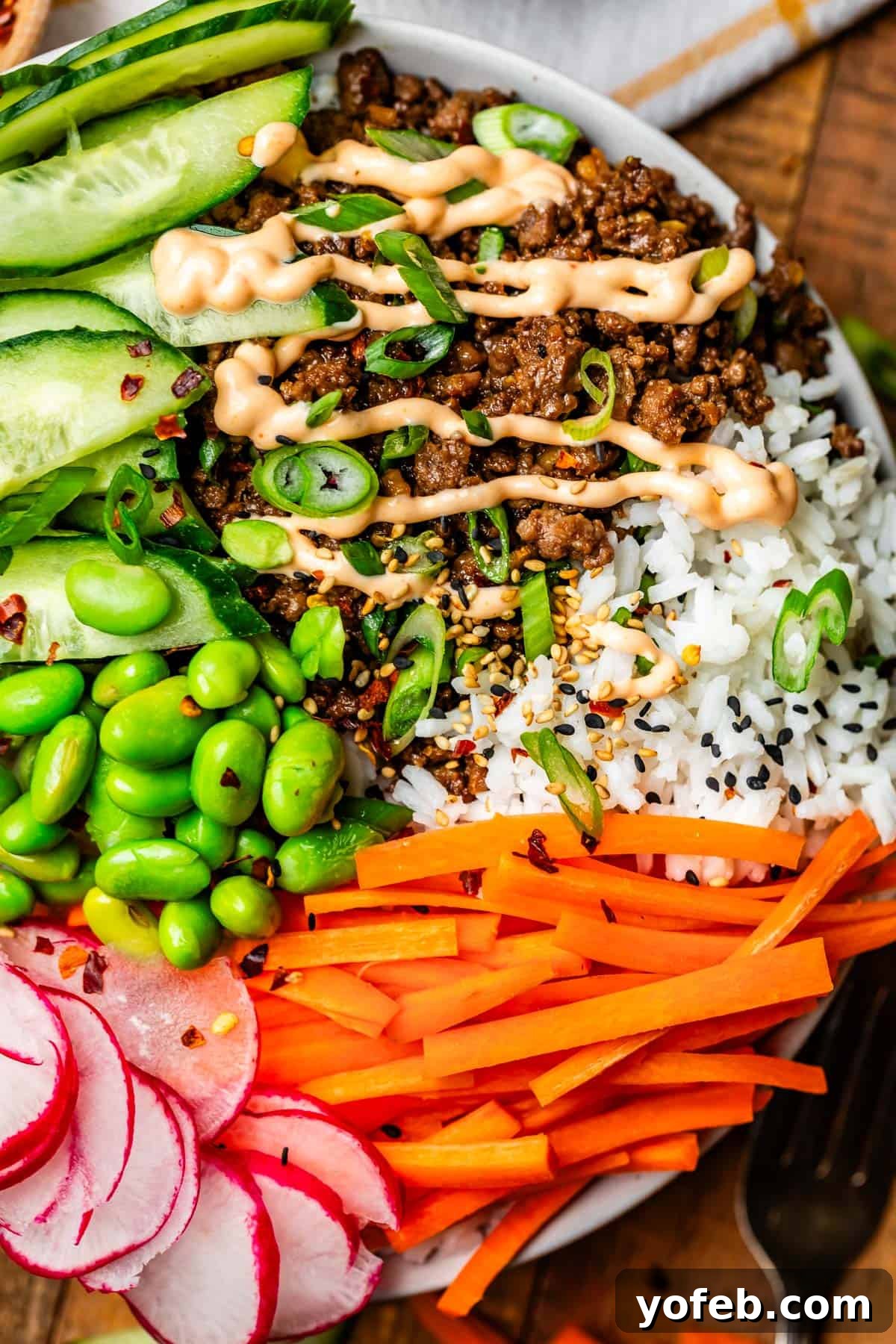
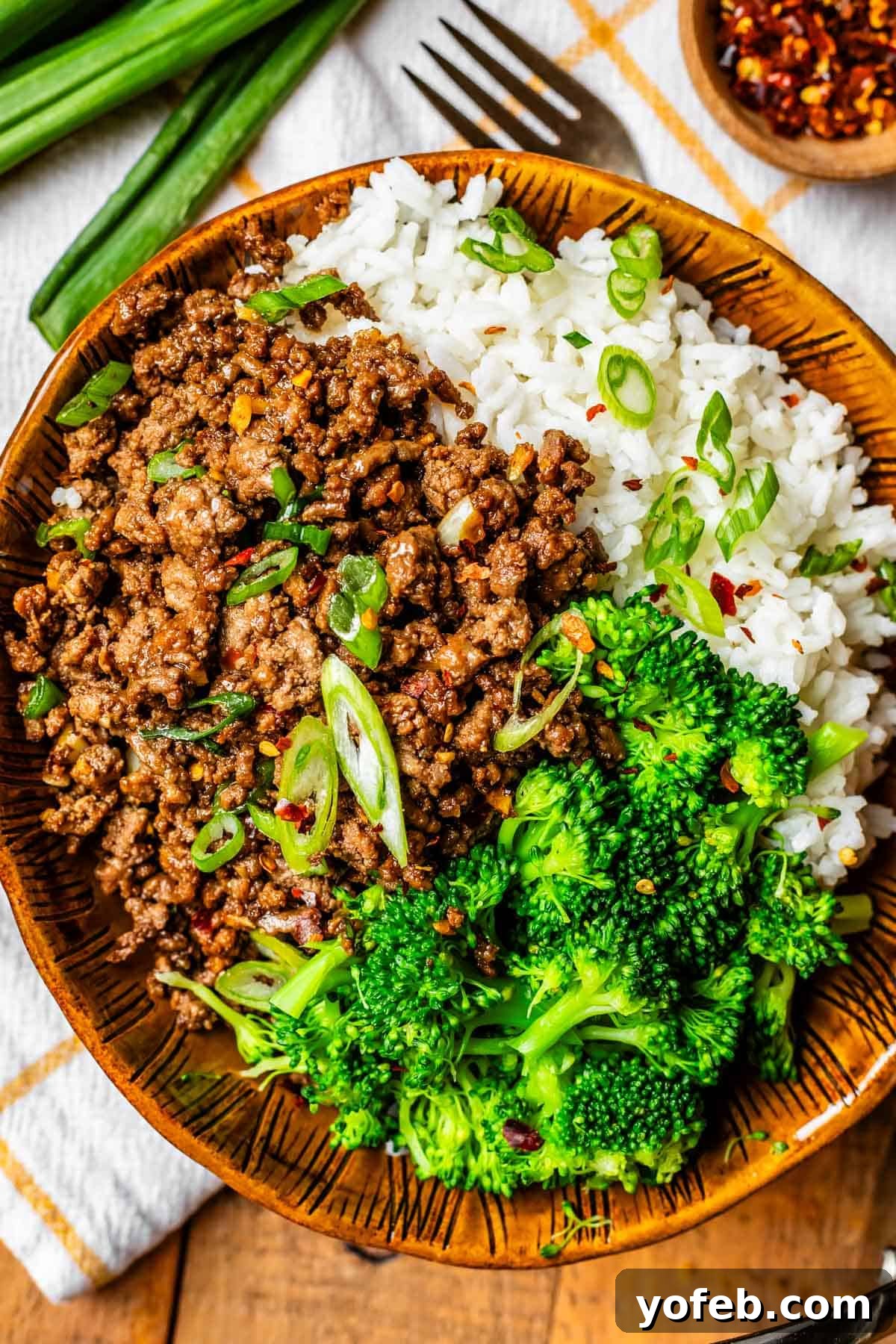
Welcome to your new favorite weeknight meal! This Korean Beef recipe is an absolute game-changer, delivering incredible flavor with surprisingly minimal effort. All you need is a pound of ground beef and a handful of common Asian pantry staples to create a truly magical dinner in just minutes. It’s a versatile dish that you can customize to your heart’s content, whether you serve it simply with rice or load it up with an array of fresh vegetables like crisp cucumbers, shredded carrots, vibrant edamame, or tender broccoli. The possibilities are truly endless, making it the perfect solution for busy evenings.
This recipe was a standout success during our Get Dinner Done Challenge, proving that delicious, home-cooked meals don’t have to be complicated or time-consuming. Ready to conquer your dinner routine? Join the next challenge here and discover more effortless recipes like this one.
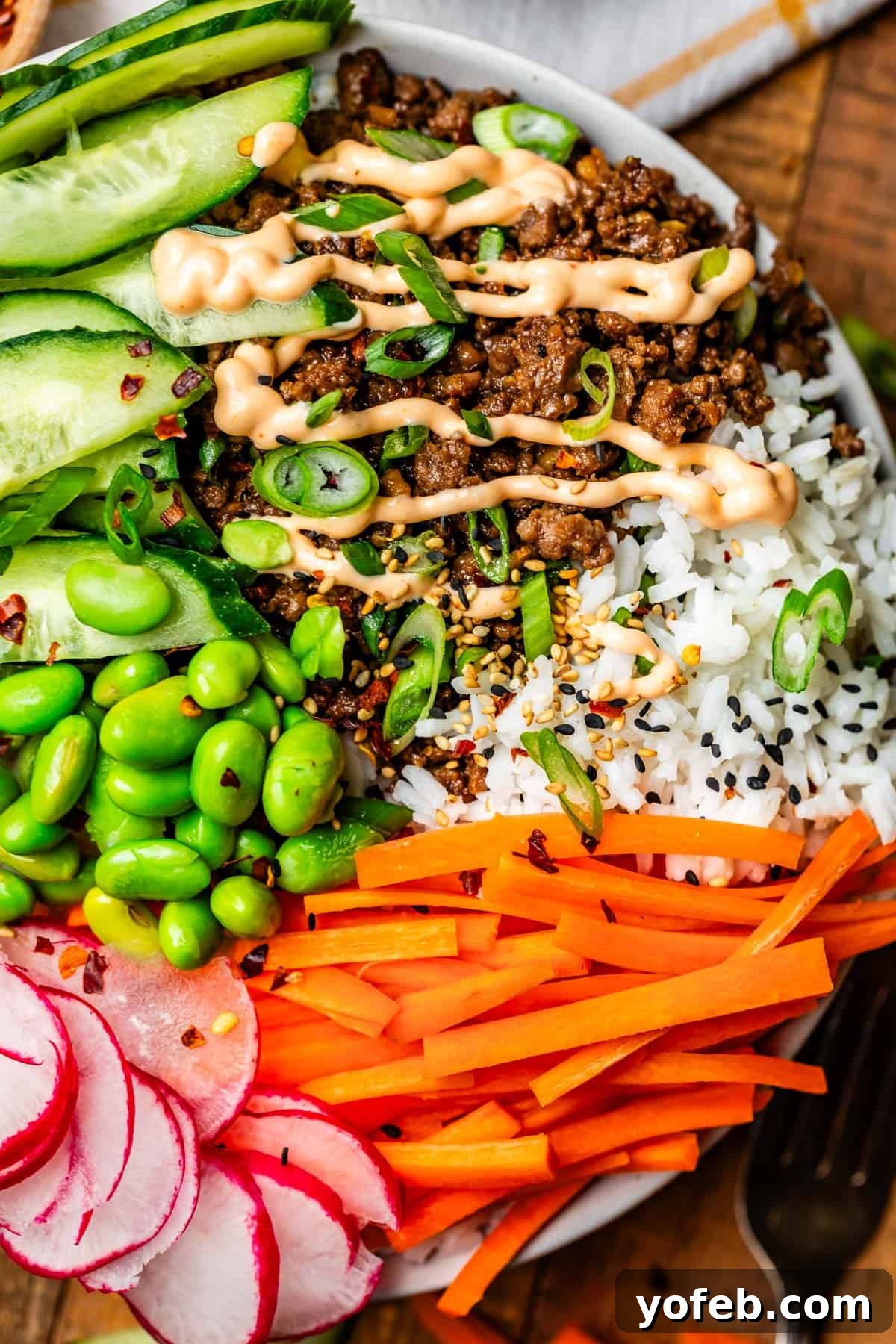
Table of Contents
- Korean Beef: The Ultimate Weeknight Flavor Bomb
- Essential Korean Beef Ingredients
- How to Make Korean Beef: A Step-by-Step Guide
- What to Serve with Korean Beef Bowls
- How to Store Korean Beef Leftovers
- Can You Freeze Korean Beef for Future Meals?
- Korean Beef Frequently Asked Questions
- Easy Ground Beef Recipes for Any Night
- More Stupid Easy FAST Dinner Recipes
- 30 Minute Korean Beef Recipe Recipe
Just the other day, I glanced over at my four-year-old son, Edison, perched on a kitchen barstool, and noticed something unusual in his hair. Reaching up to brush it away, I realized with a jolt that it wasn’t something *in* his hair, but *was* his hair – completely shriveled and singed! It turned out my little explorer had gotten a bit too close while “smelling” a candle.

I immediately sent a picture to my family with the caption: “Edison, when he smells a candle.” Their responses were a mix of concern and amusement:
“I think he’s drunk. Have you had him walk a straight line, or do finger-to-nose yet?”
“Poor kid. It’s rough being 4. 😂”
“At least the eyelashes were spared!!”
“I hope he makes it to adulthood.”
Honestly, I hope he does too! Life with this kid often feels like a series of close calls. His face in the picture is red, not from any scorch marks (thankfully!), but because earlier that day at “play school,” he decided paper was overrated and opted to paint his face instead. Of course.
Incidents like this make me seriously reconsider lighting candles at all. So much for a beautifully scented kitchen! I probably gave the most intense “stop, drop, and roll” demonstration a four-year-old has ever witnessed. He likely thought *I* was the crazy one, flailing around on the floor after he did something as seemingly innocent as sniffing a candle. It’s these kinds of daily shenanigans that reaffirm my need for truly amazing 30-minute dinners, like the one I’m sharing today. Keeping up with these kids is a full-time job; an overly involved dinner simply isn’t an option!
The genius behind this incredibly simple yet flavorful Korean Beef recipe is my sister, Laura. She’s a master at whipping up super quick and genuinely healthy dinners. While anyone can throw together pasta, Laura possesses a remarkable talent for crafting nutritious and satisfying meals that don’t compromise on taste or time. Have you ever tried Korean Beef before? There’s a very good reason for its widespread popularity – it’s a flavor explosion that comes together in a flash!
Korean Beef: The Ultimate Weeknight Flavor Bomb
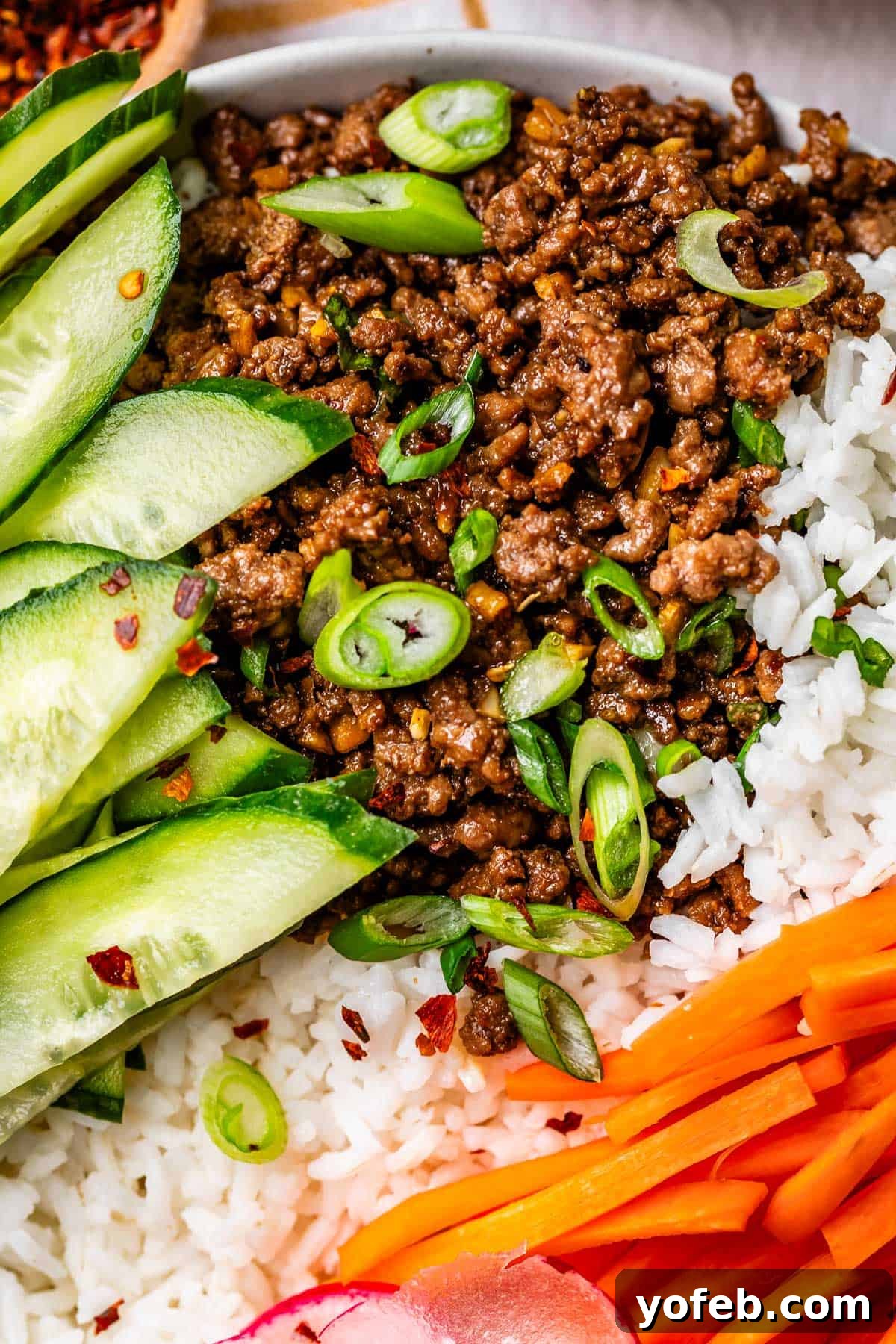
For a long time, I never gave Korean beef much thought. I’d see the pictures – “Looks like some ground beef with spices over white rice. Big woof,” I’d think. But since actually making it, my perspective has completely shifted. The FLAVOR, oh my goodness! It’s truly astounding what a few simple, yet potent, Asian pantry ingredients can do to transform a humble pound of ground beef into something so utterly delicious.
Typically, I’m the one advocating for 80/20 ground beef, especially for dishes like my famous Smash Burgers, where you truly need that fat content for maximum juiciness and flavor. However, for Korean beef, the opposite is true: lean ground beef is your best friend. I find that 93/7 lean ground beef works best here. While it might be a bit more expensive, the payoff is significant. Using lean beef means you won’t have to drain excess grease from the pan, which helps prevent that undesirable slick, greasy mouthfeel in the finished dish. Plus, it allows us to start by toasting sesame oil directly in the pan before browning the meat (a step usually unnecessary with fattier beef), which infuses the entire dish with a wonderfully deep, nutty flavor right from the start.
Once the lean beef is perfectly browned, we introduce a symphony of simple yet incredibly powerful flavors. Fresh garlic and ginger provide aromatic warmth, while toasted sesame oil adds its signature nutty depth. Low-sodium soy sauce contributes a salty, umami base, beautifully balanced by a hint of dark brown sugar, which adds a crucial touch of sweetness and caramelization. Finally, a generous amount of fresh green onions are stirred in, with extra reserved for garnish, along with a sprinkle of sesame seeds for texture and aroma. And just like that, your Korean beef is DONE. It’s genuinely that easy and quick!
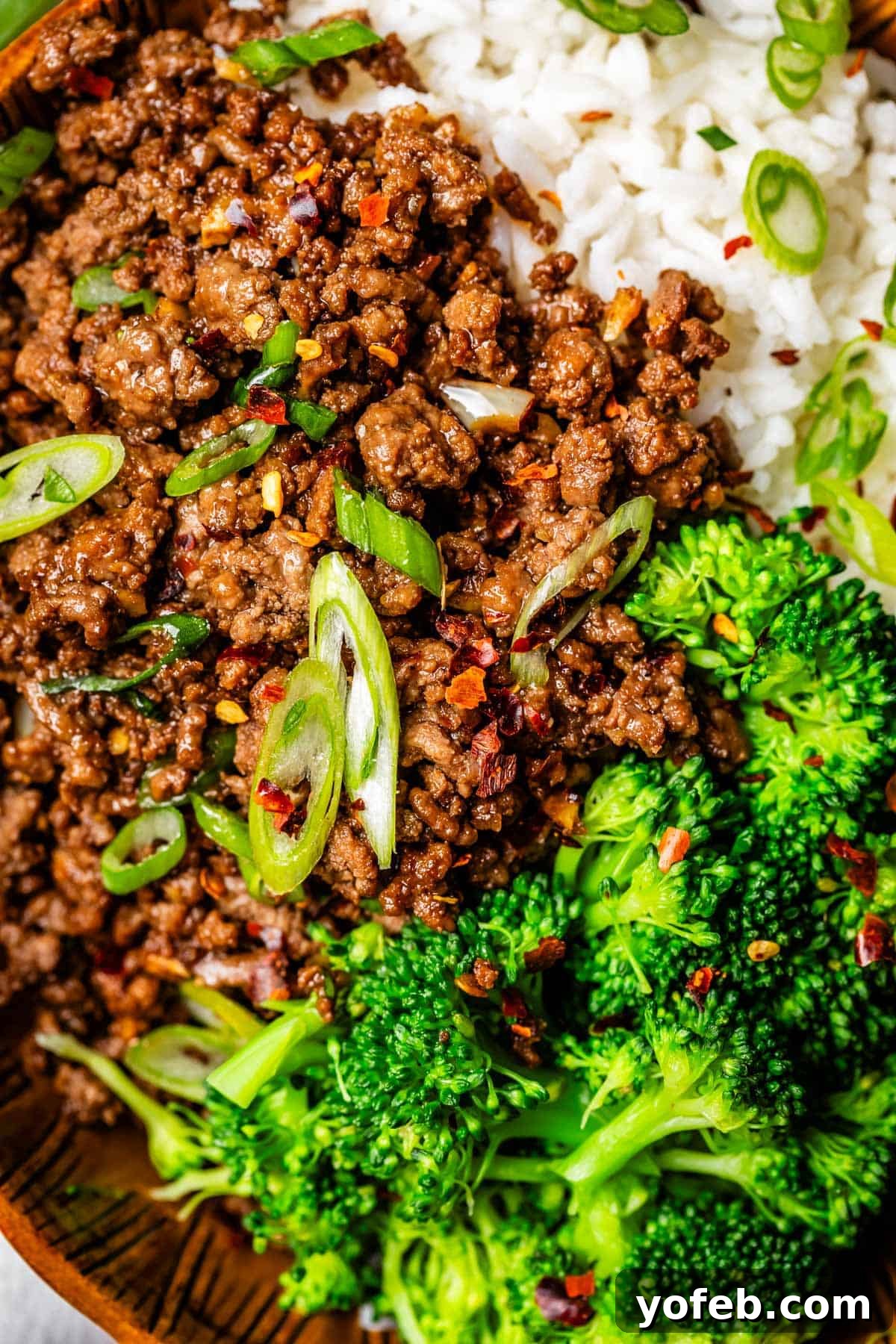
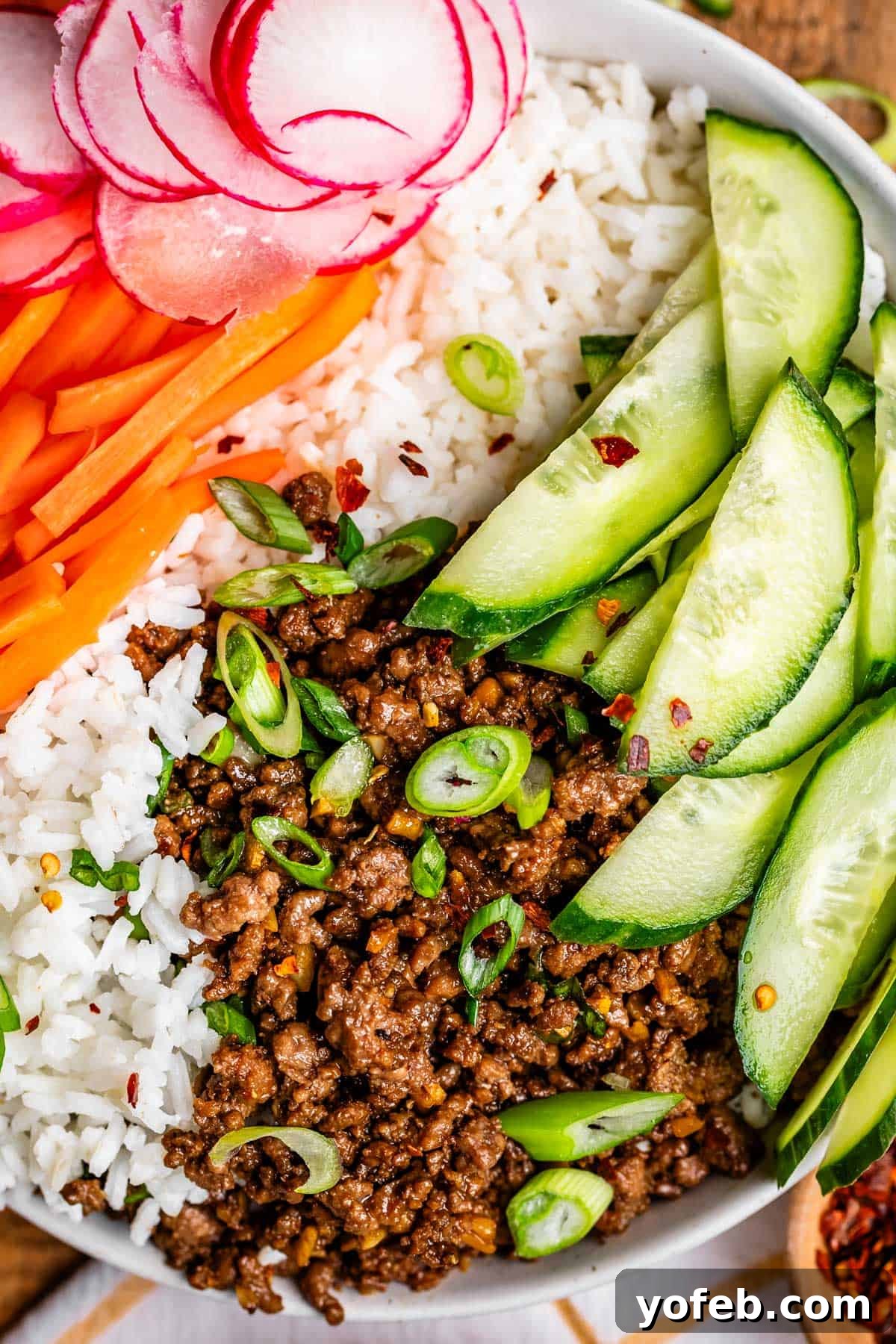
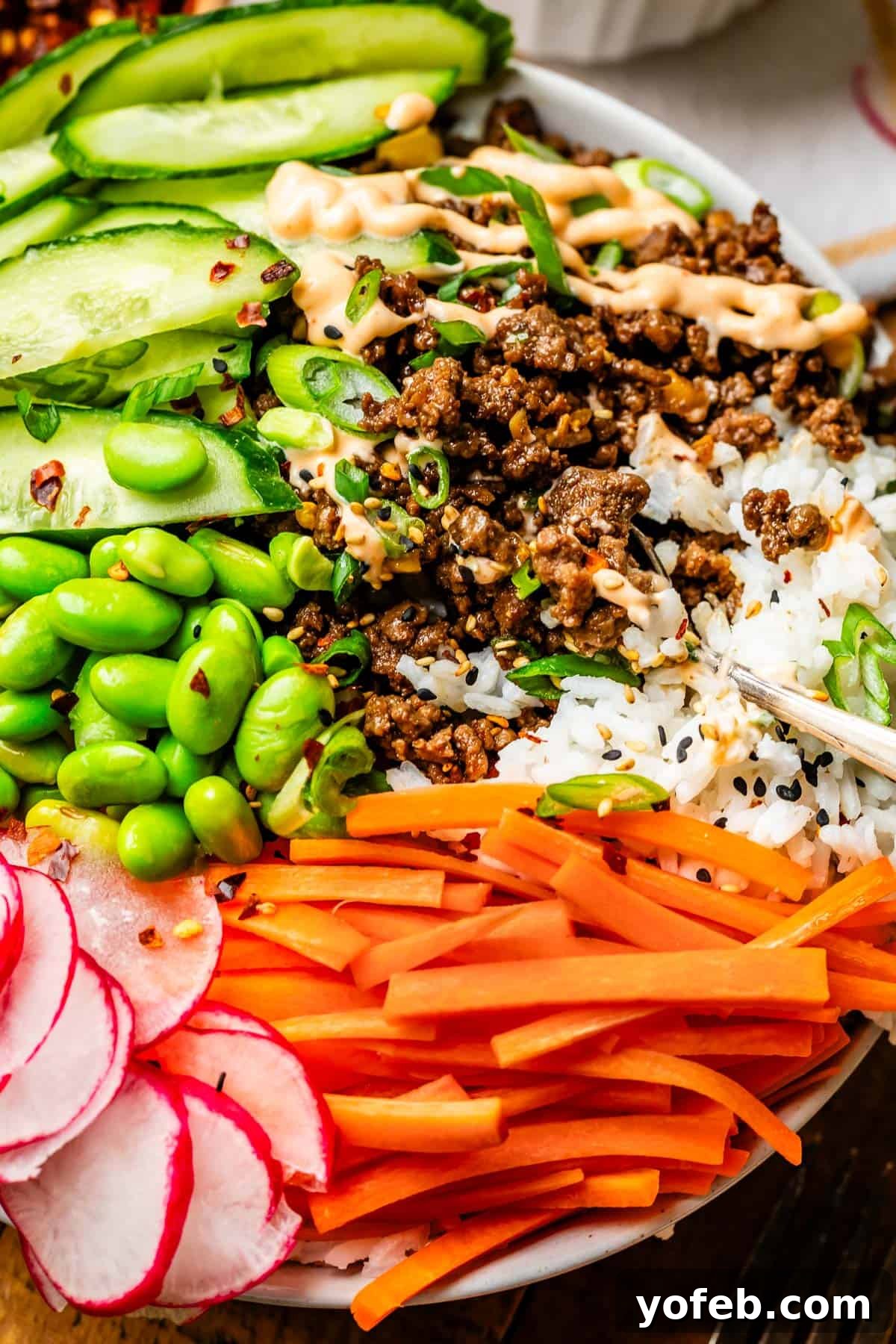
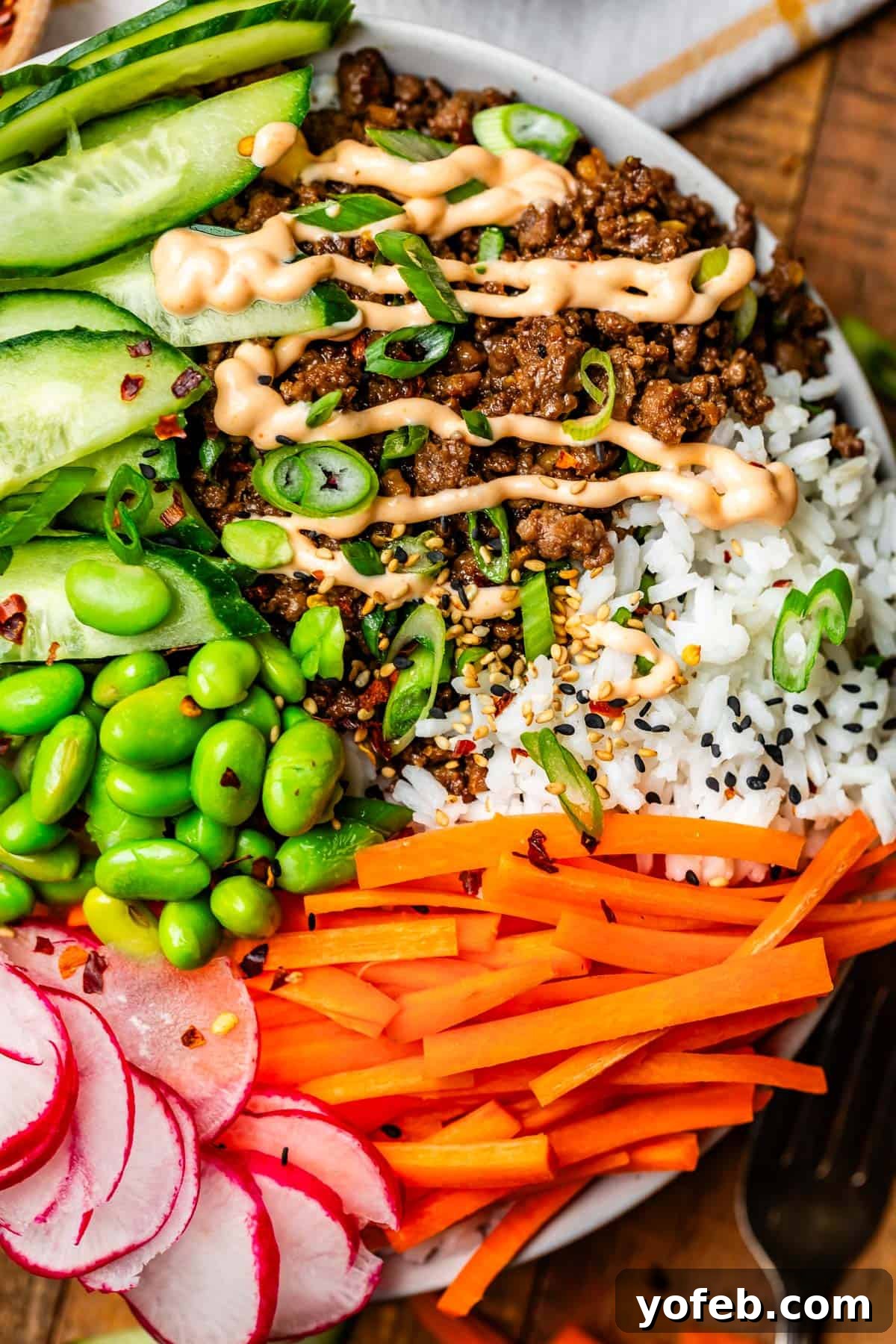
Serve this flavorful Korean ground beef over your favorite rice – be it fluffy white rice, healthier brown rice, or a low-carb cauliflower rice option – and accompany it with a medley of stir-fried or fresh vegetables. Or, assemble it all into a vibrant, customizable Korean beef bowl, as you see in the photos today. Trust me when I say this easy and delicious Korean beef recipe is destined to become a new, fast favorite in your regular dinner rotation, bringing excitement to even the busiest of weeknights.
Essential Korean Beef Ingredients
Making delicious Korean Beef is all about striking the right balance with a few key ingredients, most of which you likely already have in your pantry if you enjoy Asian cooking. Here’s a breakdown of what you’ll need and why each component is so important. For precise measurements and detailed instructions, be sure to check the full recipe card below!
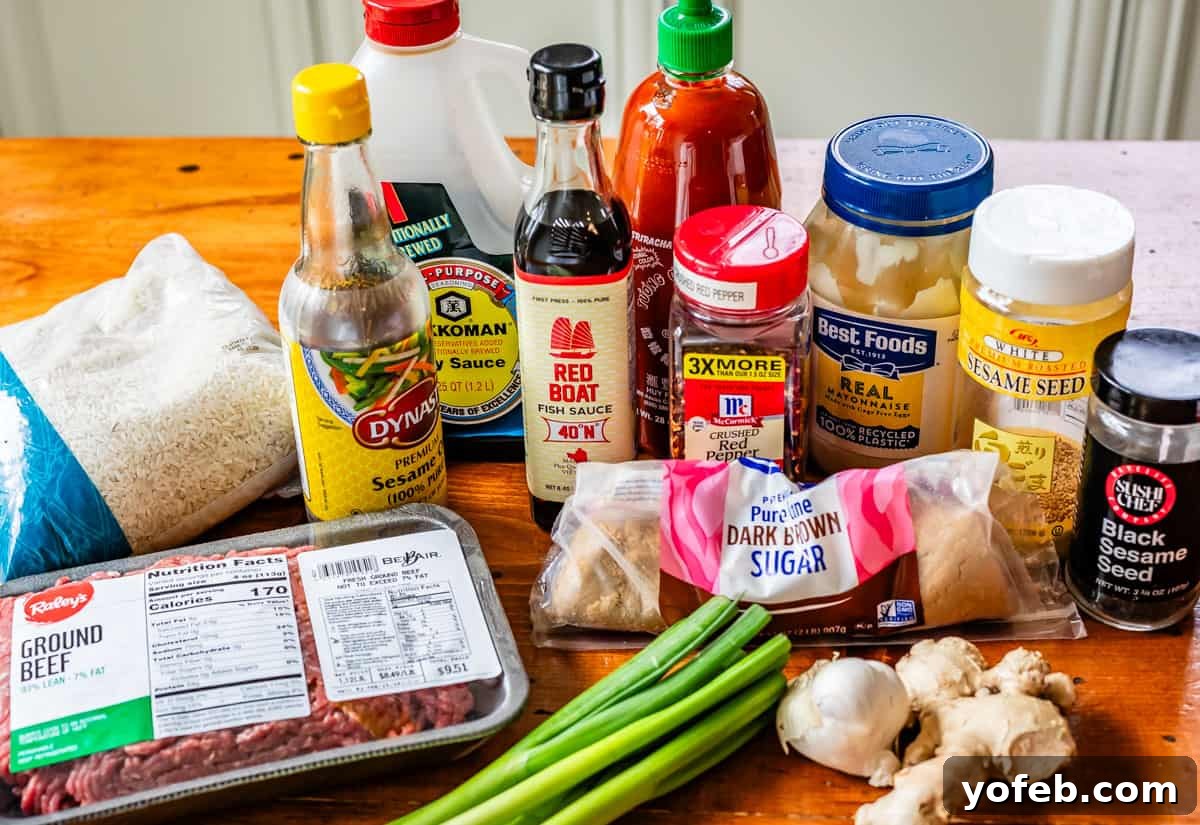
- Lean Ground Beef: The foundation of this dish. Opt for 93/7 for the best texture and to minimize grease.
- Toasted Sesame Oil: Essential for that deep, nutty aroma and flavor that defines many Asian dishes.
- Fresh Garlic: Provides a pungent, aromatic base. Don’t skimp on fresh for the best flavor!
- Fresh Ginger: Adds a zesty, slightly spicy warmth that complements the garlic beautifully.
- Red Pepper Flakes: For a customizable kick of heat. Adjust to your spice preference.
- Low-Sodium Soy Sauce: The primary source of savory, umami flavor and saltiness. Using low-sodium allows for better control of seasoning.
- Fish Sauce (optional, but highly recommended): This is your secret weapon for an incredible depth of UMAMI! Even a teaspoon can dramatically elevate the dish.
- Dark Brown Sugar: Balances the savory and salty notes with a rich sweetness and hint of molasses.
- Green Onions: Adds a fresh, pungent bite and vibrant color, both stirred in and as a garnish.
- Sesame Seeds: For garnish, adding a pleasant crunch and nutty finish.
- Rice: Your essential accompaniment! White, brown, or cauliflower rice all work wonderfully.
- Optional Veggies: The beauty of a Korean beef bowl is its versatility! Think cucumbers, carrots, edamame, broccoli, bell peppers, or even quick-pickled radishes.
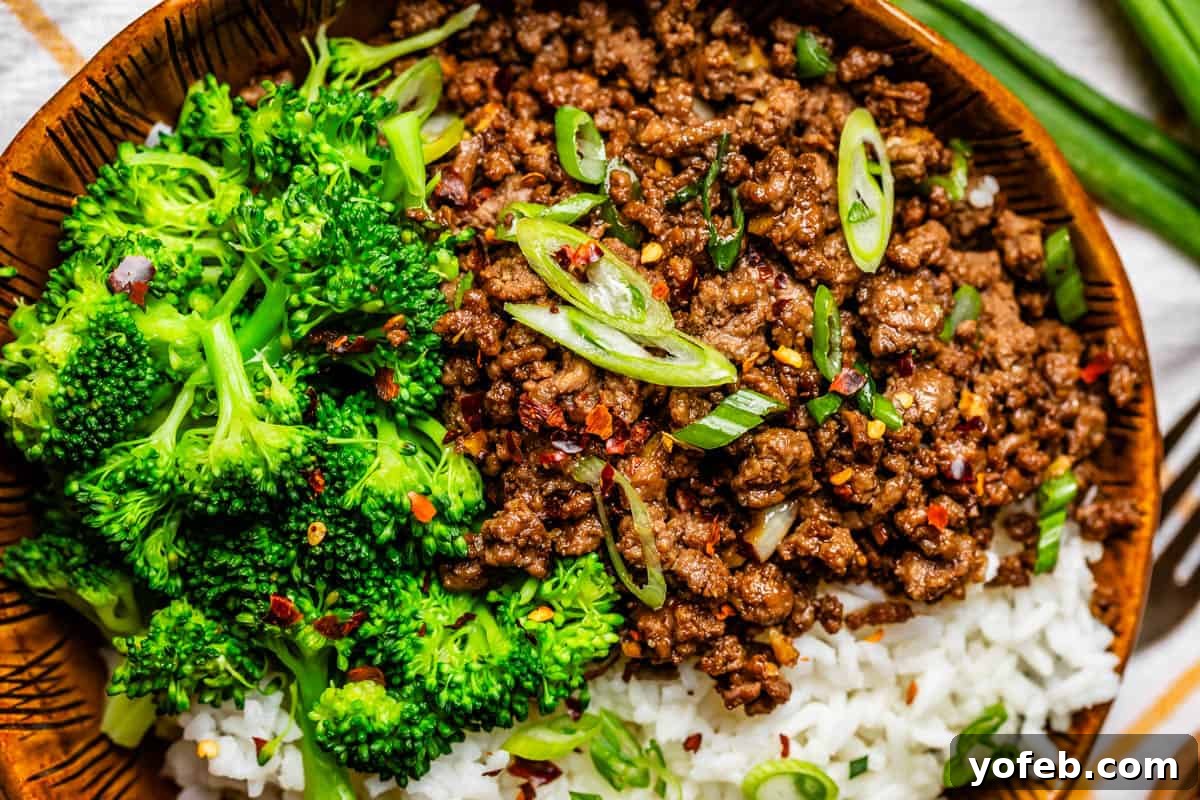
How to Make Korean Beef: A Step-by-Step Guide
This Korean Beef recipe truly embodies the spirit of a quick weeknight meal. The entire cooking process, from start to finish, is incredibly efficient. In fact, you’ll find that preparing your rice takes longer than cooking the beef itself! So, let’s dive into making this flavorful dish.
1. Get Your Rice Started First:
If you’re serving this delicious Korean beef with rice, make sure to get your rice cooking first. This dish comes together so quickly that the rice will undoubtedly be the longest part of your prep. I usually opt for classic white rice for my kids and either Cauliflower Rice or Asian Cauliflower Rice for myself and Eric, as we often prefer low-carb dinners. Whether you rice a fresh head of cauliflower yourself or opt for the convenience of pre-riced frozen cauliflower (which just needs to be heated in a pan with a little oil and salt), both are fantastic, healthy bases.
2. Brown the Lean Ground Beef:
While your rice is simmering, grab a large skillet (a 12-inch skillet works perfectly) and place it over medium-high heat. Add your toasted sesame seed oil. The toasted variety offers a richer, deeper flavor, but regular sesame oil will work just fine. Once the oil shimmers slightly, add your pound of lean ground beef (remember, 93/7 is ideal here to avoid excess grease). Use a spatula or spoon to break up the meat into small, even pieces as it cooks. Stir occasionally until the beef is thoroughly browned, which should take about 5 to 8 minutes. If you accidentally used fattier ground beef, now would be the time to carefully drain any accumulated grease.
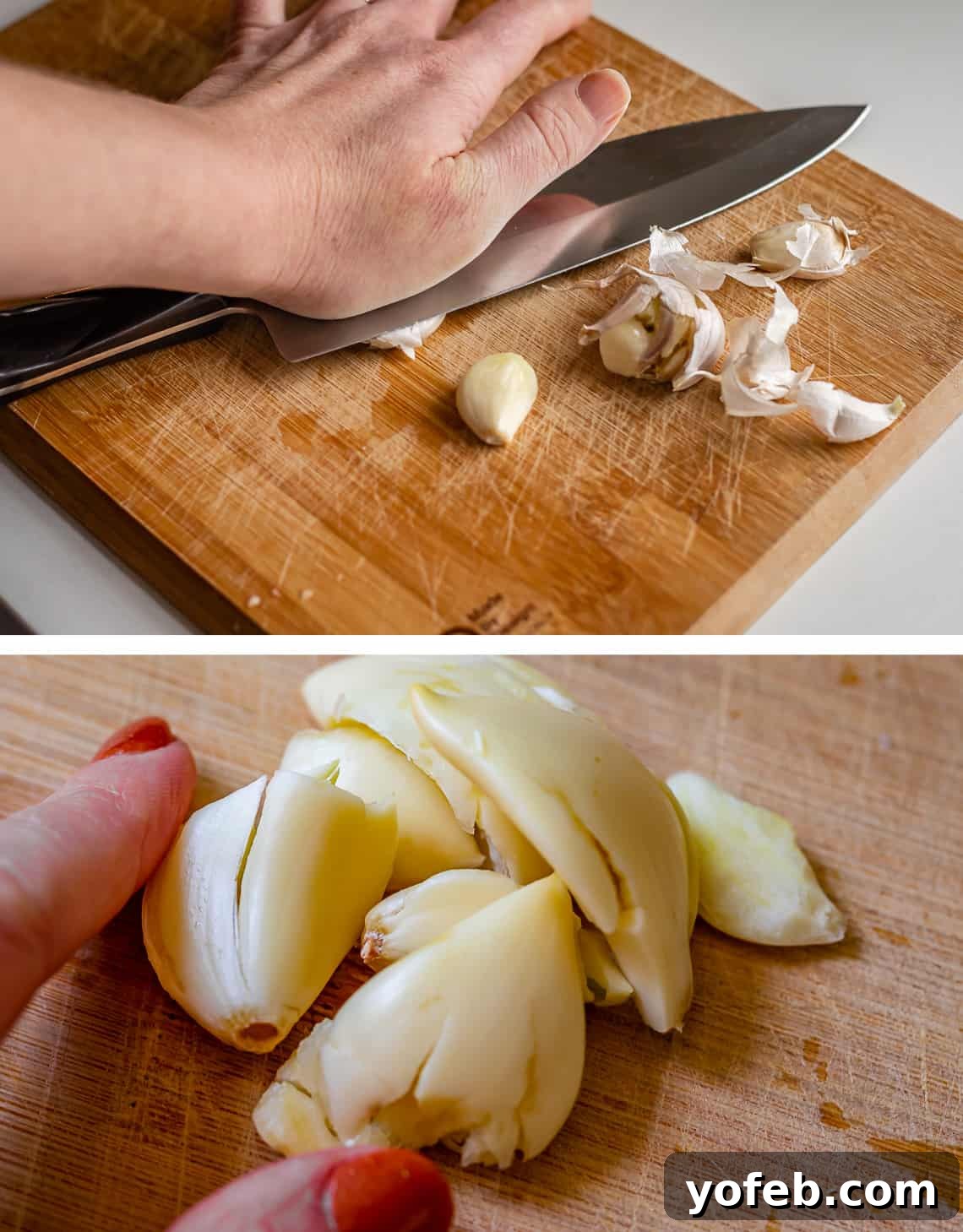
3. Prep Your Aromatics: Garlic and Ginger:
While the beef browns, it’s the perfect time to prepare your aromatics. Smash your garlic cloves, then finely mince them until you have about a tablespoon. For the fresh ginger, you can grate it or mince it finely. I often use a spoon to peel ginger – it’s incredibly easy! My sister, Laura, has even taken it a step further: she just scrubs her ginger really well and chops it up without peeling. Talk about freedom in the kitchen! If you’re really pressed for time, jarred garlic and ginger can work, but for the most vibrant flavor, fresh is always best.
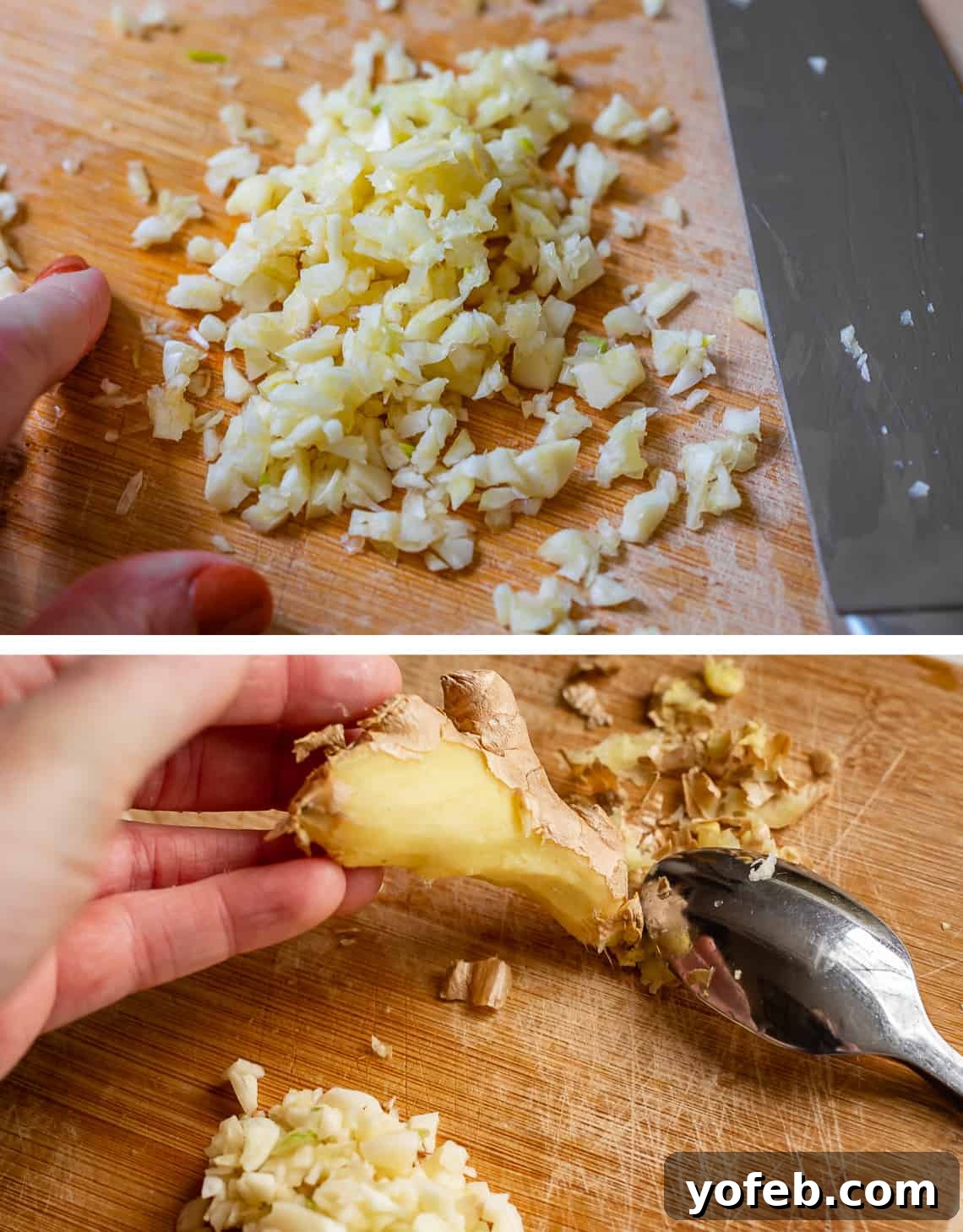
4. Add Fragrant Seasonings:
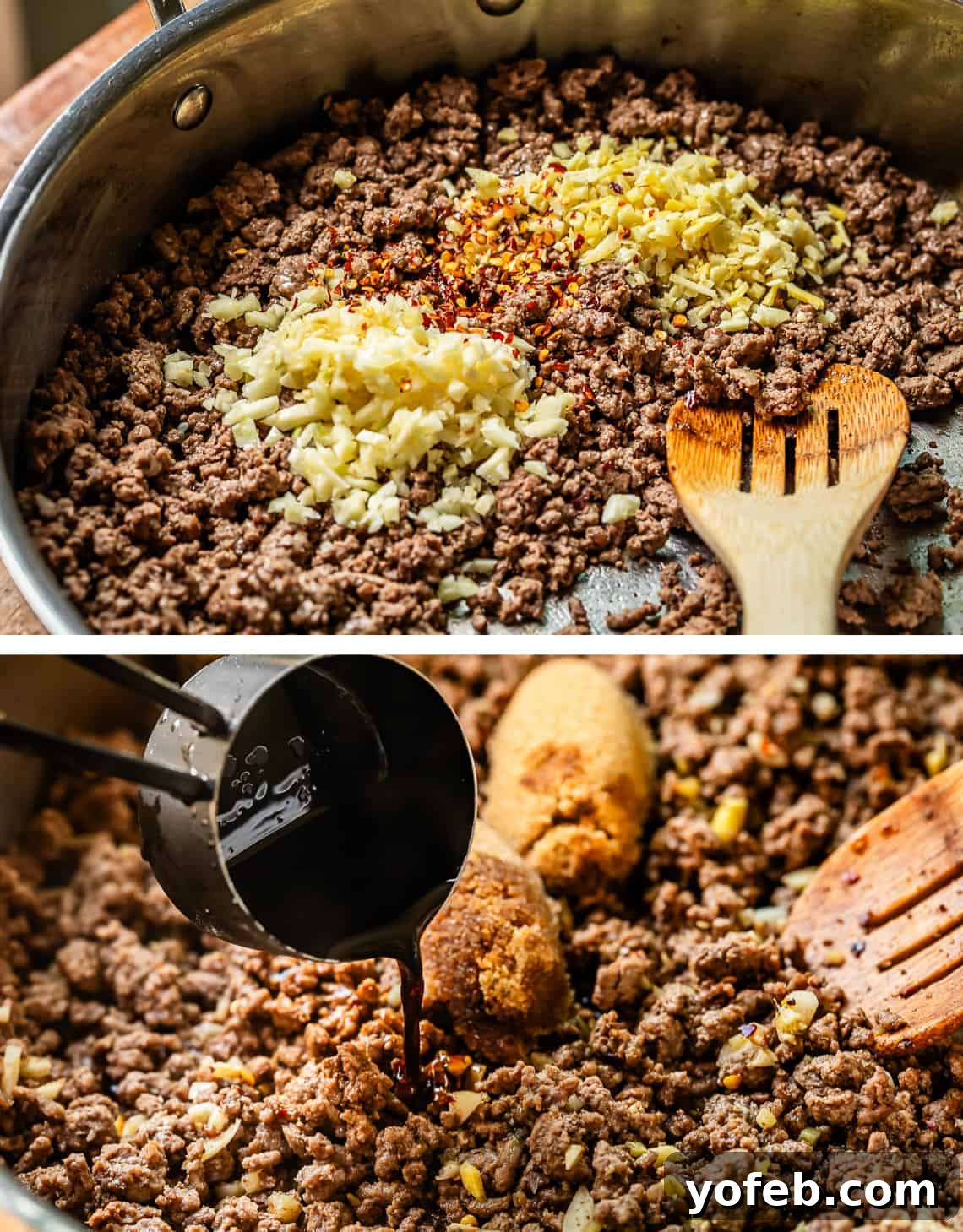
Once the ground beef is fully cooked and slightly crispy, reduce the heat to medium. Add in the minced garlic, grated ginger, and red pepper flakes. Stir these aromatics into the beef and let them cook for just 1-2 minutes. You’ll know they’re ready when your kitchen is filled with their incredibly fragrant aroma – don’t let them burn!
5. Create the Delicious Sauce:
Now it’s time for the liquids! Pour in the low-sodium soy sauce and add the dark brown sugar. Here’s where the magic truly happens: add a teaspoon of fish sauce. While technically optional, please, if you do *any* Asian-style cooking, get yourself a bottle of quality fish sauce (Red Boat brand is a fantastic choice). It’s essentially bottled umami, and adding just a teaspoon to any Asian dish will instantly amplify and deepen its flavors. Stir all these ingredients together until well combined and let them cook for another 1-2 minutes, allowing the sauce to slightly thicken and coat the beef. Taste and adjust for sweetness, saltiness, or spice level as desired.
6. Finish with Fresh Green Onions:
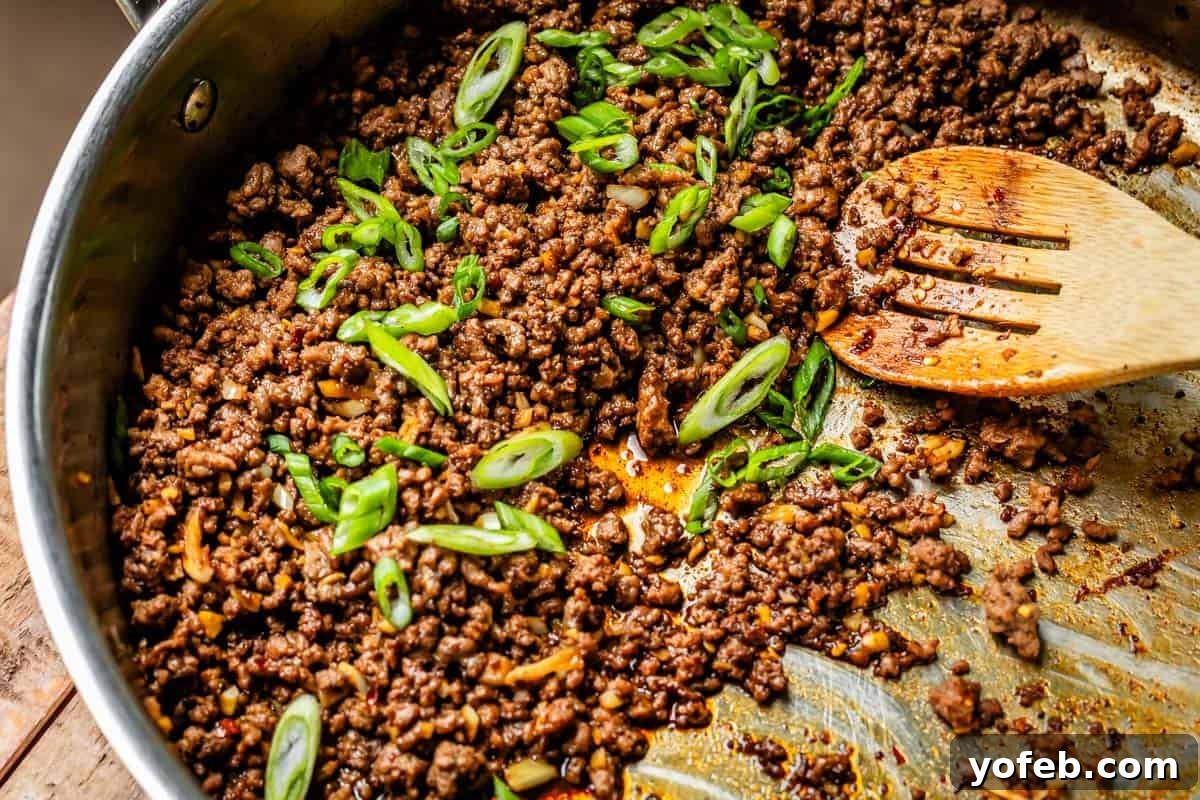
Turn off the burner. Y’all… THAT’S IT for the cooking! But we’re not quite done with the flavor. Fresh green onions are a crucial addition. Here’s a little trick: I often use my kitchen shears to quickly snip the green onions directly into the pan, saving on a chopping board and extra dishes. If you don’t have kitchen shears, a knife works perfectly fine, of course. I usually stir about three-quarters of the chopped green onions into the warm beef, allowing them to *very slightly* wilt and infuse their flavor. The remaining onions can be sprinkled over the top just before serving, or passed at the table for an extra burst of freshness.
7. Don’t Forget the Garnishes!
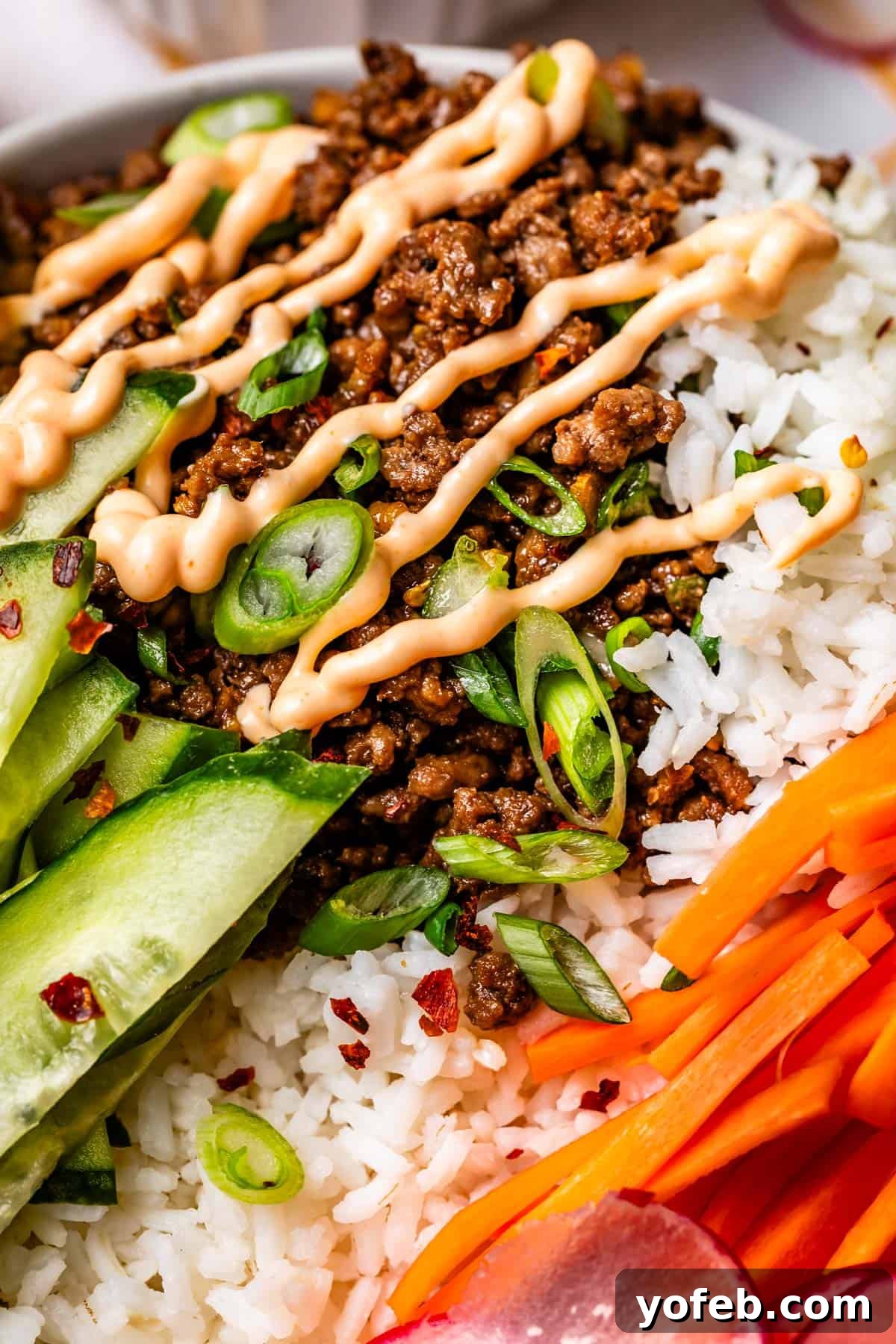
A final touch of sesame seeds adds a lovely nutty flavor and a bit of visual appeal. And seriously, if you truly love yourself, take an extra minute to whip up some quick Sriracha mayo. A dollop of this creamy, spicy sauce over your Korean beef bowl with literally any veggie you have in your fridge elevates the whole experience to another level. Sooo good!
What to Serve with Korean Beef Bowls
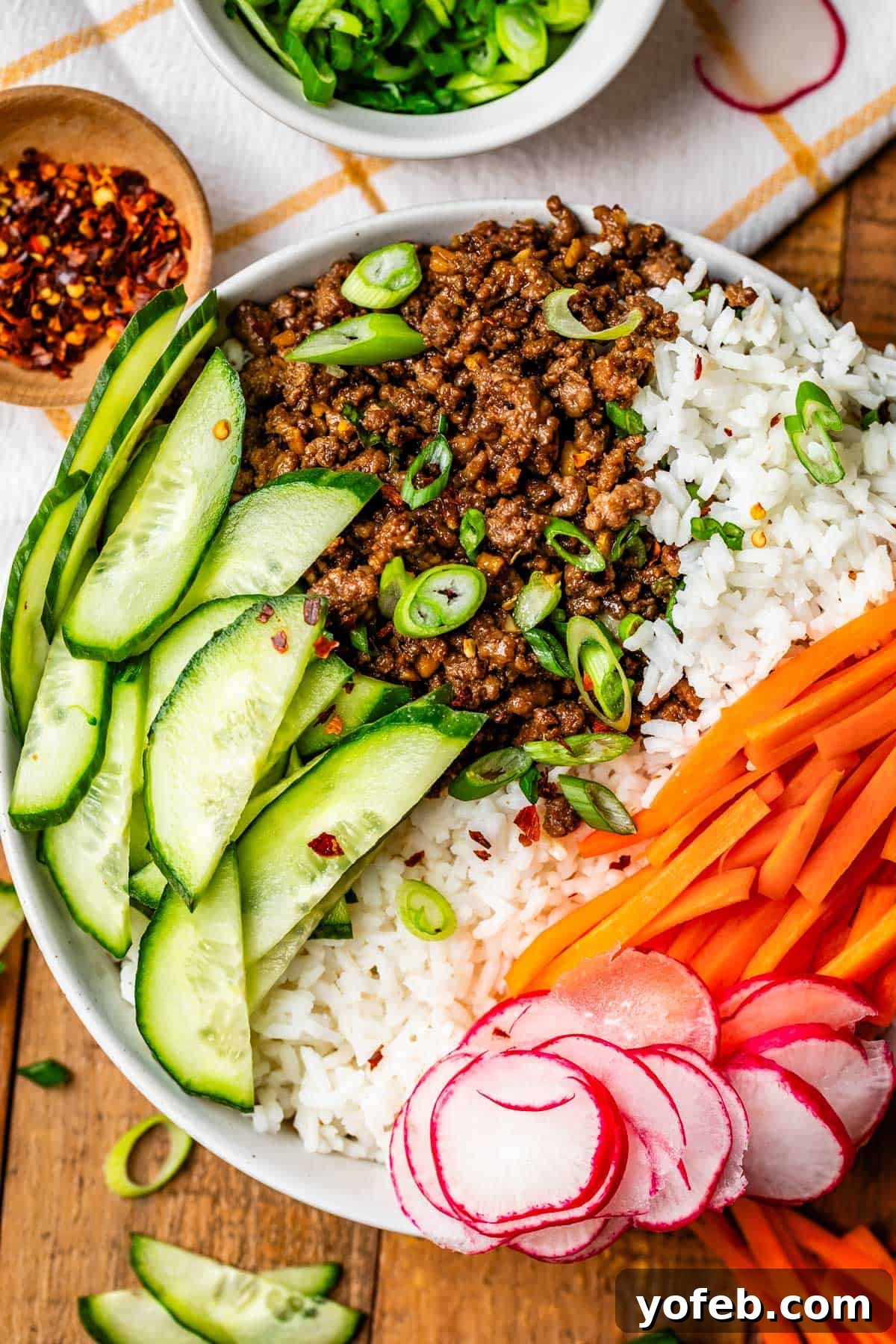
The beauty of these Korean beef bowls is their incredible versatility. They can be as simple or as elaborate as your time and fridge contents allow. When I need the absolute quickest meal, I pair the beef with freshly cooked rice and a bag of pre-cut stir-fry vegetables from the produce aisle—typically a mix of cabbage, broccoli, carrots, and perhaps some snow peas or Brussels sprouts. If I have a little more time, I’ll chop up whatever fresh veggies I have on hand and quickly stir-fry them or prepare a separate side dish. Here are some fantastic rice and veggie options that pair perfectly with this flavorful Korean beef:
- Coconut Jasmine Rice with Cilantro: The subtle sweetness and freshness of coconut and cilantro in this rice would provide a delightful contrast to the savory beef.
- How to Cook Brown Rice in Instant Pot: For a healthier, whole-grain option that’s still incredibly easy and takes only about 30 minutes, the Instant Pot makes perfect brown rice every time.
- How to Make Riced Cauliflower: An excellent low-carb alternative to traditional rice, allowing you to load up on more vegetables without sacrificing satisfaction.
- How to Make Zucchini Noodles Without a Spiralizer: Another fantastic no-rice, low-carb option that adds a fresh, light texture to your bowl.
- Easy Roasted Broccoli Recipe: This is always a hit with my kids, and you can even use frozen broccoli for added convenience. Roasting brings out its natural sweetness.
- Thai Cucumber Salad: Light, refreshing, and quick-pickled cucumbers offer a tangy crunch that cuts through the richness of the beef beautifully.
- Fresh Coleslaw (with Lemon and Herbs!): While a bit unconventional for a Korean dish, I adore bright, herbaceous salads with heartier meals, and this zesty coleslaw would provide a refreshing counterpoint.
- Lemon Dijon Green Beans Almondine: Super easy to make and packed with zesty, garlicky flavor that complements the Asian profile.
- Kimchi Recipe from My Korean Kitchen: For an authentic touch and a probiotic boost, homemade kimchi adds a fermented, spicy, and tangy element that truly elevates the Korean beef experience.
How to Store Korean Beef Leftovers
One of the many great things about this Korean beef recipe is how well it keeps, making it fantastic for meal prep or simply enjoying leftovers. To store any remaining beef, transfer it to an airtight container and place it in the refrigerator. It will stay fresh and delicious for about 5 days, making it ideal for grabbing quick lunches throughout the week.
For ultimate convenience, consider preparing individual meal prep containers. Add a portion of leftover rice, the Korean beef, and any cooked or fresh veggies you prefer into microwave-safe containers. This way, when hunger strikes, you can simply grab a container, heat it up, and have a complete, satisfying meal ready in minutes. When reheating Korean beef from the refrigerator, I recommend using the microwave. Since lean meat can become tough if overcooked, heat it at 50% power for 1-2 minutes, stirring halfway through, until it reaches your desired warmth. This gentle reheating method helps maintain its tender texture and delicious flavor.
Can You Freeze Korean Beef for Future Meals?
Absolutely! Freezing Korean beef is one of my favorite hacks for even easier future dinners – which is saying something, considering how quick it is to make fresh. It’s so convenient that I often double or even triple the recipe just to ensure I have extra portions to freeze for those really hectic nights. To freeze, let the cooked beef cool completely, then transfer it into a freezer-safe ziplock bag. Flatten the bag to create a thin, even layer. This not only saves space in your freezer but also helps the beef thaw much more quickly and evenly.
Seal the bag tightly, removing as much air as possible, and place it in the freezer. Properly stored, frozen Korean beef will maintain its quality for 4-6 months. When you’re ready to enjoy it, simply pull the bag out of the freezer and let it thaw in the refrigerator overnight, or on the kitchen counter for a few hours if you’re short on time. Once thawed, reheat the beef gently over low heat in a skillet on the stove. You might want to add 1-2 tablespoons of water or a splash of broth during reheating to prevent it from drying out and to refresh the sauce. It’s almost like having a freshly made meal, but with zero effort!
Korean Beef Frequently Asked Questions
“Korean beef” in the context of this recipe is essentially a simplified, weeknight-friendly take on the classic Korean dish, Beef Bulgogi. It cleverly adapts Bulgogi’s signature sweet and savory flavor profile—featuring sesame, soy, ginger, and garlic—but skips the traditional tenderizing addition of blended Asian pear and the need for thinly sliced premium beef cuts like ribeye or sirloin. Instead, this version keeps it wonderfully simple (and budget-friendly) by utilizing versatile ground beef, making it an accessible and quick meal for any night of the week.
This question actually has two distinct answers! First, there’s the popular “Korean Beef” recipe, which is what we’re making today—a ground beef dish inspired by Korean flavors. Secondly, “Korean Beef” can also refer to a specific type of cattle breed known as Hanwoo. Hanwoo is a native Korean breed and is one of the rarest and most expensive meats in the world, renowned for its exceptional marbling and flavor. Hanwoo beef is primarily consumed in Korea as a delicacy and is not commonly available in the U.S. or other international markets.
I personally believe this Korean beef recipe offers a wonderfully balanced meal! Made with lean ground beef, it provides an excellent source of protein. You have complete control over the amount and type of vegetables you add, allowing you to pack in plenty of nutrients. Plus, you can choose your preferred carb or low-carb base, such as white rice, brown rice, or cauliflower rice. While it’s already a healthy option for most, there are several ways to make it even leaner or healthier if you wish. Consider swapping the ground beef for lean ground turkey, serving the meat and veggies in crisp lettuce wraps instead of rice, or using a brown sugar substitute to reduce the sugar content and calories. It’s highly adaptable to various dietary needs and preferences!
The primary spices and aromatics that give Korean beef its distinctive flavor include fresh garlic and ginger, which provide a pungent and warming base. Red pepper flakes are typically added to introduce a customizable level of heat. Other key flavorings come from the sauce, such as savory soy sauce, a touch of rich dark brown sugar for sweetness, and optionally, a dash of fish sauce for an incredible boost of umami. Fresh green onions also contribute a mild oniony bite and bright freshness.
The spice level of Korean beef is entirely up to you! This recipe typically includes red pepper flakes, allowing you to adjust the heat to your preference. If you prefer a very mild dish, you can use just a small pinch or omit them entirely. For those who love a fiery kick, feel free to add more red pepper flakes during cooking or serve extra on the side for individual customization. You can also drizzle with extra Sriracha mayo for added spice and creaminess!
Easy Ground Beef Recipes for Any Night
Ah, the age-old culinary conundrum: “What am I going to do with this ground beef?” It’s a question I hear (and ask myself) constantly! If you find yourself stuck in a ground beef rut, fear not. I’ve got some incredible, easy-to-make recipes that will transform that versatile ingredient into a delicious meal in no time. Say goodbye to boring dinners and hello to these fantastic options:
- Best Sliders Recipe: These aren’t just any cheeseburger sliders; they are the stuff of dreams – perfect for parties or a fun family dinner!
- Smash Burger Recipe (Cast Iron Burgers): You won’t believe how easy it is to make the best burgers right in your cast iron skillet. Just promise me you won’t use lean 93/7 ground beef for this one; the fat is key for juicy smash burgers!
- Easy Salisbury Steak Recipe (30 Minutes): This classic comfort food comes together in just 30 minutes, but tastes so rich and satisfying, it feels legitimately gourmet.
- Chili Mac and Cheese Recipe (30 Minute Dinner): A huge crowd-pleaser that combines two favorites into one hearty, cheesy, and delicious meal for both kids and adults.
- Ground Beef and Potatoes from Well Plated: A simple, comforting, and filling one-pan meal that’s perfect for a chilly evening.
More Stupid Easy FAST Dinner Recipes
Some nights, you just need to get dinner on the table, and fast! We all have those evenings where time is short, energy is low, and the thought of an elaborate meal is simply overwhelming. That’s why I’m always on the hunt for “stupid easy” and lightning-fast dinner recipes that don’t compromise on flavor. Here are some of my other go-to favorites that will save your weeknights and bring deliciousness without the fuss:
- 10 Minute Enchilada Chicken Quesadillas: A true life-saver! Using rotisserie chicken, these cheesy quesadillas are ready in a flash and packed with flavor.
- Easy Wonton Soup Recipe with Frozen Wontons: Grab some frozen wontons, and you can have a warm, comforting soup on the table in about 15 minutes any night of the week.
- 20 Minute Broccoli Lemon Pasta Skillet: One of my absolute favorite quick pasta dishes, offering bright, fresh flavors and a satisfying meal in less than half an hour.
- 20 Minute Pan-Seared Salmon with Arugula Pesto: Healthy, incredibly fast, and unbelievably delicious – this salmon recipe is a winner for seafood lovers.
- Sheet Pan Gnocchi with Cherry Tomatoes and Mozzarella (30 Minute Dinner): Minimal prep, then pop it in the oven while you relax or tackle other tasks. So simple and so quick!
- 15 Minute One Pot Chicken Dinner Recipe from The Kitchen Wife: True to its name, this recipe delivers a complete chicken dinner with minimal cleanup in a flash.
- 15 Minute Dinner Sausage Alfredo from Lynn’s Kitchen Adventures: A creamy, savory pasta dish that comes together incredibly fast, perfect for a busy weeknight.
Facebook | Pinterest | Instagram

30 Minute Korean Beef Recipe
Ingredients
- 1 pound lean ground beef, 93/7 is best
- 1 and 1/2 teaspoons toasted sesame seed oil, or regular sesame oil
- 1 tablespoon finely minced garlic, about 4-5 cloves
- 1 tablespoon ginger, grated or minced
- 1/2 teaspoon red pepper flakes, more or less to taste
- 1/4 cup low sodium soy sauce
- 1 teaspoon fish sauce, optional
- 1/4 cup dark brown sugar*, more or less to taste
- 1 bunch green onions, chopped
Garnishes
- 1/2 cup mayonnaise
- 2 teaspoons sriracha sauce, or your favorite hot sauce, add more to taste
- sesame seeds, to garnish
Veggies you need for a Korean Beef Bowl
- 3 medium carrots , sliced into matchsticks
- 1 English cucumber, sliced
- 4 radishes, sliced very thin
- 1 (5-ounce) bag frozen edamame
For the rice
- 1 & 1/2 cups long grain white rice
- 2 & 1/4 cups water
- 1 teaspoon kosher salt
- 1 teaspoon garlic, smashed and minced
Instructions
-
Start your rice first. Combine 1 and 1/2 cups long grain white rice, 2 and 1/4 cups water, 1 teaspoon kosher salt, and 1 teaspoon minced garlic (jarred garlic is fine here) in a medium saucepan. Bring to a rolling boil over high heat with the lid securely on.
-
Once steam begins to escape from under the lid, immediately reduce the heat to low and set a timer for 10 minutes. When the timer sounds, turn off the heat, but keep the lid on and do not disturb for another 10 minutes. After this resting period, fluff the rice gently with a fork. Keep the lid on until you are ready to serve.
-
Brown the meat. Heat a 12-inch skillet over medium-high heat. Add 1 and 1/2 teaspoons of toasted sesame seed oil and swirl to coat the bottom of the pan. Once hot, add 1 pound of lean ground beef (93/7 is recommended). Stir and break up the meat into small, uniform pieces. Continue cooking until the beef is fully browned and cooked through, typically 5-8 minutes. Once cooked, reduce the heat to medium.
(If you’re using ground beef with a higher fat content, drain any accumulated grease from the pan at this point.)
-
Add seasonings. Finely mince 4-5 cloves of garlic to yield about 1 tablespoon. Grate or finely mince 1 tablespoon of fresh ginger.
-
Add the minced garlic, ginger, and 1/2 teaspoon red pepper flakes to the browned beef in the pan. If you prefer a subtle hint of spice, start with 1/2 teaspoon; for a bolder kick, begin with 1 teaspoon. You can always add more later if desired.
-
Stir all ingredients together and cook for 1-2 minutes over medium heat, allowing the garlic and ginger to become fragrant. Be careful not to burn them.
-
Add sauce ingredients. Pour in 1/4 cup of low-sodium soy sauce and 1 teaspoon of fish sauce (optional, but highly recommended for depth of flavor). Start by adding 2 tablespoons of dark brown sugar. Stir everything thoroughly and let it cook for about a minute, allowing the sauce to meld and slightly thicken.
-
Taste the Korean beef mixture and adjust the sweetness to your preference. I often add an additional 2 tablespoons of brown sugar, bringing the total to a full 1/4 cup, for a richer, sweeter sauce. You can also add salt or black pepper to taste at this stage, but be mindful that soy sauce is inherently salty, even the low-sodium variety.
-
Add green onions. Once the flavor is to your liking, turn off the burner. Chop the bunch of green onions, or use kitchen shears to snip them directly into the pan for convenience.
-
Stir about three-quarters of the chopped green onions into the warm beef, allowing them to slightly wilt and release their flavor. Reserve the remaining onions to sprinkle over the top for garnish or to pass at the table for ultimate freshness.
-
Prep the veggie toppings, if using. Peel and slice 3 medium carrots into thin matchsticks.** Slice 1 English cucumber into rounds or half-moons. Slice 4 radishes very thinly. For the frozen edamame, follow the package instructions for steaming in the microwave (typically 2-3 minutes). Don’t forget your reserved fresh green onions.
-
To serve, you can either arrange all the prepared vegetables in separate bowls for guests to build their own custom Korean beef bowls, or plate each bowl individually with the rice, Korean beef, and an assortment of colorful veggies on top.
-
Sesame seeds. Garnish generously with sesame seeds! The nutty flavor and subtle crunch they add are truly wonderful. Both black and toasted white sesame seeds work beautifully.
-
Make the sriracha mayo (optional, but highly recommended). In a small bowl, whisk together 1/2 cup of mayonnaise and 1-3 teaspoons of sriracha sauce (or your favorite hot sauce) until well combined.
If you prefer a thinner consistency, you can add 1-2 teaspoons of milk. Use a spoon to artfully drizzle this creamy, spicy mayo over the beef and rice when plating your bowls. While Sriracha mayo isn’t traditionally part of Korean Beef, I wholeheartedly encourage you not to miss this opportunity to add an extra layer of deliciousness to your meal!
Notes
**If raw carrots aren’t your preference, you can quickly sauté the matchsticks in a teaspoon of oil in a hot pan for about 7-9 minutes until they soften slightly. Alternatively, for a tangy twist, follow the instructions for pickling carrots on my Banh Mi sandwich recipe—they would be incredibly delicious here! Daikon radish, sliced thin, would also make a fantastic veggie topper for this meal.
UPDATE: I recently tried this recipe with ground turkey instead of ground beef. You should have seen the looks on my kids’ faces when I told them we were having “Korean Turkey” for dinner! 😂 But to my surprise, and theirs, it was really good! This makes a great alternative for those who prefer or require leaner meats.