
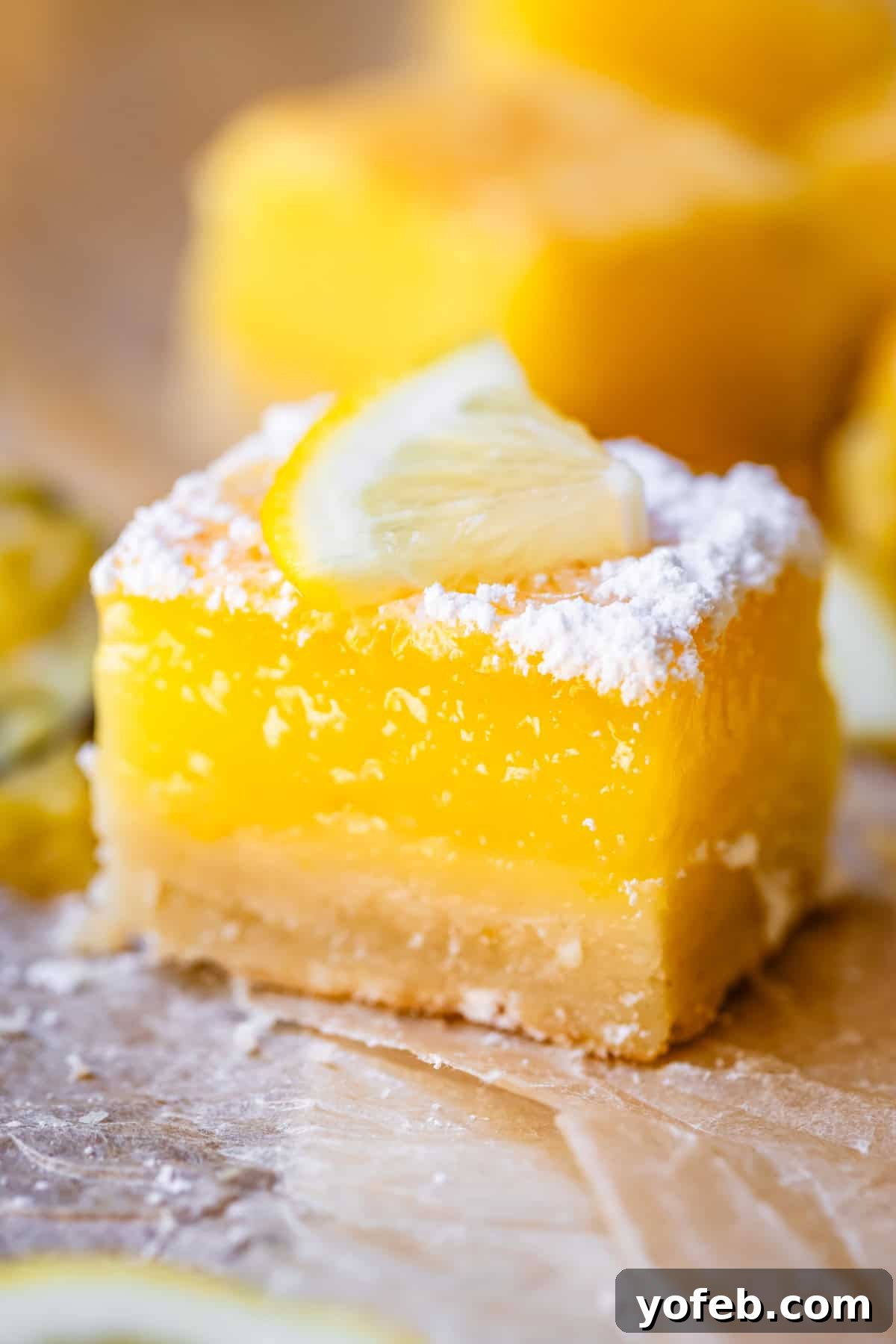
Irresistibly Tart Lemon Bars: The Ultimate Recipe for a Zesty Delight
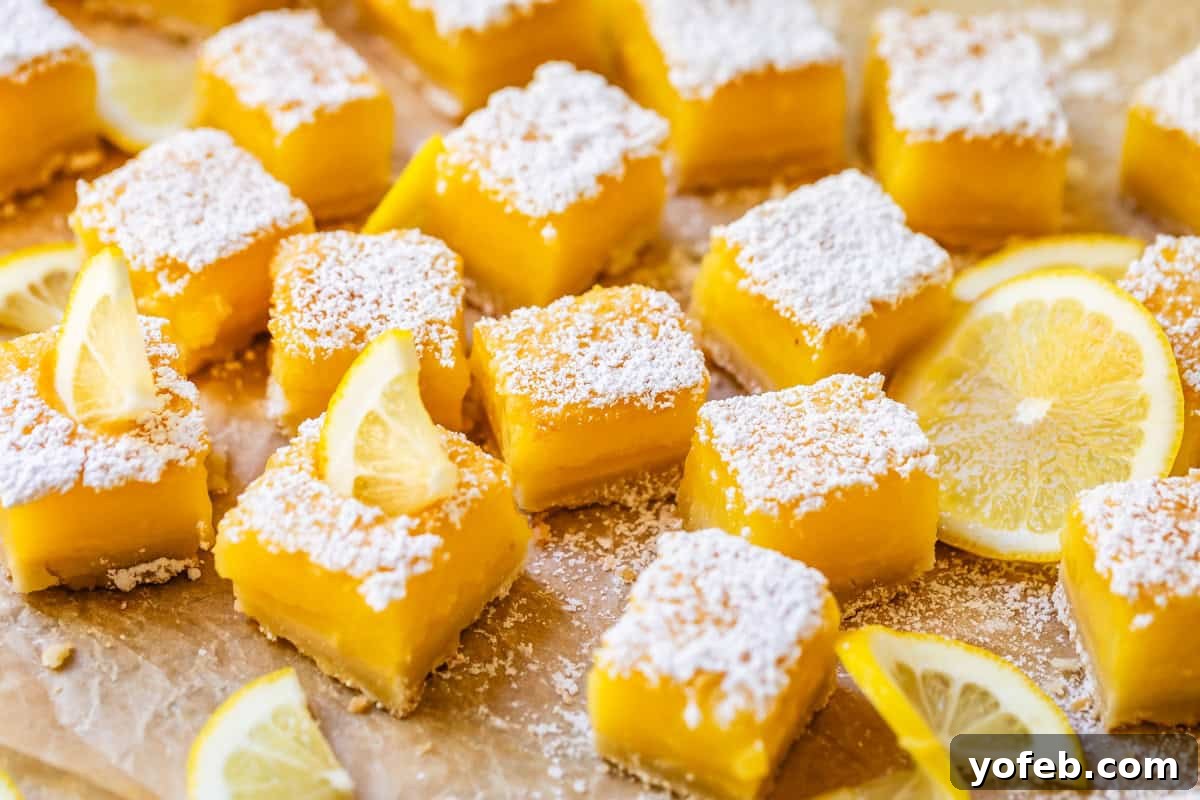
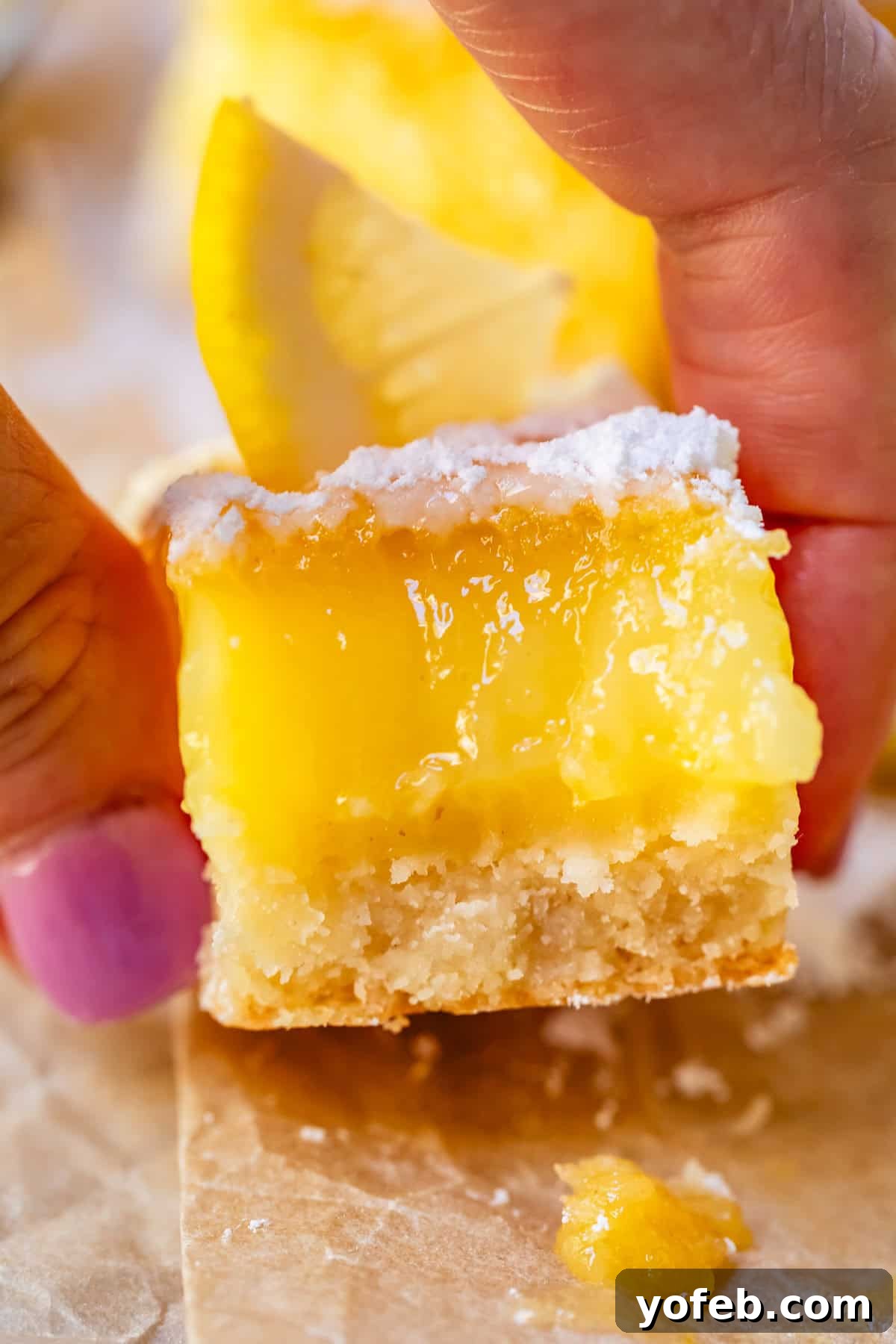
If there’s one dessert that truly captures pure joy in every bite, it’s a perfectly crafted lemon bar. Imagine a dessert so bright and invigorating, it instantly lifts your spirits – that’s the magic of these lemon bars. From the moment you taste the crumbly, tender, and intensely buttery shortbread crust, to the luscious, thick, and wonderfully puckery lemon custard, you’ll understand why this recipe is absolute perfection. These aren’t just easy to make; they’re a guaranteed crowd-pleaser for any occasion: Mother’s Day brunch, baby showers, bridal celebrations, Easter gatherings, Thanksgiving dessert spreads, or even just to chase away the January blues. Be warned, though: once you try them, you might find yourself finishing an entire pan faster than you thought possible!
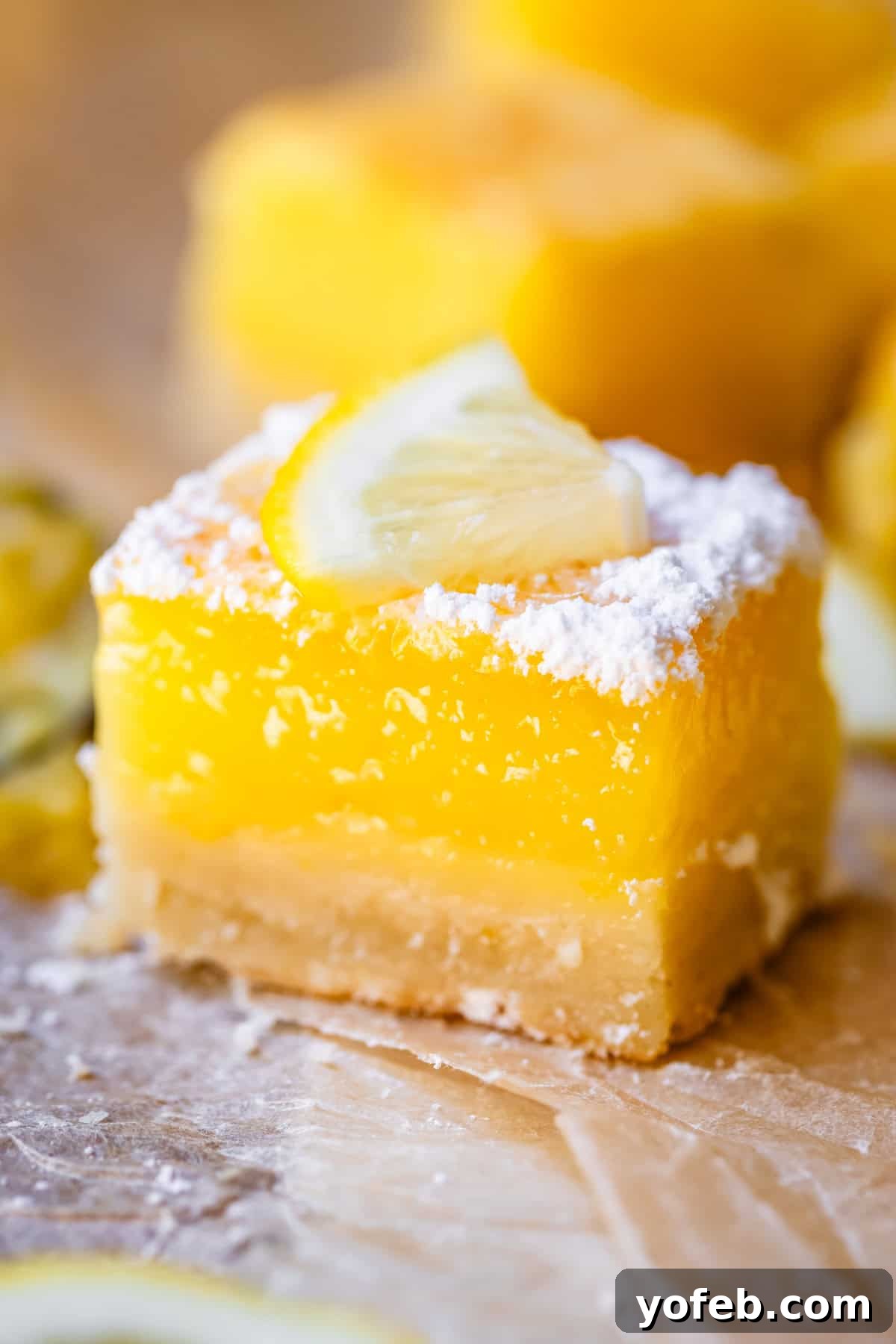
Table of Contents
- Why These Lemon Bars Will Become Your All-Time Favorite
- The Secret to a Dreamy Shortbread Crust
- Crafting the Perfectly Tart Lemon Custard
- Essential Tips for Flawless Lemon Bars
- Lemon Bars Recipe Ingredients at a Glance
- Step-by-Step Guide to Making Homemade Lemon Bars
- Best Ways to Serve Your Easy Lemon Bars
- How to Store and Preserve Your Delicious Lemon Bars
- Can You Freeze Lemon Bars?
- Frequently Asked Questions About Lemon Bars
- Explore More Zesty Lemon Recipes You’ll Love
- Classic Lemon Bars Recipe
- The Original Beloved Lemon Bar Recipe
- Original Ingredients
- Original Instructions
Just the other day, while out on a jog (or perhaps more accurately, a leisurely walk-jog, as January mornings often demand), I found myself deep in conversation with a friend. We were happily chatting when a car unexpectedly slowed beside me on a 45 mph road.
“Just wanted to let you know, there are a couple of deer up there!” the driver called out, pointing ahead with a look of genuine concern. My mind raced through several potential responses:
- “Oh, how lovely! A deer sighting!”
- “Thanks for the warning, I’ll try not to, you know, run into them!”
- “Perhaps you should watch out for deer yourself while giving directions to strangers!”
- “Are you concerned they might charge me? These are deer, not ferocious moose!”
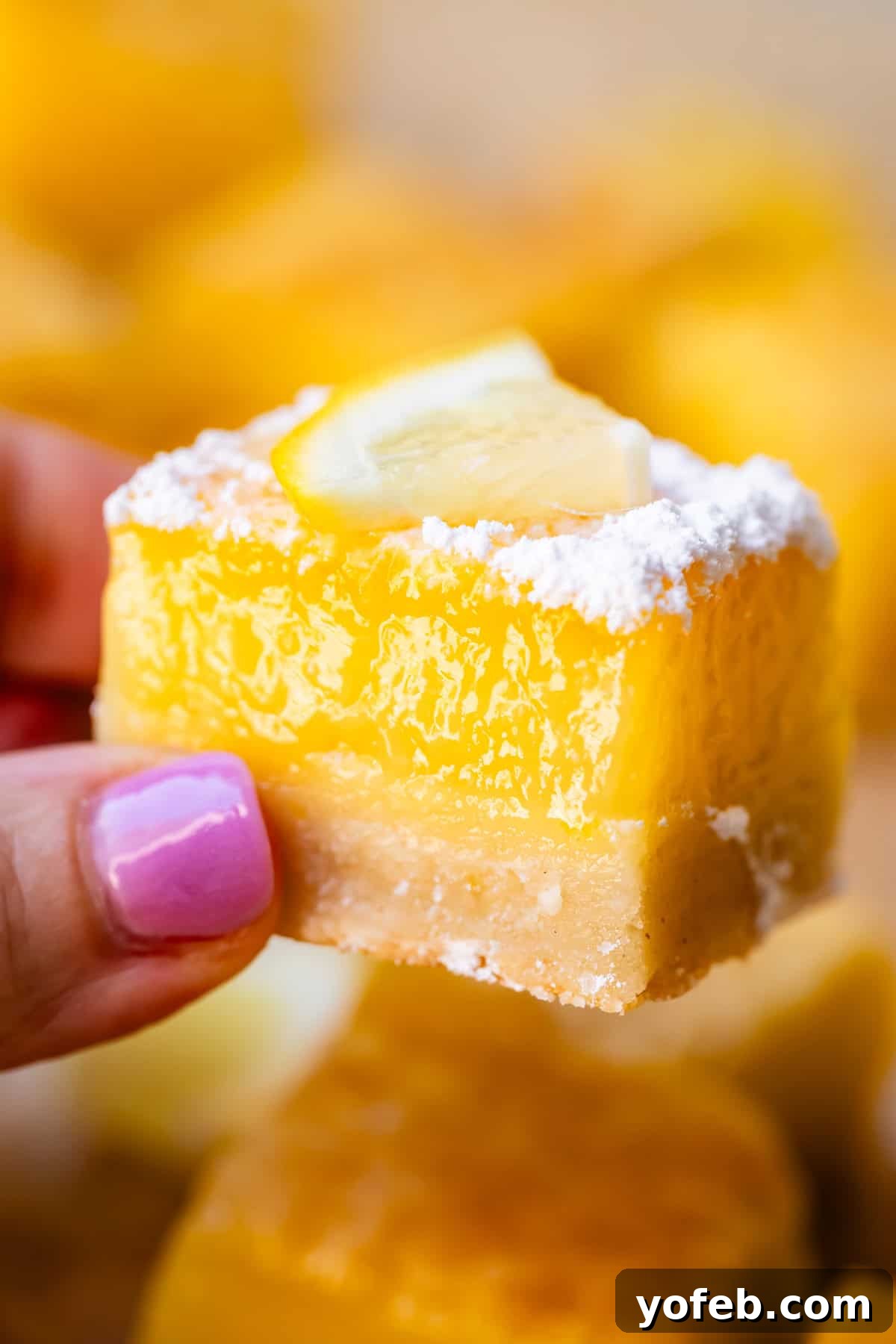
In the end, I saw no deer at all, which left me wondering if I’d just been part of a very elaborate, albeit perplexing, distraction. Regardless, that unexpected encounter served as a delightful reminder of the simple, joyful moments in life – much like the sheer bliss of biting into a perfect lemon bar.
Why These Lemon Bars Will Become Your All-Time Favorite
Recently, I was chatting with a friend, Tawna, and mentioned I’d made a fresh batch of lemon bars. Her response, “Oh, I’ve never had a lemon bar,” nearly made my jaw drop. The thought of someone missing out on this incredible dessert was truly unimaginable!
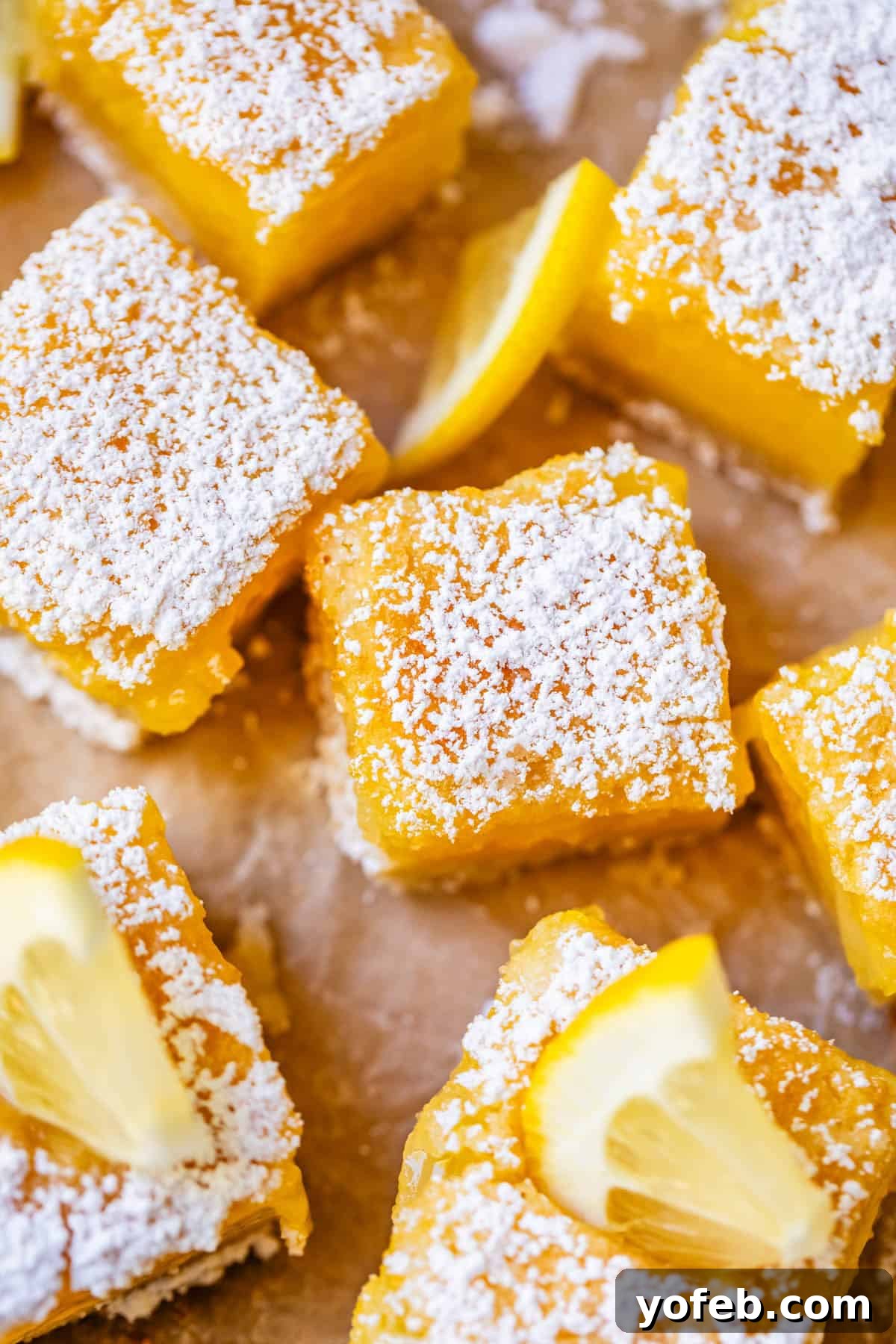
Honestly, if I could only choose one dessert to eat for the rest of my life, it would be these lemon bars. (Okay, I admit, it would be a coin toss between these and The Best Chocolate Cake Ever, but these lemon bars hold a special place in my heart.) Tawna, fortunately, had a valid reason for her lack of lemon bar experience: she’s gluten-sensitive. But fear not! This recipe is incredibly easy to adapt for gluten-free diets (check the recipe notes for details), so I made sure she got to try them. My mission is to spread the joy of the lemon bar far and wide. Are you ready to become a believer?
This recipe has a rich history on my blog, first published in January 2012 – because what better way to combat dreary winter days than with a burst of citrus? This marks the third significant update to these lemon bars in 13 years, a personal record! These bars are truly a labor of love, deserving of continuous refinement. Each update has aimed to elevate them to new heights of deliciousness.
My most recent goal was to optimize the recipe for a standard 9×13 inch pan, moving away from the less common 8×11 inch pan. This allows for easier scaling when serving a crowd, without compromising on the perfect crust-to-custard ratio. After much testing and tweaking, especially to the crust, I couldn’t be happier with the results!
So, let’s dive into the details. I have some golden rules when it comes to creating the ultimate lemon bar, starting with the foundation: the crust.
The Secret to a Dreamy Shortbread Crust
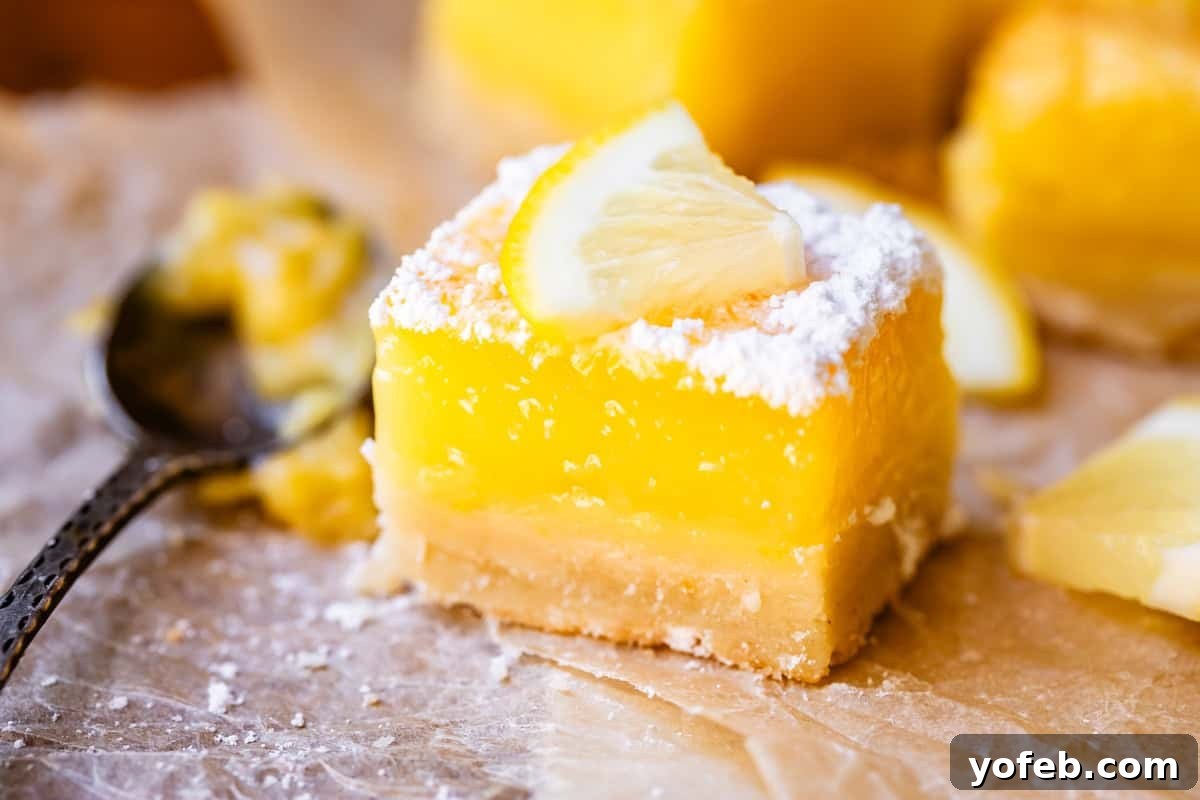
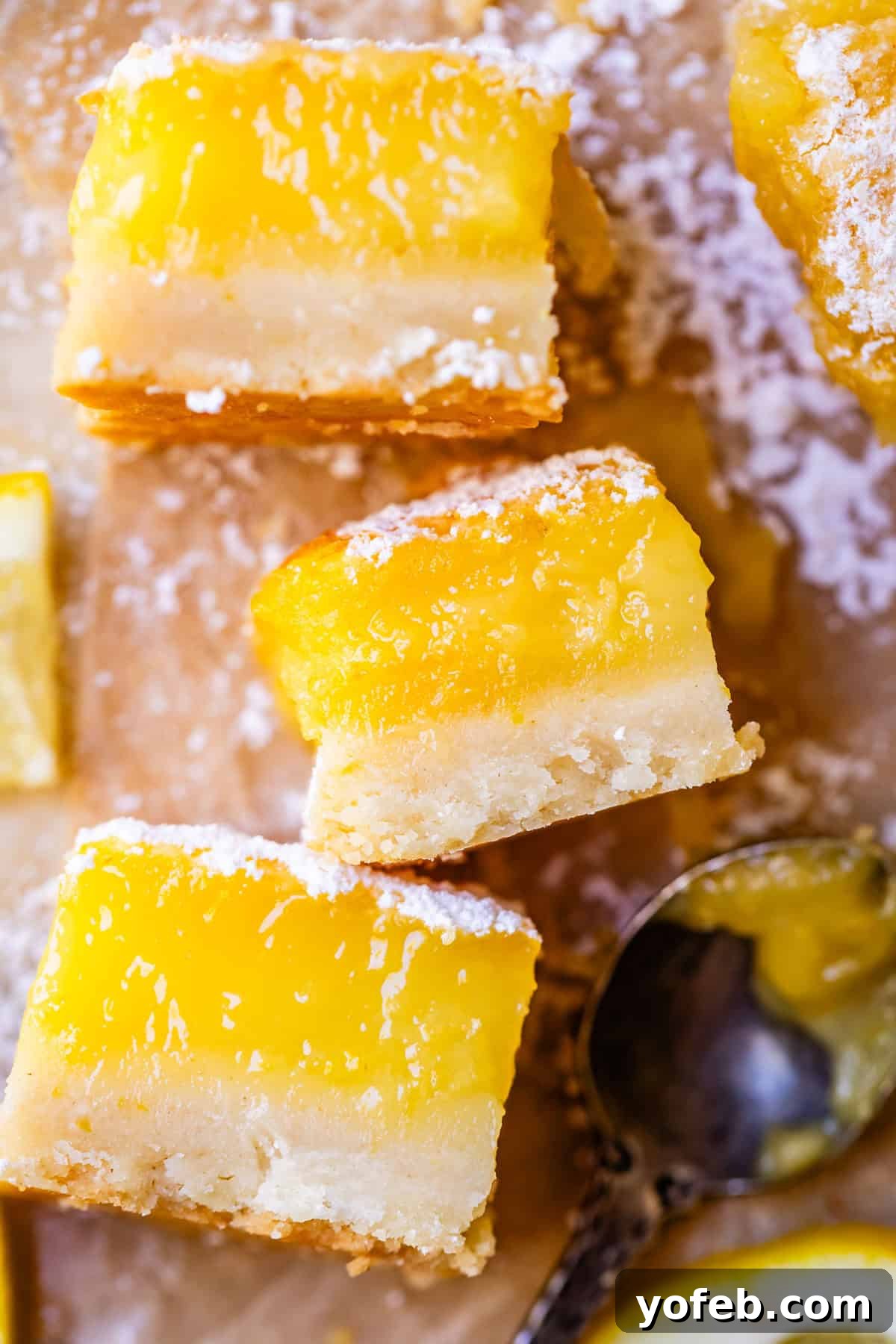
My journey to perfecting these lemon bars led me down a delightful rabbit hole of shortbread research. After meticulously refining my Shortbread Cookies, I applied those lessons to create a truly exceptional crust for these bars. I was obsessed with achieving a texture that was crumbly yet cohesive, intensely buttery, and literally melted in your mouth – a distinct quality from a standalone shortbread, designed to perfectly complement the lemon custard.
The answer lay in a few key adjustments: exclusively using powdered sugar in the crust for that irresistible melt-in-your-mouth quality, incorporating a touch of cornstarch to achieve ultimate tenderness, and infusing lemon zest directly into the crust for an extra layer of bright flavor. These elements combine to create a shortbread base that is nothing short of sublime.
Crafting the Perfectly Tart Lemon Custard
When it comes to lemon bars, I don’t believe in subtlety. If a dessert promises citrus, I expect a flavor explosion! None of that “truck full of lemons driving by” experience (a nod to the infamous La Croix meme for those who remember). I want that lemon flavor front and center, bold and unapologetic.
A fun fact about me: I inherited a peculiar trait from my dad where extremely tart foods make my face sweat – it’s quite odd! Rest assured, after a few (or perhaps a few dozen) tiny bites of these intensely lemony bars, you might find me fanning my face in the kitchen. Every single drop of sweat is worth it, though, for that incredible tartness.

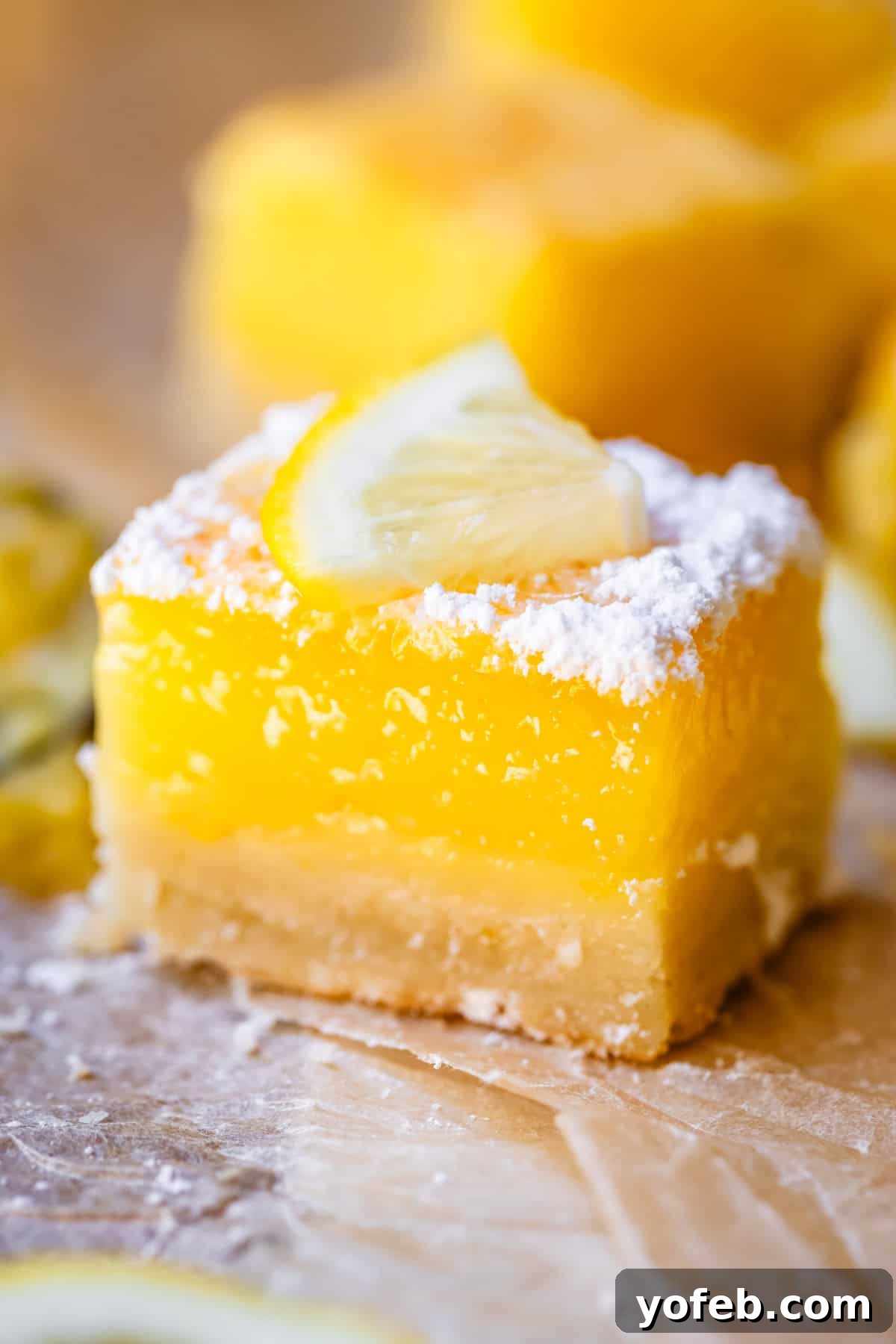
This recipe is intentionally developed to be intensely TART. If your preference leans towards a milder lemon flavor, simply refer to the recipe notes for guidance on adjusting the sugar content in the custard. It’s an easy modification to tailor these bars to your taste buds. The other hallmark of this recipe is the generous volume of custard. I believe a perfect lemon bar features a substantial layer of that bright, tangy custard atop the tender shortbread. It’s a ratio designed for maximum enjoyment!
Essential Tips for Flawless Lemon Bars
Achieving the perfect lemon bar isn’t just about ingredients; it’s about technique and attention to detail. Here are my tried-and-true rules for baking lemon bars that will earn you endless compliments:
- A Thick, Buttery Shortbread Crust: Don’t skimp on the base! A substantial, buttery crust provides the ideal contrast to the tangy custard.
- Ample Lemon Custard: This recipe uses more eggs (6 instead of the typical 4) and over a cup of lemon juice (compared to a half cup in average recipes). This ensures a rich, deep layer of lemon flavor.
- Powdered Sugar in the Crust: Using only powdered sugar (confectioners’ sugar) in the shortbread crust makes it incredibly tender, giving it that delightful “dissolve on your tongue” texture.
- Cornstarch for Tenderness: A small amount of cornstarch in the crust contributes significantly to its soft, melt-in-your-mouth quality, preventing it from becoming tough.
- Generous Lemon Zest: The true essence of lemon flavor comes from the zest. Incorporate a significant amount into the custard layer for that powerful, zesty punch.
- Invest in a Microplane Grater: This tool is non-negotiable for achieving the finest lemon zest. Fine zest integrates seamlessly into the custard, releasing maximum flavor without any large, fibrous pieces. (Find one here).
- Fresh Lemon Juice: Always use fresh lemon juice for the best flavor. If you bake with citrus frequently, an electric citrus juicer is a fantastic investment, saving you time and effort (and protecting your hands from paper cuts!).
- The “Rest” After Chilling: This is an unconventional but crucial step. After chilling your lemon bars completely in the refrigerator, let them rest on the counter for 30-60 minutes before serving. This allows the butter in the crust to soften slightly, enhancing its flavor and making it easier to bite through, without sacrificing the desired coldness of the bars.
- Trim the Edges (and enjoy them yourself!): For a polished presentation, especially when serving guests, slice off and “discard” the very edges of the pan directly into your mouth. The center pieces are often the most aesthetically perfect and consistently baked, while the edges can sometimes be slightly overbaked or gummy. This is a small detail but makes a big difference in presentation and taste for your guests.
- Don’t Halve the Recipe for a Small Pan: While technically possible, halving the recipe for a smaller square pan means that a larger proportion of your delicious lemon bars will be “edge pieces.” Given that the edges are typically removed for optimal taste and texture (as noted above), you’ll be left with very little. And who wants less lemon bar goodness? Embrace the full 9×13 pan!
Lemon Bars Recipe Ingredients at a Glance
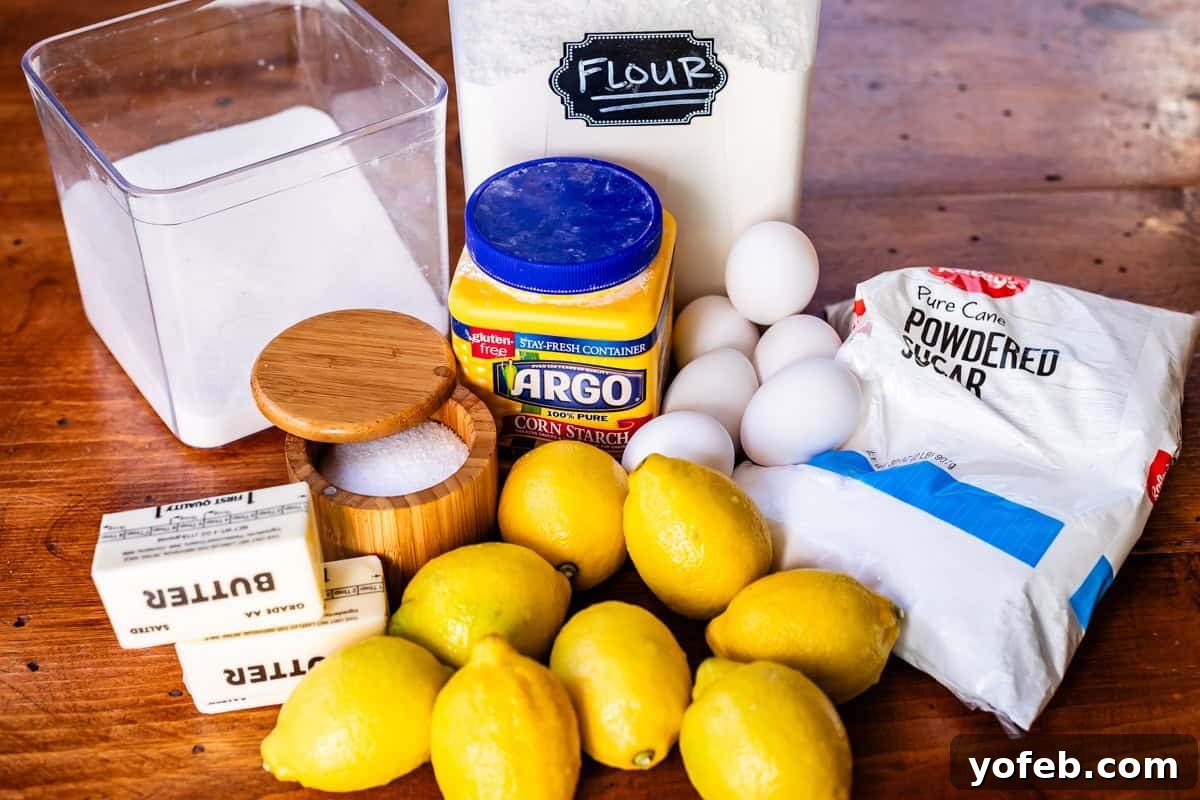
Here’s a quick shopping list to help you gather everything you need. For the full, detailed list of ingredients and step-by-step instructions, please refer to the comprehensive recipe card below!
- Butter: Unsalted, cold for the crust.
- Powdered Sugar: Key for that melt-in-your-mouth crust.
- All-Purpose Flour: The structural base for both crust and custard.
- Cornstarch: Adds tender crispness to the shortbread.
- Kosher Salt: Balances sweetness and enhances flavor.
- Fresh Lemons: The star of the show for juice and zest.
- Large Eggs: Create the rich, creamy custard.
- Granulated Sugar: Sweetens the tart lemon custard.
Step-by-Step Guide to Making Homemade Lemon Bars
Let’s begin by crafting that incredible shortbread crust. In a large bowl, combine your dry ingredients. Notice the generous 1/4 cup of cornstarch – this is our secret weapon for a wonderfully tender crust:
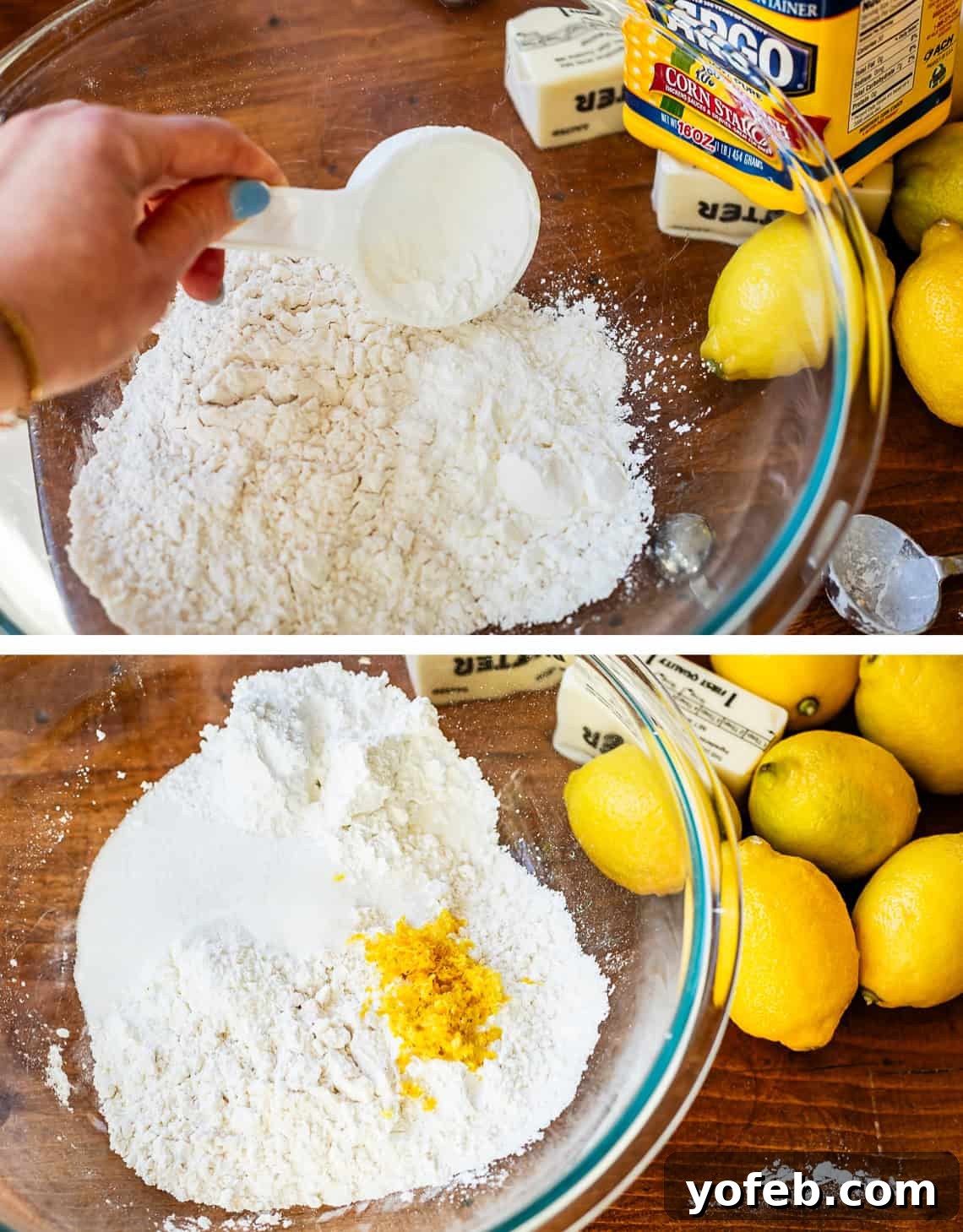
While this particular photo might show granulated sugar, remember for this perfected recipe, we’re using all powdered sugar in the crust for unparalleled tenderness! And don’t forget that vital lemon zest in the crust – it adds a delightful aromatic layer that truly elevates the flavor.
Next, incorporate the COLD butter:
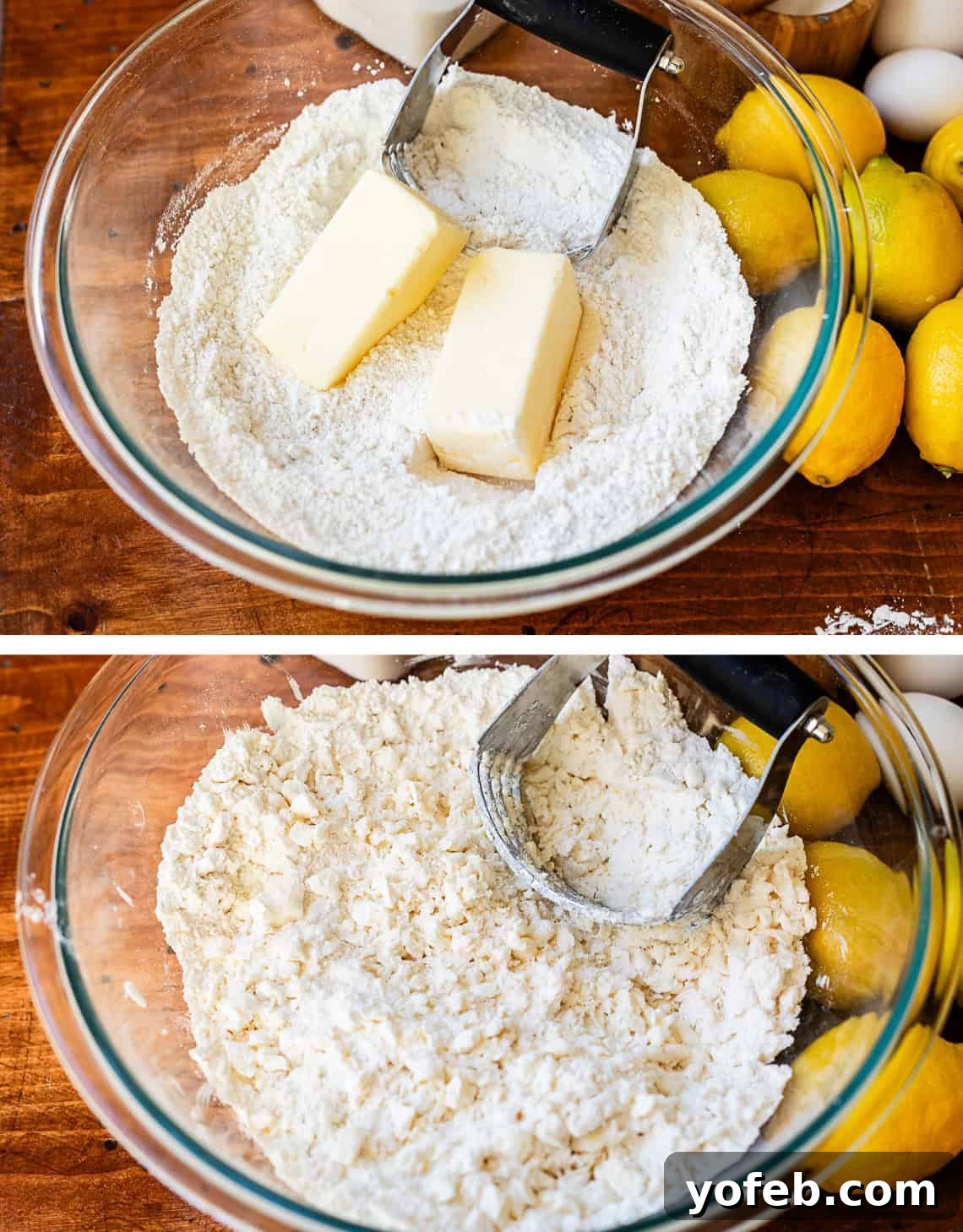
Using a pastry cutter (or even two butter knives), cut the cold butter into the dry ingredients until the mixture resembles a shaggy, coarse meal. It won’t form a cohesive dough at this stage, and that’s exactly what we want. Trust the process!
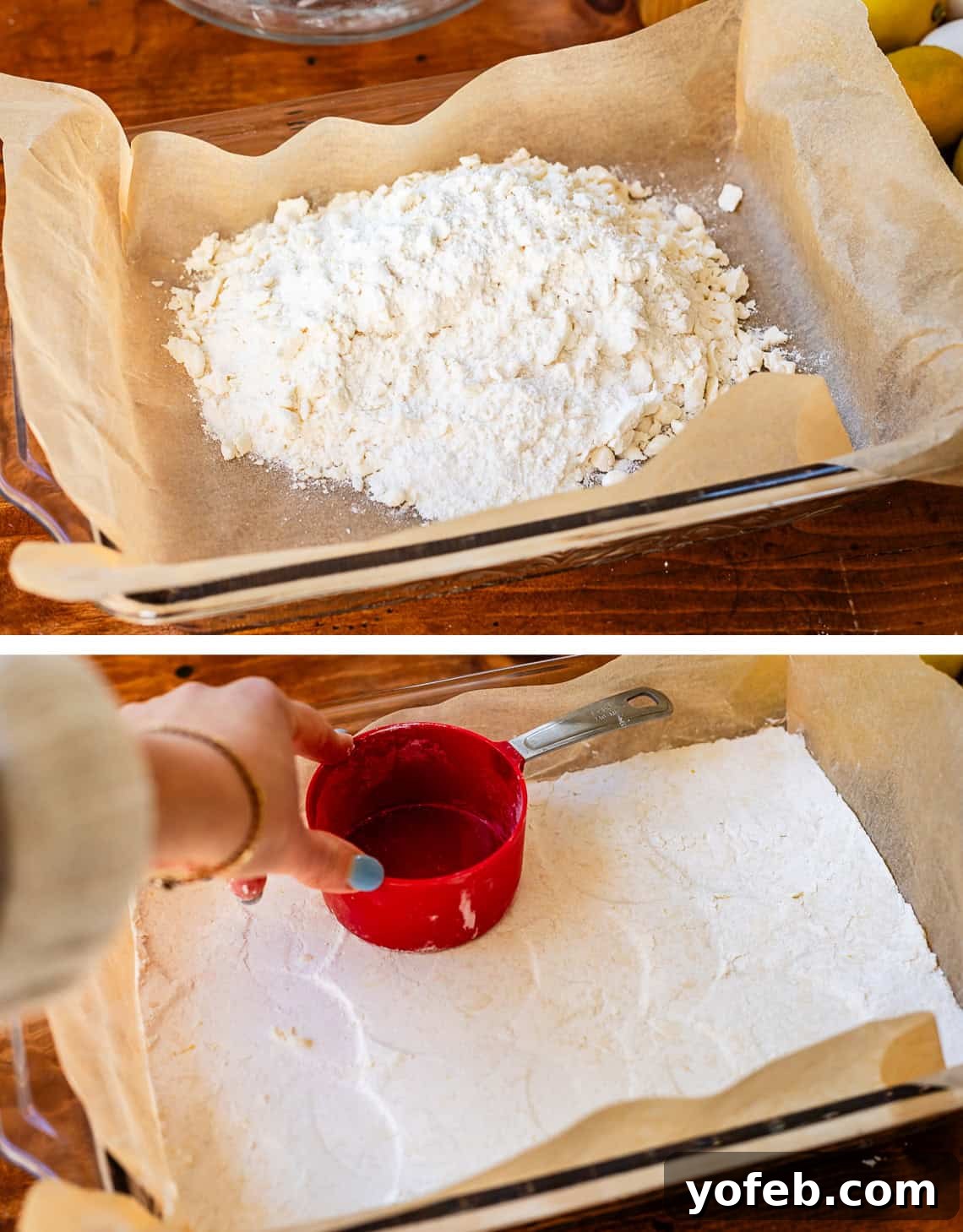
Press the butter-flour mixture firmly and evenly into your prepared 9×13 inch pan. Use the flat bottom of a measuring cup to ensure it’s tightly packed. The mixture might still seem dry and powdery, but don’t worry, that’s normal. Once pressed, place the pan in the freezer for about 20 minutes (or fridge for 30 minutes). This crucial chilling step ensures a perfectly flaky and tender crust!
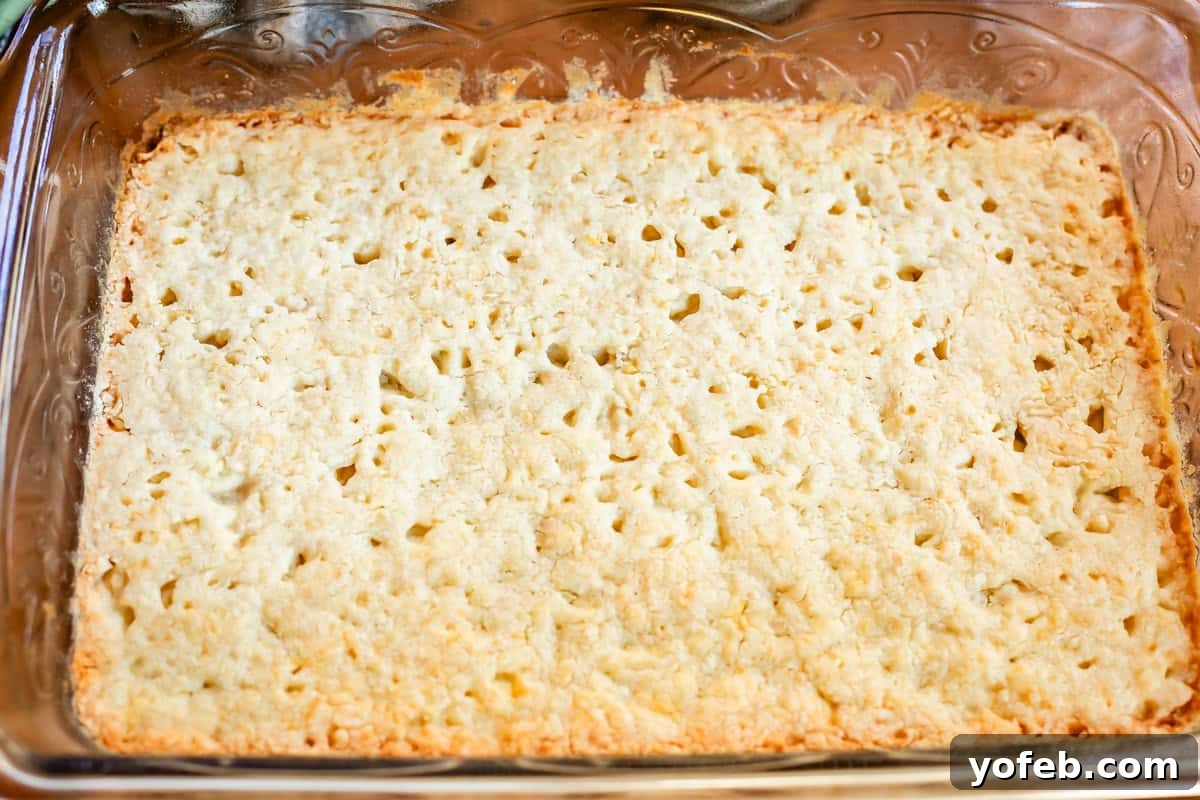
Here’s what your beautifully baked shortbread crust should look like. Notice those wonderful craggy holes? Those are air pockets, a tell-tale sign of a flaky, tender shortbread that’s easy to bite through. Now, let’s move on to the star of the show: the lemon custard!
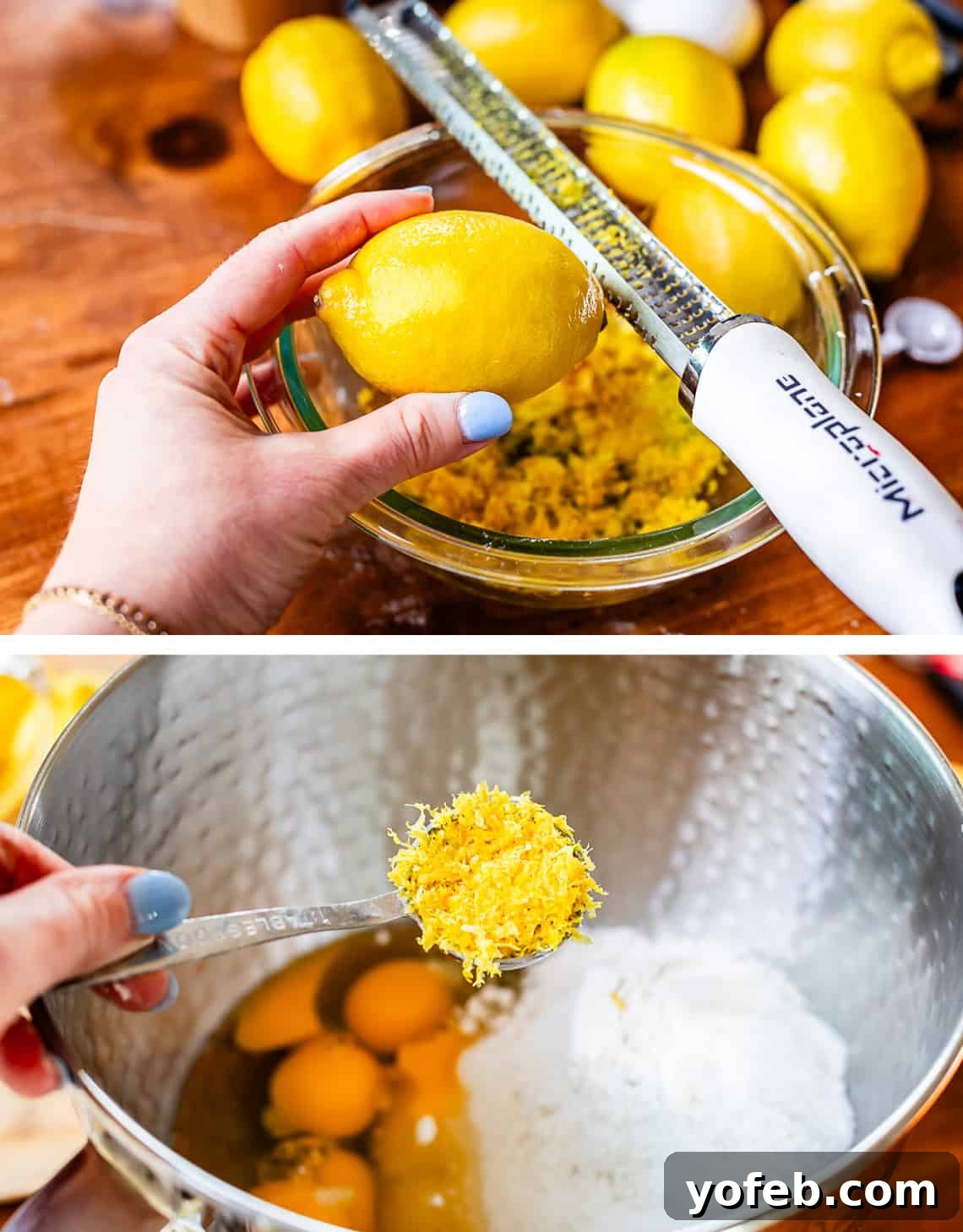
We’re incorporating two full tablespoons of lemon zest into these bars. While zesting might seem like a small effort, it’s where the majority of that vibrant, zingy lemon flavor resides. Don’t skip this step! A microplane grater makes this task incredibly easy and efficient, yielding fine zest that melts into the custard.
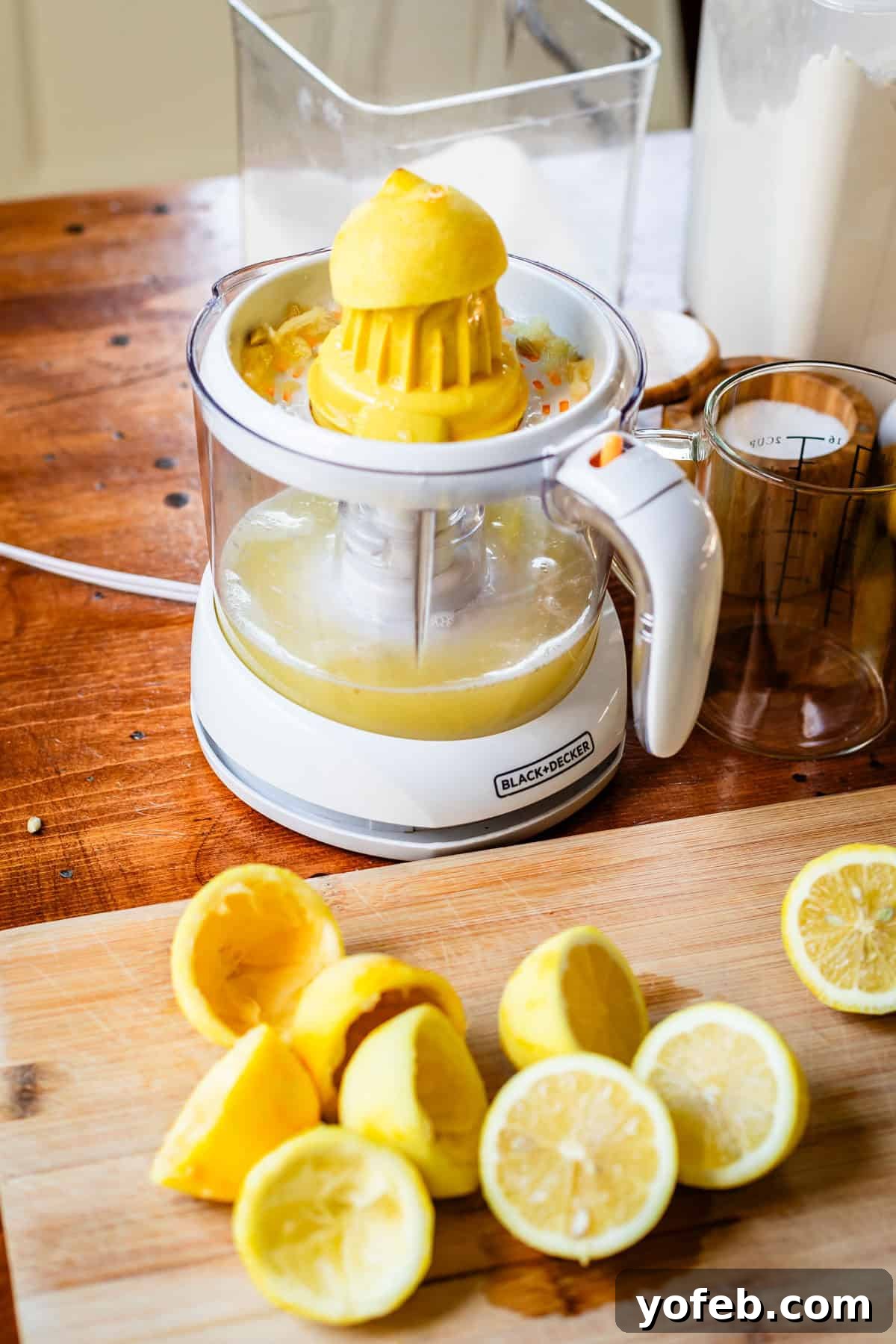
Another tool I wholeheartedly recommend for lemon bar enthusiasts is an electric juicer. It transforms the task of juicing a large quantity of lemons into a swift and effortless process. These juicers are often quite affordable and, if you have the counter space, they are a true game-changer for all your citrus-based recipes.
Because, for these truly tart lemon bars, we need over a cup of fresh lemon juice. That’s a serious amount of citrus power right there!
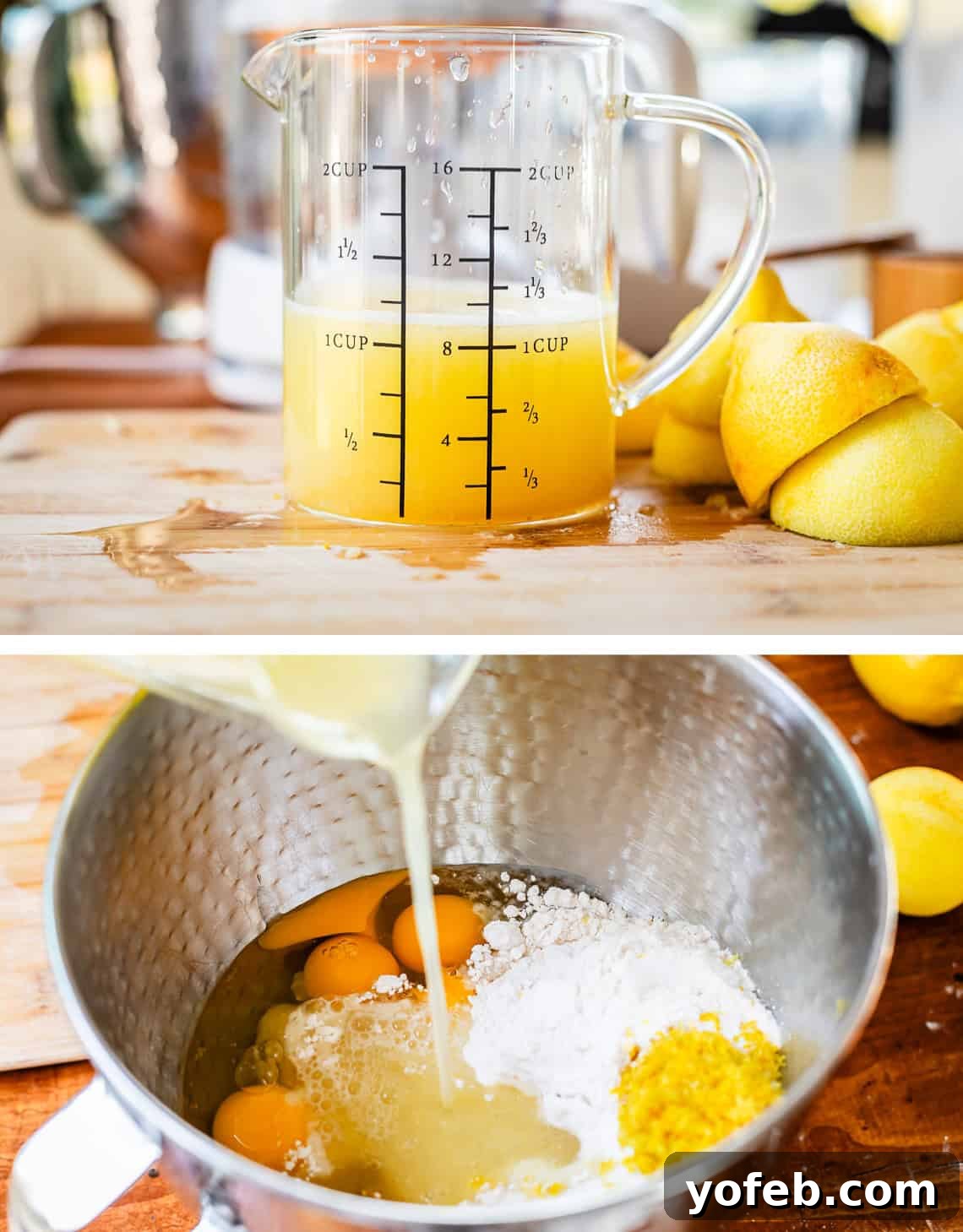
Now, it’s time to thoroughly whisk or beat your custard mixture. Whether you’re using a hand mixer or a stand mixer with a whisk attachment, ensure everything is perfectly combined. Keep mixing until you no longer see any solid egg proteins clinging to your whisk. (If a particularly stubborn piece remains, simply remove it.)
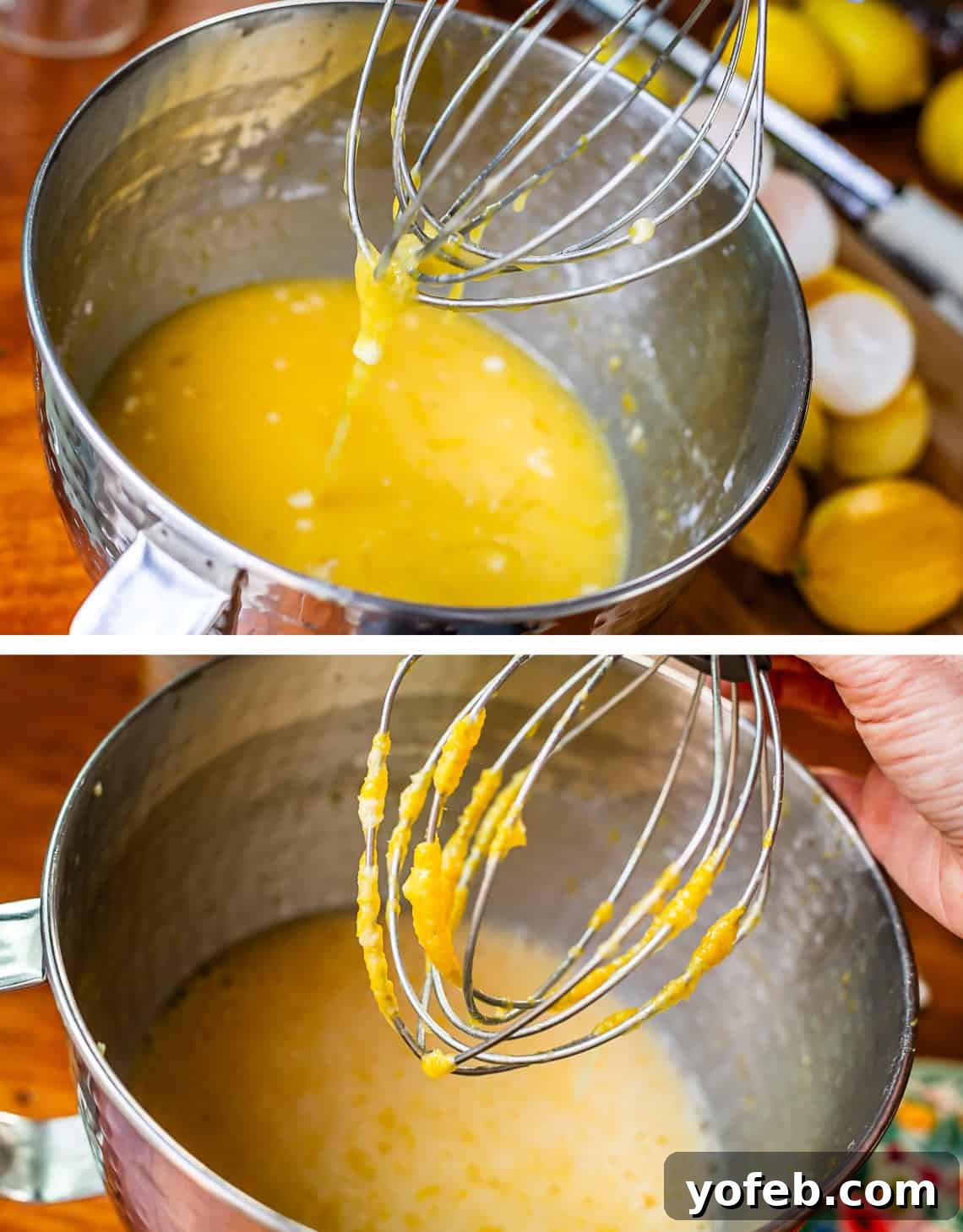
This photo highlights the beautiful lemon zest clinging to the whisk. That’s exactly what we want! After thorough mixing, use a spatula to scrape down any zest from the whisk and fold it into your custard mixture, ensuring even distribution of that incredible lemon flavor.
Gently pour the vibrant lemon custard mixture over your cooled, baked shortbread crust:
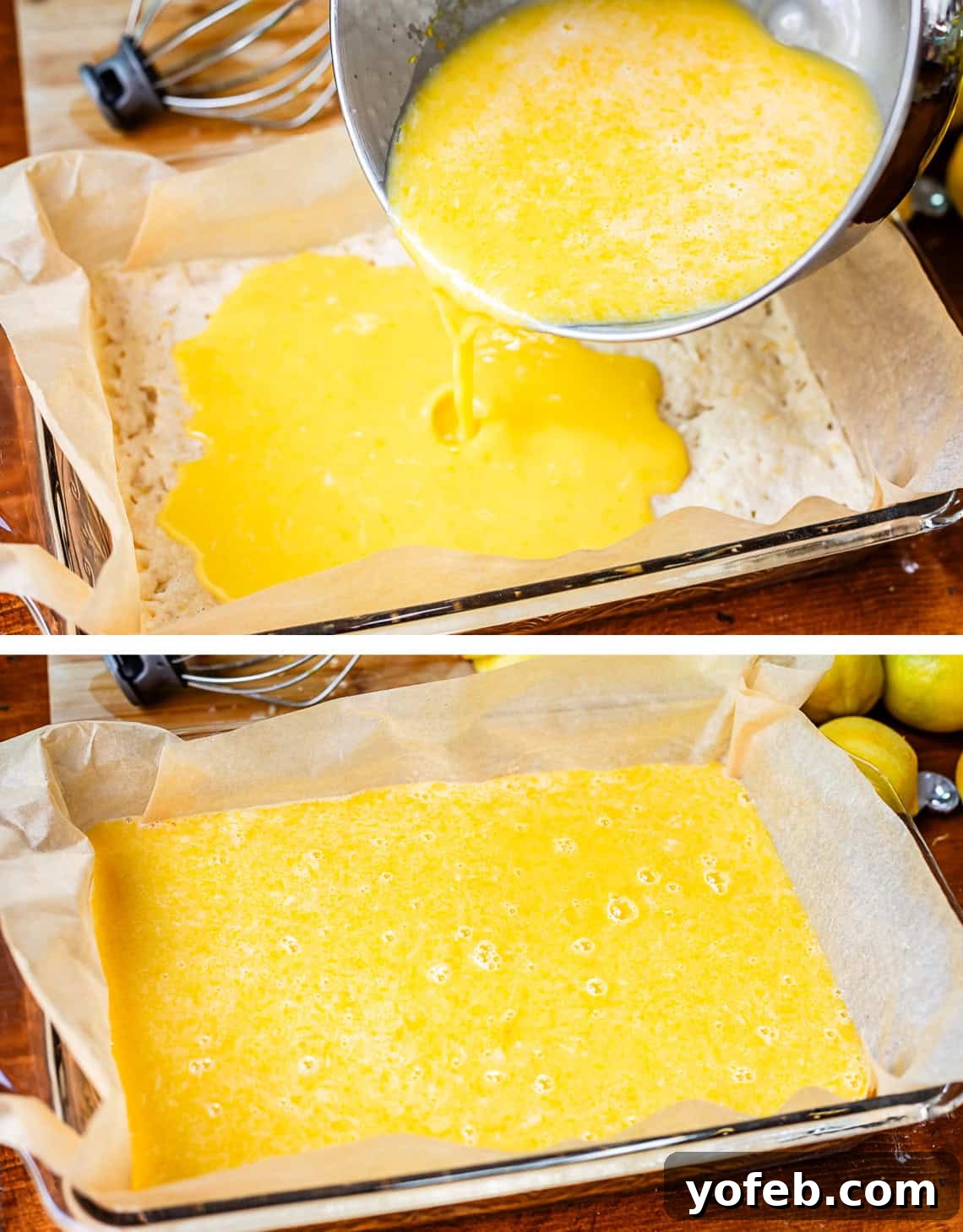
And just like that, it’s ready for the oven!
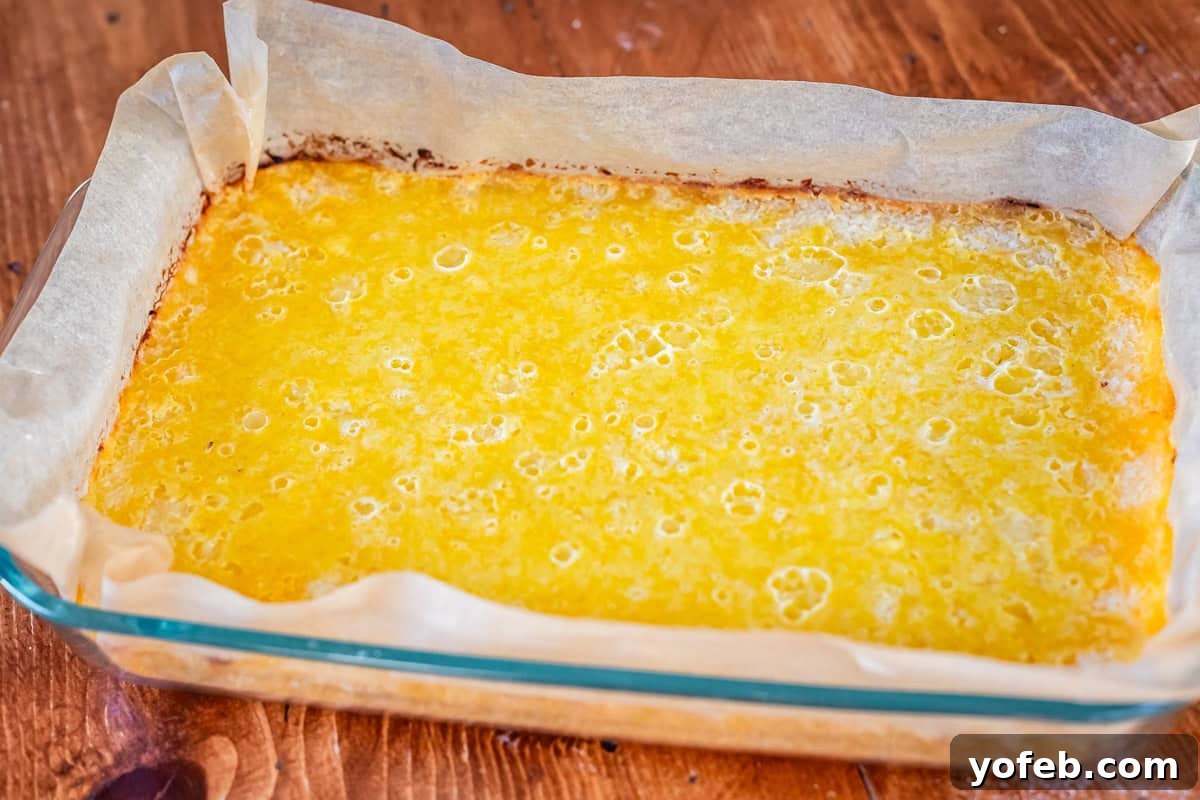
Allow the bars to cool slightly, then cover and refrigerate until thoroughly chilled. Before serving, a delicate dusting of powdered sugar is a must – it adds a lovely visual appeal and a touch of extra sweetness that perfectly complements the tart lemon!

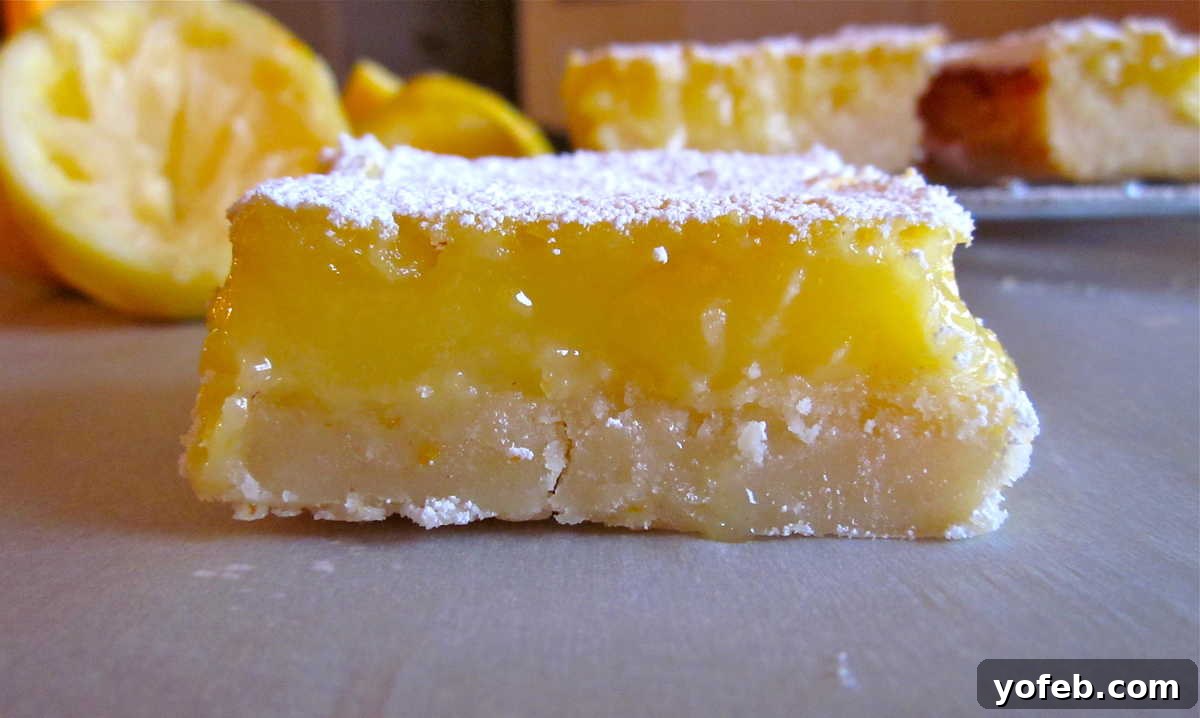
It’s always fun to look back at how much things have evolved. Here’s a photo from when I originally posted this recipe back in 2012. I was so incredibly proud of it then!
And here’s a photo from my second photoshoot of these lemon bars, I believe around 2017:
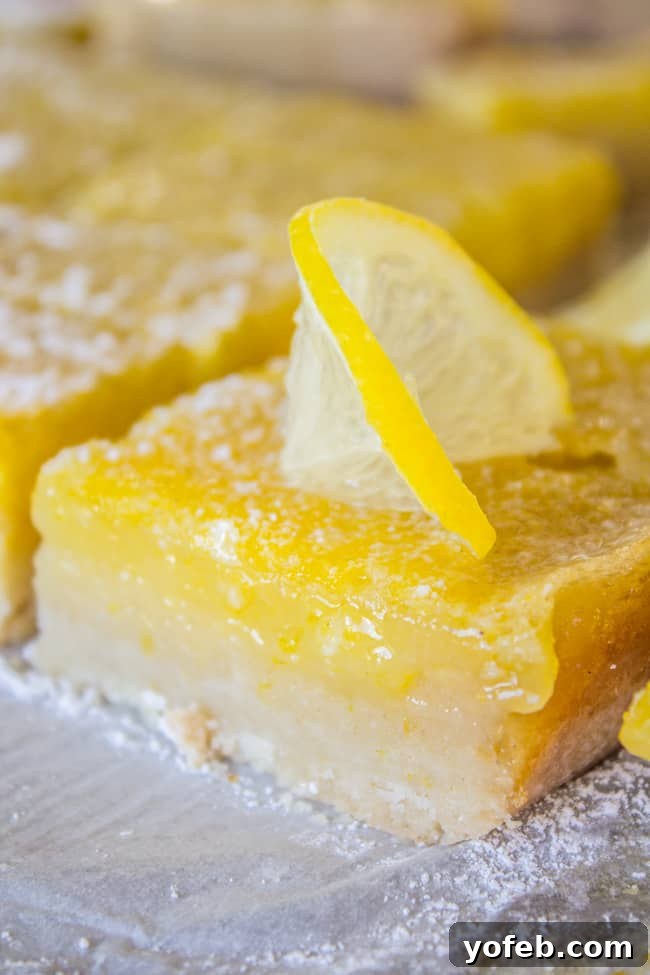
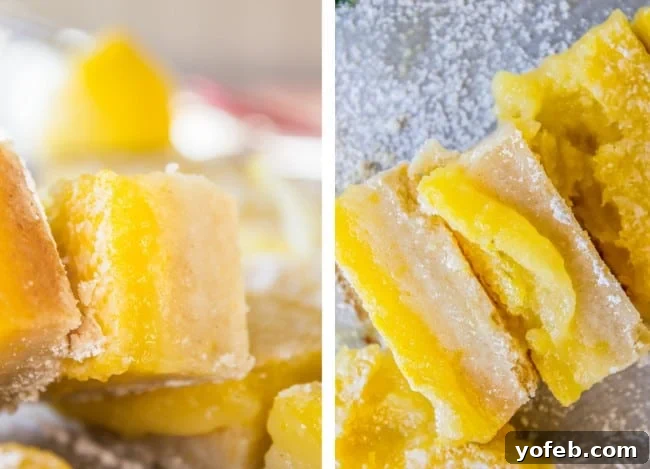
It’s truly enjoyable to observe the evolution of my photography style over the years!
Best Ways to Serve Your Easy Lemon Bars
I find lemon squares are particularly adored at gatherings where many lemon enthusiasts are present. And yes, by “lemon enthusiasts,” I often mean adult women! There’s just something inherently appealing about lemon bars that resonates with many ladies. My 11-year-old son, Truman, is an exception; he absolutely adores these lemon bars, often preferring them over other desserts. So, while it’s not an exclusive rule, if you want your lemon squares to vanish quickly, take them to a baby shower, a book club meeting, or a girls’ night in. You’re guaranteed to receive rave reviews and requests for the recipe!
How to Store and Preserve Your Delicious Lemon Bars
Lemon bars, being a custard-based dessert, should always be stored covered in the refrigerator. Proper storage is key to maintaining their freshness and preventing spoilage. However, here’s a little secret for optimal enjoyment: I never serve these bars immediately after taking them out of the fridge. While thorough chilling is essential for the custard to set perfectly, I highly recommend letting them rest on the counter for at least 30-45 minutes before serving.
This resting period makes a significant difference, primarily for the shortbread crust. Composed mostly of butter, the crust becomes quite firm when cold (much like trying to spread cold butter on hot toast – a struggle we all know!). Allowing it to come slightly closer to room temperature softens the butter, making the crust easier to bite through. More importantly, it allows the nuanced, rich buttery flavor to truly shine through, rather than being masked by the sheer coldness. This small step elevates the entire lemon bar experience, bringing out the best in both the crust and the vibrant lemon custard.

Can You Freeze Lemon Bars?
Absolutely! Lemon bars are wonderfully freezer-friendly, making them a fantastic make-ahead dessert. You can freeze an entire pan, or pre-cut them into individual portions for easy thawing. When stored properly in an airtight container or tightly wrapped, they will maintain their delicious quality for up to three months. The best part? They taste surprisingly amazing even straight out of the freezer, which means if you’re freezing them to deter yourself from eating them all at once, you might need a different strategy! Just remember to let them thaw overnight in the refrigerator before serving to ensure the best texture and flavor.
Frequently Asked Questions About Lemon Bars
Yes, it’s highly recommended to refrigerate lemon bars for at least a couple of hours, ideally overnight. The lemony filling is a baked custard containing eggs, which requires refrigeration to properly set and ensure food safety. Chilling completely also helps achieve that desirable firm texture.
A metallic taste in lemon bars is definitely not ideal! This can sometimes happen when the citric acid in the lemon juice reacts with certain metals in your cookware, particularly aluminum. To avoid this, I strongly recommend baking your lemon bars in a glass or ceramic pan. If you must use a metal pan, opt for stainless steel and always line it with parchment paper for an extra protective barrier.
A soggy crust is a common issue, and the most likely culprit is insufficient baking time for the crust itself. You want to bake the shortbread until it’s beautifully golden brown and completely matte across the top, ensuring it has developed a firm barrier against the moisture from the custard. Another critical factor is allowing the baked crust to cool almost completely before adding the hot or warm custard filling. If you add the filling to a warm crust, steam can get trapped, leading to a soft or crumbly base.

Explore More Zesty Lemon Recipes You’ll Love
Are you, like me, utterly devoted to lemon? I simply can’t get enough of this incredible citrus queen! Its vibrant flavor transforms any dish into something truly special. If you’re looking for more ways to incorporate that bright, tangy goodness into your baking, here are some of my other favorite lemon-starring desserts:
- Glazed Lemon Loaf Recipe >> This loaf is lemon-packed to the max, boasting an incredibly tender crumb and a sweet, tangy glaze.
- Lemon Curd Sugar Cookie Sandwich >> Only true lemon lovers need apply for this delightful sandwich of soft sugar cookies and luscious lemon curd.
- Meyer Lemon Tart >> Discover the unique sweetness and subtle orange notes of Meyer lemons in this elegant and flavorful tart.
- Lemon Lush Dessert >> Perfect for warmer weather, this dessert is smooth, light, and luxuriously refreshing.
- Lemon Crinkle Cookies with Lemon Frosting >> These cookies are bursting with lemon flavor, made even better with a tangy lemon frosting.
- The Best Lemon Curd >> Trust me, this is truly the best lemon curd you’ll ever make. Essential for fillings, toppings, or by the spoonful!
- Lemon Cake with Lemon Frosting >> One of my absolute favorite cakes, this features a tender lemon cake topped with a bright lemon frosting.
- Lemon Bar Muddy Buddies from Lemon Tree Dwelling
- Lemon Crumble Bars from House of Yumm
- Lemon Ice Box Pie from Life, Love, and Sugar
Facebook | Pinterest | Instagram

Classic Lemon Bars Recipe
20 minutes
55 minutes
3 hours
4 hours
15 minutes
24
Servings
Equipment
-
Microplane grater
(for the finest lemon zest – essential for maximum flavor) -
Electric citrus juicer
(a game-changer for effortlessly juicing many lemons) -
Mesh strainer
(for evenly dusting powdered sugar)
Ingredients
For the crust:
-
1 and 3/4
cups
all-purpose flour*,
spooned and leveled -
1/4
cup
cornstarch -
2/3
cup
powdered sugar -
1/2
teaspoon
kosher salt,
use half the amount of table salt -
1
teaspoon
lemon zest,
the zest of one lemon -
1
cup
butter,
COLD (2 sticks)
For the custard:
-
6
large
eggs -
2 and 1/4
cups
granulated sugar* -
1/2
cup + 1 tablespoon
all-purpose flour ,
spooned and leveled -
1/2
teaspoon
kosher salt,
use half the amount of table salt -
2
tablespoons
lemon zest ,
about 6-8 lemons. More zest=more tart. -
1
cup + 2 tablespoons
fresh lemon juice,
about 6-8 medium lemons -
powdered sugar,
for dusting the finished lemon bars
Instructions
-
For the crust: Line a 9×13 inch glass or ceramic pan with parchment paper, allowing some overhang for easy lifting, or generously spray the sides with nonstick cooking spray or rub with butter.
-
In a large bowl, combine the dry ingredients: 1 and 3/4 cup all-purpose flour (ensure it’s spooned into the measuring cup and leveled off, don’t pack it), 1/4 cup cornstarch, 2/3 cup powdered sugar, 1/2 teaspoon kosher salt, and the zest from 1 lemon, finely grated using a microplane grater. Whisk all these ingredients thoroughly until well combined.
-
Using a pastry cutter (or two butter knives), cut the cold butter into the flour mixture. Continue cutting and blending until the butter pieces are roughly the size of a small pea or slightly larger. The mixture should appear shaggy and crumbly, not a smooth dough.
-
Press the butter and flour mixture evenly and firmly into the bottom of the prepared 9×13 inch pan. Use the flat bottom of a measuring cup to pack it in as tightly and smoothly as possible across the entire base of the pan. The mixture will initially seem dry, but it will come together under pressure.
-
Freeze the pan for approximately 20 minutes, or chill in the refrigerator for 30 minutes. This critical chilling step ensures that when the cold butter hits the hot oven, it creates a wonderfully flaky and tender shortbread crust.
-
Preheat your oven to 350 degrees F (175 degrees C) while your unbaked crust is chilling.
-
Bake the crust at 350°F (175°C) for about 24-25 minutes, or until the edges are lightly golden brown and the surface of the crust no longer appears shiny (it should be matte). Avoid overbaking; you want the center to still be pale on top but fully set. Small craggy holes in the crust are completely normal and indicate the desirable flaky texture.
-
Allow the baked crust to cool completely, or at least almost completely, while you prepare the lemon custard. You can place the crust in the refrigerator or freezer to expedite the cooling process.
-
For the lemon custard: In a large mixing bowl or the bowl of a stand mixer, add all the remaining custard ingredients: 6 large eggs, 2 and 1/4 cups granulated sugar,* 1/2 cup + 1 tablespoon all-purpose flour, 1/2 teaspoon kosher salt, 2 generous tablespoons of finely grated lemon zest, and 1 cup + 2 tablespoons fresh lemon juice.
-
Beat the mixture together thoroughly for about 2 minutes. If using a stand mixer, use the whisk attachment. If using a hand mixer, use beaters. Stop periodically to scrape down the sides and bottom of the bowl to ensure all ingredients are fully incorporated. Continue mixing until the eggs are completely smooth and no solid white egg proteins are visible on the whisk. (If a few stubborn pieces remain, you can carefully pick them out).
-
Carefully pour the prepared lemon custard mixture evenly over the cooled shortbread crust in the pan.
-
Bake the lemon custard for an additional 30-35 minutes in the preheated oven. The edges of the custard should appear set, while the very center can still have a slight, barely perceptible jiggle (it should not be sloshy or appear liquid). It’s normal for the edges to become quite dark, even slightly browned, to ensure the center is adequately cooked. The lemon bars will continue to firm up considerably as they cool.
-
Let cool completely on a wire rack for at least 20-30 minutes at room temperature.
-
Chill: Once cooled to room temperature, cover the pan tightly with plastic wrap (taking care not to let it touch the surface of the custard) and refrigerate for a minimum of 2-3 hours, or ideally until they are very cold throughout. This chilling period is crucial for the custard to fully set and achieve its perfect firm texture.
-
Let rest before serving, if time allows. For optimal flavor and texture, I recommend taking the chilled lemon bars out of the refrigerator and letting them sit on the counter for about 30 minutes before slicing and serving. This allows the buttery crust to soften slightly, enhancing its flavor.
-
Slice the lemon bars. For clean cuts, use a sharp chef’s knife and wipe the blade clean with a damp cloth between each slice. For a professional presentation, I often cut off the very edges of the lemon bars and “discard” them (usually into my own mouth or to eager family members!). The center pieces tend to be the most visually appealing. Lemon bars are quite rich, so small squares are usually sufficient, though I personally enjoy eating many small pieces!
-
Dust with powdered sugar just before serving. Use a fine-mesh sieve to lightly dust the tops of the lemon bars. Avoid doing this too far in advance, as the sugar will absorb moisture from the custard and disappear. Transfer the dusted bars to a serving platter.
-
Store any leftover lemon bars covered tightly in the refrigerator. They will remain fresh and delicious for several days!
-
Freezing: Yes, lemon bars freeze beautifully! Once baked and cooled, you can freeze them whole or cut into individual squares. Thaw overnight in the refrigerator before serving.
Notes
GLUTEN FREE OPTION: You can absolutely make these lemon bars gluten-free with fantastic results. Simply use a high-quality 1:1 gluten-free flour blend (such as Bob’s Red Mill 1:1 Baking Flour), ensuring you spoon and level it just as you would regular all-purpose flour. Use it for both the crust and the lemon custard. This recipe works exceptionally well as a gluten-free dessert because shortbread doesn’t rely on gluten development for its structure, which is often a challenge in gluten-free baking.
Nutrition Information
Serving:
1
square
|
Calories:
232
kcal
|
Carbohydrates:
35
g
|
Protein:
3
g
|
Fat:
9
g
|
Saturated Fat:
5
g
|
Polyunsaturated Fat:
1
g
|
Monounsaturated Fat:
2
g
|
Trans Fat:
0.3
g
|
Cholesterol:
67
mg
|
Potassium:
48
mg
|
Fiber:
1
g
|
Sugar:
22
g
|
Vitamin A:
305
IU
|
Vitamin C:
5
mg
|
Calcium:
13
mg
|
Iron:
1
mg
Dessert
American
232
bars, citrus, lemon, squares
The Original Beloved Lemon Bar Recipe
For my long-time readers and those who prefer the version that graced my blog for over a decade, here is the original lemon bar recipe. While my current recipe is an enhanced version, this classic still delivers a fantastic lemon bar experience, designed to fit an 8×11 inch pan.
Original Ingredients
For the crust
- 1 cup butter, softened
- 1/2 cup white sugar
- 2 cups all-purpose flour OR a gluten-free blend (I used Bob’s Red Mill), spooned and leveled
- 1/4 teaspoon salt (or a few shakes more, to taste)
- Zest of one lemon
For the custard
- 1 and 1/2 cups white sugar
- 1/4 cup + 2 tablespoons all-purpose flour OR a gluten-free blend (I used Bob’s Red Mill), spooned and leveled
- 3/4 cup fresh lemon juice (about 4 medium lemons)
- 4 large eggs
- Zest of 2-3 lemons (more zest for more tartness)
- Powdered sugar, for dusting
Original Instructions
For the crust:
- Preheat oven to 350 degrees F (175 degrees C). Prepare an 8×11 inch pan by lining it with parchment paper or spraying with nonstick spray. You can also use foil, ensuring it’s sprayed with nonstick spray.
- In a medium bowl (or stand-mixer), beat together the softened butter with 1/2 cup sugar, salt, and lemon zest until combined.
- Add 2 cups of flour (all-purpose or a gluten-free blend). Make sure to spoon the flour into your measuring cup and level it off; avoid packing the flour.
- Beat in the flour mixture. It won’t typically form a smooth ball, but you should have large, cohesive clumps. Ensure the butter and flour are thoroughly incorporated.
- Press the mixture firmly into the bottom of the prepared 8×11 inch pan. Dampen your fingers slightly if the dough tends to stick to your hands.
- Bake at 350 degrees F (175 degrees C) for 24-26 minutes, or until the edges are golden brown.
For the Custard:
- In a separate bowl (or using the same, unwashed bowl from the crust after scraping it clean to avoid lumps), whisk together the remaining 1 and 1/2 cups sugar and 1/4 cup + 2 tablespoons flour.
- After whisking the flour and sugar, whisk in the fresh lemon juice, eggs, and lemon zest until thoroughly combined.
- Once the crust is done baking, immediately pour the custard mixture over the warm crust. There’s no need to wait for the crust to cool.
- Bake for an additional 26-28 minutes in the preheated oven. The edges of the custard should be set, while the center may still have a slight, gentle wobble. The bars will continue to firm up as they cool.
- Cover and refrigerate the lemon bars for at least 3 hours, or until completely cold. Dust generously with powdered sugar just before serving, as the sugar will disappear into the custard if applied too early.
- Store any leftovers covered in the refrigerator.