
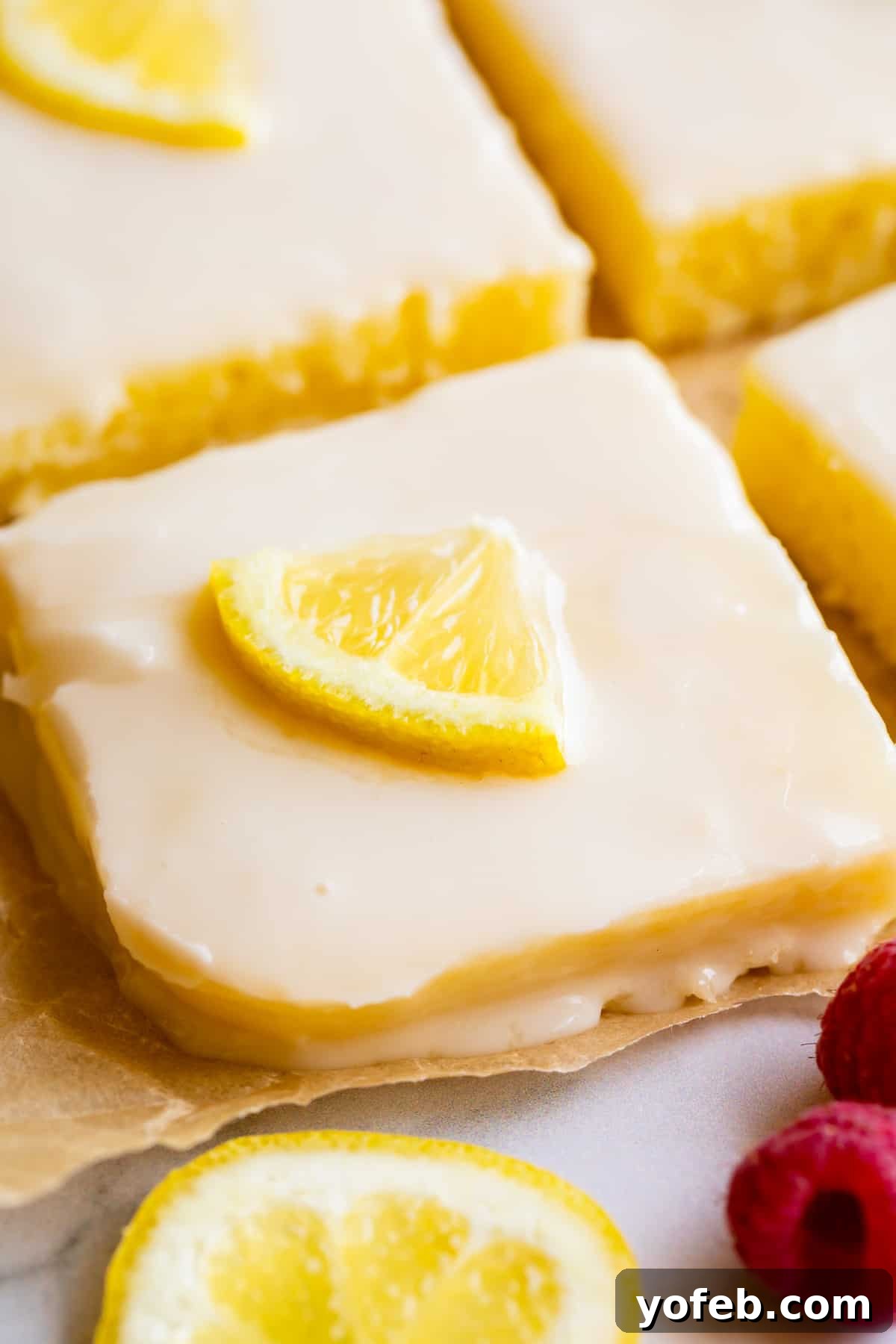
Welcome, fellow lemon enthusiasts! Prepare your taste buds for an extraordinary treat: our incredibly zesty and delightfully moist Lemon Sheet Cake, generously crowned with a vibrant lemon glaze. This is more than just a cake; it’s a celebration of citrus, perfect for bright summer days, festive gatherings, or simply whenever you crave a burst of refreshing flavor. Designed to effortlessly feed a crowd and incredibly simple to prepare, this recipe promises to be your new go-to for a show-stopping dessert. Originally shared on May 13, 2020, this timeless classic continues to captivate hearts with its irresistible tang and tenderness.
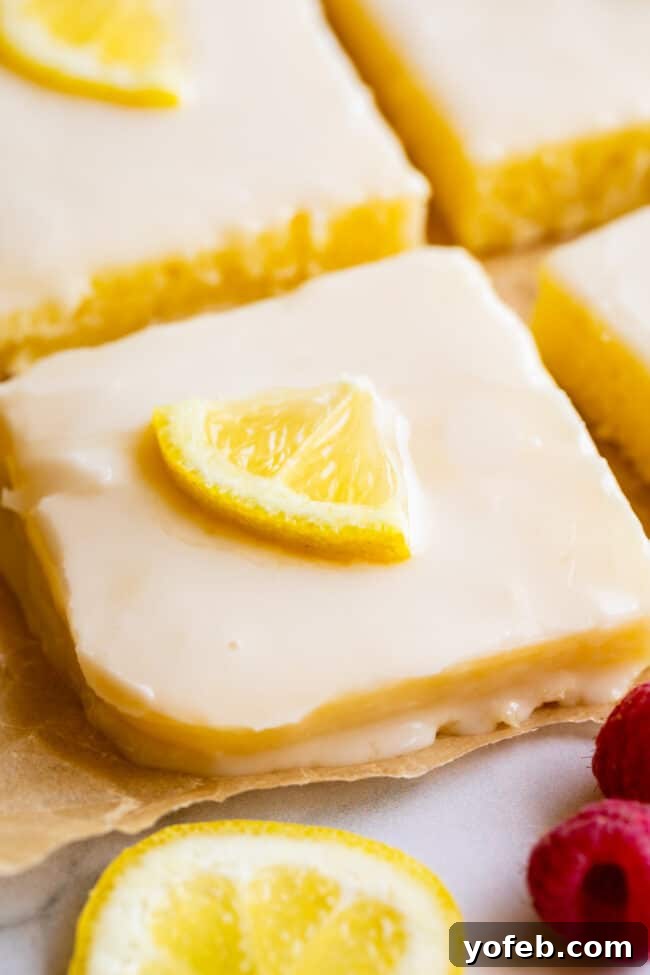
Table of Contents
- You’ll Love This Zesty Lemon Texas Sheet Cake
- Glazed Lemon Cake Recipe Ingredients
- How to Make Lemon Sheet Cake with Glaze
- Storing Your Lemon Sheet Cake with Glaze
- Lemon Cake with Glaze FAQs
- More Delightful Lemon Recipes!
- More Irresistible Sheet Cakes!
- Lemon Sheet Cake with Glaze Recipe
There’s a unique satisfaction in creating something truly delicious that brings joy to everyone who tastes it. While our world has certainly seen its share of challenges and changes, one thing remains constant: the comforting power of a home-baked treat. This Lemon Sheet Cake emerged from a simple craving for something bright, tangy, and utterly refreshing during an unusual spring. Forget the complicated planners and endless to-do lists that 2020 brought; sometimes, the best accomplishment is whipping up a batch of sunshine in cake form.
Inspired by the anticipation of summer and the simple pleasures of life, this recipe captures that feeling perfectly. Imagine the warmth of the sun, the gentle breeze, and the bright, clean taste of lemon cutting through it all. It’s a delightful escape, a moment of pure bliss in every bite.
Before diving into this lemony masterpiece, I was enjoying a quick coastal escape, where the fresh air and open spaces brought a much-needed sense of calm. The beach, with its expansive views and natural social distancing, proved to be the perfect antidote to the stresses of daily life. There, surrounded by the rhythm of the waves, a profound craving for something intensely tart and vibrant struck. This isn’t just a casual desire; it’s a deep, undeniable pull towards the bright, invigorating essence of lemon.
Having previously fallen in love with my Glazed Lemon Bread, I knew I had to translate that obsession into a full-fledged cake. And so, this Lemon Sheet Cake was born – a true testament to the power of a good lemon craving. It’s perfectly tart, wonderfully sweet, and delivers that signature lemony punch in every single crumb.
If you’re a devout lemon lover, this cake is your paradise. It boasts an incredible depth of lemon flavor, achieved through a generous amount of fresh lemon zest and a substantial ¾ cup of lemon juice in the cake batter alone. This ensures every bite is infused with that bright, tangy essence. But we don’t stop there! The luscious lemon glaze provides an additional layer of intense citrus, cementing this cake’s status as a true lemon heaven.
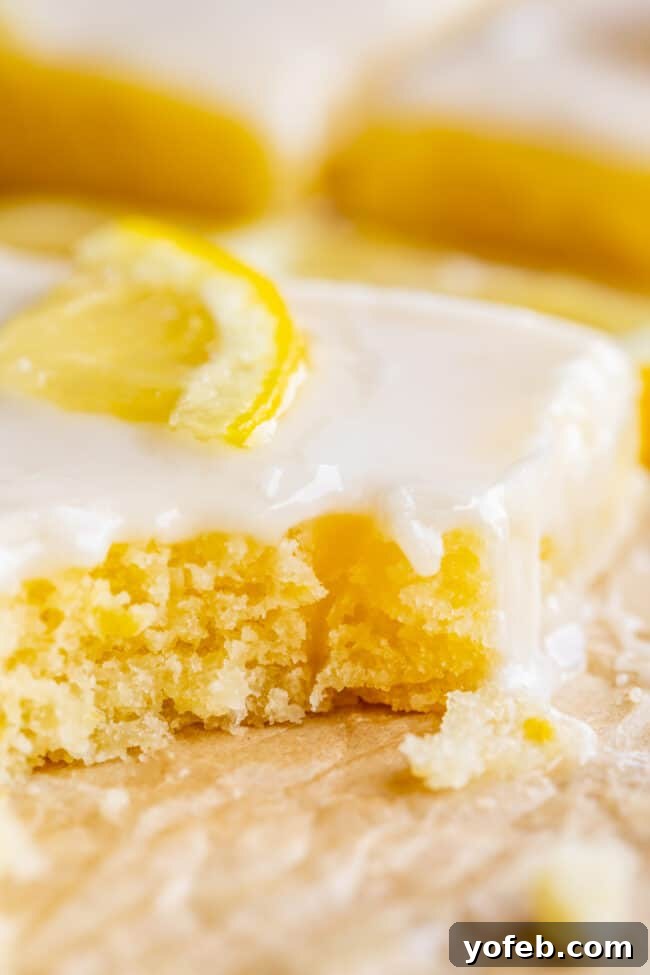
You’ll Love This Zesty Lemon Texas Sheet Cake
This Lemon Sheet Cake is truly a lemon lover’s dream, offering an unapologetically tart and sweet profile that invigorates the senses. Unlike many lemon cakes that hold back on the citrus, this recipe leans into the full, vibrant flavor of fresh lemons. The secret lies in using a generous amount of both lemon zest, which carries the aromatic oils for intense flavor, and ample fresh lemon juice in the cake itself. This robust lemon foundation is then complemented by an equally potent lemon glaze, ensuring a delightful pucker with every forkful.
During development, I even experimented with adding butter to the glaze, thinking it might enhance richness. However, it quickly became clear that butter simply diluted the pure, bright lemon flavor that makes this cake so special. The goal here is unadulterated lemon brilliance, so we embraced the tartness and let the citrus shine through. If you’ve ever enjoyed a classic Texas sheet cake, you’ll appreciate this lemon rendition for its ease of preparation and its ability to serve a crowd without compromising on flavor or presentation. It’s the perfect dessert to brighten any potluck, baby shower, or family gathering, offering a refreshing alternative to traditional sweet treats.
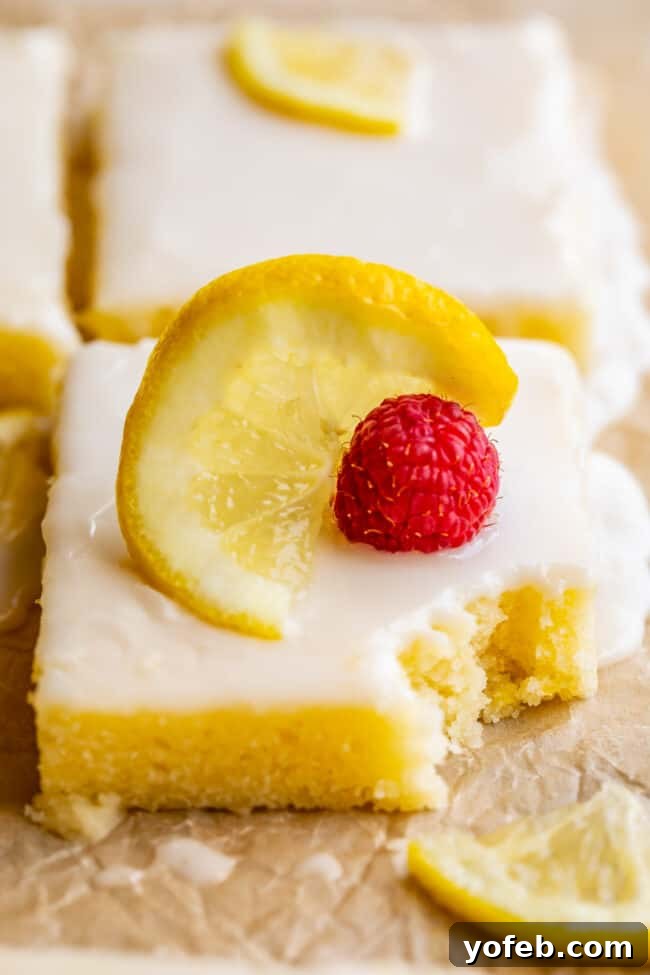
Glazed Lemon Cake Recipe Ingredients
To embark on your journey to creating this sensational lemon sheet cake, here’s a convenient shopping list. Each ingredient plays a crucial role in achieving the perfect balance of flavor, moisture, and texture. For the complete measurements and detailed instructions, please refer to the recipe card below!
- All-purpose flour: Provides the essential structure for the cake.
- Granulated sugar: Balances the tartness of the lemon and contributes to a tender crumb.
- Baking soda: A key leavening agent that helps the cake rise and become fluffy.
- Kosher salt: Enhances all the flavors, making them pop.
- Lemon zest and juice: The stars of the show! Use fresh lemons (approximately 6-7) for the most vibrant flavor. The zest holds aromatic oils, while the juice provides the tangy liquid.
- Butter: Adds richness and moisture to the cake batter.
- Sour cream: Contributes to the cake’s incredible moisture and adds a subtle tang that complements the lemon beautifully.
- Eggs: Bind the ingredients, provide structure, and add richness.
- Powdered sugar: The base for our smooth and delicious lemon glaze.
- Raspberries: (Optional garnish) Add a touch of color and a contrasting sweet-tart note.
How to Make Lemon Sheet Cake with Glaze
Crafting this lemon sheet cake is surprisingly straightforward, taking just a few minutes of active preparation before baking. The process begins with combining all your dry ingredients – flour, sugar, baking soda, and salt – in a large bowl. Next, you’ll want to incorporate the star ingredient: lemon zest. Finely grate the zest of several lemons directly into the dry mixture. This step is crucial as lemon zest is a powerhouse of flavor, containing aromatic oils that will infuse your cake with an intense citrus essence. Whisk these dry ingredients together thoroughly to ensure even distribution.

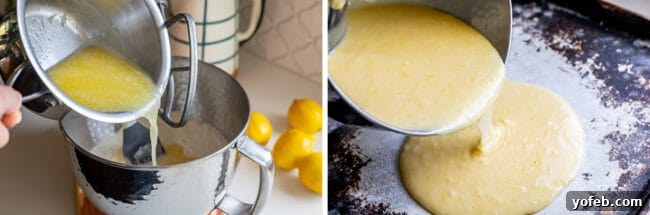
Next, juice your lemons to gather that glorious liquid gold. Combine this fresh lemon juice with a splash of water and a full cup of butter in a small saucepan. Heat this mixture over medium-high heat, stirring occasionally until the butter is completely melted and the liquid reaches a rolling boil, with bubbles appearing across the surface. This step infuses the butter with lemon flavor and creates a base for a wonderfully moist cake. Carefully pour this hot wet mixture into your dry ingredients and stir or beat until just combined. The batter will be noticeably thin, which is exactly what you want for a tender sheet cake. Finally, stir in the sour cream and eggs, beating until everything is thoroughly incorporated and the bowl’s bottom and sides are scraped clean.
Once your batter is ready, pour it into a half sheet pan (18×12 inches), spreading it evenly to the edges. This size is ideal for achieving a thinner cake, which I find creates a superior cake-to-glaze ratio – every bite gets a perfect balance of moist cake and luscious glaze. While this recipe is optimized for a half sheet pan, you can also bake it in a 9×13 inch or 10×15 inch pan. Just be aware that thicker cakes will require adjusted, longer baking times. Keep an eye on the edges, which should be lightly browned and pulling away from the pan, and use a toothpick inserted into the center to ensure it comes out clean, indicating perfect doneness.
For any lemon dessert enthusiast, two simple tools can dramatically speed up and improve your preparation: a microplane grater and an electric juicer. A microplane allows you to zest lemons finely and efficiently, extracting maximum flavor without bitter pith. An electric juicer, on the other hand, makes quick work of extracting large quantities of juice, saving your hands from fatigue. Both are relatively inexpensive investments that pay dividends in convenience and superior results for all your citrus-infused baking.
How to Make Lemon Glaze for Cake
The lemon glaze for this sheet cake is a testament to simplicity and flavor. Requiring just two core ingredients – powdered sugar and fresh lemon juice – it’s incredibly easy to prepare. The magic happens when these two components combine to form a smooth, intensely lemony coating that truly elevates the cake. While the cake itself is packed with lemon zest, I personally prefer a glaze that is silky-smooth and free of zest for a cleaner finish and texture. However, if you desire an extra burst of aromatic lemon flavor, feel free to add a teaspoon or two of fresh lemon zest to your glaze – customize it to your preference!
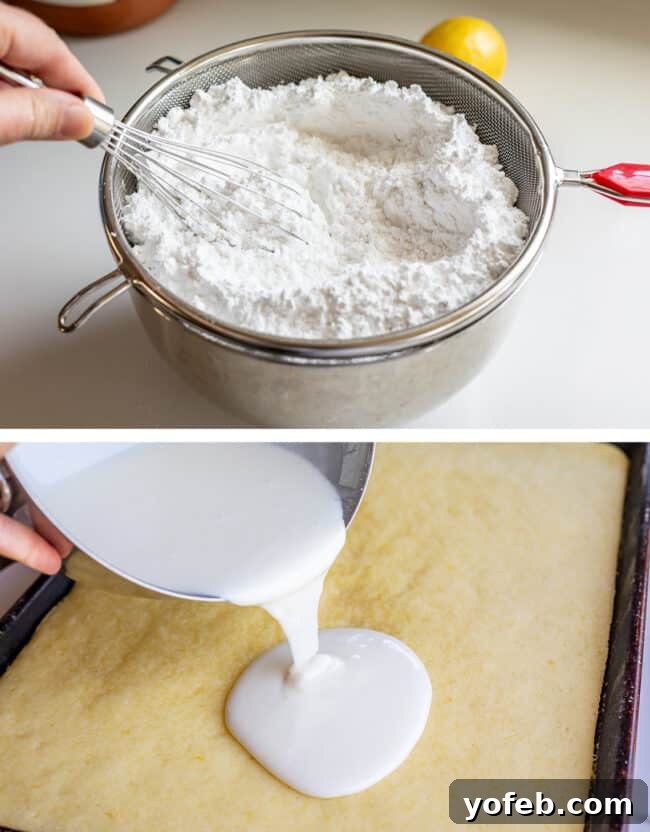
For the best results, I highly recommend sifting your powdered sugar before mixing. This step is particularly helpful if your powdered sugar tends to be clumpy, as it ensures a much smoother, lump-free glaze. Sifting allows the powdered sugar to dissolve more easily into the lemon juice, resulting in that perfectly silky texture that coats the cake beautifully. Once your powdered sugar is sifted, gradually whisk in the fresh lemon juice until you achieve a smooth, pourable consistency. If it’s too thick, add a tiny bit more lemon juice; if too thin, a touch more powdered sugar.
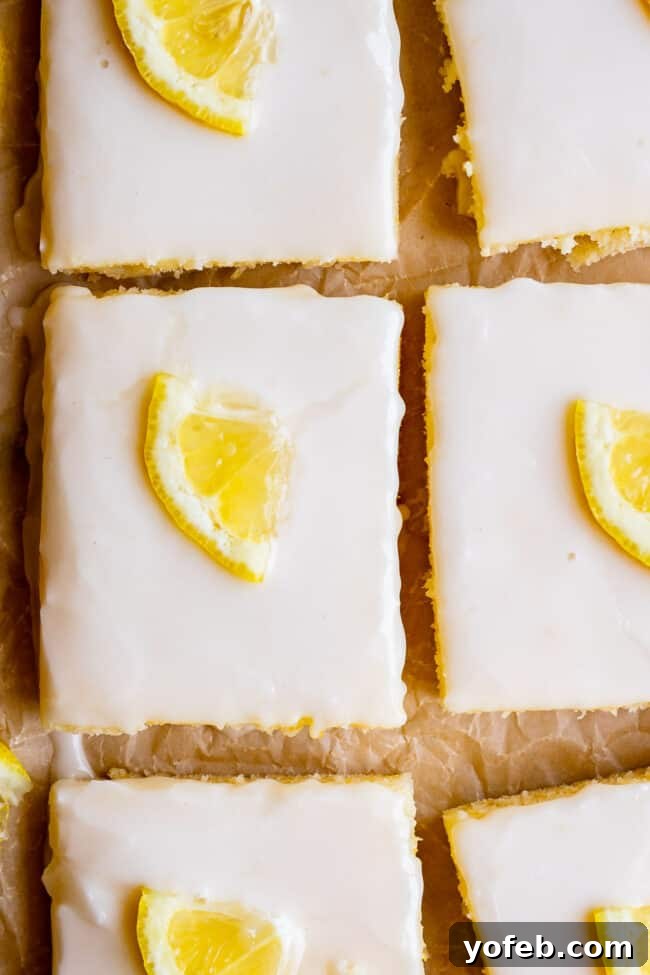
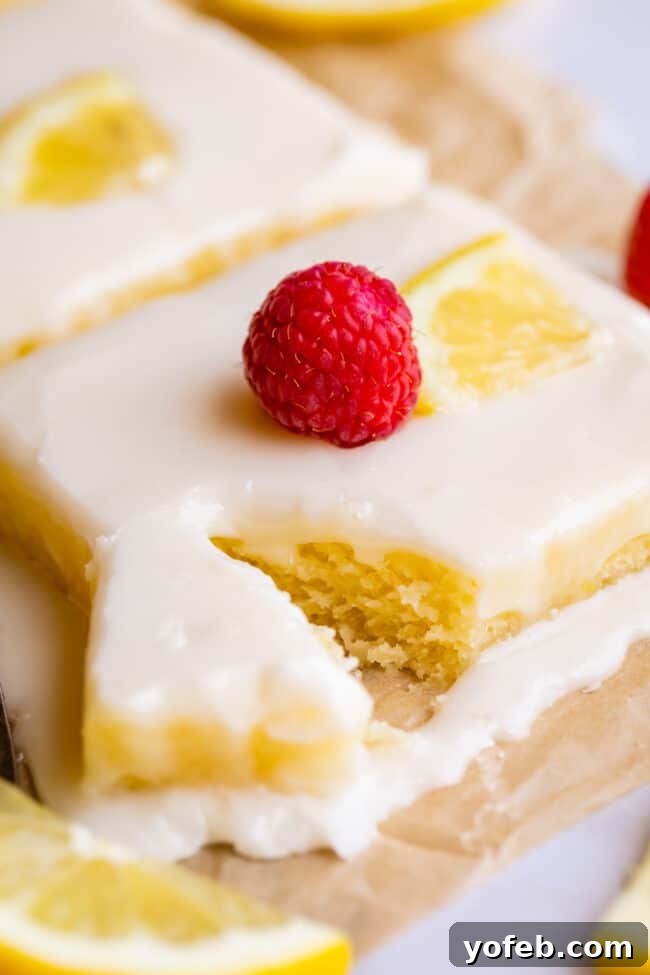
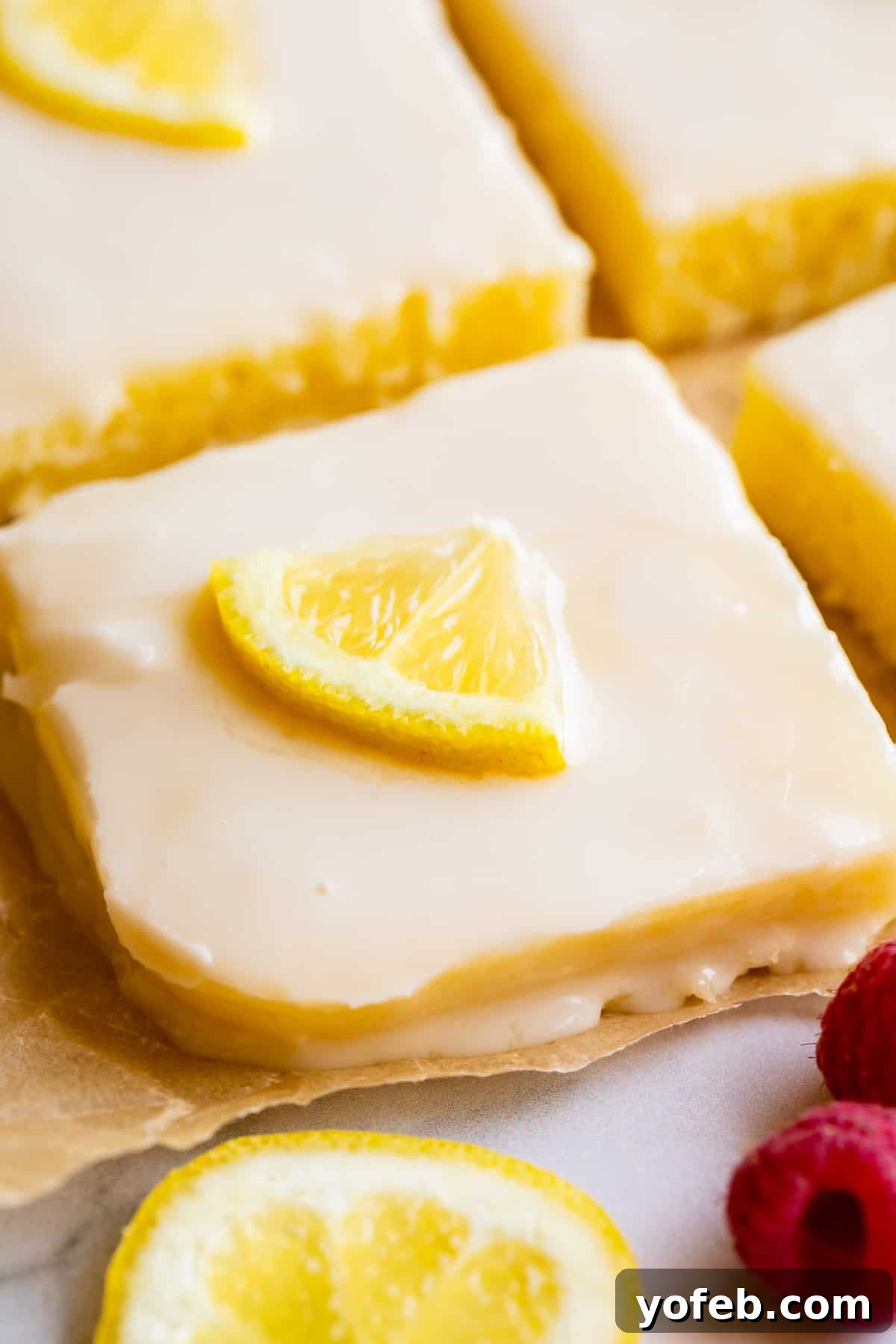
After preparing your exquisite glaze, drizzle it generously over the top of your completely cooled lemon cake, spreading it gently to the edges. The key here is patience: resist the urge to cut into it immediately! Allow the glaze to set for at least an hour or two. As it sets, it will harden slightly, developing a delightful crackly surface that adds another layer of texture and deliciousness. This waiting period is crucial for achieving that perfect, professional finish and flavor. You’ll be rewarded with a cake that looks as incredible as it tastes.
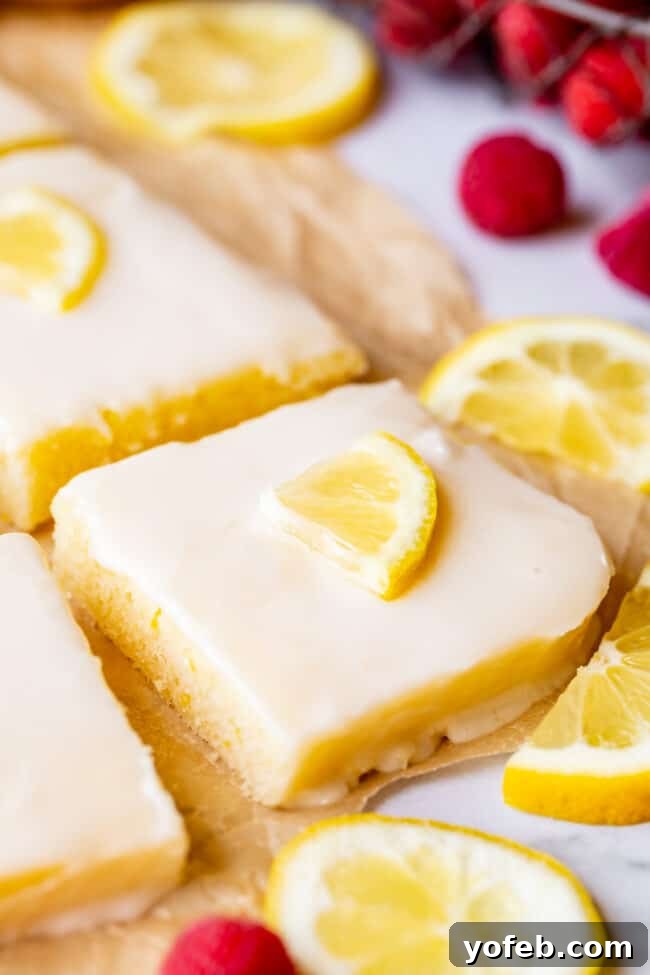
One of the many advantages of this lemon sheet cake is its crowd-pleasing capacity. It’s perfect for sharing, whether you’re hosting a large family dinner, celebrating a special occasion, or bringing a delightful dessert to a potluck. Even if large gatherings aren’t on the immediate horizon, this cake is incredibly versatile. You can make it now and enjoy it for days, or take advantage of its excellent freezing qualities. Yes, this cake freezes beautifully, which means you can always have a slice of lemony goodness ready for an impromptu craving or future celebration. Hallelujah for delicious desserts that stand the test of time and convenience!
Storing Your Lemon Sheet Cake with Glaze
Proper storage ensures your Lemon Sheet Cake remains fresh and delicious for as long as possible. Once the glaze has fully set, you can store this cake at room temperature for up to three days, provided it’s kept in an airtight container. This helps maintain its moisture and prevents the glaze from becoming sticky. If you need to store it longer, transfer the cake to the refrigerator, where it will stay fresh for up to a week. For refrigerating, covering it tightly with plastic wrap or placing it in an airtight container is essential to prevent it from drying out or absorbing other food odors.
Planning ahead? This lemon cake is also an excellent candidate for freezing! To freeze, ensure the cake is completely cooled and the glaze is fully set. You can freeze individual slices wrapped tightly in plastic wrap and then placed in a freezer-safe bag or container, or freeze the entire remaining cake. When you’re ready to enjoy it, simply transfer the sealed cake from the freezer to the counter and allow it to thaw at room temperature. The slow thawing process in its sealed container will help maintain its moisture and delightful texture, making it taste freshly baked.
Lemon Cake with Glaze FAQs
The primary distinction between a sheet cake and a “regular” cake lies in the pan it’s baked in, which in turn influences its shape, thickness, and serving style. Sheet cakes are typically baked in rectangular, shallow pans, often referred to as sheet pans or jelly roll pans. I particularly favor baking my sheet cakes in a half sheet pan, which measures about 12×18 inches. This larger, shallower format results in a thinner cake, which is ideal for achieving a fantastic cake-to-frosting or glaze ratio. Every slice gets a generous coating without feeling overwhelmed. “Regular” cakes, on the other hand, are commonly baked in round pans (like 8-inch or 9-inch diameter) for layer cakes, or in a deeper 9×13-inch rectangular pan for single-layer cakes. While you can often adapt a cake recipe to a different pan size, careful attention to baking times is crucial. For instance, this versatile lemon cake recipe can be successfully baked in a 9×13 inch cake pan (resulting in a thicker cake), a 10×15 inch jelly roll pan (for a moderately thin cake), or my preferred 12×18 inch half baking sheet (for the thinnest cake with the best glaze coverage).
Achieving a light and fluffy cake texture is a common goal, and several factors can contribute to a dense or tough result. The most frequent culprit is **overmixing the batter**. When you mix flour with liquid, gluten develops. Overmixing causes excessive gluten development, leading to a chewy, rather than tender, cake. For this recipe, mix the wet and dry ingredients only until they are just combined, and then stop. A few small lumps are preferable to an overmixed batter.
Another significant factor is the effectiveness of your **leavening agents**, specifically baking soda in this recipe. Baking soda loses its potency over time, especially once the box has been opened. If you’re using baking soda that’s several months old, it might not be reacting sufficiently to create the desired lift. It’s a good practice to purchase baking soda in smaller boxes and replace it every six months, labeling the box with the date you opened it. If you’re ever in doubt, a simple freshness test involves mixing a teaspoon of baking soda with a few tablespoons of vinegar or lemon juice; if it fizzes vigorously, it’s still good!
The ideal temperature for glazing a cake largely depends on the type of cake and glaze. For this Lemon Sheet Cake with its powdered sugar and lemon juice glaze, it is absolutely crucial that the cake is **completely cool** before you even think about pouring on the glaze. If you apply the glaze to a warm cake, the heat will cause the glaze to melt, run off the sides, and absorb into the cake, resulting in a soggy mess rather than a beautiful, set topping. Once the glaze is drizzled over the thoroughly cooled cake, it needs additional time – typically an hour or two – to properly set and harden on top. This waiting period allows the glaze to achieve its delightful, slightly crackly texture, which is a signature characteristic of this irresistible dessert. While the aroma of freshly glazed lemon cake might tempt you to dig in immediately, trust me, the wait is entirely worth it for the perfect slice.
The exact origins of the “Texas sheet cake” are a bit of a culinary mystery, but its name evokes the grand, generous spirit of the Lone Star State. There are several popular theories and characteristics that make the name particularly fitting for these large, easy-to-serve desserts:
- Everything’s Bigger in Texas: The most common explanation points to the cake’s enormous size. Baked in a large sheet pan, a Texas sheet cake yields many servings, perfectly aligning with the popular saying, “Everything’s bigger in Texas.” It’s designed to feed a crowd!
- Southern Ingredients: Traditional Texas sheet cakes often feature ingredients like buttermilk and pecans, both of which are common in Southern cuisine and agricultural specialties of Texas. While this lemon version is a delightful twist, it maintains the spirit of a cake designed to be shared generously.
- Flat and Wide: Some jokingly suggest the cake’s wide, flat profile mirrors the expansive, flat landscapes of Texas itself.
- Ease of Serving a Crowd: Regardless of its precise historical origin, the sheet cake format is inherently practical for large gatherings. It’s simple to bake, easy to transport, and effortless to slice and serve to many people, making it a staple for potlucks, church functions, and family reunions – occasions where a satisfying, no-fuss dessert is always appreciated. Whether it’s a rich chocolate classic or a bright, zesty lemon variation like ours, sheet cakes are synonymous with hospitality and delicious abundance.
More Delightful Lemon Recipes!
- My Favorite Lemon Bars are Ridiculously Tart >> These are truly the best of the best, lemon heaven in bar form!
- Glazed Lemon Bread << The delicious inspiration behind today’s incredible cake recipe.
- Raspberry Lemon-Glazed Muffins << A perfect combination of tart and sweet in every bite!
- Lemon Crinkle Cookies with Lemon Frosting << These cookies are genuinely amazing and packed with lemon flavor.
- Lemon Cupcakes << Easy and delicious, proving doctored cake mixes can be fantastic!
More Irresistible Sheet Cakes!
- The Only Texas Sheet Cake You’ll Ever Need << Incredibly fudgy and utterly classic!
- White Texas Sheet Cake << A beautiful, simple vanilla version that is outstanding in its elegance.
- Almond Sheet Cake << This will forever be one of my absolute favorite cakes, truly divine.
- Chocolate Cherry Sheet Cake with Fudge Frosting << A wonderful pairing of rich chocolate and sweet cherries!
- Coconut Almond Sheet Cake << A fantastic vegan option you’d never guess was plant-based.
- Blackberry Cake with Coconut Cream Cheese Frosting << A beloved family favorite, bursting with fruit flavor.
- Pig Pickin Cake (Sunshine Cake) << While a layer cake, it starts with a doctored mix and is a quintessential spring and summer dessert!
- Caramel Cake with Caramel Icing << If caramel could be transformed into a cake, this is it. Absolutely essential for caramel lovers.
- Peach Cake with Brown Sugar Frosting << Summer encapsulated in a cake – truly delightful!
- Peanut Butter Sheet Cake << A rich and satisfying cake for peanut butter fans (recipe overdue for new photos!).
- Blackberry Margarita Sheet Cake from Kitchen Fun with My 3 Sons
- Keto Texas Sheet Cake from All Day I Dream About Food
- Buttermilk Sheet Cake from Miss in the Kitchen
Facebook | Pinterest | Instagram

Lemon Sheet Cake with Glaze
Ingredients
For the cake
- 2 cups all-purpose flour, spooned and leveled
- 1 & 3/4 cups granulated sugar
- 1 teaspoon baking soda
- 1/2 teaspoon kosher salt
- 2 tablespoons lemon zest, from 4 lemons
- 3/4 cup lemon juice, from the same 4 lemons
- 1/4 cup water
- 1 cup butter, (2 sticks)
- 1/2 cup sour cream
- 2 large eggs
For the glaze
- 4 & 1/2 cups powdered sugar, sifted
- 1/2 cup lemon juice, from about 2-3 lemons
- lemon slices, quartered (to garnish)
- raspberries, to garnish
Instructions
-
Preheat your oven to 375 degrees F (190°C). Prepare a half sheet pan (18×12 inches) by spraying it with nonstick spray or lining it with parchment paper. Set this aside.
-
In a large mixing bowl or the bowl of a stand mixer, combine all the dry ingredients: 2 cups all-purpose flour, 1 and ¾ cups granulated sugar, 1 teaspoon baking soda, and ½ teaspoon kosher salt. Whisk these together until well combined. Using a microplane grater, zest 4 lemons directly into the dry ingredients. You should aim for approximately 2 tablespoons of zest. Whisk the lemon zest into the dry mixture, ensuring it’s evenly distributed, and set aside.
-
Juice 4 lemons (or as many as needed) to yield ¾ cup of fresh lemon juice. For efficiency, I recommend using an electric juicer. Pour the lemon juice into a small saucepan along with ¼ cup of water.* Add 1 cup (2 sticks) of butter to the saucepan and place it over medium-high heat. Stir occasionally until the butter has completely melted and the mixture comes to a full boil, with bubbles appearing consistently across the surface.
-
Carefully pour the hot wet ingredients from the saucepan into the bowl with the dry ingredients. Stir or beat the mixture until it is just combined. Be careful not to overmix.
-
Add ½ cup of sour cream and 2 large eggs to the batter. Beat until all ingredients are thoroughly combined, making sure to scrape down the bottom and sides of the bowl to ensure no dry pockets remain.
-
Pour the thin batter evenly into the prepared sheet pan, spreading it all the way to the edges. Bake in the preheated oven at 375°F (190°C) for 12-14 minutes, or until the edges of the cake are lightly golden brown and have begun to pull away from the sides of the pan. To confirm doneness, insert a toothpick into the center of the cake; it should come out clean, without any wet batter attached.
-
Once baked, remove the cake from the oven and transfer the pan to a wire cooling rack. Allow the cake to cool completely before proceeding with the glaze. This step is crucial for the glaze to set properly.
-
While the cake cools completely, prepare the lemon glaze. Sift 4 and ½ cups of powdered sugar into a medium bowl. Sifting prevents lumps and ensures a smooth glaze. Add ½ cup of fresh lemon juice to the sifted powdered sugar and whisk vigorously until the mixture is completely smooth and free of any lumps. If you desire a thinner consistency, add a small amount more lemon juice; for a thicker glaze, add a little more powdered sugar until your desired consistency is reached.
-
Once the cake is fully cooled, drizzle the prepared lemon glaze evenly over the top, spreading it gently to cover the entire surface of the cake. Allow the glaze to set up for approximately 1-2 hours at room temperature, or until it has hardened slightly on top. This creates a delightful crackly crust.
-
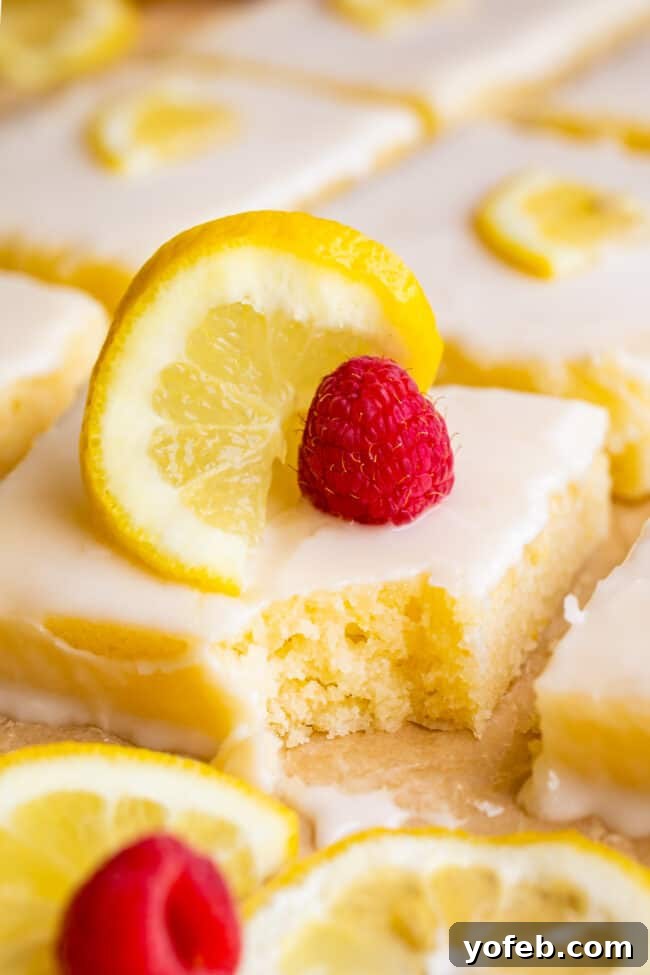
Slice the cake into desired squares or rectangles and serve! For an extra touch of elegance and flavor, garnish each slice with a quarter of a fresh lemon slice and a vibrant raspberry, if desired.
-
Store the cake on the counter in an airtight container for the first 2-3 days to maintain optimal freshness. For longer storage, transfer it to the refrigerator.
Notes
This cake is an excellent candidate for freezing! To freeze, ensure the cake is completely cooled and the glaze is fully set. Wrap it well in plastic wrap and then aluminum foil, or place slices in an airtight, freezer-safe container. When you’re ready to enjoy, simply let it thaw on the counter in its sealed container at room temperature.
*The choice of pan significantly affects your cake’s thickness. You can bake this cake in a 9×13 inch cake pan for a thicker cake, a 10×15 inch jelly roll pan for a moderately thin cake, or my preferred 12×18 inch half baking sheet for the thinnest cake, which offers the perfect cake-to-glaze ratio in my opinion.
Remember, the thicker your cake, the longer it will need to bake. Always use your best judgment and rely on the toothpick test to ensure it’s cooked through – a toothpick inserted into the center should come out clean.