
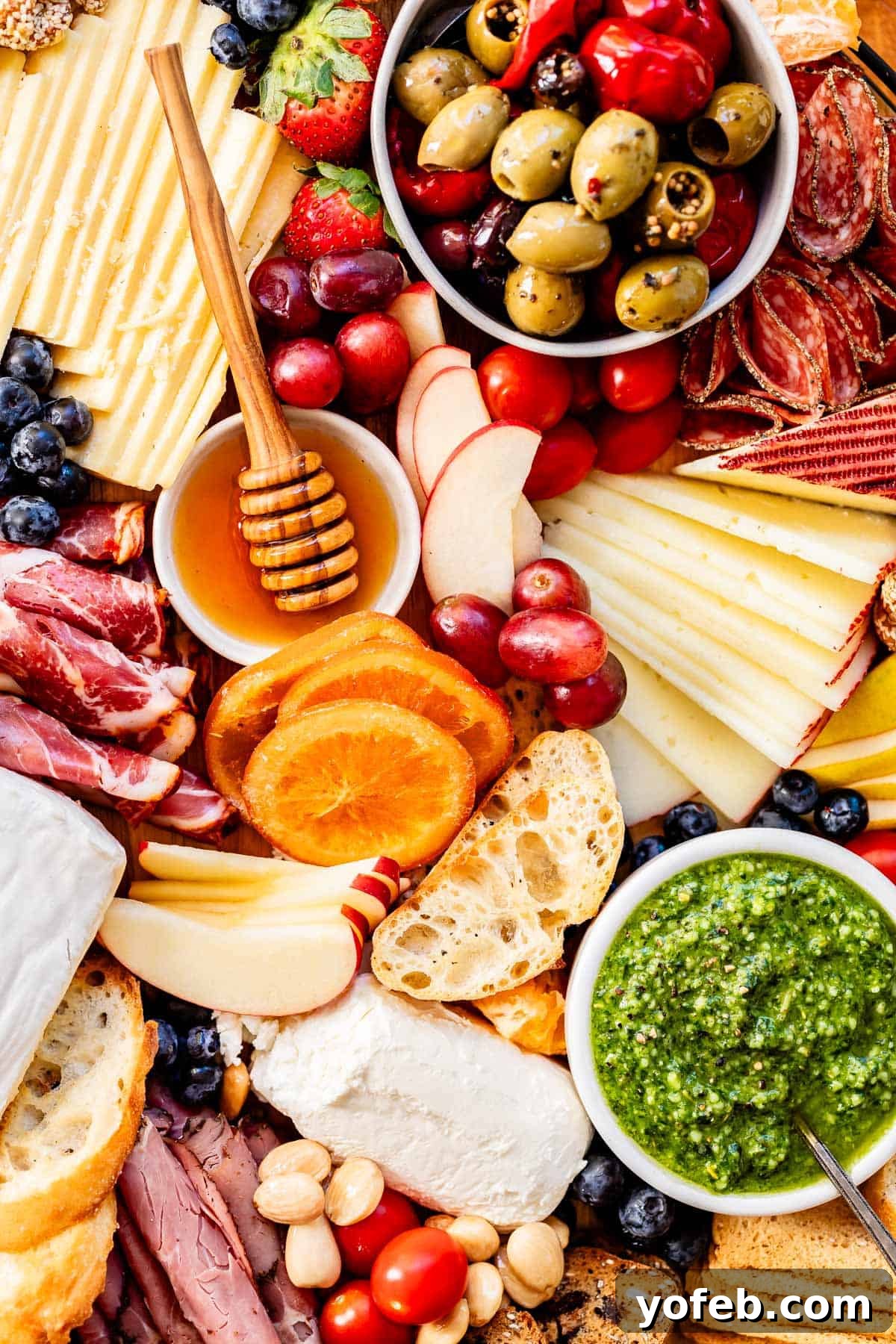
For the longest time, the idea of creating a charcuterie board felt incredibly intimidating. They always looked so sophisticated and elaborate, a realm far beyond my perceived culinary skills. However, after countless attempts for various parties and festive occasions over the years, I’ve finally unlocked the secrets to crafting the most stunning charcuterie boards with surprising ease. This comprehensive guide will walk you through everything you need to know, from selecting the perfect ingredients for a diverse charcuterie board to arranging it beautifully, making the process simple and enjoyable even for a complete beginner who might not know the first thing about artisanal cheeses or gourmet meats. Get ready to impress your guests and elevate your entertaining!
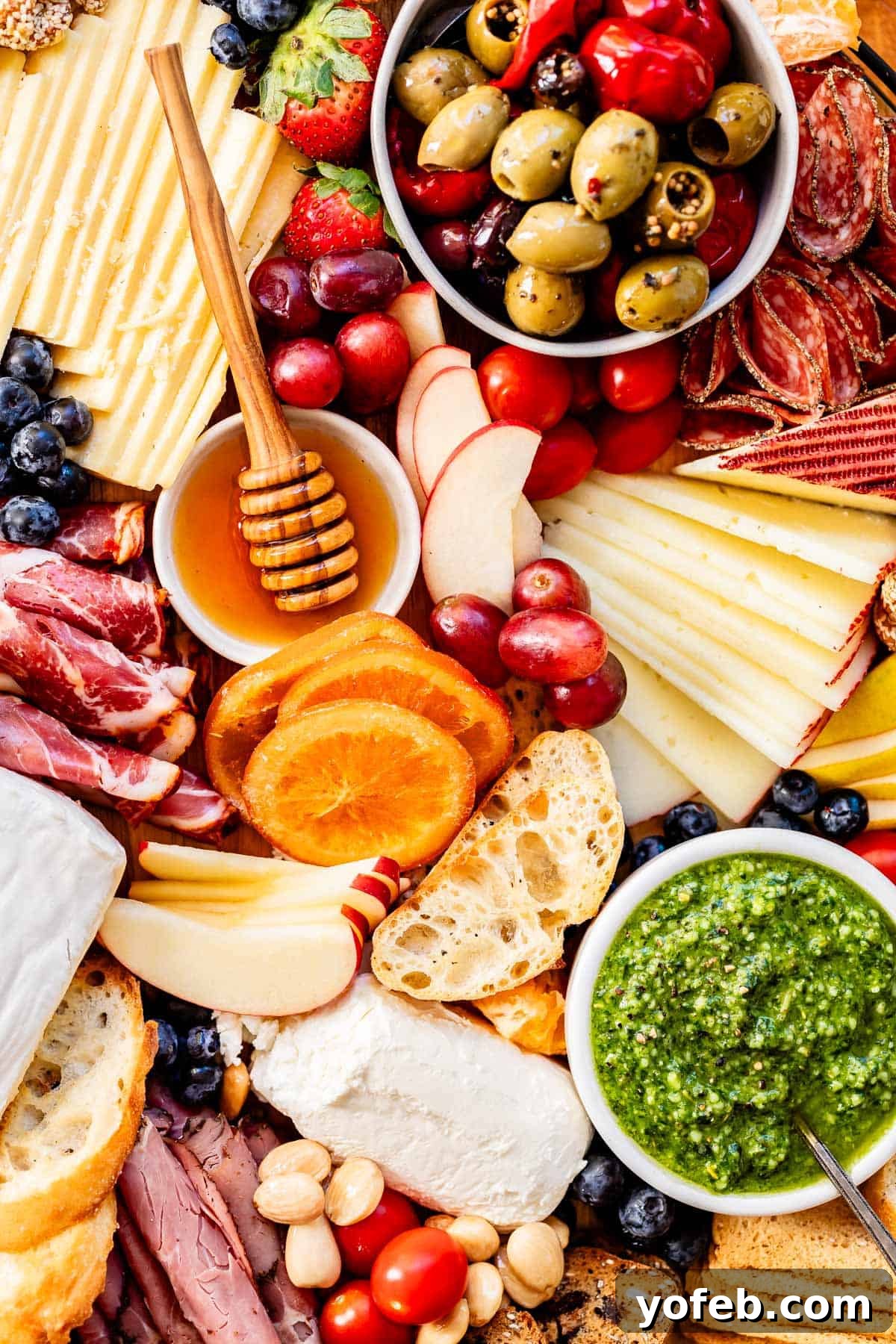
Table of Contents
- What is a Charcuterie Board?
- Why Charcuterie Boards are a Party Favorite
- Mastering the Easy Charcuterie Board
- Essential Rules for an Impressive Charcuterie Board
- The Optionality of Meat: More Than Just “Cold Cuts”
- The Power of Sauces and Spreads on Your Board
- Achieving Variety for the Best Charcuterie Board
- Shopping Smart for Your Charcuterie Ingredients
- Preventing Soggy Bread and Crackers on Your Charcuterie Board
- How Much Cheese Per Person on a Charcuterie Board?
- Exploring Types of Cheeses for Your Board
- Hard / Firm Cheese Ideas
- Semi-Soft or “Firm” Cheese Ideas
- Soft Cheese Selections
- “Stinky” Cheese: Bold Flavors
- Selecting Meats for Your Charcuterie Board
- How Much Meat Per Person on a Charcuterie Board?
- Charcuterie Board Ingredient List
- Step-by-Step: How to Make a Charcuterie Board
- How to Arrange a Charcuterie Board
- Serving Your Charcuterie Board: Occasions and Pairings
- Hosting a BYOC (Bring Your Own Cheese) Party
- Storing Charcuterie Board Leftovers
- Can You Freeze Charcuterie Board Food?
- Creative Ways to Use Charcuterie Board Leftovers
- Gifting Charcuterie Leftovers
- Charcuterie for the Lactose Intolerant
- Frequently Asked Questions About Charcuterie Boards
- More Delicious Appetizers to Explore
- How to Make a Charcuterie Board Recipe
There’s a unique charm in gathering friends and family around a beautifully presented spread of food. A charcuterie board, with its vibrant colors and diverse textures, embodies this spirit of togetherness and celebration. It’s more than just an appetizer; it’s an interactive culinary experience, a conversation starter, and a true feast for the senses. Just like my kids are learning to appreciate good music and balanced diets (even if they sometimes think “Pirate’s Booty” is a health food!), I’ve learned that a real “booty boost” comes from enjoying quality ingredients, especially fine cheeses and savory meats. Who knew such an elegant presentation could be so incredibly simple to achieve?
What is a Charcuterie Board?
Historically, “charcuterie” is a French term referring to a branch of cooking dedicated to prepared meat products, primarily from pork, such as ham, sausage, bacon, and pâté. Essentially, it means cold cuts of meat. However, in modern culinary parlance, especially in the United States, the concept has evolved far beyond its original definition. Today, a charcuterie board is a beautifully arranged platter featuring an assortment of cheeses, cured meats, crackers, bread, fruits, nuts, olives, and various dips or spreads. While traditionalists might insist on the presence of meat for it to be a true “charcuterie,” contemporary boards embrace incredible versatility. You’ll find everything from a dessert charcuterie board to a breakfast pancake board, or even creative soup boards. The essence lies in the artful presentation of diverse, delicious finger foods on a single serving surface, inviting guests to graze and explore a symphony of flavors and textures.
Why Charcuterie Boards are a Party Favorite
While I believe all food brings joy, charcuterie boards undoubtedly claim a top spot for “fun food for adults” – and often for kids too! Their universal appeal makes them an instant hit at any gathering. These boards effortlessly make you feel cultured and fancy, yet at their heart, they’re simply a sophisticated version of adult Lunchables, offering a delightful opportunity to eat with your hands. And who doesn’t love that?
Beyond their delicious contents, charcuterie boards serve as stunning centerpieces, frequently becoming the star attraction of an event. I recently prepared one for Thanksgiving, and by the end of the day, my dad enthusiastically declared, “Karen, all the food was wonderful, but my favorite part of the entire day was the charcuterie board. I just love all that stuff!” This anecdote perfectly illustrates their power: if you want to win over friends and truly impress your guests, offering a well-curated selection of cheese and crackers is a surefire strategy.
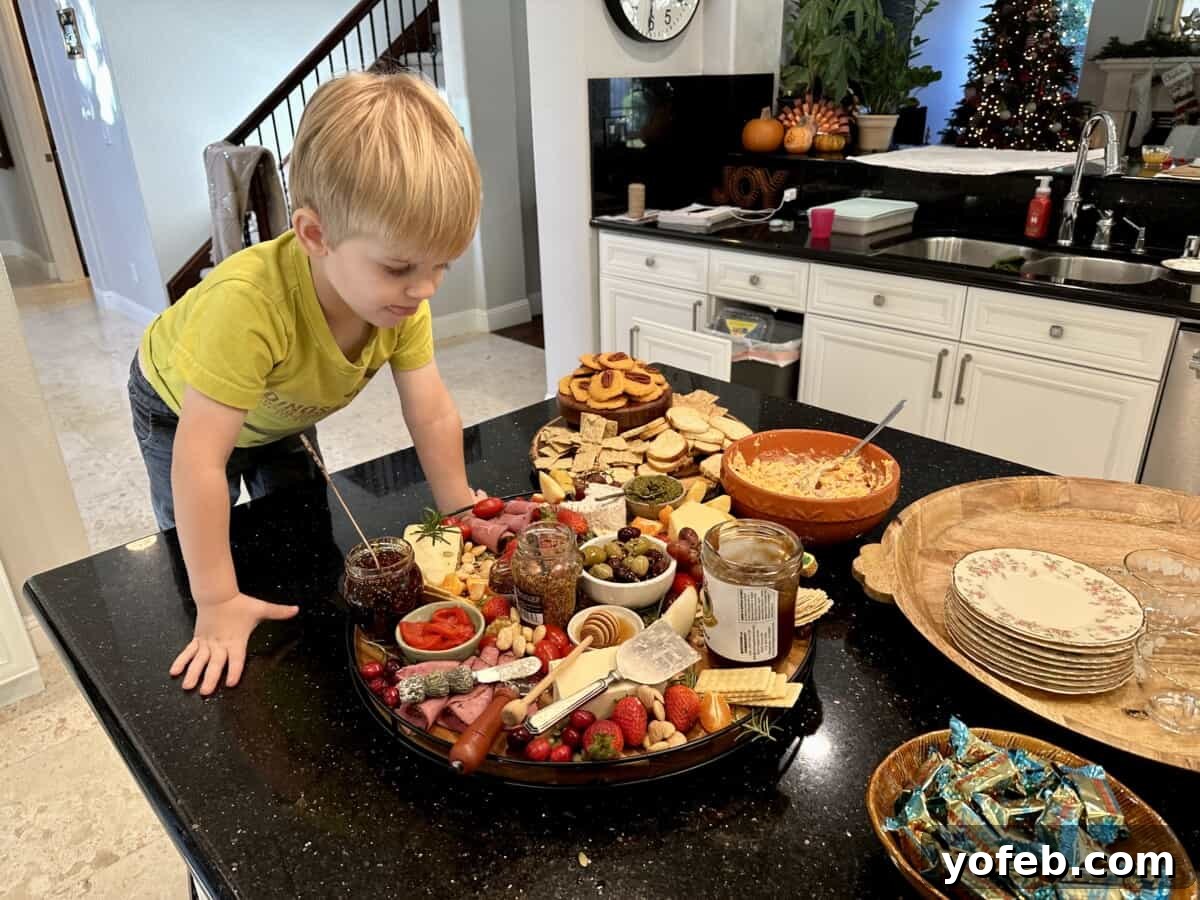
A glimpse of our Thanksgiving spread. He’s clearly enjoying it!
A charcuterie board extends a warm, inviting welcome to your guests. It conveys thoughtfulness and shows you’ve put effort into creating a memorable experience. Despite their impressive appearance, charcuterie boards are surprisingly straightforward to assemble. If you’re looking to make a big impression with minimal effort, a gourmet charcuterie board is the perfect solution.
Mastering the Easy Charcuterie Board
It might seem counterintuitive, but it took me years to truly feel confident in building charcuterie boards. The process didn’t come naturally at first, and I struggled for a long time to get the hang of it. Many people feel a bit insecure when it comes to charcuterie because we aren’t all experts on exotic cheeses and cured meats, and that’s perfectly normal. But I promise you, with the right guidance, you can absolutely master this art.
My big secret? Success comes down to two key factors: having a clear plan before you shop, and following a few simple guidelines during assembly. Once you adopt this approach, you’ll discover just how incredibly easy and satisfying it is to put together a stunning charcuterie board.
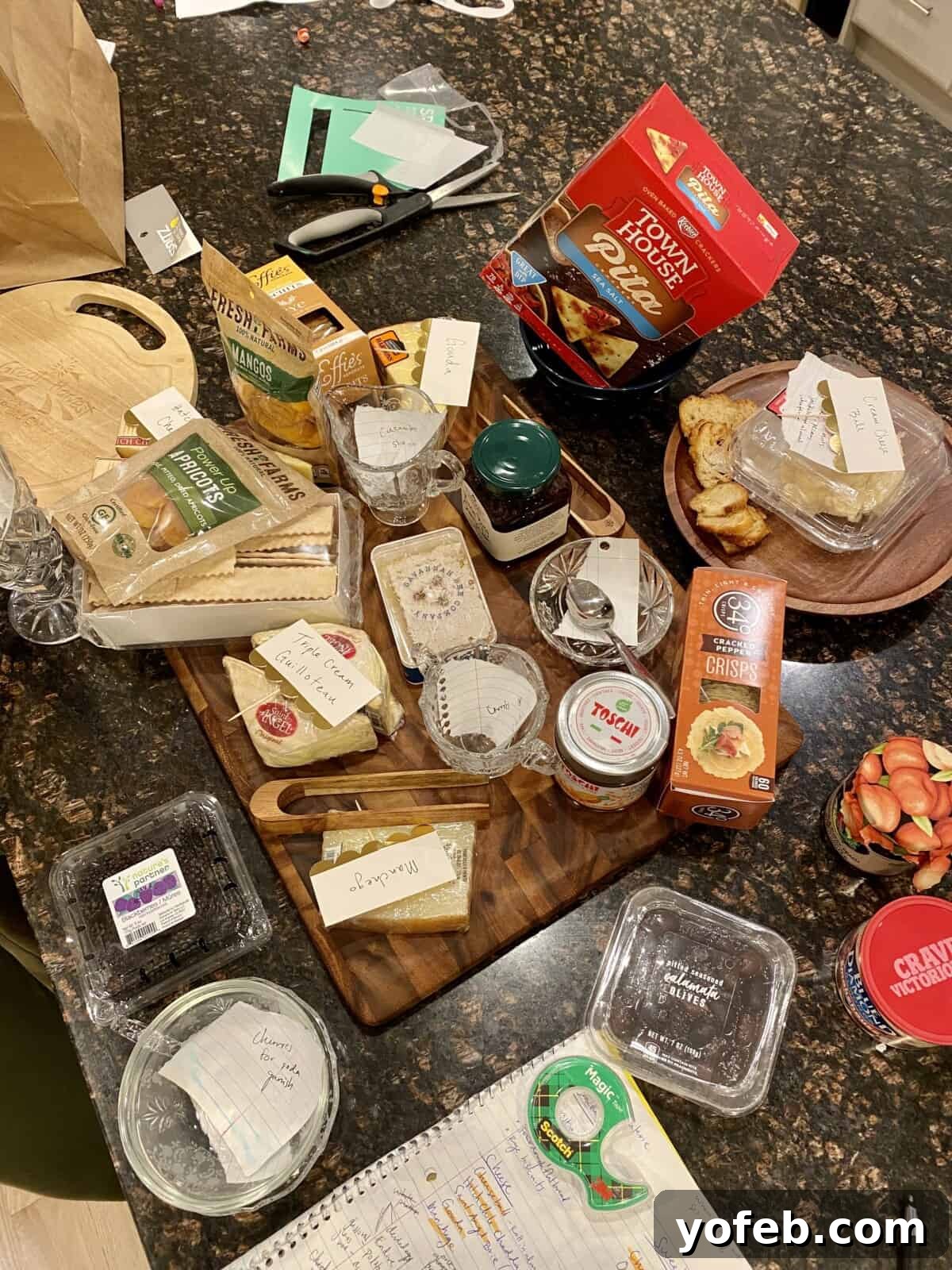
Prepping a board at my sister Nikki’s house a few years ago. Labeling each dish saved so much time before the event. Notice the honeycomb in the middle, a delicious and unique addition!
Charcuterie boards used to overwhelm me precisely because of the seemingly infinite options. For someone who can easily get scattered, walking into a gourmet cheese section and being bombarded with hundreds of choices was a recipe for decision paralysis. Which cheeses should I pick? Do I really only need four? And what are these “rules” about hard, soft, stinky, and mild? It was all so confusing.
For a long time, my approach was to go in without a plan, resulting in significant over-buying. I’d leave the store with far more cheese than necessary for my party, often driven by visual appeal. I’d gravitate towards “cute” cheeses: adorable round rinds that looked straight out of a quaint French dairy farm. While there’s nothing wrong with charming cheese, this often meant I ended up with four different kinds of Triple Cream cheese and nothing else. This imbalance led to a less exciting board.
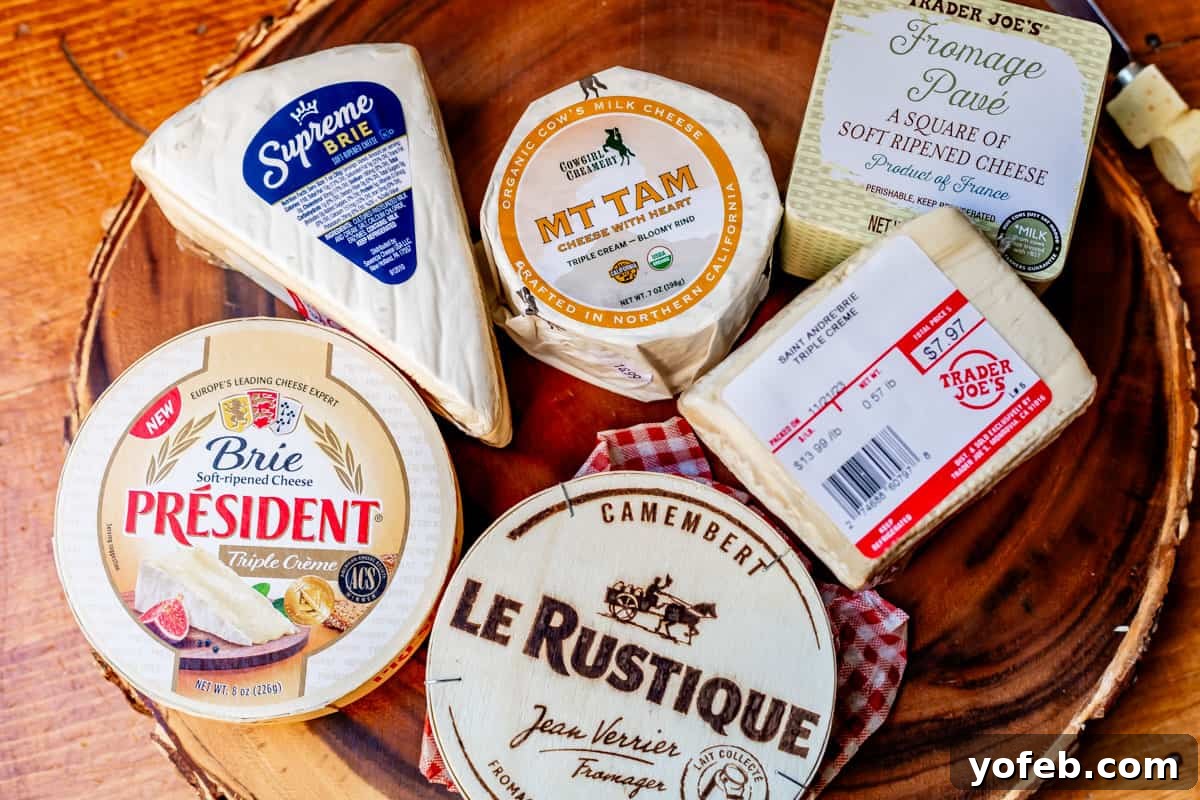
Indeed, all these cheeses are visually appealing and seem perfect for a board. That red checkered paper and wooden box are certainly charming! The issue, however, is that they all serve a similar purpose: these cheeses are typically mild and soft, offering a buttery, fatty complement to other items. While undeniably delicious, you generally only need one cheese of this specific profile on your board to ensure a diverse flavor experience.
Essential Rules for an Impressive Charcuterie Board
Creating an amazing charcuterie board doesn’t require complex culinary training. Here’s a foundational overview of what you need to know. Don’t worry about all the options right now; the detailed recipe below provides exact steps for beginners. Just focus on these core principles, and you’ll be well on your way to building a board that wows:
- Embrace Cheese Variety: This is arguably the most crucial rule. Aim for at least one soft, one hard, and one tangy cheese. Think about contrasting textures and flavor profiles to keep things interesting. A board featuring only mild, creamy cheeses can quickly become monotonous.
- Abundance is Key (If That’s Your Style): When people marvel at a board I’ve made, it’s often because of the sheer volume and vibrant array of food. My personal goal is to cover every inch of the board so that no wood is visible beneath the colorful spread. This abundance creates an immediate “wow” factor. While minimalist boards are also beautiful, for larger parties, a bountiful presentation truly excites guests. Just keep piling it on, and watch their eyes light up!
- Variety Beyond Cheese: This principle extends to all elements of your board. Offer a mix of sweet and savory, crunchy and soft, fresh and preserved. The interplay of different flavors and textures is what elevates a good board to a great one.
- Prioritize Personal Preference: This trumps every other rule. Only include items that you and your guests genuinely enjoy. There’s no point in buying an expensive cheese or an exotic meat if no one at your party will eat it. Your charcuterie board should reflect your taste and create joy for everyone involved.
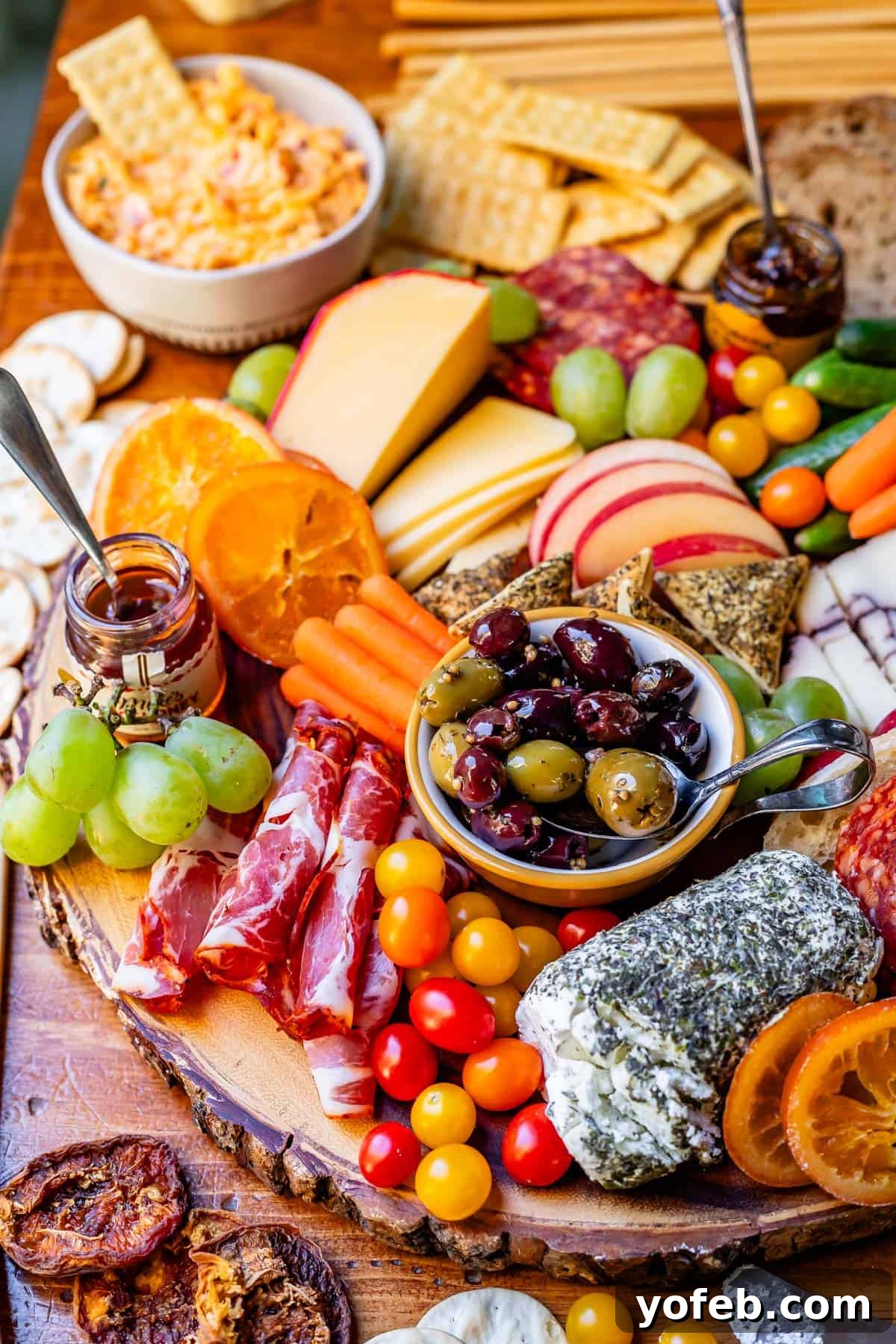
The Optionality of Meat: More Than Just “Cold Cuts”
While the term “charcuterie” literally translates to cold cooked meats, I firmly believe that meat, though delicious, is an entirely optional component of a modern charcuterie board. And I’m willing to stand by that statement! In my experience preparing numerous boards, the cheeses are almost always the first to disappear, while a significant portion of the meat often remains untouched. This suggests that for many guests, the cheese selection holds greater allure than the cured meats.
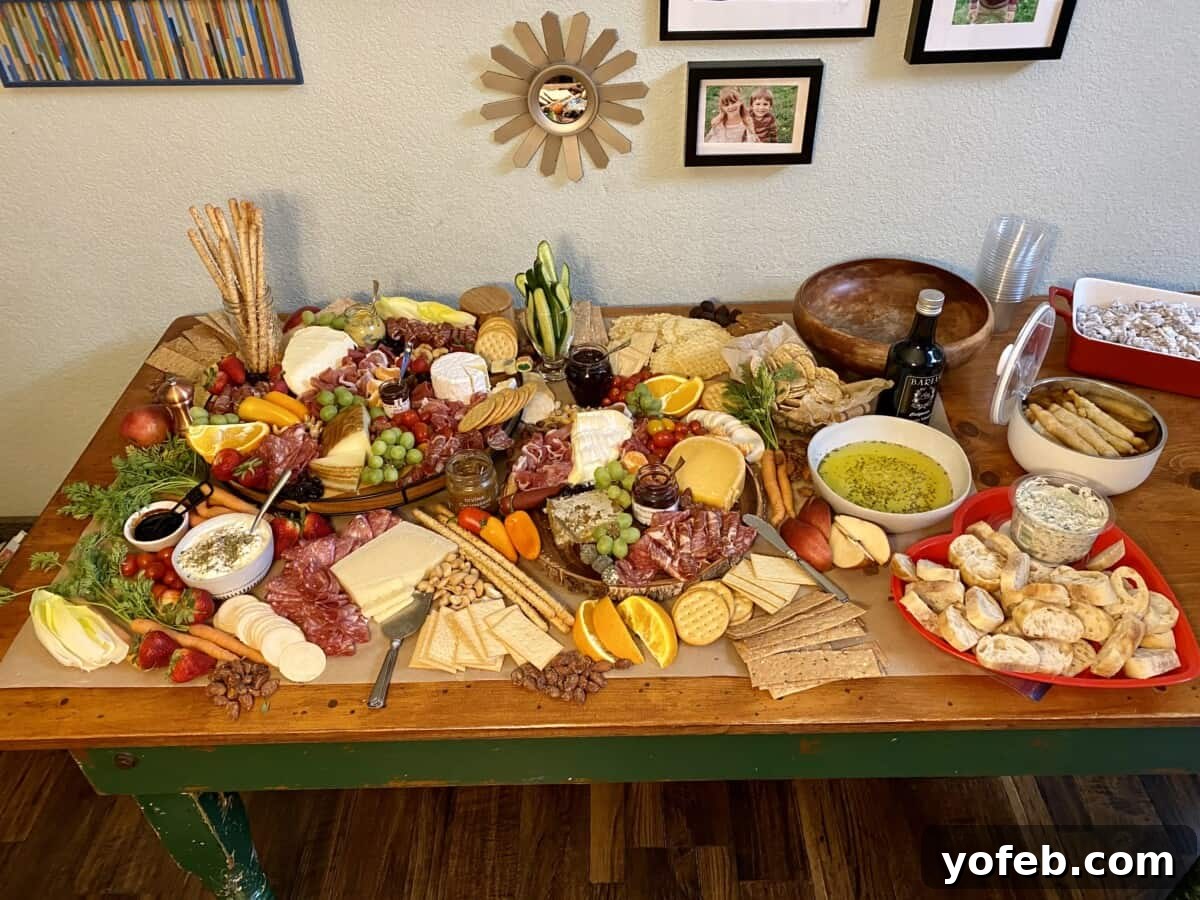
My very first charcuterie board for a Christmas party back in 2018. I was so confused while shopping and ended up with a lot of leftover meat!
Of course, technically, a board without meat is a “cheese board,” not a “charcuterie board.” But try explaining that nuance to a hungry crowd, and you’ll likely be met with polite yawns or eye rolls. For practical purposes, and to avoid unnecessary stress, embrace the versatility!
It’s important to know your audience, though. I once had a sister-in-law who, upon noticing the absence of cold cuts, promptly headed to the store to rectify the situation! This highlights that while meat can be optional, it’s always best to consider your guests’ preferences. Ultimately, choose what you and your primary guests enjoy most.
Keep in mind that if your charcuterie board is intended to serve as a light meal rather than just an appetizer before a main course, guests are far more likely to consume a larger quantity of meat.
The Power of Sauces and Spreads on Your Board
A truly exceptional charcuterie board is elevated by an array of engaging and flavorful jams, sauces, and savory spreads. Do not underestimate this aspect of your board; these accompaniments can truly make or break the experience, adding layers of complexity and moisture that enhance the meats and cheeses.
Furthermore, including even just one homemade item instantly makes your board feel incredibly special and personalized. It often becomes the most talked-about component of the entire spread. Here are some of my favorite sauces and spreads to consider for your charcuterie board, along with links to recipes:
- Homemade Pesto (recipe often found in recipe card notes, adds a fresh, herbaceous kick)
- Onion Dip (creamy and savory, a crowd-pleaser)
- Pimiento Cheese Dip (a Southern classic, rich and tangy)
- Whipped Ricotta with Herbs and Honey (light, creamy, and subtly sweet)
- Whipped Feta (tangy and salty, pairs wonderfully with fresh veggies)
- Cranberry Jalapeno Dip (a perfect balance of sweet, spicy, and fruity, especially for holidays)
- Strawberry Jalapeno Jam (delicious simply poured over a block of cream cheese for an effortless dip)
- Chimichurri Sauce (pesto’s vibrant, garlicky cousin, excellent with meats)
- Garlic Aioli (creamy and pungent, versatile for many pairings)
- Horseradish Sauce (especially good with roast beef or other hearty meats)
- Balsamic Reduction (sweet and tangy, a sophisticated drizzle over cheese)
- Olive Oil and Balsamic Bread Dip (classic, simple, and satisfying)
- Cinnamon Honey Butter (a sweet, comforting spread for breads or sweeter elements)
- Lemon Curd (unexpectedly delightful with certain cheeses and berries)
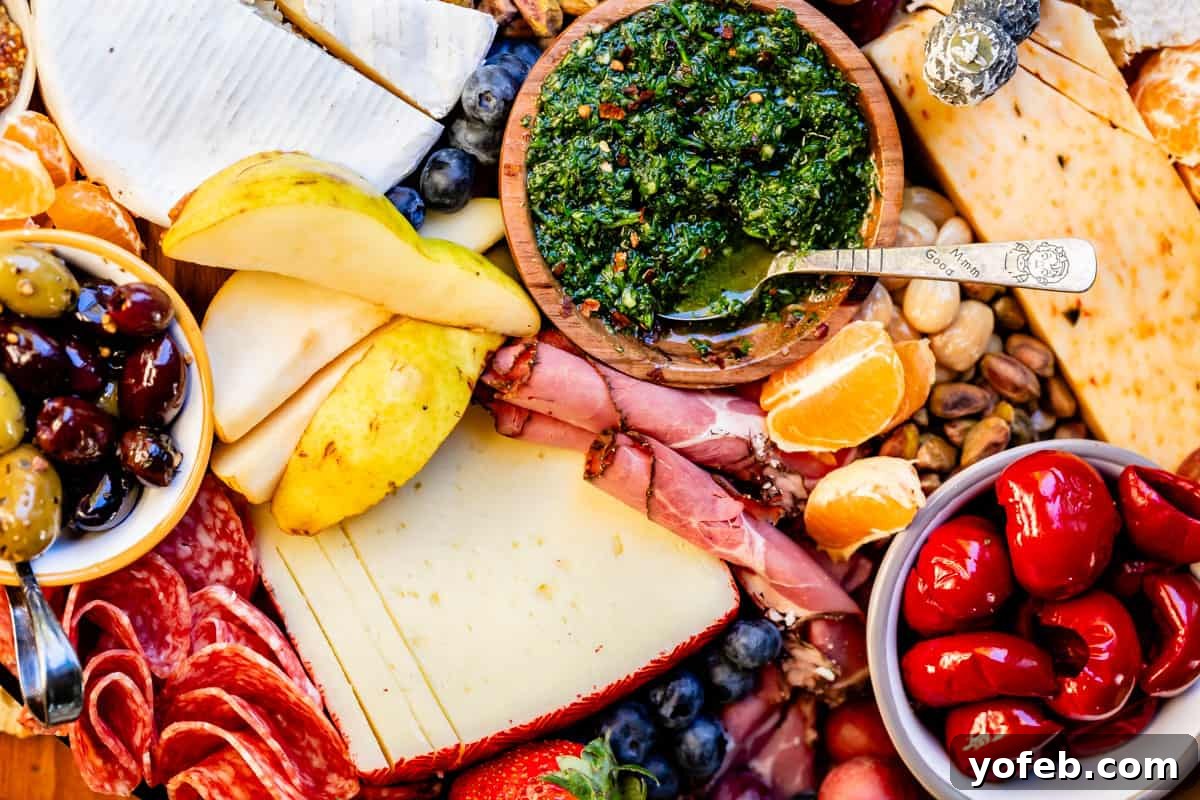
Achieving Variety for the Best Charcuterie Board
The secret to a truly outstanding charcuterie board lies in providing a thoughtfully curated assortment of options. This diversity encourages guests to mix and match, creating an endless array of delicious flavor combinations. Here are some key tips to ensure your board offers the ultimate variety:
- Offer Diverse Dippers: Don’t limit yourself to just one type of cracker. Provide a few different varieties of crackers and sliced bread. Consider textures like crispy, buttery, and seeded. Aim for bite-sized options to make snacking easy and elegant, minimizing the need for plates (unless you prefer to offer them).
- Prioritize Texture Contrast: Beyond flavor, texture is paramount. Include a range of ingredients that offer crispy crunch, creamy softness, and satisfying chewiness. This textural interplay makes each bite more interesting and keeps guests coming back for more.
- Balance Flavors: A great board includes a balance of tastes. Feature something spicy or pungent (like a zesty olive or a sharp cheddar), something sweet (like fig jam or fresh berries), something salty (cured meats, certain nuts), and something acidic (pickled vegetables, citrus). This balance ensures there’s a flavor profile for every palate.
- Serve Cheese at Room Temperature: This simple tip makes a significant difference in flavor. Cold cheese tends to be muted in taste and harder in texture. For the most flavorful and enjoyable experience, remove your cheeses from the refrigerator about 30 minutes to an hour before serving. This allows them to soften slightly and their full aromatic complexity to develop.
Shopping Smart for Your Charcuterie Ingredients
The quality of your ingredients significantly impacts the overall appeal and taste of your charcuterie board. While you don’t need to break the bank, choosing the right stores makes a big difference. This is not the time for budget bin shopping!
- Seek Out Quality Grocery Stores: Aim to do your shopping at a grocery store that is known for its gourmet section, ideally one with a dedicated olive bar. An olive bar, for those unfamiliar, is a self-serve station offering a vibrant selection of olives, marinated vegetables, and other pickled delights, all sold by weight. These fresh, high-quality ingredients are perfect for adding unique flavors and visual appeal to your board. You’ll always find something excellent to enhance your spread there.
- Strategic Board Assembly: Here’s a somewhat unconventional but highly effective tip: try to build your board when you have some undisturbed time. My family, bless their hearts, transforms into a flock of vultures whenever I attempt to assemble a charcuterie board. They hover with such excitement that ingredients start disappearing before the board is even half-complete! It’s endearing, but it makes thoughtful placement and aesthetic decisions much harder. A calm environment allows for more deliberate and beautiful arrangement, ensuring all your chosen elements make it onto the board as intended.
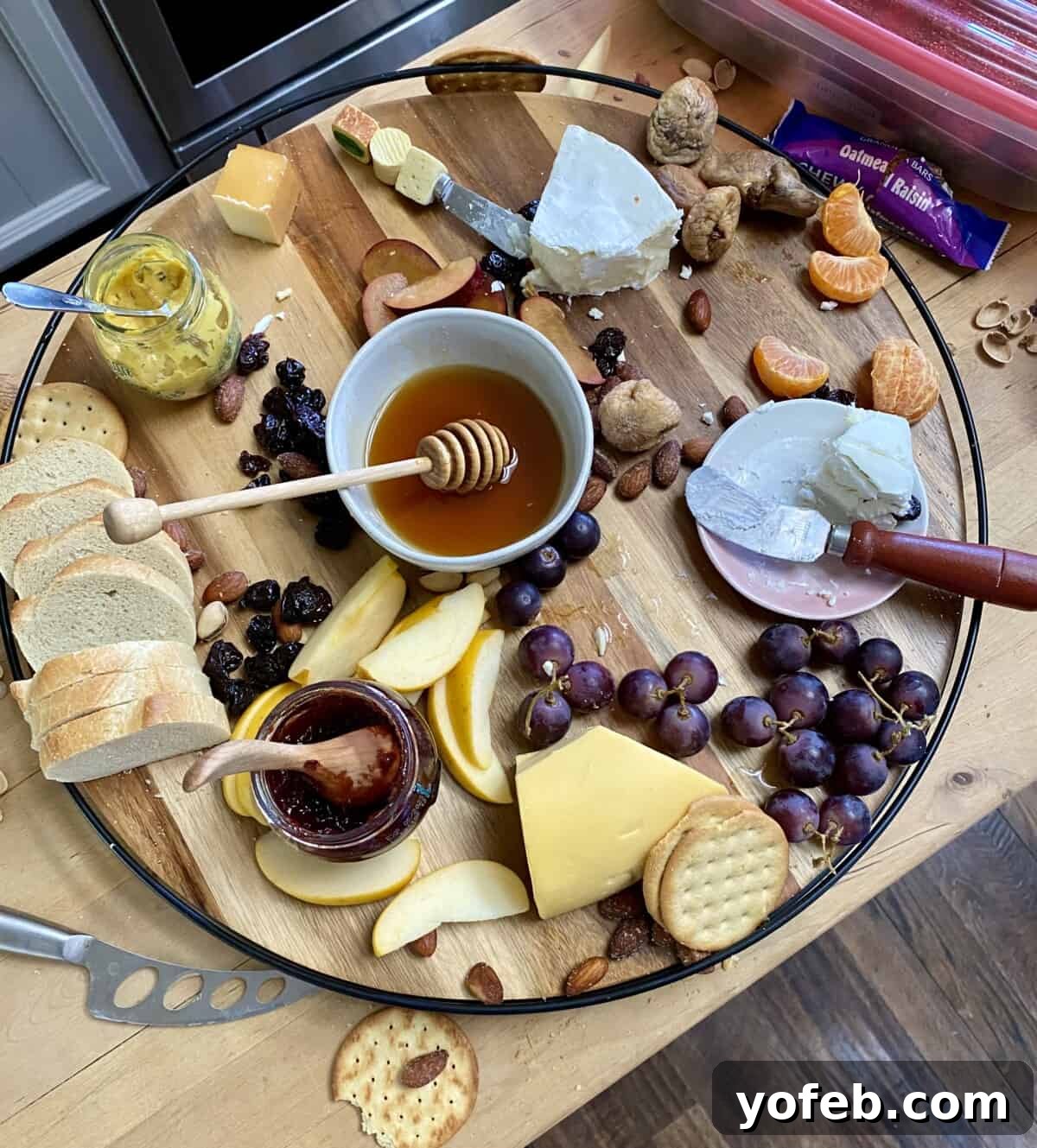
This board from a few years ago was decimated before I could even finish making it pretty. Kids will be kids!
Preventing Soggy Bread and Crackers on Your Charcuterie Board
One of the most common charcuterie mishaps is discovering that your once-crisp crackers and bread have turned soggy from contact with honey, olive oil, or juicy fruits. This is a legitimate concern that can detract from the overall experience. To combat this, strategic placement is key:
When arranging your board, place crackers and bread in neat piles or rows, ensuring they are not directly touching any moist ingredients. Create small barriers with drier items, or use mini bowls for anything wet. However, to be completely honest, these days I often opt not to place the bread and crackers directly on the main board at all.
Instead, I prefer to serve them in separate baskets or attractive bowls positioned nearby. While this might deviate from some Instagram-perfect aesthetics, it’s a highly practical solution to avoid annoying soggy dippers. Sometimes, I even dedicate an entire second board solely to an artful arrangement of various breads and crackers, keeping all the dry elements separate and pristine. This ensures every bite remains as intended: crisp, delicious, and perfectly paired.
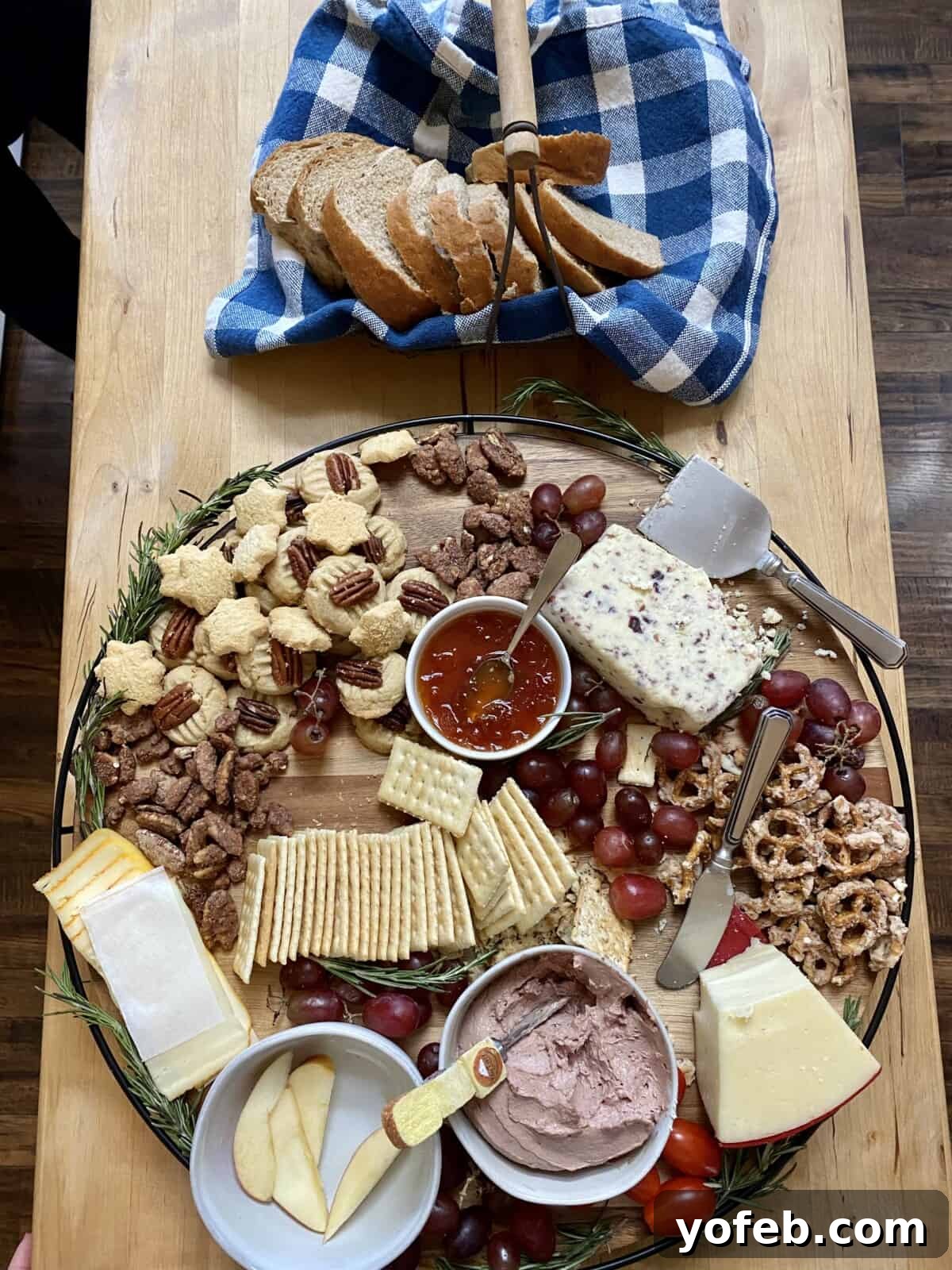
My Christmas Eve board from a few years ago, showcasing rye bread served in a separate bowl. The pink item in a bowl is Liver Pate, a traditional Swedish spread my husband’s family enjoys with rye bread and Swedish Meatballs. (The rye bread recipe will be shared on the blog later in December; I’ve been meaning to post it for years! The Butter Pecan Cookies are in the top left.)
How Much Cheese Per Person on a Charcuterie Board?
Determining the right quantity of cheese is crucial for a successful board. As a general guideline, if your charcuterie board is served as an appetizer, plan for approximately 2 ounces of cheese per person. If the board is intended to be a lighter meal or the main course, increase that amount to 3-4 ounces per person. Here’s a more specific breakdown:
Cheese per Person for a Board Serving 3-5 People (as an appetizer)
- 3 to 4 ounces of hard cheese (total for the board)
- 3 to 4 ounces of soft cheese (total for the board)
- 3 to 4 ounces of tangy cheese (total for the board)
Cheese per Person for a Board Serving 6-8 People (as an appetizer)
- 5 to 6 ounces of hard cheese (total for the board)
- 5 to 6 ounces of soft cheese (total for the board)
- 5 to 6 ounces of tangy cheese (total for the board)
Cheese per Person for a Board Serving 10-15 People (as an appetizer)
- 10+ ounces of hard cheese (total for the board)
- 10+ ounces of soft cheese (total for the board)
- 10+ ounces of tangy cheese (total for the board)
Exploring Types of Cheeses for Your Board
When selecting cheeses for your charcuterie board, I always recommend choosing at least one hard cheese, one soft cheese, and one tangy cheese (often goat cheese). This combination ensures a diverse flavor and texture experience for your guests. If you’re hosting a larger group, feel free to add more varieties from these categories. Here’s a deeper dive into each type:
Hard / Firm Cheese Ideas
Hard cheeses are typically aged longer, resulting in a drier, often crumbly texture and intense, complex flavors. They are excellent for shaving or breaking into shards. Examples include: Parmigiano-Reggiano (nutty, salty), aged Gouda (caramel-like, rich), Asiago (sharp, nutty), well-aged Cheddar (pungent, sharp), and Gruyère (nutty, earthy with a slightly sweet finish).
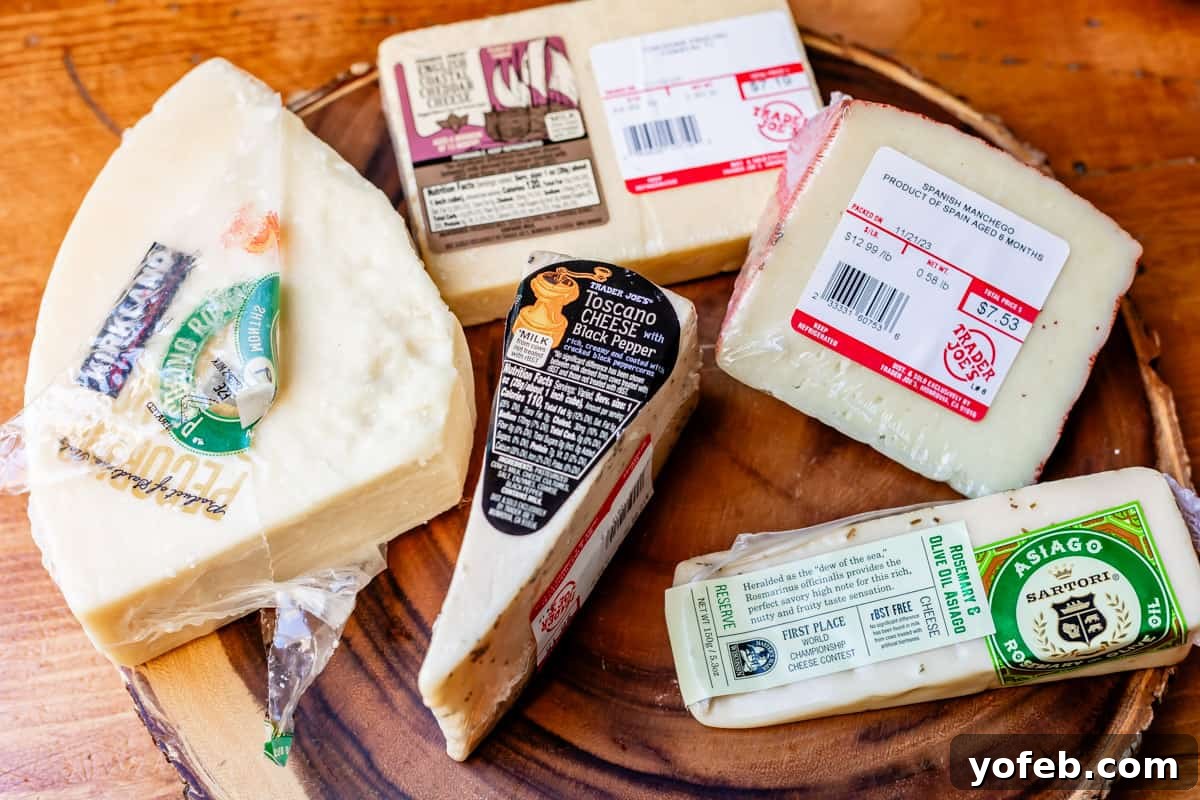
When you cut into a very hard cheese like Parmigiano-Reggiano or Pecorino, it often crumbles beautifully, making it easy to portion and enjoy.
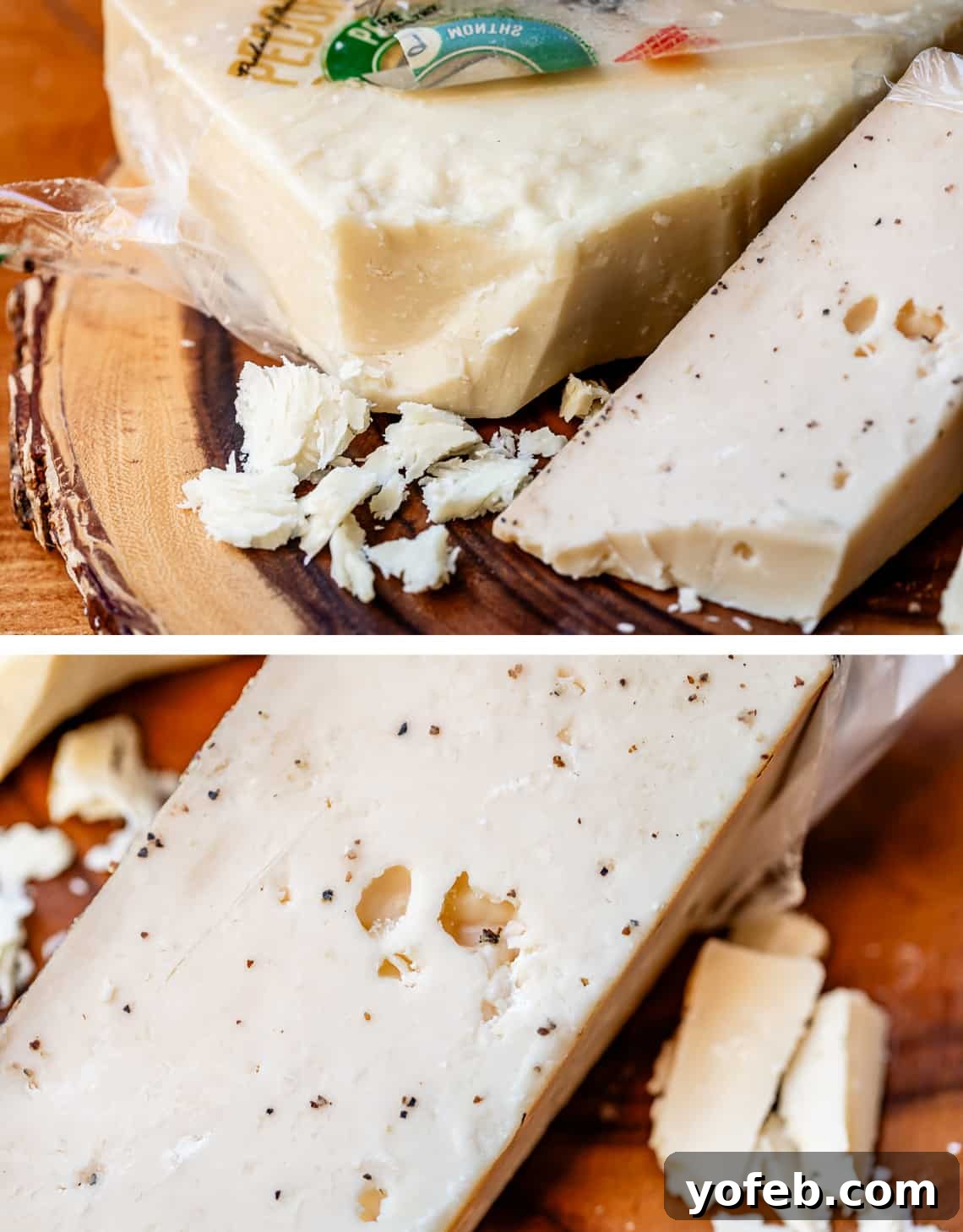
If you examine this Pecorino Toscano closely, you’ll notice small white specks—these are Tyrosine crystals. They develop as cheese ages and are a hallmark of a well-aged, flavorful, hard cheese, offering a delightful crunch and concentrated umami flavor. Their presence signifies a high-quality, mature cheese.
Semi-Soft or “Firm” Cheese Ideas
Semi-soft or firm cheeses strike a balance between hard and soft varieties. They are generally pliable, sliceable, and melt well, offering a smooth texture and often milder, approachable flavors that appeal to a wide audience. Examples include: Havarti (buttery, slightly tangy, often with dill or caraway), medium-aged Cheddar (less sharp than aged, still distinct), Muenster (mild, savory, with a distinctive orange rind), Fontina (nutty, earthy, and very creamy when melted), younger Gouda (milder, sweeter than aged Gouda), Comté (nutty, fruity, similar to Gruyère), Manchego (my personal favorite – a sheep’s milk cheese from Spain, buttery, slightly briny, and distinctively nutty), and Colby (mild, moist, and firm).
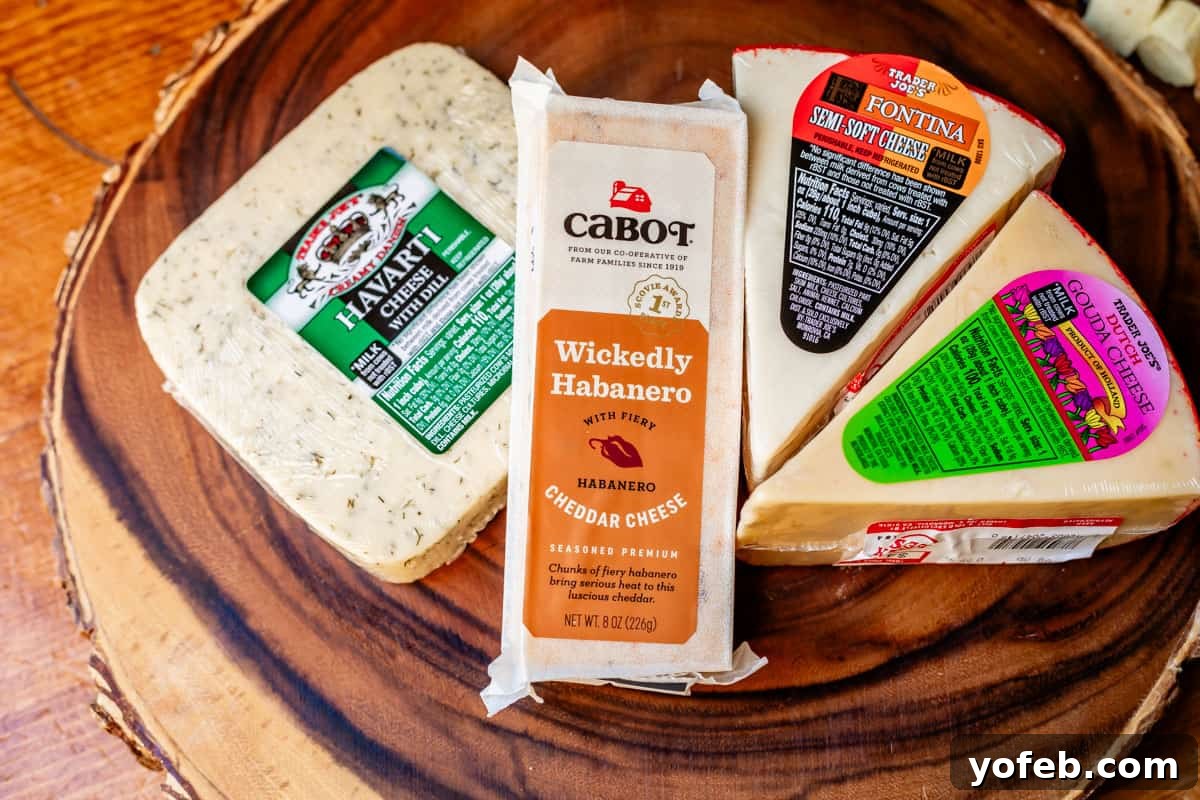
These cheeses are not as spreadable as a soft Brie, nor do they crumble quite like a Parmesan. They fall comfortably in the middle, offering a pleasant firmness that holds its shape when sliced. A simple trick to gauge a cheese’s texture is to give it a gentle squeeze. Does it yield slightly but hold together like the cheddar you put on your sandwich? Then it’s likely a firm or semi-soft cheese. This hands-on approach can quickly help you identify the right category.
Soft Cheese Selections
Soft cheeses are characterized by their creamy, often spreadable texture and generally mild, buttery flavors. They are perfect for slathering on crackers or baguettes, adding a luxurious richness to each bite. Examples include: Brie (famous for its rich, buttery interior and bloomy rind, often labeled “Triple Cream” or “Double Cream” for extra richness), Boursin (a flavored cream cheese, often with garlic and herbs, wonderfully spreadable), Burrata (an outer shell of mozzarella filled with soft stracciatella and cream, incredibly decadent), Mascarpone (a rich, Italian cream cheese), Stracchino (a fresh, soft, and very creamy Italian cheese), Cream Cheese (versatile and widely loved), fresh Goat Cheese (tangy, crumbly, and spreadable), Ricotta Cheese (light, fluffy, and slightly sweet), and Camembert (similar to Brie but often with a more robust, earthy flavor).
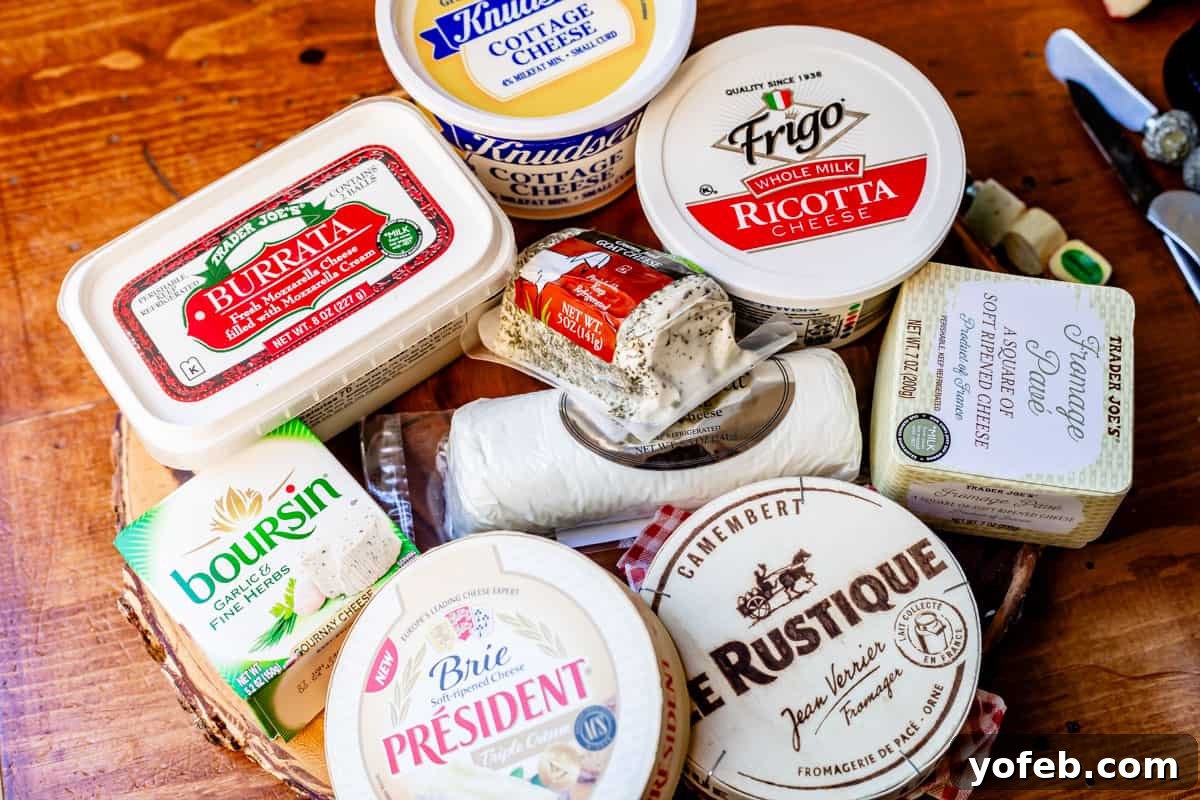
Ricotta, cottage cheese, and cream cheese are excellent choices if some of your guests, especially children or less adventurous adults, might be hesitant about more exotic soft cheeses. These are mild, approachable, and still fantastic for spreading on crackers. You can easily elevate them by sprinkling with a pinch of salt and pepper, or by whipping them slightly and drizzling with high-quality olive oil for an extra touch of sophistication.
“Stinky” Cheese: Bold Flavors
“Stinky” cheeses, often referred to as blue cheeses or washed-rind cheeses, are known for their strong aromas and distinctive, pungent flavors. Their texture can vary from soft and creamy to crumbly and firm, but their bold character sets them apart. These cheeses are typically a “love it or hate it” category, but for those who love them, they add an unparalleled depth to a charcuterie board.
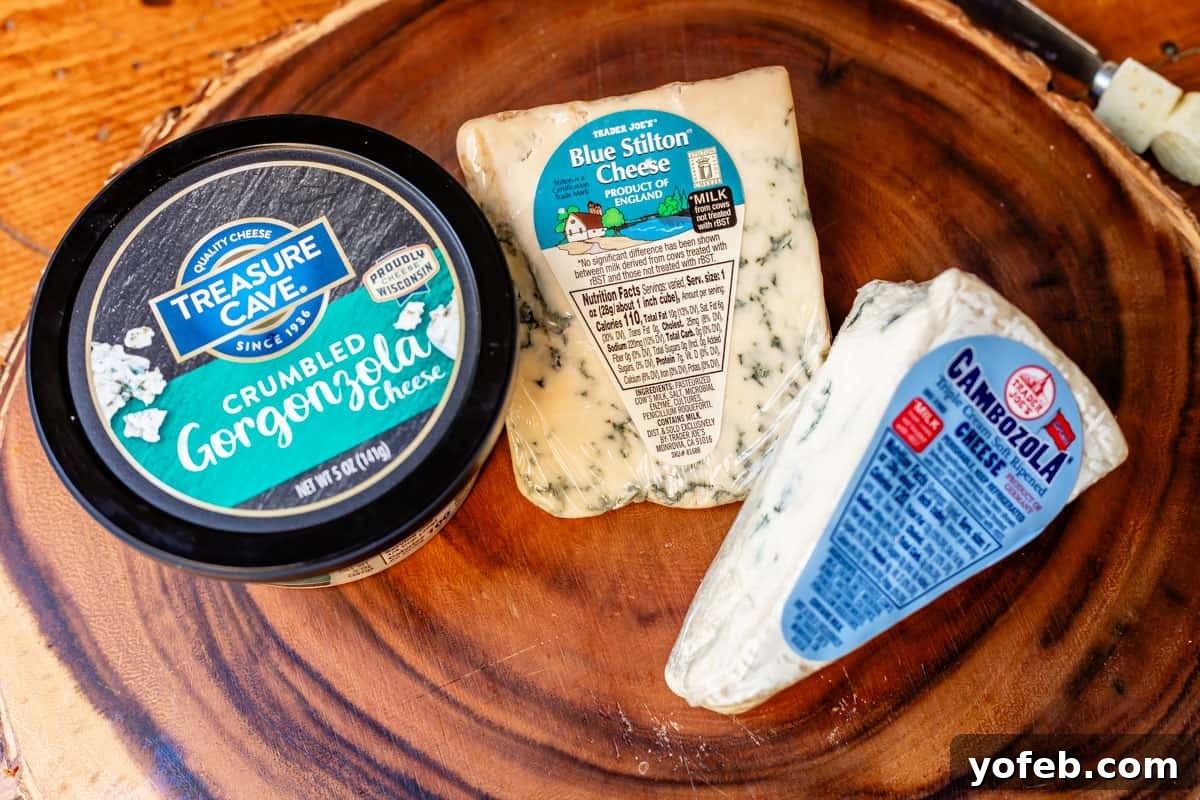
Examples of stinky cheeses include: various types of Blue cheese (characterized by blue-green mold veins and a sharp, salty flavor), Gorgonzola (a creamy, piquant Italian blue cheese), Dunbarton Blue (a Wisconsin original, a cheddar-like cheese with subtle blue veins), Marbled Blue Jack (a milder blue cheese option), and certain varieties of Goat Cheese. While goat cheese is physically soft and spreadable, its distinct tangy and often “goaty” flavor profile places it in this category for me, as it serves a similar purpose to blue cheese in providing a potent, contrasting taste experience on the board.
Selecting Meats for Your Charcuterie Board
Choosing the right cured meats for your charcuterie board can significantly enhance its savory profile. While the options are seemingly endless, I advocate for keeping it simple and selecting what you genuinely enjoy. Focus on variety in flavor and texture, from spicy to mild, and smooth to marbled. My personal favorites, which are always a hit, include:
- Thinly Sliced Pastrami or Black Forest Ham: These deli staples offer familiar and comforting flavors, perfect for guests who prefer less adventurous options.
- Genoa Salami or Peppered Salami: Classic choices that provide a robust, savory flavor with a pleasant chew. Peppered varieties add a subtle spice.
- Soppressata: Similar in texture and often in flavor to salami, soppressata tends to be a bit coarser and can range from sweet to spicy depending on the region.
- Calabrese Salami: For those who appreciate a kick, Calabrese salami is a spicy, flavorful option that adds excitement to the board.
- Prosciutto: This delicate, thinly sliced, salt-cured ham from Italy is a staple for its melt-in-your-mouth texture and sweet, salty flavor.
- Chorizo: A highly seasoned, often spicy, cured sausage from Spain or Portugal, bringing bold flavors and a distinctive red hue.
- Mortadella: A large Italian sausage, characterized by its smooth texture and distinctive flavor, often studded with pistachios.
- Any Type of Cured Sausage: Explore your deli’s selection for unique cured sausages that catch your eye – variety is key!
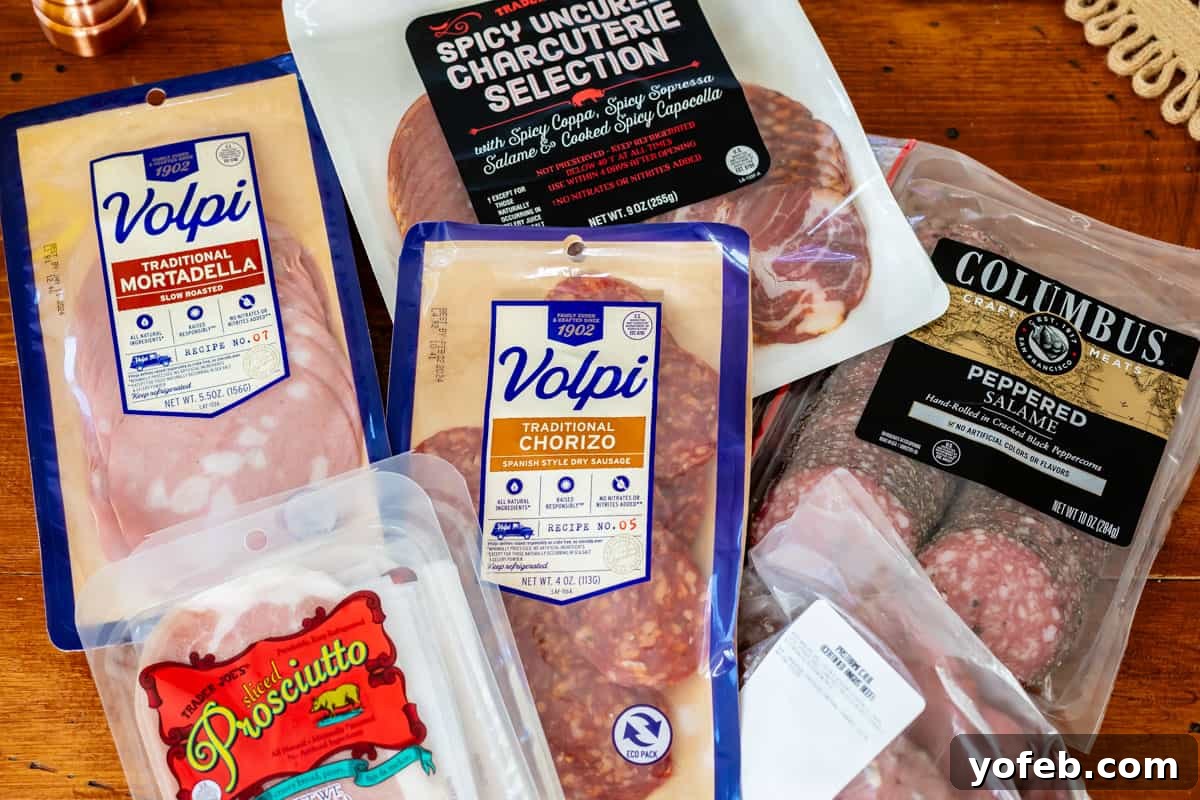
If you’re shopping at a well-stocked grocery store, you’ll often find pre-packaged assortments of cured meats specifically designed for charcuterie. These curated selections are incredibly convenient, ensuring you get a good variety of flavors and textures without the risk of accidentally buying three meats that all taste the same.
How Much Meat Per Person on a Charcuterie Board?
Similar to cheese, the amount of meat you need depends on whether your charcuterie board is an appetizer or a light meal. For an appetizer, aim for approximately 1-2 ounces of meat per person. If it’s intended to be more substantial, you might increase this to 3 ounces. Here’s a basic guide:
Meat per Person for 3-5 People (as an appetizer)
- 3 to 4 ounces of Genoa salami or Soppressata (a savory, classic option)
- 3 to 4 ounces of Prosciutto, Mortadella, or Pancetta (delicate, melt-in-your-mouth textures)
- 3 to 4 ounces of spicy meat like Chorizo or Spicy Coppa (for a bold, fiery kick)
Meat per Person for 6-8 People (as an appetizer)
- 5 to 6 ounces of Genoa salami or Soppressata
- 5 to 6 ounces of Prosciutto, Mortadella, or Pancetta
- 5 to 6 ounces of spicy meat like Chorizo or Spicy Coppa
Meat per Person for 10-15 People (as an appetizer)
- 10+ ounces of Genoa salami or Soppressata
- 10+ ounces of Prosciutto, Mortadella, or Pancetta
- 10+ ounces of spicy meat like Chorizo or Spicy Coppa
Charcuterie Board Ingredient List
The beauty of a charcuterie board lies in its endless customization. While the sky is truly the limit, the sheer number of choices can sometimes feel overwhelming. To simplify the process, especially for beginners, I’ve compiled a list of my favorite ingredients and must-haves. Think of these as a fantastic starting point. The exact quantities and specific instructions are in the recipe card below, but remember, this is about creating a board that you love and that perfectly suits your event or guests. Feel free to use these as a guideline and swap items to fit your preferences!
- Brie (soft, creamy)
- White Cheddar (sharp, firm)
- Goat Cheese (tangy, crumbly)
- Manchego Cheese (nutty, semi-hard)
- Pesto (fresh, savory spread)
- Marinated Olives or Roasted Peppers (briny, savory accents)
- Fig Jam (sweet, fruity pairing)
- Pastrami (savory, deli-style meat)
- Peppered Salami (spicy, cured meat)
- Capicola (spicy, tender cured meat)
- Pears (fresh, crisp fruit)
- Pickles (acidic, crunchy complement)
- Tomatoes (fresh, juicy veggie)
- Blueberries (sweet, tart berries)
- Cutie Oranges (easy-to-peel citrus)
- Assorted Berries (strawberries, raspberries)
- Baguette (crusty bread)
- Almond Thins (delicate, nutty crackers)
- Club Crackers (buttery, classic crackers)
- Pretzel Crisps (salty, crunchy dippers)
- Honeycomb or Bowl of Honey (natural sweetness)
- Dried Apricots (chewy, sweet fruit)
- Rosemary Sprigs (aromatic garnish)
- Mustard (tangy, savory spread)
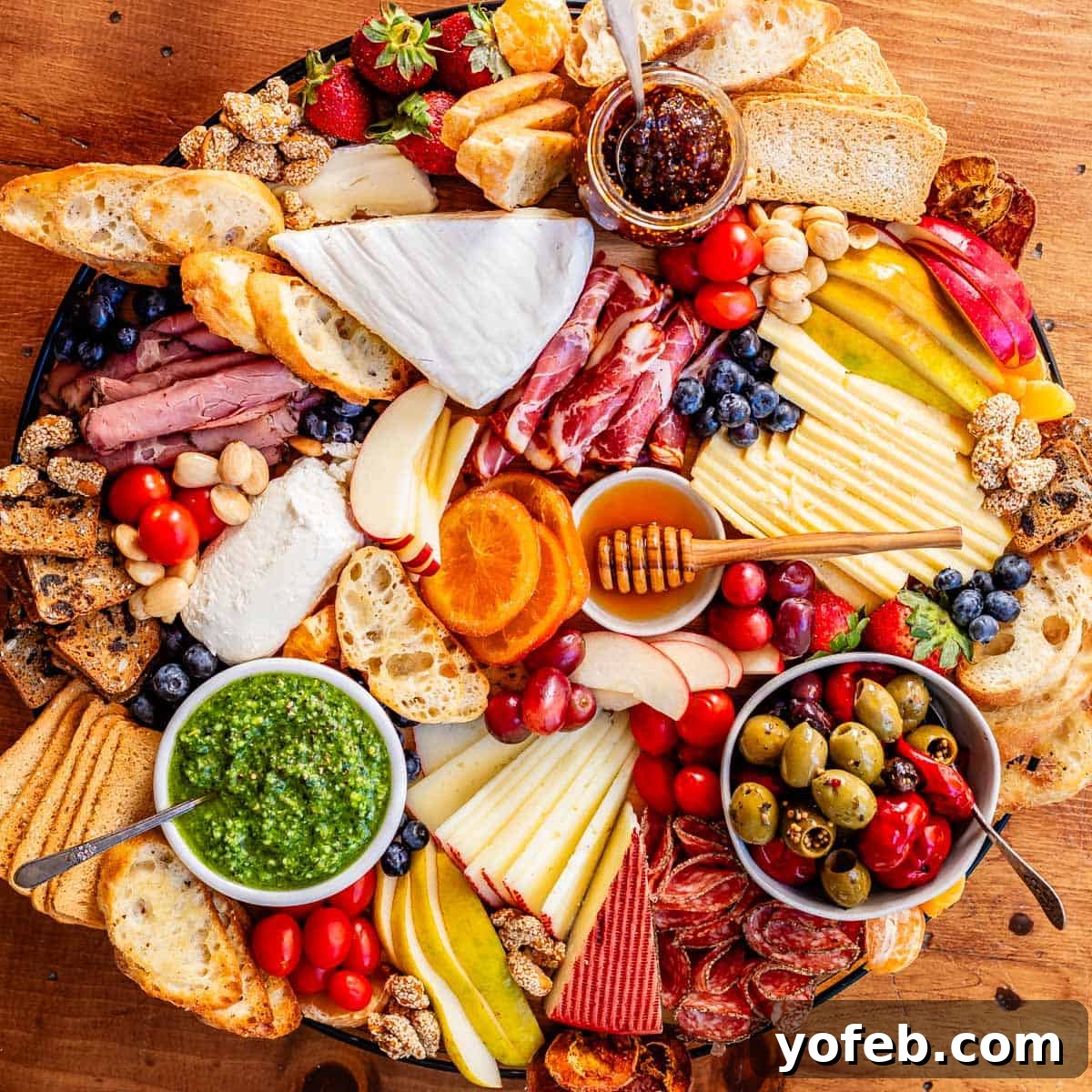
Step-by-Step: How to Make a Charcuterie Board
Creating a gorgeous charcuterie board is a simple process once you understand the basic order of assembly. This sequence helps you build a balanced and visually appealing spread. While the specific ingredients listed are suggestions, the method remains the same. More detailed arrangement tips follow in the next section.
- Strategically Place Cheeses: Begin by distributing your selected cheeses around the board. Place your Brie, white cheddar, Manchego, and goat cheese (or your chosen varieties) first, leaving ample space between them to act as anchors.
- Add “Anchor” Bowls or Jars: Next, introduce small bowls or jars for dips, spreads, and marinated items. For example, place one bowl of vibrant pesto, one bowl of marinated olives, and one jar of sweet fig jam. These containers help define spaces and add height.
- Arrange the Meats: Now, artfully arrange your cured meats. Roll or fold slices of pastrami, peppered salami, and Capicola (or your preferred meats) and nestle them around the cheeses and bowls. Don’t overthink the exact placement; you can adjust as you fill the board.
- Incorporate Fresh Fruits: Add fresh, colorful fruits to bring brightness and sweetness. Include a sliced pear, crisp apple slices (lightly coated with lemon juice to prevent browning), handfuls of blueberries and strawberries, and sections of cutie oranges.
- Introduce Veggies: Cherry tomatoes are a simple and effective addition, providing freshness and a pop of color. Other options include cucumber slices or baby carrots.
- Place Crackers and Bread Slices: Arrange your chosen crackers and bread. This could include toasted baguette slices, light Almond Thins, classic Club Crackers, and crunchy Pretzel Crisps. Remember to consider serving some off-board to prevent sogginess.
- Fill with Nuts, Dried Fruit, and Extra Spreads: Finally, fill in any remaining gaps with smaller items that add texture and flavor. Scatter pistachios or Marcona almonds, place dried figs or apricots in clusters, and add a tiny bowl of honey (with a dipper) for a sweet finish. Garnish with fresh herbs like rosemary for an aromatic touch.
How to Arrange a Charcuterie Board
A beautifully arranged charcuterie board is a feast for the eyes before it’s a feast for the palate. Follow these steps to create an appealing and cohesive display:
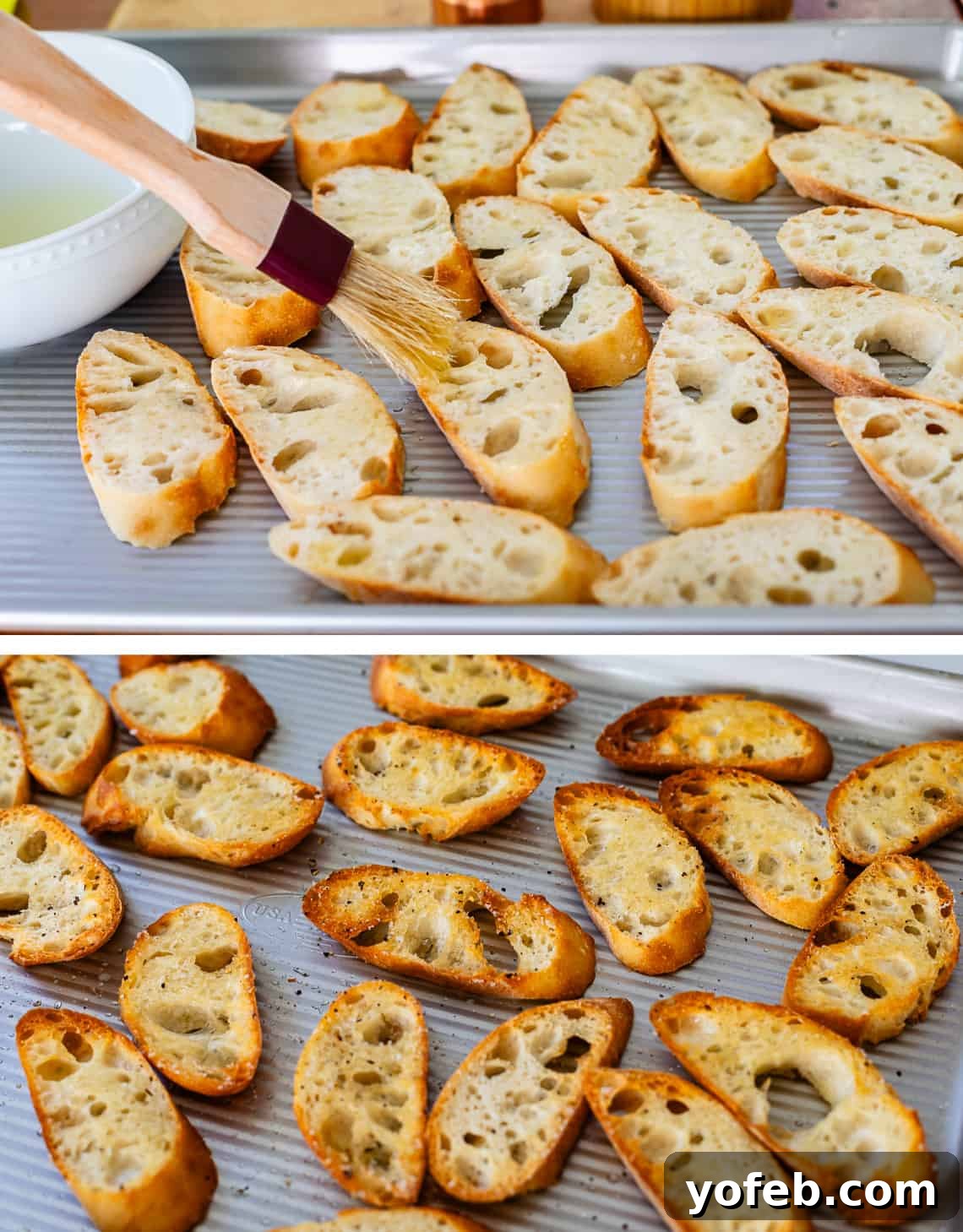
First, prepare your baguette. Toasting it lightly makes it perfect for dipping and topping. Slice your baguette on a bias for a more elegant presentation. Arrange the slices on a baking sheet, brush both sides with a touch of olive oil, and sprinkle with a pinch of salt and pepper. Toast in a preheated oven at 450°F (230°C) for about 5-6 minutes, or until just firm and lightly golden, but not overly browned. Remove from the oven and set aside to cool completely.
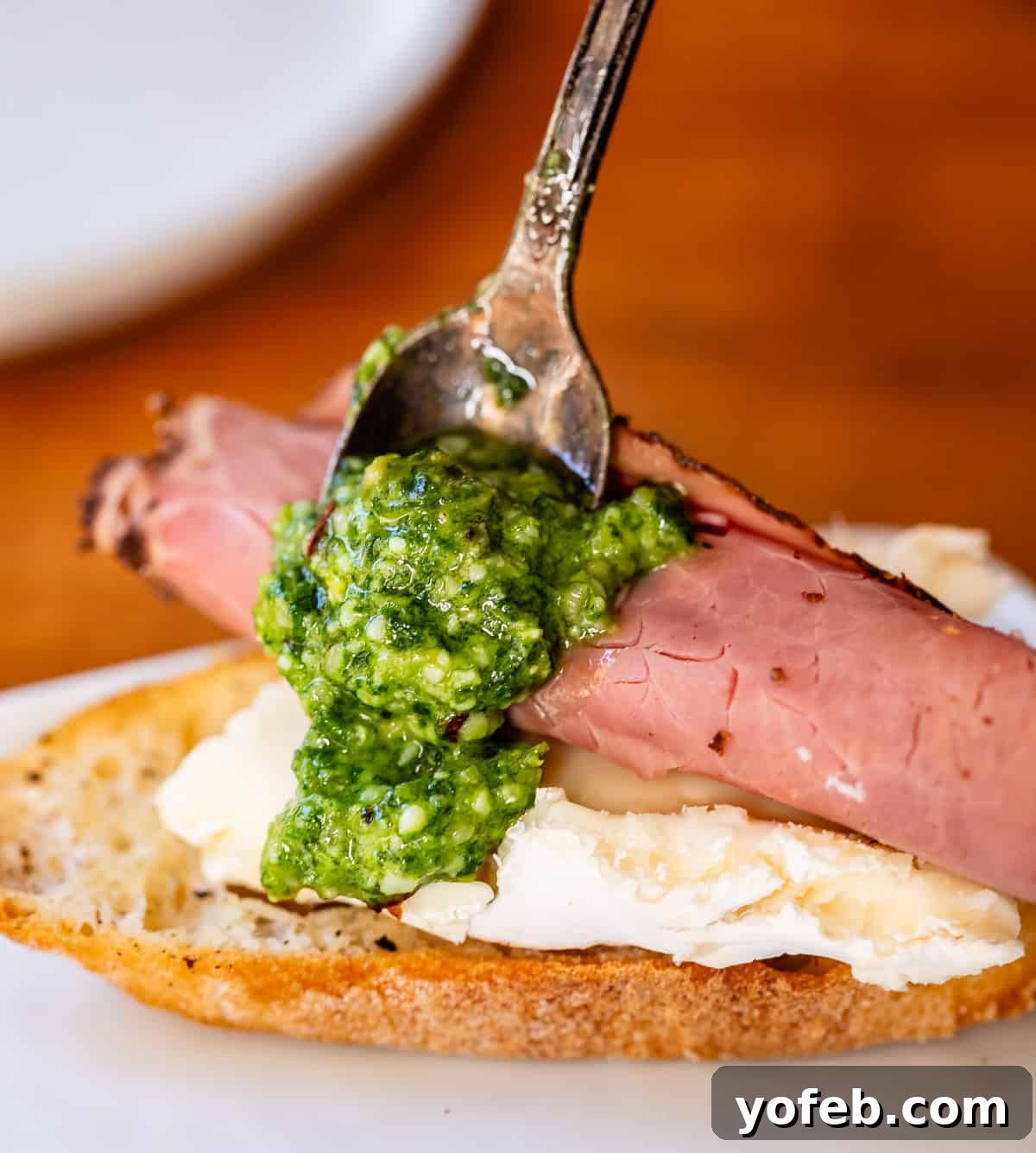
If homemade pesto is your savory spread of choice, prepare it now. It’s incredibly simple: just combine basil leaves, good olive oil, chunks of Parmigiano-Romano cheese, pine nuts, garlic cloves, kosher salt, and black pepper in a food processor. Pulse until blended but still slightly textured. This takes less than 5 minutes and adds a fresh, vibrant element.
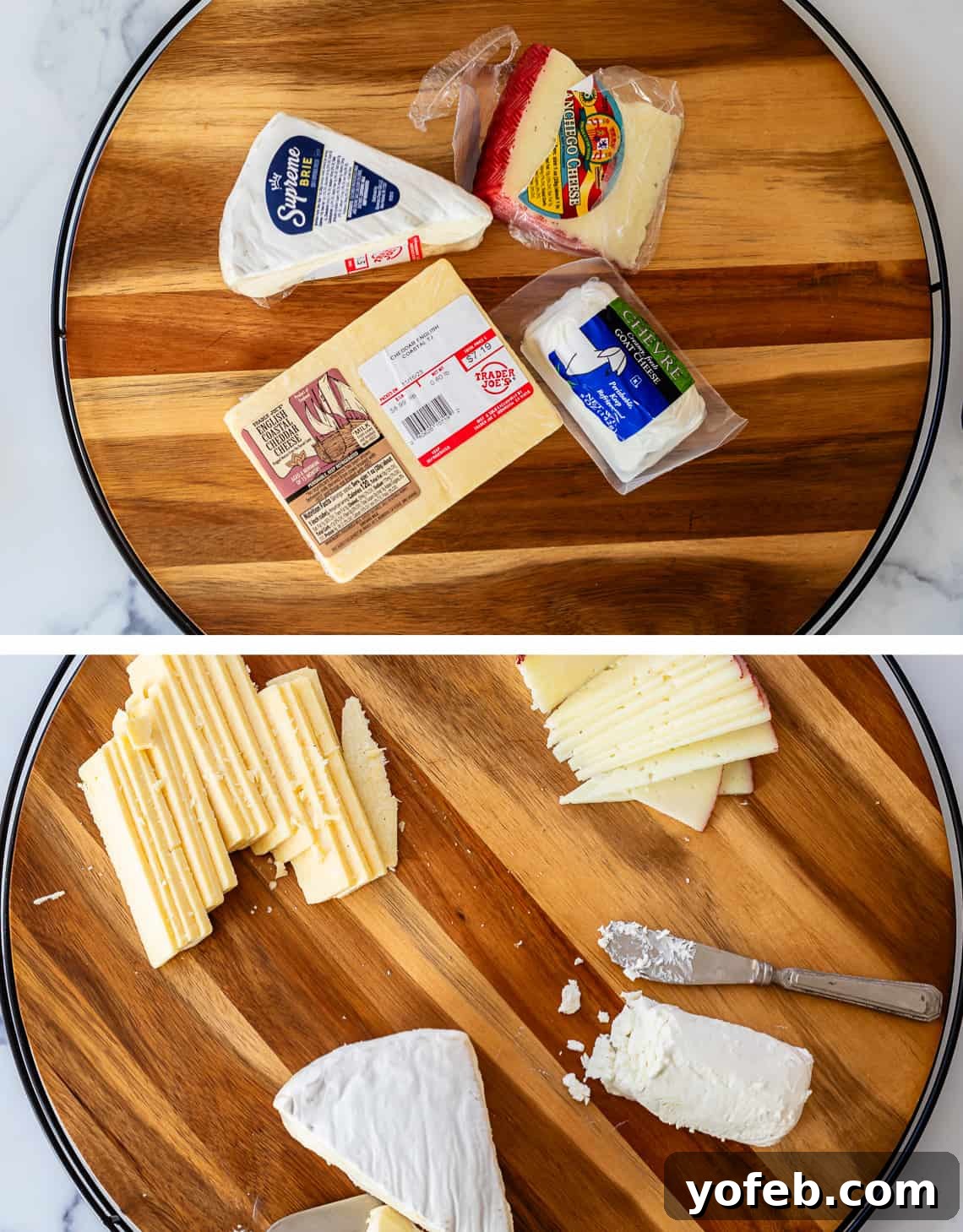
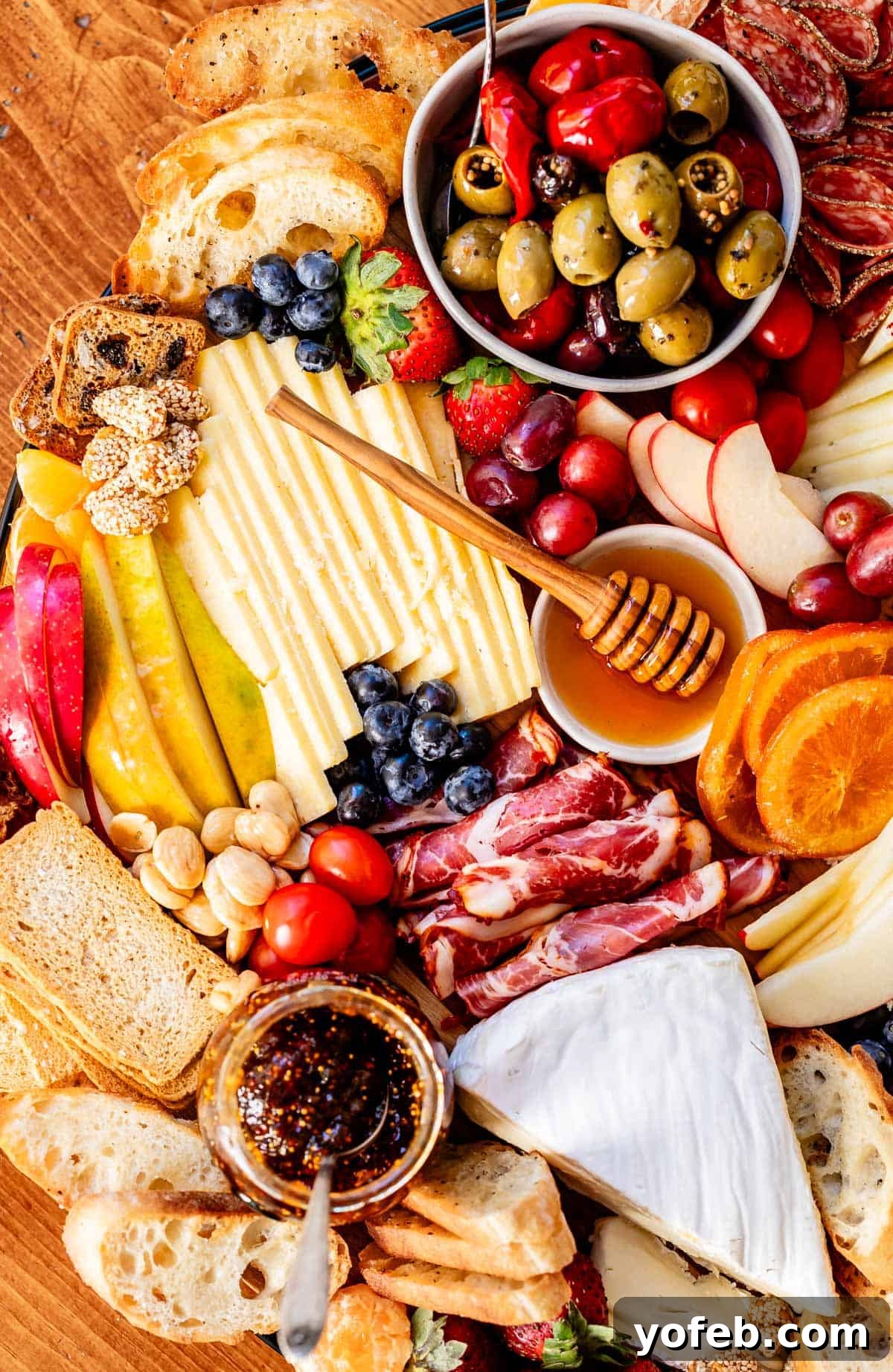
Now, it’s time to begin assembling your masterpiece! Start by placing your chosen cheeses on an 18-inch board (or whatever size you have). Distribute them evenly, creating visual anchors. If you plan to pre-slice the cheese for convenience, do it now while you still have plenty of space on the board. Alternatively, leaving whole blocks of cheese with appropriate knives allows guests to cut their own portions.
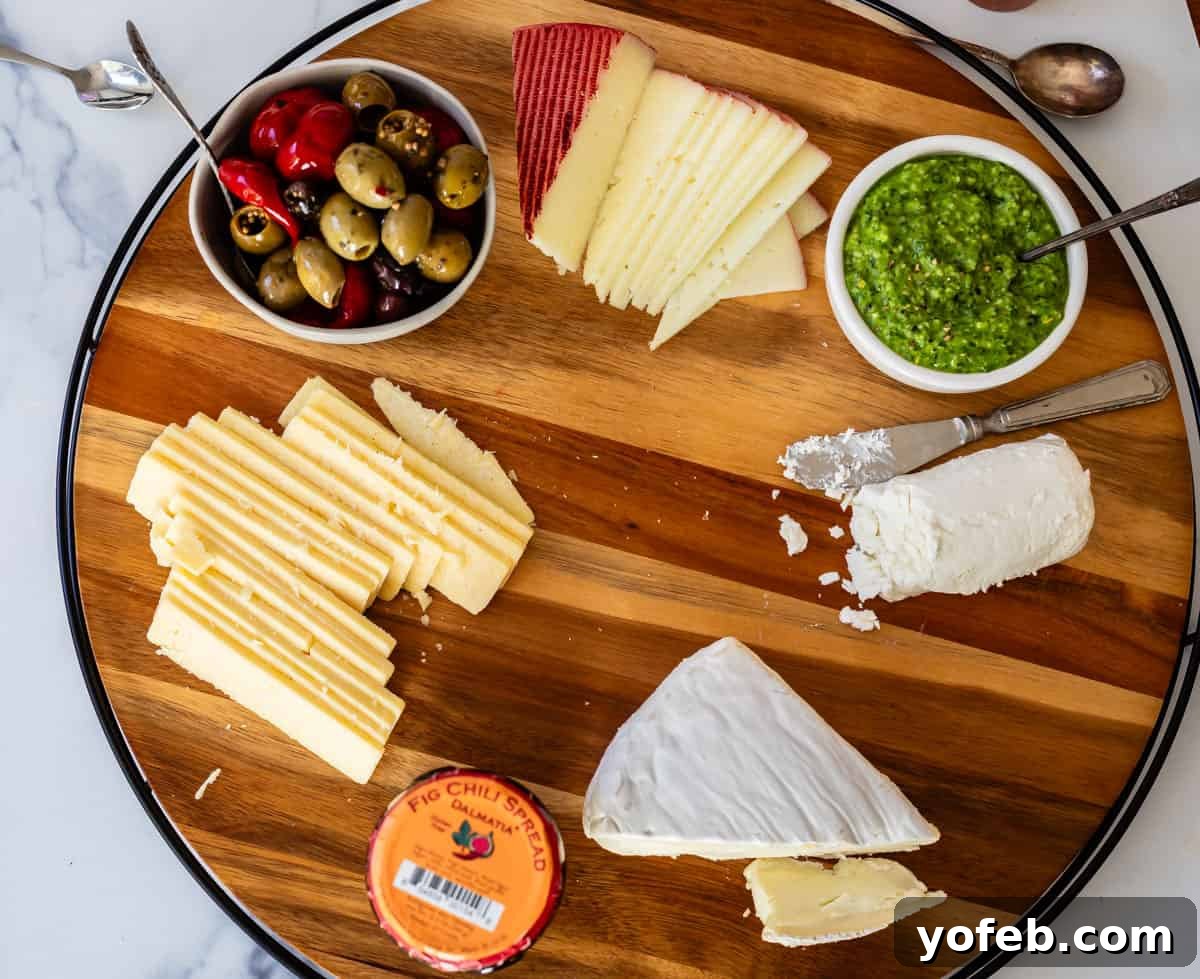
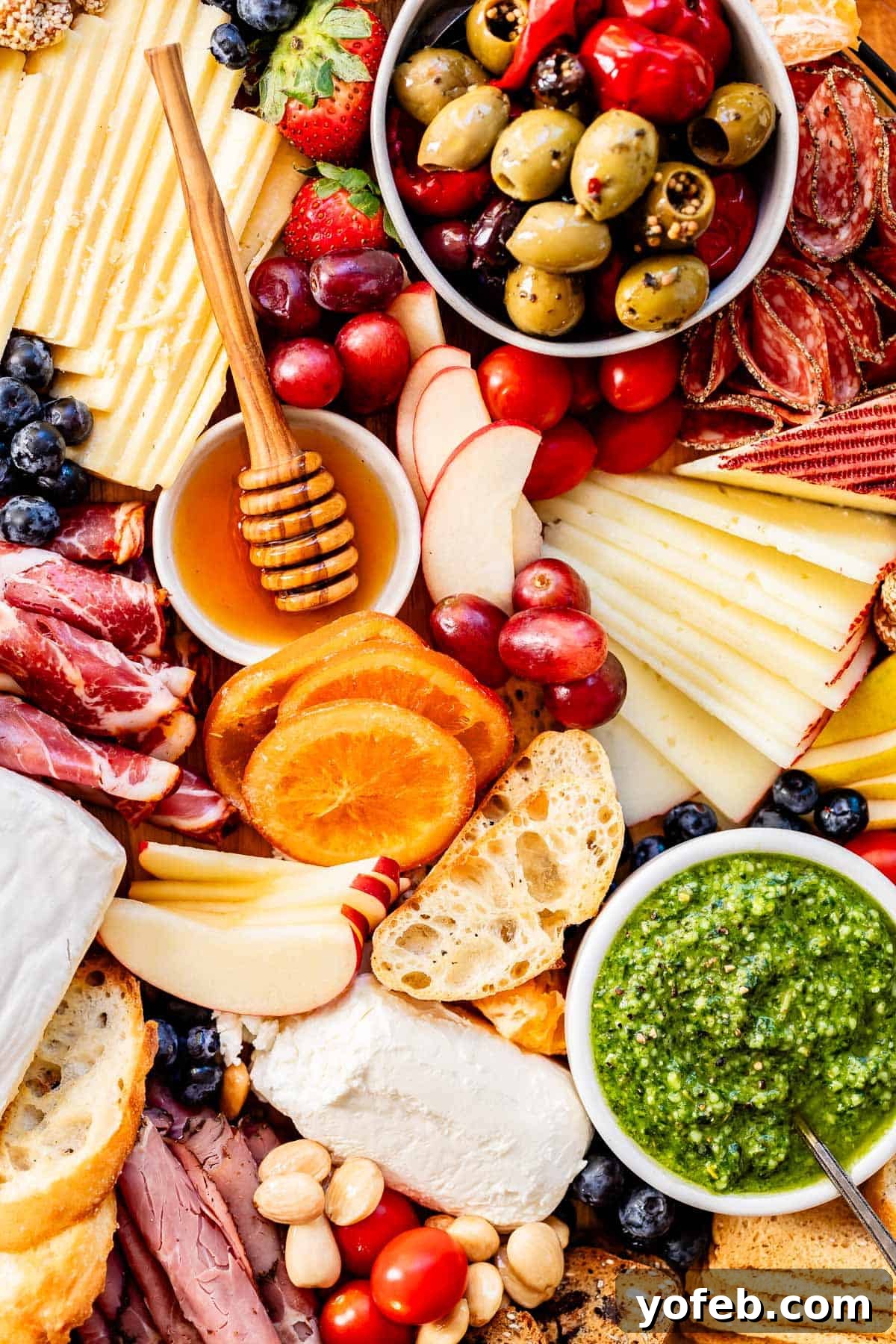
Next, introduce your “anchor” bowls. These small containers hold wet items and add varying heights to your board. For instance, place one jar of spicy fig jam, one small bowl of freshly made pesto, and one bowl of marinated olives. Remember to include small spoons or tongs for each of these items for easy serving.
Then comes the meat. Don’t get too stressed about precise placement at this stage. Simply “throw it on there” in attractive clusters wherever you see open spaces. You can always shuffle and adjust as you add more elements. For presentation, consider simple folding techniques:
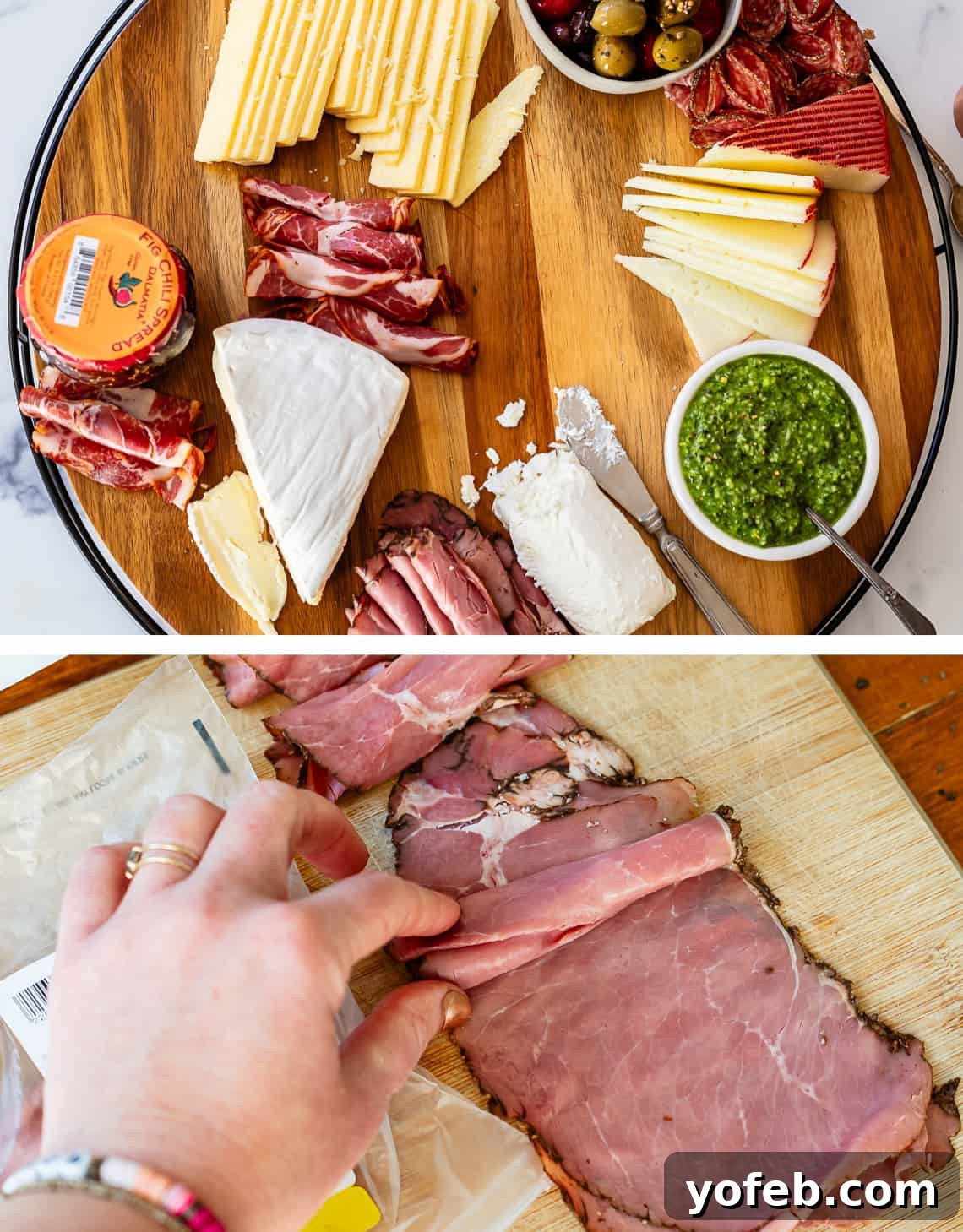
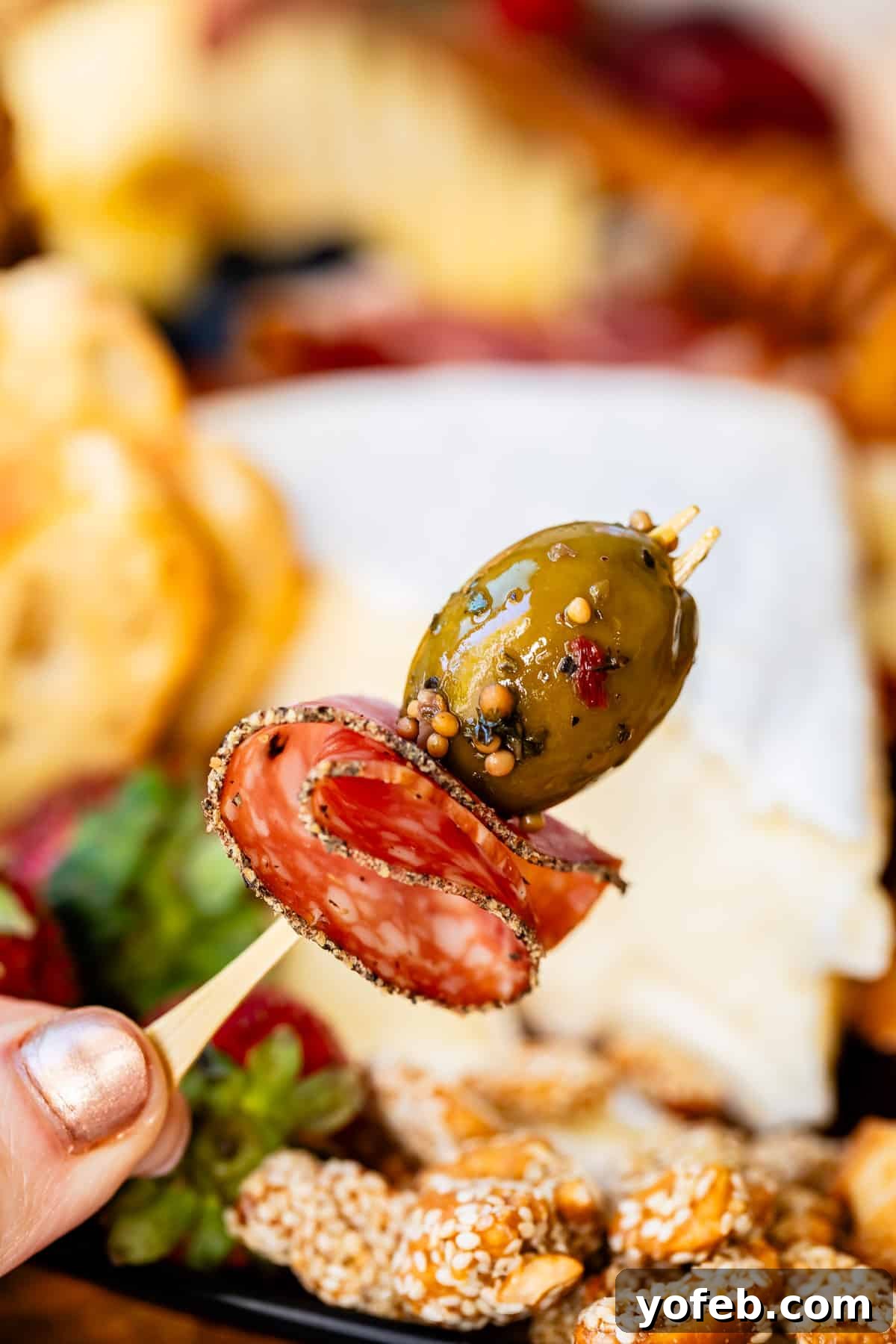
While elaborate meat folding techniques are trendy, simple methods are just as effective. You can roll thinly sliced meats like pastrami or prosciutto into cylinders. For salami, a quick and easy “flower” fold involves lightly folding a slice in half, then half again, and arranging these small quarters to create a textured, layered look. Don’t overcomplicate it!
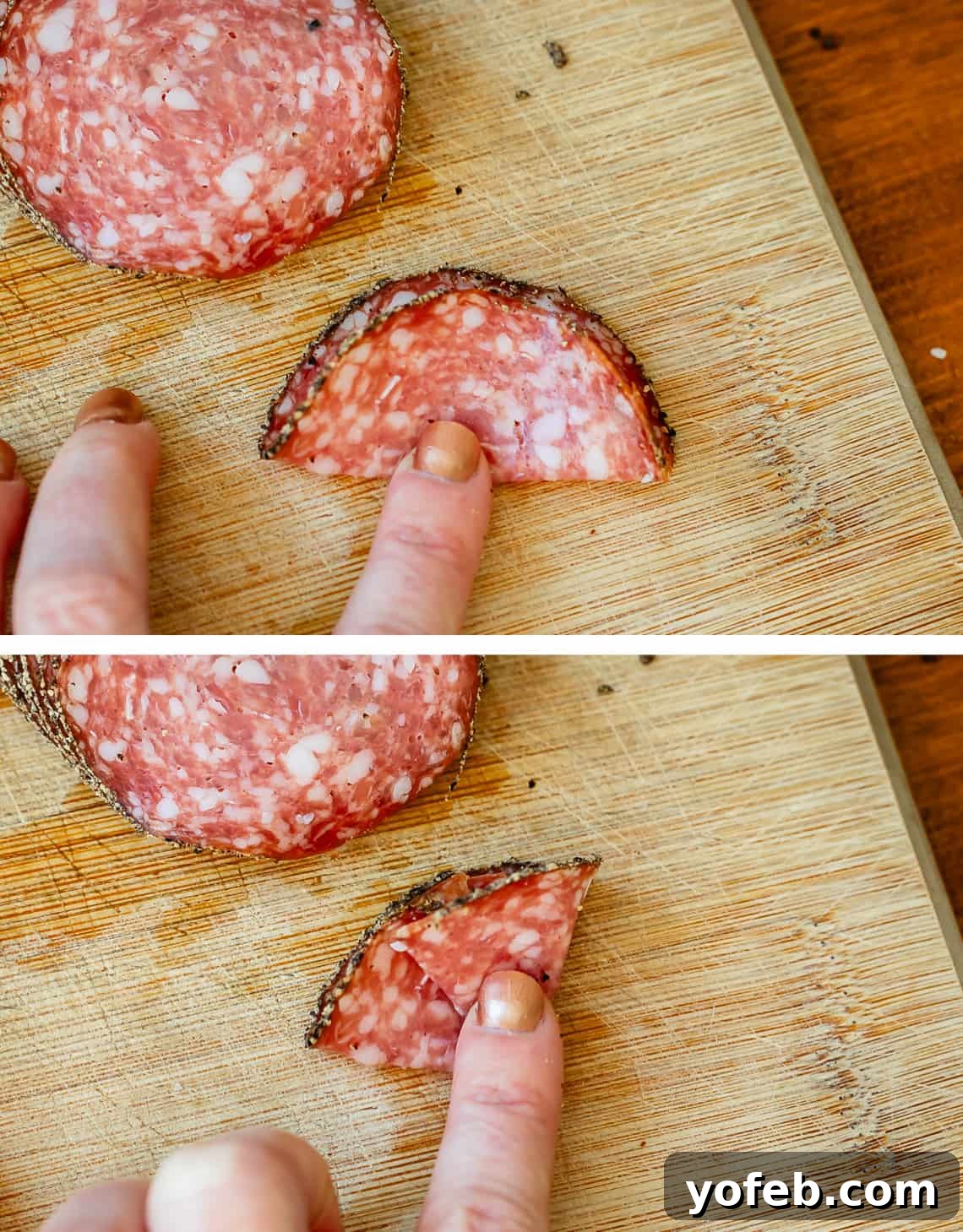
Simple folds still look fantastic and contribute to a visually rich board without adding unnecessary stress.
Now, if you choose to include bread and crackers directly on the board (a traditional approach), add them next, along with fresh fruits and vegetables. I love to offer a variety of crackers to cater to different tastes and textures. Delallo Sesame crackers are a personal favorite, and including something gourmet like Fig and Olive Crisps adds an extra touch of sophistication.
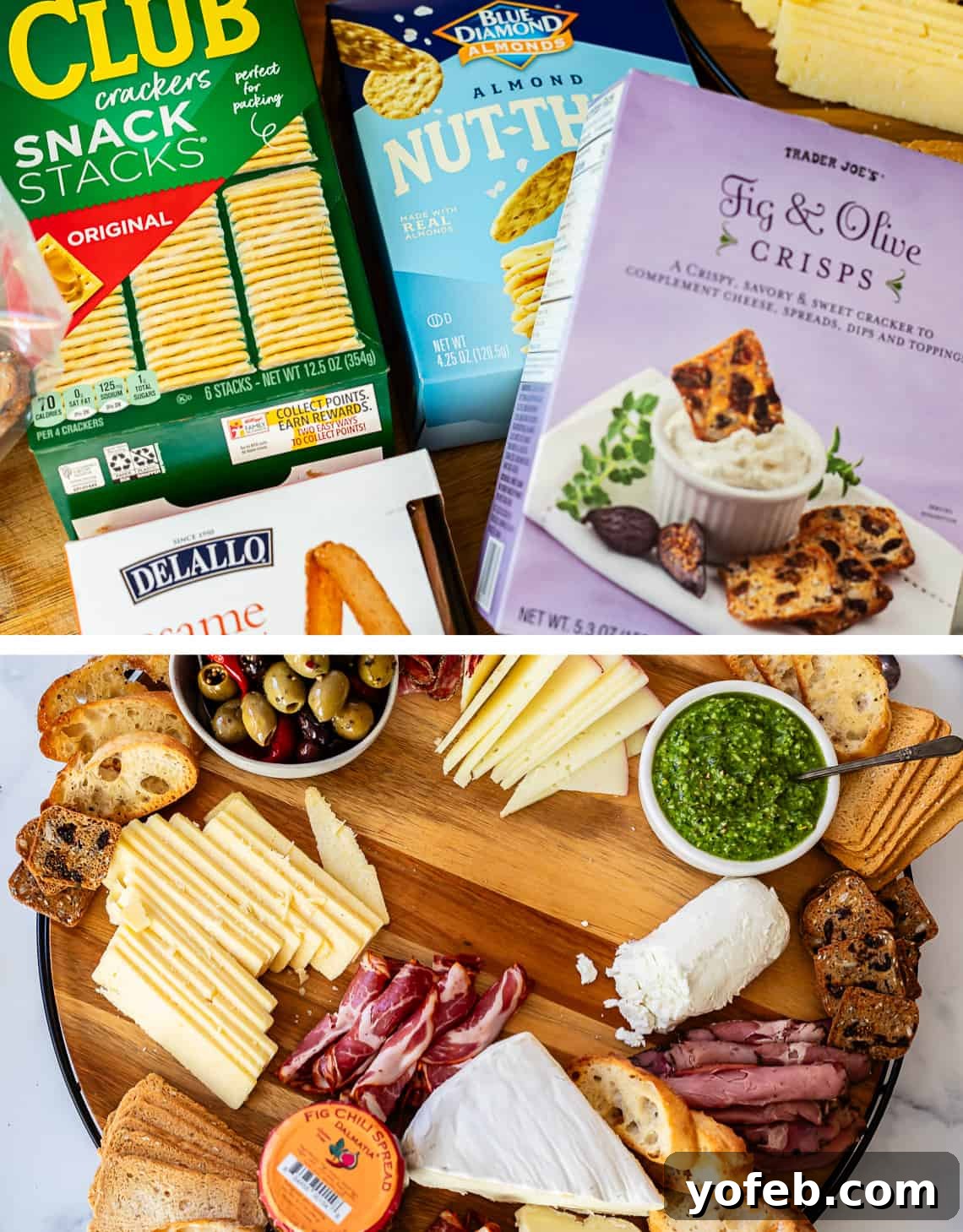
As mentioned earlier, I often prefer to keep my bread and crackers separate in their own bowls or on a designated platter to prevent them from becoming soggy.
Finally, fill in any remaining spaces with fruits, veggies, and smaller “filler” items like nuts. I particularly love those tiny 1-ounce jars of honey and jam often found in the deli section’s charcuterie display. They’re a brilliant way to introduce more variety without committing to large quantities.
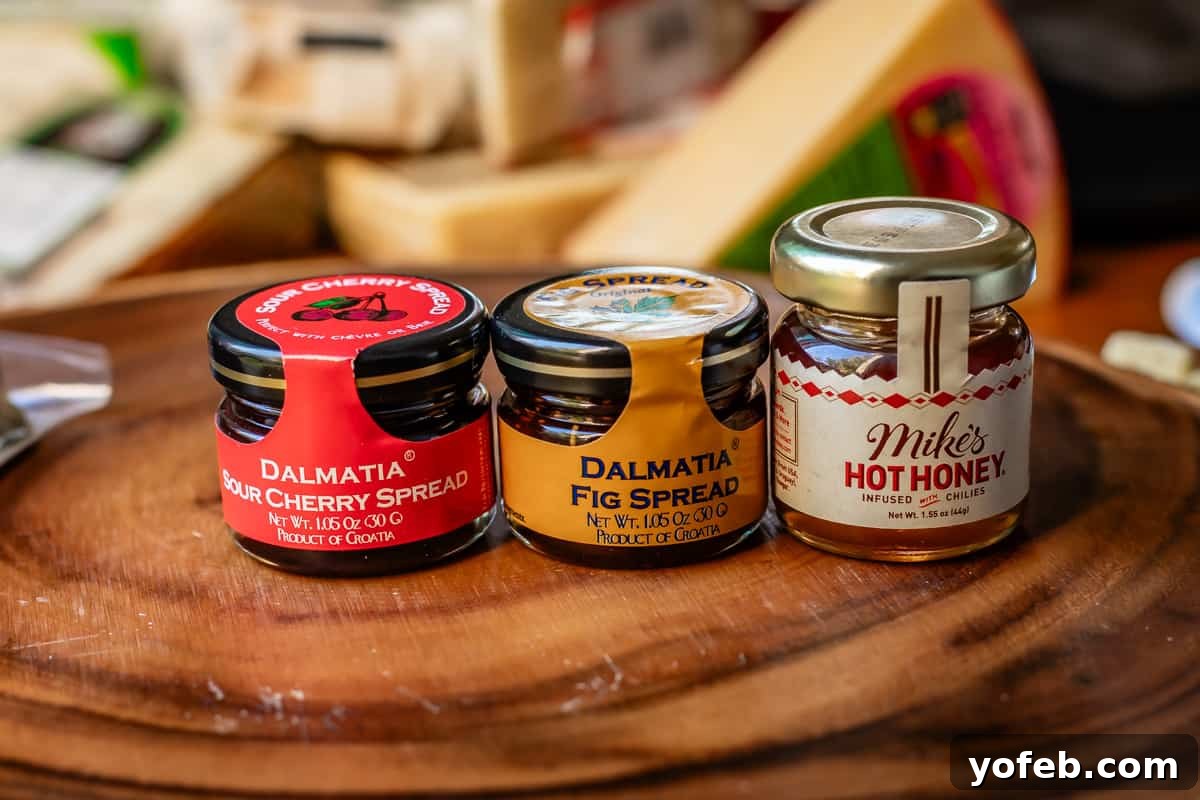
Honey is always a staple on my boards, though I have to confess it often leads to sticky situations with my four children! My 7-year-old, in particular, has an uncanny ability to find the honey and then spread it everywhere. Despite the occasional messy aftermath, I love the sweetness honey adds to cheese too much to leave it out. Consider this a fair warning if you’re serving little “heathens”!
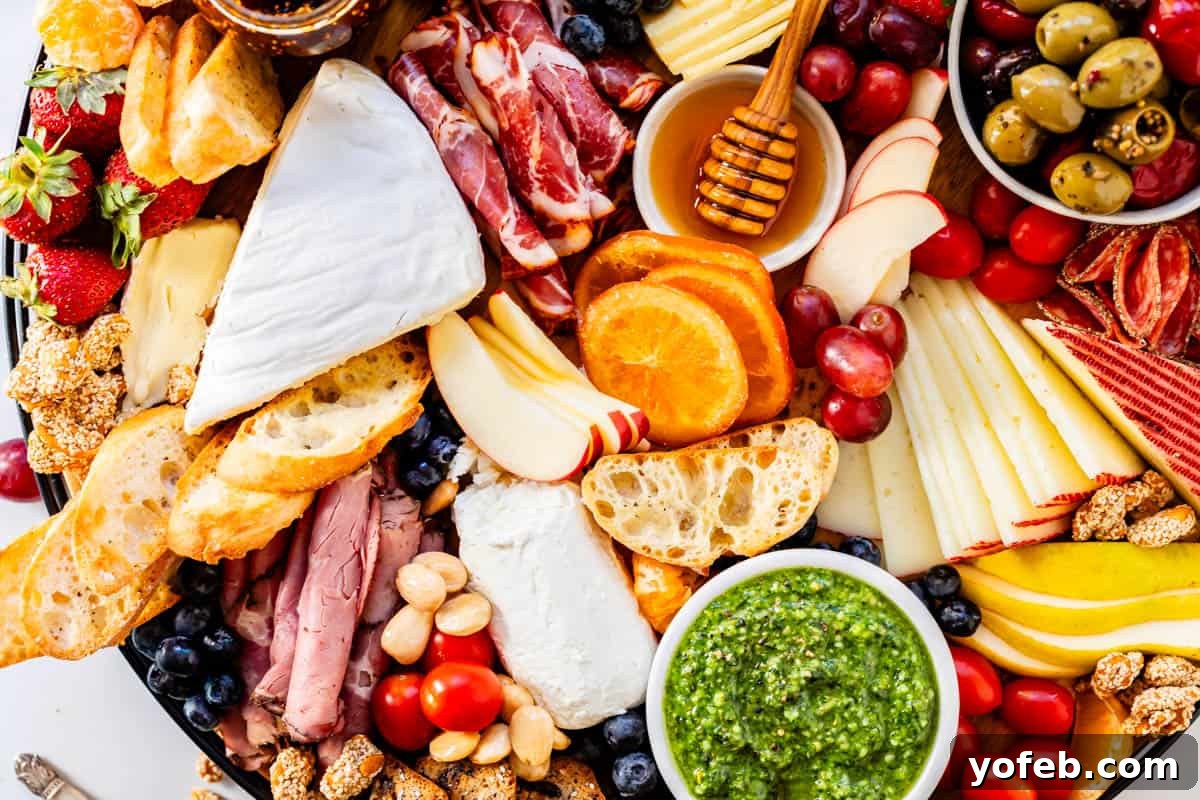
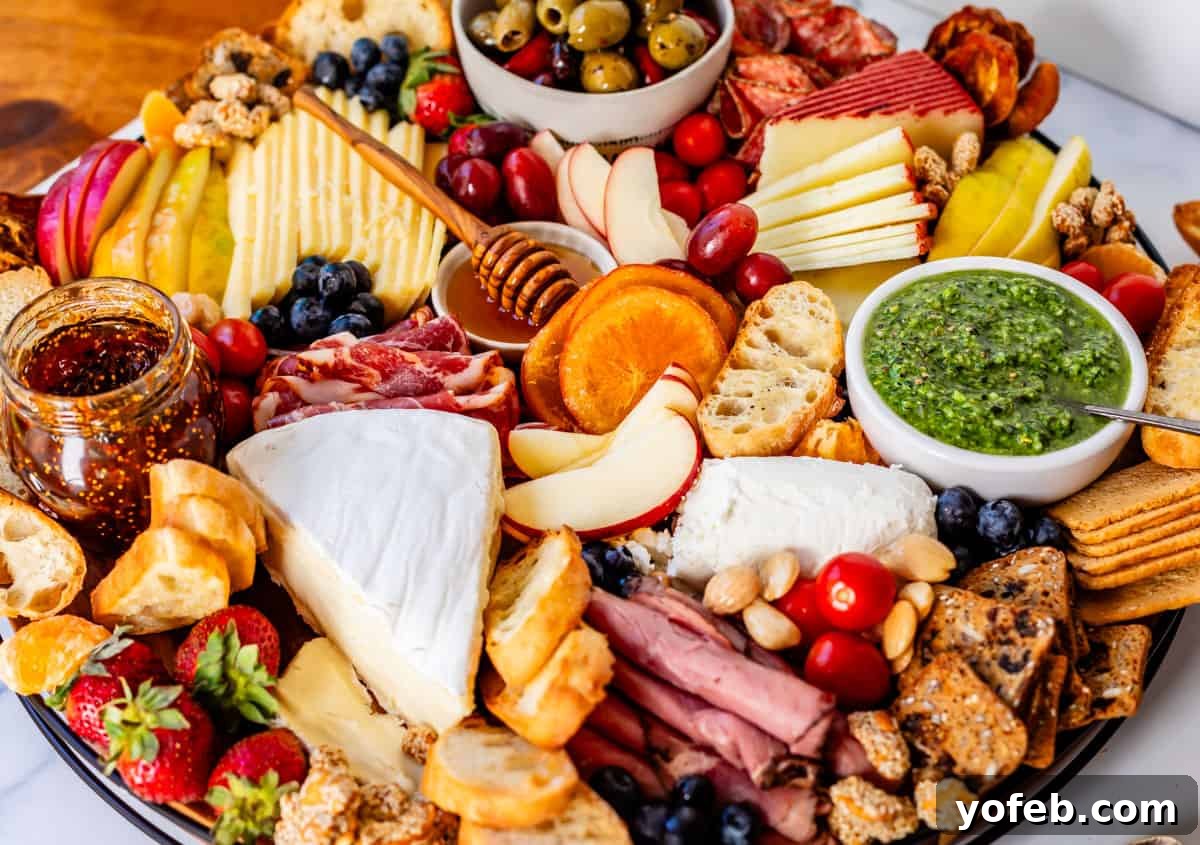
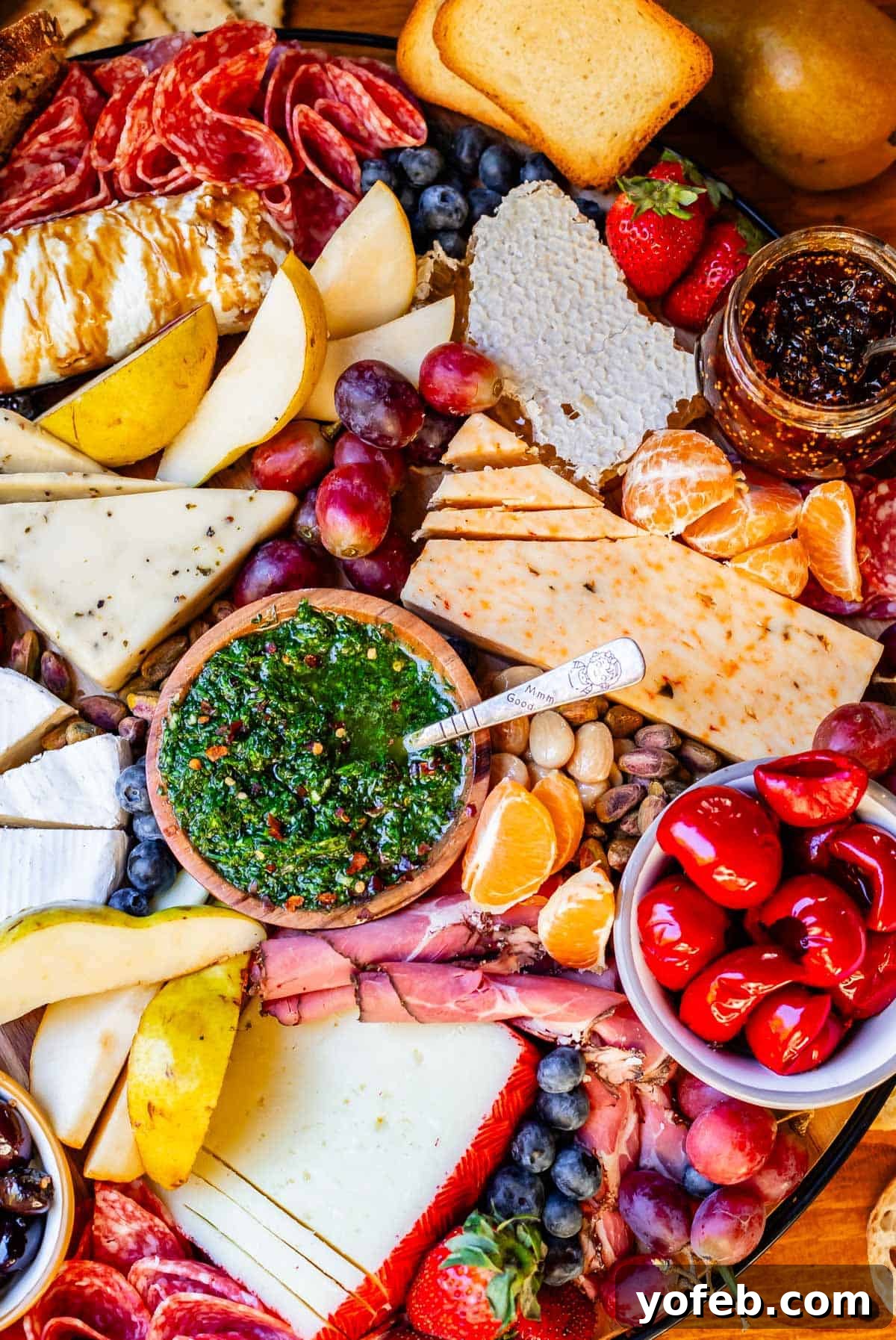
And voilà! Your stunning charcuterie board is complete! Remember, the goal is often to create a bountiful, overflowing spread, so don’t hesitate to keep adding more of the same items until the board is gloriously full. A high-piled board is incredibly inviting and fun to graze from!
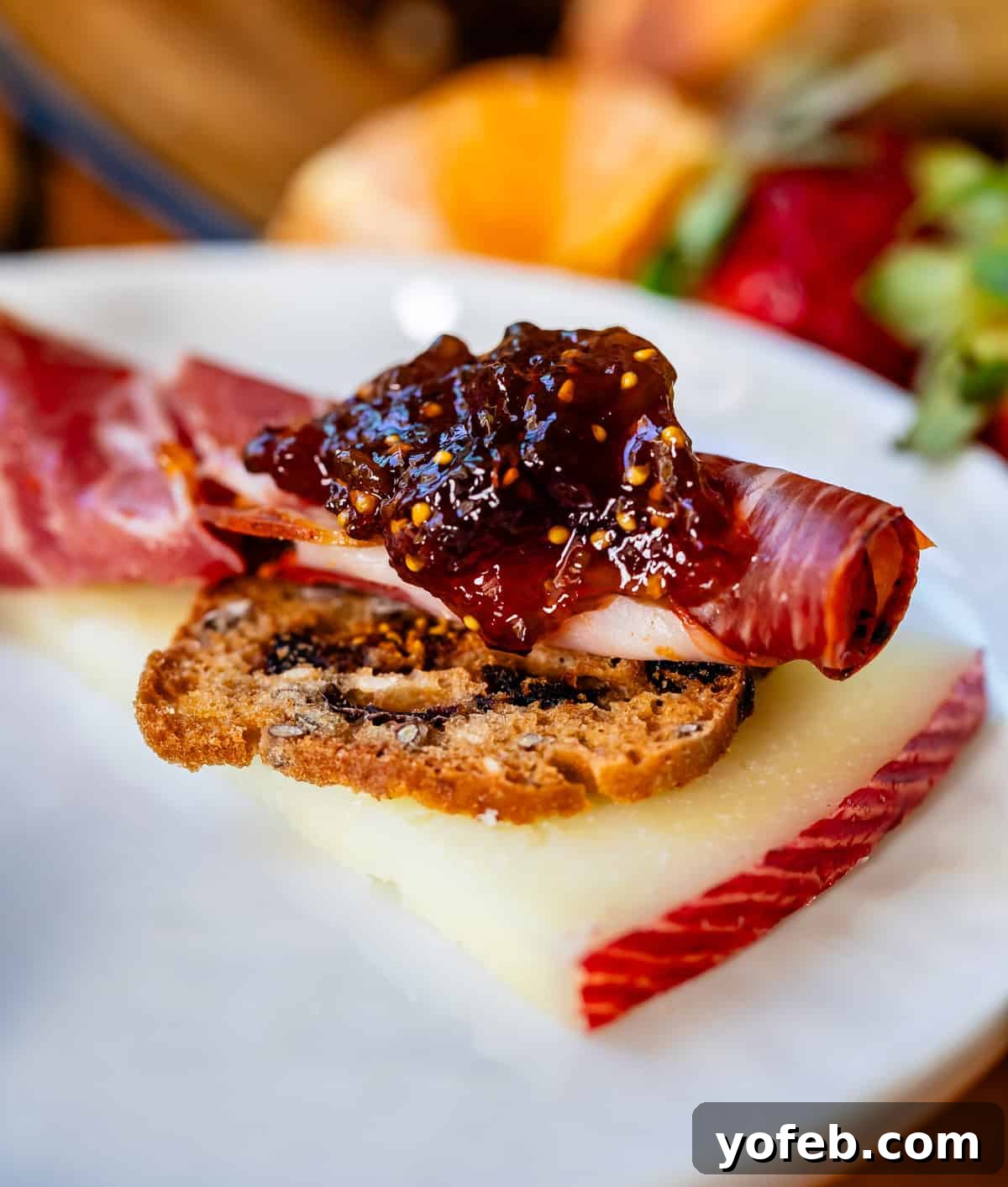
One of my favorite aspects of making a charcuterie board is asking guests about their favorite flavor combinations. Sometimes, they discover pairings I would never have considered! This delightful bite features Manchego cheese, a fig-olive cracker, spicy Coppa, and sweet fig jam – a perfect balance of flavors and textures.
Serving Your Charcuterie Board: Occasions and Pairings
For me, a charcuterie board is often a meal in itself – I simply can’t resist going back for more! However, its versatility makes it perfect for a wide range of serving occasions. It’s an ideal appetizer before a large holiday feast, a fantastic centerpiece for any type of party, or a delightful addition to bridal or baby showers, and even game nights.
As I emphasized before, including at least one homemade item on your board truly elevates it. Here are some additional ideas for homemade treats and other delicious items that pair wonderfully with a charcuterie board:
- Quick and Easy French Bread Recipe: Perfect to bake the day before, slice thinly, and toast to serve as crispy crostini.
- Southern Pecan Cheese Wafers: These homemade, toasty cheese crackers are delightful one-bite treats. My mom made them for Thanksgiving last week!
- How to Make Balsamic Vinegar Reduction: Imagine drizzling this sweet and tangy reduction over cheese on a cracker – pure deliciousness!
- How to Make Easy Chimichurri Sauce: No cooking required, and it pairs incredibly well with all those cured meats and cheeses.
- Chunky Chex Mix Muddy Buddies Recipe: If you’re leaning towards a sweeter board, these chocolate peanut butter treats can be scattered in small clusters for a delightful contrast.
- 10 Minute Caramel Popcorn in the Microwave: Another awesome and super easy sweet addition for a fun, eclectic charcuterie spread.
- The Easiest Sugared Cranberries: A beautiful and festive addition to any holiday board, adding sparkle and a tart-sweet flavor.
- Quick Pickled Vegetables from Feasting at Home: A refreshing, acidic counterpoint to rich cheeses and meats.
- Pickled Red Onions from Love and Lemons: My brother Eric insists no charcuterie is complete without them. They’re fantastic with cheese!
Hosting a BYOC (Bring Your Own Cheese) Party
My friend Jackie shared a brilliant party idea with me that’s perfect for cheese lovers: a BYOC (Bring Your Own Cheese) gathering! The concept is simple and engaging: ask each guest to bring one type of cheese and a couple of their favorite charcuterie accompaniments. This could include a selection of meats, crackers, bread, a unique dip or spread, or some fresh fruits, vegetables, or nuts. It’s incredibly fun to see the diverse selections everyone brings, and even more enjoyable to assemble all the contributions onto a large board together, then graze and discover new favorites collectively. It takes the pressure off the host and ensures an incredibly varied and exciting charcuterie experience!
Storing Charcuterie Board Leftovers
Managing charcuterie board leftovers effectively ensures you can enjoy them again later. Here’s how to store different components:
If you plan to graze on the board again soon—later the same evening or the next day—you can remove all the crackers and bread (to prevent sogginess). Then, cover the entire board tightly with plastic wrap and refrigerate it. The cheeses, meats, and other moist items will remain fresh. Store the removed crackers and bread in their original bags or airtight zip-top bags in the pantry.
If you assembled your charcuterie directly on parchment or butcher paper on a buffet table, you have more flexibility. Simply cover any items that don’t require refrigeration. For cheeses and meats, transfer them back to their original containers or into airtight food storage containers before refrigerating. You can then reassemble them on the board when ready to serve again.
For longer-term storage, or if you don’t intend to serve all the leftovers together, repackage each individual item. Return cheeses, meats, jellies, and vegetable leftovers to their original packaging or new airtight containers and refrigerate. Bread and crackers can be stored in the pantry. Always refer to the best-by dates on the packaging for optimal freshness.
One important consideration: charcuterie boards can sometimes get a bit messy, especially depending on your guests (children, for example!). Take a moment to assess the board at the end of your event. Some items, if dripped on or handled excessively, might be best discarded for hygiene reasons. Trust your judgment here.
Can You Freeze Charcuterie Board Food?
Generally, freezing most charcuterie board items is not recommended, as it can significantly alter their texture and flavor. Many components, such as cheeses, cured meats, and pickled vegetables, have a decent shelf life in the refrigerator or pantry already. If you find yourself with an abundance of a particular item and wish to explore freezing, it’s best to research specific freezing guidelines for that individual ingredient. For example, while most cheeses don’t freeze well due to textural changes (they can become crumbly or mealy, though shredded cheese is often an exception), cold cuts, like deli meats, typically freeze beautifully without losing much quality.
Creative Ways to Use Charcuterie Board Leftovers
Don’t let any of those delicious charcuterie components go to waste! Leftovers from your board can be transformed into fantastic new meals. Here are some creative and easy ideas to repurpose your leftover meats, cheeses, and other goodies:
- Omelets or Scrambled Eggs: Elevate your breakfast by folding in leftover cheeses, diced meats, and any suitable vegetables into the cheesiest, best omelet or scrambled eggs you’ve ever made.
- Frittata: Use a medley of your leftover meats and cheeses to create a hearty and flavorful frittata, perfect for brunch or a light dinner.
- Epic Sandwiches: Layer all your favorite leftover ingredients onto a fresh baguette or artisan bread for an incredible Dagwood-style sandwich. Add some fresh greens and a drizzle of sauce for perfection.
- Pizza Toppings: Transform your next homemade pizza by using a variety of cured meats, cheeses, olives, and even some of those marinated peppers as gourmet toppings.
- Easy Stromboli: Wrap up your leftover meats and cheeses in pizza dough for a delicious and easy stromboli, a perfect family meal or hearty appetizer.
- Italian Pasta Salad: Dice up leftover salami, cheese, olives, and tomatoes, then toss them with cooked pasta, a vibrant vinaigrette, and fresh herbs for a flavorful pasta salad.
- Quiche: Create an amazing quiche with a rich, savory filling featuring your leftover meats and cheeses. It’s a versatile dish that works for any meal.
Gifting Charcuterie Leftovers
After photographing this post, I ended up with an abundance of delicious cheese, produce, and meat! My plan is to lovingly package much of it onto individual paper plates and gift them to friends and neighbors as an early Christmas treat. This is such a thoughtful and welcome neighbor gift for the holidays, offering a delicious break from the usual sugary treats.
You can keep it simple: package 1-2 types of unopened cheese (so they can enjoy it when they wish), a selection of cured meats, and some fresh produce like grapes or berries. Be sure to include at least one small sauce or spread, like a mini jar of honey or jam from the deli section. And don’t forget an unopened box of crackers or some baguette slices to complete the package!
Charcuterie for the Lactose Intolerant
Good news for those with lactose intolerance: you can absolutely still enjoy a delicious charcuterie board! The key is making smart cheese choices. Lactose content varies significantly between different types of cheese.
To minimize discomfort, avoid fresh, high-lactose cheeses such as mozzarella, mascarpone, ricotta, and most soft, creamy varieties. Instead, focus on hard, aged cheeses. During the aging process, most of the lactose in cheese is broken down, making these varieties naturally very low in lactose or even lactose-free. Excellent choices include aged cheddar, Parmigiano-Reggiano, and other firm, well-aged cheeses. These delicious options will allow you to partake in the charcuterie experience without the worry of tummy troubles!
Frequently Asked Questions About Charcuterie Boards
What is a charcuterie board?
A charcuterie board is an artfully arranged platter or board featuring a diverse selection of cheeses, cured meats, crackers, breads, fruits, nuts, olives, and various spreads. While traditionally focused on cold meats (charcuterie being a French term for meat preparation), modern boards have expanded to include a wide array of ingredients, creating a customizable and visually appealing snack or appetizer experience. The size and variety can be adapted to serve any number of guests, from an intimate gathering to a large party.
What goes on a charcuterie board?
To ensure a successful and balanced charcuterie board, a helpful guideline is the “3-3-3-3 rule”: aim for at least 3 types of cheeses, 3 types of meats, 3 types of starches (crackers, bread), and 3 types of accompaniments (sauces, fresh fruit, dried fruit, vegetables, nuts). Once you have these foundational elements, you can freely add any other delightful details you like. For larger groups, scale up to 4-4-4-4 or more. There’s truly no single “wrong” answer, as customization is key!
How to arrange a charcuterie board?
Arranging a charcuterie board is a creative process that starts with larger items and fills in with smaller ones. Begin by placing your main cheeses, spaced strategically around the board. Next, arrange the salami and other meats in a few different sections, perhaps folded or rolled for visual appeal. Place small bowls of olives, honey, or jam as “anchors” in the middle or at key points. Fill larger open spaces with crackers and fresh vegetables. Finally, tuck smaller items like bunches of grapes, nuts, dried fruits, and fresh herbs into all the nooks and crannies to create a lush, full appearance.
Where to buy a charcuterie board (the actual board)?
If you’re looking to purchase the wooden board itself, you’ll find some excellent options at stores like Target. The boards featured in the photos for this article were sourced there. Charcuterie boards are incredibly popular, so you can find a wide variety of boards and serving platters at almost any store that sells kitchen items, including World Market, Kohl’s, Crate and Barrel, William Sonoma, and Walmart.
If you’re interested in buying a pre-made charcuterie board with food already on it, check with your local specialty grocery store. Many high-end delis or grocery chains offer pre-packaged boards, or they might be able to create one for you upon request. However, keep in mind that assembling your own board is often much easier and significantly more cost-effective than you might imagine. This guide provides all the step-by-step instructions you need to craft an impressive board for any event!
More Delicious Appetizers to Explore
A charcuterie board is an excellent starting point when you need to feed a crowd. If you’re looking to expand your appetizer offerings even further, these recipes below are perfect complements to a charcuterie spread. Many of them can even be featured directly on the board itself for added variety and flair!
- Extra Cheesy Spinach Artichoke Dip (Hot or Cold!): A smooth, creamy, and undeniably cheesy dip that’s always a crowd-pleaser.
- Caprese Salad Skewers Appetizer: Perfect year-round, these skewers are fresh and colorful. Use summer tomatoes and basil, or red and green varieties for a festive Christmas touch!
- Bacon Wrapped Pineapple with Honey Chipotle Glaze: You simply can’t go wrong with the delicious combination of savory bacon and sweet pineapple, especially with a spicy-sweet glaze.
- Smokey Almond Cream Cheese Endive Bites: These elegant, low-carb bites are a fantastic addition to any board, offering a fresh crunch and creamy filling.
- French Onion Dip from Belly Full: A classic savory dip that pairs well with many charcuterie elements, especially crunchy crackers or veggie sticks.
Facebook | Pinterest | Instagram

How to Make a Charcuterie Board
20 mins
10 mins
30 mins
10
Rate this Recipe
Print Recipe
Charcuterie boards were SO unapproachable to me for the longest time. They look Super Fancy (and I’m Super Not!) But after years of making boards again and again for parties and holidays, I’ve finally figured out the tips you need to create the most beautiful charcuterie. I will break it down with ideas for what to put on a charcuterie board and how to make it EASY and simple for the beginner who knows nothing about cheese and fancy meat.
Equipment
- 1 18-inch wooden board
- Cheese slicers and knives
- Small spoons
- Mini bowls
- Honey dipper
Ingredients
4 types of Cheese:
- 8 ounces Brie*, or other soft cheese
- 8 ounces aged white cheddar*, or other hard cheese
- 5 ounces goat cheese, or other tangy cheese
- 8 ounces manchego cheese, or other semi-hard cheese of choice
Things in “anchor” bowls:
- 8 ounces pesto, or other savory dip / spread. A simple pesto recipe is in the notes
- 8 ounces marinated olives, or marinated roasted peppers
- 8 ounces fig jam, or jam of your choice
3 types of cold cut meat:
- 8 ounces thinly sliced pastrami, or any other sliced meat from your deli
- 8 ounces peppered salami, or other salami of choice
- 8 ounces Capicola, or prosciutto, or other
Variety of Fresh Fruits
- 1 pear, sliced thin
- 1 apple, sliced thin
- 1 lemon, juiced, for coating apple and pear
- 1 pint blueberries
- 1 pint strawberries, or raspberries, blackberries, etc.
- 4 cutie oranges, opened and split into sections
Variety of Veggies (optional)
- 1 small box tomatoes, or carrots, cucumbers, or celery
Crackers and bread
- 1 baguette, sliced, and toasted if you like
- 2 tablespoons olive oil, for the baguette slices
- Salt and pepper, for the baguette slices
- 1 box Fig and olive crisps, or any cracker you like
- 1 box Club crackers, or any cracker you like
- 1 box Sesame crisps, or other artisan cracker that you like
Extras and Fillers, Spreads, and Sauces
- 2 ounces honey, or honeycomb (spicy hot honey can also be fun)
- 1 cup dried apricots, or dried figs, or any dried fruit
- 1 cup Marcona almonds, or any nut
- 1 cup sesame cashews, or any nut
- Rosemary sprigs, for garnish, optional
Instructions
-
Start by gathering your ingredients. Choose a grocery store that is a little upscale, if you can. Buy the baguette from the deli section (or an actual bakery). Make your cheese choices: buy exactly what’s on this recipe if you are a beginner, or make choices at the store based on what looks good to YOU, focusing on variety. Ask for help from the grocer if you need it. Make your meat choices. Visit the olive bar and see what they have that looks interesting, but don’t go too crazy. One or two selections is fine. Make sure you have a nice board, some cheese knives, and some small spoons and bowls.
-
Toast your baguette: Preheat your oven to 450 degrees F. Slice your baguette on a bias. Place on baking sheet and brush each side with 2 tablespoons olive oil. Sprinkle with salt and pepper. Toast at 450 in the oven for about 5 minutes, until firm but not overly browned. Remove and set aside to cool.
-
Add the cheese to the board: Open all the cheese packages and add them to your board, with plenty of space around each one. Take the time to slice the cheese now, if you want. Add the knives/spoons you need for each cheese.
-
Add the “anchor” bowls: 1 jar of jam (spoon jam into a small bowl if it’s too large), a small bowl of pesto (recipe in notes), a small bowl of olives.
-
Add the meat: Roll or fold 8 ounces of pastrami. Fold 8 ounces of salami. Roll 8 ounces of Capicola. Arrange on the board wherever you like.
-
Add fruits and veggies: Slice the pear and the apple and squeeze with lemon juice so they don’t brown. Peel and section the oranges. Arrange the apple, pear, blueberries, strawberries, and cutie oranges on the board. Arrange the cherry tomatoes on the board.
-
Add crackers and bread: Arrange the baguette toasts, Fig and Olive crackers, Club crackers, and Sesame Crisps on the board, or on another board or bowl nearby. (I like to do this so they don’t get soggy.)
-
Add fillers and nuts: Pour a bit of honey into a tiny bowl and arrange on the board with a spoon or honey dipper. Arrange apricots, almonds, and cashews on the board, filling in the cracks. Garnish with rosemary if you have some! Voila! Dig in! See post for notes about how to store leftovers.
Notes
Pesto Recipe:
- 2 cups basil leaves (at least 2 bunches)
- 1/2 cup good olive oil
- Several chunks of Parmigiano-Romano cheese, what looks like it might be 3/4 cup when shredded
- 1/3 cup pine nuts
- 1 or 2 cloves garlic
- 1/2 teaspoon kosher salt
- Black pepper to taste
Add it all to a food processor (a blender will work too) and whir until blended. Scrape the sides. Don’t go too far, pesto is supposed to be a little textured. Make sure the mixture is homogenous (no big chunks).
Nutrition
Calories: 492kcal | Carbohydrates: 39g | Protein: 17g | Fat: 30g | Saturated Fat: 9g | Polyunsaturated Fat: 3g | Monounsaturated Fat: 10g | Trans Fat: 0.002g | Cholesterol: 42mg | Potassium: 367mg | Fiber: 4g | Sugar: 18g | Vitamin A: 602IU | Vitamin C: 31mg | Calcium: 160mg | Iron: 2mg
Appetizer
American, French
492
board, charcuterie
Did you make this? I’d love to see it!
Mention @thefoodcharlatan or tag #thefoodcharlatan!