

Hallelujah! I finally discovered how to make whole wheat bread that’s soft and fluffy. It’s tender, springy, rises impressively, and is simple to make. This honey-scented whole wheat loaf has the right amount of salt so it doesn’t taste flat and a little secret that keeps the crust soft for days. Ideal for sandwiches, toast, or the best PB&J you’ve ever had.

Last weekend my sophomore daughter Charlotte had friends over. They laughed, shared ice cream, attempted social-media challenges (including the ridiculous Tortilla Slap Challenge), and finished with everyone jumping fully clothed into the pool. If you’re worried about today’s teens, don’t be—they’re great.

Bread, bread, bread
While the teens practiced being teens, I tested a lot of wheat bread. My goal was a wholesome, whole-grain loaf that’s genuinely light and fluffy—no weird dough enhancers, emulsifiers, or unfindable ingredients. I wanted something simple and repeatable for family meals.

This recipe took many test loaves—dense bricks, close calls, and finally the solution. I quickly nailed the flavor, but getting a reliable rise took research and technique. Here’s what works.
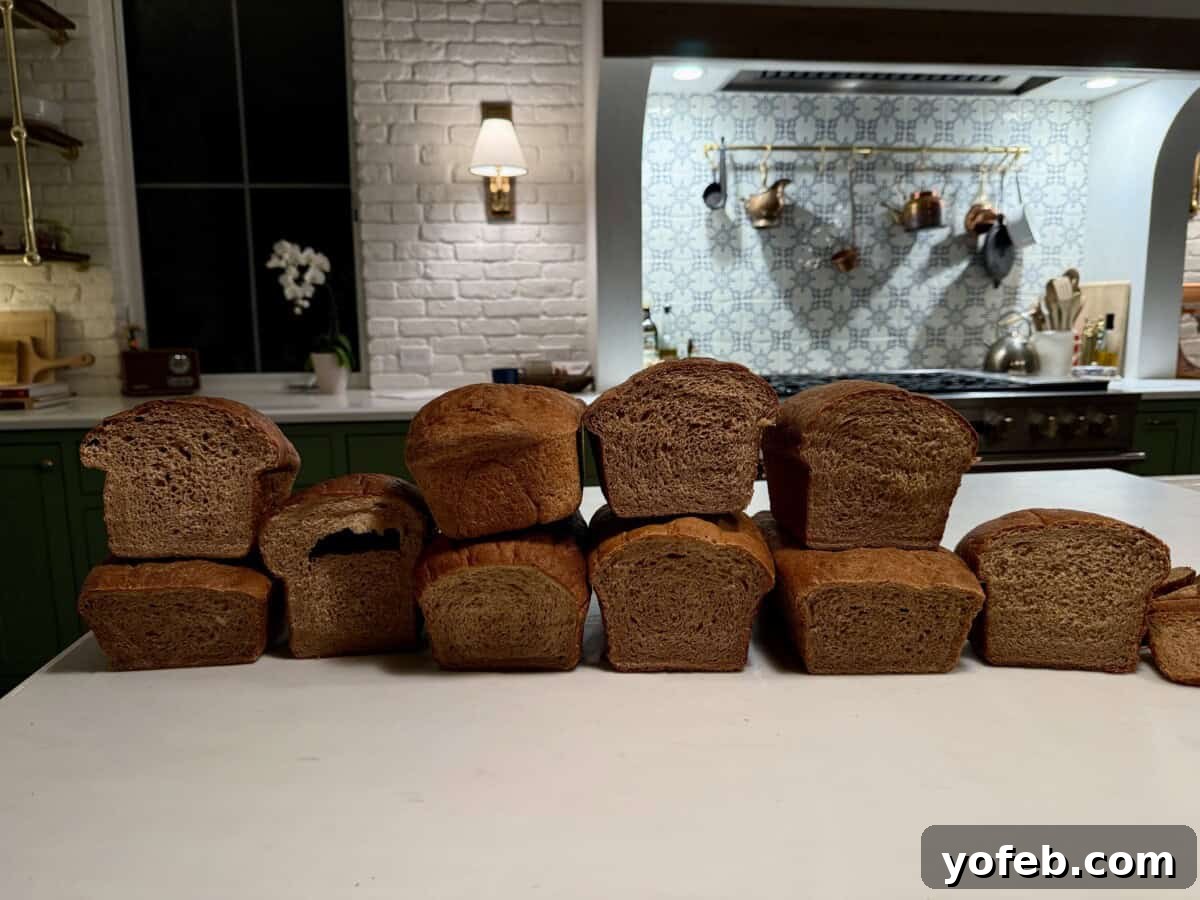
I tested around 18 loaves in a week and a half. Most were edible, and I quickly achieved the desired flavor, but the texture and rise required a few important changes to standard whole wheat methods.

What is whole wheat bread, anyway?
Whole wheat flour contains the bran, germ, and endosperm. While these parts are nutritious, the bran’s sharp pieces and the germ’s weight interfere with gluten development. White all-purpose flour is mostly endosperm, which lets gluten form a stretchy structure to trap gas from yeast and produce a light loaf. With whole wheat, the bran can cut gluten strands and the result is often dense bread.

The solution
To get a tall, tender whole wheat loaf I use several tactics:
- Add vital wheat gluten to boost gluten strength.
- Start with a sponge to hydrate and soften the bran and germ so they’re less damaging.
- Include a small amount of mashed potato for extra starch—this feeds the yeast and helps retain moisture so the bread stays soft longer.
- Use a cup of bread flour to increase the endosperm proportion—this improves rise without industrial dough enhancers.
This makes the loaf not 100% whole wheat, but it’s a practical compromise: two full cups of whole wheat flour in a single loaf, no chemical additives, and a wonderfully tall, soft result.

Red wheat vs white wheat
Hard red wheat has the classic nutty, earthy wheat flavor and darker color. Hard white wheat is milder and lighter in color; it produces loaves that rise more easily but lack the deep “brown bread” flavor. Either works in this recipe—use white wheat if you prefer a milder loaf, or red wheat for that nostalgic, robust taste.
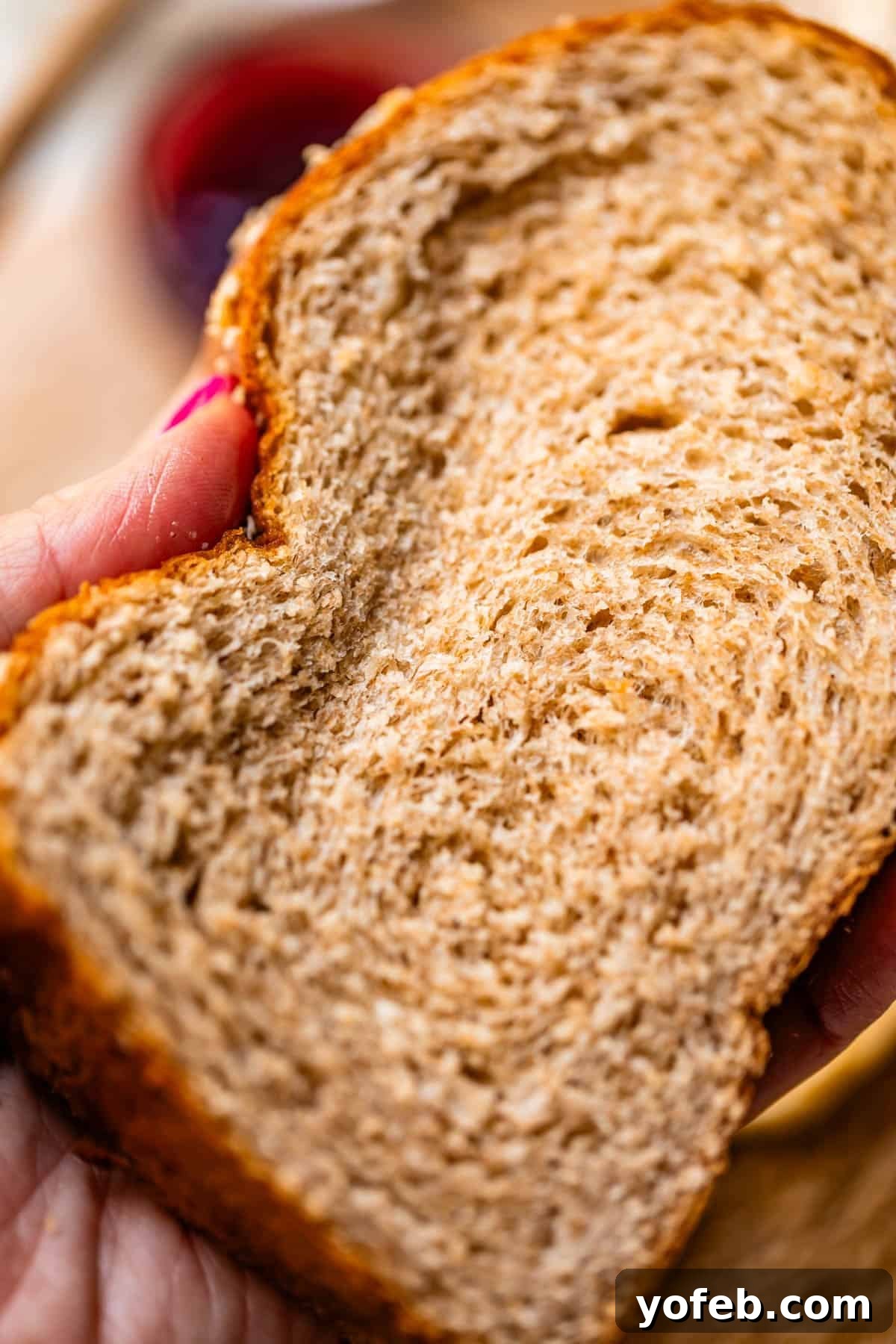
Why do we need a sponge step?
The sponge hydrates and softens bran and germ so they’re less likely to damage gluten. It enhances flavor and improves rise—don’t skip it.
Why does wheat bread take so long to make?
Whole wheat dough requires more kneading and longer rise times because the gluten has to work harder to form the structure blocked by bran and germ. Expect a first rise of about 2–2½ hours; the second rise is shorter, around 30–45 minutes.
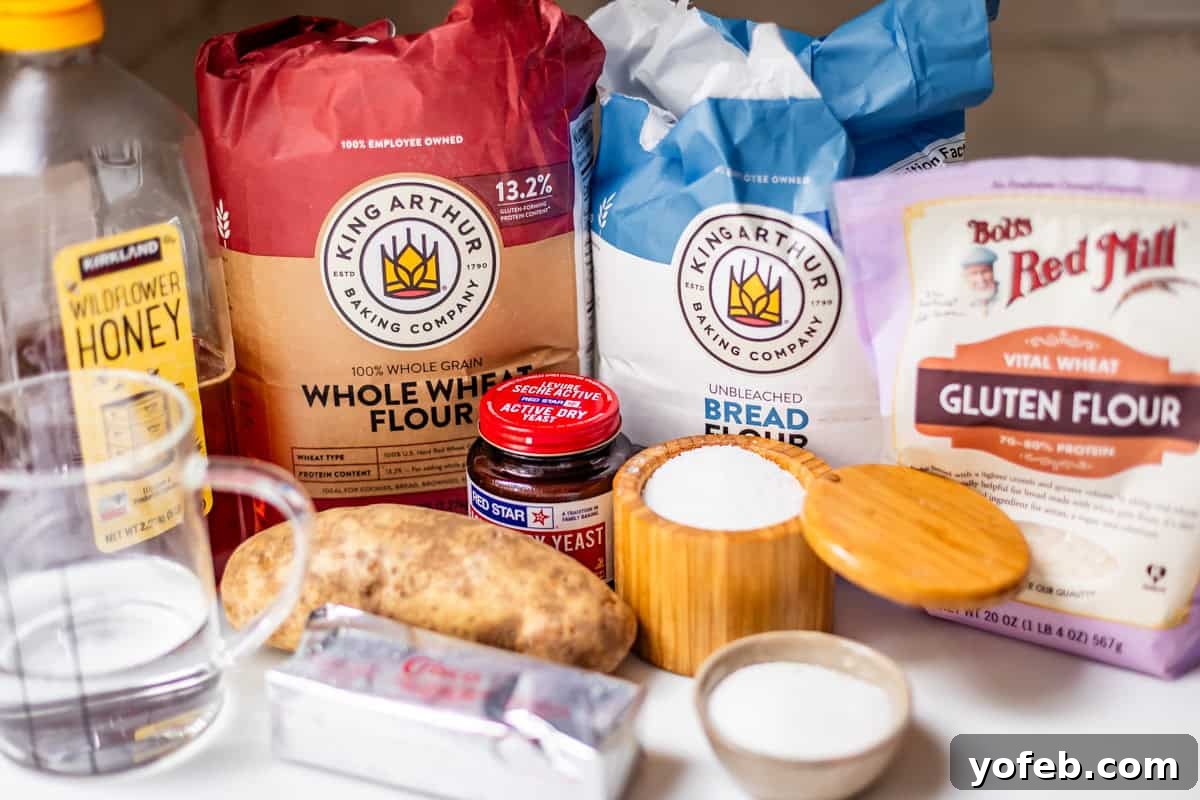
Ingredients you should know about
A few key ingredients make or break this loaf:
- Whole wheat flour: choose red or white whole wheat depending on your flavor preference.
- Vital wheat gluten: concentrated gluten that restores structure lost to the bran and germ.
- Mashed potato: adds starch that feeds yeast and retains moisture for days of softness.
- Kosher salt: enhances flavor and strengthens gluten; reduce if you only have table salt.
How to make whole wheat bread
You’ll use simple grocery ingredients. Photos here illustrate key steps: making the sponge, boiling and ricing a potato, proofing yeast, kneading, shaping, and baking.
Overview: Make the sponge (warm water, vital wheat gluten, honey, and whole wheat flour) and let it rest about 30 minutes while you boil and mash a small russet potato. Proof the yeast separately in warm water with a pinch of sugar. Add sugar, salt, shortening (or butter/oil), the mashed potato, and the yeast to the sponge. Stir in additional whole wheat flour and bread flour. Knead for 10 minutes, adding up to ½ cup extra bread flour as needed—the dough should be smooth, elastic, and slightly sticky.
Place the dough in an oiled bowl, cover, and let rise in a warm spot until doubled (about 2–2½ hours). Punch down, shape into a loaf, place in a greased 9×5-inch pan, cover, and proof 30–45 minutes until it rises about 1½ inches above the pan rim. Bake at 375°F for 10 minutes, lower to 350°F, tent with foil, and bake another 20–25 minutes until the center reaches 205–210°F. Immediately turn out of the pan and rub the entire loaf with butter to keep the crust soft. Cool before slicing.
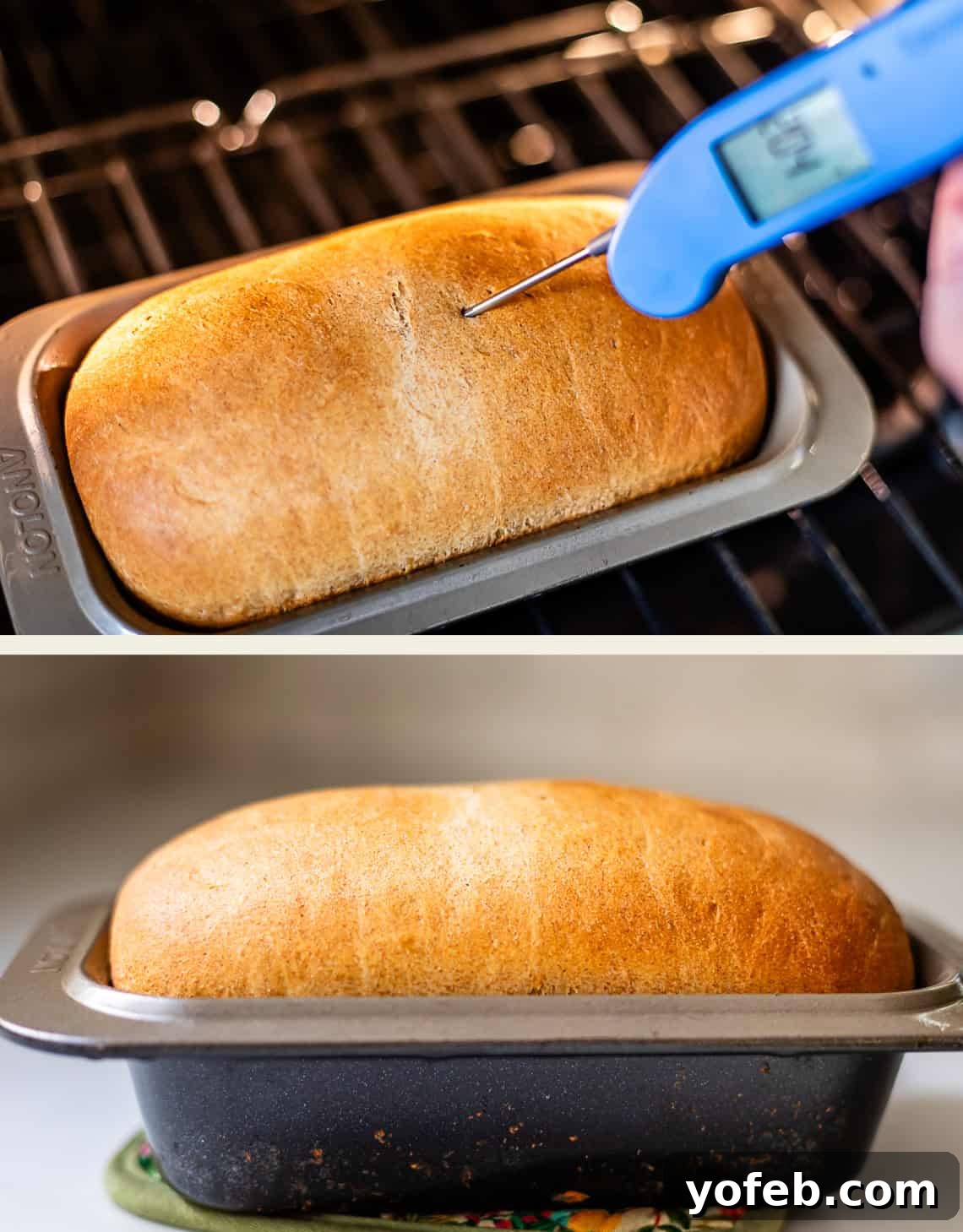
This method rewards patience with a tall, tender, flavorful whole wheat loaf that keeps well when brushed with butter and stored properly.
Ways to use your whole wheat bread
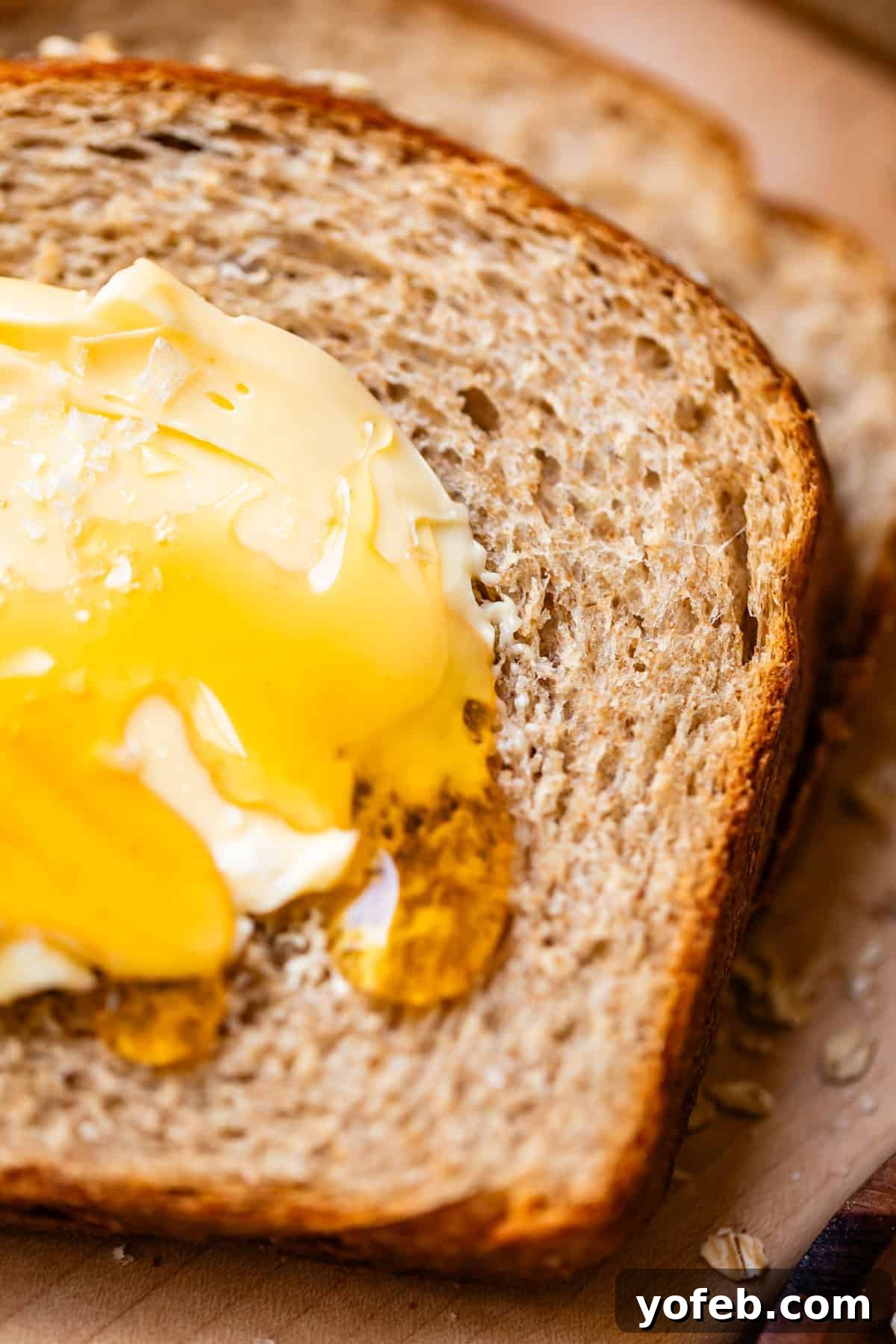
Serve slightly warm with butter and jam for the best experience. Other ideas:
- Toast for breakfast: plain, avocado toast, or Egg in a Hole.
- Everyday sandwiches—lunchmeat, chicken salad, or PB&J.
- French toast (sweet or savory) and hearty dips or spreads.
- Make croutons, breadcrumbs, or stuffing from stale slices.

How to store your bread
Cool completely before storing to avoid condensation. Don’t pre-slice if you want longer freshness. For regular use, plastic bread bags keep loaves like store bread; for occasional use, store a few slices in a zip-top bag and freeze the rest.
Can you freeze it?
Yes. Double the recipe if you like, cool completely, wrap the loaf tightly in two layers of plastic wrap and a layer of foil (or use a freezer bag). Thaw at room temperature for 1–2 hours before slicing.

Honey Wheat Bread Recipe
Soft, fluffy honey wheat bread with mashed potato and vital wheat gluten for a tall, tender loaf.
Ingredients
For the sponge:
- 1 cup warm water
- 2 tablespoons vital wheat gluten
- 3 tablespoons honey
- 1 cup whole wheat flour (spooned and leveled, about 113 g)
In a small bowl:
- 2 tablespoons warm water (105–110°F)
- 1 tablespoon active dry yeast
- 1 teaspoon granulated sugar
For the dough:
- 3 tablespoons granulated sugar
- 1 tablespoon kosher salt (reduce if using table salt)
- 3 tablespoons shortening (or butter/oil)
- 2 tablespoons mashed russet potato (no seasonings)
- 1 cup whole wheat flour (spooned and leveled)
- 1 cup bread flour (spooned and leveled)
- Up to 1/2 cup additional bread flour as needed
- 1 tablespoon oil for greasing
- Butter for rubbing on the baked loaf
Instructions
- Make the sponge: Whisk 1 cup warm water, 2 tbsp vital wheat gluten, 3 tbsp honey, and 1 cup whole wheat flour. Cover and rest 30 minutes.
- Boil the potato: Peel and cube a small russet; simmer 10–15 minutes until fork-tender. Mash thoroughly and press through a colander or ricer if possible.
- Proof the yeast: Combine 1 tbsp yeast, 2 tbsp warm water, and 1 tsp sugar. Let bubble 5 minutes.
- Add 3 tbsp sugar, 1 tbsp kosher salt, 3 tbsp shortening, and 2 tbsp mashed potato to the sponge. Stir in the bubbly yeast mixture.
- Stir in 1 cup whole wheat flour, then 1 cup bread flour. Knead by hand or with a dough hook for 10 minutes, adding up to 1/2 cup additional bread flour as needed. The dough should be smooth, elastic, and slightly sticky.
- Oiled bowl: coat a large bowl with about 1/2 tablespoon oil, place the dough ball inside, turn to coat the top, and cover with greased plastic wrap.
- Warm-rise: Put the covered bowl in a gently warmed oven (about 100°F) and let rise 2–2½ hours until doubled.
- Grease a 9×5-inch loaf pan with 1/2 tablespoon oil. Turn dough onto a lightly floured surface, knead briefly, press into a rectangle, and roll tightly to shape. Place seam-side down in the pan.
- Cover with greased plastic wrap and let rise 30–45 minutes until about 1½ inches above the pan edge. Preheat oven to 375°F about 10 minutes into proofing.
- Bake at 375°F for 10 minutes. Lower to 350°F, tent with foil, and bake another 20–25 minutes until an instant-read thermometer reads 205–210°F in the center.
- Remove from oven, turn loaf out within 2 minutes onto a cooling rack, and rub the entire loaf with butter. Cool at least 30 minutes before slicing.
Notes
Sponge time: Sponge can rest 30 minutes to 2–3 hours—longer risks evaporation. Keep tightly covered if you extend the time.
Kosher salt: If using table salt, reduce the amount (about 2 teaspoons). The larger kosher crystals contribute texture and flavor balance.
Shortening: Shortening yields the softest crumb; butter will work but gives slightly less softness. Oil is an option but may require extra flour during kneading.
Doubling: To double the recipe, divide dough before the first rise and bake in two 9×5 pans.
Nutrition (per serving, approximate)
Calories: 175 kcal | Carbohydrates: 30 g | Protein: 5 g | Fat: 4 g | Fiber: 2 g
More delicious breads to love
Homemade bread is worth the effort. If you enjoy this loaf, try other favorite bread recipes for variety and practice.

Breads, Muffins & Rolls
The Only White Bread Recipe You’ll Ever Need

Christmas Recipes
Garlic and Rosemary Skillet Bread

Breads, Muffins & Rolls
Grandma Prudy’s Rye Bread Recipe

Breads, Muffins & Rolls