
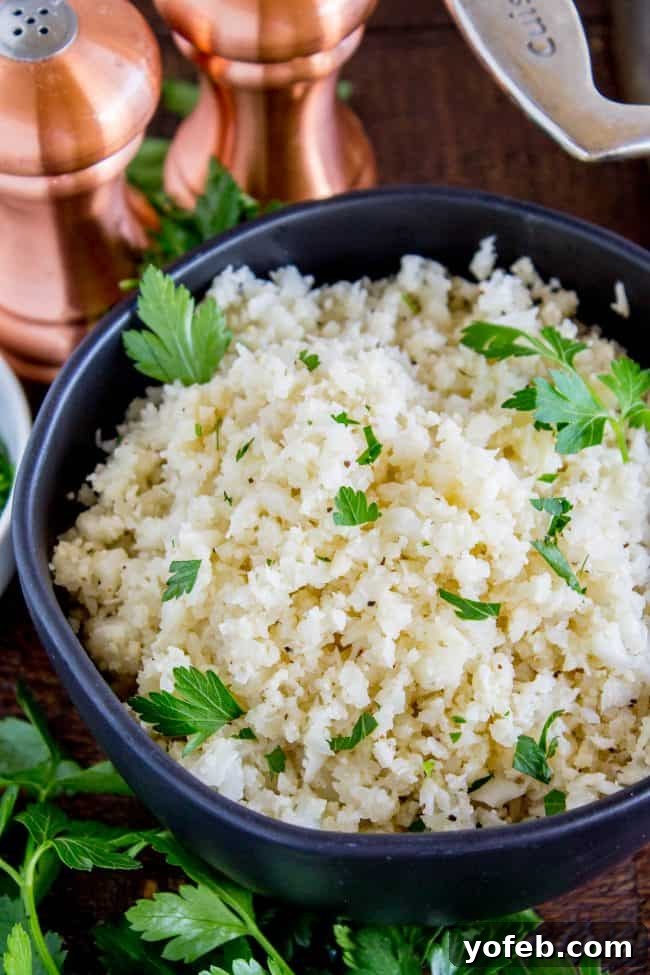
The Ultimate Guide to Delicious & Healthy Cauliflower Rice
Craving rice but aiming for a healthier, low-carb alternative? Look no further than cauliflower rice! While it won’t trick your taste buds into believing it’s traditional rice, this versatile vegetable substitute is undeniably delicious, incredibly easy to make, and a fantastic way to cut calories and carbohydrates from your meals. Whether you’re following a keto, Whole30, or simply a health-conscious diet, cauliflower rice is a culinary game-changer that opens up a world of nutritious possibilities. Let’s dive into how you can effortlessly create this kitchen staple in your own home.
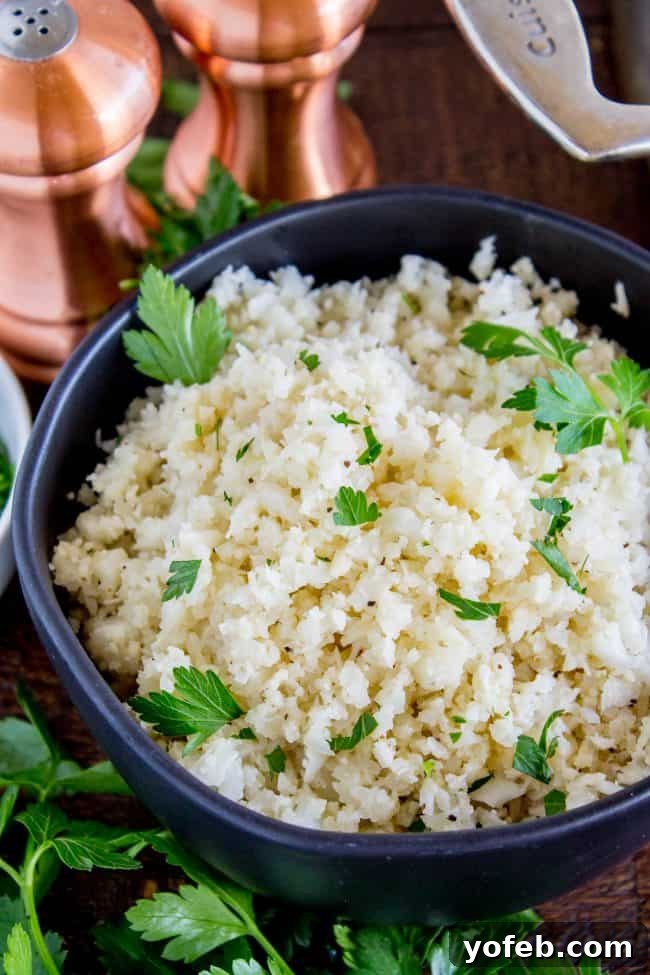
Table of Contents
- What is Cauliflower Rice: A Versatile Low-Carb Alternative?
- Why Choose Cauliflower Rice? Health Benefits Explained
- Gather Your Ingredients for Cauliflower Rice
- How to Make Cauliflower Rice: Step-by-Step
- How to Season and Flavor Cauliflower Rice
- How to Store and Reheat Cauliflower Rice
- Cauliflower Rice FAQs: Your Questions Answered
- What to Serve with This Cauliflower Rice Recipe
- Explore Other Rice and Grain Alternatives
- Cauliflower Rice Recipe Card
As the holidays wind down, many of us find ourselves seeking fresh starts and healthier routines. For me, that often means returning to a focus on nutrient-dense, low-carb meals, prioritizing lean protein and an abundance of vegetables. It’s about eating well and feeling good, without necessarily embarking on a restrictive “diet.” That’s where cauliflower rice truly shines and has become an indispensable side dish in our household. It’s not just a passing trend; it’s a genuinely delicious and smart swap that my entire family, even the kids, enthusiastically enjoys.
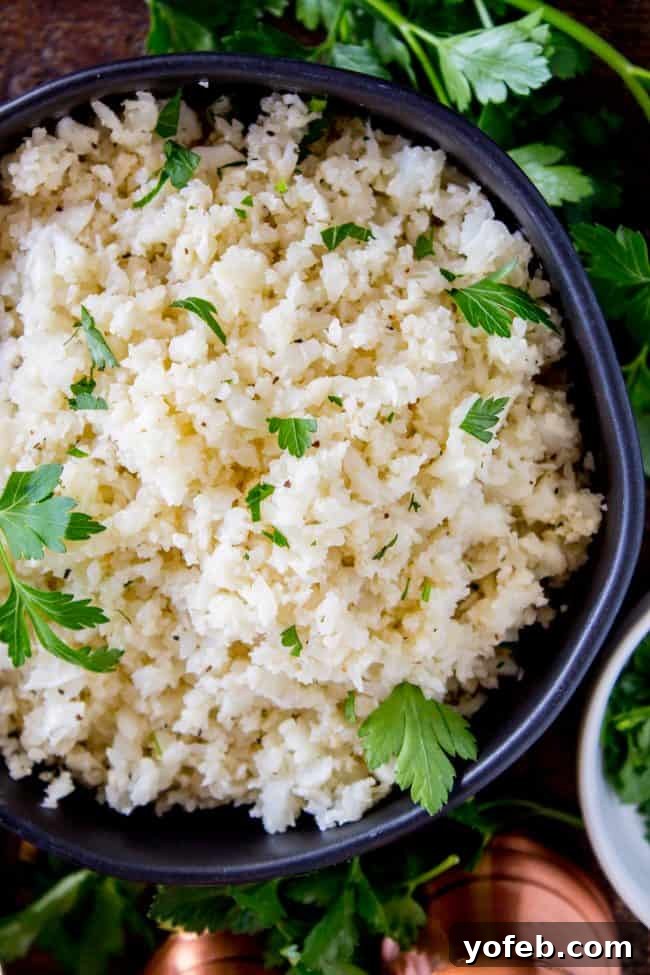
Perhaps you’ve heard of it, or even tried it, but if you haven’t fully embraced cauliflower rice into your cooking repertoire, you’re in for a treat. It’s a simple, versatile ingredient that can transform countless dishes, making them lighter and more nutritious. Forget complex preparations; making cauliflower rice is surprisingly straightforward. Let me guide you through the process, from choosing your cauliflower to perfecting its texture and flavor, ensuring you’ll create a side dish that’s as satisfying as it is healthy.
What is Cauliflower Rice: A Versatile Low-Carb Alternative?
Cauliflower rice is precisely what its name suggests: cauliflower transformed into tiny, rice-like granules. This ingenious vegetable hack involves finely chopping or grating a head of cauliflower until its texture mimics that of cooked rice. Once “riced,” it’s typically sautéed with a little butter or oil and seasonings until it reaches a tender-crisp perfection. The beauty of cauliflower rice lies in its ability to serve as an excellent low-carb, low-calorie substitute for traditional grains like white or brown rice in nearly any dish.
Now, let’s be clear: cauliflower rice doesn’t taste exactly like white rice. It retains the subtle, earthy flavor of cauliflower, which is part of its charm! However, when properly seasoned and served alongside flavorful main courses, its mild taste acts as a fantastic canvas, absorbing the flavors of your meal beautifully. It’s this versatility and its inherent health benefits that have cemented its place as a staple in many kitchens, including ours. Even my kids, initially skeptical, now enjoy it with the same enthusiasm they reserve for regular rice.
Why Choose Cauliflower Rice? Health Benefits Explained
Beyond its low-carb appeal, cauliflower rice boasts an impressive nutritional profile, making it a truly smart choice for anyone looking to boost their health. Here’s why it’s so good for you:
- Low in Calories and Carbohydrates: This is its most significant advantage for those on weight management or ketogenic diets. A serving of cauliflower rice contains significantly fewer calories and carbs than an equivalent serving of white or brown rice.
- Rich in Vitamins and Minerals: Cauliflower is packed with essential nutrients, including a substantial amount of Vitamin C, which is crucial for immune function, and Vitamin K, important for blood clotting and bone health. It also provides B vitamins, potassium, and manganese.
- High in Fiber: With a good amount of dietary fiber, cauliflower rice supports digestive health, helps regulate blood sugar levels, and contributes to a feeling of fullness, which can aid in weight control.
- Antioxidant Powerhouse: Cauliflower contains various antioxidants that help protect your body from harmful free radicals, potentially reducing the risk of chronic diseases.
- Versatile and Nutrient-Dense: It’s an easy way to sneak more vegetables into your diet, even for picky eaters, acting as a neutral base that can be flavored in countless ways.
By incorporating cauliflower rice into your diet, you’re not just cutting carbs; you’re adding a powerful, nutrient-rich vegetable that supports overall well-being. It’s a delicious and genuinely enjoyable way to make healthier eating choices.
Featured Comment
“This was actually delicious. I had very low expectations but honestly? It was very very tasty and absolutely something I would serve with a stir fry, curry, or similar.” – Eowyn
See All Comments
Gather Your Ingredients for Cauliflower Rice
Making delicious cauliflower rice requires just a few basic ingredients. Here’s your simple shopping list. For full measurements and detailed instructions, please refer to the complete recipe card below!
- Cauliflower: One large head, fresh and firm.
- Fat of Choice: Butter or olive oil. While olive oil is a great option, many find that butter imparts a richer, more satisfying flavor to the cauliflower rice.
- Garlic Powder: For a foundational savory note.
- Onion Powder: Complements the garlic for aromatic depth.
- Salt & Pepper: To taste, enhancing all the other flavors.
- Fresh Parsley: (Optional) For a vibrant garnish and a touch of freshness.
How to Make Cauliflower Rice: Step-by-Step
Creating cauliflower rice is surprisingly straightforward and can be done with tools you likely already have in your kitchen. Here’s how to do it for perfect, fluffy results every time.
Step 1: Prepare the Cauliflower
Start by washing your head of cauliflower thoroughly under cool water. Next, carefully slice the cauliflower in half, cutting straight down through the center of the stem. Take each half and split it in half again, ensuring you cut through the stem. With your knife, angle it to remove the tough core and stem entirely from each quarter. Once the core is removed, you’ll be left with large florets.
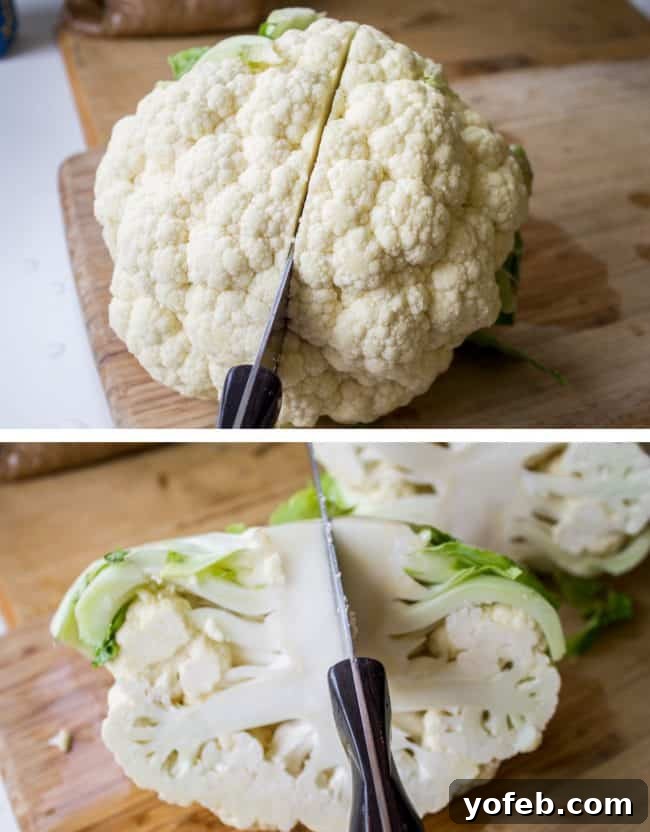
Step 2: Rice the Cauliflower Using Your Preferred Method
This is where you transform the florets into rice-like grains. You have several convenient options:
Option A: Food Processor (Recommended for Ease and Speed)
Chop your cauliflower florets into 1 to 2-inch pieces. Don’t worry about keeping them perfectly intact; they’ll be pulsed down anyway. Add about 1/3 of the chopped cauliflower to your food processor. Pulse in quick 1-second bursts until the cauliflower resembles grains of rice. Be careful not to over-process, or you’ll end up with a puree! Repeat with the remaining cauliflower in batches for even ricing. If you notice a few larger chunks, simply remove them, chop them smaller, and add them to the next batch.
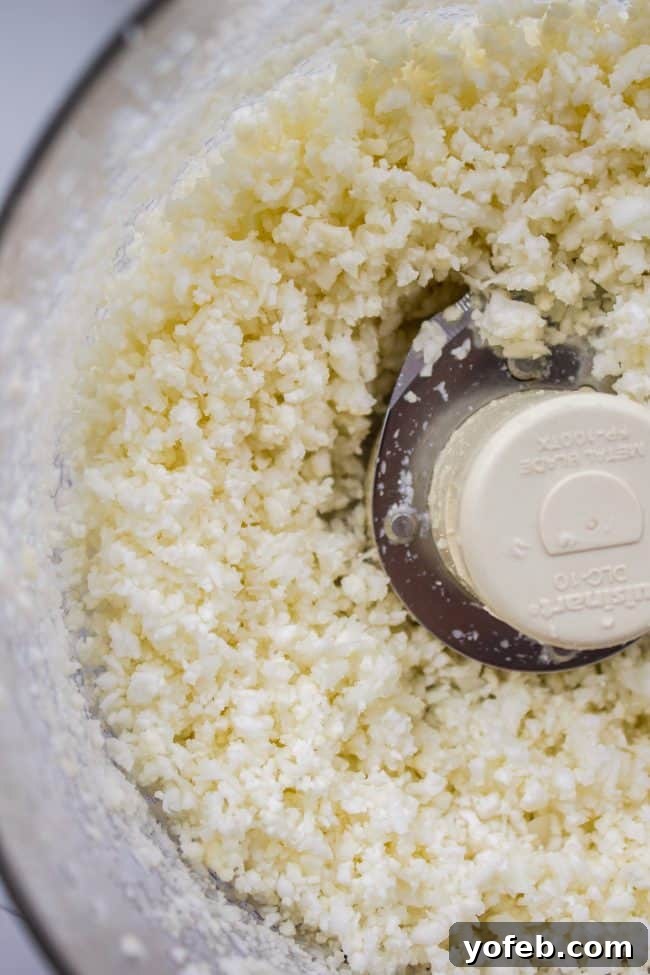
Option B: Blender
If you don’t have a food processor, a blender can work too. Use the pulse function and you may need to stop frequently to scrape down the sides with a spatula to ensure even processing.
Option C: Box Grater or Knife (Manual Method)
For a more manual approach, you can use the largest holes on a box grater (like you would for cheese) to grate the cauliflower into small pieces. Alternatively, a sharp chef’s knife can be used to finely mince the florets until they reach the desired consistency. These methods take more effort but are effective if you don’t have power tools.
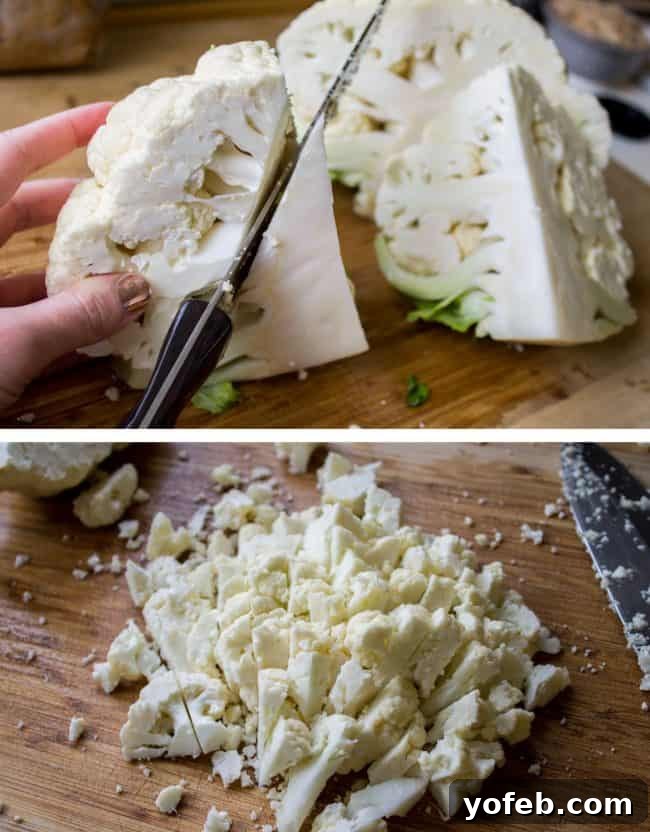
Step 3: Sauté the Cauliflower Rice
Once your cauliflower is perfectly riced, it’s time to cook it. Heat a large skillet over medium heat. Add 4 tablespoons of butter or olive oil. While oil works perfectly well, butter often imparts a richer, more delicious flavor. If you’re mindful of calories, you can reduce the amount of fat to 1-2 tablespoons, but for maximum flavor, I recommend sticking closer to the recipe’s suggestion.
Once the butter is melted and slightly bubbly, or the oil is shimmering, add the riced cauliflower to the skillet. Spread it out evenly. Season generously with 1 teaspoon of salt, 1/4 teaspoon of black pepper, 1 teaspoon of garlic powder, and 1/4 teaspoon of onion powder. Remember that the size of your cauliflower head can vary, so feel free to adjust the seasonings to your preference and taste as you go.
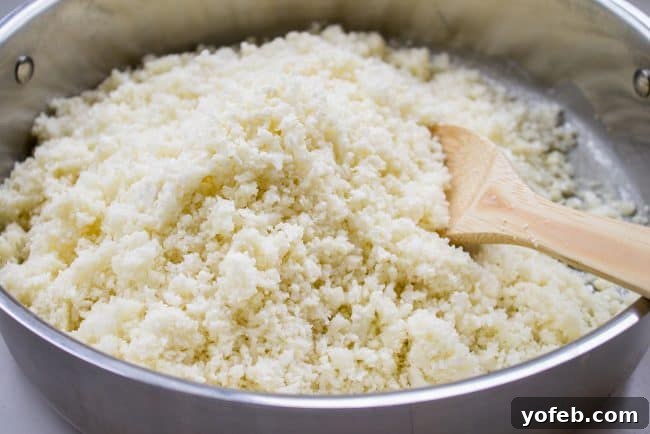
Sauté for about 5-10 minutes, stirring frequently with a wooden spoon to ensure even cooking and to prevent burning. The cooking time will depend on the quantity of cauliflower and your stovetop. The goal is a “crisp-tender” texture, similar to a perfectly sautéed vegetable, not mushy. Taste it as it cooks; since raw cauliflower is safe to eat, you can easily gauge when it’s done to your liking. Remove it from the heat as soon as it reaches that ideal crisp-tender stage.
Step 4: Serve Immediately
Once cooked, your flavorful cauliflower rice is ready to be enjoyed! Serve it warm as a side dish, or use it as a base for your favorite curries, stir-fries, or saucy main courses. It’s a wonderful, healthy foundation for a myriad of meals.
How to Season and Flavor Cauliflower Rice
While a simple blend of salt, pepper, garlic powder, and onion powder creates a delicious base, cauliflower rice is incredibly versatile and welcomes a variety of flavor profiles. Don’t hesitate to experiment with spices and herbs to match your main dish. Here are a few ideas to get you started:
- Internationally Inspired: Explore recipes like my Indian-Spiced Cauliflower Rice with turmeric, cumin, and coriander, or my Spanish Cauliflower Rice, featuring paprika, chili powder, and oregano for a Mexican-inspired meal.
- Herbal Freshness: Add fresh or dried herbs like rosemary, thyme, oregano, or a mix of Italian herbs for a Mediterranean twist.
- Spicy Kick: A pinch of red pepper flakes or cayenne pepper can add a pleasant heat.
- Lemon Zest: A squeeze of fresh lemon juice or a sprinkle of lemon zest brightens the flavor, especially if you’re serving it with fish or chicken.
- Sesame Ginger: For an Asian-inspired meal, try a dash of sesame oil, grated fresh ginger, and a splash of soy sauce (or tamari for gluten-free).
How to Store and Reheat Cauliflower Rice
Proper storage is key to maintaining the freshness and optimal texture of cauliflower rice, preventing it from becoming smelly or mushy. Here’s how to do it right:
Refrigeration:
For raw cauliflower rice, store it in an airtight container or a sealed plastic bag in the refrigerator for up to four days. It’s a good idea to pat it dry with paper towels before storing, as excess moisture can accelerate spoilage. If the cauliflower rice has already been cooked, allow it to cool completely before transferring it to an airtight container. Cooked cauliflower rice also keeps well in the fridge for about 3-4 days.
Freezing:
Yes, cauliflower rice freezes beautifully! To prevent it from clumping together, spread the raw riced cauliflower in a single, thin layer on a baking sheet and freeze for approximately one hour. Once partially frozen, transfer it to a freezer-safe bag or container. This pre-freezing step ensures that the individual grains remain separate. Frozen raw cauliflower rice can be stored for up to three months and can be cooked directly from frozen without thawing. For cooked cauliflower rice, ensure it’s completely cooled before freezing in an airtight container for up to three months.
Reheating Cooked Cauliflower Rice:
Reheating is simple, whether your cauliflower rice is raw and frozen or already cooked and refrigerated:
- From Frozen (Raw): You don’t need to thaw it! Simply add the frozen cauliflower rice directly to a skillet over medium heat with a little oil or butter. Sauté for about 5 to 7 minutes, stirring occasionally, until it’s hot, tender, and any excess moisture has evaporated.
- From Refrigerator (Cooked): For cooked and refrigerated cauliflower rice, you have two options:
- Microwave: Reheat in the microwave for 1 to 2 minutes, stirring halfway through to ensure even heating.
- Skillet: Warm it in a skillet over medium heat for 3 to 5 minutes, adding a splash of water or broth if it seems dry. Be careful not to overcook, as this can lead to a mushy texture.
Cauliflower Rice FAQs: Your Questions Answered
Is cauliflower rice good for you?
Absolutely! Cauliflower rice is an excellent addition to most diets, especially if you’re aiming for low-carb or calorie reduction. It’s significantly lower in calories and carbohydrates than traditional rice, while being rich in beneficial vitamins (like A and C), minerals (such as calcium and potassium), and dietary fiber. This fiber content is fantastic for your digestive system and helps keep you feeling full and satisfied. It’s a genuinely delicious and nutritious alternative that supports a healthy lifestyle.
Does riced cauliflower need to be cooked?
No, technically, riced cauliflower does not need to be cooked. Just like raw cauliflower florets can be enjoyed on a veggie platter, finely riced cauliflower is perfectly safe to eat raw. However, cooking it truly transforms its flavor and texture. Sautéing it with butter or oil and your choice of seasonings takes it from a simple raw vegetable to a legitimately tasty and warm side dish that complements most meals far better than its raw counterpart.
How do you make cauliflower rice without it becoming mushy?
Mushy cauliflower rice is a common pitfall, but it’s entirely avoidable with a few simple techniques for perfect texture every time:
- Don’t Overcook It: Cauliflower rice cooks much faster than regular rice. Aim for a “crisp-tender” consistency, similar to other sautéed vegetables. Since it’s safe to eat raw, taste it frequently during the last few minutes of cooking to prevent it from going soft.
- Avoid Boiling or Simmering in Water: Unlike traditional rice, cauliflower rice should not be cooked in water. This will lead to a watery, mushy mess. Always sauté it in a skillet with a small amount of fat (butter or oil) to allow moisture to evaporate and the grains to achieve a slightly firm bite.
- Don’t Make It Too Far in Advance: While you can prep raw cauliflower rice a few days ahead, cooked cauliflower rice is best enjoyed fresh. It tends to soften and release more moisture when stored for too long, especially in the refrigerator. If you must meal prep, cook it slightly less to allow for reheating without overdoing it.
Which is healthier: cauliflower rice or brown rice?
Both cauliflower rice and brown rice offer distinct health benefits, and the “healthier” choice often depends on your dietary goals. Brown rice, a whole grain, is an excellent source of complex carbohydrates, fiber, and B vitamins, and it has been linked to reducing the risk of chronic diseases. However, it is higher in calories and carbohydrates.
Cauliflower rice, on the other hand, is significantly lower in calories and carbohydrates and provides a different array of vitamins (especially Vitamin C) and minerals, along with fiber. It’s an ideal choice for those focused on low-carb, keto, or calorie-restricted diets. Many people (including myself) often opt for cauliflower rice due to its lower carb count. Ultimately, both are good for you, and a balanced diet can certainly include both!
Can I use frozen cauliflower to make cauliflower rice?
Yes, absolutely! Pre-riced frozen cauliflower is a fantastic time-saver. You can often find it in the freezer aisle of most grocery stores. When using frozen riced cauliflower, there’s no need to thaw it first. Simply add it directly to a hot skillet with your chosen fat and seasonings. You may need to sauté it a little longer than fresh cauliflower rice (around 7-10 minutes) to cook out any excess moisture and ensure it’s tender and flavorful, rather than watery.
Recipes with Riced Cauliflower
Cauliflower rice is the perfect canvas for a wide array of flavors. Beyond the basic butter, salt, and pepper, I have several recipes on my blog that take riced cauliflower to exciting new heights:
- Asian Cauliflower Rice Recipe >> Features a delectable sweet chili sauce that perfectly complements any Asian-inspired protein or curry.
- Indian Spiced Cauliflower Rice >> Bursting with aromatic spices, this pairs wonderfully with dishes like Chicken Tikka Masala.
- Cauliflower Rice Skillet with Zucchini and Kielbasa >> A hearty and flavorful one-pan meal with savory Kielbasa sausage and fresh zucchini.
- Spanish Cauliflower Rice (To Eat with Mexican Food) >> The ideal accompaniment for your favorite Mexican dishes, from Creamy Enchiladas to Traditional Tejano Carne Guisada.
- Cauliflower Fried Rice from Kitchen Sanctuary >> A healthy take on a classic takeout favorite.
- Southwestern Cauliflower Rice from Budget Bytes >> Infused with zesty flavors of the Southwest.
- Loaded Cauliflower Rice Casserole from Low Carb with Jennifer >> A comforting, low-carb casserole packed with flavor.
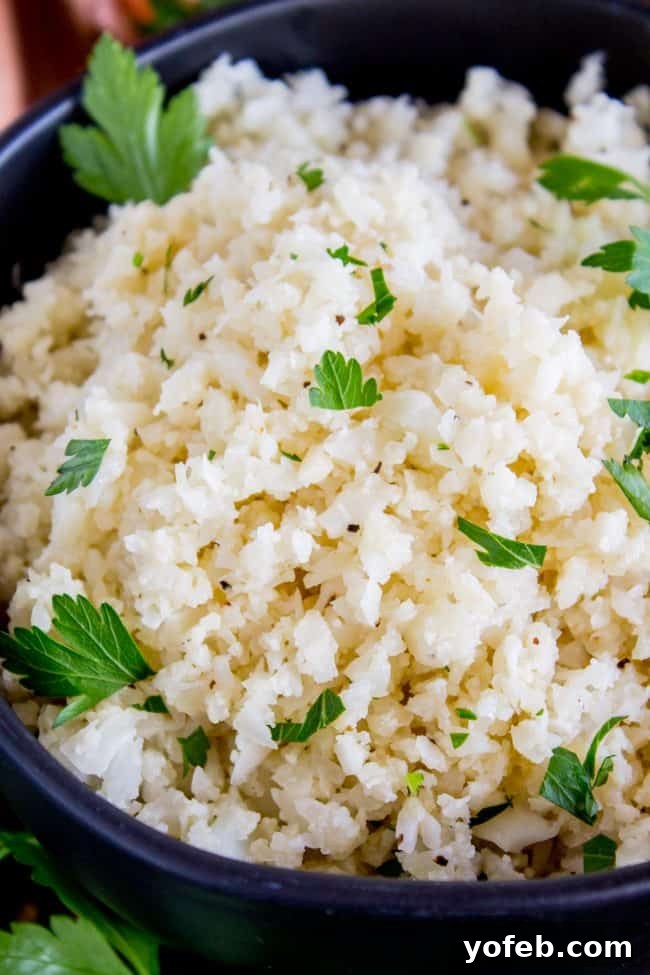
What to Serve with This Cauliflower Rice Recipe
The versatility of cauliflower rice means it can replace traditional rice or mashed potatoes in almost any dish. It’s particularly fantastic when paired with saucy main courses, as it eagerly soaks up all the delicious flavors. Here are some of my top recommendations for serving with this simple cauliflower rice recipe:
- Slow Cooker Basil Chicken in Coconut Curry Sauce >> One of the most flavorful curries you’ll ever make, perfect for spooning over cauliflower rice.
- Easy Fall-Apart Pot Roast with Carrots (Slow Cooker) >> An incredibly tender and flavorful pot roast, ideal for soaking into your riced cauliflower.
- Honey Balsamic Slow Cooker Pork Ribs >> These ribs are fall-off-the-bone delicious, and the sweet, tangy sauce is magnificent with cauliflower rice.
- Asian Pork Tenderloin with Ginger Glaze (Slow Cooker) >> A caramelized ginger glaze that reaches absolute perfection when paired with light cauliflower rice.
- 30 Minute Korean Beef Recipe >> A magical, quick dinner that comes together in minutes and is fantastic over riced cauliflower.
- Slow Cooker Beef Curry >> Thick, tender chunks of slow-cooked beef in a rich, flavorful curry sauce—begging to be served with cauliflower rice.
- Grilled Chicken with Spicy Honey Bacon Glaze >> Loaded with incredible flavor from the sweet honey and savory bacon.
- Pan Seared Chicken and Broccolini in Creamy Mustard Sauce >> The creamy mustard sauce in this dish is seriously restaurant-worthy and perfect over cauliflower rice.
- Pork with Paprika, Mushrooms, and Sour Cream from Kalyn’s Kitchen >> A comforting, hearty dish with a creamy sauce.
- Easy Sheet Pan Jambalaya from Lauren Fit Foodie >> A simplified, flavorful version of the classic that pairs well with plain cauliflower rice.
- Chicken with Garlic Sauce from The Woks of Life >> A classic Chinese dish with a fragrant garlic sauce that’s excellent with a lighter base.
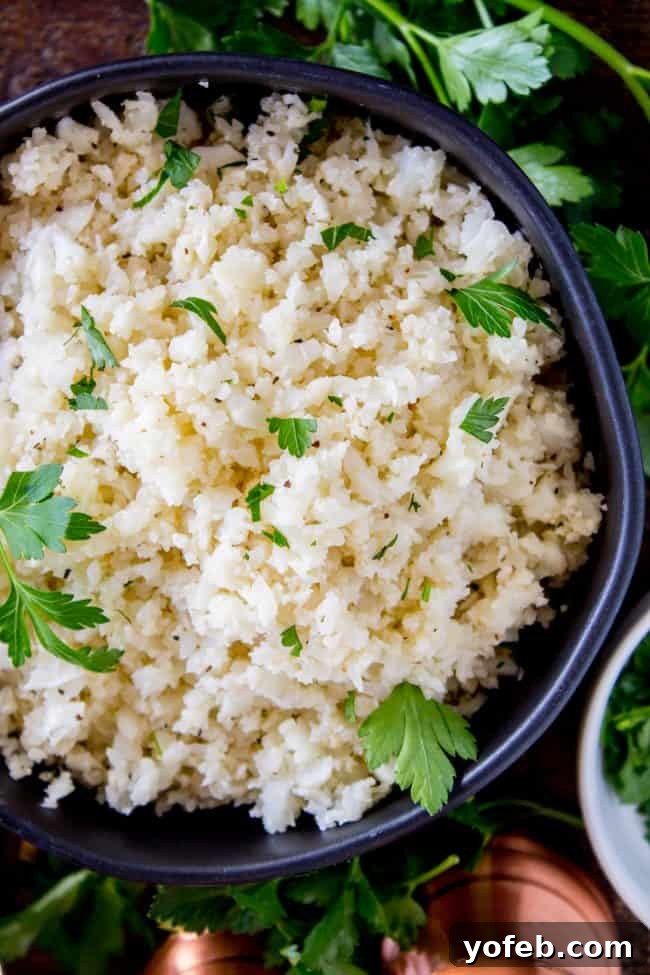
If you’ve been hesitant to try cauliflower rice, I genuinely encourage you to give this recipe a go. It’s not just a healthier alternative; it’s a genuinely enjoyable and versatile component of a nutritious meal. My family and I enjoy it so much that it’s become a weekly staple, and I rarely leave the grocery store without a fresh head of cauliflower. It’s a simple change that can have a big impact on your healthy eating journey. Let me know what you think when you try it!
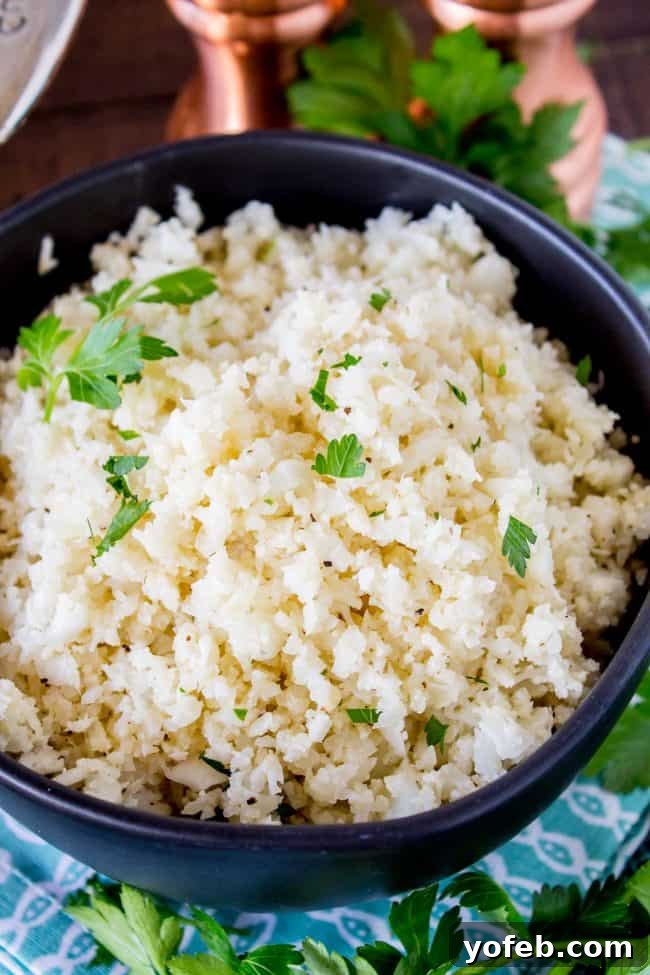
Explore Other Rice and Grain Alternatives
If you’re interested in diversifying your grain and side dish options beyond cauliflower rice, here are some other fantastic recipes to try:
- Better Than Chipotle Cilantro Lime Rice >> This recipe brings a zesty, vibrant flavor you’re sure to love, perfect for Mexican-inspired meals.
- Coconut Jasmine Rice with Cilantro >> A fragrant and creamy side dish made with coconut milk, ideal for complementing curries and Asian cuisine.
- How to Cook Brown Rice in Instant Pot >> Discover how to make healthy brown rice quickly and effortlessly using your Instant Pot.
- Asian Cauliflower “Rice” >> Another delicious twist on cauliflower rice, infused with Asian flavors.
- Herb Lemon Rice Recipe from Sweet Peas and Saffron >> A light and refreshing rice dish with bright citrus and fresh herbs.
- Easy Mushroom Risotto from The Busy Baker >> A creamy, comforting risotto that’s surprisingly easy to make at home.
- Sushi Rice from Hungry Huy >> Master the art of perfectly cooked sushi rice for your homemade rolls.
Facebook | Pinterest | Instagram

Cauliflower Rice Recipe
10 mins
10 mins
20 mins
4
Rate this Recipe
Print Recipe
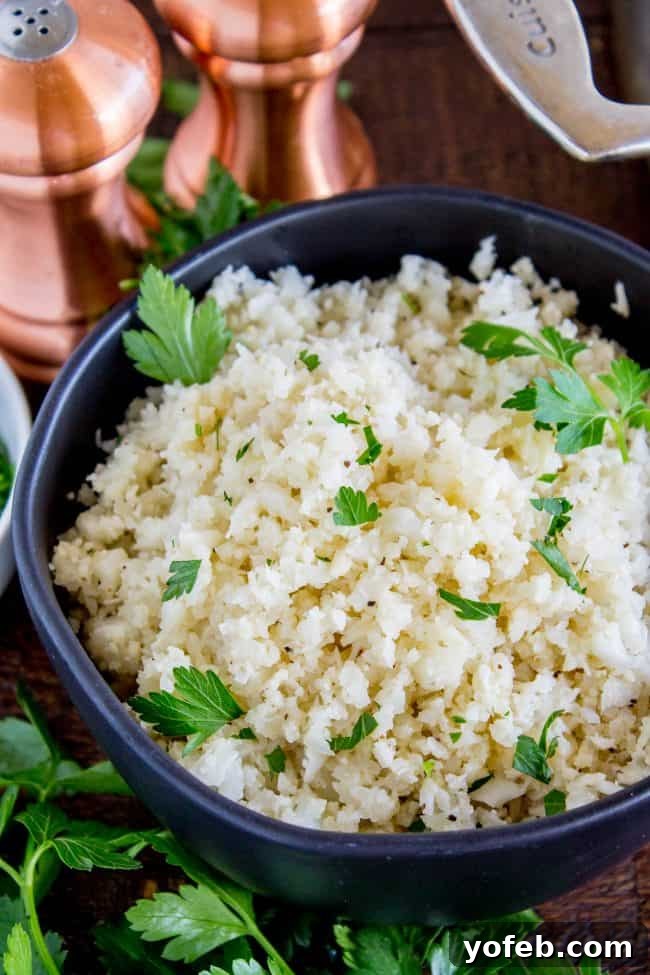
Cauliflower rice is a delicious, low-carb, and easy-to-make substitute for traditional rice. Perfect for calorie-cutting or adhering to diets like Keto and Whole30, it’s a versatile side dish that complements almost any meal you’d serve “over rice.”
Ingredients
- 1 large head of cauliflower
- 4 tablespoons butter OR olive oil (butter tastes better)
- 1 teaspoon salt, or more to taste
- 1/4 teaspoon pepper, or to taste
- 1 teaspoon garlic powder
- 1/4 teaspoon onion powder
- Parsley, to garnish (optional)
Instructions
- Wash your head of cauliflower well.
- Slice the cauliflower in half down the center, splitting the stem. Split each half again through the stem. Use a knife to remove the stem entirely from each quarter.
- Food processor method: Chop cauliflower into 1-2 inch pieces. Add about 1/3 of the chopped cauliflower to a food processor (or blender). Pulse in 1-second intervals until cauliflower resembles rice grains. Do not over-process. Repeat with remaining cauliflower.
- Box grater method: After removing the stem, grate the cauliflower using the largest holes on a box grater. Alternatively, use a knife to finely chop it.
- Once riced, heat a large skillet over medium heat. Add 4 tablespoons of butter or olive oil.
- Once the fat is melted and bubbly, add the cauliflower rice to the skillet.
- Season with 1 teaspoon salt, 1/4 teaspoon pepper, 1 teaspoon garlic powder, and 1/4 teaspoon onion powder. Adjust seasonings to your taste.
- Sauté for about 5-10 minutes, stirring often, until crisp-tender. Avoid overcooking to prevent mushiness.
- Remove from heat and serve immediately.
Notes
For detailed information on storing and reheating cauliflower rice, please refer to the “How to Store and Reheat Cauliflower Rice” section above this recipe card.
Nutrition
Calories: 156kcal |
Carbohydrates: 11g |
Protein: 4g |
Fat: 12g |
Saturated Fat: 2g |
Polyunsaturated Fat: 3g |
Monounsaturated Fat: 6g |
Potassium: 646mg |
Fiber: 4g |
Sugar: 4g |
Vitamin A: 501IU |
Vitamin C: 101mg |
Calcium: 52mg |
Iron: 1mg
Side Dish
American
156
cauliflower rice, how to make
Did you make this? I’d love to see it!
Mention @thefoodcharlatan or tag #thefoodcharlatan!