
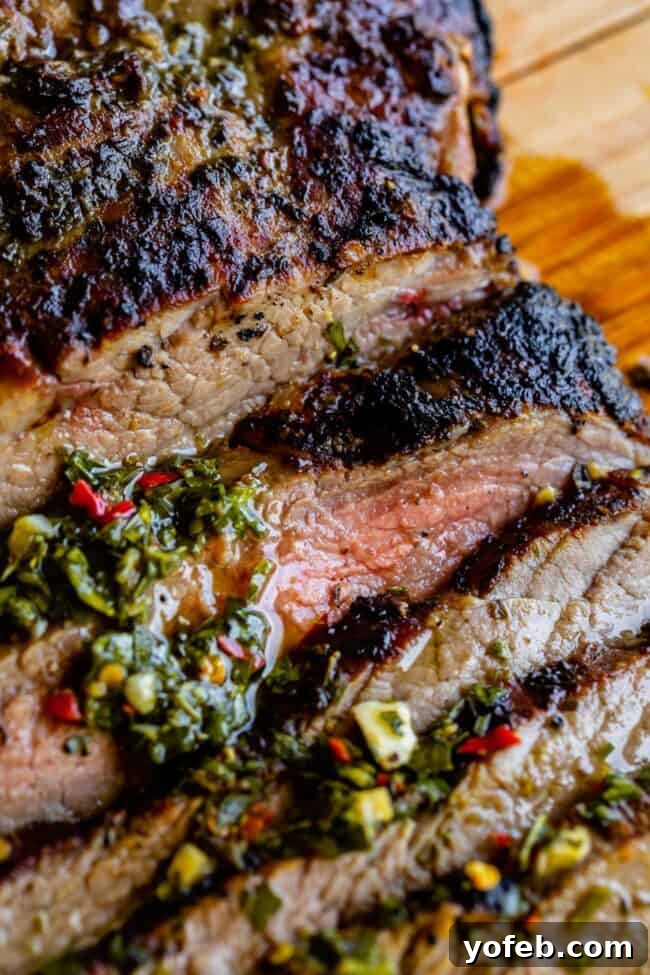
Flank steak, a notoriously flavorful cut of beef, holds a special place in the hearts of grill masters and home cooks alike. When prepared correctly, it delivers an incredibly tender and juicy experience that elevates any meal. However, this lean cut also carries a reputation for being easy to overcook, leading to a tough and unappetizing result. This comprehensive guide will equip you with all the essential tips and tricks to master flank steak, ensuring it’s always bursting with flavor, perfectly tender, and irresistibly juicy, whether you’re grilling outdoors or using your oven’s broiler.
The secrets to a truly fabulous flank steak lie in three critical elements: a stellar marinade, precise cooking at high temperatures, and the correct slicing technique. Dive in to unlock these culinary secrets and transform a humble piece of beef into a show-stopping dish your family and friends will rave about. This timeless recipe was originally shared on August 31, 2019, and remains a favorite for its simplicity and outstanding results.
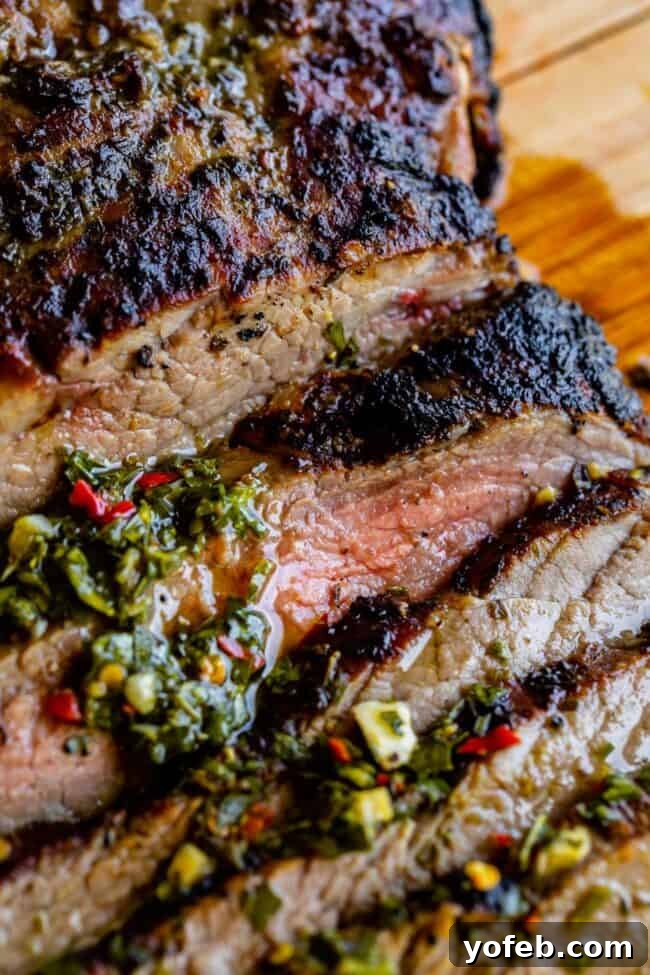
Table of Contents
- Understanding Beef Flank Steak
- What Makes Flank Steak Unique?
- Flank Steak Recipe Ingredients
- The Art of Marinating Flank Steak
- How to Grill Flank Steak to Perfection
- Cooking Flank Steak in the Oven (Broiler)
- Optimal Cooking Time for Oven Broiled Flank Steak
- Achieving the Perfect Internal Temperature
- Pro Tips for Tender Flank Steak
- Mastering the Art of Slicing Flank Steak
- Serving Suggestions for Your Flank Steak
- Storing and Reheating Flank Steak
- Flank Steak Cooking FAQs
- Flank Steak Recipe
- More Delicious Recipes You’ll Love!
Before we dive into the nitty-gritty of cooking, let me share a little anecdote from my kitchen. Every recipe journey has its bumps, and flank steak has certainly tested my patience! Picture this: a Friday morning, fully prepped for a photoshoot, with a beautiful flank steak happily marinating in a homemade chimichurri sauce for a full 24 hours. The anticipation was real.
I meticulously set up my outdoor photo station, double-checked my research on high-heat grilling for flank steak, and turned on the gas grill. I brought out my star of the day, ready for its close-up, only to discover the propane tank was completely empty. A true kitchen catastrophe! A frantic call to my husband, Eric, a trip to the gas station (still in my apron!), and an unexpected delay later, I was finally ready to grill.
Understanding Beef Flank Steak
The initial searing went perfectly, but then life intervened. My two-year-old, Valentine, needed assistance, and somehow, my grill timer decided to take a vacation. The result? A completely overcooked first flank steak. Disaster struck again! But perseverance is key in cooking, and I was determined. I acquired another flank steak, re-marinated, and this time, I set three timers. No joke. The second attempt was pure perfection, succulent and tender, ready for its photoshoot.
Of course, the universe had one last laugh. My camera battery decided to die on the very last picture I intended to take. It’s always something, isn’t it? Despite the minor setbacks, the final product was absolutely worth it. And if your upcoming plans involve grilling, this is the recipe you NEED. If you’ve never prepared flank steak before, now is your moment. This cut, especially when paired with a vibrant chimichurri sauce, is an absolute game-changer. You’ll be the hero of any cookout!
What Makes Flank Steak Unique?
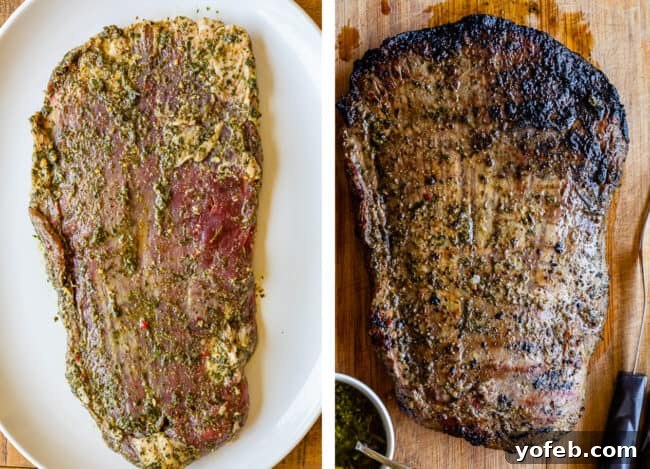
Flank steak is a fascinating cut, primarily known for its distinct shape and robust flavor profile. It’s a long, thin, and relatively flat strip of muscle, harvested from the cow’s abdominal area, just below the loin. Its lean nature, being boneless and devoid of significant fat marbling, contributes to its intense, beefy taste. However, this leanness also means it can become tough if not handled with care. This is precisely why proper marinating and precise cooking are not just recommended, but absolutely essential for a tender and delicious flank steak.
Its recognizable long, flat shape often sees it sold neatly rolled up in butcher shops. Despite its potential for toughness, flank steak’s ability to absorb marinades makes it a versatile canvas for flavor, transforming it into a succulent centerpiece.
Skirt Steak vs. Flank Steak: A Closer Look
Flank steak is frequently confused with skirt steak, particularly the inside skirt steak, due to their similar long, thin appearance. Both cuts originate from the abdominal region of the cow, a heavily worked muscle area, resulting in a coarse, muscular grain. This muscularity makes both cuts inherently tougher than, say, a tenderloin, and thus they greatly benefit from tenderizing techniques.
While similar in some aspects, there are subtle differences in their fiber structure and ideal preparation methods. Skirt steak tends to be a bit more fibrous and often benefits from aggressive tenderizing, as seen in recipes like Carne Asada. Flank steak, while still tough, is slightly broader and less prone to drying out if cooked quickly. Rest assured, this recipe’s focus on marinating and proper slicing will ensure your flank steak is incredibly tender, despite its natural robust texture.
Flank Steak Recipe Ingredients
Preparing a delicious flank steak requires only a few key ingredients, with the marinade playing a pivotal role in flavoring and tenderizing the meat. Below is a quick shopping list to get you started. For a detailed breakdown and instructions, please refer to the full recipe card further down this page.
- Flank Steak: Approximately 2 pounds, ideally with uniform thickness for even cooking.
- Salt and Freshly Ground Black Pepper: Essential for seasoning the meat before marinating.
- Homemade Chimichurri Sauce: Our preferred marinade, made with fresh parsley, garlic, fresh oregano, crushed red pepper, cumin, red wine vinegar, and olive oil. (Alternatively, any favorite marinade will work!)
- Cooking Oil: A small amount of neutral oil for greasing the grill grates or broiler pan.
- Extra Chimichurri Sauce: For serving, to truly enhance the flavor.
The Art of Marinating Flank Steak
Given flank steak’s lean profile and lack of extensive fat marbling, marinating is arguably the most crucial step in achieving a truly flavorful and tender outcome. This thin cut readily absorbs the rich flavors of a marinade, allowing the acids and enzymes to work their magic, breaking down tough muscle fibers and infusing the meat with incredible taste.
While various marinades can work wonders, a good marinade typically incorporates three fundamental components: **fat, acid, and flavor**. The fat, often olive oil, helps to moisten the meat and carry fat-soluble flavors. The acid, such as lemon juice, lime juice, vinegar (like red wine vinegar), or even dairy products like buttermilk, plays a vital role in tenderizing by denaturing proteins. Finally, the flavor component comes from a blend of spices, herbs, and aromatics like garlic, which is so essential it almost deserves its own category! For an added layer of complexity and a touch of caramelization during cooking, a touch of sweetness from honey or brown sugar can also be a delightful addition.
My absolute favorite marinade for flank steak is a robust Chimichurri Sauce. Its intense garlic-infused, herbaceous profile is simply divine, and it conveniently doubles as an exquisite serving sauce. This dual-purpose aspect makes it incredibly efficient and undeniably delicious. While I’ve included a simple marinade idea in the recipe card, I wholeheartedly recommend trying the chimichurri for an unforgettable flavor experience that perfectly complements the rich beefiness of flank steak.
How to Grill Flank Steak to Perfection
The secret to grilling a tender, juicy flank steak lies in a “hot and fast” approach. This method creates a beautiful sear on the exterior while keeping the interior perfectly cooked and moist. Here’s a detailed guide to achieve grilling mastery; full instructions are also available in the recipe card below.
- Preheat the Grill: Turn your grill to its highest setting, aiming for approximately 450 degrees Fahrenheit. Allow it to preheat for at least 15 minutes to ensure the grates are intensely hot, which is crucial for a proper sear.
- Prepare the Steak: Ensure your marinated flank steak is at room temperature (let it sit out for 30-40 minutes before grilling) and pat it dry to remove excess marinade. This promotes better searing.
- Initial Sear: Place the steak on the very hot grates. Sear for 1 to 2 minutes per side, depending on the thickness of your steak. This initial high-heat exposure locks in juices and develops a desirable crust. It’s critical not to lift the lid during this phase to maintain high internal grill temperature.
- Reduce Heat and Finish Cooking: After the initial sear, reduce the grill heat to medium. Continue to cook for another 6-10 minutes, flipping the steak once halfway through. Avoid opening the lid unnecessarily.
- Monitor Internal Temperature: This is paramount for flank steak. Given that every grill and every cut of meat behaves differently, relying solely on cooking times can lead to overcooked steak. Invest in a reliable meat thermometer. Cook until the internal temperature reaches 5 degrees Fahrenheit below your desired final doneness (e.g., 130°F for medium-rare). Refer to the internal temperature guide below for precise doneness levels.
- Rest the Steak: Once removed from the grill, immediately transfer the steak to a clean cutting board or rimmed platter. Tent it loosely with foil and let it rest for at least 5-10 minutes. This resting period allows the juices to redistribute throughout the meat, ensuring a tender and moist result when sliced.
Cooking Flank Steak in the Oven (Broiler)
For those times when outdoor grilling isn’t an option, your oven’s broiler is an excellent alternative for cooking flank steak. This method effectively mimics the intense, direct heat of a grill, making it perfect for achieving a good sear and a juicy interior. Flank steak is sometimes even labeled as “London Broil” because it’s such a suitable cut for broiling.
- Preheat the Broiler: Set your oven broiler to high heat. Position your oven rack so that the top surface of the flank steak will be about 3-4 inches below the heat source. Allow the broiler to preheat for at least 10-15 minutes to ensure it reaches its maximum temperature.
- Prepare Your Pan: If you have a dedicated broiler pan, use it! Its slotted design allows fat to drip away. If not, don’t worry. Line a sturdy baking sheet with aluminum foil for easy cleanup, and then place an oven-safe cooling rack on top. This setup elevates the steak, promoting even cooking and airflow, similar to a broiler pan.
- Broil the Steak: Place your room-temperature, marinated flank steak directly on the prepared pan. Broil on high heat for approximately 5-7 minutes per side. The total cooking time will typically range from 11-14 minutes, depending on the thickness of your steak and your desired level of doneness.
- Flip Halfway: At the halfway point, carefully remove the pan from the oven (close the oven door immediately to retain heat) and use tongs to flip the steak. Return the pan to the oven to finish cooking the second side.
- Check Internal Temperature: As with grilling, a meat thermometer is your best friend here. Always rely on internal temperature rather than strict cooking times. Remove the steak from the oven when it reaches 5 degrees Fahrenheit below your target doneness temperature.
- Rest and Slice: Transfer the cooked flank steak to a rimmed platter, tent loosely with foil, and let it rest for 5-10 minutes. This essential step ensures the juices redistribute, yielding a tender and moist steak. Once rested, slice thinly against the grain and on the bias, as detailed below.
Optimal Cooking Time for Oven Broiled Flank Steak
Flank steak, being a relatively thin cut, cooks remarkably fast under the high heat of a broiler. For a perfect medium-rare steak, you’re looking at a total cooking time of just 11-14 minutes, which translates to about 5-7 minutes per side. The golden rule for preventing dry, chewy meat is to pull the steak from the oven when its internal temperature is approximately 5 degrees Fahrenheit lower than your desired final temperature. This accounts for “carryover cooking,” where the steak continues to cook after being removed from the heat, reaching its ideal doneness as it rests. Overcooking is the primary culprit behind tough flank steak, so meticulous temperature monitoring is key.
Achieving the Perfect Internal Temperature
Mastering flank steak requires precision, especially regarding internal temperature. Remember the carryover cooking principle: remove your steak from the heat source when it’s 5 degrees Fahrenheit BELOW your target final temperature. As the steak rests, tented with foil, its internal temperature will continue to rise to the desired level. Here’s a handy guide:
- Rare: Remove at 120°F (Final: 125°F)
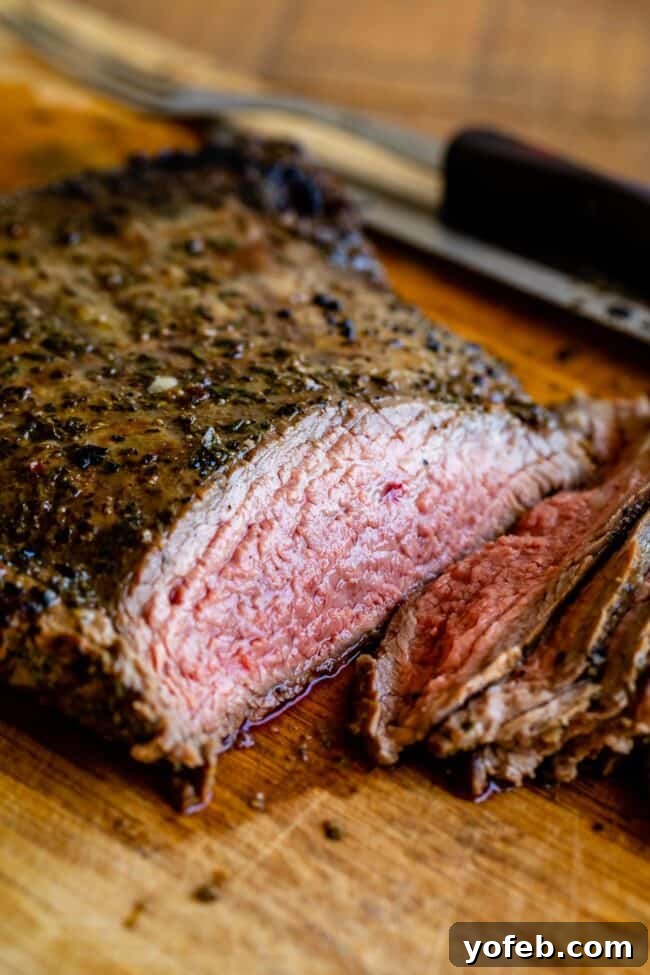
- Medium-Rare: Remove at 130°F (Final: 135°F) – Highly Recommended for Flank Steak
- Medium: Remove at 140°F (Final: 145°F)
- Medium-Well: Remove at 150°F (Final: 155°F)
- Well Done: Remove at 160°F (Final: 165°F) – Generally not recommended for flank steak due to potential toughness.
For the most tender and flavorful flank steak, aim for medium-rare. Its lean nature means that cooking it beyond medium can quickly lead to a dry and chewy texture.
Pro Tips for Tender Flank Steak
Achieving a consistently tender flank steak is a combination of several crucial steps. While marinating is paramount, let’s review all the essential techniques to ensure your flank steak is always succulent and never chewy:
- Marinate, Marinate, Marinate! This cannot be overstated. Aim for a minimum of 2 hours, with 4 hours being ideal. You can marinate for up to 24 hours, but avoid going longer as the acids in the marinade can begin to break down the meat too much, leading to a mushy texture. If you’re short on time, even 15-30 minutes will add some flavor, but for true tenderization, give it time. Another option, though less common for flank steak, is mechanical tenderizing with a meat mallet.
- Bring to Room Temperature: Always remove your flank steak from the refrigerator 30-40 minutes before cooking. Starting with room temperature meat allows it to cook more evenly and prevents the exterior from overcooking before the interior reaches your desired doneness.
- Pat Dry Before Cooking: Before it hits the heat, gently pat the steak dry with paper towels. This removes excess moisture and any loose bits of marinade or spices. A dry surface is crucial for achieving a proper, flavorful sear and preventing the meat from steaming instead of grilling or broiling.
- Cook Hot, Then Medium: Start with high heat for a quick sear (1-2 minutes per side) to create a beautiful crust and lock in juices. Then, reduce the heat to medium to finish cooking gently. Resist the urge to keep the heat high throughout, as this will lead to a burnt exterior and potentially tough interior. Flank steaks are thin, so they cook quickly – don’t overdo it!
- Respect Carryover Cooking: Understand that the internal temperature of your steak will rise by about 5 degrees Fahrenheit after it’s removed from the heat. Therefore, take the flank steak off the grill or out of the oven when it reaches 130°F for medium-rare, or 5 degrees below your preferred final doneness. As mentioned, flank steak shines at medium-rare; for well-done, consider a different cut of beef.
- Rest Your Meat: After cooking, transfer the steak to a cutting board or platter and tent it loosely with foil. Let it rest for at least 5-10 minutes. This allows the muscle fibers to relax and reabsorb the juices, ensuring a more tender and moist slice. Skipping this step means all those delicious juices will run out onto your cutting board.
- Slice Against the Grain: This is a non-negotiable step for tender flank steak. Flank steak has prominent muscle fibers (the “grain”). Slicing perpendicular to these fibers shortens them, making each bite much easier to chew. Combine this with slicing “on the bias” for maximum tenderness and an elegant presentation.
Mastering the Art of Slicing Flank Steak
Slicing flank steak correctly is just as important as marinating and cooking it properly when it comes to achieving optimal tenderness. Flank steak is composed of long, lean muscle fibers that run in a single, visible direction, often referred to as the “grain” of the meat. If you slice with the grain, you’ll end up with long, chewy fibers that are difficult to masticate. The key is to cut these fibers into much shorter pieces, doing most of the work for your teeth before you even take a bite.
To ensure a truly tender flank steak, you need to slice it very thinly (about 1/4 inch thick) and specifically “on the bias” and “against the grain.”
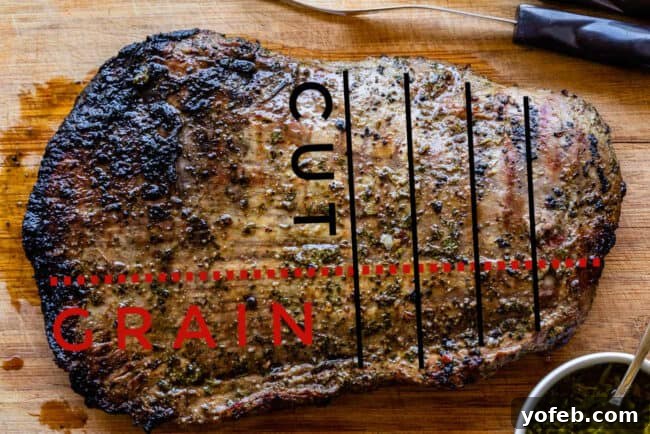
- “Against the grain” means your knife should cut perpendicular to the visible lines of muscle fibers on the steak. Imagine the fibers are like parallel lines; your knife should cut across them at a 90-degree angle. This significantly shortens the tough fibers, making the meat much more tender.
- “On the bias” refers to the angle of your knife. Instead of slicing straight up and down, you should hold your knife at a 45-degree angle to the cutting board. This technique increases the surface area of each slice, making each piece seem larger and more appealing, while further shortening the muscle fibers for enhanced tenderness. It also contributes to a more elegant and professional presentation.
Take your time with this step, using a very sharp knife. Precision here will make all the difference in the final texture of your flank steak.
Serving Suggestions for Your Flank Steak
Once you’ve mastered the art of cooking a perfect flank steak, the possibilities for serving are endless! This versatile cut pairs beautifully with a wide array of side dishes, from classic comfort foods to fresh, vibrant salads. Here are some of my top recommendations to complement your delicious flank steak:
- Homemade Chimichurri Sauce: As repeatedly emphasized, flank steak and chimichurri are a match made in culinary heaven. The bright, herbaceous, and garlicky notes of chimichurri cut through the richness of the beef perfectly. It’s a must-try!
- Aunt Shirley’s Famous Creamy Mashed Potatoes: Indulgently creamy and utterly comforting, these mashed potatoes are the ideal vehicle for soaking up any delicious beef juices and chimichurri.
- Instant Pot Brown Rice: For a healthier, nutty alternative, brown rice provides a wonderful textural and flavor contrast to the robust flank steak. It’s also incredibly easy to make.
- My Favorite Coleslaw (With Lemon and Fresh Herbs): A light, tangy, and refreshing coleslaw offers a fantastic counterpoint to the rich beef. The lemon and fresh herbs brighten the entire meal.
- Homemade Green Bean Casserole: Elevate this classic side dish with a homemade version that’s far superior to any canned soup rendition. It’s hearty and satisfying.
- Cream of Turkey Soup: While it might seem unconventional, a light, flavorful soup with a hint of lemon and shredded carrots can be a surprisingly delicious accompaniment, especially in cooler weather.
- Roasted Brussels Sprouts and Sweet Potatoes: A vibrant and nutritious side, roasted Brussels sprouts are less bitter than in generations past and, when paired with sweet potatoes, offer a delightful caramelized flavor that complements beef wonderfully.
- Fluffy Buttermilk Biscuits: Warm, flaky, and buttery biscuits are perfect for a heartier meal, ideal for sopping up any remaining juices or sauces.
Storing and Reheating Flank Steak
Proper storage and reheating are crucial to preserving the tenderness and flavor of your leftover flank steak. With a little care, you can enjoy this delicious meal for days to come.
Storage: Store any leftover cooked flank steak in an airtight container in the refrigerator for 3-4 days. For longer storage, thinly sliced cooked flank steak can be frozen in an airtight container or freezer bag for up to 2-3 months. Thaw overnight in the refrigerator before reheating.
Reheating Methods to Maintain Tenderness: The goal when reheating flank steak is to warm it through without drying it out or making it tough. The key is low heat and added moisture.
- Microwave (with moisture): While often avoided for steak, the microwave can work if done correctly. Place slices of flank steak in a microwave-safe container with a tight-fitting lid. Add a tablespoon or two of beef broth, gravy, or even a splash of water to the bottom of the container. Cover tightly and microwave on medium power in short bursts (30-60 seconds) until just heated through. The added liquid creates steam, preventing the steak from drying out.
- Stovetop (gentle heat): Heat a skillet over medium-low heat. Add a bit of beef broth, gravy, or a pat of butter to the pan. Once shimmering, add the sliced flank steak and gently warm for 1-2 minutes per side, just until heated through. Avoid high heat, which can quickly toughen the meat.
- Oven (low and slow): Preheat your oven to a low temperature, around 250-275 degrees Fahrenheit. Place the sliced flank steak in an oven-safe dish. Again, add a small amount of beef broth or water to the bottom of the dish to create moisture. Cover the dish tightly with foil and heat for 10-15 minutes, or until the steak is warmed through. This method is excellent for reheating larger quantities and helps maintain tenderness.
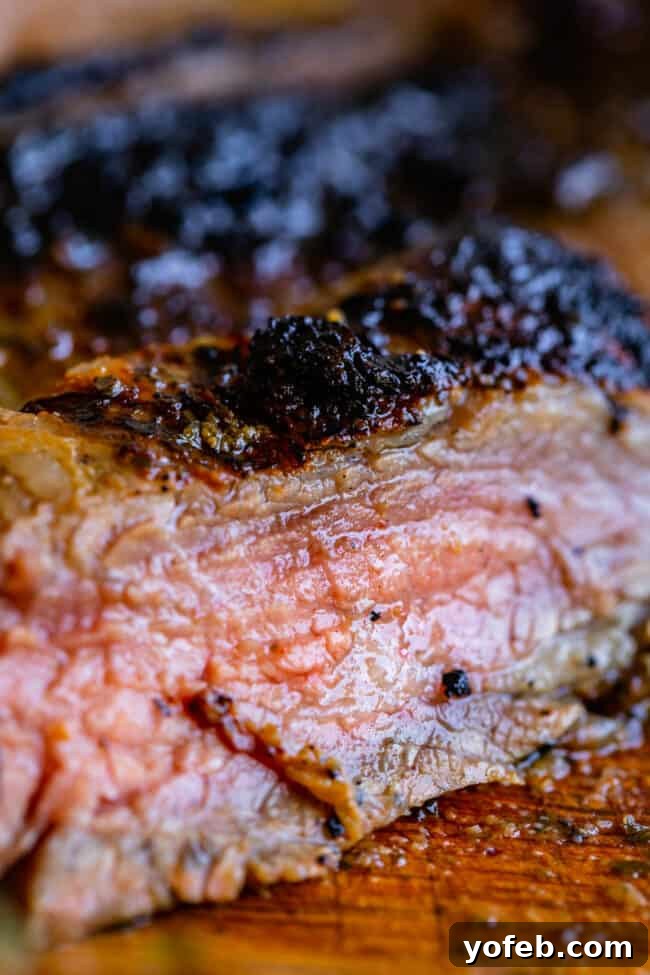
And there you have it! Cooking flank steak might seem intimidating at first, but by following these simple rules – marinating, cooking hot and fast, monitoring temperature, resting, and slicing correctly – you’ll consistently achieve a tender, juicy, and incredibly flavorful result. Once you understand these techniques, it really is that easy!
If you’re looking for more fantastic beef and grilling recipes, be sure to explore some of our other favorites:
- How to Cook Tri-Tip (Grilled or Oven Roasted)
- How to Cook Ribeye Steak
- Texas Beef Brisket in the Oven
- Cuban Mojo Marinated Pork
Flank Steak Cooking FAQs
Yes, it is possible to over-marinate flank steak. Marinades designed to tenderize, especially those containing acids like vinegar or lemon juice, can begin to break down the meat’s structure excessively if left for too long. This can result in a mushy texture and sometimes an off-putting sour taste. It’s generally recommended not to marinate flank steak for longer than 24 hours. Ideal marinating times are typically between 2 to 12 hours for both flavor and tenderization without compromising texture.
While flank steak is a tougher cut than some, it doesn’t always require mechanical tenderizing (like pounding with a mallet) in the same way that a skirt steak might. A well-formulated marinade, with its acidic components, is usually sufficient to tenderize flank steak. The combination of marination and correct slicing – thinly against the grain – effectively breaks down the long muscle fibers, making the meat tender and pleasant to eat. Mechanical tenderizing is an option if you prefer, but it’s not strictly necessary if you follow the marinating and slicing instructions.
Flank steak can be incredibly tender, but its tenderness is highly dependent on how it’s prepared and cooked. It’s not inherently as tender as, say, a filet mignon, due to its muscle structure. However, by adhering to a few key techniques, you can achieve remarkable tenderness:
- Marinating: Soaking the steak for at least 2 to 24 hours in an acidic marinade helps break down connective tissues.
- Correct Cooking: Cooking it quickly at high heat to the correct internal temperature (preferably medium-rare) and allowing for carryover cooking. Removing the steak when it’s 5 degrees BELOW your desired final temperature is crucial.
- Proper Slicing: Thinly slicing the steak against the grain and on the bias shortens the muscle fibers, making each bite tender and easy to chew.
If you’ve previously experienced tough, chewy flank steak, it’s likely that one or more of these crucial steps were overlooked.
Facebook | Pinterest | Instagram

Flank Steak Recipe
5 mins
10 mins
2 hrs 15 mins
4 Servings
Rate this Recipe
Print Recipe
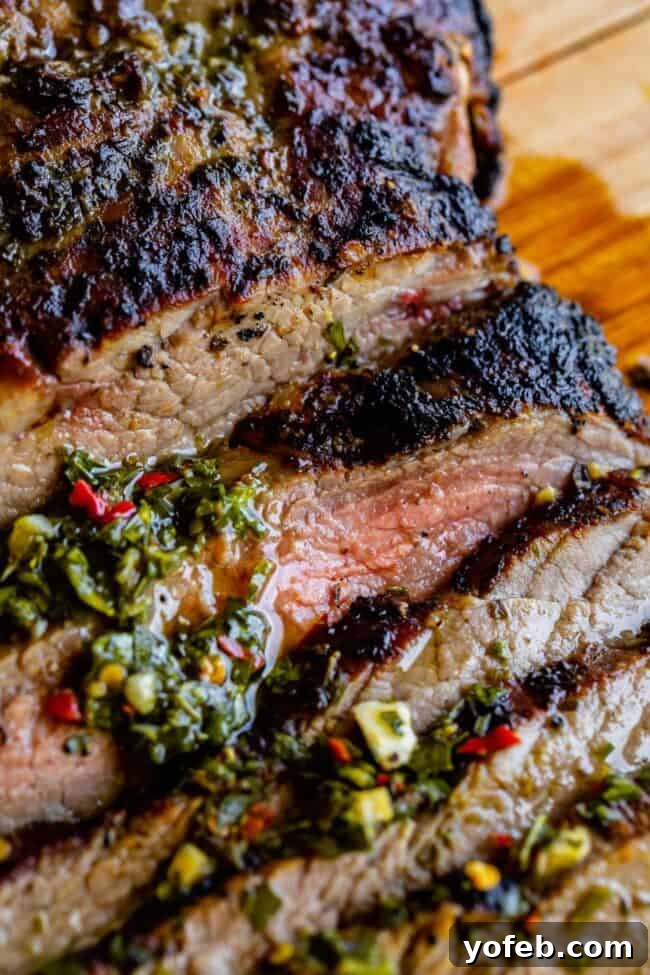
Flank Steak is one of those cuts of beef that is incredibly tasty when done well, but can also be really easy to mess up. I will show you all my tips and tricks to get a flavorful, juicy, and tender flank steak, grilled outside or under the broiler! Using a great marinade, slicing correctly, and cooking hot and fast are the secrets to a fabulous flank steak.
Ingredients
- 2 pounds flank steak
- Salt and pepper to taste
- 1/4 cup homemade Chimichurri sauce*
- Oil, to grease grill
- More Chimichurri sauce to serve
Instructions
- Start by choosing a great flank steak at the store. Look for one that is uniform in thickness if you can find it, to ensure even cooking. (Costco sells fabulous flank steaks in a 2 pack. Cook one and freeze the other for next time!)
- Unroll the steak and season generously with salt and pepper on both sides.
- Place the steak in a large ziplock bag, or in a glass casserole dish with a lid.
- Rub about 1/4 cup homemade Chimichurri sauce (click here for the recipe) all over both sides of the flank steak. OR you can use your favorite marinade (see notes for a different marinade idea).
- Seal the bag or put the lid on your dish. Marinate in the fridge for at least 2 hours, or up to 24 hours. Turn the steak at least once or twice during the marinade (which is why I prefer using ziplocks; I don’t like getting my hands messy).
- Take the steak out of the fridge and let it sit on the counter for about 30-40 minutes before cooking, so that it starts cooking at room temperature.
How to grill flank steak
- Make sure your grill has been scraped clean of any remaining bits from the last time you grilled.
- Heat your grill to the highest setting, about 450 degrees. Let the grill heat for at least 15 minutes to make sure it’s REALLY hot.
- Discard any marinade that is not sticking to your flank steak.
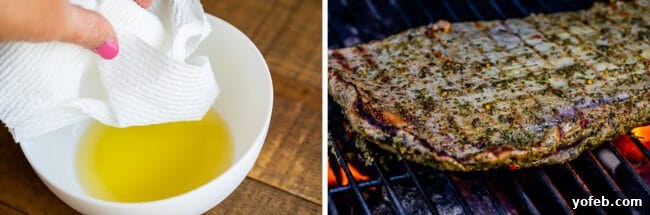
- Just before you are ready to put the steak on the grill, oil the grates. I like to add a little olive oil to a bowl, dip a paper towel in it lightly (don’t soak it) and rub the grill grates where the steak is going to go.
- Place your steak on the grill and shut the lid. Set a timer for 1 minute, or 2 minutes if it’s a very thick steak.
- Open the lid and flip the steak. Shut the lid and set a timer for another 1-2 minutes.
- After this initial sear, don’t open the lid again. Simply turn the heat down to medium.
- Cook the steak over medium heat for 6-10 minutes, opening the grill to flip the steak one time at the halfway point. Keep an eye on it and don’t walk away. Use your meat thermometer. Rely on the meat thermometer, not on cooking times. See notes below for doneness temperatures.
- When your steak has reached the temperature that is 5 degrees BELOW what you want your final temperature to be (see notes), remove from the grill and place on a rimmed platter to catch any drippings.
- Tent your steak with foil to keep it warm while it rests for 5 minutes. You need to let the steak rest, or all the juices will run out of the steak when you slice it.
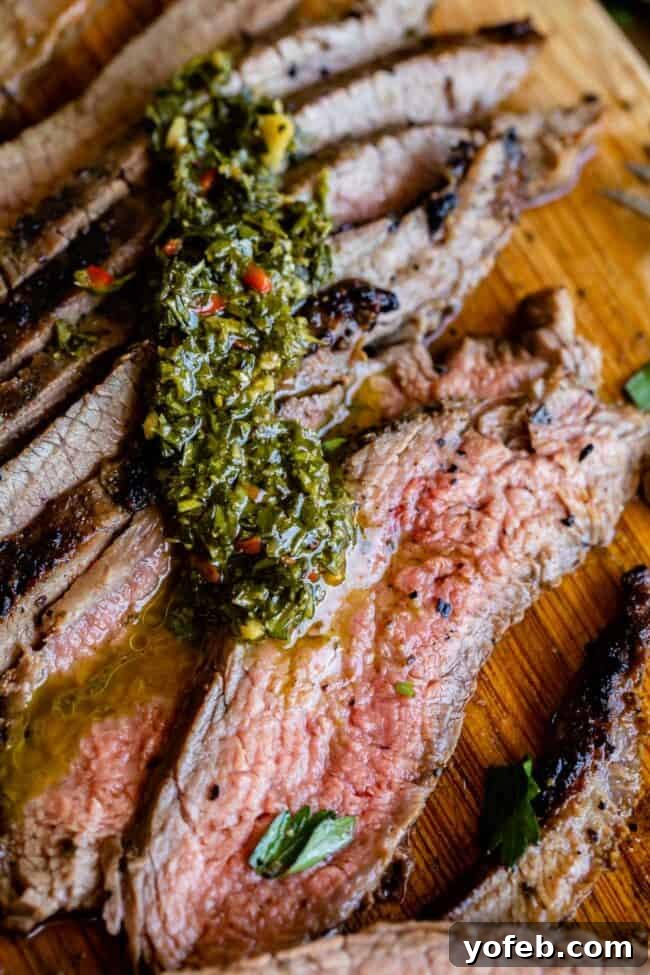
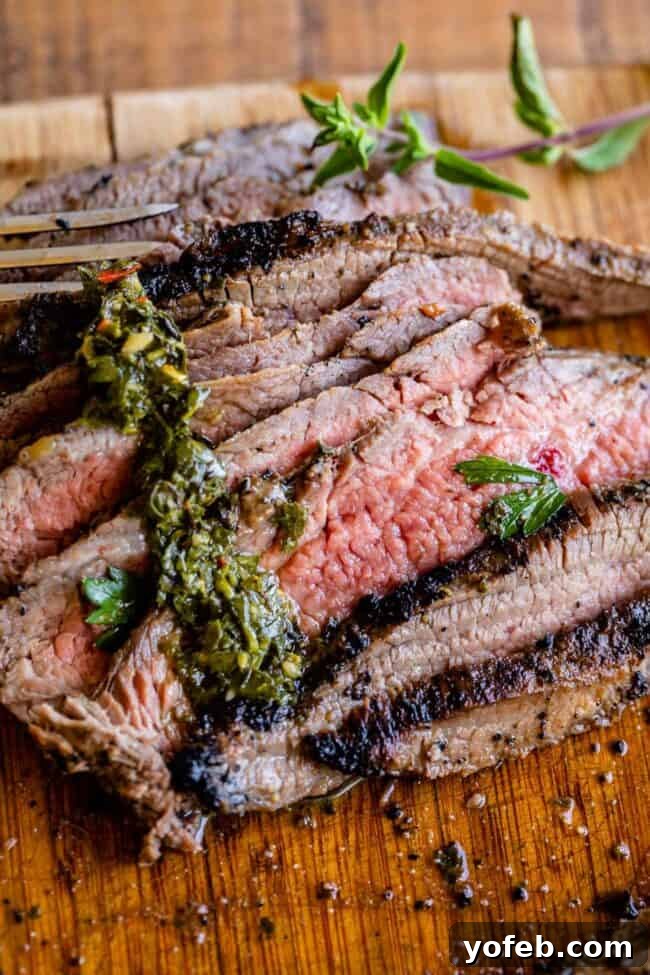
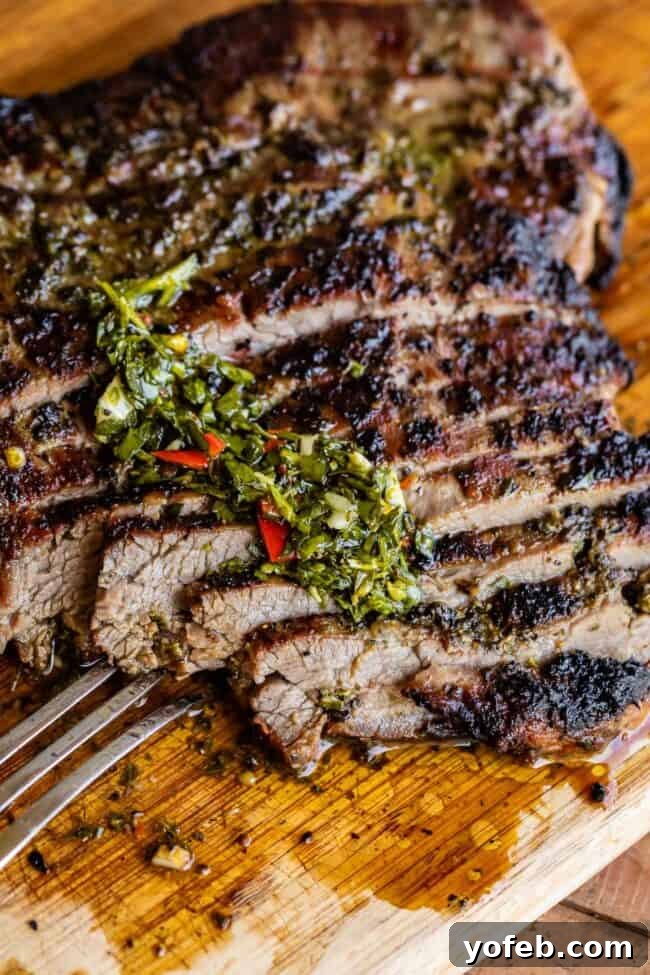
- Transfer the meat to a cutting board. Use a sharp knife to slice the steak into thin 1/4 inch strips, on the bias against the grain. “On a bias” means you should be cutting at a 45 degree angle, not straight up and down like you would slice bread. (This increases the surface area of each bite, and shortens the muscle fibers, enhancing tenderness.) “Against the grain” means that your knife should be cutting the meat perpendicular to the lines of muscle (“grain”) that you can see on the flank steak. See photo.
- Serve the flank steak with extra Chimichurri Sauce!
How to oven broil flank steak
- Turn your broiler on to high heat. Let it heat up for 15 minutes at least, to make sure it’s good and hot.
- Meanwhile, place your room temperature flank steak on a greased broiling pan, or on an oven-safe cooling rack that has been set on a baking sheet. (Line the baking sheet with foil for easy clean up. See photo).
- Position your oven rack so that the meat will be about 3-4 inches from the heat source.
- Broil the flank steak for about 11-14 minutes (for Medium Rare. See how to measure doneness temperature in the notes below.) At the halfway point (after about 6-7 minutes), remove the pan from the oven, shut the oven door, and flip the steak with tongs. Put the pan back in the oven. (you always want to keep the oven door shut as much as possible so that your oven doesn’t cool down.)
- When the steak reaches the temperature that is 5 degrees BELOW what you want your final temperature to be, remove it from the oven.
- Place the steak on a rimmed platter to catch any drippings.
- Tent your steak with foil to keep it warm while it rests for 5 minutes. You need to let the steak rest, or all the juices will run out of the steak when you slice it.
- Transfer the meat to a cutting board. Use a sharp knife to slice the steak into thin 1/4 inch strips, on the bias against the grain. “On a bias” means you should be cutting at a 45 degree angle, not straight up and down like you would slice bread. (This increases the surface area of each bite, and shortens the muscle fibers, enhancing tenderness.) “Against the grain” means that your knife should be cutting the meat perpendicular to the lines of muscle (“grain”) that you can see on the flank steak. See photo.
- Serve the flank steak with extra Chimichurri Sauce!
Notes
Remember to take the steak off the grill when it is 5 degrees BELOW what you want the final temperature to be. The steak will continue cooking once off the heat; this is called “carryover cooking.” So, for example, if you want a Medium Rare steak, take it off the grill or out of the oven at 130 degrees F.
- Rare: 125 degrees F
- Medium Rare: 135 degrees F
- Medium: 145 degrees F
- Medium Well: 155 degrees F
- Well Done: 165 degrees F
*Chimichurri sauce is my favorite marinade to use with flank steak, but you can use any marinade you know and love! The flank steak you see in the photos on the cooling rack (ready to broil) was rubbed with a version of my Tri Tip marinade:
- 1 teaspoon garlic salt
- 1 and 1/2 teaspoons Lawry’s seasoning salt
- 1 teaspoon kosher salt
- 1/2 teaspoon pepper
- 1/2 teaspoon sugar
- 1 teaspoon garlic powder
- 1 and 1/2 teaspoons dried parsley (or a handful of chopped fresh parsley)
- 2 tablespoons olive oil
Nutrition
Mention @thefoodcharlatan or tag #thefoodcharlatan!
More Delicious Recipes You’ll Love!
- How to Cook Tri Tip (Grilled or Oven Roasted)
- How to Cook Ribeye Steak
- Easy Fall-Apart Pot Roast with Carrots (Slow Cooker)
- Carne Asada << this recipe makes the BEST tacos ever!
- Smashed Burger
- Marshmallow Cream Fudge
- Christmas Morning Casserole
- Best Sugar Cookies Recipe
- Cookie Frosting
- Moist Banana Bread with Sour Cream
- Scrambled Egg Casserole
- Maple Long John Donuts
- Pumpkin Pie Dump Cake
- How to Make Berry Cobbler
- Best Homemade Cinnamon Rolls Recipe
- Rhubarb Dream Bars
- Candy Cane Ice Cream
- Soft Pumpkin Cookies
- Grilled Greek Beef Kebabs << from Cupcakes and Kale Chips
- Grilled Chicken Caprese with Buffalo Mozzarella << from Cafe Delites