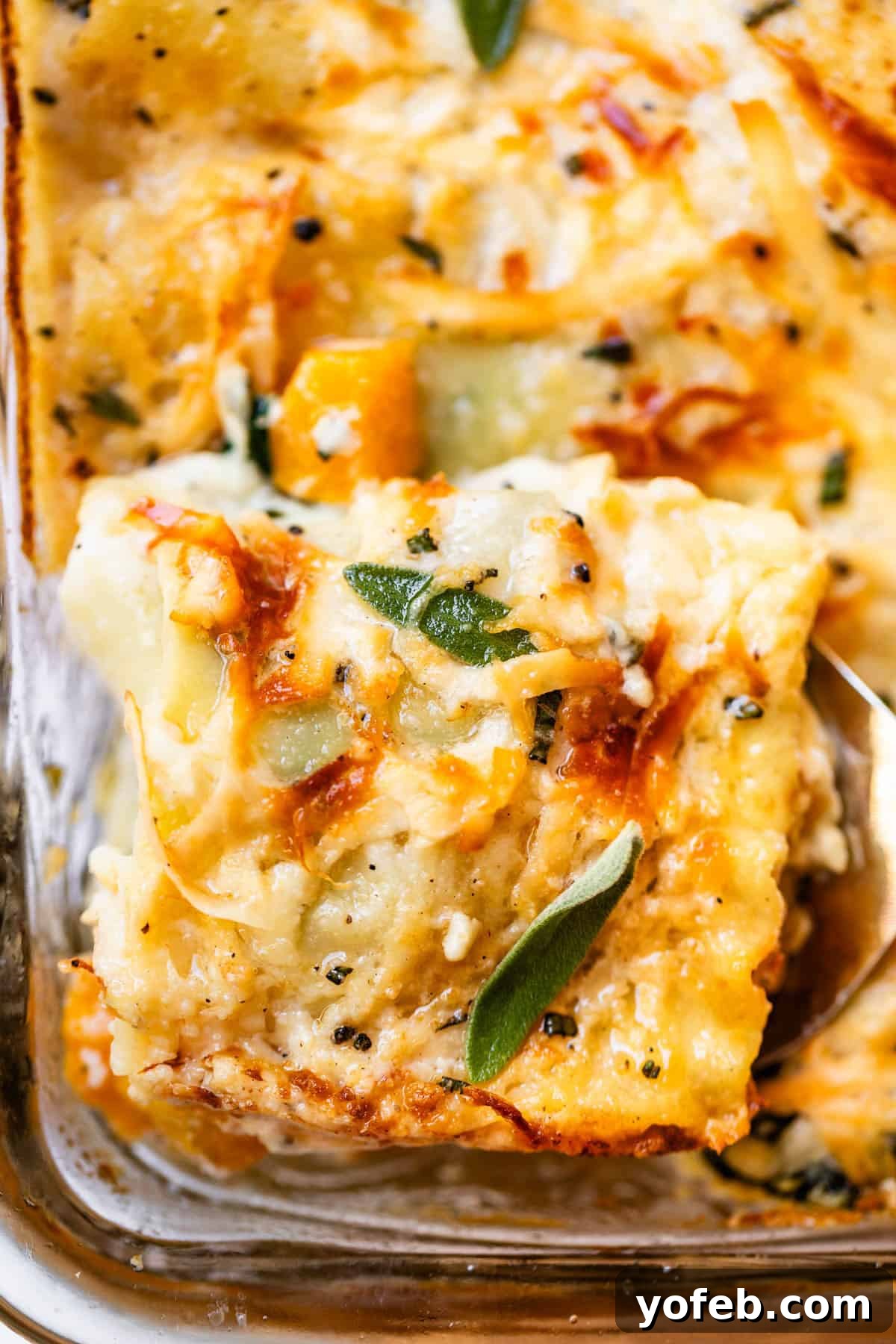
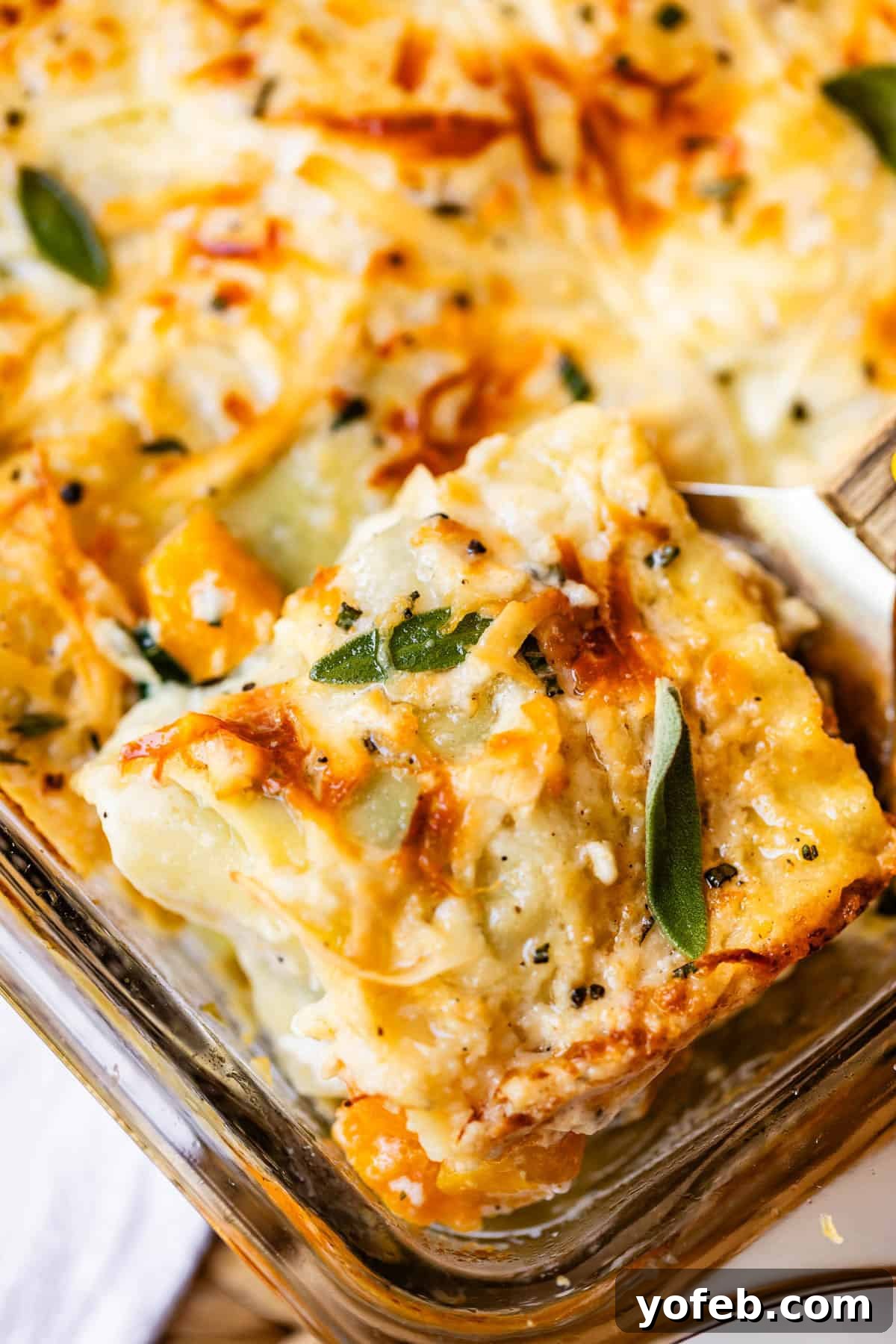
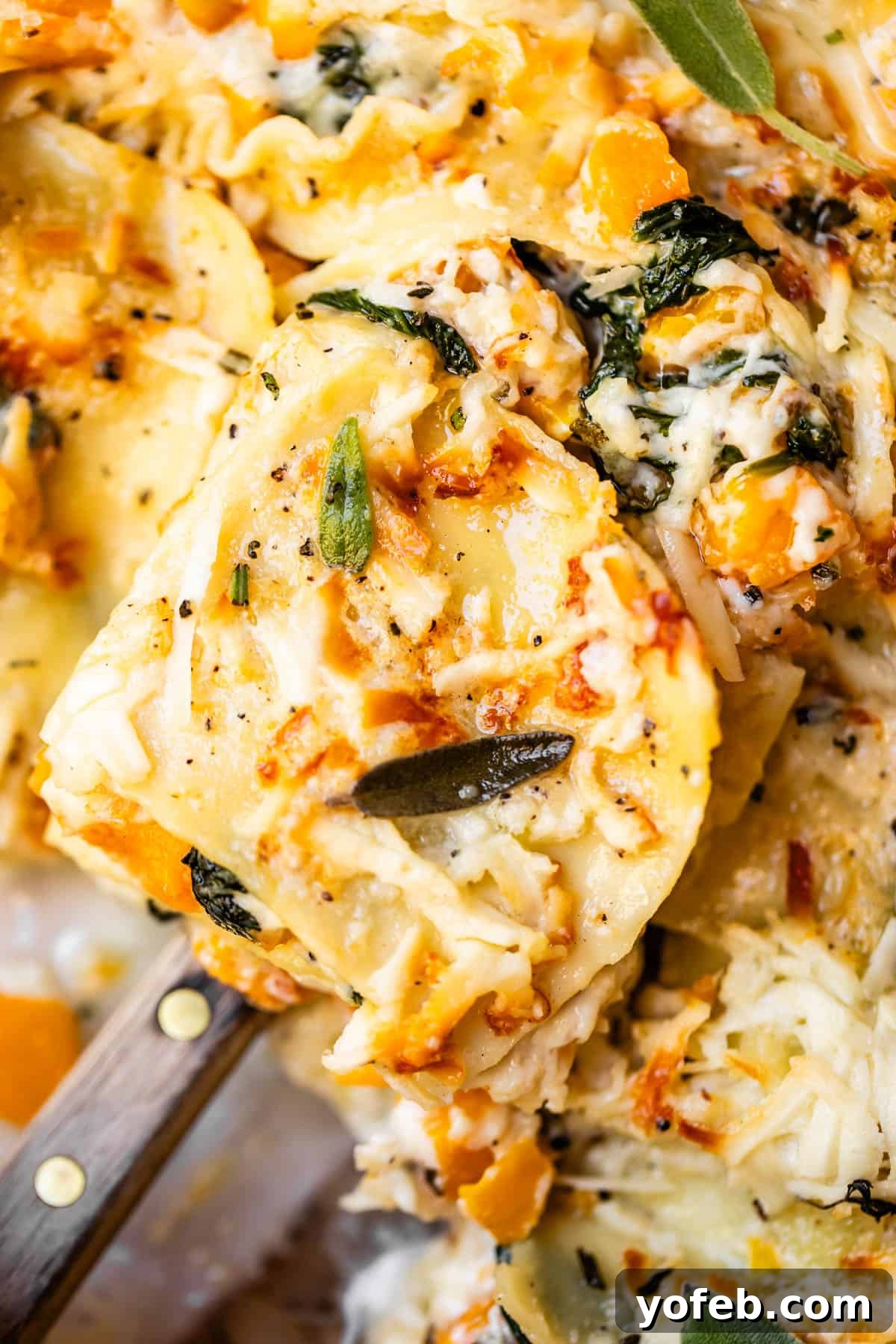
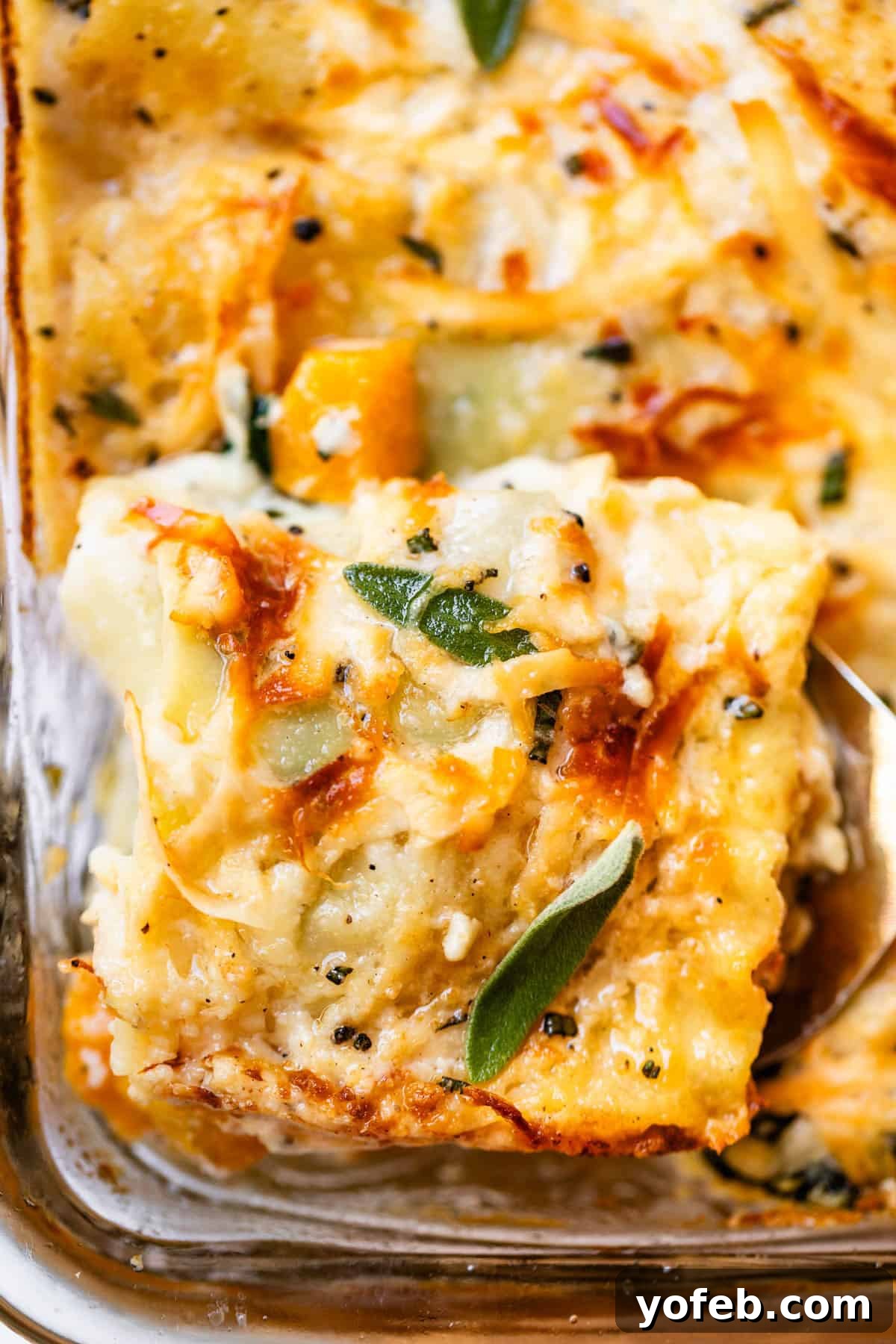
This Butternut Squash Lasagna is the vegetarian main dish of my dreams! Layers of noodles, roasted squash, buttery spinach, a rich and savory cream sauce, and of course lots of Parmesan cheese make this the fall casserole that will steal the show this Thanksgiving. Delicious and hearty, it’s the perfect comfort food on a chilly winter day. It’s the perfect side dish OR main dish on Thanksgiving!
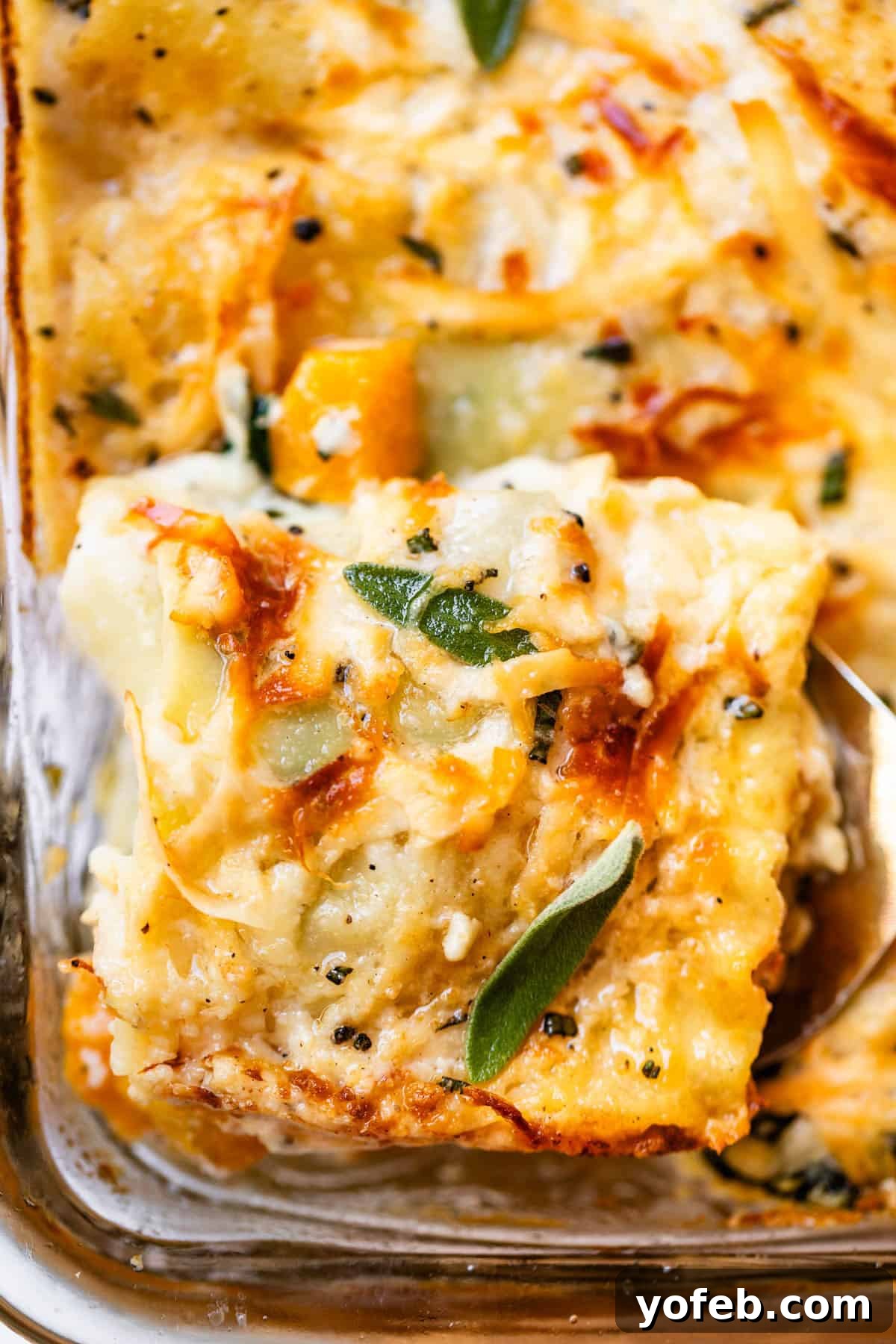
Table of Contents
- Why This Butternut Squash Lasagna Will Be Your Fall Favorite
- Essential Ingredients for a Masterpiece
- Crafting Your Butternut Squash Lasagna: A Step-by-Step Guide
- How to Layer This Lasagna:
- Serving Suggestions: Completing the Feast
- Maximizing Enjoyment: Storage, Freezing, and Make-Ahead Tips
- Frequently Asked Questions
- Discover More Fall Favorites
- Butternut Squash Lasagna Recipe
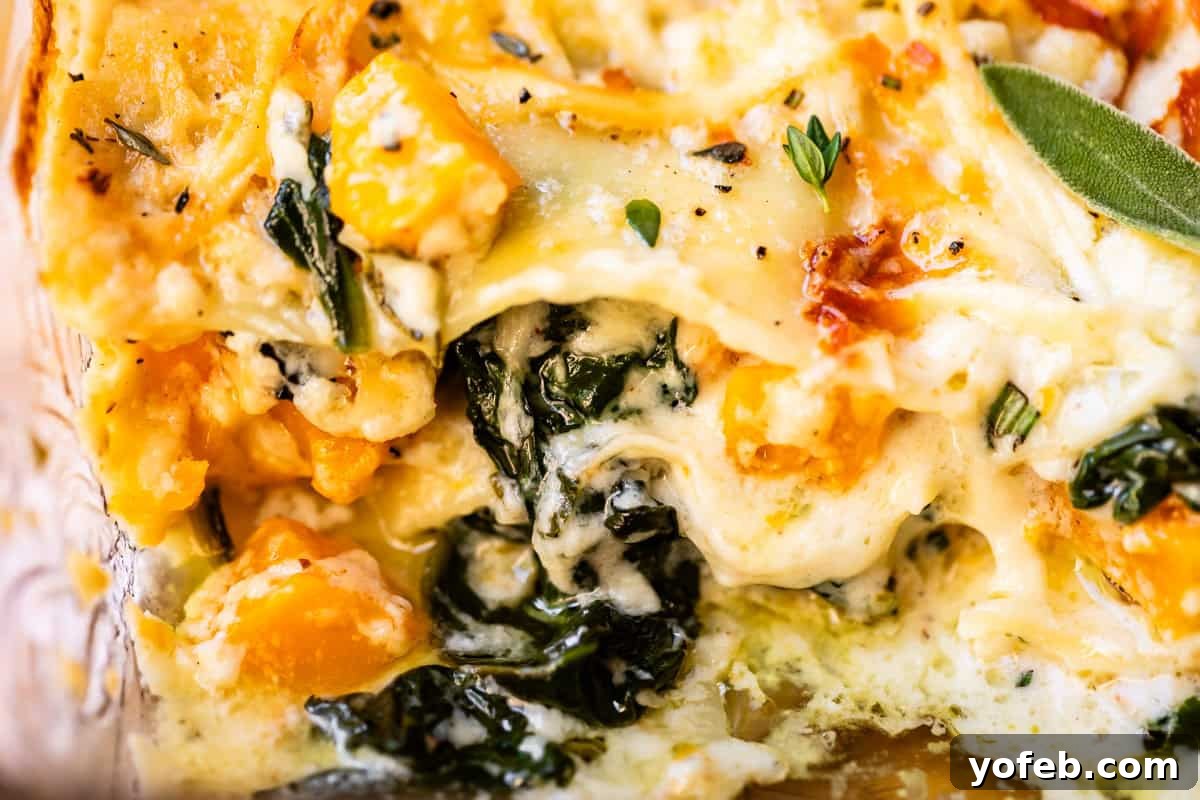
There’s nothing quite like the cozy embrace of a hearty casserole as the days grow shorter and the air turns crisp. This Butternut Squash Lasagna isn’t just another fall dish; it’s a culinary celebration that brings warmth, comfort, and an explosion of seasonal flavors to your table. Imagine tender layers of pasta, sweet roasted butternut squash, savory sautéed spinach, all enveloped in a rich, herb-infused cream sauce, and topped with generous amounts of salty Pecorino Romano cheese. It’s a vegetarian masterpiece, perfect as a show-stopping main course for Thanksgiving, a comforting meal on a chilly winter evening, or a delightful side dish for any gathering.
My journey to perfecting this lasagna began with my friends at our cookbook club. It’s truly one of my favorite monthly traditions – we gather at someone’s home, each bringing a dish inspired by the same chef, cook, or blogger. When it was my turn to host, I chose Ali from Alexandra’s Kitchen, a creator whose recipes I deeply admire.
The spread was incredible, a testament to Ali’s talent. Highlights included her Chocolate Chip Cookies, the vibrant 5-Ingredient Corn Soup with Herby Salsa, the irresistible Gooey Oat Bars, and of course, her legendary Focaccia. But for me, the standout was the Butternut Squash Lasagna. This beloved recipe, originally featured in Gourmet magazine back in the 90s, left an unforgettable impression. You can still find the recipe on Epicurious, though it’s now often behind a paywall.
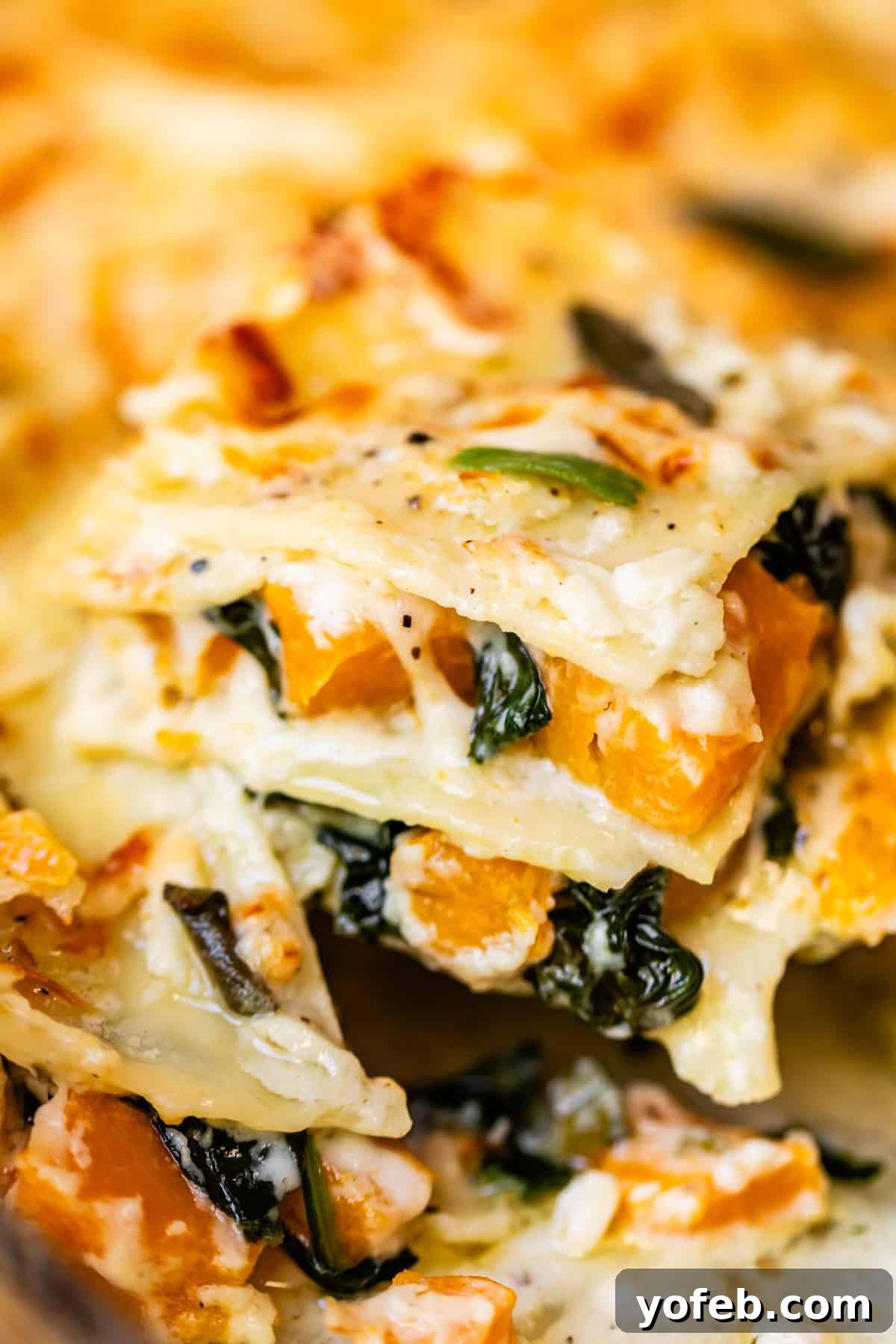
The first time I prepared it, following the original recipe, it was universally adored. Friends raved about it for weeks. Inspired, I decided to put my own spin on it, incorporating a full bag of fresh spinach for added nutrients and color, and streamlining the sauce-making process for ease. The result? This sensational vegetarian lasagna that is not only Thanksgiving-worthy but has become a personal obsession. Let’s delve into what makes this recipe truly special.
Why This Butternut Squash Lasagna Will Be Your Fall Favorite
Lasagna, by its very nature, is a labor of love, a delightful investment of time and effort. So, if we’re dedicating a couple of hours to assembling this masterpiece, it absolutely needs to be worth every moment. This Butternut Squash Lasagna doesn’t just meet that standard; it exceeds it with its harmonious blend of rich flavors and satisfying textures.
The Golden-Roasted Butternut Squash
The foundation of this lasagna’s incredible flavor is perfectly roasted butternut squash. We’re not just cooking the squash; we’re coaxing out its inherent sweetness and achieving those coveted caramelized, slightly crispy edges that elevate its flavor profile significantly. Roasting transforms the squash, giving it a depth that boiling or steaming simply can’t replicate. The key to this golden perfection? Using two sheet pans. Crowding the squash on a single pan will steam it instead of roast it, denying you those delicious browned bits. For those who find dealing with whole squash daunting, I’ve prepared a detailed tutorial on How to Chop Butternut Squash, making the process simple and stress-free. While pre-cut squash might seem like a time-saver, a few extra minutes of chopping yields superior flavor and saves a considerable amount of money. Trust me, the difference is worth the effort!
The Velvety Herb-Infused Béchamel
Forget your standard white sauce; this béchamel is a dream. It’s generously infused with abundant fresh garlic, aromatic sage, and fragrant rosemary. For a recipe destined for special occasions like Thanksgiving, fresh herbs are non-negotiable – they lend an unparalleled depth and brightness. This sauce is a symphony of savory, herbaceous, and garlicky notes, so utterly divine you’ll want to savor every drop.
The Unexpected Savory Whipped Cream Topping
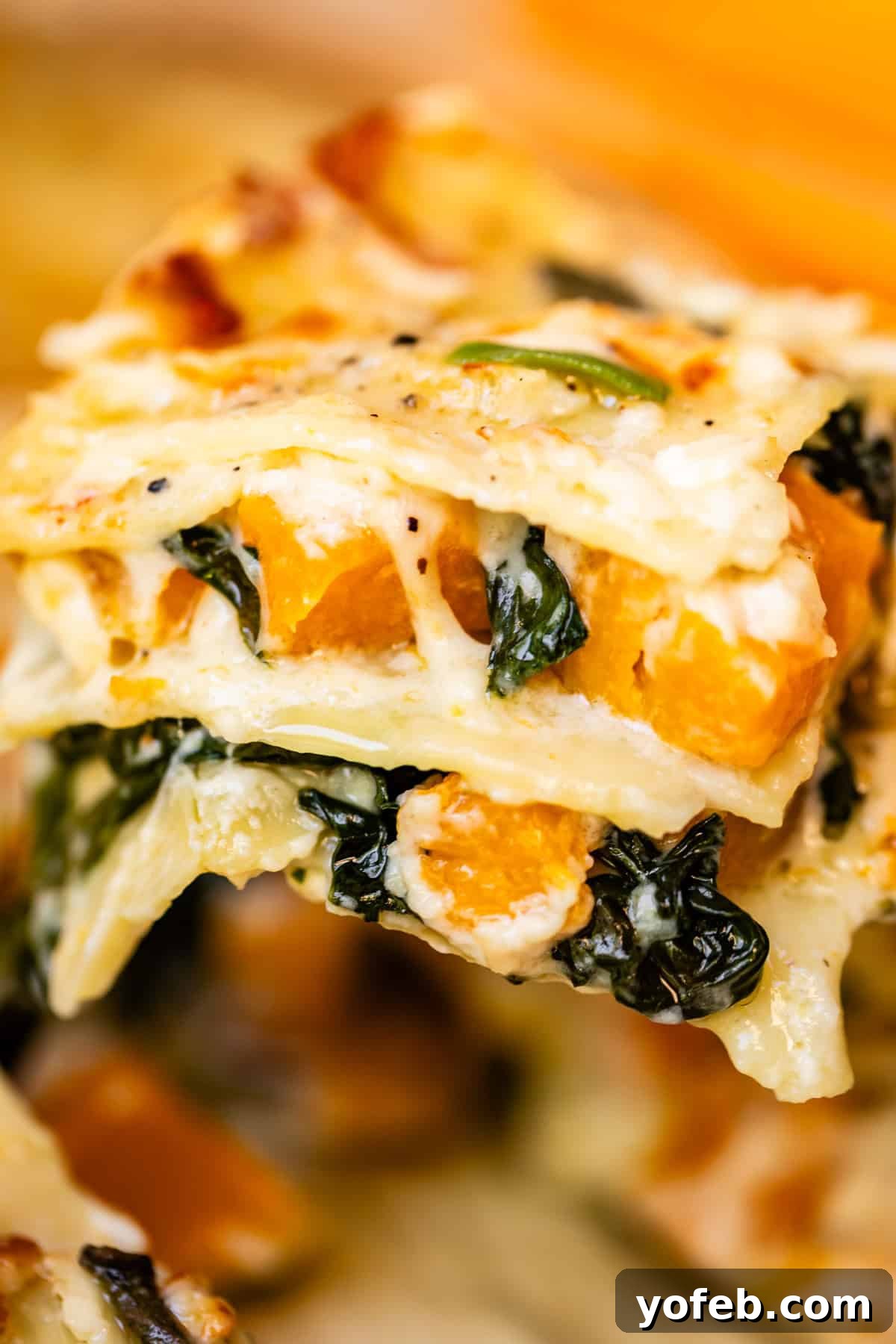
Yes, you read that right – whipped cream! Before you question it, let me assure you, this isn’t a dessert, but rather a revolutionary addition to savory dishes. While I’m not sure if this is a widespread trend, it absolutely should be! This lightly salted whipped cream forms the final, glorious layer of the lasagna. Unlike liquid cream, which would simply sink to the bottom, the whipped cream holds its structure. As it bakes in the oven, it slowly melts, permeating every single layer of the lasagna with an astonishing richness and juiciness. It’s a game-changer that adds an unparalleled luxurious texture and flavor. Prepare to be converted!
The Tangy Pecorino Romano
In this recipe, we bypass mozzarella in favor of something truly special: authentic Pecorino Romano cheese. Known for its distinct sharp, salty, and slightly tangy flavor, Pecorino Romano adds a robust character that complements the sweet butternut squash and creamy sauce perfectly. I often source high-quality Pecorino Romano from places like Costco, where a single block, while an investment, lasts for many delicious meals. If Pecorino Romano isn’t readily available or you prefer a milder taste, high-quality Parmigiano Reggiano makes an excellent substitute; their flavors are often interchangeable in rich dishes like this.
The Balancing Act of Sautéed Spinach
While the lasagna is undeniably rich and decadent, the addition of spinach serves multiple purposes. It introduces a subtle earthiness that wonderfully balances the creamy sauce and sweet squash. Beyond being a healthy boost, spinach adds a beautiful pop of color and a pleasant textural contrast. The original Gourmet recipe didn’t include it, but I found that a generous amount of sautéed spinach makes this lasagna even more satisfying and well-rounded. It’s an effortless addition that packs extra nutrients without compromising flavor.
I am utterly captivated by this lasagna, and I genuinely hope you’ll have the chance to experience its magic soon! Now, let’s get into the delicious details.
Essential Ingredients for a Masterpiece
Crafting this incredible Butternut Squash Lasagna requires a thoughtful selection of fresh, high-quality ingredients. Here’s an overview of what you’ll need to gather to bring this fall favorite to life. Remember to consult the full recipe card at the end of this post for precise measurements and detailed instructions.
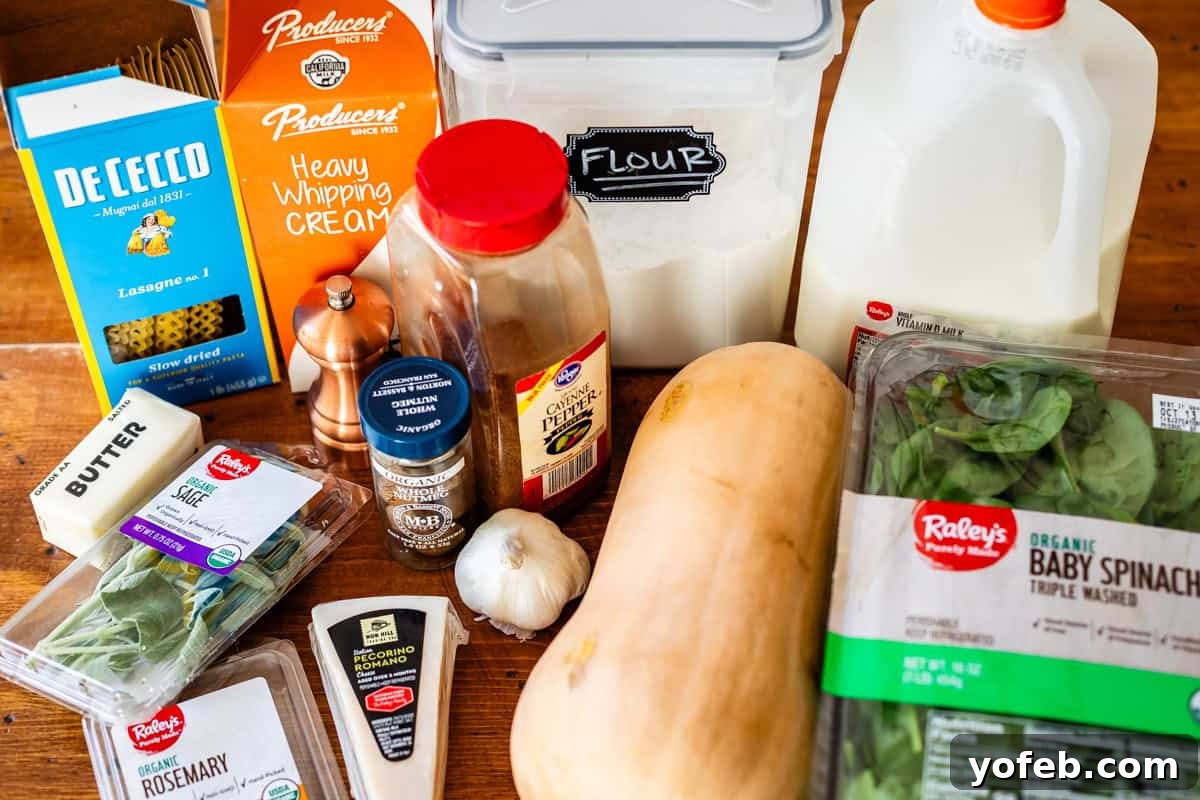
- Butternut Squash: The vibrant, sweet star of our dish. Choose a whole squash to chop yourself for optimal freshness and flavor, or opt for convenient pre-chopped varieties if time is short.
- Kosher Salt: Our indispensable flavor enhancer, used for seasoning both the squash and the creamy sauce, bringing out the best in every ingredient.
- Oil (Light Olive, Avocado, or Canola): Essential for achieving perfectly roasted, caramelized butternut squash edges.
- Butter: Provides a rich, luscious base for sautéing the spinach and forms the crucial roux that thickens our luxurious cream sauce.
- Fresh Spinach: Adds a delightful earthy note, vibrant color, and an extra boost of nutrients to balance the richness of the lasagna.
- Garlic: A generous amount of fresh garlic is key to building the aromatic, savory foundation of our cream sauce, imparting deep, irresistible flavor.
- All-Purpose Flour: Used in combination with butter to create a classic roux, the thickening agent for our decadent béchamel sauce.
- Spices (Black Pepper, Cayenne, Nutmeg, Fresh Sage, Fresh Rosemary): This thoughtful blend of spices and fresh herbs imparts a quintessential fall flavor profile, making the sauce truly special and aromatic.
- Whole Milk: The liquid base for our silky-smooth cream sauce, contributing to its incredible creaminess and body.
- Lasagna Noodles (No-Boil or Traditional): The structural backbone of our lasagna. While no-boil noodles are convenient, a quick pre-softening ensures the perfect texture in every bite.
- Pecorino Romano Cheese: This sharp, salty, and robust Italian hard cheese provides an intense cheesy goodness that stands out beautifully against the sweet squash and creamy sauce.
- Heavy Whipping Cream: The secret ingredient for our unique savory whipped cream topping, adding an astonishing layer of richness and moisture that melts perfectly into the lasagna.
Crafting Your Butternut Squash Lasagna: A Step-by-Step Guide
Let’s dive into the detailed process of creating this unforgettable Butternut Squash Lasagna. Each step is designed to build layers of flavor and ensure a truly satisfying result.
Preparing the Star: Roasting Butternut Squash
Begin by preparing your butternut squash. While it might seem daunting, it’s quite simple! I have a dedicated post that walks you through the process of safely and efficiently chopping butternut squash into uniform cubes.
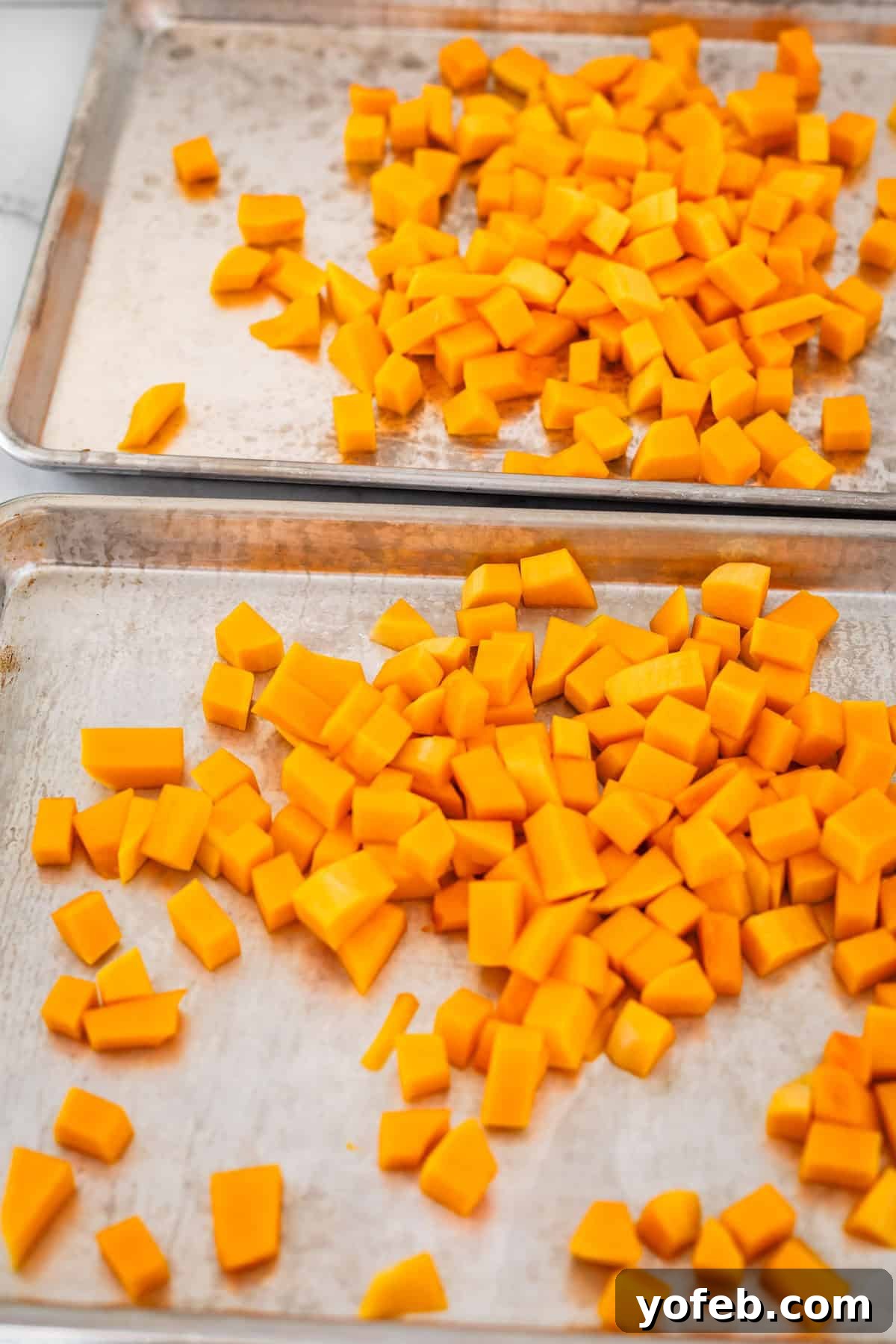
Once chopped, distribute all your butternut squash cubes evenly across TWO half-sheet pans. This is crucial! Using two pans ensures that the squash pieces have ample space to roast and caramelize, developing those desirable browned, crispy edges and a deeper, sweeter flavor. If they are piled on top of each other, they will steam rather than roast, resulting in a less flavorful, softer texture.
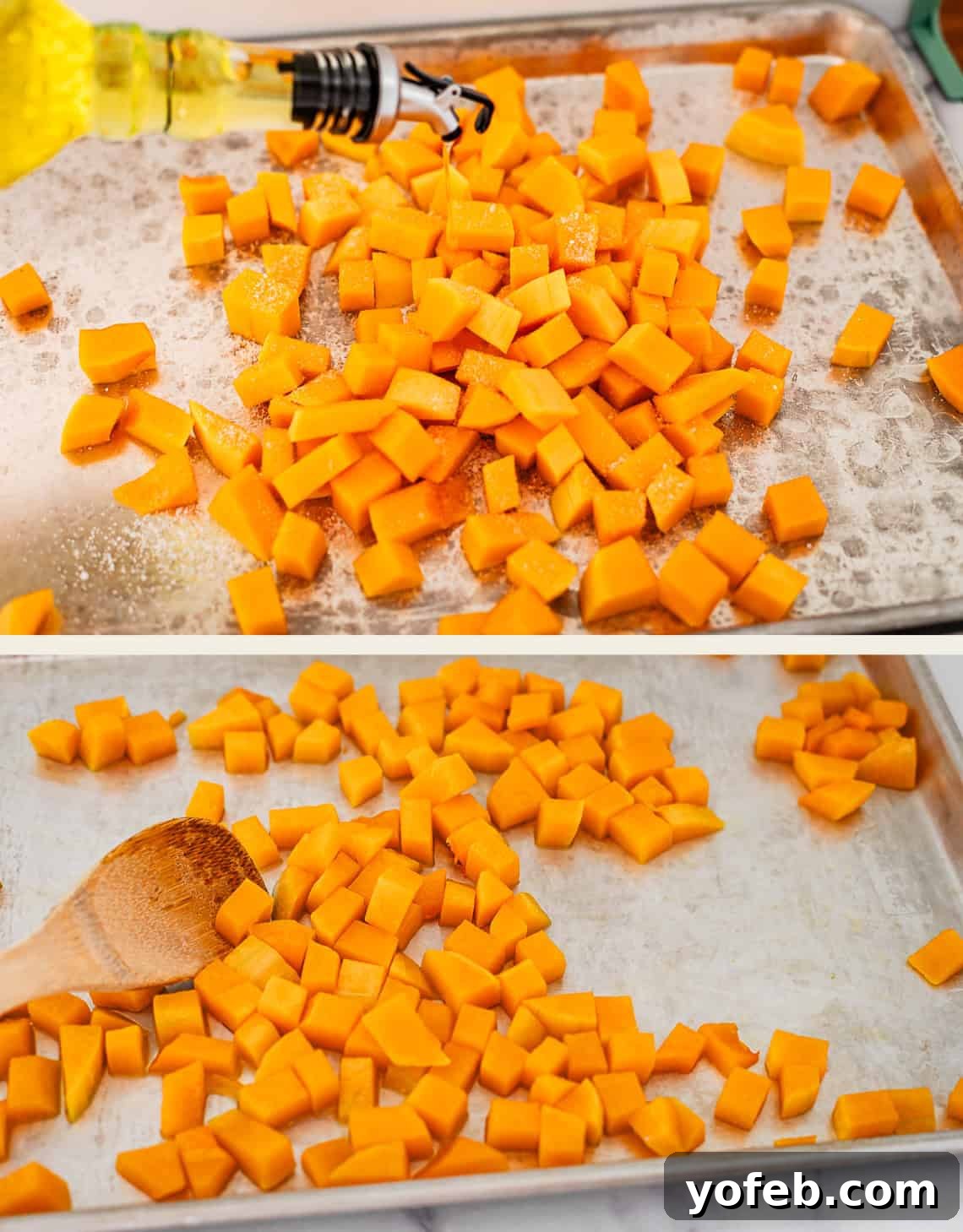
Drizzle the squash with a little oil and sprinkle with kosher salt, then use your hands to toss and spread them out into a single layer. Roast for approximately 30 minutes in a preheated 450°F (230°C) oven, or until the squash is fork-tender and beautifully golden-brown. Rotate the pans halfway through baking for even cooking. Set the roasted squash aside.
The Verdant Layer: Sautéing the Spinach
In a large, high-sided skillet, melt a portion of butter over medium heat. Add the entire 10-ounce bag of fresh spinach. It will look like a mountain, but it cooks down significantly. Sprinkle with a bit of salt and cook for 3-5 minutes, stirring occasionally, until the spinach is completely wilted. Its vibrant green color will deepen, and its volume will dramatically reduce.
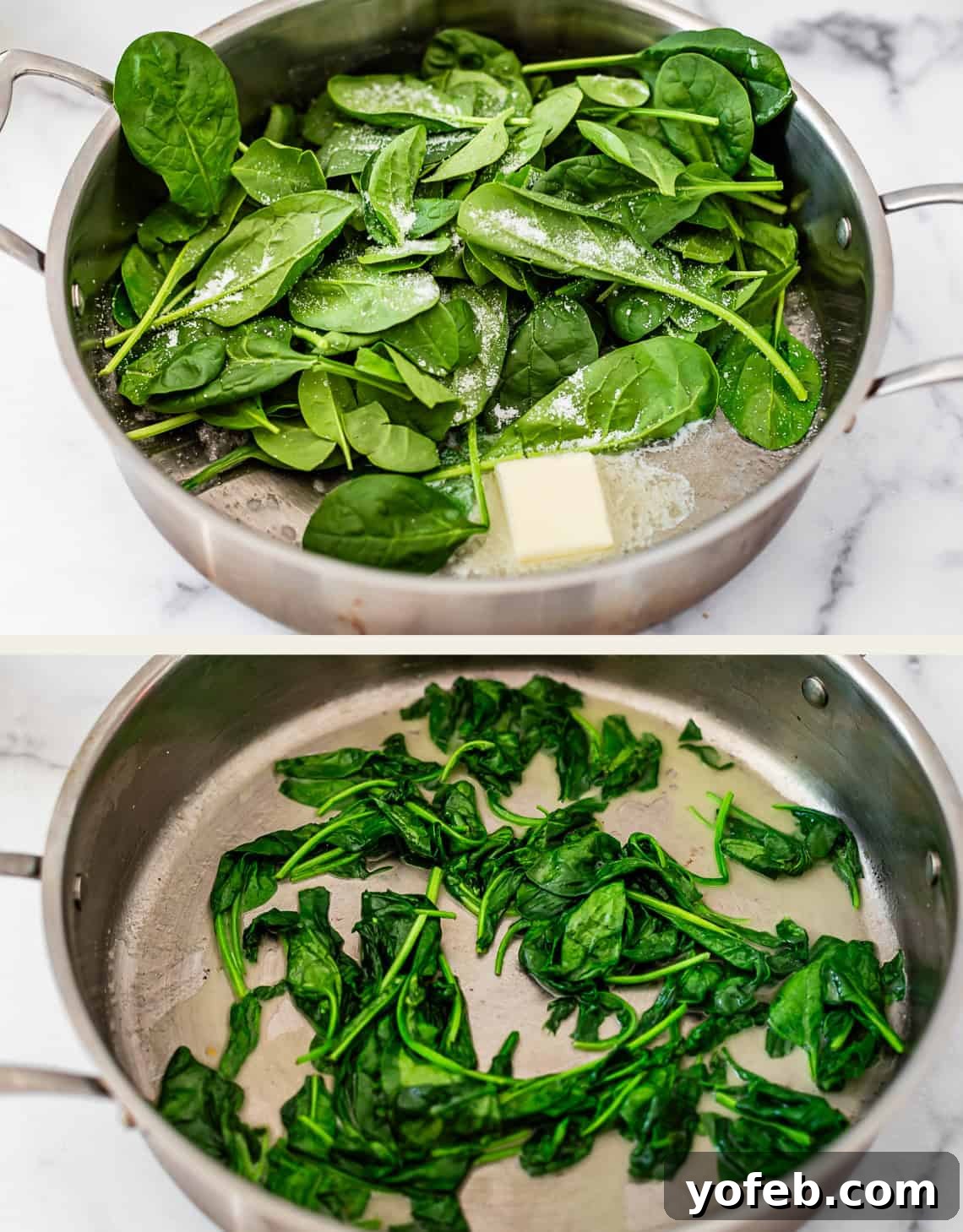
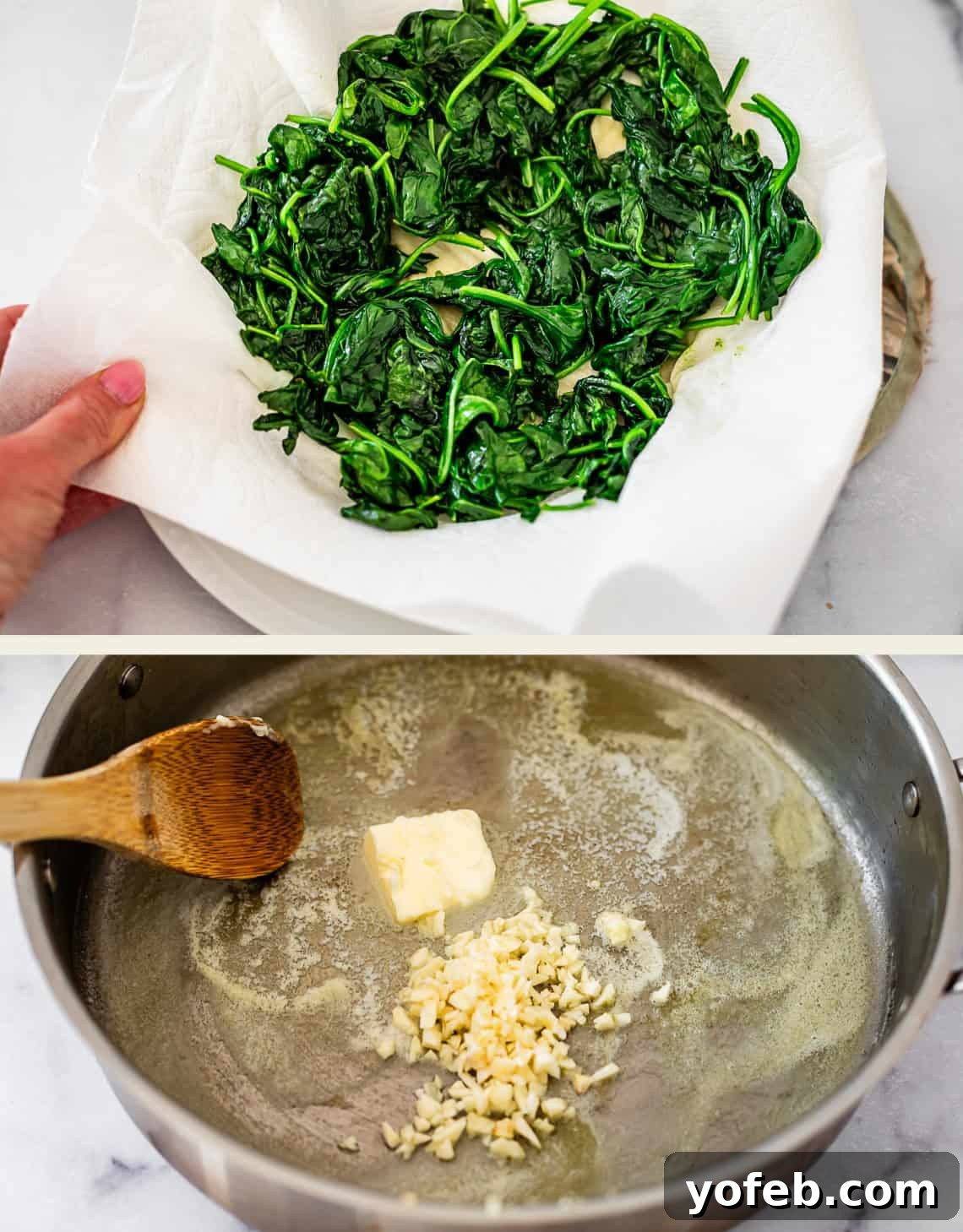
Once wilted, transfer the spinach to a plate lined with paper towels to absorb any excess moisture. It’s important to leave any residual butter or juices in the pan, as they will add flavor to our cream sauce. (Alternatively, if using frozen spinach, thaw an 8-10 ounce package, squeeze out all liquid thoroughly, and skip this sautéing step, adding the squeezed spinach directly to the lasagna layers later.)
The Heart of the Dish: Building the Béchamel Sauce
In the same skillet where you cooked the spinach, add the remaining butter and a generous amount of minced fresh garlic. Sauté for about 1 minute over medium heat until the garlic is fragrant and lightly golden, being careful not to burn it.
While the garlic cooks, in a small bowl, combine the all-purpose flour with the dried spices: kosher salt, black pepper, a pinch of cayenne pepper for a hint of warmth, and nutmeg for that classic fall aroma. This spice blend will infuse our sauce with exquisite flavor.
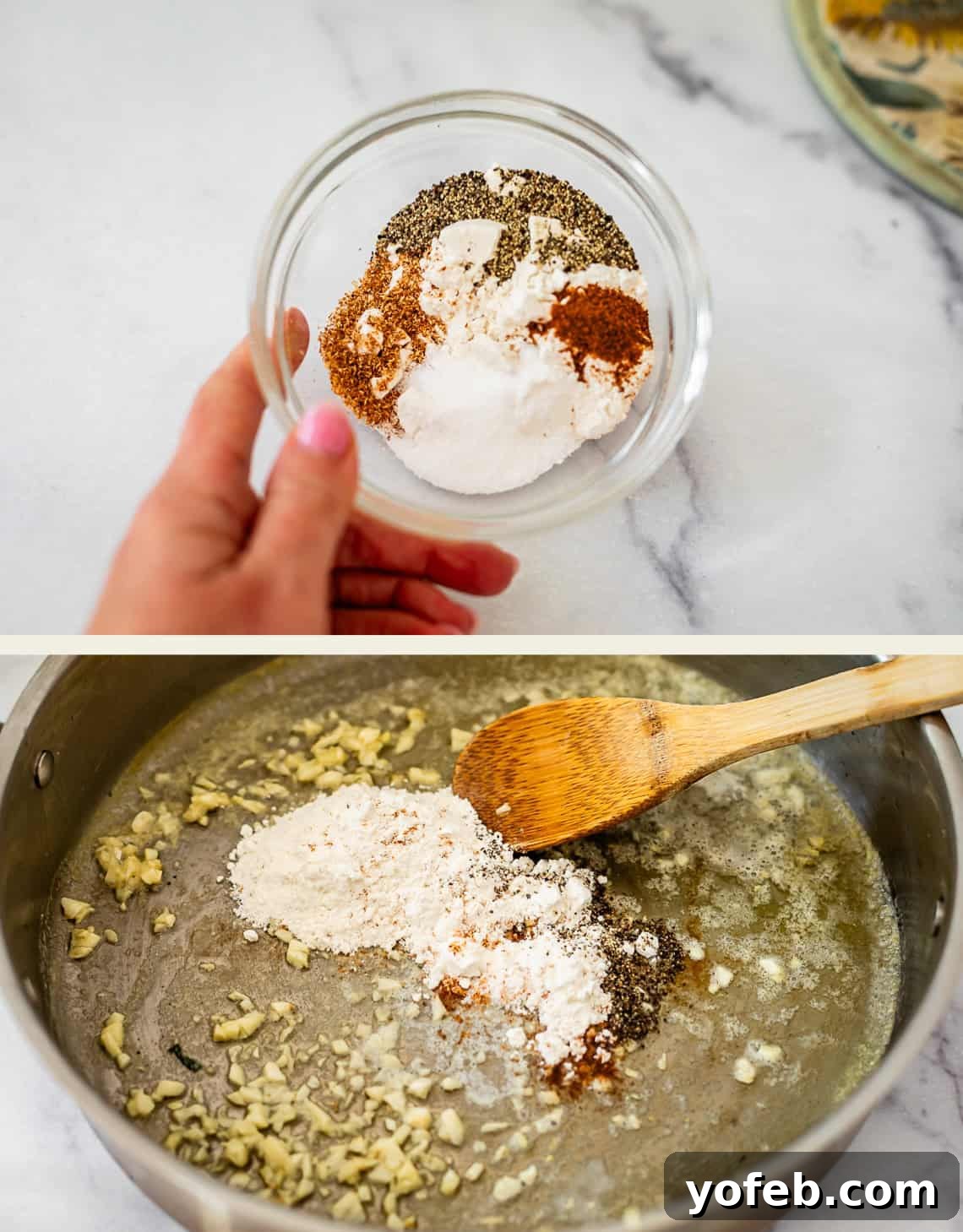
Add the flour and spice mixture to the pan with the garlic and butter, stirring constantly to form a roux. Let it cook for 1-2 minutes until all the flour is absorbed and it forms a paste. This step is crucial for thickening the sauce and cooking out the raw flour taste.
Meanwhile, finely chop fresh sage and rosemary. These fresh herbs are vital for the authentic fall flavor of the sauce.
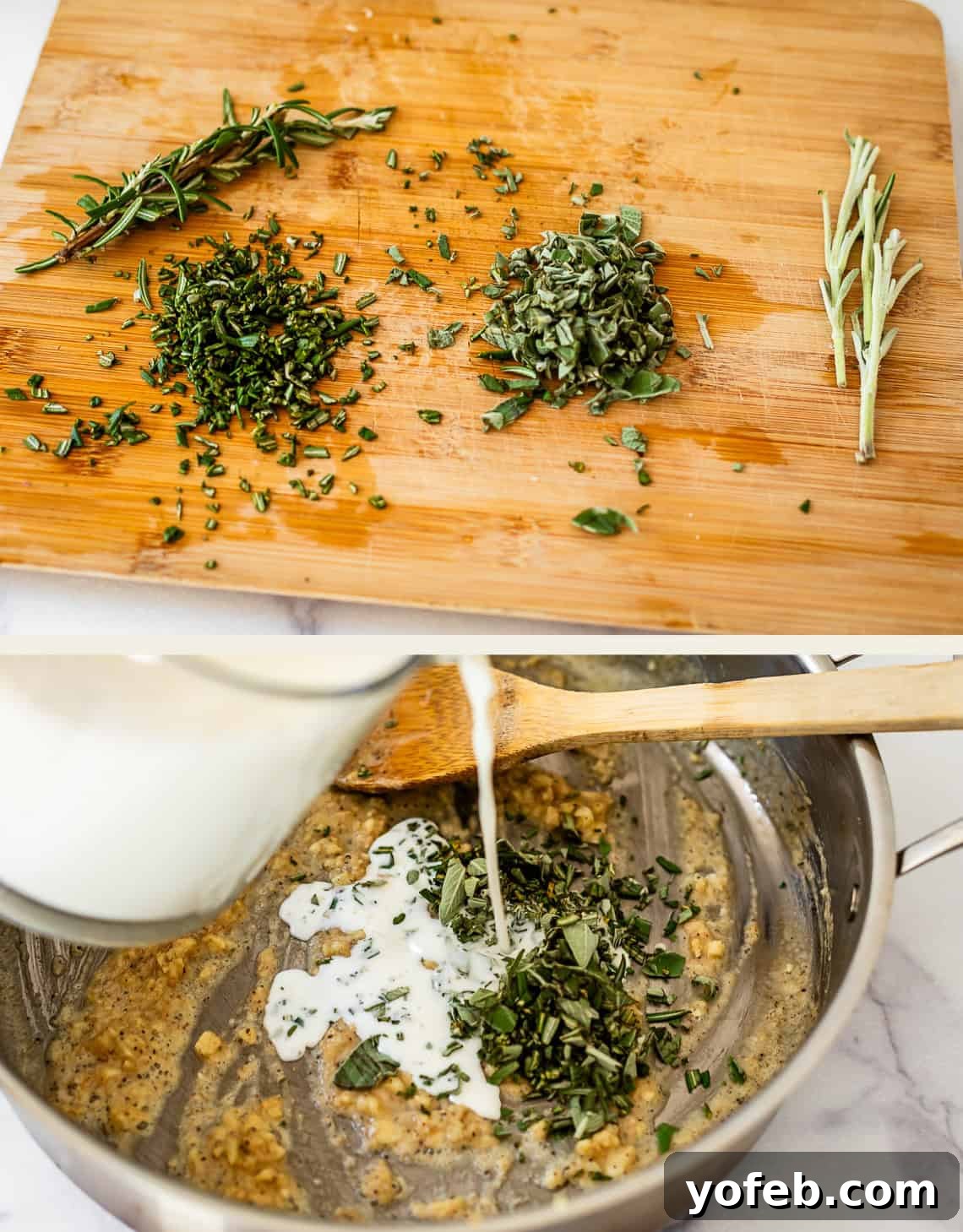
Add the chopped fresh sage and rosemary to the roux, then immediately begin to gradually pour in the whole milk, a quarter cup at a time. Whisk constantly as you add the milk, ensuring each addition is fully absorbed and incorporated before adding more. This slow and steady method is key to achieving a smooth, lump-free béchamel sauce. Patience here will be rewarded with a velvety texture.
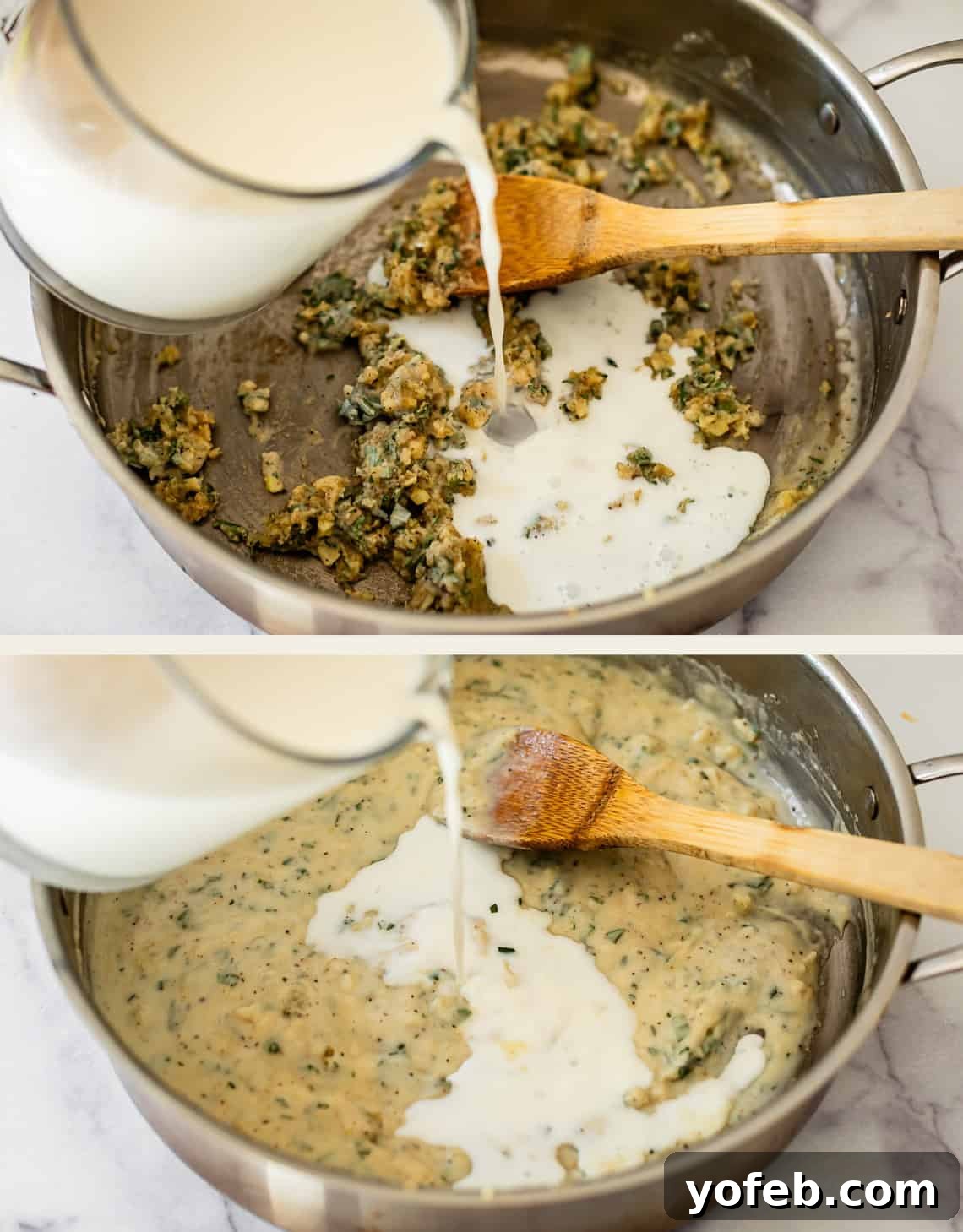
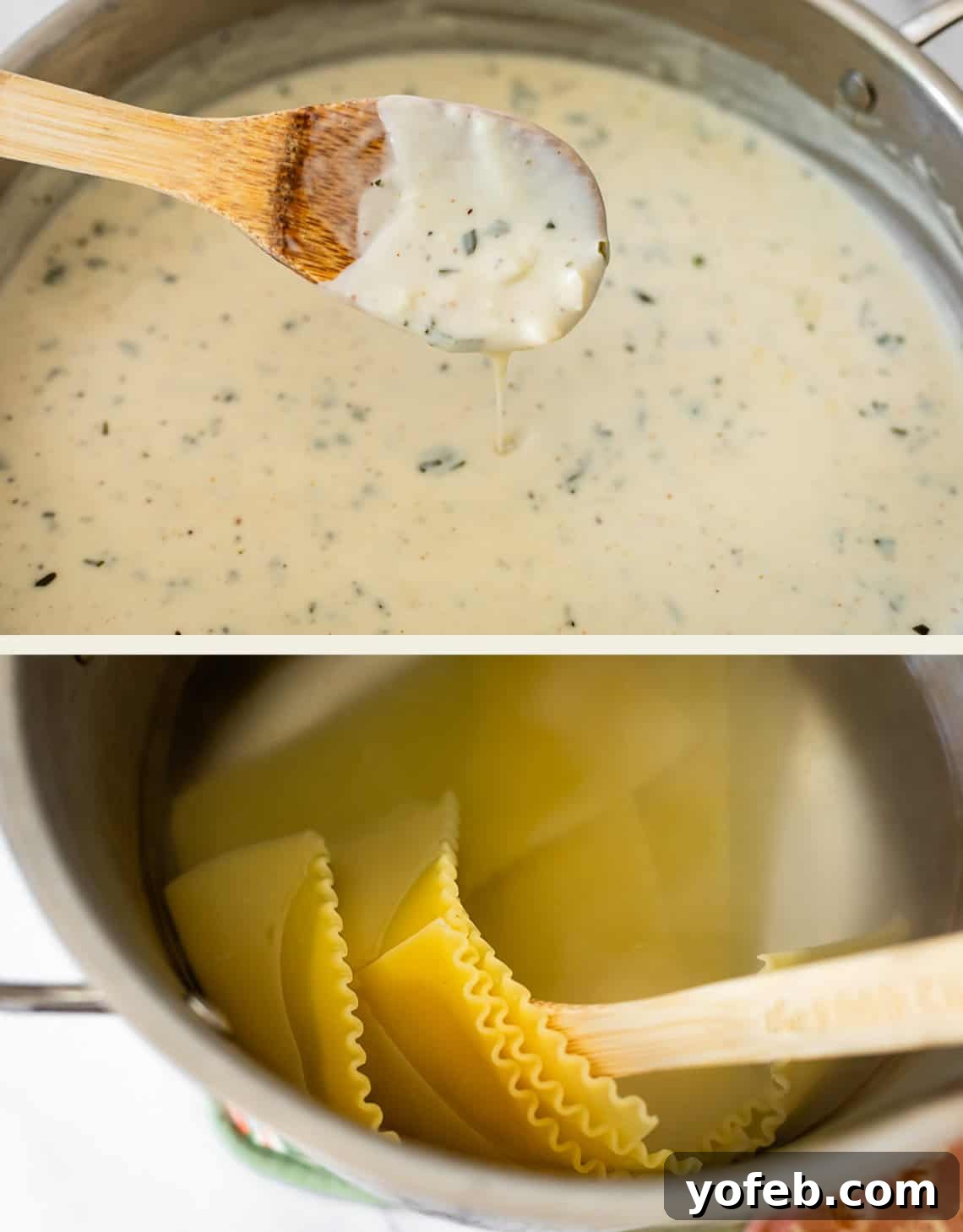
Once all the milk has been added and the sauce has thickened, let it simmer gently for 8-10 minutes over medium-low heat, stirring occasionally, until it reaches a rich, creamy consistency. Taste and adjust seasonings as needed – this is your chance to perfect the flavor!
Perfecting the Pasta: Noodle Preparation
Even though we’re using no-boil lasagna noodles for convenience, I strongly recommend giving them a head start by boiling them for about 3 minutes. This extra step ensures they are adequately softened to absorb the luscious, but not overly liquid, cream sauce during baking, preventing any hard or chewy sections in your finished lasagna. You can either boil them in a pot of water or pour boiling water from a kettle over them in a baking dish or large bowl. Drain them thoroughly after 3 minutes; we want them pliable, not soggy.
Assembling the Layers: A Visual Symphony
Now, it’s time for the exciting part: assembly! First, lightly grease a 9×13 inch baking pan. A clever trick is to use the butter wrapper to grease the pan – efficient and ensures no butter goes to waste. Gather all your prepared components: the creamy sauce, wilted spinach, roasted butternut squash, shredded Pecorino Romano, and softened lasagna noodles. Have them ready to create a smooth assembly line.
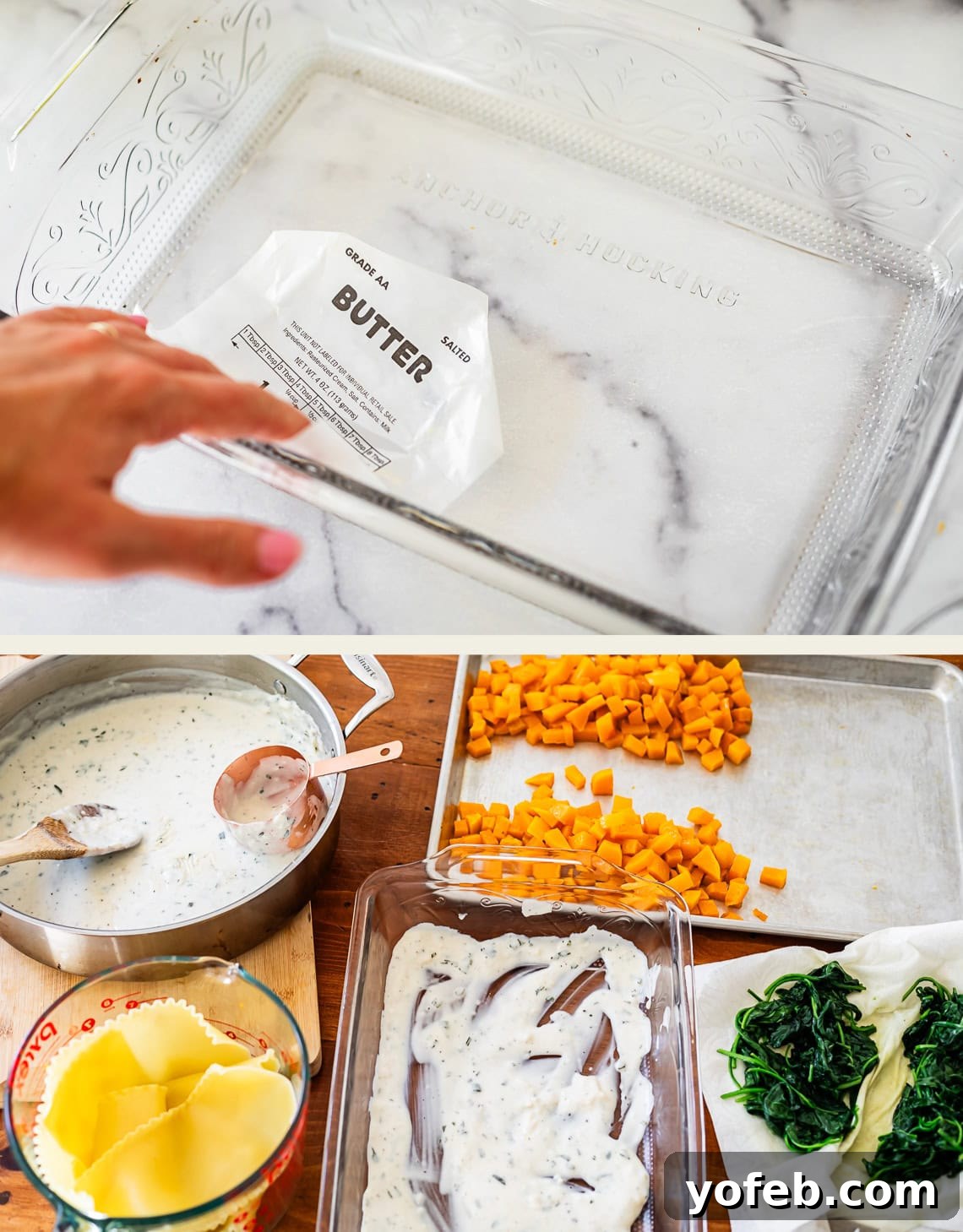
Spoon approximately 1 cup of the rich cream sauce onto the bottom of the prepared baking pan, spreading it evenly to cover the base. This provides a non-stick layer and moistens the first layer of noodles.
How to Layer This Lasagna:
Follow this precise layering sequence to build your Butternut Squash Lasagna, repeating the main vegetable layers twice:
- First Layer: Place 3 lasagna noodles over the sauce.
- Second Layer: Distribute half of the roasted butternut squash evenly over the noodles.
- Third Layer: Spread half of the sautéed spinach over the squash.
- Fourth Layer: Sprinkle with 1/2 cup of shredded Pecorino Romano cheese.
- Fifth Layer: Spoon half of the remaining cream sauce over the cheese.
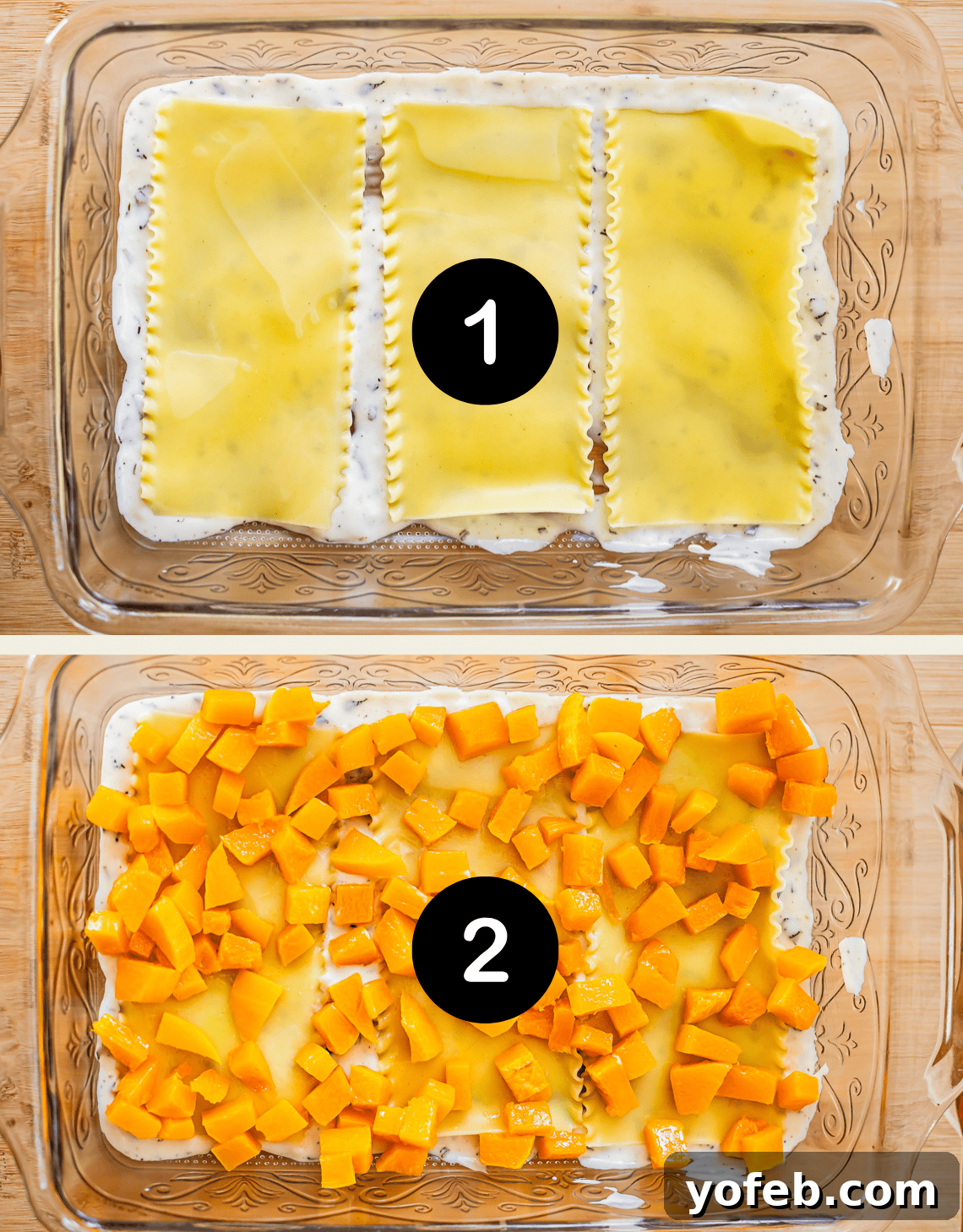
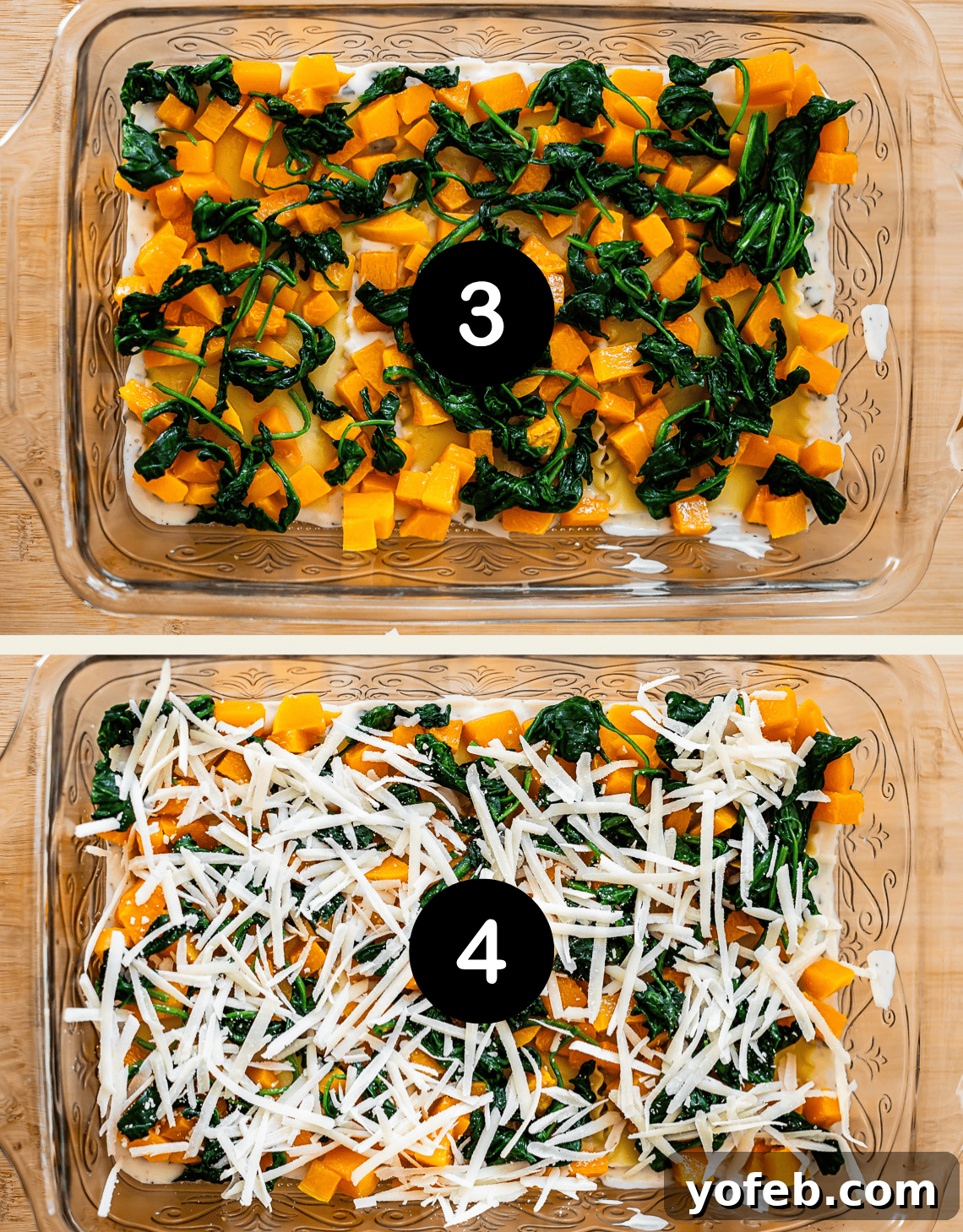
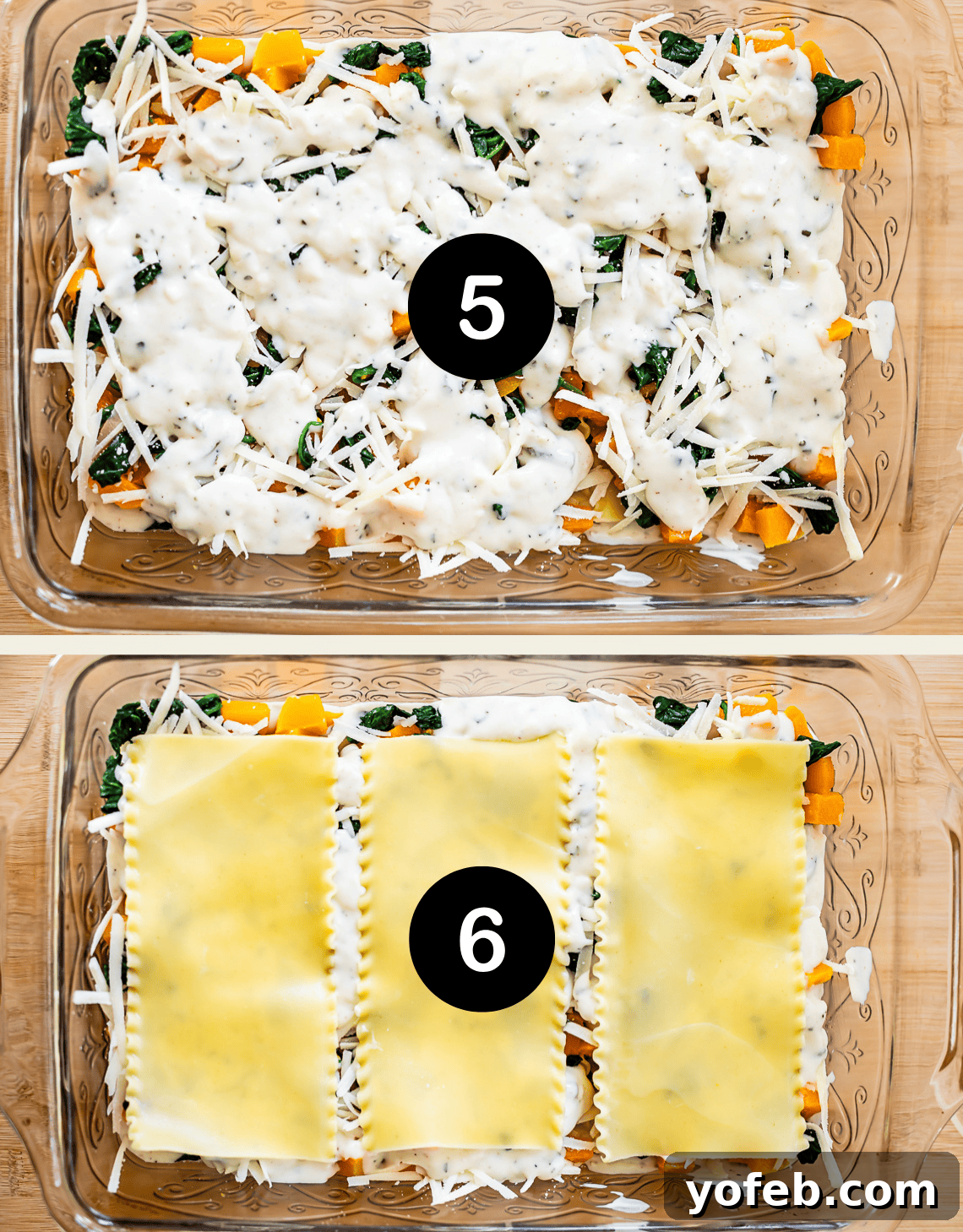
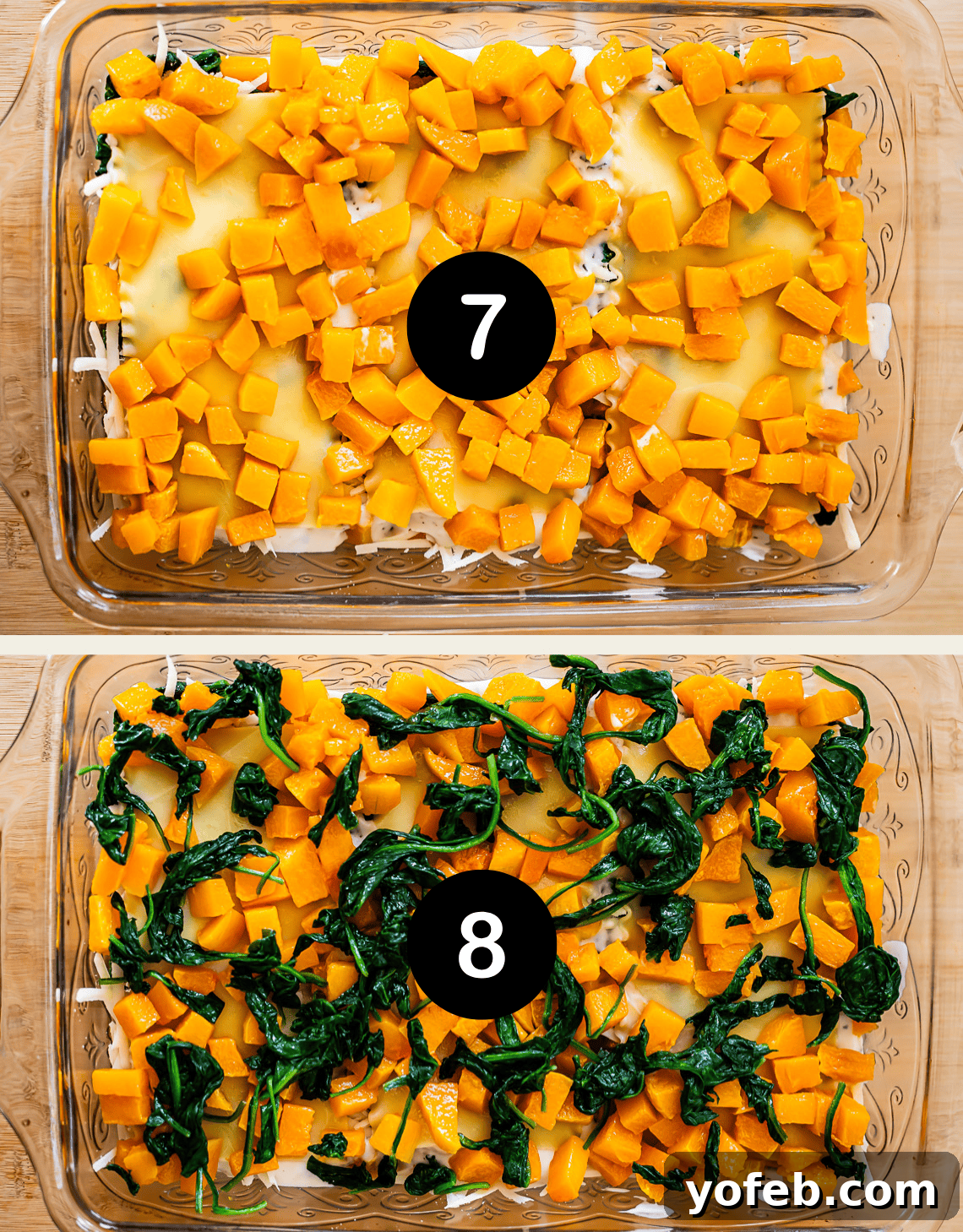
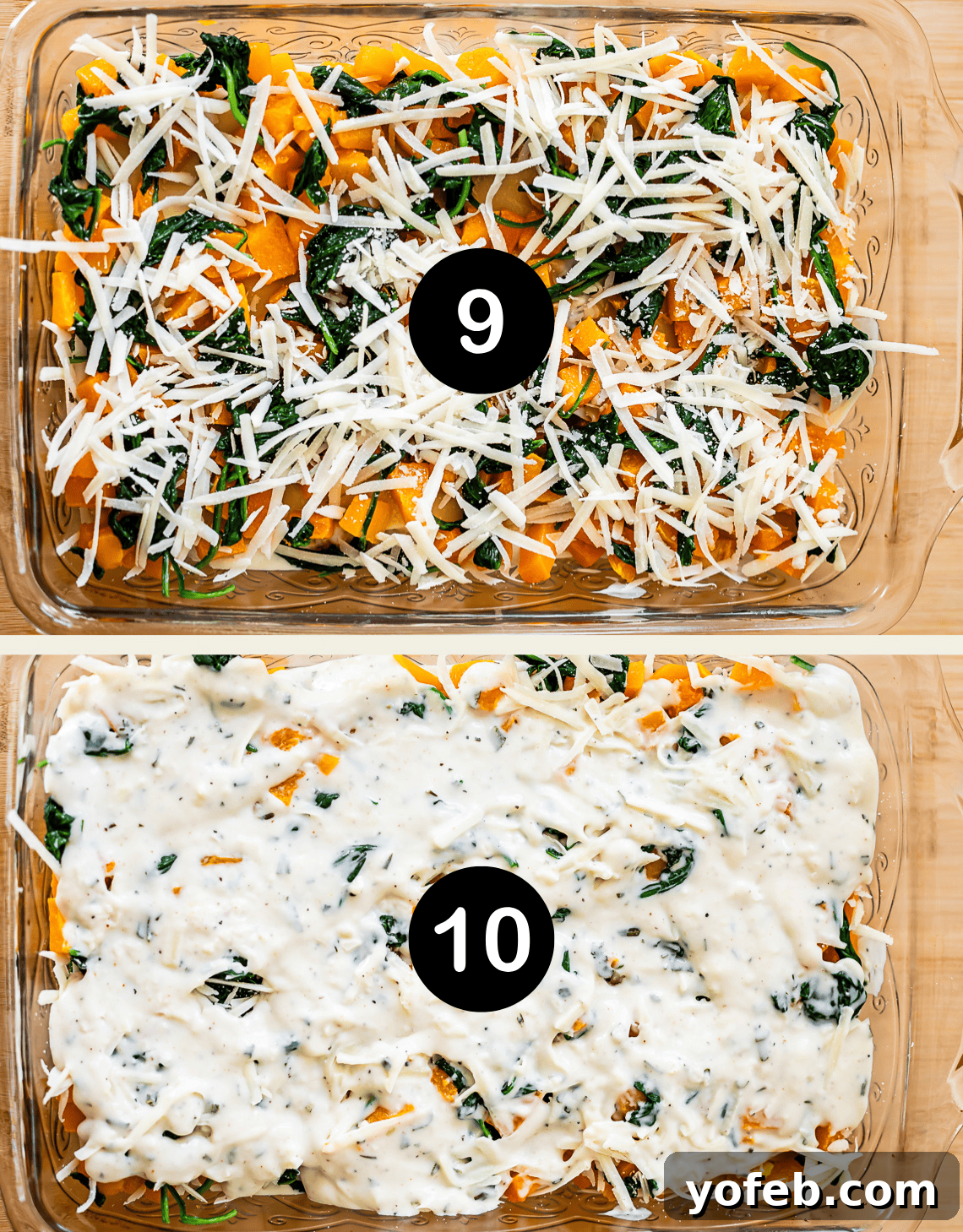
Repeat the layers exactly as above for a second time, starting with 3 noodles and ending with the remaining sauce. Once these two full cycles are complete:
- Final Noodle Layer: Top with the last 3 lasagna noodles.
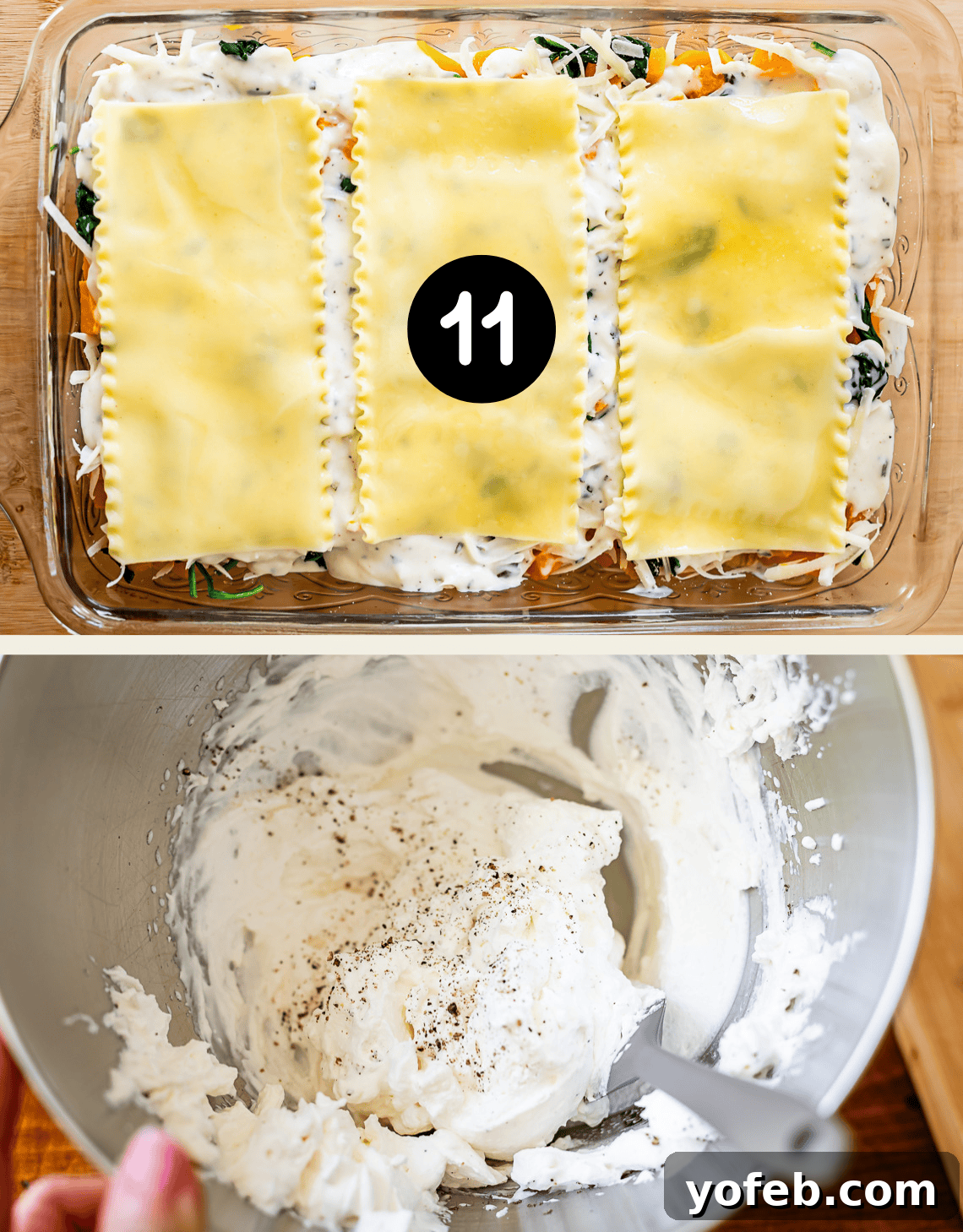
The Grand Finale: Savory Whipped Cream Topping
Now for the pièce de résistance: savory whipped cream! In a large bowl, combine 1 cup of heavy whipping cream with 1/2 teaspoon each of kosher salt and black pepper. Using a whisk attachment on a stand mixer or hand beaters, whip the cream until stiff peaks form, just like regular whipped cream. This delightful, lightly seasoned cream will be the final layer on your lasagna.
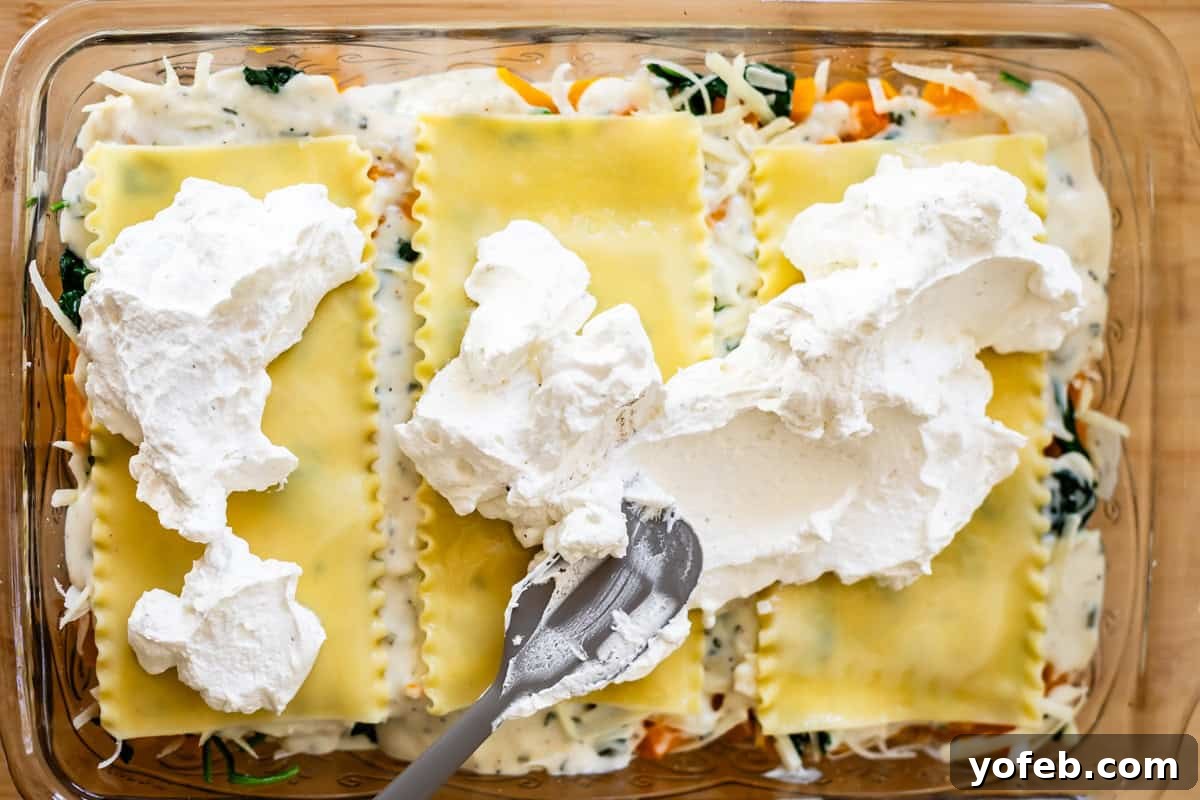
Carefully spread this savory whipped cream over the top layer of noodles, ensuring every noodle is completely covered. This isn’t just for decoration; it’s the secret to an incredibly moist and rich lasagna, as the whipped cream slowly melts and infuses its richness throughout the dish as it bakes.
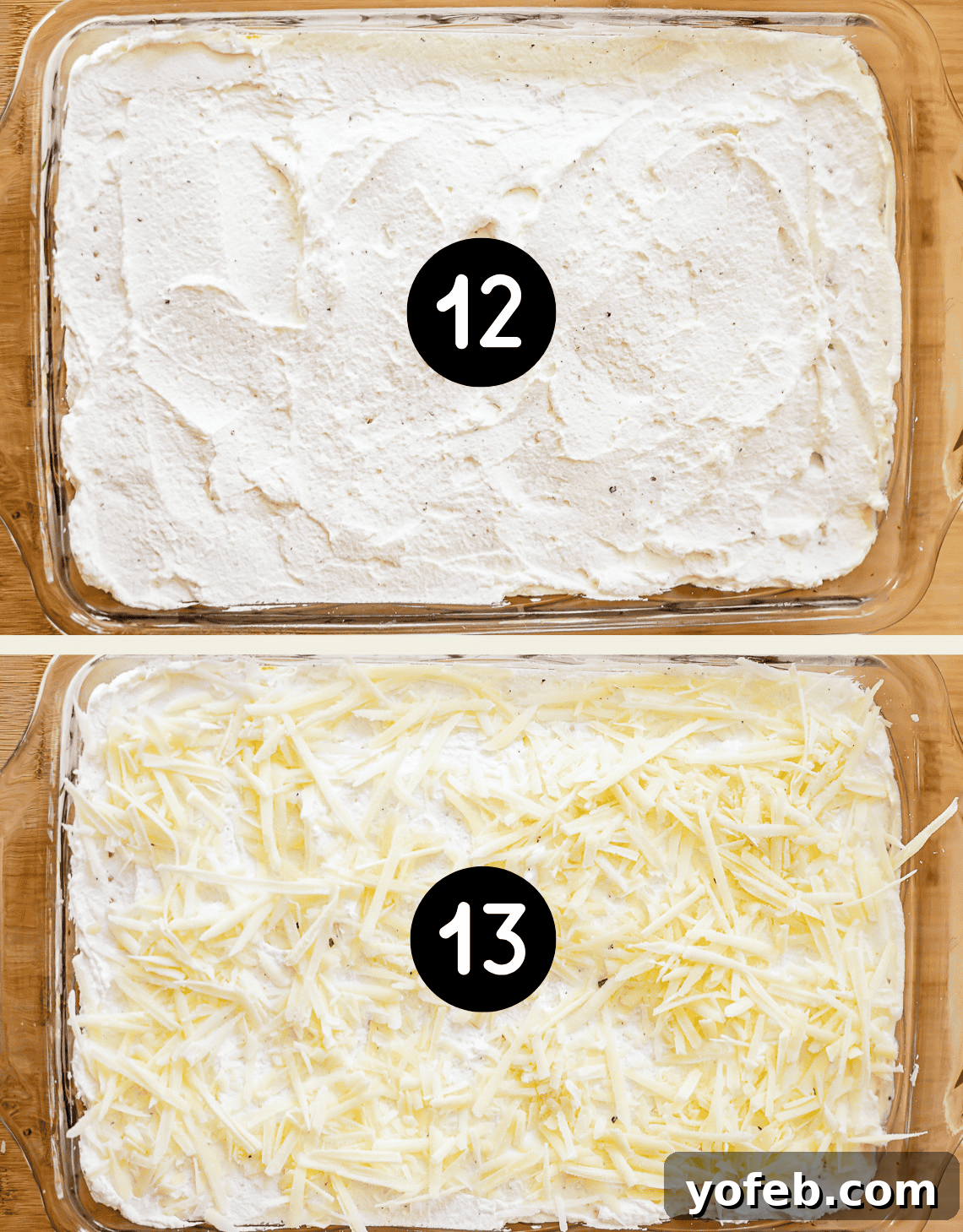
Finish with a final, generous sprinkle of the remaining 1/2 cup of Pecorino Romano cheese. Let your heart be your guide here – more cheese is always a good idea!
Baking to Golden Perfection
Before covering your lasagna, remember to spray one side of a sheet of aluminum foil with nonstick spray. This prevents the foil from sticking to the luscious cheese topping and pulling it off when you remove it – a truly disheartening moment! Cover the lasagna pan tightly with the sprayed foil.
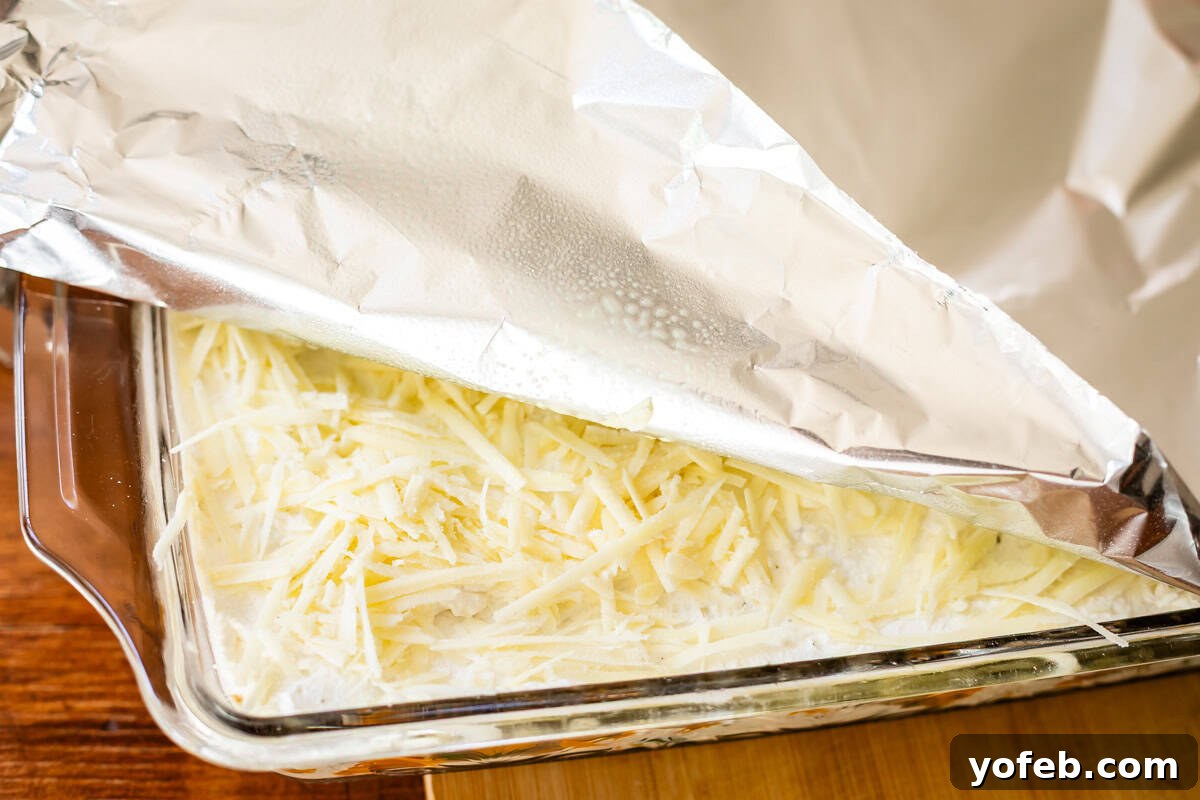
Bake in your preheated 375°F (190°C) oven for 30 minutes with the foil on. Then, carefully remove the foil and continue baking for another 10-20 minutes, or until the top is beautifully browned, bubbly, and starting to crisp. If the top isn’t browning to your liking after 40 minutes of total bake time, you can briefly place it under the broiler for 1-3 minutes, watching it very closely to prevent burning.
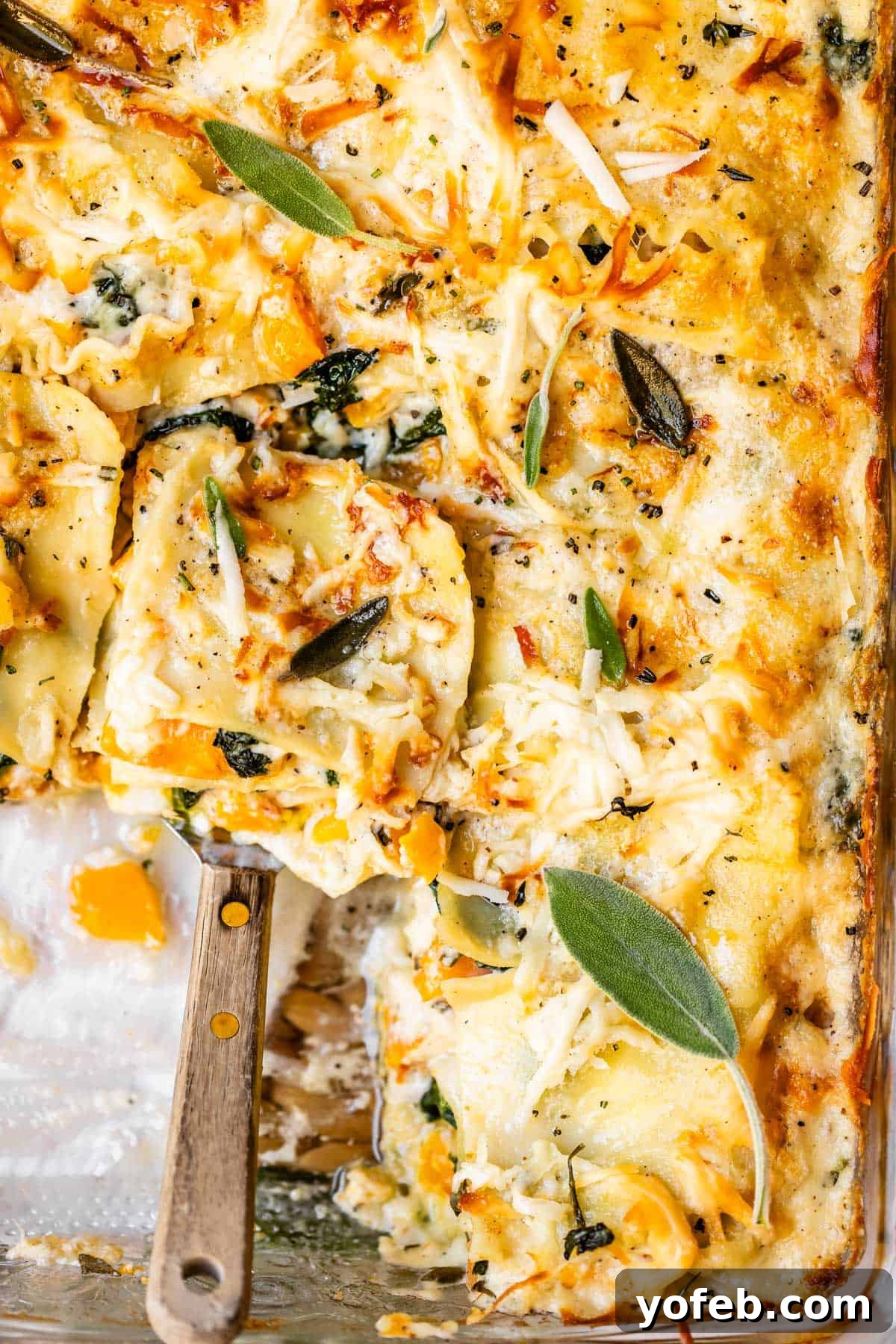
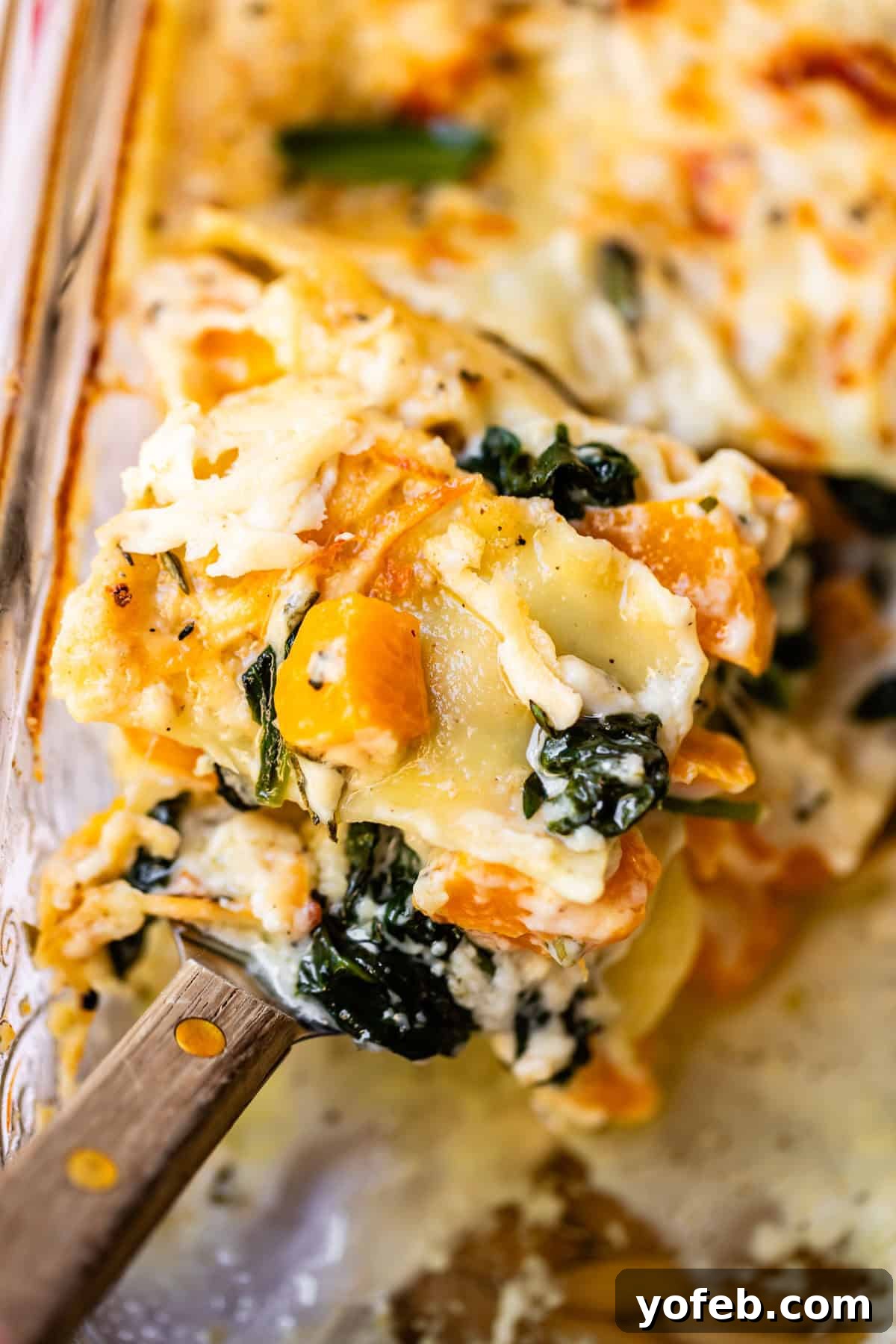
Once baked, let the lasagna rest for about 10-15 minutes before cutting and serving. This crucial resting period allows the layers to settle, making it easier to slice and preventing it from falling apart. Then, dig in and savor every comforting bite!
Serving Suggestions: Completing the Feast
This Butternut Squash Lasagna is a meal in itself, but it truly shines when paired with complementary sides. Its creamy, rich profile begs for something to soak up every last bit of that delicious sauce, and a fresh salad or additional cooked vegetable always provides a welcome contrast. Here are some of my favorite accompaniments that will turn your lasagna dinner into a complete feast:
- The Best Garlic Butter Bread: You simply cannot go wrong with warm, crusty garlic bread. It’s the ultimate companion for soaking up the luscious cream sauce, and its aromatic garlic flavor complements the lasagna beautifully. This recipe guarantees a crowd-pleasing side.
- Strawberry Spinach Salad: For a bright and refreshing counterpoint, this zippy salad with sweet strawberries and a tangy dressing provides a fantastic textural and flavor contrast to the rich lasagna. It’s a perfect palate cleanser.
- Green Salad with Feta and Beets (The Fanciest No-Chop Salad Ever): Sometimes, after putting effort into a lasagna, you need an easy side. This vibrant, no-chop salad is incredibly simple to assemble yet feels wonderfully elegant, offering freshness and a hint of brininess from the feta.
- Elegant Green Beans: Green beans are a versatile and healthy option. I highly recommend either these Lemon Almond Green Beans, which are bright and nutty, or these incredibly flavorful Green Beans with Garlic Bread Crumbs and Almonds, offering a wonderful crunch.
- Crispy Roasted Brussels Sprouts: Their slightly bitter, caramelized notes and crispy texture make a fantastic contrast to the creamy lasagna. Simply toss with olive oil, salt, and pepper and roast until tender-crisp.
- A Light White Wine: A crisp Sauvignon Blanc or a lightly oaked Chardonnay would pair wonderfully with the rich, herbaceous flavors of the lasagna.
Maximizing Enjoyment: Storage, Freezing, and Make-Ahead Tips
One of the many beauties of this Butternut Squash Lasagna is its versatility for meal prep and future enjoyment. Whether you’re planning ahead for a holiday feast or simply want to savor leftovers, these tips will help you preserve its deliciousness.
Storing Leftovers
Allow the lasagna to cool completely to room temperature before storing. Transfer individual portions to airtight containers, or if you prefer to keep it in the original baking pan, wrap it tightly with at least two layers of plastic wrap, followed by a layer of aluminum foil. Properly stored, the lasagna will remain fresh and delicious in the refrigerator for 4-5 days.
To reheat individual servings, microwave at 50% power for 2-3 minutes, or until heated through, to prevent the edges from drying out. For reheating an entire pan, remove it from the refrigerator and let it sit on the counter for 20-30 minutes. Add a small amount of water (just enough to barely cover the bottom) to any empty sections of the dish to prevent scorching. Cover the pan tightly with foil and place it in a cold oven. Set the temperature to 350°F (175°C) and bake until heated through, which can take anywhere from 30-60 minutes or more, depending on the amount of lasagna remaining.
Freezing for Future Feasts
This lasagna is exceptionally freezer-friendly, making it ideal for meal prepping or stashing away for busy days. You can freeze it in individual portions or as a whole pan, either baked or unbaked. Frozen lasagna maintains its quality for a good 3-4 months in the freezer.
Individual Portions (Baked)
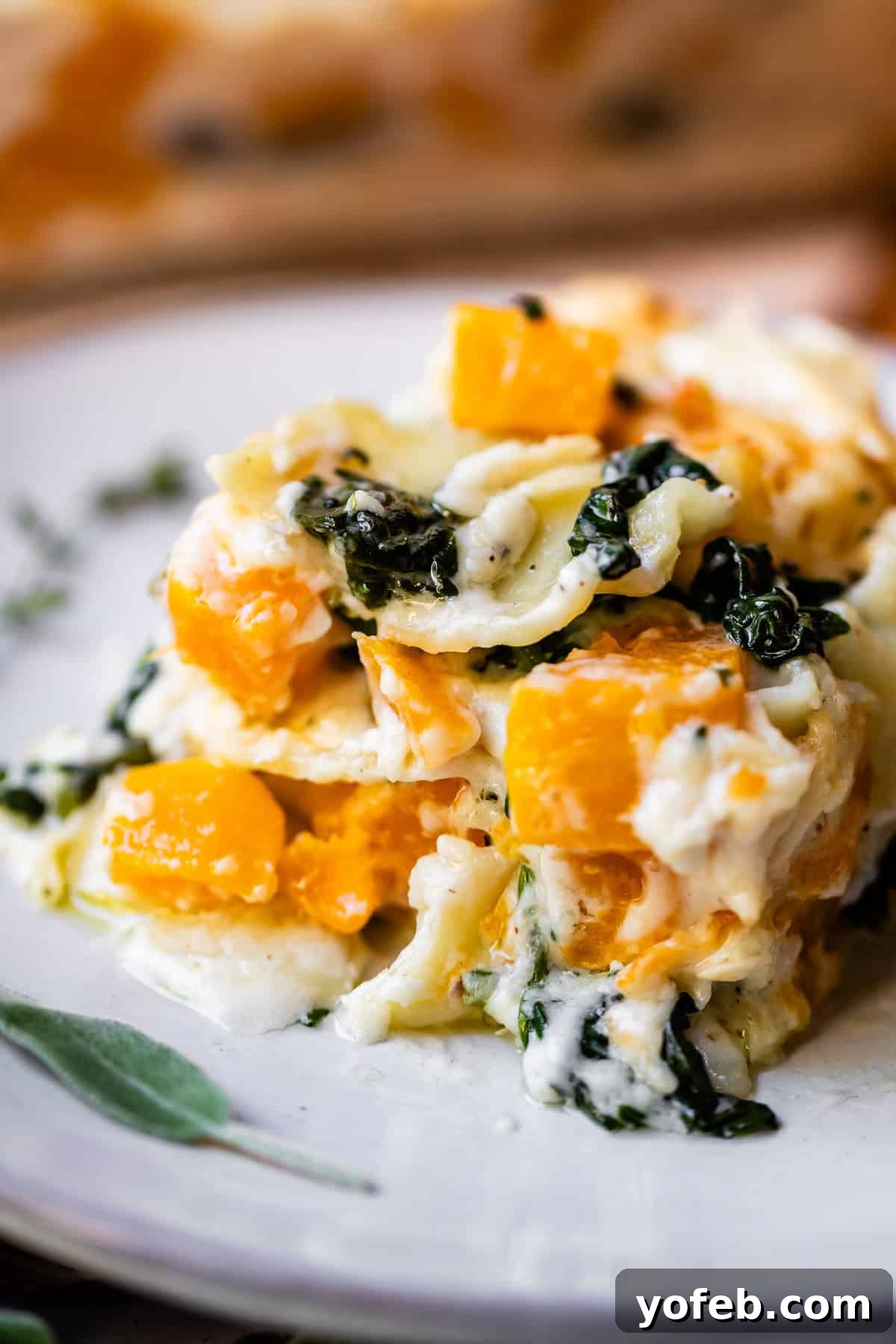
For convenience, slice the fully baked and cooled lasagna into individual portions. Place them in freezer-safe containers with tight-fitting lids, or flash freeze them on a parchment-lined baking sheet for 30 minutes, then wrap each portion individually in plastic wrap and store them all together in a freezer-safe ziplock bag. Reheat frozen individual portions in the microwave at 50% power for 4-5 minutes, or until thoroughly hot.
Whole Baked Lasagna
To freeze an entire baked lasagna, let it cool completely to room temperature. Wrap the pan very thoroughly with two layers of plastic wrap, then an additional layer of aluminum foil to prevent freezer burn. You have two reheating options: thaw overnight in the refrigerator, then bake according to the standard instructions (remember to remove plastic wrap first!). Alternatively, let the frozen lasagna sit at room temperature for about 30 minutes, remove all plastic, and re-cover with foil. Place in a cold oven and set to 375°F (190°C). Since it’s frozen, it will take at least twice as long to heat through; check after 60 minutes and add another 20-30 minutes if needed.
Whole Unbaked Lasagna
Assemble the entire lasagna as directed in the recipe card. Wrap the pan carefully in two layers of plastic wrap, followed by a layer of foil. To bake, you can either thaw it overnight in the refrigerator and then follow the normal baking instructions (removing plastic wrap first), or let it sit on the counter for about 30 minutes from frozen, remove plastic, and re-cover with foil. Place in a cold oven set to 375°F (190°C). Expect it to take at least twice as long to bake as a fresh lasagna; check for doneness after 60 minutes and add more time as necessary until heated through and bubbly.
Make-Ahead Magic
Absolutely! Preparing lasagna is a labor of love, and being able to make it ahead of time is a huge advantage, especially for holidays or busy weekdays. You can fully assemble the lasagna as instructed in the recipe card, wrap it tightly with plastic wrap, and store it in the refrigerator to bake the following day.
To bake from the refrigerator, remove the plastic wrap, cover the pan with foil, and let it sit at room temperature for 20-30 minutes. Then, place the pan in a cold oven and set the temperature to 375°F (190°C). Bake for approximately 40-45 minutes, or until the lasagna is bubbly and heated through.
If your plans require more than a day’s advance preparation, freezing is your best bet. Refer to the “Whole unbaked lasagna” instructions in the freezing section above for optimal results.
Frequently Asked Questions
Yes, absolutely! I actually prefer no-boil noodles for their convenience, as making lasagna already involves several steps. However, for this particular recipe, because the sauce isn’t as liquidy as some traditional lasagnas, I recommend a quick 3-minute pre-boil or soak to ensure the noodles soften sufficiently and bake up perfectly.
Yes, this Butternut Squash Lasagna is entirely vegetarian! It features no meat, focusing instead on the delicious flavors of roasted butternut squash, spinach, and a rich cheese sauce. If you wish to add meat, cooked bulk Italian sausage or even diced ham would be excellent additions, folded in with the squash layer.
While Pecorino Romano adds a unique salty and sharp flavor, Parmigiano Reggiano is an excellent substitute if you prefer. Its nutty, savory notes will still provide fantastic depth. For a milder flavor, you could also use a good quality aged white cheddar, though the overall profile would be different.
Transforming this recipe into a dairy-free or vegan version would require significant substitutions. You would need plant-based milk and butter for the béchamel, vegan cheese shreds (such as almond or cashew-based Parmesan alternatives), and a dairy-free heavy cream alternative for the whipped topping. The texture and flavor profile would change, but it’s certainly possible with the right ingredients.
Discover More Fall Favorites
Fall cuisine holds a special place in my heart – it’s all about warmth, comfort, and embracing those rich, seasonal flavors. After a summer of grilling, returning to oven-baked dishes and aromatic spices feels like coming home. If you’re as enchanted by autumn’s culinary offerings as I am, you’ll love my comprehensive collection of The Best Fall Recipes! Here are a few hand-picked favorites that embody the essence of the season:
Soup Recipes
Laura’s Tomato Bisque Soup
A creamy, comforting classic that’s perfect with a grilled cheese sandwich.
Salad Recipes
Honey Roasted Butternut Squash Salad
A sweet and savory salad bursting with seasonal flavors and textures.
Recipes for Dinner
Shepherd’s Pie Recipe with Cheese Topping
The ultimate savory comfort food, topped with a golden, cheesy mashed potato crust.
Recipes for Dinner
The Best Chili Recipe Ever! (Slow Cooker)
A rich, hearty chili perfect for cozy nights, easily made in your slow cooker.
- Roasted Sweet Potato Salad with Honey Lemon Dressing from Recipe Tin Eats: A vibrant and delicious salad featuring the sweetness of roasted sweet potatoes.
- Easy Clam Chowder from Damn Delicious: A creamy, satisfying seafood soup, perfect for a crisp evening.
Facebook | Pinterest | Instagram

Butternut Squash Lasagna
Rate this Recipe
Print Recipe
Equipment
- 2 sheet pans for roasting the squash
- 1 9×13 baking dish for the lasagna
Ingredients
For the squash:
- 3 pounds butternut squash, about 8 cups, chopped
- 1 and 1/2 teaspoons kosher salt, divided, for roasting squash
- 3 tablespoons light olive oil, divided, for roasting squash
For the spinach layer:
- 4 tablespoons butter, half stick
- 10 ounces fresh spinach*
- 3/4 teaspoon kosher salt
For the cream sauce:
- 4 tablespoons butter, half stick
- 5 cloves garlic, smashed and minced (at least 1 tablespoon)
- 1/4 cup flour
- 1 teaspoon kosher salt
- 1/2 teaspoon black pepper
- 1 pinch cayenne pepper
- 1/4 teaspoon nutmeg
- 1 tablespoon fresh sage, chopped
- 1 tablespoon fresh rosemary, chopped
- 4 cups whole milk
For the lasagna:
- 9 sheets no-boil lasagna noodles
- 1 and 1/2 cups shredded Pecorino Romano, divided (or Parmesan)
- 1 cup whipping cream
- 1/2 teaspoon kosher salt
- 1/2 teaspoon pepper
Instructions
- Preheat your oven to 450 degrees F (230°C).
- Chop your butternut squash. For a detailed guide, refer to my post on how to cut butternut squash.
- Roast the squash. Spread 3 pounds of chopped butternut squash evenly on TWO half sheet pans. Drizzle EACH pan with 3/4 teaspoon kosher salt and 1 and 1/2 tablespoons light olive oil (or any vegetable oil). Use your hands to toss the squash with the salt and oil, then spread all the chopped squash out on the pan, ensuring pieces are not touching.
- Roast at 450 F (230°C) for 30 minutes, rotating the pans’ positions in the oven halfway through. The butternut is ready when it’s fork-tender and lightly browned. Set aside.
- Lower the oven temperature to 375 F (190°C).
- Wilt the spinach. While the butternut roasts, melt 4 tablespoons butter in a large skillet over medium heat. Add 10 ounces fresh spinach and sprinkle with 3/4 teaspoon kosher salt. Cook for 2-4 minutes until the spinach is wilted. Remove to a paper-towel lined plate, leaving any liquid in the pan.
- Work ahead: Prepare your ingredients. Mince 5 cloves of garlic. Measure all dry spices into a bowl. Chop the sage and rosemary. Measure 4 cups milk into a measuring glass. Grate 1 and 1/2 cups Pecorino Romano cheese.
- Make the sauce. In the same pan used for spinach, add the remaining 4 tablespoons butter. Add the minced garlic. Cook for 1 minute over medium heat until fragrant.
- Add 1/4 cup flour, 1 teaspoon kosher salt, 1/2 teaspoon black pepper, a pinch of cayenne pepper, and 1/4 teaspoon nutmeg. Stir and cook over medium heat for another 1 minute, until all the flour is absorbed and a paste forms.
- Add 1 tablespoon freshly chopped sage and 1 tablespoon fresh chopped rosemary.
- Immediately begin to GRADUALLY pour in the 4 cups of milk. Add about 1/4 cup at a time, stirring continuously until the milk is absorbed before adding more. Continue until all the milk is incorporated and your roux has transformed into a thickened, smooth sauce.
- Once all the milk has been added, simmer the sauce for about 8-10 minutes over medium-low heat, adjusting heat to maintain a gentle simmer (no vigorous boiling).
- Prep the noodles: While the sauce simmers, soften your lasagna noodles. You can either boil them in a pot of water for 3 minutes, or pour boiling water over them in a casserole dish for 3 minutes. Drain the water thoroughly after 3 minutes.
- Assemble your lasagna: Use the butter wrapper to grease a 9×13 inch pan. Arrange the sauce, spinach, butternut, Pecorino Romano, and noodles near the pan.
- Layer the lasagna: Scoop 1 cup of sauce into the bottom of the pan, spreading it evenly.
- Add 3 noodles. Add half of the roasted butternut squash. Add half of the wilted spinach. Add 1/2 cup Pecorino Romano cheese. Add half of the remaining sauce.
- Repeat the above layers exactly: Add 3 noodles. Add the other half of the butternut squash. Add the other half of the spinach. Add 1/2 cup Pecorino Romano cheese. Add all of the remaining sauce.
- Top with the final 3 noodles.
- Make the whipped cream. In a large bowl or stand mixer, combine 1 cup heavy cream with 1/2 teaspoon kosher salt and 1/2 teaspoon black pepper. Beat with a whisk attachment until stiff peaks form.
- Spread the whipped cream evenly over the top layer of noodles, ensuring they are completely covered.
- Top the whipped cream with the remaining 1/2 cup Pecorino Romano cheese (or more, if desired).
- Spray a sheet of foil with nonstick spray. Cover the lasagna tightly.
- Bake at 375 degrees F (190°C) for 30 minutes. Remove the foil and bake for another 10-20 minutes, until the top is golden brown and bubbling. If needed, broil for 1-3 minutes to crisp the top (watch carefully!).
- Let the lasagna settle for about 10-15 minutes before cutting and serving. This allows the layers to set.
- Store covered in the fridge for 3-5 days.
- Freezing**: This lasagna is highly freezer-friendly. See notes below for detailed freezing instructions for individual portions or whole pans (baked or unbaked).
- Make ahead: Assemble the entire lasagna, wrap well in plastic wrap, and refrigerate to bake the next day. To bake, remove plastic, cover with foil, let sit 20-30 minutes at room temperature, then bake at 375°F (190°C) for 40-45 minutes or until heated through. For longer storage, freeze as per notes.
Notes
*Using frozen spinach: If using 8-10 ounces of frozen spinach, thaw it completely and squeeze out all excess liquid using paper towels. Skip the sautéing step and layer the squeezed spinach directly into the lasagna. You will not need the 4 tablespoons butter or 3/4 teaspoon salt specified for sautéing fresh spinach in this step.
**Freezer instructions:
Whole baked lasagna
To freeze a whole baked lasagna, let it cool completely to room temperature. Wrap the entire pan very well in 2 layers of plastic wrap, then wrap once more in foil. You can thaw the pan in the refrigerator overnight and follow the normal baking instructions (remove plastic wrap first!). Alternatively, let the frozen lasagna sit on the counter for about 30 minutes, remove all plastic, and recover with foil. Place the pan in a cold oven and set the temperature to 375°F (190°C). Because it is frozen, it will take at least twice as long to heat through; check after about 60 minutes of baking. If it’s not hot all the way through, add another 20-30 minutes of time.
Whole unbaked lasagna
Assemble the entire lasagna as per the instructions. Wrap the whole pan carefully in 2 layers of plastic wrap, then wrap in foil. You can let the pan thaw in the refrigerator overnight and follow the normal baking instructions (remove plastic wrap first!). Or, let the frozen lasagna sit on the counter for about 30 minutes, remove all plastic, and recover with foil. Place the pan in a cold oven and set the temperature to 375°F (190°C). Because it is frozen, it will take at least twice as long to bake; check after about 60 minutes of baking. If it’s not hot all the way through, add another 20-30 minutes of time.
Nutrition
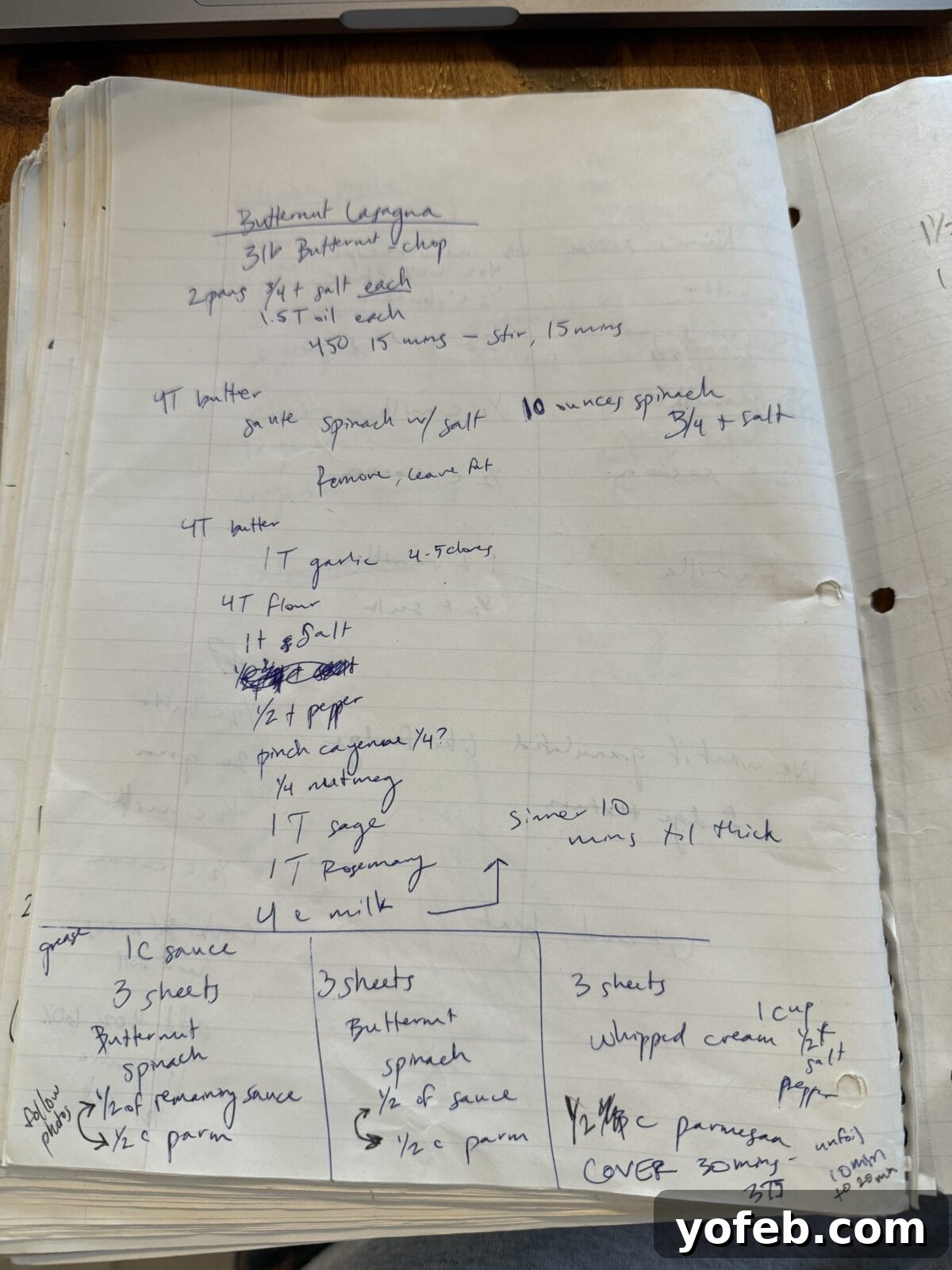
Here is my page of notes from when I was developing this recipe. Thank goodness for the internet. I’m so glad my grandchildren won’t have to decipher my chicken scratch handwriting in order to make my recipes!